













Web Development Process: How Does Change Happen?

The web development process usually stretches across planning, design, development, testing, launch, and, well, the part people may forget – maintenance.
Because of that, web development is not a solo job. Designers, developers, project managers, testers – they all step in at different moments, sometimes at the same time. If one piece slips, the rest can feel it.
So what does a typical web development process actually look like? More importantly, why should you even care about understanding it? If you’ve ever wondered how websites move from vague ideas to real, working products, you’re in the right place. Let’s walk through it together in today’s article from Designveloper.
Why Is the Web Development Process Important?
The web development landscape doesn’t really stand still. It shifts at a steady pace, with an expected annual growth rate of around 8.03% from 2026 to 2035. The reasons aren’t exactly mysterious. Businesses still need websites, and e-commerce keeps raising the bar for speed, experience, and reliability.
As of 2025, there are already more than 1.3 billion websites out there, and that number alone hints at how crowded – and competitive – web development has become. New trends keep popping up alongside. Blockchain finds its way into security discussions, while AI and machine learning creep into personalization. Besides, PWAs promise app-like experiences without the app store hassle. Even IoT has started knocking on the web’s door.
Are you thinking about entering this market, whether as a business owner, a product manager, or someone funding a digital idea? If so, understanding the web development process is not optional. This comes with a few very real advantages:
- Clear vision and realistic expectations: A defined process gives you a better sense of how long things may take, what they might cost, and where problems could show up.
- More effective planning: Once expectations are grounded in reality, planning becomes less of a guessing game. Your team can set up achievable timelines and assign the right resources (people, tools, etc.) with purpose.
- Better budget control: Knowing the stages of web development makes it easier to estimate costs early on.
- Stronger quality assurance: When you understand how development flows, you also know when testing should happen. Quality stops being an afterthought and becomes part of the process itself.
- Clearer communication: Good communication matters throughout the entire Software Development Life Cycle. When your business understands how a website is actually built, conversations with an outsourcing team become more direct. This also means fewer misunderstandings and clearer collaboration overall.
Key Stages of the Web Development Process

You have understood the importance of understanding a web development process? Great! Now, let’s dive deep into each crucial phase of a process and discover what you need to build a successful website:
1. Planning and Requirement Analysis
Before jumping into design and code, you need to make a detailed project plan and analyze project requirements. Here are several tasks you need to do:
- Identify the website’s ultimate goal
Ask yourself or those involved directly in the project this question: What is this website actually for?
Is it to sell your company’s products (e.g., furniture or clothes) or to collect leads? The answer may be “all of the above,” but honestly, this answer leads your teams nowhere. Clarify the truly core goal that benefits your target users the most.
- Analyze user and business requirements
Next, you should understand what your business and target visitors want from your website. Your business requires data, conversions, and growth, while users prefer something fast, simple, and easy to navigate. Good analysis helps you figure out whether these requirements overlap or clash, thereby identifying “must-have” features of the website that meet the demands of both parties.
- Build a sitemap and wireframe
You need sitemaps and wireframes to see where those features sit on your site.
The sitemap, or the “information architecture,” shows how the pages talk to each other. Tools like Whimsical, Coggle, or Mindmeister help you build a sitemap without much effort.
But a sitemap doesn’t really show you what a page looks like, but just the connection. That’s why we need wireframing.
As a low-fidelity blueprint, a wireframe is only about the placement of the key features. It doesn’t consider typography, specific brand colors, etc. You may use Sketch, Adobe XD, or InVision to create one.
- Choose the right tech stack
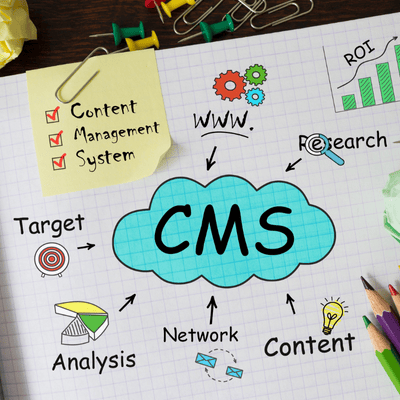
Decide on the programming languages, frameworks, and content management systems (CMS) that will be used. The tech choice is crucial as it influences the website’s functionality, scalability, and future maintenance.
2. UI/UX Design
In this phase, UI/UX designers make your website visually appealing and easy to use for real visitors. Here is what the design team often does in this stage:
- Create a mockup
Wireframes turn into mockups. This time, UI/UX designers will add colors, fonts, real text, and other design elements into low-detail wireframes to create the user interface of your website.
- Consider the user journey
How does someone move from a landing page to action? Besides the user interface, the designers also need to consider the real user’s experience and movement on the site, from scrolling to clicking.
Information architecture supports that journey by letting the designers see how to structure menus, how to group content, and how pages relate to each other.
- Consider responsive and accessibility factors
Designing only for desktop is a mistake people still make. Phones and tablets matter as well. Therefore, UI/UX designers need to consider designing a responsive website that can work seamlessly across devices and platforms.
Further, they have to consider accessibility by adding elements that benefit those using screen readers, navigating by keyboard, and having visual/motor limitations.
3. Web Development (Coding Phase)
Once you’ve got those designs polished, it’s time for the actual development. This is where building the “client-side” and the “server-side” happens.
- Front-end development
It’s called front-end development because it makes the client-side app visible to people. The designs from the previous stage are turned into HTML pages with animations and effects. There are JavaScript frameworks and libraries like Angular, React, and many more that are used to make JavaScript more complex than simple JavaScript can do. As so many people use mobile devices, the web app must be responsive and mobile-friendly.
- Back-end development
If the front-end is the paint and the furniture, the back-end is the heart and the brain hidden behind the walls. You don’t see it, but without it, nothing moves.
This is where the business logic lives. The developers here are busy linking data storage and making sure the server actually talks to the front-end without any lag. They also handle the databases for seamless data exchange and secure data storage.
Further, backend developers also handle CMS integrations. A CMS allows the non-tech folks to publish content without ever touching a line of code.
Developers also spend a lot of time carefully handling API integrations. Whether it’s hooking up Google Analytics to track how people are behaving or connecting to some old legacy infrastructure you’ve had for a decade, the API layer is what makes the modern web feel “connected.”

4. Testing and Quality Assurance
So, the code is done. And now, it’s time for testing and quality assurance, or QA.
During QA, testers usually work closely with developers and designers, going back and forth many times. They run different kinds of tests to check if the website works properly before real users touch it.
Some of the more common tests include:
- Functional testing: This tests whether the site actually works. From clicking every button and submitting every form to checking links – this test does them all.
- Cross-browser and device testing: Your site might look great on one screen and completely fall apart on another. So, your QA team tests across browsers, devices, and screen sizes to make sure the experience stays usable.
- Performance and security testing: The focus here shifts to speed and safety. How fast does the site load under pressure? How is user data handled? Are there weak points that attackers could, potentially, take advantage of?
When bugs show up, your team fixes them early, as letting small issues slide now tends to turn them into much bigger, more expensive problems later.
5. Deployment and Launch
Your website is free of bugs and flaws, so let’s deploy it to browsers. First, you need to prepare for the hosting environment, a domain, and SSL certificates.
The hosting server stores your website files, databases, and assets. Being properly configured, the server can process expected traffic and load your site fast.
Meanwhile, a domain – or your website’s address – needs to connect correctly to the hosting server. This ensures user requests go to the right place. Besides, SSL certificates are crucial in making sure your site uses HTTPS and protects user data effectively.
Then, deploy the website to the production environment. But it’s not the end. Your team must conduct the final review to:
- Check whether there is any missing text or placeholders in the content
- Make sure links and forms work as expected
- Verify backups exist if rollback is needed
- Confirm analytics tools are working properly
- Ensure error pages and redirects work correctly.
6. Maintenance and Continuous Improvement
Launch is not the end. Your team needs to continuously monitor and improve your website to make it perform properly all the time. This phase includes the following tasks:
- Monitoring and performance optimization: Real users behave differently from test users. Monitoring shows what’s slow, what’s ignored, and what’s clicked like crazy. Data here can be humbling.
- Security updates: The website ages fast. Updates close holes that attackers actively look for.
- Content updates: Outdated content erodes trust quietly, while fresh content keeps the site alive. So, regular content updates matter.
- Feature enhancement: When new ideas appear and feedback comes in, the site needs to evolve with improved features.
FURTHER READING: |
1. 5 Best eCommerce Website Design Services for Success |
2. 6 Signs It’s Time to Give Your Website an Overhaul |
Developing a Successful Website with Designveloper
At Designveloper, we follow our structured web development process to transform your idea into a working website. We start with a meeting where we sit down with you to figure out what you’re actually trying to do and define the scope. It’s not just about a list of features but also about the “why” behind the project.
Then, we make a Rough Estimation (RE) that clarifies your project’s cost and time. If that looks good, we dive deeper into a Detailed Estimation (DE) and start assembling the team.
We don’t rely on one single tool, but we pick the right techs for a reason.
We tend to lean on React or NextJS, as they’re flexible. For the heavy lifting in the background, we use AWS due to its reliability. For data storage, we use MongoDB or PostgreSQL, really depending on your data.
Our process is client-centric, which is a corporate way of saying we actually listen. It seems to work out. Our clients give us positive reviews on reputable platforms like Clutch or GoodFirms – all due to our technical quality, active communication, and on-time delivery.
Contact us now and start bringing your idea to life!
FAQs About the Web Development Process
How Long Does The Web Development Process Take?
It depends.
A small website with clear goals and limited features might take a few weeks. A larger, more complex platform, with custom features, integrations, and multiple user roles, can stretch into months or longer. The timeline often isn’t decided by coding alone, but also by feedback cycles and last-minute changes.
There’s also another thing people forget: waiting time. Waiting for approvals, content, and even for someone to say, “Actually, can we change this?” Those pauses increase the web development time.
So while a rough estimate is possible, real-world timelines tend to move a bit.
Is The Web Development Process The Same For All Websites?
No, not really.
On the surface, many companies often follow the same “plan-design-build” roadmap. But in reality, the “web development process” can changes shape based on what you’re actually trying to achieve.
For example, a simple marketing site focuses mainly on the visuals, the copy, making sure the brand feels right. Meanwhile, in a massive e-commerce platform, the focus shifts toward security, database speed, and handling concurrent requests.
Besides, constraints, like budget cuts or tight deadlines may make you skip some steps.
Who Is Involved in the Web Development Process?
It depends on the scope and requirements of each project.
Typically, you’ll see:
- Project managers keeping timelines and expectations in check
- UI/UX designers shaping how the site looks and feels
- Frontend developers building what users interact with
- Backend developers handling logic, data, and integrations
- QA testers catching what everyone else missed
Then there are stakeholders, clients, marketing teams, content editors, and even legal professionals. Each brings a different perspective, and occasionally, a different priority to the web development process.
Also published on

Share post on










Related Articles


WebSocket Protocol Vs HTTP: Key Differences And When To Use Each
WebSocket Protocol Vs HTTP: Key Differences And When To Use Each Published August 05, 2026
The Future Of Frontend Web Development: Trends Teams Should Prepare For
The Future Of Frontend Web Development: Trends Teams Should Prepare For Published August 03, 2026
Best Frontend Frameworks For Modern Web Development In 2026
Best Frontend Frameworks For Modern Web Development In 2026 Published August 03, 2026