

10 Best UX UI Design Companies in 2026

Choosing among the best UX companies in 2026 is less about finding well-known agencies and more about identifying the right fit for your product, team, and budget. Some UX/UI design companies are strongest at enterprise transformation and service design, while others are better suited to SaaS products, AI interfaces, design systems, or startup MVPs.
This guide shortlists 10 of the best UX/UI companies to consider in 2026 and compares them by product fit, strengths, trade-offs, and ideal use cases. Rather than ranking agencies on reputation alone, it focuses on what buyers actually need during vendor selection: proven UX capability, industry fit, delivery model, and practical downside awareness.
Explore more:
Quick Comparison Table: Best UX/UI Companies at a Glance
| Company | Best for | Core strength | Budget signal |
|---|---|---|---|
| IDEO | Innovation-heavy, cross-functional transformation | Human-centered strategy and service design | Premium |
| Clay | Premium digital products and polished visual execution | Brand-led product UX and high-end UI | Premium |
| Neuron | B2B, enterprise software, and AI products | Enterprise UX, strategy, and design systems | Premium to upper mid-market |
| UX Studio | Research-backed SaaS and product redesigns | Embedded collaboration and UX process depth | Mid-market to premium |
| MetaLab | Product interface design for digital products | Product design execution and shipping discipline | Premium |
| Ramotion | Product plus brand alignment | Design systems, brand, and UI craft | Mid-market to premium |
| ustwo | Digital products, mobile apps, and behavior-change experiences | Product design with design-and-build delivery | Premium |
| Momentum Design Lab | Research-heavy enterprise UX | Usability, complex workflows, product UX | Premium |
| Goji Labs | Startup product design and MVP support | Product design with practical delivery focus | Mid-market |
| Designveloper | Design plus software delivery value | Combined design and engineering support | Value to mid-market |
Top 10 Best UX UI Design Companies in 2026
The companies below cover different needs, from enterprise transformation and B2B product UX to startup delivery support and design systems work.
1. IDEO
General information
- Office location: San Francisco, Cambridge, Chicago, London, and Shanghai
- Year founded: 1991
- Key clients: IKEA, GE, Verizon, Ford, Procter & Gamble, Swarovski
- Portfolio or projects: ideo.com
- Services: service design, digital product design, strategy, innovation consulting, organizational transformation
- Industries and product types: enterprise software, digital services, customer experience programs, websites, mobile apps
IDEO is one of the best-known names in design and innovation. In the context of UI/UX design, the company is most associated with digital services, websites, mobile apps, and experience programs that connect business direction with customer experience.
IDEO is most compelling when a website, web app, or mobile app project needs more than interface execution. The company is especially relevant for discovery-heavy work, service design, and complex digital programs where research, stakeholder alignment, and long-term product thinking matter as much as screens.
Best for: enterprise websites, web apps, and mobile app experiences tied to service design or transformation programs
Recommended reading: The 6 Factors to Choose a UI UX Design Company
2. Clay
General information
- Office location: San Francisco headquarters, with offices in New York, Austin, Denver, Lisbon, and Belgrade
- Year founded: 2010
- Key clients: Google, Slack, Facebook, Credit Karma, Coca-Cola
- Portfolio or projects: clay.global
- Services: UX/UI design, branding, websites, design systems, product design, development
- Industries and product types: digital products, consumer and enterprise software, marketing websites, fintech, startup and scale-up platforms
Clay is a digital design agency known for combining product design with a polished brand layer. Its work often appeals to companies that want strong product UX without separating visual identity, interface quality, and digital storytelling.
Clay stands out for shaping refined product experiences that still feel commercially sharp. The agency is especially strong when teams want premium interface quality, scalable design systems, and product experiences that also support brand perception.
Best for: premium digital products, polished interfaces, and brand-led product experiences
Reading more: Latest Mobile App UX/UI Design Trends to Watch
3. Neuron
General information
- Office location: San Francisco, Boston, New York, and Los Angeles
- Year founded: 2016
- Key clients: Hootsuite, Vivint, Listrak, Flo Health, Paycom, Vendr
- Portfolio or projects: neuronux.com
- Services: UX/UI design, product strategy, usability testing, information architecture, prototyping, DesignOps, design systems
- Industries and product types: B2B software, enterprise platforms, AI products, SaaS, healthcare, financial services
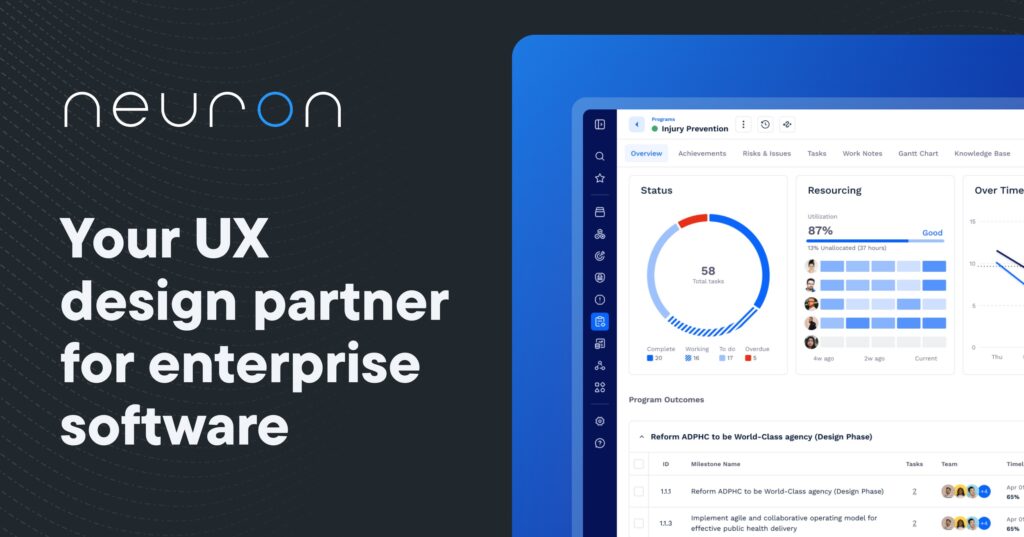
Neuron is a specialized UX/UI agency with a clear focus on complex digital products. Its positioning is strongest in enterprise software, workplace tools, and B2B environments where workflows, adoption, and product clarity are harder to solve than visual style alone.
Neuron stands out in complex product environments. The agency is especially well-suited to projects that involve enterprise workflows, AI features, information density, and the need for closer alignment between design decisions, user behavior, and technical feasibility.
Best for: B2B software, enterprise UX, and AI-driven products
Related articles: Web Design Trends
4. UX Studio
General information
- Office location: Budapest, Hungary
- Year founded: 2013
- Key clients: featured work includes Pakk, SysKit, Targens, LightMetrics, and Copyfolio
- Portfolio or projects: uxstudioteam.com/case-studies
- Services: UX research, UX/UI design, redesign, UX training, UX consultancy, development support
- Industries and product types: SaaS, legal tech, finance, education, healthcare, AI products, web apps
UX Studio is a product-focused agency known for research-led design and close collaboration with internal teams. Its case studies show a strong emphasis on redesigns, usability work, and product decisions shaped by testing and research rather than visual treatment alone.
UX Studio is strongest in methodical product improvement. The agency is most useful when the goal is to refine an existing SaaS product, validate decisions through research, and build a clearer path from discovery to interface design.
Best for: SaaS products, research-driven redesigns, and embedded collaboration
Further Reading:
5. MetaLab
General information
- Office location: Vancouver, with a distributed global team
- Year founded: 2006
- Key clients: Midjourney, Uber, Suno, Headspace, Calvin Klein, The Atlantic
- Portfolio or projects: metalab.com/work
- Services: product design, interface design, brand and product collaboration, digital product delivery
- Industries and product types: SaaS, AI products, consumer apps, media, ecommerce, digital platforms
MetaLab is a long-established product design firm with a strong reputation for digital interfaces. The company is closely associated with software products that need cleaner interaction patterns, sharper visual clarity, and a strong shipping mindset.
MetaLab is particularly strong in product execution. The agency is a good fit when the challenge is to improve a software product through better interface decisions, clearer UX patterns, and a design process that stays close to implementation.
Best for: digital product interface design and shipping-focused product teams
6. Ramotion
General information
- Office location: San Francisco, California
- Year founded: 2009
- Key clients: Salesforce, Oracle, Mozilla
- Portfolio or projects: ramotion.com
- Services: UX/UI design, branding, web design, product design, design systems
- Industries and product types: SaaS, developer tools, B2B technology, startup products, enterprise platforms
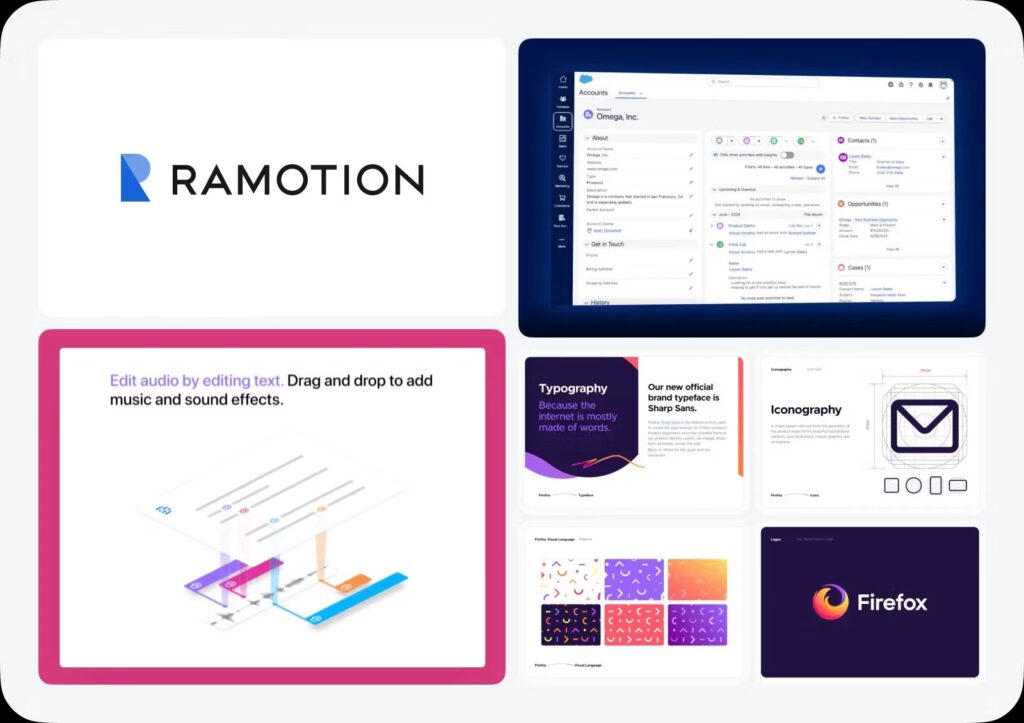
Ramotion operates at the overlap between product design and brand expression. Its positioning is especially relevant for software companies that want a more distinctive interface language without treating branding and product UX as separate tracks.
Ramotion is especially effective at translating brand thinking into product experience. The agency is particularly useful when teams want stronger UI craft, clearer design systems, and more consistency between the product experience and the company’s market-facing identity.
Best for: SaaS, developer tools, and products where brand and UX need to reinforce each other
7. ustwo
General information
- Office location: London, Malmo, New York, and Lisbon
- Year founded: 2004
- Key clients: Google, DeepMind, Reuters, HSBC, Samsung, Lilly, Peloton, L’Oreal
- Portfolio or projects: ustwo.com/work
- Services: digital product design, web and mobile app design, design systems, AI product design, full-stack product development
- Industries and product types: healthcare, finance, retail, AI-supported products, digital coaching products, websites, mobile apps
ustwo is a digital product studio with a long track record in designing and building apps, websites, and product ecosystems. The company is known for combining product thinking, design, and engineering in products used by large audiences.
ustwo is especially relevant when UX/UI design needs to stay close to product behavior, engagement, and delivery. The studio is a good fit for teams building mobile apps, digital coaching products, design systems, or AI-supported experiences where usability and long-term adoption both matter.
Best for: digital products, mobile apps, and behavior-change experiences
8. Momentum Design Lab
General information
- Office location: Silicon Valley, New York, London, and Sydney
- Year founded: 2002
- Key clients: featured work includes Nasdaq Private Market, Bitstamp, KT Tape, Sifted, and Coalfire
- Portfolio or projects: momentumdesignlab.com/work
- Services: UX research, product strategy, product design, CX design, design systems, digital strategy
- Industries and product types: enterprise software, fintech, healthcare, web platforms, mobile apps, AI-supported products
Momentum Design Lab is a product design consultancy with a long track record in UX, CX, and digital product work. The company is frequently associated with complex redesigns and enterprise environments where product clarity and research depth need to shape the solution.
Momentum is strongest in structured product improvement. The agency is a strong option for teams that need better workflows, stronger usability, and research-backed interface decisions rather than a heavily brand-led design direction.
Best for: research-heavy product redesigns and enterprise UX modernization
9. Goji Labs
General information
- Office location: Los Angeles and New York
- Year founded: 2014
- Key clients: featured work includes WWF, TGS, CompleteOR, and other startup and nonprofit products
- Portfolio or projects: gojilabs.com/case-studies
- Services: product strategy, UX/UI design, web development, mobile development, system architecture
- Industries and product types: startups, nonprofit platforms, healthcare, logistics, travel, marketplaces, SaaS products
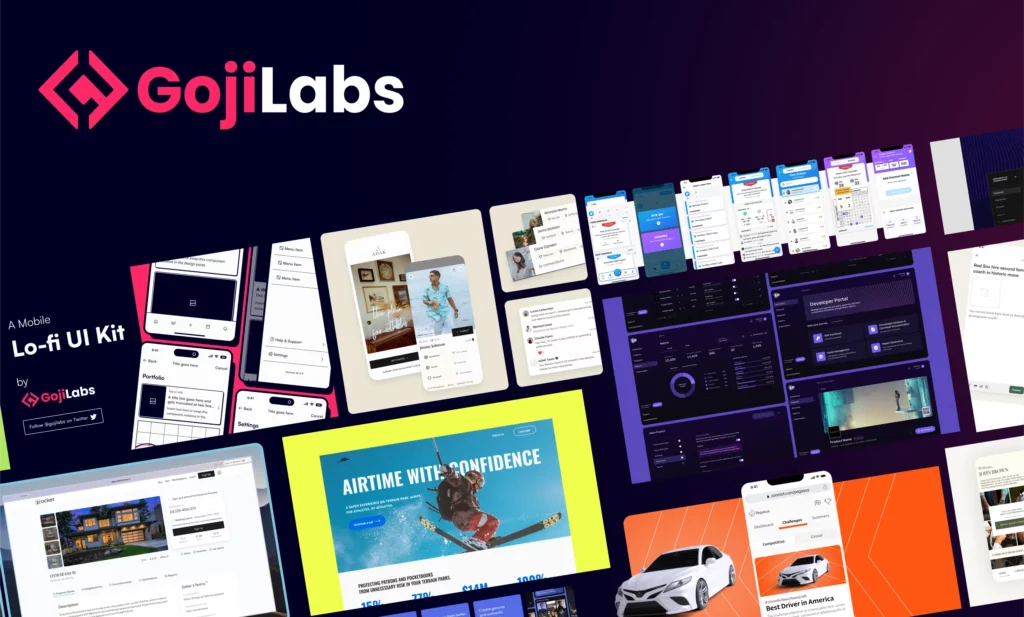
Goji Labs is a strategy-first digital product agency that works well for startup and mid-market teams. Its positioning is practical and product-oriented, with a visible focus on helping teams clarify scope, reduce complexity, and move from idea to launch.
Goji Labs is most useful when UX/UI work needs to stay close to product delivery. The agency is especially relevant for teams that want support grounded in business goals, user flow clarity, and implementation realities rather than pure visual refinement.
Best for: startup product teams, MVPs, and practical digital product design
10. Designveloper
General information
- Office location: Ho Chi Minh City, Vietnam
- Year founded: 2013
- Key clients: Lumin, Bonux, ODC, Hanoi Radio and Television, Swell & Switchboard, Walrus Education
- Portfolio or projects: designveloper.com/projects
- Services: UI/UX design, web development, mobile app development, AI-powered software, business consulting
- Industries and product types: logistics, transportation, manufacturing, healthcare, SaaS platforms, web apps, mobile apps
Designveloper is a software development company that also provides UI/UX design as part of broader product delivery. The company is positioned for teams that want to keep design and implementation connected instead of splitting strategy, design, and engineering across separate vendors.
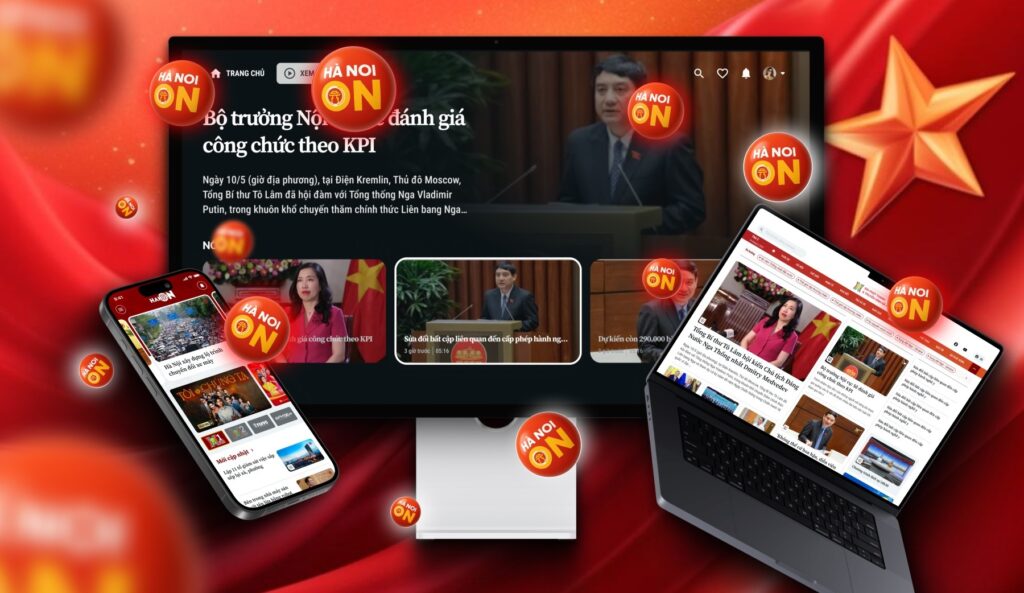
Designveloper is most relevant when UI/UX design needs to connect closely with delivery. That capability is visible in projects such as HANOI ON, where the team worked with Hanoi Radio and Television to redesign a full digital ecosystem across website, mobile app, and TV app into a more unified experience. The company is a better fit for projects that need solid UX/UI work, close coordination with development, and a cost structure that is easier to justify than a premium global consultancy.
Best for: companies that need UX/UI design plus software delivery support at a more accessible cost structure
How to Choose the Right UX/UI Design Company
There is no single best UX/UI design company for every project. The right choice depends on product needs, team structure, budget, and the level of support required.
The selection process becomes easier when the evaluation stays focused on five practical areas:
- process
- portfolio
- services
- proposal
- reviews
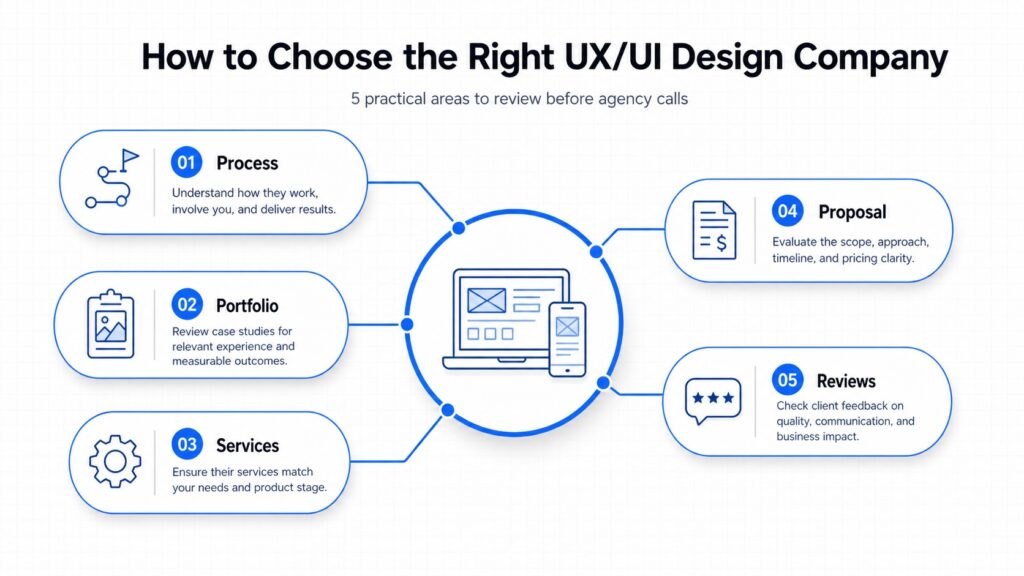
This checklist can help narrow the shortlist before agency calls:
| What to check | Why it matters |
|---|---|
| Problem fit | Enterprise UX, SaaS product design, research-heavy redesigns, and design-plus-development support require different strengths. |
| Case study outcomes | Strong case studies explain the problem, the changes made, and the reason the solution worked. |
| Product complexity match | A B2B dashboard, a consumer mobile app, and a service design initiative require different UX capabilities. |
| Execution readiness | Design systems, testing processes, engineering handoff, and workflow clarity are practical indicators of delivery maturity. |
| Budget and scope fit | A well-known consultancy may still be the wrong fit for a team that mainly needs focused UX/UI execution. |
1. Review the process
Many agencies describe a similar UX process on their websites. The more useful question is whether the process fits the project and supports clear decisions from discovery to delivery.
Strong signs include:
- kickoff sessions that help the agency understand the business and product context
- a clear plan for research, design, feedback, and iteration
- room for client input during reviews and design sprints
- a practical handoff process for product and engineering teams
2. Review the portfolio
Portfolio quality is about more than visual polish. A stronger portfolio shows how the agency handles usability, product complexity, onboarding, workflows, or design systems in real projects.
Strong signs include:
- case studies with problems, decisions, and outcomes
- experience with similar product types or UX challenges
- measurable results such as adoption, engagement, or retention
- work that looks distinct rather than repeated across every client
3. Review the services
Service lists often look similar, so the main question is whether the services match the project scope. A redesign, UX audit, research engagement, or full product design partnership can require very different levels of depth.
Strong signs include:
- services are clearly explained
- UX research or audits are included where relevant
- recommendations are based on the product stage and business need
- the agency can explain when a lighter or broader scope makes sense
4. Review the proposal
A proposal should reflect the product, the scope, and the working model discussed during early conversations. A strong proposal gives enough detail to guide execution without becoming vague or overcomplicated.
Strong signs include:
- clear scope, deliverables, and timeline
- pricing transparency
- explanation of priorities and assumptions
- some flexibility if the scope changes during the project
5. Review the reviews
Reviews help verify whether the delivery experience matches the agency’s positioning. The most useful reviews describe quality, communication, timelines, and business impact.
Strong signs include:
- credible third-party reviews
- repeated mentions of the same strengths
- feedback on collaboration, reliability, and outcomes
- evidence that the agency handles challenges professionally
After reviewing these five areas, the next step is a direct conversation. Agency calls are usually the best time to confirm fit, test how clearly the team thinks, and identify gaps that are not visible in a portfolio or proposal.
Questions to Ask Before Hiring a UX/UI Agency
Before signing with any UX/UI design company, ask:
- What kinds of products do you design most often?
- How much of your work is UX research versus interface design?
- How do you validate design decisions before development?
- Who will actually work on our project day to day?
- How do you handle developer handoff and implementation QA?
- Can you show relevant case studies from our industry or product type?
- What engagement model do you recommend for our scope?
- What are the biggest risks you see in a project like ours?
These questions usually reveal more than awards pages or agency taglines. In many cases, the better choice comes from fit, process, and delivery model rather than name recognition alone.
Further Reading: Free Stock Photo Websites
FAQs
What is the difference between a UX company and a UI/UX company?
A UX company usually emphasizes research, information architecture, workflows, usability, and how a product works. A UI/UX company often combines that with interface design and visual execution. In practice, many agencies do both, but their strengths can still lean more toward strategy or more toward UI craft.
How much does it cost to hire a UX/UI design agency?
Costs vary widely depending on scope, agency reputation, team composition, and project complexity. Premium agencies typically command higher budgets, while value-oriented partners may be more accessible for startups and mid-market teams. The more useful comparison is not hourly price alone, but whether the agency is right-sized for your problem.
What should I look for in the best UX company?
Look for product-fit relevance, clear thinking, research capability, strong execution, and a track record in projects similar to yours. You should also pay attention to how the agency explains trade-offs, works with engineering, and validates design choices.
Should I hire a design-only agency or a design-and-development partner?
That depends on your team structure. If you already have a strong internal engineering organization, a design-focused agency may be enough. If implementation continuity, speed, or budget coordination is a concern, a partner that can support both design and development may be more practical.
Final Thoughts
The best UX companies do not all solve the same problem. Some help organizations rethink entire experiences. Others help product teams improve adoption, usability, and interface quality in a more focused way.
If you are evaluating the best UX/UI companies in 2026, start by defining the problem you need solved, not the logo you want on a shortlist. That will make it much easier to separate agencies that look impressive from agencies that are actually a good fit.
If your team needs a partner that can support both UX/UI design and software delivery, Designveloper can be one of the options to consider, especially when budget efficiency and implementation continuity matter.
Contact Designveloper to discuss your project.
Also published on

Share post on










Related Articles


TOP 10+ Custom Software Development Companies in Vietnam 2026
TOP 10+ Custom Software Development Companies in Vietnam 2026 Published April 29, 2026
10 Best UX UI Design Companies in 2026
10 Best UX UI Design Companies in 2026 Published February 18, 2026
Top 10 Web App Development Companies in Vietnam in 2026
Top 10 Web App Development Companies in Vietnam in 2026 Published January 21, 2026