













Top Agentic AI Companies: 18 Vendors By Product Layer And Fit

KEY TAKEAWAYS:
- 18 companies, three buying layers: OpenAI, Anthropic, Google Cloud, AWS, and Mistral AI offer models or agent platforms; Microsoft, Salesforce, IBM, SAP, ServiceNow, and Palantir bring agents into enterprise systems; Sierra, Decagon, Cognition, Harvey, Glean, Kore.ai, and Genesys focus on specific workflows.
- This is a vendor map, not a performance ranking. The companies sell different products, so compare each one with the job, data, and systems your team needs to support.
- Score the workflow, not the demo. Test task completion, permission boundaries, error recovery, human handoffs, latency, and cost on the same representative cases.
- Set safety boundaries before deployment. Decide which actions an agent may take, when a person must approve, and what gets logged; use the agentic AI security checklist to shape that review.
A vendor can show a smooth agent demo and still fail a live workflow when a record is missing, a tool call is denied, or a person needs to approve an exception. That gap makes vendor selection a systems decision, not a test of how autonomous the demo looks. This shortlist covers agentic AI companies selling different types of products; compare the action each can perform and the system your team would still own before choosing a pilot. The at-a-glance table gives the first filter, and the profiles show where each option needs a closer check.
Top Agentic AI Companies at a Glance
Use this table to narrow the list by product layer and workflow. Teams comparing enterprise AI agents should first decide whether an agent must run inside an existing business platform or through a separate runtime. These entries are not ranked or independently benchmarked; product claims are linked to vendor sources and still need to be checked in your environment.
| Company and layer | Product focus | Good starting point | Validate before choosing |
|---|---|---|---|
| OpenAI – model and agent tools | Agents SDK and Agents API | Build agent workflows in an application or use a managed harness | Who owns tools, state, permissions, and approvals? |
| Anthropic – model and API | Claude tool use | Add defined tool calls to a Claude-powered workflow | Who builds the agent loop, tool policy, and recovery path? |
| Google Cloud – agent platform | Gemini Enterprise Agent Platform | Build, deploy, and govern agents in a Google Cloud environment | Check identity, region, integrations, and operating cost |
| AWS – agent runtime | Amazon Bedrock AgentCore | Operate agents built with different frameworks or models on AWS | Test identity, networking, session state, and observability |
| Mistral AI – model and API | Agents and Conversations API | Build tool-using agents around Mistral models and APIs | Confirm API status, hosting choices, and supported tools |
| Microsoft – workflow platform | Copilot Studio | Connect agents to Microsoft business data, tools, and flows | Review licenses, connector scope, and action approvals |
| Salesforce – CRM platform | Agentforce | Support sales or service work tied to Salesforce records | Check data access, allowed actions, and escalation paths |
| IBM – agent platform | watsonx Orchestrate and watsonx Agents | Build and coordinate agents across enterprise workflows | Confirm deployment model, connectors, and governance ownership |
| SAP – business application agents | Joule Agents and AI Agent Hub | Extend supported SAP business processes with agents | Check release, licensing, data context, and process controls |
| ServiceNow – workflow and agent fabric | ServiceNow AI Agents | Coordinate work across Now Platform processes and connected agents | Test action scope, permissions, audit, and licensing |
| Palantir – operational data platform | Palantir AIP | Connect AI workflows with operational data and applications | Validate data modeling, access policy, and write actions |
| Sierra – customer experience | Customer-service agents | Resolve service tasks using approved CRM or order-system actions | Check channels, handoffs, permissions, and exception handling |
| Decagon – customer experience | Conversational AI for chat and voice | Support customer journeys across digital service channels | Test knowledge freshness, integrations, and human escalation |
| Cognition – software engineering | Devin | Delegate bounded engineering tasks in a development environment | Set repository, secret, test, and code-review boundaries |
| Harvey – legal work | Legal AI agents and workflows | Assist with document-heavy legal and professional work | Require attorney review and check confidentiality controls |
| Glean – enterprise knowledge | Glean AI agents | Combine company knowledge, context, and workflow actions | Test inherited permissions and source freshness |
| Kore.ai – enterprise agent platform | Kore.ai Agent Platform | Build and manage agents, tools, workflows, and handoffs | Check integration effort, policy controls, and total cost |
| Genesys – contact center | Genesys Cloud AI Studio | Create customer-experience agents within Genesys Cloud | Verify channel coverage, transfer rules, and supported actions |
The list includes companies with a documented model, runtime, enterprise platform, or focused agent product that can support multi-step work. The product layer matters: a model provider may leave the application and controls to your team, while a software vendor may limit actions to its own environment. If you need a ready-to-use tool rather than a platform or custom workflow, compare AI apps as a separate category.
What Makes a Company an Agentic AI Company?
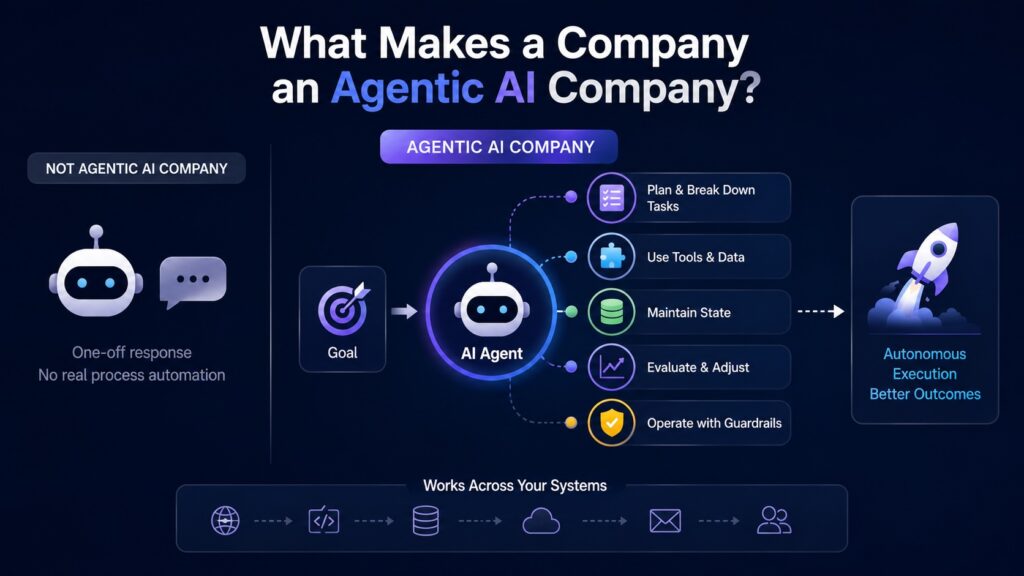
An agentic AI company sells a model, platform, or application that can use context and tools to carry out a multi-step task toward a goal. The product may decide which supported action to take next, but the company label alone does not show how much autonomy a system has or whether it can act safely in your environment.
Use observable product behavior, not marketing language, to decide whether a vendor belongs on your shortlist:
- It handles a sequence of steps. The product can plan or select the next step rather than only return one generated response.
- It can use approved tools or systems. Examples include searching a knowledge source, reading a CRM record, or calling a defined API.
- It keeps enough state to finish the task. The workflow can use relevant context across steps and report what it completed.
- Its action boundary can be tested. The buyer can inspect permissions, approvals, logs, and failure behavior instead of trusting an autonomy claim.
A general-purpose model can power an agent, but a model endpoint is not automatically a finished agent product. The useful comparison is what the vendor supplies and what your team must still build, secure, operate, and review.
For a deeper dive:
- What Is Agentic AI? Benefits, Architecture and How It Works
- AI Agents vs Agentic AI: Differences From Execution to Autonomy
- Agentic AI Architecture: Components, Workflow, Design Patterns
With the category boundary clear, market-size forecasts can be read as industry context rather than evidence that any one vendor is ready for production.
Market Growth Is Context, Not a Vendor Score
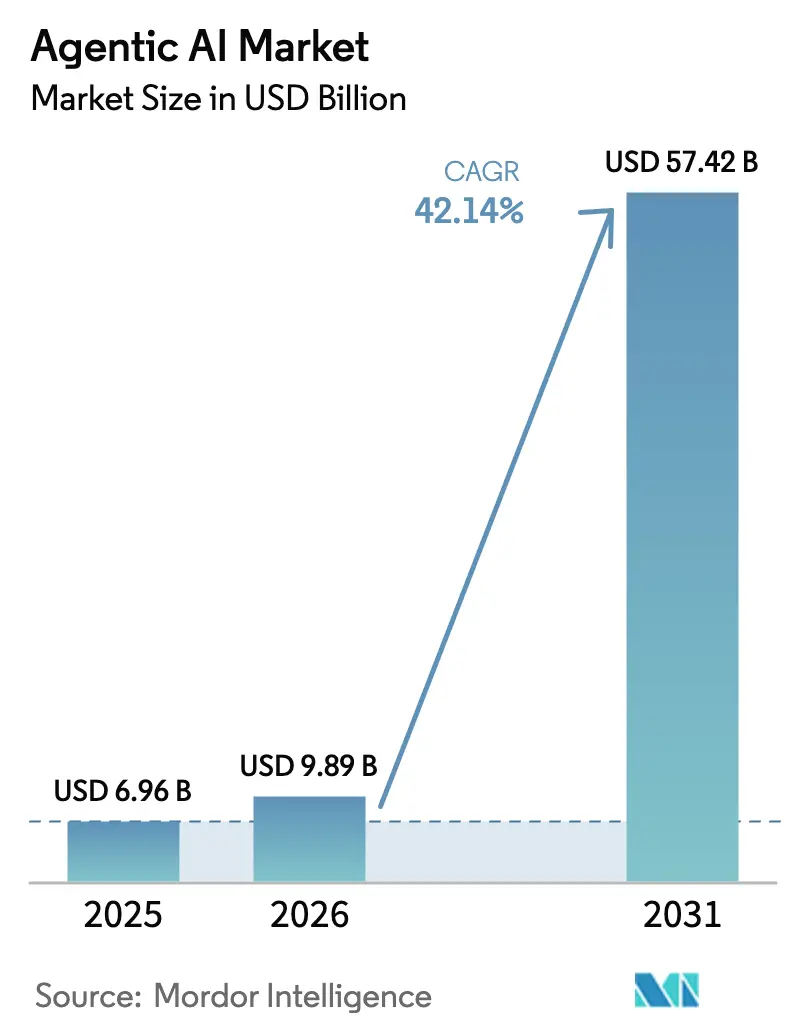
Market estimates can show why more companies are adding agent features, but they do not measure the reliability or fit of an individual product. Mordor Intelligence’s agentic AI market forecast is one publisher estimate; it is not audited vendor revenue or independent proof that a workflow works.
Keep market forecasts separate from a shortlist. Growth projections cannot tell a buyer whether a product supports its country, data rules, system integrations, service levels, or approval process. Use the image as broad market context only.
Related reading:
- How to Build Agentic AI: Practical Guide with Examples
- AI Agent Architecture Diagrams: Components, Patterns, and Design Steps
- Top 13 Agentic AI Tools You Should Know
That market activity creates more choices, not one universal winner. The profiles below separate vendors by the layer a buyer would actually adopt.
Model and Cloud Platforms for Building Agents
Model and cloud providers give developers building blocks, APIs, and operating infrastructure; they do not all deliver the same finished workflow. Teams also evaluating AI agent orchestration should confirm where planning, tool execution, state, and human approval will live.
OpenAI
OpenAI offers two different implementation paths: the Agents SDK runs in the application’s environment, while the Agents API provides a managed harness. For example, a team can build a research agent that searches approved sources and drafts a report, then keep final publication behind a human review.
Best fit: teams that want OpenAI models with a choice between application-owned execution and a managed service. Verify: tool permissions, state retention, tracing, approval points, and the operational work your team owns for the selected path.
Anthropic
Anthropic’s Claude API supports tool use: Claude can request a developer-defined function or supported tool, and the application can return the result for the next step. The Claude API tool-use documentation is useful for teams building a controlled workflow, such as reviewing documents and preparing a draft for a specialist.

Best fit: teams that want Claude to reason over supplied context and call a defined set of tools. Verify: your application still needs to enforce authorization, handle tool errors, limit data access, and decide when a person must review an output.
Google Cloud
Google Cloud’s current Gemini Enterprise Agent Platform brings agent development, deployment, governance, and operations into a managed platform. Its documentation describes both low-code and code-first paths, which can suit a team that already runs data and services on Google Cloud.
Best fit: organizations that want agents close to Google Cloud data and identity services. Verify: supported regions, IAM permissions, connectors, runtime ownership, pricing, and how portable the workflow would be if the architecture changes.
AWS
Amazon Bedrock AgentCore is an agent platform for building and operating agents across frameworks and foundation models. That can be useful when an AWS team wants shared runtime or operations components without assuming every part of the agent must come from one model provider.

Best fit: teams already using AWS that need a common environment for agent workloads. Verify: identity flows, network access, session-state behavior, monitoring, model costs, and how a failure or deployment change affects a running task.
Mistral AI
Mistral AI’s Agents and Conversations API supports building agents that use tools within a conversation. A team can use it to connect a Mistral-powered assistant to a defined search or business action instead of stitching each model turn together by hand.
Best fit: teams that want to build around Mistral’s model and API ecosystem. Verify: the current API status, tool support, region and hosting options, data terms, and whether the needed features are available in the production tier you plan to use.
Enterprise Software and Workflow Platforms
These companies can place agent features near the business records and workflows their customers already use. That can reduce integration work, but it can also tie actions, permissions, and operating costs to a specific software environment.
Microsoft
Microsoft Copilot Studio lets teams build agents that use instructions, knowledge, tools, and flows. A service desk could use an agent to find a policy and prepare a ticket update, while a separate flow controls what data it can write.

Best fit: organizations using Microsoft 365, Teams, Power Platform, or related services. Verify: connector scope, license and action charges, identity inheritance, audit records, and whether an approval step is required for each write action.
Salesforce
Salesforce Agentforce 360 Platform is designed for agents that work with Salesforce data and CRM processes. A service workflow may summarize a case, retrieve customer context, or prepare a next step for an employee; the permitted action depends on the configured data and tools.
Best fit: sales and service teams whose records and process rules already sit in Salesforce. Verify: record-level permissions, available actions, data or feature prerequisites, human escalation, and how usage is metered before estimating a production budget.
IBM
IBM watsonx Agents and watsonx Orchestrate support building agents and coordinating work across tools and workflows. This makes IBM worth assessing when a team needs both agent creation and an operational layer, rather than a model endpoint alone.

Best fit: enterprises that need to connect existing systems or combine more than one agent or model. Verify: deployment options, connector coverage, identity and governance ownership, and which capabilities require a separate service or commercial plan.
SAP
SAP describes Joule Agents and Joule Assistants for work connected to SAP business processes. The SAP AI Agent Hub is positioned to help customers discover, deploy, and govern Joule agents, making this option relevant when the task already depends on SAP’s process data.
Best fit: organizations using SAP for processes such as finance, procurement, or HR. Verify: the exact agent and product release, required entitlements, supported process context, and the approval and audit rules for actions that change business records.
ServiceNow
ServiceNow’s AI Agents sit within its workflow platform, while AI Agent Fabric is presented as a way to connect and control agents and tools from other platforms. This may appeal to organizations that already use ServiceNow to route and track operational work.
Best fit: IT, employee, or service workflows managed on the Now Platform. Verify: which records and actions an agent can access, how agents from other vendors are governed, the handoff to a person, and any usage or licensing limits.
Palantir
Palantir AIP connects AI applications and workflows with operational data in the Palantir platform. It is relevant when a company has already modeled its data and decisions there, and wants an agent to work against that governed context rather than a disconnected copy of business records.
Best fit: teams whose operational systems already rely on Palantir Foundry or its data model. Verify: the data and action permissions, how write operations are approved, and whether the required workflow depends on platform configuration your team does not yet have.
Specialized Agent Product Companies
Specialist vendors sell a product around a narrower job, such as customer service, software engineering, legal work, or internal knowledge. A closer product fit can reduce initial build work, but buyers should still test the data boundary, action scope, and handoff to staff.
Sierra
Sierra’s customer-service agents are designed to answer customers and take approved actions through connected systems. Its product overview describes workflows such as order or reservation changes, which makes Sierra a candidate for service teams that need more than an FAQ bot.
Best fit: customer journeys with clear policies and actions in systems such as CRM or order management. Verify: which channels and systems are supported, how exceptions reach a person, and how the vendor records actions and policy failures.
Decagon
Decagon’s conversational AI platform focuses on customer experiences across support interactions, with product pages covering chat and voice. A retailer could test an agent against delivery, exchange, and account questions, including cases where its answer must come from current customer or order data.
Best fit: support teams looking to automate repeatable customer conversations across available channels. Verify: knowledge freshness, policy enforcement, CRM or commerce integration, multilingual behavior, escalation, and how outcomes are measured in your own queue.
Cognition
Cognition’s Devin is an AI software-engineering agent designed to work with development tools in a sandboxed environment. A useful pilot is a small issue with a clear reproduction and test, not an open-ended request to own an entire codebase. Pair any generated changes with human AI code review and the team’s normal test process.
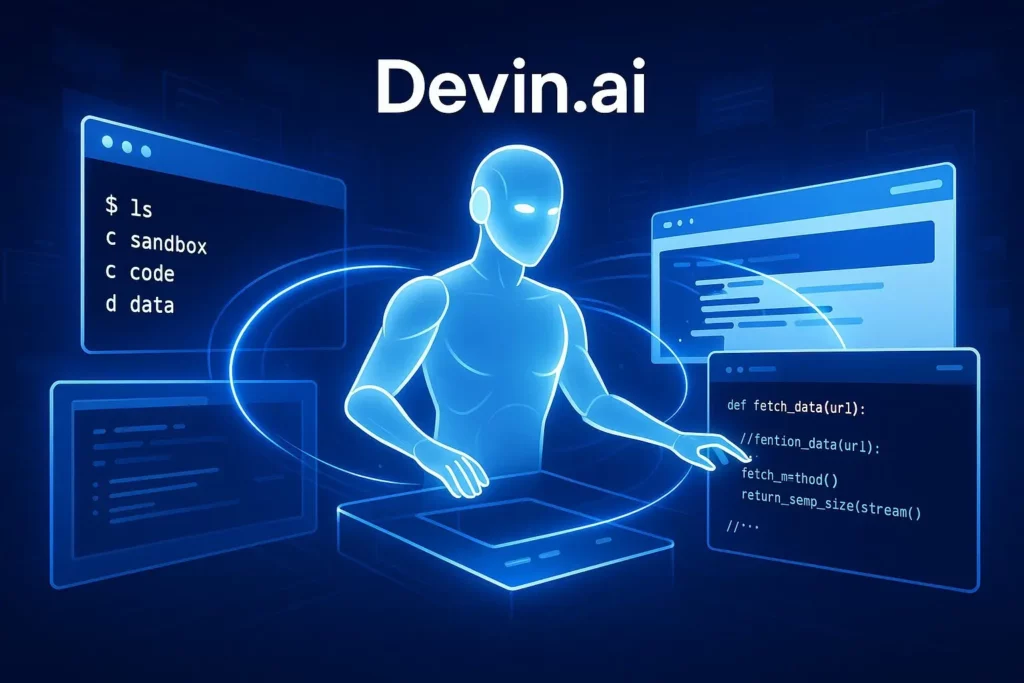
Best fit: engineering teams exploring bounded coding tasks with a reviewable result. Verify: repository and secret access, sandbox limits, test coverage, code ownership, and who approves or merges any change.
Harvey
Harvey Agents are designed for legal and professional work that may involve documents and multi-step tasks. A team might test document review or preparation of a first-draft work product, while keeping legal interpretation and final advice with qualified professionals.
Best fit: law firms and professional-services teams with repeatable, document-heavy workflows. Verify: matter-level confidentiality, source traceability, jurisdiction limits, retention terms, and the review process before work reaches a client or court.
Glean
Glean AI agents build on the company’s enterprise search and knowledge context. Its documentation describes agents that combine instructions, knowledge, tools, and context to complete team tasks, which may help employees find information and then take an approved next step.
Best fit: organizations that want internal knowledge retrieval alongside work across connected applications. Verify: inherited permissions, stale or conflicting sources, connector coverage, and whether actions follow the same access rules as the underlying systems.
Kore.ai
The Kore.ai Agent Platform is positioned for building and managing enterprise agents, workflows, tools, policies, and handoffs. Teams can assess it when they need a platform spanning customer-facing or employee workflows rather than a single ready-made agent.
Best fit: enterprises that need configurable agents across several workflows. Verify: the effort to connect each system, administration roles, deployment options, support model, pricing basis, and how policy changes are tested before release.
Genesys
Genesys Cloud AI Studio provides tools for creating AI experiences in Genesys Cloud, including customer-facing virtual agents and assistance for service teams. A contact center could test a narrow intent such as checking an order, then measure when the agent resolves it and when it needs to transfer the conversation.
Best fit: customer-experience teams already operating on Genesys Cloud. Verify: available channels, supported actions, language coverage, transfer behavior, reporting, and the boundary between an autonomous virtual agent and an assistant for a human representative.
How to Shortlist and Test Agentic AI Vendors
A vendor pilot should reproduce one business task from trigger to outcome, including the exceptions that a polished demo may skip. For example, a returns workflow can retrieve an order, check the policy, prepare an exchange, and request approval for a refund that crosses the business’s own threshold. This is one form of AI business process automation; the test should measure both the agent’s result and the work left for staff.
- Choose one bounded task. Name the trigger, approved input, expected output, systems involved, and actions that remain out of scope.
- Set access and approval rules. Give each vendor the same least-privilege tools. Require human approval for external commitments, sensitive transfers, and irreversible changes.
- Prepare representative cases. Include normal requests, missing information, conflicting records, a policy exception, an unauthorized request, and a tool outage.
- Measure the same outcomes. Record correct completion, policy errors, unauthorized actions, handoff quality, recovery, time, and cost per completed task. Set thresholds from your baseline and risk.
- Review the operating model. Check logs, support, deployment, data retention, model changes, exit options, and who owns a failure after launch.
Use AI agent orchestration patterns only if the pilot shows that routing, delegation, or coordination across agents is needed; a single controlled workflow may be easier to operate. Keep the task, permissions, test cases, and scoring rules the same when vendors are compared.
For practical examples, check out:
- AI Agent Pricing: Monthly Costs, Models, Hidden Fees, And ROI
- Agentic AI in Action: 7 Real Life Use Cases and Examples
- Agentic AI Impact On The Workforce: Changing Tasks, Jobs, And Skills

A pilot turns a vendor conversation into evidence about one workflow. Keep the result tied to the agreed baseline, risk, and operating cost; do not generalize from a single demo or a vendor-reported case study.
FAQs About Agentic AI Companies
Do All Agentic AI Companies Sell Ready-to-Use Agents?
No. Some sell models, APIs, or cloud runtimes that a customer’s developers use to build an agent. Others sell a platform for creating workflows, and specialist vendors offer a product focused on a job such as customer support or legal work. Check what is included and what your team must still integrate and operate.
How Much Does Agentic AI Software Cost?
There is no single price for this list. A quote may depend on seats, model or tool usage, completed actions, platform features, setup, support, and integration work. Ask vendors to show the pricing unit, expected usage, overage rules, and implementation costs against the same pilot workload.
Can an Agentic AI Product Act Without Human Approval?
Some products can run configured actions, but the autonomy boundary depends on the product, connected tools, permissions, and customer policy. Start with read-only or reversible tasks, then require approval for high-impact or irreversible actions. Test whether the system blocks an action when a permission, policy, or required input is missing.
Build a Custom Agent Workflow With Designveloper
A ready-made product may be enough when its workflow, integrations, and controls fit. A custom build can make sense when the task spans systems or policies that existing products do not support, but it also leaves your team with more responsibility for security, monitoring, evaluation, and ongoing changes.
Designveloper provides AI development services for teams assessing or building AI-enabled software. Share the workflow, systems, approval rules, and pilot measures with the team through Designveloper’s contact page to discuss whether a custom path is justified.
Also published on

Share post on










Related Articles


How To Build A RAG System: Step-By-Step (New Guide)
How To Build A RAG System: Step-By-Step (New Guide) Published October 19, 2026
Agentic AI Single Vs. Multi-Agent Systems: When To Use Each One
Agentic AI Single Vs. Multi-Agent Systems: When To Use Each One Published October 19, 2026
Is Vibe Coding Legal? Ownership, Copyright, and Release Risks
Is Vibe Coding Legal? Ownership, Copyright, and Release Risks Published October 16, 2026