














What Is Software Development and the Software Development Process?

Software development is the process of designing, creating, deploying, and supporting software applications. It is a series of well grounded steps towards a reliable solution on an efficient software. This process is crucial to understand, since software is of major importance in many aspects of present-day life.
The software development industry is also experiencing significant growth in its workforce. By 2024, there will be 28.7 million people making up the global developer population up from 3.2 million in 2020. This expansion reflects the increasing need for expertise in driving innovation and meeting increasing demands of different industries.
In addition, it projects that employment opportunities for software developers, quality assurance analysts and testers will grow 17 percent from 2023 until 2033, which is much faster than the average job growth for all occupations. This trend emphasizes the critical role of software development in the modern economy and the increasing reliance on technology across sectors.
Understanding the software development process is vital for businesses and individuals alike, as it ensures the creation of effective, efficient, and user-friendly software solutions that drive progress and innovation in today’s technology-driven world.
Understanding Software Development
Software development is the process of designing, coding, testing, and maintaining software applications. This guarantees that software follows the user requirement and works the way it is supposed to.
The software development industry is experiencing significant growth. It was found that, in 2024, the global application development software market will amount to USD 257.94 billion and is estimated to develop at 22.8% CAGR from 2025 to 2030. The total revenue is projected to go beyond $1,450.87 billion by 2031. The reason for such a surge comes from the increasing need of software solutions across the different industry sectors.

There is also an increase in the number of software developers around the world. The total is set to rise from 3.2 million to 28.7 million by 2024. It proves there is a growing need for skilled resources in this field even more.
Several methodologies guide the software development process. For example, agile development is development by cross functional teams in iterative progress that promotes collaborative work. The waterfall model is another approach in which the design is completed in a linear and sequential way. There are unique benefits that each method provides and they are picked based on the project’s requirements.
Understanding these methodologies is crucial for anyone involved in software development. This helps to eliminate projects from being completed inefficiently as well as meeting users’ expectations as well as business objectives.
What is Software Development?
Software development is the process of designing, creating, testing, and maintaining software applications. There are multiple stages that are performed including preparation, development, coding, examining, delivery, and upkeep.
The demand for software development has surged in recent years. By 2025, this number will be about 28.7 million software developers worldwide. The demand for the software is increasing over the various sectors and is evident by this growth.
Artificial intelligence (AI) has significantly impacted software development. Take JPMorgan Chase, for example: its software engineers were even able to increase their productivity by up to 20%, through the use of an AI coding tool. Similarly, India’s IT industry can expect generative AI to increase productivity by 43 to 45 per cent over the next five years.
The software development process typically includes stages like planning, designing, coding, testing, deployment, and ongoing maintenance to ensure the software meets user needs and functions as expected. These processes are guided by various methodologies e.g. Agile, Waterfall, DevOps, each with its own approach of managing and executing the project.
In summary, software development is a multifaceted discipline essential for creating and maintaining the applications that drive today’s digital world.
Recommended reading: Top 10+ Best Software Outsourcing Companies
Types of Software Development
Software development encompasses various categories, each serving distinct purposes. As such, it is important to understand the breadth of the field and this implies knowing what these types are.
1. Front-End Development
In simple words, front end development is all about the creation of the UI of the application or how the application looks and the experience which a user will have while using the application. In this area, developers employ technologies such as HTML, CSS, and JavaScript in order to make interfaces interactive and visually attractive. They want the users to navigate and interact with such applications without the barrier.
2. Back-End Development
The Input Types related to the back-end development contain details about the operations performed on the server side, database and application logic. These developers write their code using programming languages like Python, Java or Ruby in order to help users store and retrieve data and keep it secure. They manage the behind the scene processes, to make sure, your front-end functions perfectly.
3. Full-Stack Development
The full stack developers are the ones who know everything about the front and back end development. They take the product all the way from the design of user interfaces through the database and server management. This provides them the option of developing complete apps without external help.
4. Mobile Development
Mobile development refers to applications development that provides smart phone users with devices such as smartphones and tablet computers. To make such apps, developers utilize languages like Swift for iOS, or Kotlin for Android. This firm has risen with the increase in the use of mobile devices.
5. Game Development
It is the process of making video games for consoles, computers or mobile devices. The interactive entertainment comes from programming, storytelling and design all rolled into one. Engines such as Unity or Unreal are used by developers when they want to streamline the development.
6. Embedded Systems Development
Programming typically goes on in the embedded development of a computer system in the mechanical or electric system. The efficient and reliable software is needed in these systems that are used in devices such as microwaves, cars, or medical equipment.
7. Cloud Computing Development
The act of creating applications and services to run over the internet and not on local server or the personal device is Cloud computing development. The platforms used to build scalable and accessible solutions are AWS, Azure, etc …
8. Security Software Development
Security software development focuses on creating applications that protect systems and data from cyber threats. Antivirus programs, etc are tools developed by the developers to ensure that the information is safe. This field is still important as cyber threats persist in evolving through time.
9. Artificial Intelligence and Machine Learning Development
That is an area of creating software that can learn and also adapt without necessary programming. These are algorithms or models built by developers to allow machines to infer, make deductions, take decisions, or predict certain outcomes. This has a range of applications such as recommendation systems as well as for speech recognition or autonomous vehicles.
Each type of software development plays a vital role in the digital ecosystem. With the advancement of technology, these categories keep changing and this provides new opportunities and new challenges for the developers across the globe.
Types of Software Development Methodologies
Software development methodologies are structured approaches guiding the software creation process. Every of these methods has its own principles and practice. The project requirements with the team dynamics will determine what’s the appropriate one to use. Here are some prevalent methodologies:
1. Waterfall Development
A linear and sequential model is the Waterfall model. It goes through specified phases of requirements, design, implementation, verification and maintenance. The next phase can only be started when the previous is done. This type of project is well served with this approach. Nonetheless, it is rigid, and it fails to adapt well to change.
2. Agile Development
Instead, Agile believes in progressing through forward progress in iterations small enough and manageable enough that they’re ready to release all of the time. It encourages flexibility, customer partner collaboration, and rapid delivery. As per the latest stats, 95% of developers have adopted some kind of Agile methodology in their development process. Projects which need to include flexibility to changing requirements would be ideal for this approach.
3. Scrum
Agile is a broader term under which Scrums pretty much fit, advocating for fixed size iterations secured to fixed length (usually some 2 weeks). A usable product increment is delivered with each sprint. This framework promotes regular feedback as well as continuous improvement. It is also noticeable that 45% of Agile adopters use Scrum as the method of their adoption.
4. Kanban
The idea of Kanban is about the visualization of work in progress using visual boards that help achieve efficiency and flow. With this it becomes possible for teams to visualize tasks and where the bottlenecks are. The advantage of this method lies in projects that have continuous delivery without any fixed iterations. About 13 percent of the tech startups choose to use Kanban by adapting it to quickly respond to changing requirements.
5. Lean Development
Waste is eliminated and the process is optimized to maximize value via Lean. It focuses on shipping just what is needed and being efficient about it. Thus, this methodology is for teams looking to build minimum viable products (MVPs) fast and cheap.
6. DevOps
DevOps combines software development (Dev) and IT operations (Ops) to shorten the development lifecycle and deliver high-quality software continuously. It develops the culture of team collaboration. In 2022, almost 47% of respondents reported using a DevOps or DevSecOps approach for software development.
7. Rapid Application Development (RAD)
RAD is characterized as having fast development and prototyping with potentially minimal planning. User feedback is a continuous process with feedback throughout the requirements and solution definition. This is a good method for projects with well welldefined business objectives and user groups, but with low computational complexity.
8. Spiral Model
The stages of the Spiral Model contain some elements of both design and prototype. Its focus is on risk analysis and refinement. The considerable extent of fit of this approach to large and complex high risk projects makes it a practical one.
9. Extreme Programming (XP)
The aim of XP is increasing software quality and ability to react to changing customer needs. It promotes several small releases of the product over a short period of time, increases productivity and allows checking customer’s requirements in the form of checkpoints. This is the best methodology for the project whose requirements change frequently.
Each has its own strengths and is selected depending on the needs of individual projects, an organization’s goals, and the expertise of the team. Understanding these methodologies aids in selecting the most appropriate approach for successful software development.
The Importance of Software Development in Today’s World
Software development is crucial in today’s world. The global growth of the application development software market is expected to reach $1,450.87 billion by 2031 from $203.35 billion in 2022, thus having a remarkable CAGR during the forecast period. The expansion suggests that the industries are relying more and more on software solutions.
Furthermore, the population of software developers is increasing too with anticipated numbers implying there will be 28.7 million developers across the globe by 2024, 3.2 million more than in 2020. This growth reflects the escalating demand for software development skills.

Software developers have promising employment prospects, as the 17 percent growth from 2023 to 2033 is much higher than that for all occupations. This trend highlights the essential role of software development in the modern economy.
Businesses benefit from software development through increased efficiency and productivity. By custom software solutions, businesses can achieve process streamlining, lowering costs and increasing the overall performance. For instance, through automation, the backend tasks like accounting, record keeping, has to be done by employees, and can be used to focus on strategic activities that brings growth to the business.
Moreover, the integration of artificial intelligence (AI) in software development is transforming industries. For example, companies like JPMorgan Chase have said tools powered by AI coding assistant tools have boosted software engineers’ efficiency by 10% to 20%. This innovation allows organizations to better allocate engineers to other projects, thus enhancing innovation and value creation.
In summary, software development is a cornerstone of modern business operations. It has a profound impact on economic growth, employment and technological advancement too which makes it unavoidable in the present digital environment.
7 Steps of Software Development
Software development follows a structured process known as the Software Development Life Cycle (SDLC). This is the way of making sure the cycle of creating high quality software is systematic. As such, it is important to understand each phase so as to successfully execute our projects.
Requirement Gathering and Analysis
Requirement gathering and analysis is the first step in the software development process. It is gathering and understanding the needs of the stakeholders enough so that the final product should be the same or alike to what is expected. The requirements in this phase are critical as poor requirements will result in projects being failures. Info-Tech Research Group said that as much as 70 percent of project failure is down to requirements problems.
Some techniques are used for effective requirement gathering. Interview, survey, workshop, and document analysis are types of methods used. Suppose a company is developing an e-commerce platform, they can do interviews with potential users of their platform to see how they shop. They might also adapt to analyze their competitors’ website and see what is critical for them to offer to their customers.
Requirements once gathered are studied to find conflicts and ambiguities. By doing this analysis, one can refine requirements to be clear and achievable. A SMART requirement is well defined and describes what is to be done in a specific, measurable, attainable, relevant, and timebound manner.
Proper requirement gathering and analysis offer several benefits. Consequently, the project is aligned with client expectations, and eventually, they negotiate an exemplary relationship between the client and the developer. Yet, concerns about incomplete information at this phase suggest that it ought to be handled thoroughly.
Incorporating comprehensive requirement gathering and analysis into the software development process is essential. Success execution and project delivery are set up on this foundation.
Feasibility Study
A feasibility study is a critical phase in the software development process. It helps to see if the proposed project is practically possible, aligning with company intent and accessing resources. Since this evaluation is used to decide if the project should proceed.
Types of Feasibility Studies
- Technical Feasibility: Evaluates whether the organization has the technical resources and expertise to execute the project successfully.
- Operational Feasibility: Assesses how well the proposed solution meets the identified needs and fits within the existing operational workflow.
- Economic Feasibility: Analyzes the cost-benefit aspect to determine if the project’s financial benefits outweigh the costs involved.
- Legal Feasibility: Examines compliance with legal and regulatory requirements pertinent to the project.
- Schedule Feasibility: Evaluates whether the project can be completed within the desired timeframe.
Benefits of Conducting a Feasibility Study
- Risk Mitigation: Identifies potential challenges early, allowing for proactive risk management.
- Resource Optimization: Ensures efficient allocation of resources, including time, finances, and personnel.
- Informed Decision-Making: Provides data-driven insights to guide strategic choices.
Let’s assume that a company intends to introduce a new customer relationship management (CRM) system. The technical requirements would be assessed, costs would be weighed against benefits and compliance with data protection laws determined in a feasibility study as well as the realism of the proposed project timeline. The results of this comprehensive analysis allows one to decide if the CRM implementation goes ahead.
Incorporating a feasibility study into the software development process is essential. It makes sure projects are viable, aligned with the strategy and prepared for success.
System Design

System design is a pivotal phase in the software development process. It entails transforming the gathered requirements into a detailed blueprint of how the software architecture will be, its components, modules, interfaces, and the data. In this phase the system will keep meeting required requirements with capabilities of being scaled and maintained with ease.
Key Aspects of System Design
- Architectural Design: Defines the overall structure of the system, detailing how components interact. For instance, deciding between a monolithic or microservices architecture impacts scalability and maintenance.
- User Interface (UI) Design: Focuses on crafting intuitive interfaces for users. For example, designing a dashboard for an e-commerce platform requires understanding user navigation patterns to enhance usability.
- Data Design: Involves structuring data storage and retrieval mechanisms. For instance, selecting between SQL and NoSQL databases depends on the data’s nature and access requirements.
Benefits of Effective System Design
- Improved Performance: A well-designed system ensures efficient data processing and responsiveness.
- Scalability: Proper design allows the system to handle growth, such as increased user loads or data volume.
- Maintainability: Clear modular designs facilitate easier updates and debugging.
For example, let’s take a ride sharing application company. In the system design phase they determine to employ microservices architecture. This makes it possible to create, deploy and scale individual services like user management and ride matching. The design of such an application has an advantage of being able to manage varying loads and makes maintenance easy.
It is important to spend time and the related resources in the system design phase. A solid, efficient, model of user-friendly software product is built on this base.
Development (Coding)
The development phase, often referred to as coding, is a critical stage in the software development process. This is the phase where developers code the software using the specifications written down during the design phase. This is a very significant step, as it realizes the envisioned software.
Key Aspects of the Development Phase
- Implementation of Design: Developers utilize design documents to guide their coding efforts, ensuring alignment with the project’s architecture and requirements.
- Coding Standards: Adherence to established coding standards is crucial. It enhances code readability and maintainability, facilitating collaboration among team members.
- Use of Programming Languages: Projects often require multiple programming languages. Notably, 85% of development teams employ various languages across their projects.
- Integration of AI Tools: The integration of AI coding assistants has notably enhanced developer productivity. For instance, JPMorgan Chase reported a 10% to 20% increase in efficiency among their software engineers after implementing such tools.
Suppose you are part of a development team building a new e commerce platform. They follow standards regarding the coding to make it consistent. First, they use Java Script for front end, and Python for back end. They also use AI coding assistants that can automate mundane tasks so that the developers themselves do not need to spend time on them and can therefore work on more complex functionalities.
For the part of the software development, the development phase focuses on structured coding practices coupled with the use of sophisticated tools resulting in production of solid software solutions.
Testing
Testing is a critical phase in the software development process. It guarantees that the software is working as they expect it to and in accordance with specified requirements. During this phase, defects are identified and is to ensure that the product meets the planned purposes. Testing has a positive effect on software quality and reliability.
Types of Software Testing
- Unit Testing: Focuses on individual components or modules to ensure each functions correctly. In 2024, 78% of projects globally incorporated unit testing.
- Integration Testing: Evaluates the interaction between integrated modules to detect interface defects.
- System Testing: Assesses the complete system’s compliance with specified requirements.
- Acceptance Testing: Validates the software against business requirements to ensure readiness for deployment.
- Performance Testing: Measures the system’s responsiveness and stability under various conditions.
- Security Testing: Identifies vulnerabilities to protect against potential threats.
Emerging Trends in Software Testing
- Automation Testing: The automation testing market is projected to reach $68 billion by 2025, highlighting a shift towards automated processes.
- AI and Machine Learning: Incorporating AI and machine learning enhances test accuracy and efficiency. These technologies assist in predicting potential failure points and optimizing test cases.
- Shift-Left Testing: Emphasizes early testing in the development lifecycle to detect defects sooner, reducing costs and time.
Imagine if you will, an application that will require very advanced security. In security testing, cyber-attacks would be simulated to find weaknesses. This is a proactive way of protecting sensitive information that would be private in financial statements.
Incorporating comprehensive testing strategies within the software development process is essential. It ensures high quality, reliable, and secure software products delivery.
Deployment
Deployment is a critical phase in the software development process. It is releasing the developed application to the production environment, from where the end users can access the application. This is to ensure that the software runs based on the intended use in actual environment.
Key Aspects of Deployment
- Preparation: Before deployment, it’s essential to notify all stakeholders about the upcoming release. This communication ensures that users are informed and prepared for any changes. Additionally, identifying collaborators across development, operations, and security teams minimizes friction during the deployment process.
- Understanding the Software Environment: A thorough grasp of the software environment is crucial. Differentiating between development, staging, and production environments helps in optimizing deployment strategies. Regular updates and maintenance of these environments ensure they mirror the production setting, reducing discrepancies that could lead to unexpected behaviors.
- Automation: Automating the deployment process ensures consistency and reduces human error. Automated deployments run the same steps in the same order every time, leading to faster and more reliable releases.
- Continuous Integration and Continuous Deployment (CI/CD): Implementing CI/CD pipelines automates builds and systematically tests, integrates, and deploys code changes. This approach enhances productivity and reduces the time between development and deployment.
Emerging Trends
- DevOps Adoption: A significant percentage of developers now perform DevOps activities, with 27% using continuous deployment processes for automating code deployment as of Q1 2024.
- Continuous Deployment: This strategy allows for the release of new application versions to production at any time without human intervention, enabling faster delivery of features to customers.
A company has already deployed a new feature to its e-commerce platform. The development team is able to automate testing and joint operations by using a CI/CD pipeline. Automated process ensures that the new feature is tested thoroughly and that it is integrated smoothly to the existing system. So the company can deliver the feature to the users faster and with a higher amount of confidence in the stability.
Incorporating these practices into the deployment phase of the software development process ensures that applications are released efficiently, reliably, and securely.
Maintenance

Maintenance is a crucial phase in the software development process. This ensures our software stays working, secure and relevant to the changes in the needs of the users. Security vulnerabilities, performance issues, and user dissatisfaction can occur from neglecting maintenance.
Types of Software Maintenance
- Corrective Maintenance: Addresses identified bugs or defects in the software. For example, fixing a glitch that causes a mobile application to crash enhances user satisfaction.
- Adaptive Maintenance: Modifies the software to remain compatible with changing environments. For instance, updating an application to support a new operating system version ensures continued functionality.
- Perfective Maintenance: Enhances existing functionalities based on user feedback. Adding new features or improving the user interface can increase user engagement.
- Preventive Maintenance: Anticipates potential issues and implements solutions to prevent future problems. Regular code refactoring can improve software performance and maintainability.
Emerging Trends in Software Maintenance
- Predictive Maintenance: The global predictive maintenance market grew to $5.5 billion in 2022, reflecting an 11% increase from 2021. This approach uses data analytics to anticipate and address potential software issues before they occur.
- Automated Maintenance Tools: Approximately 72% of companies utilize Computerized Maintenance Management Systems (CMMS) to organize and streamline their maintenance activities. These tools enhance efficiency and reduce manual intervention.
Take a financial company whose business process is transaction processing. Preventing regular preventive maintenance allows the system to have its security protocols updated to prevent cyber threats. Such a proactive behaviour preserves the customer trust and avoids the financial loss.
Incorporating a structured maintenance strategy within the software development process is essential. It guarantees the software life span and reliability along with the user’s expectations.
Designveloper’s Software Development Service
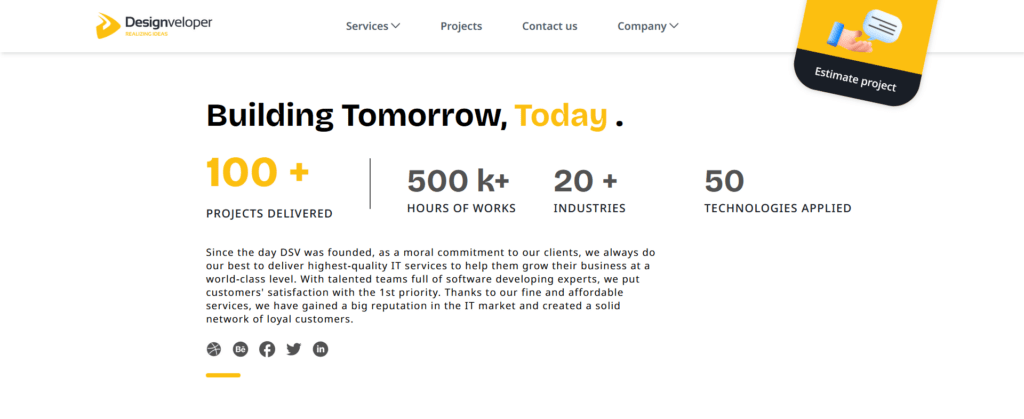
At Designveloper, we specialize in delivering top-tier software development services tailored to meet diverse business needs. From inception in 2013, we have did over 100 projects completing more than 200,000 working hours, which gave us the pleasure of satisfying the clients.
Our Core Services
- Web Development: We create responsive, single-page real-time web applications using the latest technologies to provide seamless user experiences.
- Mobile Application Development: Our team develops cross-platform mobile apps, ensuring functionality across iOS and Android devices, enhancing reach and engagement.
- UI/UX Design: We focus on crafting intuitive and engaging interfaces, ensuring that design aligns with user expectations and business goals.
- VOIP Systems: Our expertise extends to developing Voice over IP systems, facilitating efficient and cost-effective communication solutions.
Notable Projects
- Lumin: A document platform enabling users to view, edit, and share PDFs seamlessly, integrating with cloud storage services for enhanced accessibility.
- Bonux: A crypto wallet designed for investors to store, manage, and transact cryptocurrencies securely, incorporating advanced UI/UX design principles.
- ODC: A healthcare platform connecting doctors and patients, allowing for appointment bookings, online consultations, and prescription management.
Why Choose Designveloper?
We exercise a systematic approach and our commitment to excellence, so that we deliver high quality, cost effective software services. More than 50 web developers, mobile developers, UI/UX designers, VOIP and more, that our team consists of highly skilled professionals who are ready to realize your ideas.
Designveloper with years of experience and diverse service on offer will become your partner in transforming your vision into a robust software solution.
Conclusion
Software development is a dynamic and essential field, driving innovation and efficiency across various industries. This arises from the growing adoption of digital transformation that is likely to cause the global software market to grow and hit the value of $1,605.89 billion by the end of 2024. This growth underscores the critical role of software development in modern business operations.
Adhering to best practices is vital for successful software development. Implementing principles like “Don’t Repeat Yourself” (DRY) and “You Aren’t Gonna Need It” (YAGNI) promotes code efficiency and maintainability. Embracing AI assistance has also become a significant trend, enhancing productivity and accuracy in coding.
The software development process encompasses several stages, each contributing to the creation of effective software solutions. Requirement gathering and analysis, system design, coding, testing, deployment and maintenance are the stages of software development. Thus, each step ensures the final product will fulfill user’s requirements and work reliably.
In recent years, the integration of artificial intelligence has notably impacted software development. Additionally, the AI would help produce, test and optimize the code more efficiently. For instance, companies have seen very large productivity swings through the adoption of AI in their dev processes.
In conclusion, software development remains a cornerstone of technological advancement. Through following established best practices and advent of emerging technologies such as AI, developers can develop creative, potent and efficient software as a technique for progress in different sectors.
Also published on

Share post on










Related Articles



Cloud Application Development: Architecture, Process, And Cost
Cloud Application Development: Architecture, Process, And Cost Published September 14, 2026
Android App Development: Stack, Process, Cost, And Best Practices
Android App Development: Stack, Process, Cost, And Best Practices Published September 09, 2026
How Gitignore Works: Rules, Patterns, Examples, And Debugging Tips
How Gitignore Works: Rules, Patterns, Examples, And Debugging Tips Published August 05, 2026