

















What is An Ecommerce Website? Examples, Types, Features

At the moment, it seems like people cannot live without the presence of the Internet. It helps us in many aspects of life. For example, dating, visiting doctors, socializing, and you name it, even buying stuff. With merely a few clicks/taps, your selected items will be ready to deliver to your front door. And those online stores you just scroll through are called eCommerce websites!
Oh, you wanna know more about it? Fortunately, this article will guide you to some fundamental knowledge related to eCommerce websites and eCommerce website development.
What Is an Ecommerce Website?
First of all, let’s talk about the important part here: eCommerce.
Long story short, eCommerce (or electronic commerce) implies the activities of purchasing and selling products or services via the Internet. This concept sounds modern but actually, it appeared way back in the 60s.
It was when students from Stanford Artificial Intelligence Laboratory and the Massachusetts Institute of Technology used ARPANET to buy cannabis. However, it was not until 1994 the first official eCommerce transaction happened when a CD by Sting was bought via NetMarket.
We defined eCommerce as the act of trading something (legal, of course!) on the Internet. But in fact, its definition also expands to the processing of financial transactions and data in order to do those trading activities. With any Internet-connected device, you can conduct eCommerce transactions, be it computers, smartphones, or tablets.
So eCommerce websites are online stores where people can sell or purchase physical (and even digital) products, from sweaters, books, and headsets to medical equipment. There, they can exchange and store their information like name, address, credit/debit card information, etc.
FURTHER READING: |
1. 6 Best eCommerce App Development Companies |
2. How to Save Big on eCommerce App Development Cost? |
3. 5 Best eCommerce Website Design Services for Success |
Examples of Popular Ecommerce Websites
Below are five eCommerce websites most of us have bumped into:
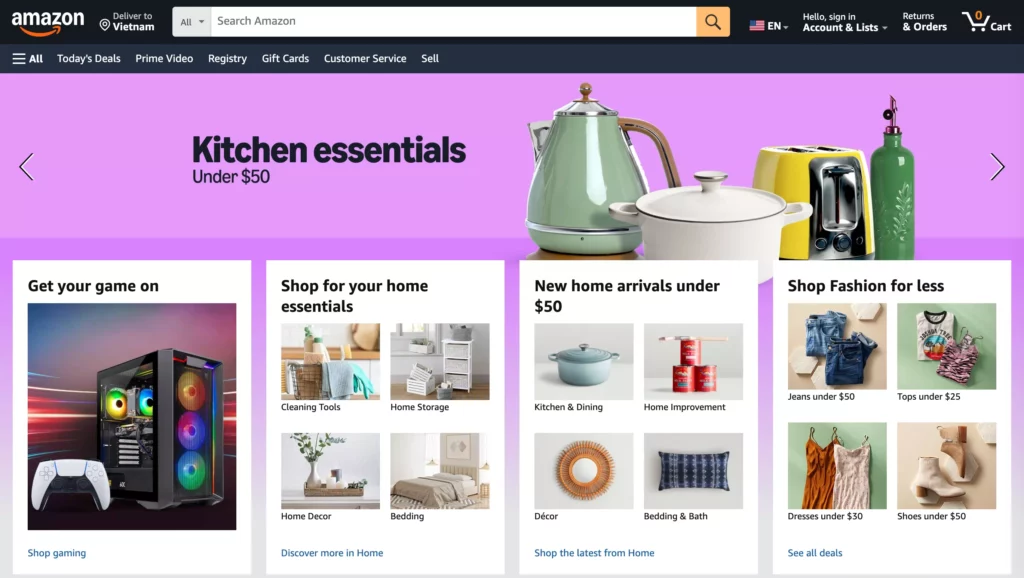
Amazon is usually the first name that comes up. It’s like a giant digital mall where you can find anything in this world, from jeans under $50 to a painting priced at $36,800. These products come from Amazon itself or from other retailers opening a store therein.
What’s interesting, though, is that Amazon isn’t just selling products. It sells speed. One-click checkout, fast delivery, and easy returns – every process happens smoothly in a unified place.
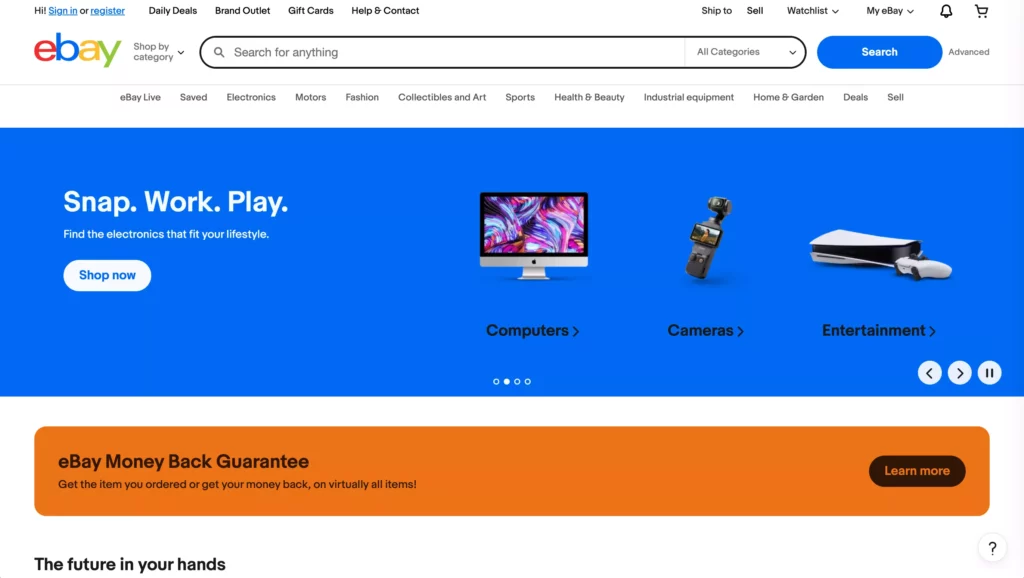
eBay started with auctions, and that DNA is still there. The eCommerce website allows you to buy and sell lots of new, second-hand, and unique items through online auctions.
That said, eBay still enables fixed-price options. It facilitates large-scale consumer-to-consumer and business-to-consumer transactions with transparent user feedback systems.
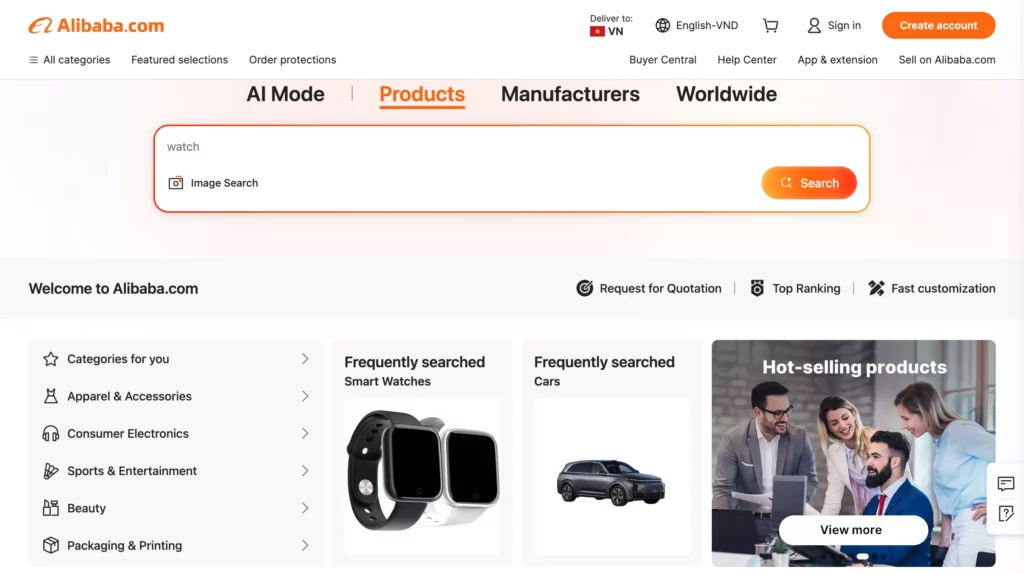
Alibaba is massive, though many casual shoppers don’t interact with it directly. It’s more B2B-focused, connecting manufacturers and wholesalers with buyers around the world.
Think of it as the backstage area of eCommerce. If you want to order 10,000 custom T-shirts or source components at scale, this is where you often end up.

Etsy goes in almost the opposite direction. It feels personal.
This is where handmade goods, vintage items, and creative products live. You’re not just buying a product; you’re buying someone’s work. So, prices can be higher for sure, and shipping might take longer.
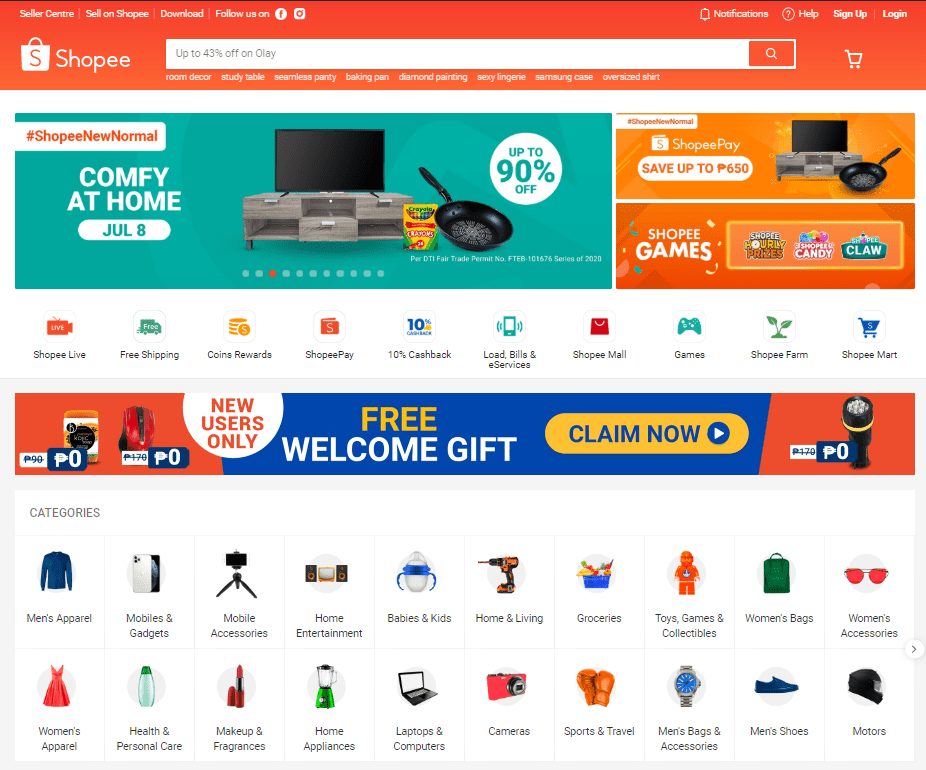
Shopee is a very different kind of eCommerce website. It leans hard into mobile-first shopping, with flash sales, vouchers, countdown timers, and free shipping banners, especially in the Asian region.
Shopee understands how people actually shop. So it offers quick sessions, price comparisons, gamified deals, live streams, and seller chats to boost sales.
Recommended reading: Web App vs Website: Why Is It a False Dichotomy?
How Does an Ecommerce Website Work?
From a user’s perspective, how an eCommerce website work may look simple on the surface. You browse, click, buy, and your order is on a way to your house. But under the surface, a lot of complex stuff is happening.
An eCommerce website works by coordinating many moving parts at once:
- It usually starts with the storefront. When you land on an eCommerce site, you may scroll a bit, compare prices, and eventually add something to the cart. These actions trigger background checks – inventory availability, pricing rules, and discounts that may or may not apply.
- Then comes the cart and checkout flow. Here, the eCommerce website automatically calculates shipping options, shows taxes, and enters payment details. But what actually happens behind the scenes? The site talks to payment gateways, fraud detection tools, and even third-party services.
- Once payment is approved, the order doesn’t magically ship itself. The system sends order data to inventory management and fulfillment platforms. This could mean notifying a warehouse, a dropshipping partner, or even a single seller packing items at home.
- After that, the job isn’t really finished. Good eCommerce websites keep working after the sale. They track deliveries, handle returns, store order history, and sometimes suggest what to buy next.
Main Features of Ecommerce Websites
If you strip an eCommerce website down to its bones, there are the features doing most of the heavy lifting. Every store handles them a bit differently, but the ideas stay more or less the same.
Product Catalog

The product catalog is the most crucial feature of an eCommerce website.
A good catalog doesn’t just list products, but guides users to what they’re looking for. So, it needs to include clear images, short descriptions, and specs. A good eCommerce website will integrate filters and categories to help users look through a pile of products effectively.
Some catalogs focus on storytelling, with lifestyle photos, use cases, and little details that make the product feel real.
Shopping Cart & Checkout
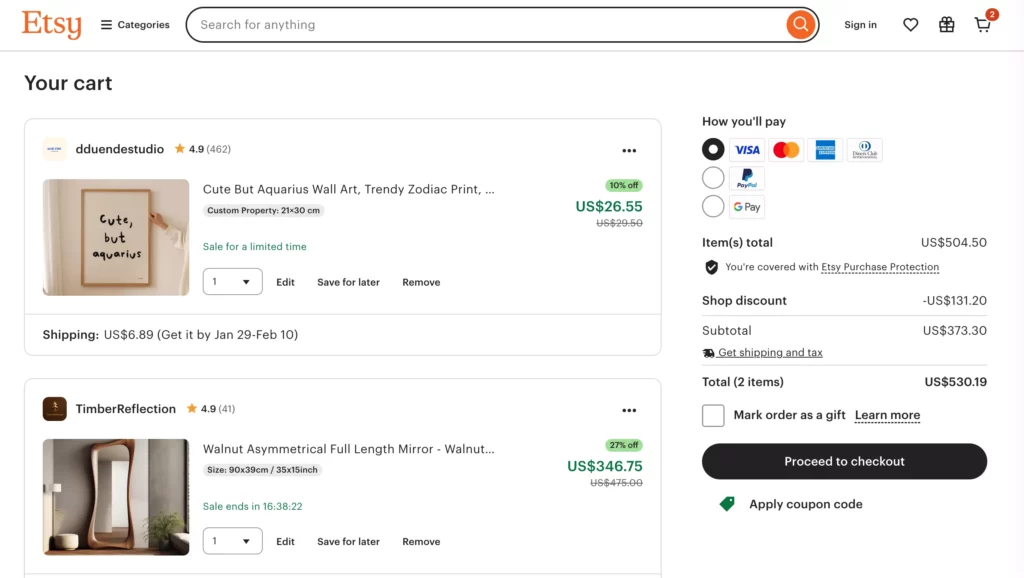
The clear shopping cart and the seamless checkout process matter for any online marketplace.
Users add items, remove them, and add them back again to the cart. Here in the cart, shipping costs, taxes, and possible vouchers appear to give users a clear look at how their order is charged. Besides, customers aren’t patient enough to wait for a slow checkout process.
So, besides a clean layout, the site’s checkout should have clear steps, with no fees popping up late. Otherwise, people leave the site without hesitation.
Payment & Security
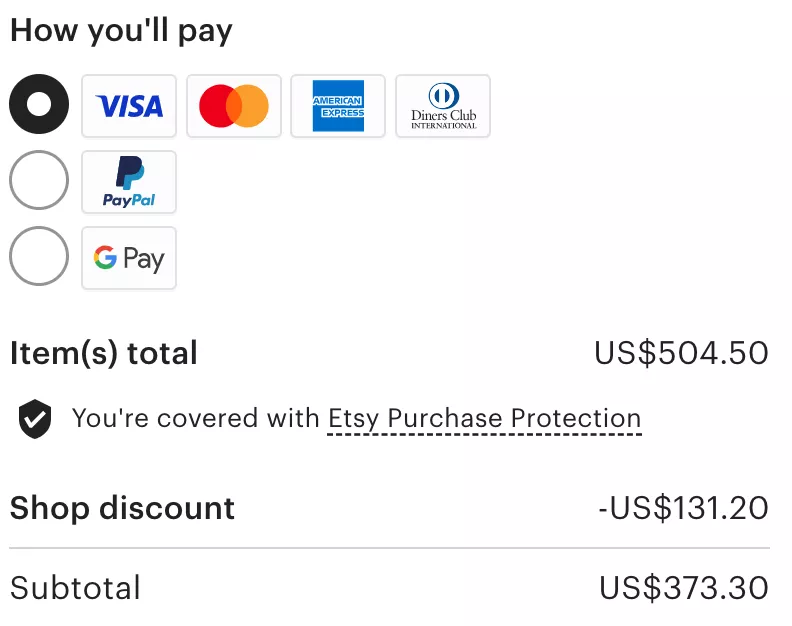
Most eCommerce websites now support multiple payment methods – credit cards, digital wallets, bank transfers, and even buy-now-pay-later options. The goal is flexibility. People want to pay the way they’re used to.
Security runs quietly in the background. SSL certificates, encryption, fraud checks, and more are adopted to safeguard online transactions. Users may not understand the tech, but they sense when something isn’t right. A missing security badge or a strange redirect can kill trust in seconds.
Order & Customer Management
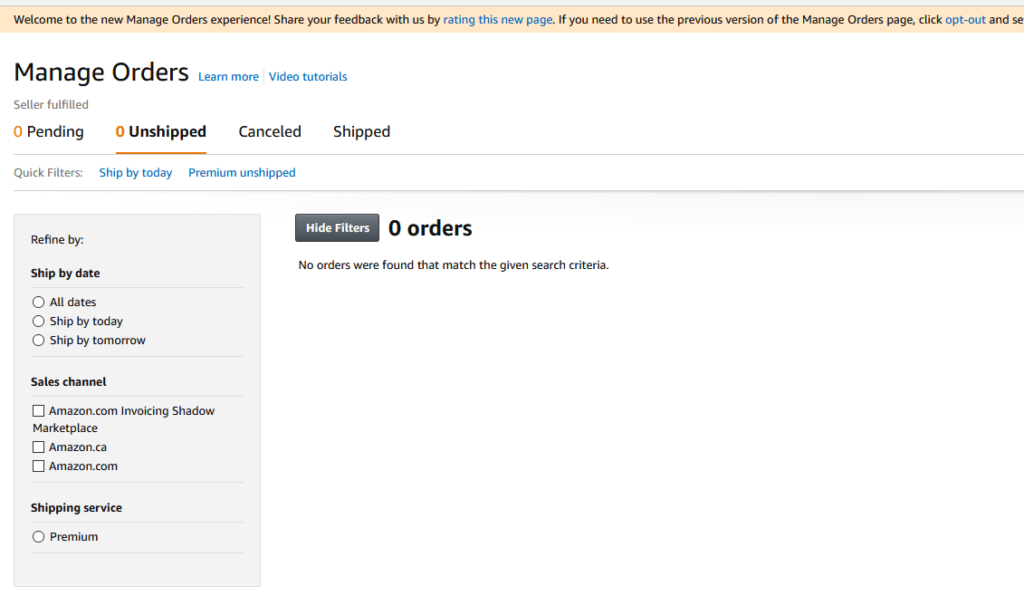
Once an order is placed, the work doesn’t stop. Order management systems track purchases, update statuses, and coordinate shipping.
On the customer side, accounts store order history, addresses, and preferences. Further, eCommerce websites offer customer support to handle returns, complaints, and the occasional “Where is my order?” message.
6 Types of Ecommerce Website by Business Model
Not all eCommerce websites sell things the same way. If you’re learning about eCommerce websites, you should understand the six common types of business model as below:
B2B (Business to Business)
In B2B eCommerce, one business sells to another business. According to the International Trade Administration, B2B eCommerce will reach an estimated $36 trillion in 2026, dominated by the APAC.
These platforms usually handle bulk orders, negotiated pricing, and long-term contracts. So, they notably features tiered pricing, minimum order quantities, account-based access, and invoice payments instead of instant checkout. Further, product pages may look plain compared to B2C sites.
Example: Alibaba
Headquartered in Hangzhou, China, Alibaba is one of the largest B2B eCommerce websites. It connects manufacturers and wholesalers with businesses worldwide. Buyers compare suppliers, request samples, and negotiate pricing before placing large orders.
B2C (Business to Customer)
This is the model most people picture when they hear “eCommerce.” It supports businesses in selling directly to individual customers.
B2C websites focus heavily on user experience. So, they have clean layouts, persuasive product descriptions, reviews, and fast checkout flows.
Some key features of B2C eCommerce websites include shopping carts, multiple payment methods, promotions, and customer support channels.
Example: Amazon
Amazon is the classic B2C case. It has massive product ranges, fast delivery, and personalized recommendations. It’s optimized for convenience above all else. On Amazon, you can sell almost every (legal) thing, from books and electronic products to home services.
C2C (Customer to Customer)
C2C eCommerce lets individuals sell to other individuals. The platform itself doesn’t own the products. It just connects people and takes a cut. This business model is so popular that it’s predicted to reach around $5.1 trillion in 2026.
In these platforms, listings vary wildly in quality, pricing isn’t always fixed, and communication between buyers and sellers is common. Therefore, ratings, reviews, dispute resolution, and identity checks matter a lot here. This ensures the reliability of both sellers and buyers.
Example: eBay
eBay enables users to sell new or used items through auctions or fixed prices. Inevitably, eBay isn’t a pure C2C eCommerce platform, as it still allows businesses to provide their products and services to individual customers.
C2B (Customer to Business)
In this model, individuals offer value, and businesses buy it.
C2B eCommerce shows up in freelance platforms, influencer marketplaces, and stock content websites. A designer uploads work, or a creator sets a price for promotion. A company pays to use it.
So, C2B eCommerce platforms often feature bidding systems, profile portfolios, usage licenses, and performance-based pricing.
Example: Upwork

Upwork allows freelancers to offer skills, like writing, design, and development, to businesses. The “product” here is expertise. In Upwork, pricing and quality vary. But for many companies, this model is flexible and cost-effective, especially if they just want to augment their team temporarily.
B2A (Business to Administration)
B2A eCommerce connects businesses with government or public sector organizations. These platforms support things like public procurement, tenders, and service contracts. So, no wonder why compliance here matters more than design, and documentation matters more than speed.
And common features in B2A eCommerce platforms? They include tender listings, proposal submissions, verification systems, and secure communication channels.
Example: Accela

Accela offers cloud-based software solutions and services to state and local governments. These offerings aim to help the governments manage different civic workflows online, from permitting and planning to licensing and public health management.
With Accela, both businesses and individuals can interact with government agencies, submit applications, track their status, and make payments online. This digital interaction reduces paper work and facilitates civic administration.
C2A (Consumer to Administration)
C2A eCommerce allows individuals to interact financially with public institutions online. Payments flow from citizens to the government, usually for services like taxes, utility bills, license renewals, or fines.
These sites prioritize clarity and security. So, their common features often entail secure logins, digital forms, online payments, and downloadable receipts.
Example: NHS
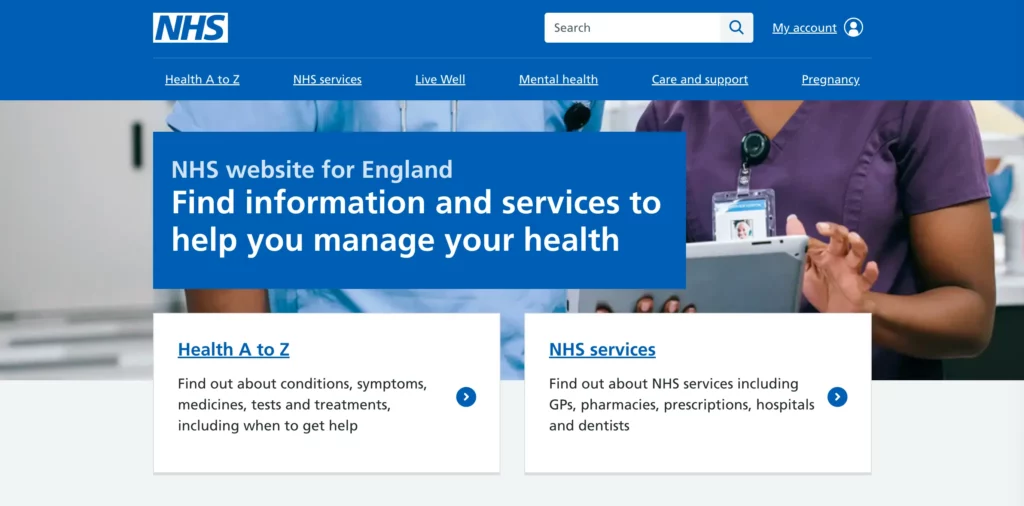
NHS is short for National Health Service. This is the UK’s publicly funded healthcare system and also a typical C2A platform. It allows citizens to book appointments, access personal health records and information online, and ask for health services.
Advantages and Disadvantages of Running an eCommerce Website
Running an eCommerce website is a good choice in this era. But it isn’t without limitations. Let’s take a look at the pros and cons of running an eCommerce website:
Advantages
- Lower operating costs: We can’t deny the fact that investing in a physical store is more expensive than a digital one. In this case, real estate, hiring staff, buying decorations, etc. could require a fortune. Meanwhile, your eCommerce website is much cheaper. Its costs depend on many factors like pricing packages, features, etc.
- Wider market reach: An online store isn’t limited by location. Accordingly, a small business in one city can sell to customers across the country, or even globally.
- 24/7 availability: Unlike physical stores with limited hours, your eCommerce website is accessible to customers around the clock. This convenience allows shoppers to browse, compare, and purchase products at any time.
- Data-driven decisions: These websites collect user data (e.g., clicks, views, abandoned carts) to help your business improve products, pricing, and marketing over time.
- Scalability: Once the number of items increases, your physical store might have to expand the area. But, you can easily scale up the website when your business grows and serves more customers.
Disadvantages
- High competition: The barrier to entry is low, which means competition in eCommerce websites is intense. Standing out can be harder than expected, especially in crowded niches.
- Trust and security concerns: Some customers still hesitate to buy online due to their common worries about product quality. Also, data breaches, fake stores, and payment issues can hurt credibility fast.
- Technical dependency: What if eCommerce websites crash? Payments fail, updates break things, and experiences halt later. When tech goes wrong, sales often stop immediately.
Should You Build an eCommerce Website?
The answer depends on what you’re trying to sell, how you want to grow, and how much control you want over the process.
If your business relies on physical products, digital goods, or even repeat services, an eCommerce website often makes sense. It gives you ownership of your brand, data, and customer journey.
That said, building an eCommerce website isn’t always the right first move. If demand is untested or operations are still shaky, starting smaller – like social commerce, marketplaces, or manual orders – might be smarter. Why? It comes with less risk and less pressure. Once orders become predictable, that’s usually the moment an eCommerce site starts to feel necessary.
Budget matters too in your decision. Ecommerce websites aren’t “set and forget.” They need updates, security checks, and performance tuning. So, building an eCommerce website means you have to take care of long-term maintenance costs, instead of initial development.

Do you want to build an eCommerce website, but don’t want to do it alone? Working with an experienced partner helps. Designveloper, a leading software and web development company in Vietnam, supports your business in building an eCommerce website that actually fit your goals.
We have proven expertise and experience in this realm. For example, Designveloper improved Aha.is by integrating core features (e.g., social sharing options & security features) and implementing multiple cache layers to boost speed. We also incorporated various payment methods, ensured mobile compatibility, and built a robust order management system.
If you are interested, contact us and tell us your ideas now!
Future of Ecommerce Websites

Because of COVID-19 and pandemic restrictions, even the most traditional consumers had to buy things online. This changed the way people bought things all over the world. It also helped make online shopping one of the most popular things to do in many countries. As such, it has promoted the thriving of eCommerce websites to meet the increasing demand.
Even when new normals are established and people can shop in their favorite mortar-and-brick stores, they still have that habit of wandering around eCommerce websites. Such platforms often provide lower prices and frequent discounts or sales promotions.
Further, people, especially those overwhelmed with their work and have no time for shopping, find eCommerce stores more convenient. This propels the growth of the global retail eCommerce revenue. According to Statista, its sales are expected to exceed $8 trillion in 2027, a 39% growth rate from 2023.
But do you know there are over 30.7 million eCommerce websites in the world? Despite a potential market, eCommerce presents a huge (maybe, harsh) competition. Therefore, the integration of advanced techs becomes increasingly popular to give those who want to stand out an edge. And the future of eCommerce websites is accordingly shaped by these advanced techs.
For example, various eCommerce websites are incorporating AI to provide personalized product recommendations, content, and even targeted marketing campaigns. Meanwhile, AI-powered chatbots can instantly support customers and answer questions when human reps are off. Or eCommerce stores can leverage AR/VR tech to help customers visualize products.
All these things improve customer experience and make eCommerce more interesting.
Conclusion
This article gave you a clearer picture of what an eCommerce website is and which feature it should cover. Building an eCommerce website isn’t a fad, yet a necessity for various companies to reach a broader audience. Prepare yourself with the necessary knowledge to stay alive and even competitive in this era.
Also published on

Share post on