















Best Retail Software Development Firms to Hire in 2026

Retail runs on software now. Point of sale, eCommerce platforms, CRM, and inventory analytics all operate through software systems. Off-the-shelf tools? They break when your workflows get complex. You need custom systems. This means finding development firms that build retail infrastructure, not just websites. We evaluated firms on engineering scope, how they handle scale, and their ability to integrate with existing retail chaos. Here’s who actually delivers.H2
Core Retail Software Systems Used by Modern Retail Businesses
Before picking a partner, understand the stack. Modern retail isn’t one system; it’s a mess of them that need to talk to each other. The firms below specialize in building and connecting these pieces.
- Modern retail software ecosystems typically include several core components.
- Point-of-sale systems supporting transactions and inventory synchronization.
- eCommerce platforms enabling digital storefronts and online transactions.
- Customer relationship management systems managing customer data and engagement.
- Inventory and supply chain management platforms coordinating logistics and stock.
- Analytics platforms providing operational and customer behavior insights.
You need engineering partners who can make these systems exchange data in real time. Otherwise, you get silos. And silos kill retail operations.
Why Custom Retail Software Improves Operational Efficiency
Retail businesses operate across multiple channels, systems, and operational layers. Off-the-shelf solutions often provide limited flexibility and cannot fully support unique workflows or integration requirements. Custom retail software allows organizations to build systems aligned with their operational structure, data flows, and customer experience requirements.
Custom-built retail platforms typically support several operational improvements:
- Integration between inventory, sales, and fulfillment systems;
- Automation of operational workflows and reporting processes;
- Centralized management of product, customer, and transaction data;
- Improved system performance under increasing transaction volume;
- Flexibility to add new features as business requirements evolve.
These capabilities allow retailers to operate more efficiently and respond to operational and market changes. Custom software provides control over system architecture and enables long-term scalability without relying on third-party platform limitations.
1. Lionwood Software
Lionwood builds custom retail software. Their Lionwood retail software development services focus on creating systems tailored to specific operational workflows rather than generic templates.
Their engineering covers the entire retail ecosystem, including CRM, AI merchandising, POS systems, and customer-facing applications with chatbot integration. These systems are connected through analytics pipelines and backend infrastructure that support unified retail operations. Their approach helps retailers integrate fragmented systems into a cohesive and scalable platform.
Their work spans from warehouse management to loyalty apps. They solve specific problems: linking inventory to real-time data, speeding up transactions, enabling omnichannel sales without the usual headaches. According to their case studies, they’ve built AI-powered retail management systems and complex CRM/ERP platforms for European brands.
Retail software engineering capabilities provided by Lionwood include:
- Custom retail platform development tailored to business workflows;
- Integration with POS, CRM, and eCommerce infrastructure;
- Cloud-based backend systems supporting scalability and reliability;
- Customer-facing mobile and web retail applications;
- Analytics and operational management systems supporting retail operations.
Lionwood’s strength is full-cycle engineering. They handle the supply chain side and the customer-facing side. Their engineering stack includes .NET, React, Node.js, AWS, and Azure, selected according to platform architecture and integration needs. It’s tailored, it’s production-ready, and it’s built to scale as your retail operation grows.
2. Designveloper
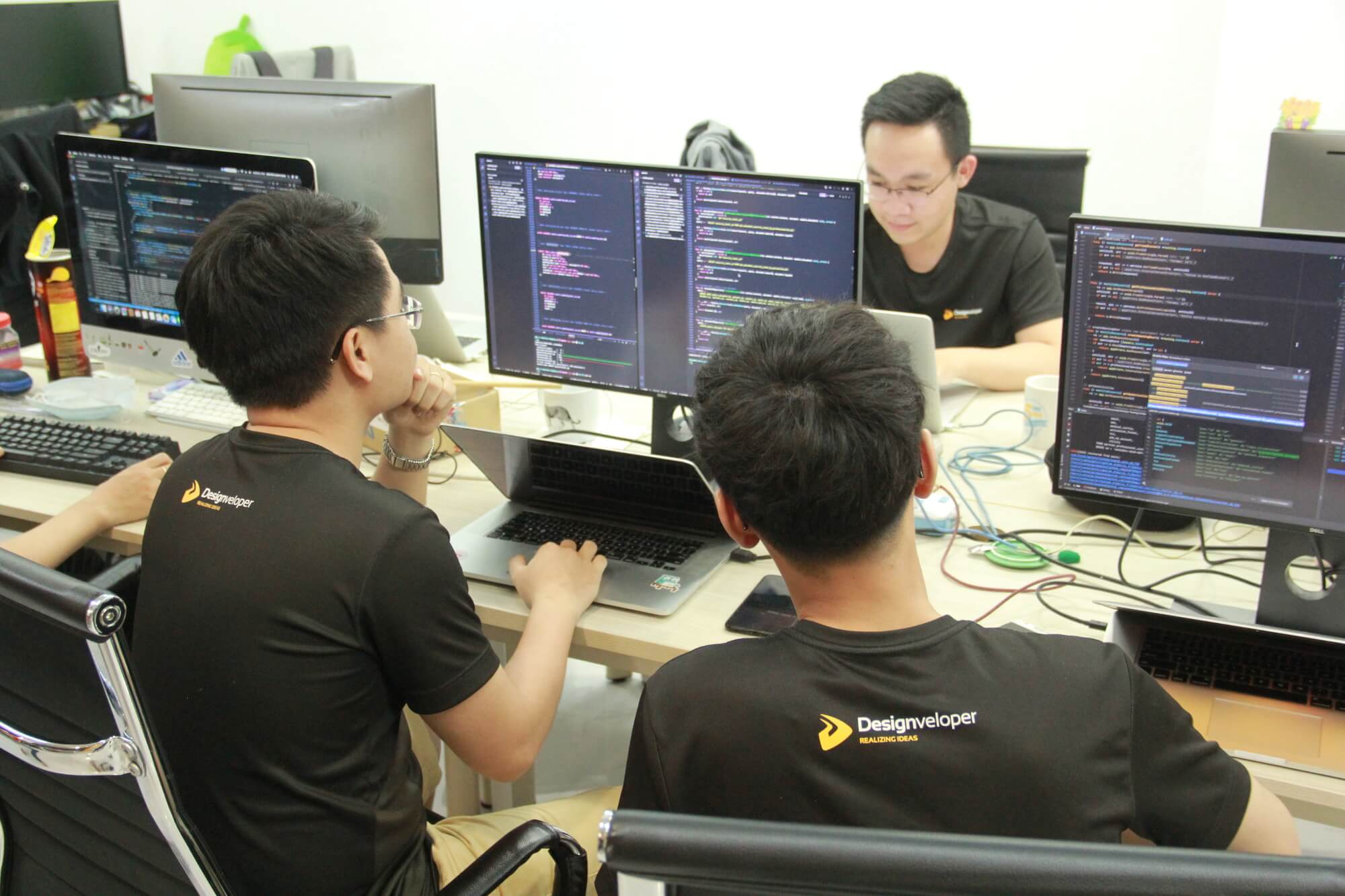
Designveloper has been building software since 2013. They work with global clients on web apps, mobile apps, and enterprise platforms. Their retail work focuses on modernization: taking outdated systems and rebuilding them for scale. They do UI/UX, backend architecture, and third-party integrations. For retailers, that means custom eCommerce platforms and customer engagement tools that actually perform.
Retail software capabilities provided by Designveloper include:
- Custom web-based retail platforms and enterprise applications;
- Mobile applications supporting retail customer engagement;
- Backend systems supporting operational and transactional workflows;
- Integration with third-party retail systems and services;
- Scalable cloud infrastructure supporting retail applications.
They focus on scalable web and mobile retail systems. If you need a customer portal or an admin dashboard that won’t buckle under traffic, they’re worth talking to.
3. Saigon Technology
Saigon Technology builds enterprise software. Their sweet spot is complex retail and eCommerce systems that need to integrate with existing backend infrastructure. They build omnichannel retail systems that maintain consistent inventory data across physical locations, eCommerce platforms, and marketplace integrations. Their engineering teams work as extensions of your own, which matters when you’re deep in a platform rebuild.
Retail software engineering capabilities offered by Saigon Technology include:
- Custom enterprise retail software development;
- Integration with eCommerce and retail backend infrastructure;
- Cloud-native retail application architecture;
- Mobile and web applications supporting retail operations;
- Enterprise system integration supporting retail workflows.
They bring enterprise-grade engineering to retail platforms. Think reliability, security, and the ability to handle high transaction volumes.
4. InApps Technology
InApps Technology builds retail platforms and eCommerce marketplace systems used for daily operations and customer interaction. Their work includes administrative portals, inventory management tools, and customer-facing applications. These platforms are designed with scalable architecture to support growing product catalogs and increasing transaction volume.
The company also develops integration layers that connect retail systems with external services such as payment providers and logistics platforms, allowing businesses to operate across multiple systems without operational disruption.
Retail software solutions delivered by InApps Technology include:
- Custom retail application development for web and mobile platforms;
- Backend systems supporting inventory and operational workflows;
- eCommerce and marketplace platform development;
- Integration with enterprise software and third-party services;
- Cloud-based retail platform architecture.
They’re strong on scalable retail platforms. If you’re launching a marketplace or scaling an existing operation, they have the engineering depth to support it.
5. Groove Technology
Groove Technology develops retail eCommerce systems and custom digital platforms. They build mobile retail apps, backend infrastructure, and integration layers that connect store operations to digital channels. Their engineering teams focus on cloud-native architecture, which means systems designed for flexibility and uptime from day one.
Retail software capabilities offered by Groove Technology include:
- Custom retail web and mobile application development;
- Backend platform development supporting retail infrastructure;
- Integration with eCommerce and enterprise retail systems;
- Cloud-native retail software architecture;
- Software engineering supporting retail platform scalability.
Groove specializes in retail digital platform engineering. They develop retail platforms that support sales across web, mobile, and application environments while maintaining consistent operational workflows.
Key Factors When Choosing a Retail Software Development Partner
Not every software firm can handle retail complexity. Retail systems handle inventory, payments, customer data, and supply chain operations in real time. Choose wrong, and you’re rebuilding in eighteen months.
Retail software development firms should be evaluated based on several technical factors:
- Experience building retail-specific platforms and infrastructure;
- Integration capability with existing retail systems;
- Scalability of platform architecture;
- Security and reliability of retail software systems;
- Ability to support long-term software maintenance and growth.
Pick engineering-focused partners. Experienced development firms understand that retail software functions as foundational infrastructure supporting daily business operations.
Conclusion
Retail runs on custom software now. Off-the-shelf tools can’t handle enterprise complexity. Engineering partners determine whether your platforms scale, whether they integrate, whether they survive peak traffic.
The firms above differ in scope and depth. Lionwood offers full-cycle retail engineering, from supply chain to storefront. Others specialize in e-commerce, mobile, or enterprise integration. Choose based on your stack, your scale, and your growth trajectory. The right partner makes retail digital growth possible. The wrong one creates technical debt that compounds for years.
Also published on

Share post on