














Agile vs DevOps: Key Differences and How They Work Together

KEY TAKEAWAYS:
- Agile is a set of values and principles for adapting software work; Scrum and Kanban are different ways to apply Agile ideas.
- DevOps brings development and operations together across building, testing, releasing, running, and improving software.
- Agile and DevOps are not competing choices: Agile helps teams decide what to build next, while DevOps helps them deliver and learn from changes reliably.
- Prioritize Agile when planning and product feedback are the bottleneck; prioritize DevOps practices when testing, releases, or production feedback are slow or fragile.
- A practical combined workflow moves a small backlog item through code review, automated checks, acceptance, a risk-based release, monitoring, and the next planning decision.
Teams weighing Agile against DevOps are often trying to solve different problems with one label: changing product priorities on one side, and slow or risky releases on the other. The useful comparison is not which camp to join, but where work gets stuck and how planning, engineering, and operations can share feedback. The sections below separate the two ideas before showing how they fit into one delivery workflow.
What Is Agile?
Agile is an approach to software development that values customer collaboration, working software, people communicating directly, and adapting to change. These four values come from the Manifesto for Agile Software Development; a separate set of 12 principles behind the Agile Manifesto explains how teams can put those values into practice.
Rather than committing to a detailed plan that cannot respond to what a team learns, Agile teams deliver work in manageable increments, review the result, and adjust priorities. The approach does not prescribe one role chart, meeting schedule, or toolset. Product feedback, technical quality, and the team’s ability to adapt matter more than following a single ceremony.
Agile is also not another name for Scrum. Scrum is one framework for applying Agile values; the official Scrum Guide defines its timeboxed Sprints and accountabilities. Kanban is another approach that visualizes work and manages flow without requiring Sprints. Teams may also draw on Extreme Programming and other methods; the right structure depends on their product and constraints. For more context, see The 12 Agile Principles And 4 Agile Values Explained For Teams and What Is SCRUM And How Does It Work?.
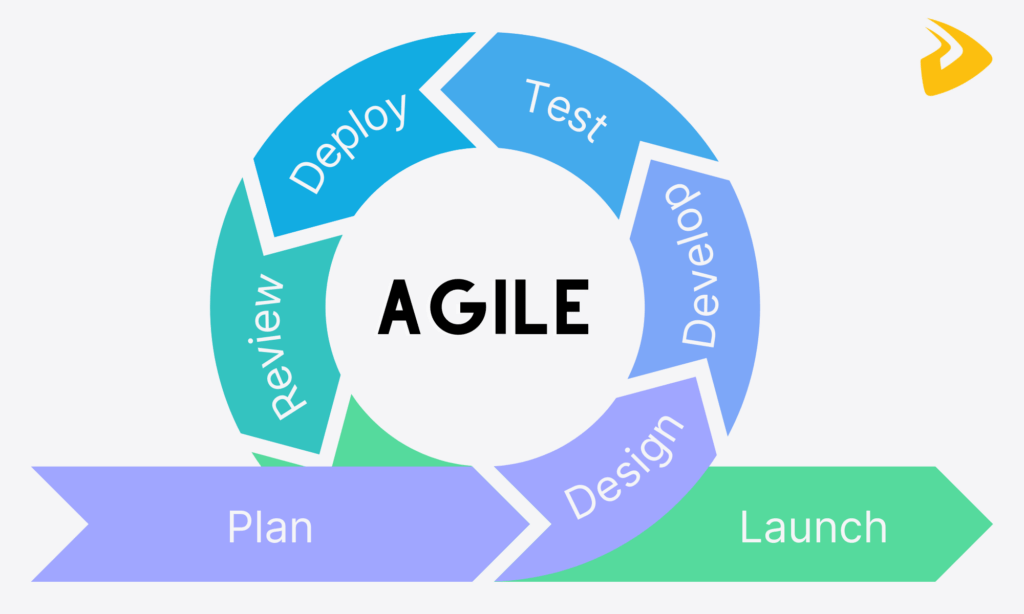
In short, Agile primarily shapes how a team discovers, prioritizes, builds, and reviews product changes. It can improve adaptation and feedback, but it does not by itself define how software is deployed or operated in production.
What Is DevOps?
DevOps is a set of cultural and technical practices that connects software development with IT operations across the delivery lifecycle. It is not work that begins after coding: teams collaborate on building, testing, releasing, operating, and learning from software. The AWS DevOps overview likewise describes DevOps as combining cultural philosophies, practices, and tools to improve an organization’s ability to deliver applications and services.
That shared lifecycle can include developers, testers, operations or platform engineers, security specialists, and product teams. The team design varies; DevOps does not require a large, separate department or a fixed organization chart. The goal is to reduce handoff gaps and make responsibility for service quality visible across roles.
Automation supports that goal. Continuous integration (CI) helps teams merge and check changes regularly; continuous delivery (CD) prepares validated changes for release, while continuous deployment can automatically release qualifying changes to production. These are related but distinct practices. A team can automate repeatable checks without removing exploratory testing, acceptance checks, or a risk-based approval before production.
Monitoring and incident learning close the loop: production signals help teams find regressions, reliability risks, and user-impacting problems, then feed that evidence into engineering priorities. For more implementation detail, read DevOps Pipeline: A Complete Guide To Building One and What Is a CI/CD Pipeline? How Modern Teams Turn Code Into Reliable Releases.
DevOps therefore emphasizes the flow and operation of changes, not just deployment speed. Reliable delivery includes verification, observability, recovery planning, and clear ownership after a release.
Agile And DevOps: Similarities And Differences
Agile and DevOps both support shorter feedback loops and continuous improvement, but they focus on different parts of the work. Agile centers on adapting product development; DevOps extends collaboration and feedback through release and operations.
Where Agile And DevOps Overlap
Both approaches encourage teams to work in small steps, surface problems early, and improve based on evidence rather than treating the original plan as untouchable. They also depend on collaboration: Agile brings people together around product outcomes, while DevOps connects the people who build software with those who release and operate it.
Neither approach guarantees fast delivery or high quality on its own. Small increments help only when teams can validate them; automation helps only when checks are meaningful and failures are acted on. Their shared value is a tighter learning cycle, not speed at any cost.
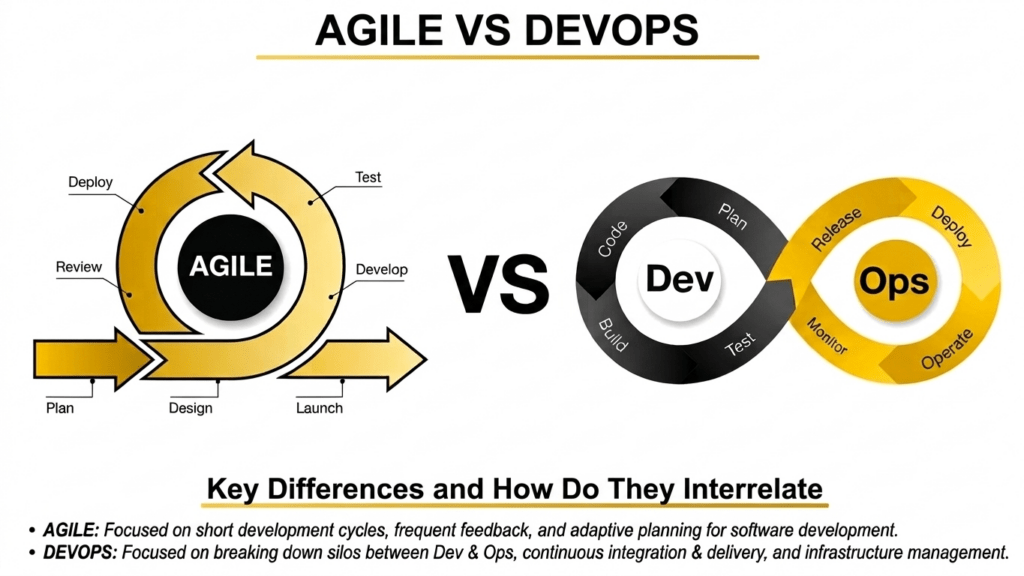
The shared ground is how teams learn and improve. The distinction remains useful: product feedback changes what the team prioritizes, while delivery and service feedback show how a change performs after it leaves development.
How Agile And DevOps Differ
The clearest difference is the problem each approach emphasizes. Agile helps a team choose and refine valuable work; DevOps helps the organization move changes through delivery and operations with reliable feedback. Actual team structures and tools vary, so the comparison is about emphasis rather than mandatory roles.
| Dimension | Agile emphasis | DevOps emphasis | How they connect |
|---|---|---|---|
| Primary question | What should the team build or change next to create customer value? | How can the team build, release, and operate that change reliably? | Product priorities guide the work; delivery evidence informs the next priority. |
| Workflow and cadence | Adaptive planning and incremental delivery; cadence depends on the method. | Continuous integration, release practices, operations, and feedback. | Pipeline work can continue alongside a Sprint or a Kanban flow. |
| Responsibilities | People collaborate around product outcomes; Scrum accountabilities apply when the team uses Scrum. | Development and operations share responsibility for delivery and service health; platform or SRE roles may support that work. | Keep ownership clear across code, release decisions, and production support. |
| Quality and automation | Build quality into increments through review, testing, and technical practices. | Automate repeatable build, test, release, and operational tasks. | Automation complements exploratory, acceptance, and risk-based checks. |
| Feedback | Customer and product feedback help shape what to improve. | Monitoring, incidents, and service data show how changes behave in production. | Operational learning can become a product backlog decision. |
Use this as a comparison of primary concerns, not as a strict boundary. An Agile team can use CI/CD and monitoring; a DevOps-oriented team can plan work iteratively. Tools, team size, and release cadence depend on the product, risk, and organization.
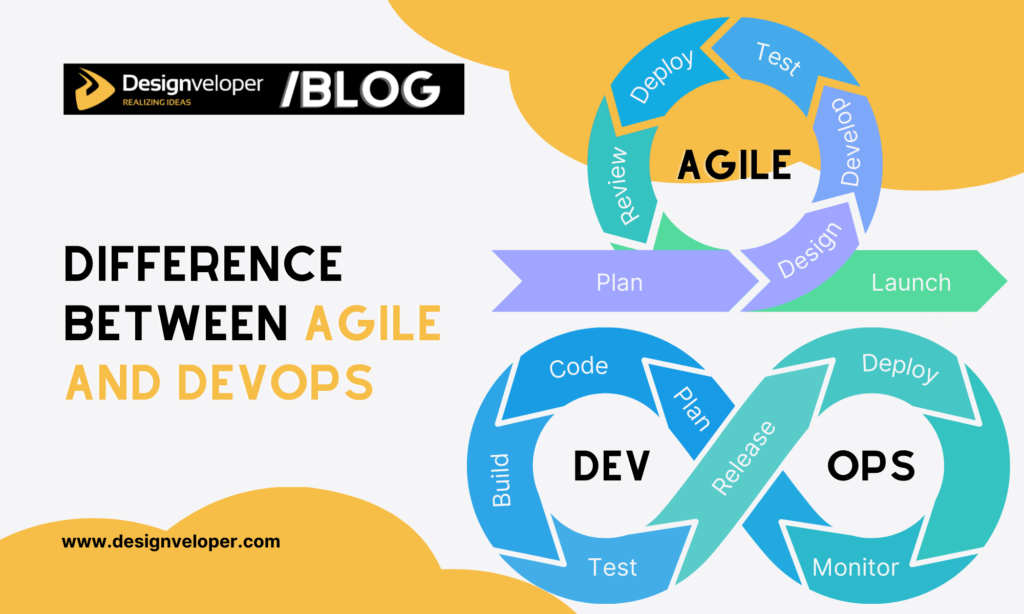
When comparing a team, look for the stage where work waits or quality becomes uncertain. A team with strong product iteration but fragile releases has a different next step from a team with a reliable pipeline but weak customer feedback.
Agile Vs DevOps: Which Should Your Team Prioritize?
Most software teams can use Agile and DevOps together; the question is which capability needs attention first. Start with the delay or failure that costs the team most, then choose practices that address that constraint without adding process for its own sake.
- Prioritize Agile practices when priorities shift, requirements remain uncertain, feedback arrives late, or large batches of work are hard to review. Start with smaller slices of value, frequent product review, and a planning method the team can sustain.
- Prioritize DevOps practices when changes are ready but manual testing, environment setup, handoffs, release approvals, or production support make delivery slow or risky. Map the release path and automate repeatable checks before broadening deployment automation.
- Improve both in sequence when the product workflow and release path each have bottlenecks. Keep planning and delivery connected, but fix the highest-impact constraint first and measure whether it improved.
A team does not need to reorganize around a new label to begin. It can clarify ownership, make one workflow visible, and test one improvement. Revisit the choice when evidence shows a different bottleneck.
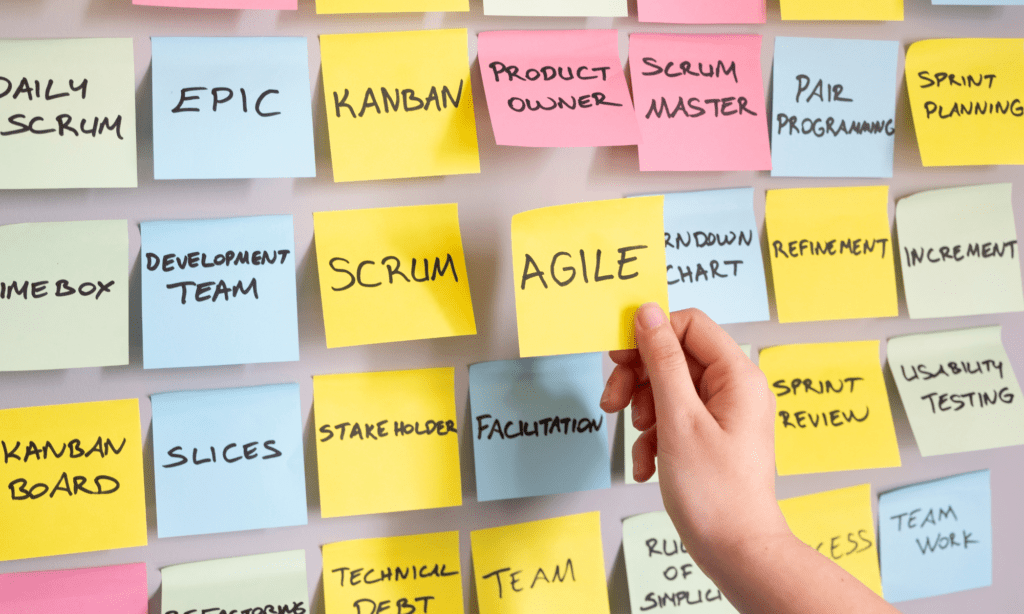
This is a sequencing choice, not a permanent label. Reassess after the bottleneck improves; the next constraint may sit elsewhere in the product or release workflow.
How Agile And DevOps Work Together: A Release Example
Consider a product team adding an export option requested by customers. Agile helps the team define a small, testable outcome and decide when it matters; DevOps practices help verify, release, and monitor that change. The workflow might look like this:
- Shape the backlog item. The product owner or team agrees on the user need, acceptance conditions, and a limited first version. If the team uses Scrum, it plans the item within a Sprint; a Kanban team pulls it according to capacity and flow.
- Build and check the change. Developers commit the change in small increments. CI runs relevant build, unit, and integration checks and gives fast feedback when a change breaks an agreed condition.
- Validate in staging. The team checks the complete user workflow in an environment configured to reflect production. Exploratory testing and accessibility or product acceptance checks remain useful where automation cannot judge the experience.
- Make a release decision. A validated change can be made available through a controlled rollout. The team may require a human approval, scheduled window, or additional review based on impact and risk; continuous delivery does not require automatic production deployment.
- Monitor and respond. The team watches relevant errors, service health, and user signals after release. A rollback or feature flag can limit impact if the change behaves unexpectedly.
- Feed learning into planning. If users complete the export successfully, the team can prioritize the next improvement. If monitoring or support reports reveal a failure, reliability work can take priority instead.
This example shows how Agile planning and DevOps delivery meet without collapsing into one method: one informs the next product change, and the other makes the change observable and manageable in production.
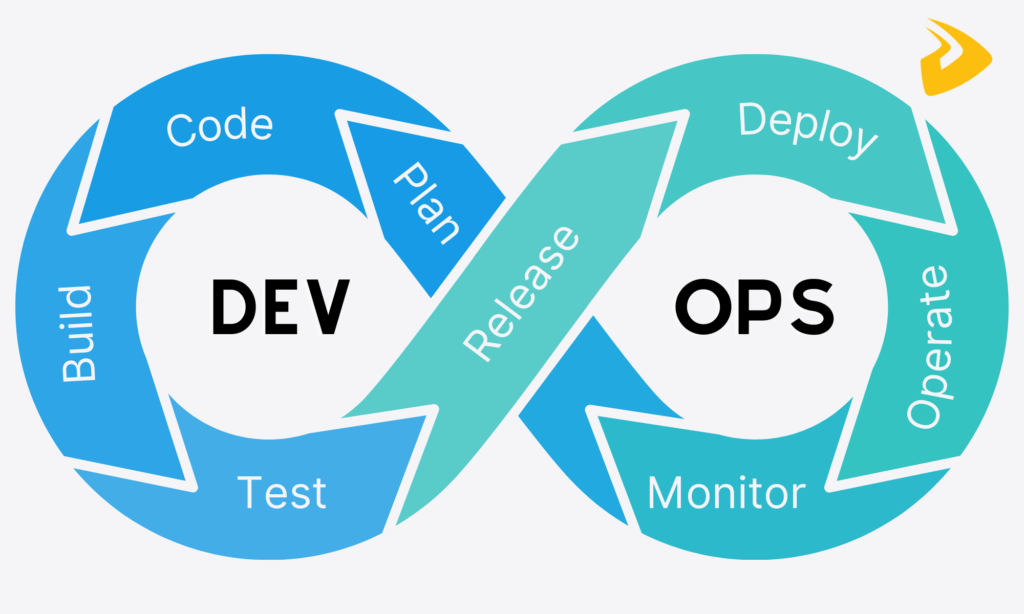
For the loop to work, decide in advance which signals trigger action and who responds. Monitoring that no one reviews, or feedback that never reaches planning, does not improve the next increment.
Practical Ways To Combine Agile And DevOps
Combining the approaches works best when teams improve the handoffs and feedback between planning, engineering, and operations. These practices keep the workflow useful without assuming every team needs the same process.
- Share an outcome, not just a deadline. Product, engineering, quality, and operations should understand the user result and service constraints behind a release. Make ownership for deployment and production response explicit.
- Keep work small and verifiable. Slice backlog items so teams can review them, test their behavior, and release them independently when appropriate. Smaller changes can make diagnosis easier, but do not remove safeguards for high-impact changes.
- Automate repeatable checks first. Add builds, tests, security checks, and deployment steps where they remove manual error or wait time. Keep human review for decisions that require product judgment, exploration, or risk approval.
- Make production signals actionable. Monitor the service with a small set of relevant indicators and assign an owner to respond. Feed recurring incidents and user-impacting issues into planning rather than treating operations as a separate queue.
- Review the delivery system regularly. Agile retrospectives and incident reviews can identify the same underlying bottleneck from different angles. Choose one change, observe its effect, and adjust instead of adding ceremonies or tools without a clear need.
Useful measures depend on the service. Teams might track how long a change waits between review and release, how often changes need follow-up fixes, or whether users can complete the target workflow. Pair speed measures with quality and user outcomes so a faster pipeline does not hide reliability problems.
Frequently Asked Questions
Is DevOps An Agile Methodology?
No. Agile is a set of values and principles for adaptive software development; DevOps is a set of cultural and technical practices connecting development, delivery, and operations. A team may apply both, but DevOps is not a Scrum role or a required Agile framework.
Does Agile Require Sprints?
No. Sprints are a Scrum event, not a requirement for every Agile team. Kanban and other approaches can apply Agile principles using continuous flow or a different planning cadence.
Does DevOps Mean Every Change Deploys Automatically?
No. Continuous delivery prepares a change for release after validation; continuous deployment can release qualifying changes automatically. Teams can keep acceptance checks and risk-based production approvals in either workflow.
How Designveloper Supports Software Delivery
Teams building or modernizing software may need support across product development, integrations, testing, and release planning. Designveloper’s software development services are one option to discuss when scoping that work.
For examples of product contexts, see Designveloper’s public project pages for Lumin and Swell & Switchboard. Those pages describe the products and project work; they are not evidence that either project used a specific Agile or DevOps process. When evaluating a partner, ask how it will handle backlog ownership, quality gates, release responsibilities, and production feedback for your own system.
For a deeper dive:
- What Is Agile Software Development? Methodologies and Benefits
- What Is Agile Acceptance Criteria? Definition, Examples
- DevOps Best Practices: 10 Ways To Improve Speed And Reliability
The practical choice is to strengthen the weakest part of the delivery system first, then keep product decisions connected to what happens in production.
Also published on

Share post on










Related Articles



Can ChatGPT Create an App? What It Can Build and What to Check
Can ChatGPT Create an App? What It Can Build and What to Check Published September 30, 2026
Best Open-Source Vector Database In 2026: 10 Options Compared
Best Open-Source Vector Database In 2026: 10 Options Compared Published September 29, 2026
Agile vs DevOps: Key Differences and How They Work Together
Agile vs DevOps: Key Differences and How They Work Together Published September 29, 2026