


















Predictive Analytics for the Automotive Industry: Key Uses and Benefits

Recent years have brought huge changes to how cars work. If electrification was the main trend ten years ago, today manufacturers compete in implementing intelligent systems capable of prediction. Predictive analytics in automotive industry has become the tool that allows companies not just to react to problems but to prevent them before they appear. According to McKinsey, manufacturers actively using predictive analytics cut conveyor downtime by 30-50%. This isn’t some futuristic concept from CES presentations anymore — it’s the everyday reality at BMW, Ford, and other giants. The problem is that most enterprises still rely on a reactive approach: something breaks — we fix it, customer complains — we correct it. This article examines how exactly predictive analytics automotive industry changes the rules and what specific advantages companies get from its implementation.
How Predictive Analytics Works in Auto Manufacturing
The technology is based on processing massive data arrays from sensors installed on conveyors, in vehicles themselves, and even at dealerships. Picture this: every modern electric vehicle generates about 25 gigabytes of data per hour. That’s information about battery performance, engine, brakes, suspension, and dozens of other systems.
Manufacturers have learned to use this data not just for diagnostics. For instance, Tesla collects telemetry from millions of cars worldwide and analyzes patterns that precede malfunctions. Companies specializing in automotive solutions, like https://dxc.com/industries/automotive, develop platforms that integrate machine learning with manufacturing processes. Algorithms analyze historical breakdown data, correlating it with external factors — from shop floor temperature to raw material quality from specific suppliers.
Predictive analytics for automotive industry uses several key technologies:
- Machine Learning models — learn to recognize equipment operation anomalies microseconds before critical failure
- IoT sensors — collect data on vibration, temperature, pressure in real time
- Digital Twins — digital replicas of production lines where scenarios get tested without stopping actual manufacturing
- Edge Computing — data processing happens locally, critically important for instant decisions on the conveyor
General Motors launched a system that analyzes sounds made by welding robots. When sound frequency changes even by a couple hertz, the system signals the need for maintenance. Before implementing this technology, breakdowns happened unexpectedly, stopping the line for hours.
Predictive Maintenance: From Reaction to Prevention
The biggest win from predictive analytics in automotive industry comes precisely in maintenance. The traditional approach is simple: there’s a schedule, there’s mileage — hit 15 thousand kilometers, come in for service. But operating conditions differ drastically. Someone drives exclusively on German autobahns, someone sits in Los Angeles traffic three hours a day.
How It Works in Practice
Porsche installs sensors in its sports cars that track not only component condition but driving style. If a Cayenne owner constantly uses Launch Control and brakes aggressively, the system automatically adjusts service intervals. The dealership receives data and contacts the client before anything goes wrong.
Volvo went further. Their system doesn’t just monitor truck condition — it creates an individual profile for each vehicle. Algorithms consider:
- Types of cargo transported
- Route characteristics (mountain roads demand more from the braking system)
- Regional climate conditions
- Specific operator’s driving manner
By the company’s own calculations, this reduced unscheduled fleet stops by 70%. For logistics companies where every hour of downtime costs thousands of dollars, that’s revolutionary.
Financial Component
BMW calculated that implementing predictive analytics automotive industry in their service centers paid for itself in eight months. Previously, clients arrived with a problem, diagnostics took a day, parts were ordered for another week. Now the system predicts the breakdown, the dealer orders parts in advance, and the client gets offered a convenient appointment time.
Manufacturing Process Optimization
Ford plants in Valencia and Cologne use digital twins of each production line. Engineers run simulations to understand how changing a supplier for a specific part will affect overall assembly quality. The system analyzes millions of combinations in minutes.
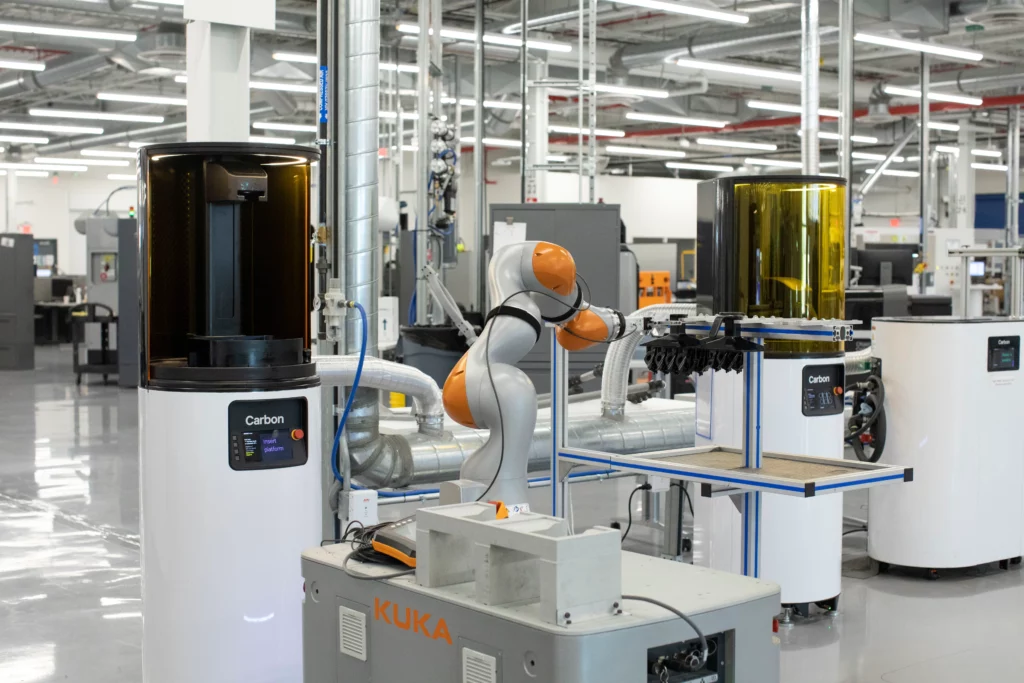
At the Audi plant in Ingolstadt, they installed cameras with computer vision that inspect every weld seam. Predictive analytics for automotive industry allows not just detecting defects but forecasting which body areas will most likely have problems in the next batch. If the algorithm sees a trend, production stops for equipment calibration.
Supply Chain Management
The COVID-19 pandemic showed how vulnerable global supply chains are. Volkswagen Group lost billions due to semiconductor shortages. Today the company uses systems that analyze risks in real time:
- Political instability in regions where supplier plants are located
- Weather conditions that might delay logistics
- Financial health of partner companies (market data analysis)
- Demand trends for specific vehicle models
When the system forecasts microchip delivery delays, production schedules automatically rebuild. Instead of conveyor downtime, the plant switches to producing models using different components.
Customer Experience Personalization
Mercedes-Benz created the MBUX system that learns from the driver. Artificial intelligence remembers when the owner usually drives to work, what cabin temperature they consider comfortable, which radio stations they listen to. But that’s just the tip of the iceberg.
Buyer Behavior Forecasting
Dealer networks use predictive analytics in automotive industry to analyze purchase cycles. If a client bought a car three years ago and has been serviced at the official dealer during that time, the algorithm calculates the probability they’re considering an upgrade. At the right moment, they receive a personalized offer.
Toyota analyzes data from connected cars to understand exactly how people use their vehicles. Turns out RAV4 Hybrid owners often drive out of town for fishing or camping. This influenced the development of next models — they added more equipment storage spaces and improved off-road capability.
Safety and Autonomous Driving
Waymo, Alphabet’s subsidiary, has driven over 20 million miles in autonomous mode. Each trip generates terabytes of data analyzed to improve algorithms. The system learns to predict pedestrian, cyclist, and other driver behavior.
Predictive analytics automotive industry in this sphere solves a critically important task: how to teach a car to make decisions in situations that have never happened before? The answer — through analyzing millions of similar scenarios and extrapolation.
Real Cases
Subaru installs the EyeSight system in its cars, which analyzes driver condition. Cameras track eye movement, blink frequency, head position. If the system detects signs of fatigue or distraction, it warns the driver. In perspective — the car itself will be able to take control in critical situations.
Bosch developed a system that predicts collision possibility 3-5 seconds before impact. Analyzing speed, trajectory of neighboring vehicles, and road conditions, it pre-tensions seat belts, closes windows, and prepares airbags for deployment.
Business Economic Advantages
Continental, one of the largest auto component suppliers, implemented predictive analytics for automotive industry at all its plants. First year results:
- 23% reduction in defects
- 15% decrease in energy consumption
- 18% increase in raw material usage efficiency
- 40% reduction in equipment downtime
Renault uses machine learning to optimize paint booths. The system analyzes how temperature, air humidity, and paint composition affect coating quality. This reduced cars requiring repainting threefold.
Implementation ROI
According to Gartner, the average payback period for investments in predictive analytics in automotive industry is 14-18 months. Main savings categories:
- Lower unplanned equipment repair costs
- Optimized spare parts inventory
- Reduced energy consumption
- Decreased defect percentage
- Increased customer loyalty through better service
Jaguar Land Rover created a data center that processes information from all brand vehicles worldwide. The investment was £40 million, but within a year the company saved twice that through warranty service optimization.
Implementation Challenges
Not everything’s rosy. The main problem — integrating legacy systems with new technologies. Many plants operate on equipment installed 20-30 years ago. Modernization requires massive investments.
Fiat Chrysler faced this when trying to implement a unified monitoring system at plants in different countries. Equipment used incompatible data transmission protocols. They had to spend an additional $50 million on transition gateways.
Data Security Issues
The more information a car collects, the more attractive a target it becomes for hackers. In 2015, researchers demonstrated how to remotely hijack control of a Jeep Cherokee through an entertainment system vulnerability. Chrysler had to recall 1.4 million vehicles.
Now manufacturers invest billions in cybersecurity. BMW hired a team of ethical hackers who constantly test systems for vulnerabilities. Each software update goes through multi-level verification before distribution.
Industry Future
Analysts forecast that by 2030, the predictive analytics automotive industry market will reach $15 billion. Main growth drivers:
- Mass implementation of electric vehicles with advanced telemetry
- 5G network development allowing real-time transmission of large data volumes
- Machine learning algorithm improvements
- Growing market competition forcing companies to seek new optimization methods
Nissan experiments with quantum computers for logistics optimization. Classical algorithms need hours to calculate optimal supply routes for components to dozens of plants. A quantum computer solves these tasks in minutes.
Honda invested in neuromorphic chip research — processors that mimic human brain structure. Such chips consume hundreds of times less energy than traditional ones, critically important for autonomous electric vehicles.
The industry moves toward a future where every car isn’t just transportation but an intelligent device that constantly learns and adapts. Predictive analytics for automotive industry transforms from competitive advantage into a survival necessity. Companies ignoring this trend risk repeating Nokia’s fate in the mobile industry — staying behind technological progress.
Also published on

Share post on