















11 Best Web Development Languages for Front-End and Back-End

KEY TAKEWAYS:
- The best web development language depends on front-end, back-end, or full-stack scope rather than popularity alone.
- JavaScript and TypeScript remain core choices for browser interfaces, while HTML and CSS still define structure, accessibility, and presentation.
- Back-end choices such as Python, Node.js, PHP, Java, C#, Ruby, and Go should be matched to scalability, team skill, ecosystem, and maintenance needs.
- Large products often need a mixed-language architecture where the front end, API, database, jobs, and integrations use different tools for different jobs.
- A practical language decision should account for hiring, security, framework maturity, performance, and long-term software architecture.
The best web development languages in 2026 depend on whether you are comparing front-end vs back-end work or building a full-stack product. JavaScript and TypeScript remain leading front-end choices, while Python, JavaScript (Node.js), PHP, Java, C# (.NET), Ruby, and Go each fit different back-end needs. The right choice depends on performance, maintainability, security, and scalability. Continue reading to compare the key benefits, limitations, and practical use cases of each language.
Explore more:
- Best Web App Languages To Use
- Best App Programming Languages For Product Teams
- Best Programming Language For Beginners
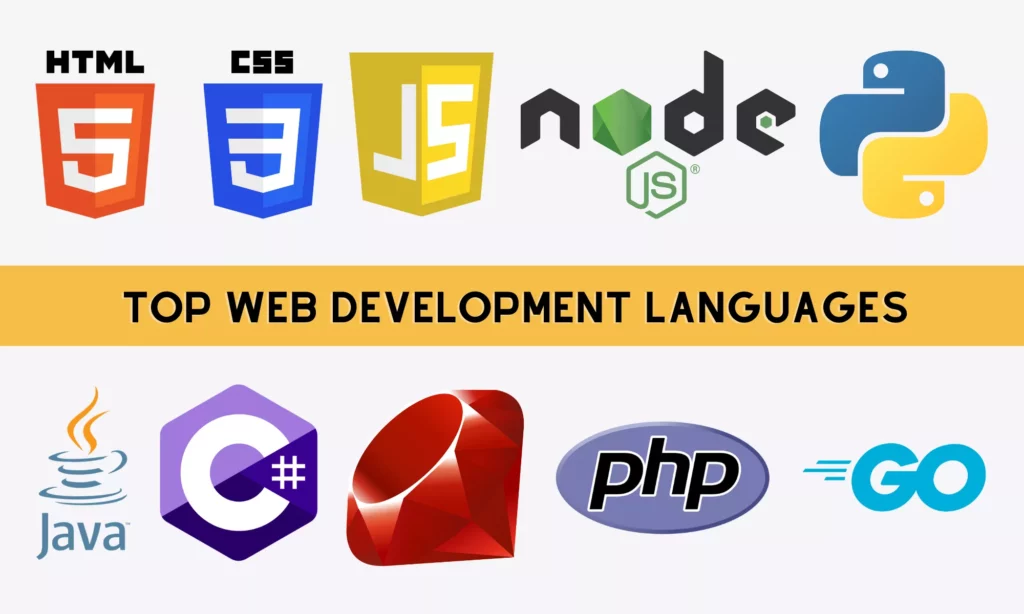
Front-End Web Development Languages
Front-end web development languages are the technologies used to build the part of a website that users see and interact with. In practice, front-end development usually depends on four core tools: HTML for structure, CSS for presentation, JavaScript for interactivity, and TypeScript for larger codebases that need stronger maintainability.
1. HTML
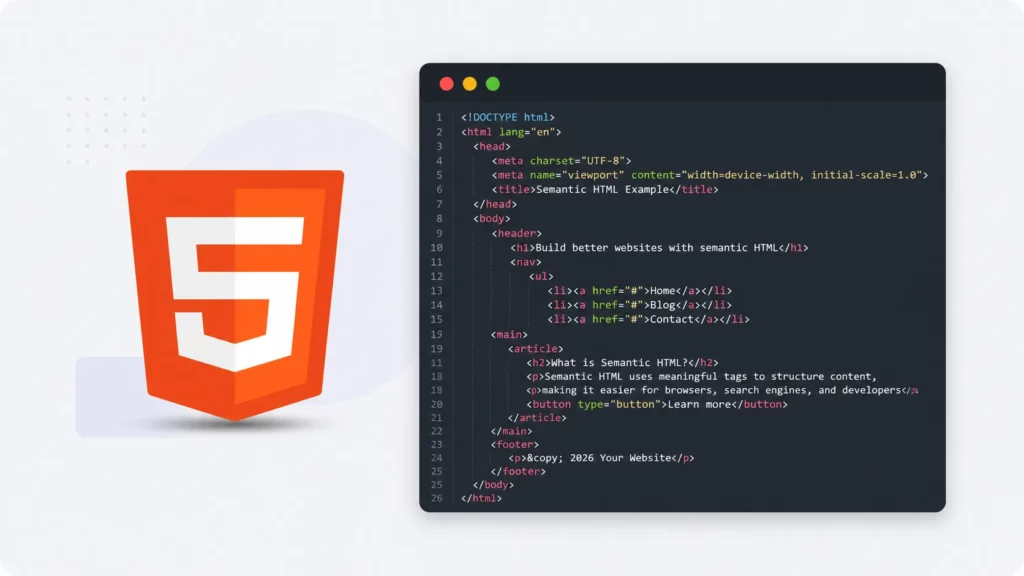
HTML is the structural foundation of every website. HTML is not usually classified as a programming language in the strict computer science sense, but HTML remains essential because it defines the content and semantic layout that browsers render.
Features:
- Page structure: HTML defines the layout of content on a page, including headings, paragraphs, lists, links, images, forms, and tables.
- Semantic meaning: HTML tags such as
header,nav,main, andarticlehelp browsers and search engines understand what each section of the page represents. - Accessibility support: Clean HTML structure makes it easier to build pages that work better with screen readers and keyboard navigation.
- Framework foundation: Even modern front-end frameworks still render HTML in the browser, which makes HTML a lasting base layer in web development.
Pros:
- HTML is easy to learn and universally supported, which makes it the fastest entry point into web development tutorials and the safest baseline across browsers.
- HTML enhances semantic clarity for users and search engines, helping accessibility tools, crawlers, and front-end frameworks interpret the purpose of each content section. Well-structured semantic HTML can also improve crawlability, organize content more clearly, and strengthen on-page SEO.
- HTML works as the base layer for every front-end stack, so even teams using React, Vue, or Angular still depend on strong markup to keep interfaces maintainable.
Cons:
- HTML cannot handle business logic on its own, so it is not enough for products that require dynamic workflows, user state, or complex application behavior.
- HTML cannot create rich interactivity without CSS and JavaScript, which means it becomes only one part of a larger front-end system in modern products.
- Poor HTML structure can damage accessibility and make the front end harder to scale, especially when teams rely on generic
divpatterns instead of meaningful semantic elements.
Typical websites built on HTML: HTML is part of virtually every major website on the web because it is the base structural layer of browser rendering. Rather than treating HTML as a competitive language choice, it is more accurate to treat HTML as a non-optional foundation for front-end delivery.
Recommended for you:
- CSS Tutorial: Styling Websites From The Ground Up
- Difference Between HTML And CSS
- Why Learn JavaScript?
2. CSS
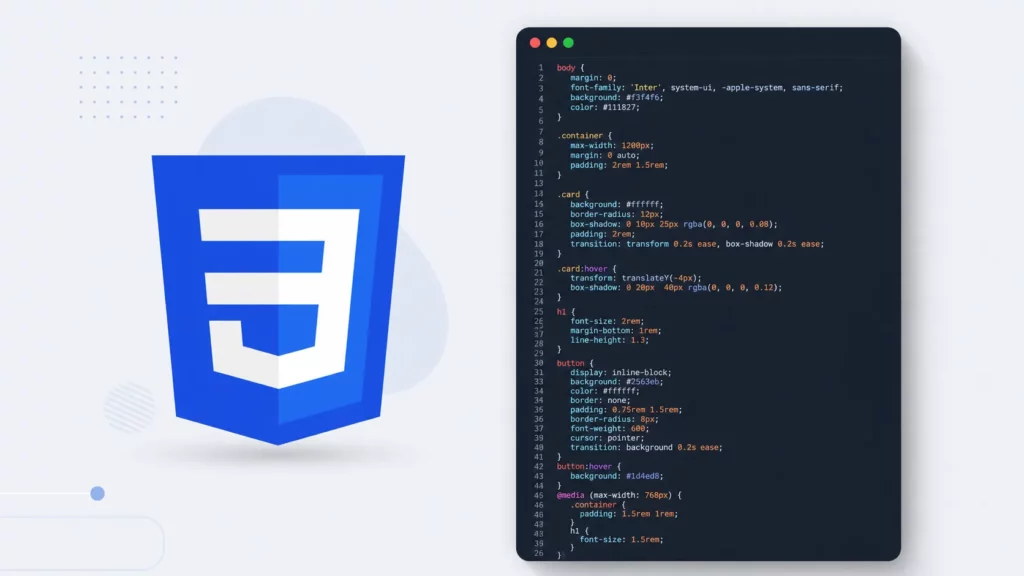
CSS is the styling layer of the web. CSS controls how a website looks, feels, and adapts across different screen sizes. Without CSS, most websites would still function, but they would look unfinished and be much harder to use.
Features
- Visual styling: CSS controls colors, typography, spacing, borders, and overall presentation across a website.
- Layout management: CSS handles page structure through tools such as Flexbox, Grid, and responsive breakpoints.
- Responsive design: CSS helps websites adapt to different screen sizes, which is essential for mobile and tablet usability.
- Interaction states: CSS supports hover, focus, transitions, and animations that improve interface clarity and polish.
Pros:
- CSS is essential for responsive and polished interfaces because it controls how layouts, typography, spacing, and interaction states adapt across devices.
- CSS gives teams strong control over presentation, which is critical for building consistent component systems and preserving brand quality at scale.
- Modern CSS can solve many interface problems without heavy JavaScript, which can improve performance and reduce unnecessary front-end complexity.
Cons:
- CSS can become difficult to manage in large codebases when selectors, naming, and component boundaries are inconsistent.
- Complex layouts can still be tedious to maintain, especially when legacy styling, overrides, and one-off fixes accumulate over time.
- Weak CSS architecture often creates hidden product costs because even small design changes can require broad regression testing across pages and devices.
Typical websites built on CSS: Like HTML, CSS is part of nearly every modern website. CSS should not be treated as an optional enhancement. CSS is a core front-end technology that supports usability, branding, and responsive design across the web.
Related reading: Difference between HTML and CSS
You might also like:
- Difference Between TypeScript And JavaScript
- What Is Data Structure? A Developer-Friendly Overview
- Best JavaScript Tutorial For Beginners
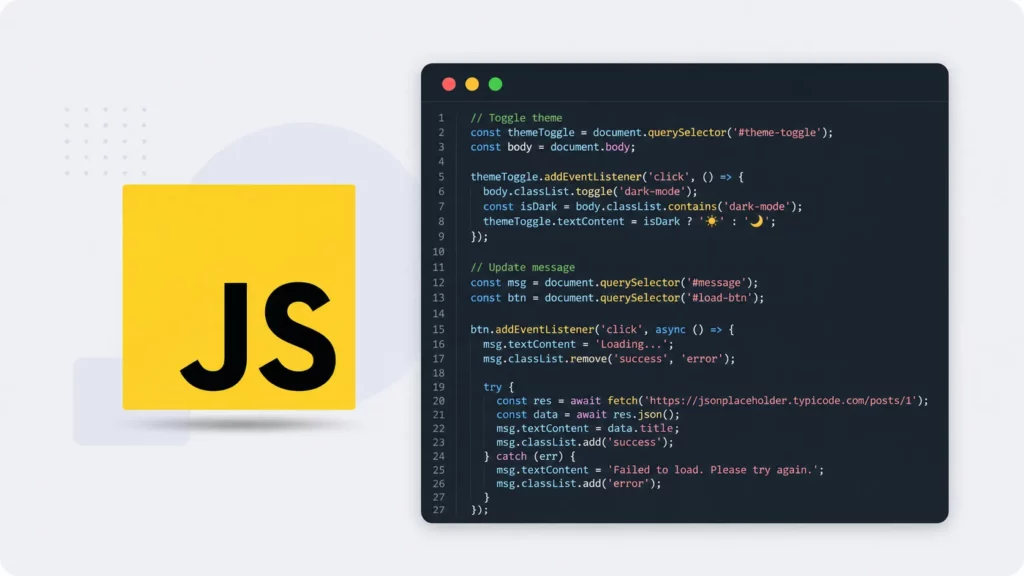
3. JavaScript
JavaScript is the most important front-end programming language in modern web development. JavaScript runs directly in the browser and powers the interactive behavior that users expect from modern websites and web applications.
Features
- Browser interactivity: JavaScript powers actions such as clicks, form validation, dropdowns, live search, and dynamic user feedback.
- DOM manipulation: JavaScript can update page content without reloading the entire page, which makes modern interfaces feel faster and more fluid.
- Asynchronous behavior: JavaScript handles API calls, real-time updates, and background data loading for web apps.
- Framework ecosystem: JavaScript is the base language behind React, Vue, Angular, Next.js, and many of the most widely used web development tools.
- Full-stack flexibility: JavaScript can also be used on the back end through Node.js, which makes it attractive for teams that want one language across the stack.
Pros:
- JavaScript runs natively in browsers, which makes it the default language for front-end interactivity without requiring extra runtime layers.
- JavaScript has the largest web ecosystem of frameworks, tools, and libraries, so teams can move quickly and solve most common product needs with mature community support.
- JavaScript supports both front-end and back-end workflows when paired with Node.js, which can simplify hiring, onboarding, and cross-team collaboration.
- JavaScript is a practical default for interactive web apps because it fits well with rapid product iteration, experimentation, and modern UI frameworks.
Cons:
- Large JavaScript codebases can become inconsistent quickly if the team does not enforce standards around patterns, testing, and architecture.
- Runtime type issues can slow debugging and increase production risk, especially in growing codebases with many shared data flows.
- Dependency sprawl is a real risk in JavaScript ecosystems because teams can adopt many packages quickly without fully controlling long-term maintenance or security exposure.
- JavaScript alone may not provide enough structure for large teams, which is why many production systems eventually adopt TypeScript, stricter linting, and stronger tooling.
Typical websites built on JavaScript: Google, Facebook, Microsoft, YouTube, Apple, Instagram, and LinkedIn as using JavaScript (W3Techs). These examples show how widely JavaScript is used in browser-based web development.
Learn more in:
- Front-End Frameworks: A Complete Guide
- JavaScript Frameworks: What Developers Should Know
- Python Frameworks: A Practical Overview
4. TypeScript
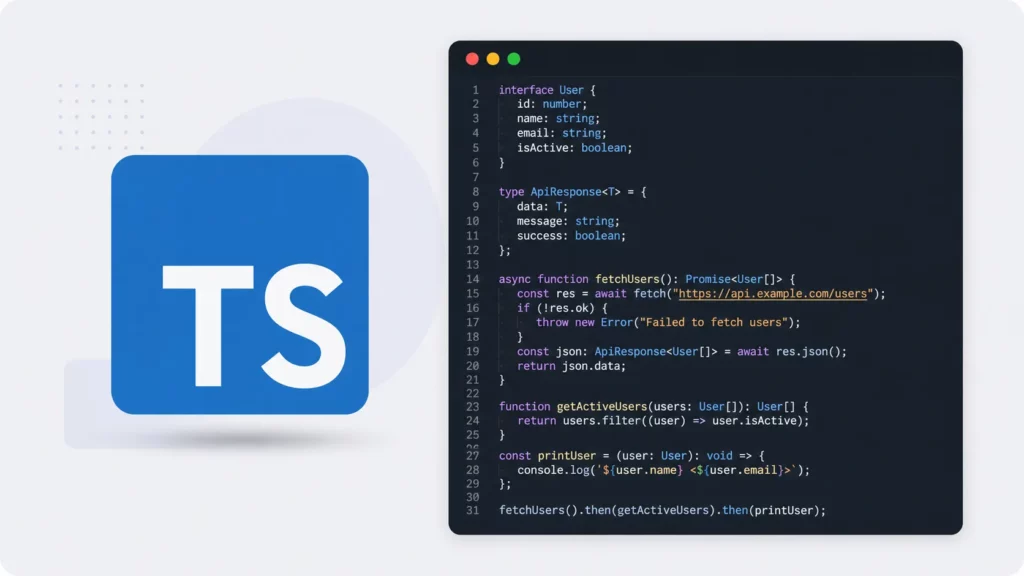
TypeScript is a strongly typed superset of JavaScript. TypeScript has become one of the best web development language choices for front-end teams that expect their codebase to grow in size, complexity, and team count. For detail comparison, read this guide difference between TypeScript and JavaScript.
Features
- Static typing: TypeScript adds type checking to JavaScript, which helps catch more errors before the code reaches production.
- Safer refactoring: TypeScript makes it easier to change large codebases with more confidence because type rules expose breakpoints earlier.
- Better tooling: Editors and IDEs can offer stronger autocomplete, inline hints, and code navigation in TypeScript projects.
- Scalable collaboration: TypeScript helps teams document interfaces and shared data structures directly in the codebase.
- JavaScript compatibility: TypeScript works with the JavaScript ecosystem, so teams keep access to familiar frameworks and libraries while adding more structure.
Pros:
- TypeScript improves maintainability in large projects by making data shapes, component contracts, and shared interfaces more explicit.
- TypeScript reduces avoidable bugs before runtime, which is especially valuable in products with many developers, APIs, and UI states.
- TypeScript offers stronger tooling and refactoring support, helping teams change complex code with more confidence and less regression risk.
- TypeScript helps teams scale collaboration because typed contracts make onboarding, code review, and cross-team development more predictable.
Cons:
- TypeScript adds setup and learning overhead, which may not pay off in very small prototypes or short-lived microsites.
- TypeScript can slow down early experimentation when the team needs to define types before validating the feature direction.
- Weakly designed types can create friction rather than clarity, especially when teams over-model the system before the product is stable.
- TypeScript does not automatically fix poor architecture, so a typed codebase can still become hard to maintain if the underlying design is weak.
Typical websites built on TypeScript: Google, Facebook, YouTube (Wikipedia). These examples show that TypeScript has real adoption in large-scale front-end environments, especially in products that benefit from stronger code structure.
For a deeper dive, read:
- Software Development Tools: A Practical Guide
- How To Become A Web Developer
- Web Developer Certifications: A Practical Guide
If you are still early in your learning path, you may also want to review our guide to the best programming language for beginners.
Back-End Web Development Languages
Back-end web development languages are used to run the server side of a website. That usually includes APIs, authentication, business rules, databases, permissions, background jobs, and integrations with third-party systems.
Back-end language choice matters because the server side shapes scalability, security, maintainability, and development speed. It is also common for large systems to use more than one back-end language at the same time. That is why the best back-end language is usually the one that fits the product architecture and team model, not the one with the loudest hype cycle.
5. JavaScript (Node.js)
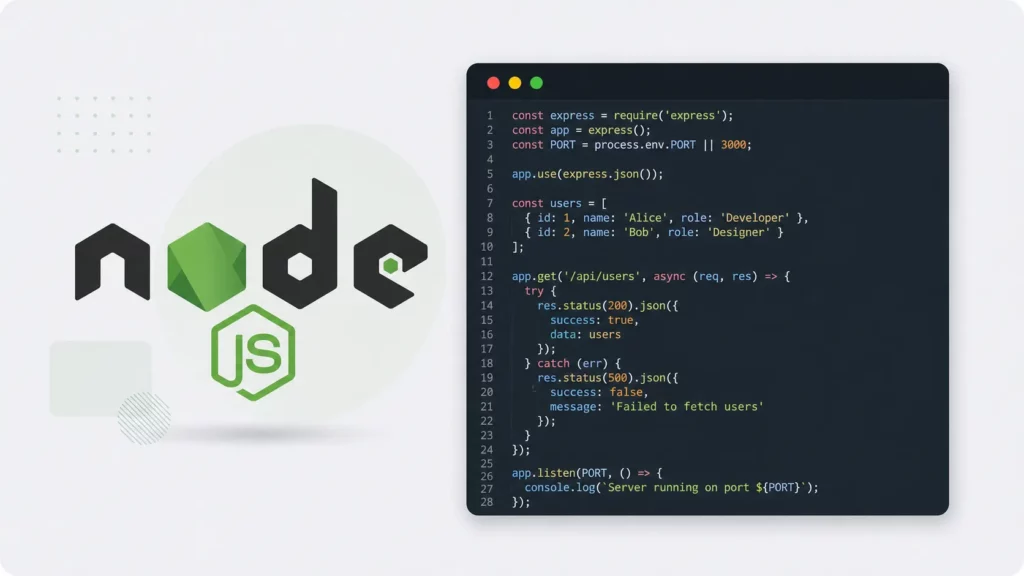
JavaScript becomes a back-end language through Node.js. Node.js is an open-source JavaScript runtime that lets teams build servers, APIs, command-line tools, and web apps outside the browser. That makes JavaScript one of the few realistic full-stack language choices.
Features
- Server-side JavaScript: Node.js lets teams use JavaScript outside the browser to build APIs, servers, and backend services.
- Event-driven architecture: Node.js works well for real-time products such as chat systems, notifications, live dashboards, and collaborative apps.
- Fast API development: Node.js supports rapid backend builds for startups, MVPs, and products that need to move quickly.
- Shared stack: Teams can use JavaScript on both the front end and the back end, which can simplify hiring, collaboration, and code reuse.
- Package ecosystem: npm gives Node.js access to one of the largest collections of web development packages in the industry.
Pros:
- JavaScript can support both front-end and back-end development through the Node.js ecosystem. That shared language model reduces context switching and can simplify team structure in product-driven organizations.
- Node.js has a large package ecosystem through npm, giving teams fast access to mature solutions for APIs, authentication, queues, and service integration.
- Node.js works well for real-time apps and API-heavy products because its event-driven model is effective for I/O-heavy workloads.
- Node.js supports fast iteration for startups and modern product teams, which makes it a strong choice for dashboards, marketplaces, SaaS tools, and collaborative products.
Cons:
- CPU-heavy tasks may be better handled by other back-end languages or isolated services, because Node.js is usually strongest in I/O-intensive rather than compute-intensive workloads.
- Large systems still need strong architecture and dependency control, so Node.js does not remove the need for careful backend boundaries and operational discipline.
- Rapid package adoption can increase security and maintenance risk, especially when teams depend on many third-party modules without long-term review.
- Node.js is not automatically the best fit for every enterprise or performance-critical workload, particularly when a product has strict latency, compliance, or compute requirements.
Typical websites built with JavaScript (Node.js): PayPal, LinkedIn, Yahoo, Medium, Shutterstock, Zendesk, Netflix
Related reading:
- What Is Rust Programming Language?
- Rust vs Python: Which Language Should You Choose?
- Best Front-End Developer Courses
6. Python
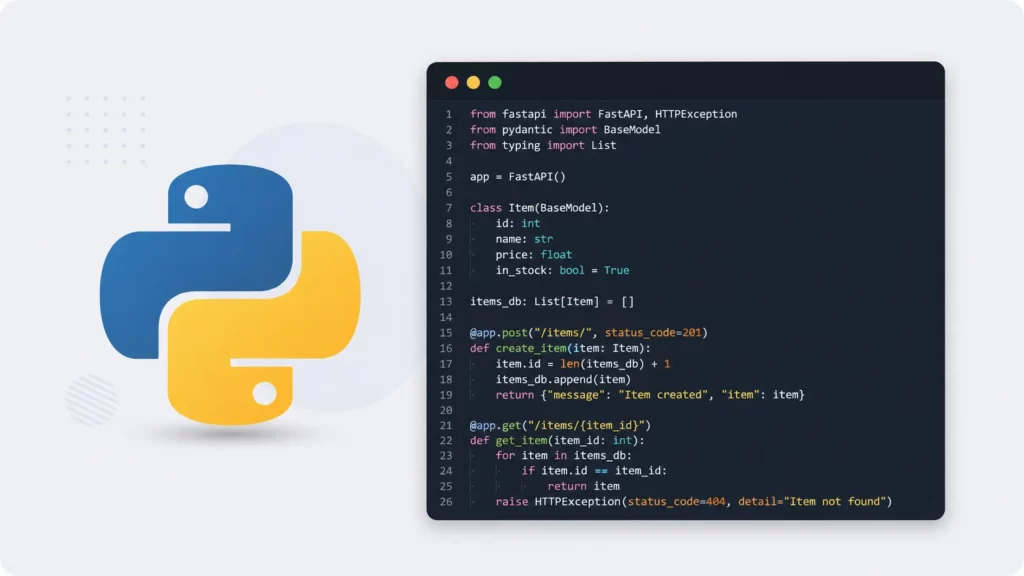
Python is one of the strongest back-end choices for teams that care about readability, fast development, automation, and AI-enabled workflows. Python is especially useful when a web product needs more than standard CRUD behavior.
Features:
- Readable syntax: Python is known for code that is relatively easy to read, which helps teams move faster and maintain services more cleanly.
- Backend frameworks: Django, Flask, and FastAPI make Python a strong option for traditional web apps, APIs, and internal platforms.
- AI and data ecosystem: Python works especially well when a web product needs automation, analytics, machine learning, or other AI-enabled features.
- Rapid development: Python is often a practical choice for teams that want to launch backend services quickly without heavy setup.
- Workflow flexibility: Python fits well in products that combine standard business logic with reporting, background jobs, or intelligent processing.
Pros:
- Python is easy to read and quick to develop in. That combination helps teams ship backend services faster and keeps business logic easier to understand.
- Python has a strong ecosystem for AI, automation, and data workflows, making it especially valuable for products that go beyond standard CRUD applications.
- Python works well for APIs, internal platforms, and backend business logic when the team values clarity, iteration speed, and flexibility.
- Python is a practical choice for products that need intelligent features because its ecosystem already supports analytics, machine learning, and workflow automation at scale.
Cons:
- Python is not usually the top choice for browser-side work, so it almost always needs to be paired with separate front-end technologies.
- Extremely performance-sensitive or ultra-low-latency services may fit Go, Java, or specialized systems better, especially when throughput is the primary constraint.
- Poorly structured Python projects can become hard to scale if teams move fast without enforcing architecture, testing, and code quality standards.
- Python may need complementary services for heavy production workloads, because not every concurrency or performance problem is best solved inside a Python application alone.
Typical websites built on Python: Facebook, Yahoo, Etsy, Wikipedia, WordPress.com, Fandom
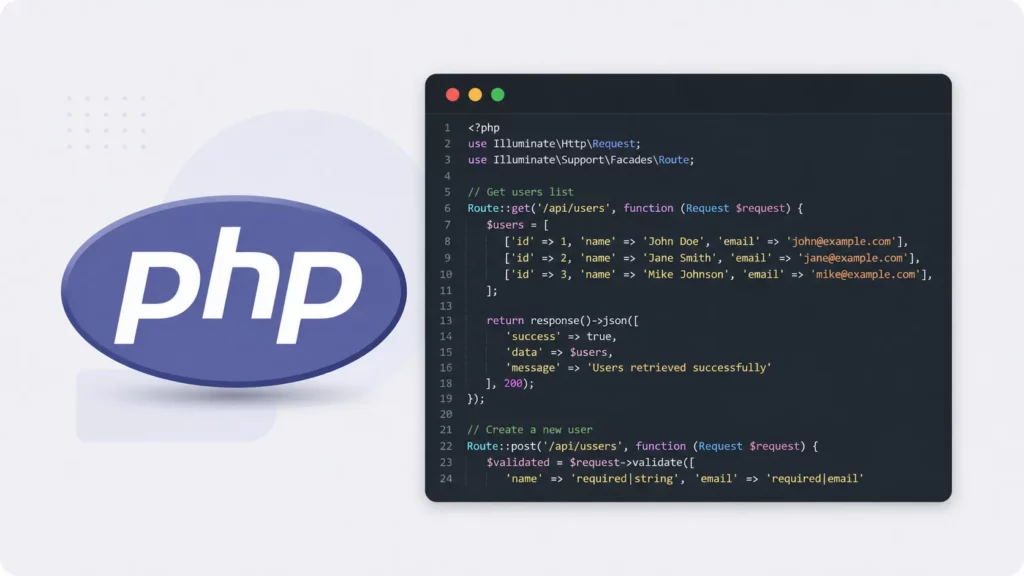
7. PHP
PHP remains one of the most practical back-end web development languages, especially for CMS-driven sites, business websites, portals, and content-heavy platforms. PHP may not always be the trendiest language in developer conversations, but it still solves real business problems efficiently.
Features
- Server-side scripting: PHP is built for handling backend logic, form processing, sessions, and dynamic page generation.
- CMS compatibility: PHP remains deeply tied to WordPress and many other content-driven web platforms.
- Framework support: Laravel and Symfony make PHP more structured for modern web application development services.
- Broad hosting support: PHP is easy to deploy across many traditional hosting environments, which keeps infrastructure simple for many businesses.
- Practical web delivery: PHP is still a sensible fit for publishing systems, service websites, portals, and content-heavy web products.
Pros:
- PHP is mature, practical, and widely supported. Those traits make PHP a dependable option for many business websites, portals, and publishing platforms.
- PHP is easy to deploy across common hosting environments, so infrastructure and operational costs can stay relatively simple.
- PHP has strong CMS and framework ecosystems, especially WordPress and Laravel. Those ecosystems help teams launch faster in content-heavy and service-oriented use cases.
- PHP is often cost-effective for business-focused web builds where fast delivery and proven web infrastructure matter more than stack novelty.
Cons:
- PHP projects vary widely in code quality across the market, so success depends heavily on architecture choices and development discipline.
- Some teams still associate PHP with legacy systems. That perception can bias stack decisions even when modern PHP frameworks are technically strong.
- PHP is not always the first choice for teams that want one language across the entire stack, especially when the front end is deeply tied to JavaScript workflows.
- PHP may be a weaker fit when the product strategy centers on highly unified JavaScript tooling, because Node.js often aligns more naturally with that model.
Typical websites built on PHP: WordPress, Flickr, Facebook, Hootsuite, Yahoo, Wikipedia, Etsy
8. Java
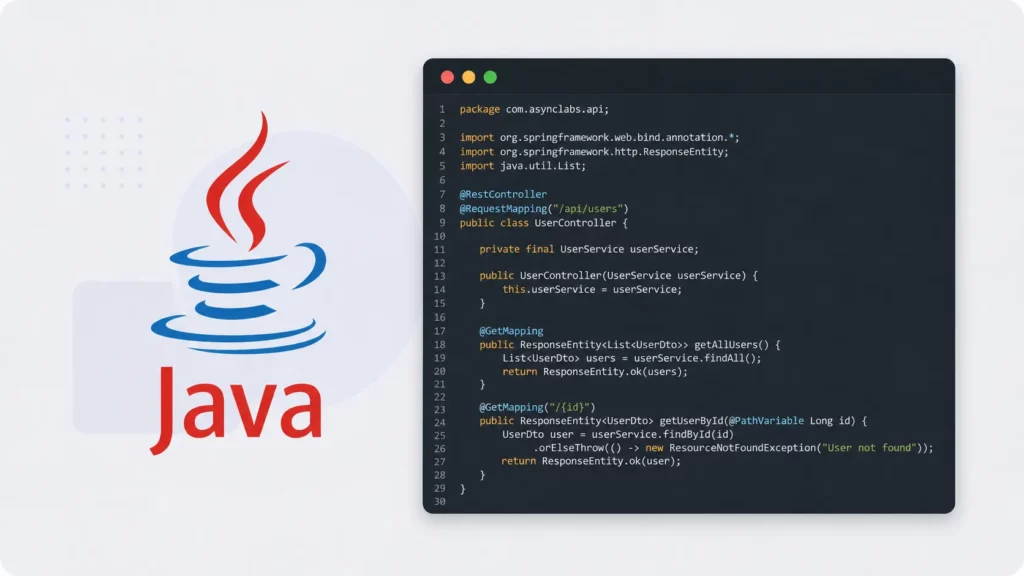
Java remains one of the strongest choices for enterprise back-end web development. Java is especially relevant when the product must support long maintenance cycles, strict business rules, security requirements, and high reliability.
Features
- Enterprise readiness: Java is widely used for large-scale business systems, regulated platforms, and long-lived backend applications.
- Strong framework ecosystem: Spring Boot and related tools help teams build APIs, integrations, and service-based architectures in a structured way.
- Scalability and stability: Java is known for supporting reliable, high-volume backend systems with predictable behavior.
- Security support: Java remains a strong fit for environments where governance, compliance, and secure backend design matter.
- Long-term maintainability: Large organizations often choose Java because the ecosystem and talent pool remain mature and well established.
Pros:
- Java is stable and highly scalable. Those traits explain why Java remains a common choice for large backend systems, enterprise platforms, and high-volume services.
- Java has strong security and mature tooling, making it a practical fit for systems with strict reliability, compliance, and audit requirements.
- Java is well suited to enterprise governance and complex business logic, especially when a product has many workflows, integrations, and operational rules.
- Java benefits from a large global talent pool and a proven ecosystem. That maturity reduces long-term platform risk for organizations building for years rather than months.
Cons:
- Java can feel heavier than lighter back-end stacks for MVPs, especially when a smaller team needs fast iteration more than enterprise-grade structure.
- Development speed may be slower than Python, Ruby, or Node.js in early-stage contexts where simplicity matters more than formal architecture.
- Teams may introduce too much boilerplate or ceremony if the system is overengineered. Extra ceremony can reduce agility without adding clear business value.
- Java can be more than smaller teams need for simple products, particularly when the product does not justify complex governance or service design.
Typical websites built on Java: Airbnb, LinkedIn, Amazon, eBay, Netflix, X
9. C# (.NET)
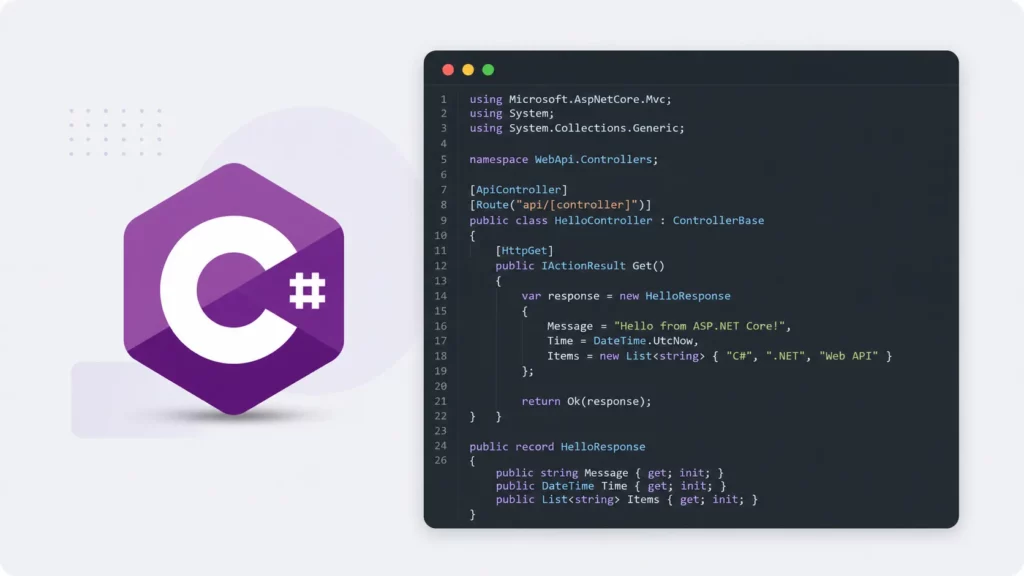
C# (.NET) is a strong back-end language choice for teams building in the Microsoft ecosystem or for organizations that want a structured, enterprise-friendly development environment. C# is often more practical than people expect in modern web architecture.
Features:
- .NET integration: C# works naturally with ASP.NET and the wider .NET ecosystem for web apps, APIs, and internal tools.
- Enterprise structure: C# fits backend systems that need clear architecture, maintainability, and strong development discipline.
- Microsoft alignment: C# is especially practical for organizations already using Microsoft services, identity systems, and infrastructure.
- Tooling support: Visual Studio and related .NET tools give C# teams a mature development environment.
- Business application fit: C# is a strong option for line-of-business platforms, internal systems, and enterprise web services.
Pros:
- C# offers strong tooling and maintainability. Those strengths help teams manage structured backend systems with better visibility and long-term discipline.
- C# fits enterprise and Microsoft-oriented environments well, especially when the organization already depends on Azure, Active Directory, or related systems.
- ASP.NET supports robust API and web app development, giving teams a mature framework for authentication, integrations, and scalable service design.
- C# performs well in structured business applications where maintainability, team coordination, and long-term support matter more than short-term trend alignment.
Cons:
- C# is discussed less often in general web content than JavaScript or Python, so some teams may overlook it even when it is a practical fit.
- Teams outside the .NET ecosystem may see less immediate value, especially if they already have skills and tooling centered on other stacks.
- Full value often comes when the organization already has Microsoft-aligned infrastructure or expertise. That dependency can reduce C#’s appeal in more neutral environments.
- C# may be less attractive for teams that want a lighter or more polyglot startup stack, especially when speed of experimentation is the top priority.
Typical websites built on C#: Bing, MSN, Citigroup, Raytheon, Wells Fargo, Stack Overflow, GitHub
10. Ruby
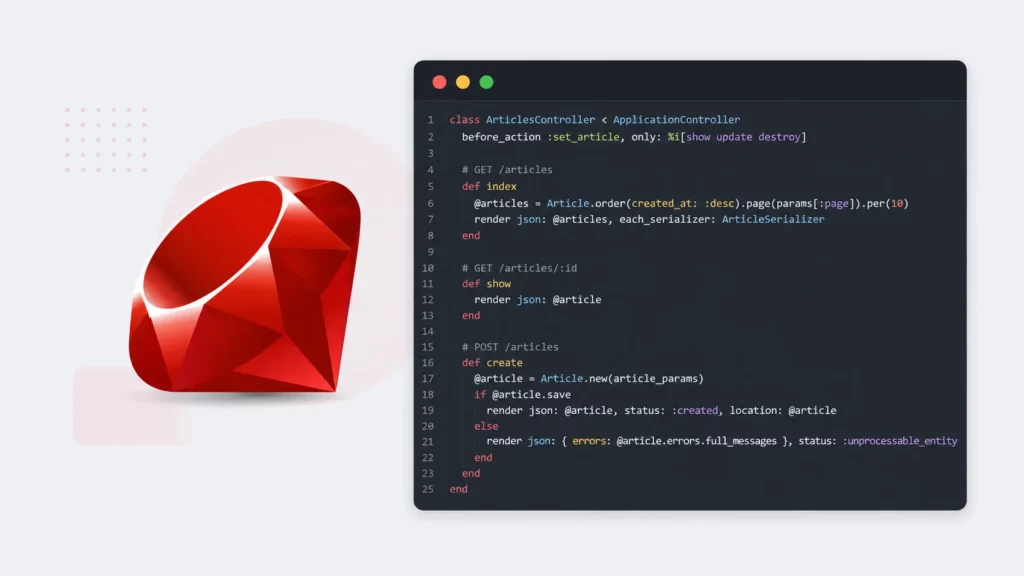
Ruby remains a valuable web development language for teams that care about shipping products quickly. Ruby on Rails still stands out as one of the most productive frameworks for getting a web application from concept to launch.
Features:
- Rapid product development: Ruby, especially with Rails, helps teams launch web products quickly with less setup friction.
- Convention-driven workflow: Ruby on Rails reduces the number of architectural decisions teams need to make early in the project.
- Startup and SaaS fit: Ruby remains practical for MVPs, SaaS products, and internal tools that need fast delivery.
- Readable code style: Ruby is known for a clean syntax that many developers find productive and expressive.
- Strong scaffolding support: Rails speeds up common web tasks such as routing, database work, and CRUD application setup.
Pros:
- Ruby is productive and developer-friendly. That productivity helps teams turn product ideas into working features with less friction.
- Rails can shorten the path from idea to launch because it provides strong conventions for routing, databases, testing, and application structure.
- Ruby fits MVPs, SaaS products, and internal systems well when speed to market matters more than broad ecosystem size.
- Ruby supports opinionated workflows that reduce early architectural drift. That structure can help smaller teams stay aligned and move faster.
Cons:
- Ruby has a smaller ecosystem than JavaScript or Python in some web segments. A smaller ecosystem can narrow hiring and package choices over time.
- Hiring may be harder in some markets, especially where Ruby is less common than more mainstream backend stacks.
- Some teams prefer stacks with larger communities for long-term standardization, particularly in organizations with stricter platform policies.
- Ruby may be a harder sell in companies that prioritize mainstream stack alignment, even when it would still be technically effective for the product.
Typical websites built on Ruby: X, Boeing, Comcast, Dribbble, GitHub, Basecamp, Shopify, Bloomberg
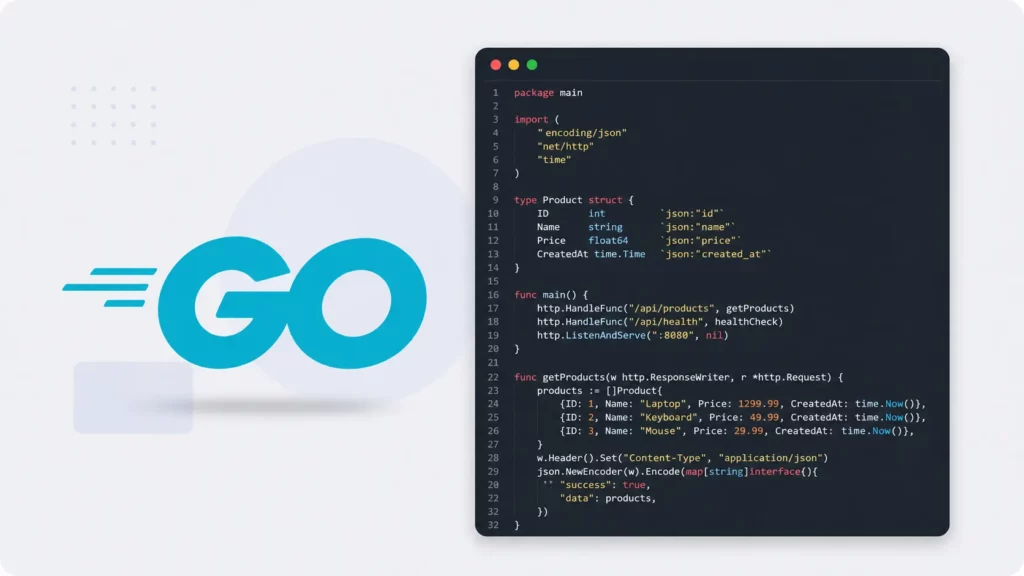
11. Go or Golang
Go, or Golang, is a strong back-end language for web systems that need efficient concurrency, straightforward deployment, and strong performance under load. Go is often chosen when backend simplicity and operational speed matter more than framework-heavy abstraction.
Features
- High performance: Go is built for backend systems that need speed, efficiency, and predictable runtime behavior.
- Concurrency support: Go handles many simultaneous processes well, which makes it useful for APIs, microservices, and distributed systems.
- Simple deployment: Go compiles into standalone binaries, which can make deployment and operations easier.
- Cloud and infrastructure fit: Go is often used in backend services that power platforms, DevOps tools, and scalable internal systems.
- Clean language design: Go favors simplicity, which helps teams build lean backend services without excessive framework complexity.
Pros:
- Go is fast and efficient. That performance profile makes Go attractive for backend services that must handle high traffic predictably.
- Go handles concurrency well, so it fits APIs, distributed systems, and workloads that process many requests simultaneously.
- Go supports simple deployment and operational clarity. Those qualities can reduce infrastructure complexity in production environments.
- Go is a strong fit for scalable APIs and cloud-oriented backends, especially when a team wants performance without excessive language complexity.
Cons:
- Go has a narrower web business ecosystem than PHP, JavaScript, or Python. A narrower ecosystem can limit options for content-heavy or traditional web use cases.
- Go may feel less expressive for teams used to more abstracted frameworks, especially when developers expect many built-in conveniences.
- Some product teams prefer other languages for fast UI-adjacent business iteration, where framework ecosystems and rapid scaffolding matter more than runtime efficiency.
- Go may be less suitable when the business needs fast CMS-style or content-first delivery, because other ecosystems are often more mature in that space.
Typical websites built on Golang: Google, YouTube, Uber, Dropbox, SoundCloud, ByteDance, BBC, Docker
FAQs about Programming Language for Web Development
What is the best programming language for web development?
There is no single best programming language for web development in every situation. JavaScript and TypeScript are the strongest front-end choices for most modern products, while the best back-end choice depends on the product’s architecture, performance goals, team skills, and delivery timeline.
Is JavaScript enough for web development?
Yes, JavaScript can be enough for many web projects, especially when a team uses JavaScript in the browser and Node.js on the server. In production, most web applications still rely on HTML and CSS for structure and presentation, and many teams add TypeScript to improve long-term maintainability.
Is TypeScript better than JavaScript for large web projects?
Yes, TypeScript is usually better than plain JavaScript for large web projects. TypeScript adds static type checking, which helps teams catch errors earlier, refactor more safely, and manage larger codebases with more confidence.
Which back-end language is best for scalable websites?
Java, Go/ Golang, C# (.NET), and JavaScript (Node.js) can all work well for scalable websites. The best answer depends on the system design, traffic patterns, data model, and engineering maturity of the team. Scalability is not only about language speed. Scalability also depends on architecture, caching, queues, databases, and operational practices.
Do I need multiple languages to build a website?
In most cases, yes. Even a simple website usually uses more than one technology, such as HTML for structure, CSS for styling, and JavaScript for interactivity. More advanced websites and web apps often add a back-end language such as JavaScript (Node.js), Python, PHP, Java, C# (.NET), Ruby, or Go to handle business logic, authentication, databases, and integrations.
Is Python good for web development?
Yes, Python is very good for web development, especially on the back end. Python is a strong choice for APIs, automation, dashboards, data-heavy platforms, and web products that need AI or machine learning features.
Are HTML and CSS programming languages?
HTML and CSS are usually not classified as programming languages in the strict sense. HTML is a markup language, and CSS is a style sheet language. Even so, both are essential to front-end web development because they define structure, presentation, and the overall usability of a website.
Conclusion
The best web development services languages are not one universal list ranked from first to last. The better way to choose is by role and by product need. HTML and CSS remain the foundation of front-end delivery. JavaScript remains the default language for browser interactivity. TypeScript is often the stronger long-term choice when a front-end codebase needs structure and scale.
On the back end, JavaScript (Node.js), Python, PHP, Java, C# (.NET), Ruby, and Go/ Golang each solve different problems well. Node.js works well for unified full-stack teams. Python stands out for AI-enabled and data-driven products. PHP remains practical for content-heavy web builds. Java and C# fit enterprise systems. Ruby still helps teams ship fast. Go is a strong choice for scalable services and high-concurrency APIs.
The best decision is the one that matches the product, the team, and the delivery model. A good stack should not only help a team launch faster. A good stack should also support long-term maintenance, product stability, security, and future scale.
If you are planning a new website, web app, or digital platform, Designveloper can help you choose the right architecture and development stack for the product you want to build. As an AI-first software and automation partner, Designveloper also helps teams apply AI to shorten repetitive parts of the delivery process, improve development efficiency, and move from idea to launch faster. The goal is not speed at the cost of quality. The goal is to build web products that are stable, secure, and ready to scale in production.
Also published on

Share post on










Related Articles


Rust Vs Java: Performance, Memory, And Project Fit For Teams
Rust Vs Java: Performance, Memory, And Project Fit For Teams Published September 30, 2026
vLLM Tutorial: Install, Run Inference, and Serve an API
vLLM Tutorial: Install, Run Inference, and Serve an API Published September 29, 2026
Git Concepts And Architecture: Objects, HEAD, Index & Workflow
Git Concepts And Architecture: Objects, HEAD, Index & Workflow Published September 27, 2026