













How to Become a Web Developer? A Detailed Guide

The booming era of the Internet and the age of professional web developer has always been here and there since their first appearance in the mid-20th century. And how to become a web developer?
There are several websites that can connect everyone in the world as long as they have an internet connection. People also invented many websites that offer us to buy items without getting out of our rooms. And did I forget to mention a bunch of streaming service websites where one can watch Friends, Breaking Bad, etc., or listen to their favorite singers even if you don’t store their songs on the PC? Well, my list can go on and on like… forever.
So, I guess, when spending your precious time reading all the above information, perhaps you’re looking for a comprehensive guide to be one of the brilliant people who make this world a more convenient place via websites: professional web developers.
Who Is a Web Developer?
Based on the process of web development, a web developer is a programmer that creates web-based applications to be accessed through the Internet. These websites and apps have specific features and functions that the dev is responsible to build through his programming skills.
Recommended reading: 8 Best Web Development Courses with Certificates in 2022
1. Types of developers
In short, web developers will be in charge of building web applications by writing markup and coding, from the interfaces, and data, to the complex structure behind them, etc. Thanks to their work, visitors can use and interact with a certain website.
But in fact, things are not that simple. If you already have some basic ideas of this industry, then it’s easy to point out the three main types of a programmer here:
- Front-end developer.
- Back-end developer.
- DevOps engineer.
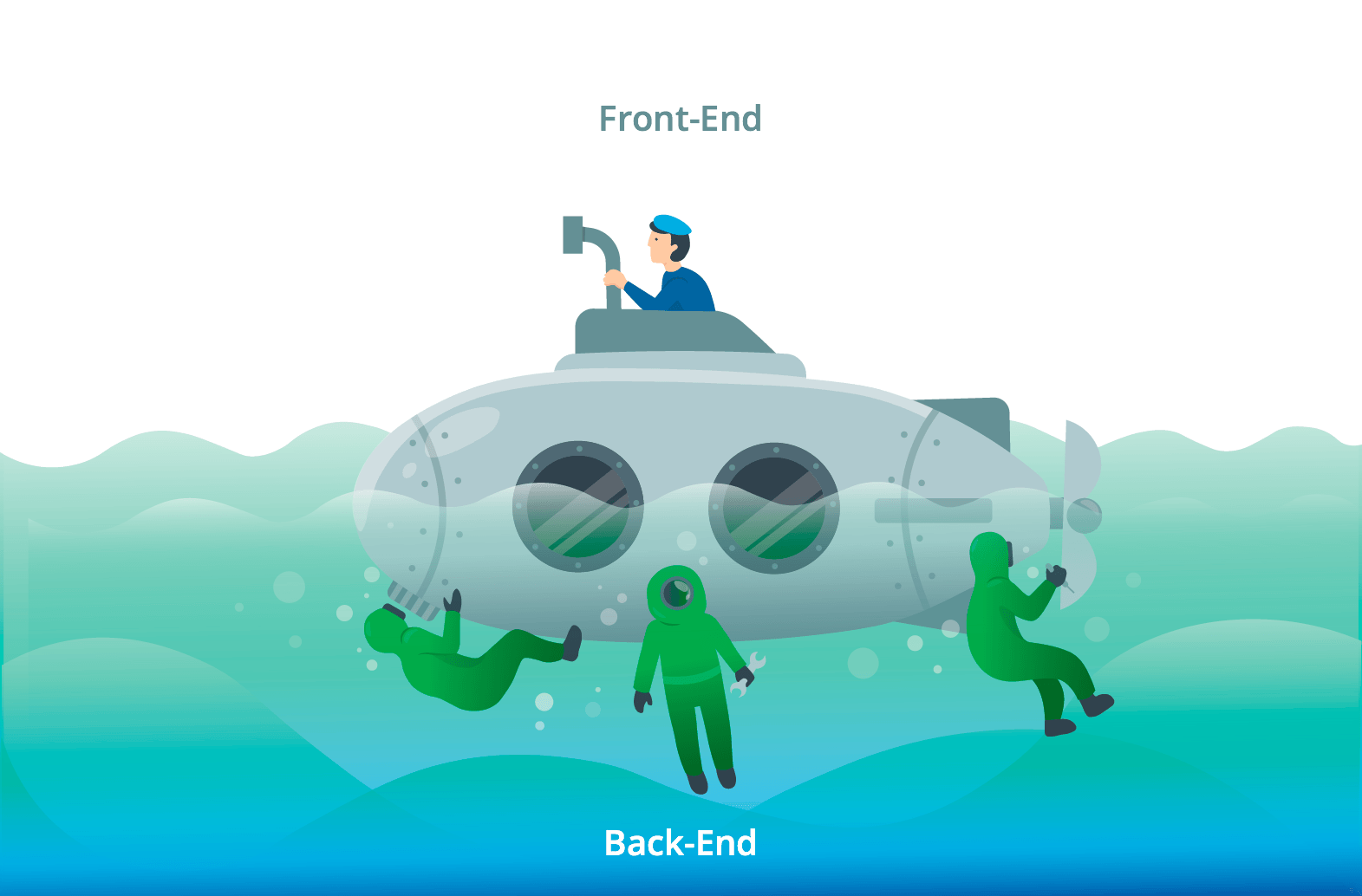
It’s not easy because each one takes into account different tasks in the process of making a website. And deciding which one to become is the first and most important step since it must be one of your most important focuses in the future.
Therefore, we at Designveloper wrote this article to give you a deeper look at 2 main professions which are front-end developers and back-end developers. We hope that this article will make it easier to choose one and be a successful professional web developer.
How to Become a Web Developer?
1. Become a Front-End Programmer
Developers who perform this practice of programming will be responsible for producing HTML, CSS, and JavaScript. With these three languages, the look (or the interface) and the interacting flow of a website will be formed based on blueprints from UI/UX designers. For example, all the buttons, texts, images, etc. on our site are the result of front-end development.
Besides, a senior front-end developer from Designveloper has revealed that his jobs also include adjusting the works from UI/UX designers so that it’s possible to code and works best from time to time.
Being aware of trends is another thing to bear in mind. Because, like any other industry, a professional web developer needs to be updated frequently in terms of technologies and aesthetics, etc. to meet users’ demands.
So, what exactly do you need to become one?
First of all, it’s time to master coding in HTML, CSS, and JavaScript. Front-end developers use HTML to build website structures and content. This language will put headers, footers, the display of text, media, and images, etc. together.
It’s also essential to know how to combine elements effectively and correctly. Besides, as a front-end developer, you must have good knowledge of common HTML elements such as default layout rules, styling, HTML semantics, and contextual usage.
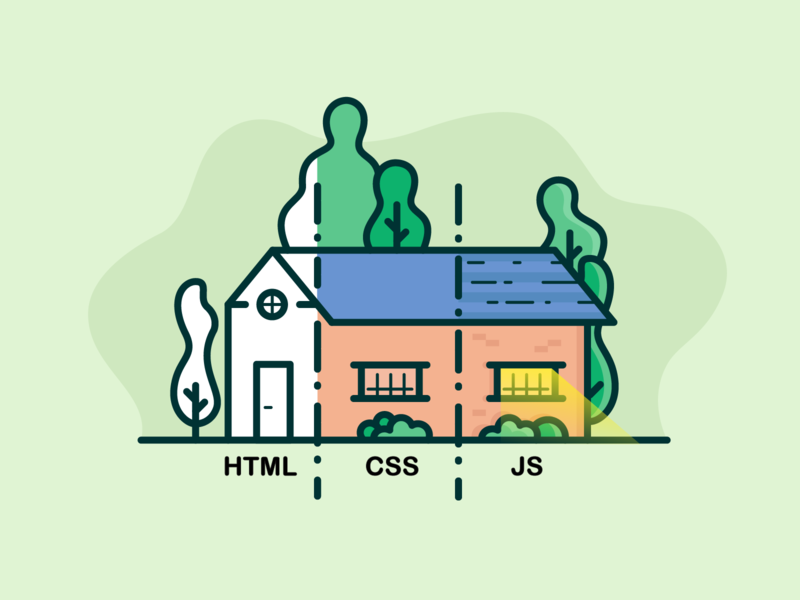
As for CSS, this is broken into modules and comprises the code for every graphic element – from backgrounds to the font, etc. That makes up the look and feel of a website. To make the best of CSS, front-end developers must understand fundamental concepts of CSS like cascading, specificity rules, selectors, inheritance, box model, and stacking context.
Last but not least: JavaScript. At any level, there are three key features of JavaScript that are important one must know; they are prototype chain, closures, and the ‘this’ keyword. As a professional web developer, you should also understand some other main features of the language such as dynamic typing, literal, variable, and function hoisting. At the same time you will want to be advanced in JavaScript, let’s learn JS idioms, patterns, modules, and frameworks.
Apart from the three programming languages
Front-end developers should have a good knowledge of Git and UX/UI. The first helps us keep track of changes, and gives people the ability to submit the issues. More importantly, your work will be cleaner and your coding skills will improve when we can revise the work and fix it once there’s a bug. And when you have a good UI/UX base. It’ll be easier to point out any issues regarding the design and fix it fast if possible.
Become a Back-End Programmer
The second path you may be interested in is back-end (or server-side) development. Instead of using code to create interfaces and interaction flows, back-end developers’ responsibilities are to:
- Use back-end programming languages to create business logic so that the website could run properly.
- Optimize websites’ speed and efficiency.
- Make sure users’ data and service requests through the front-end system are delivered well.
- Create and maintain core databases, and at the same time, build data storage solutions with databases.
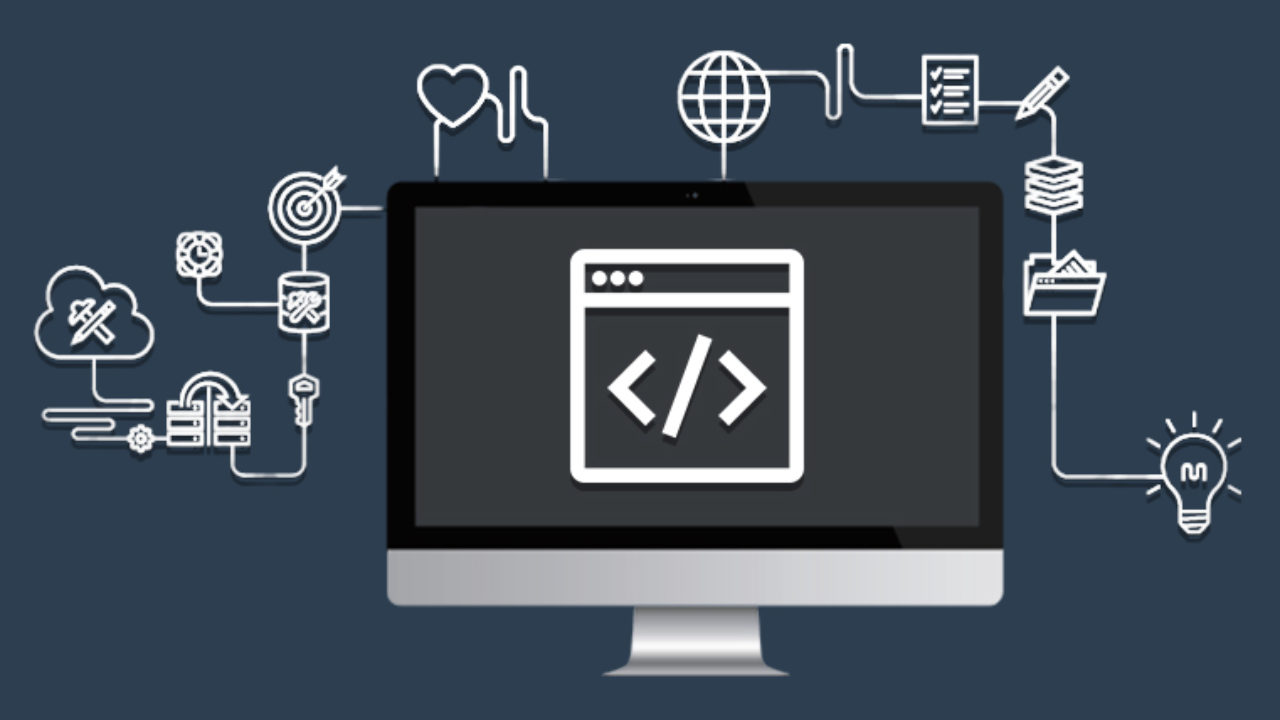
Or in short, this type of professional web developer takes account of all the inside works of a certain website regarding data, internal logic, security, the structure of databases and servers, etc.
It is said that back in the day when people did not really care about user interfaces. (Most of the computer users then were developers and they used code to navigate everything).
Back-end development was the core of a website
Nowadays, even though the attention on web development has been shifted toward the front-end. The role of the back-end is still as important as ever. Since if there is a single bug, at some point, the experience will be mildly (or seriously) ruined.
Furthermore, it’s necessary to code and maintain your server side in a good state to avoid security threats as well as low performance, etc.
Then, what do you need to become a back-end developer?
First things first, it’s always about programming languages.
In fact, there are several back-end languages in the industry. However, many experts suggest that beginners should focus on only one or two languages at a time. Some of the most important programming languages for back-end developers are Java, PHP, Node.js, and Golang.
Some courses to learn Java for beginners are:
- Java Code Geeks
- Java Brain
- Oracle Java Tutorial
And as for PHP, we suggest:
- Beginner PHP and MySQL Tutorial
- Building Web Applications in PHP
Besides programming languages, a professional web developer should be familiar with database and query languages.
Regarding query languages
SQL is the most used and famous one that every back-end developer needs to acquire a solid base of SQL syntax and knowledge about how to resolve deadlocks. Along with that, Dates, String manipulation, aggression, etc. are also some other practices a back-end developer must know. You can learn more about SQL with Short and Sweet: Get Started with Git and GitHub Right Now.
Last but not least, control version tools are needed more than ever. Since your tasks sometimes will be in a local environment setting, so knowing how to use Git is necessary. As a result, you can install and configure this tool. On top of that, let’s get comfortable with communicating with local and remote source repositories.
Benefits of Becoming a Web Developer
Aside from the fact that the market for web developers only looks to expand–probably at an accelerating rate. There are numerous other reasons to move into the field. Some of the biggest advantages that come with being a web developer are:
1. Highly Paid
The median income for a web developer in 2016 was over $66,000 a year. Keep in mind, this includes people who have been doing the job for a long time and have acquired an impressive laundry list of skills and markup languages that they know.
2. Express yourself
Finding a truly well-made website is like discovering a piece of art–only one that you get to interact with. How many times have you been surfing the web and being stunned by a truly amazing website? The design is flawless, the aesthetic sublime, and the interface effortless.
3. Work Remotely
One of the best things about web development is that it can be done anywhere that you have a reliable internet connection. This means you can work from home without a second thought. Moreover, many companies are increasingly hiring for remote positions. Because it allows them to save on the overhead of maintaining an office.
4. Build Your Own Websites
If you have had an idea for a website kicking around that you are confident will take the internet by storm. It is much easier–and far cheaper–to simply build the website yourself rather than having to track down and pick out someone who you feel can manifest your vision.
5. Independence day
Another great thing about becoming a web developer is the option to work as an independent contractor, also known as a freelancer. Essentially, you become your own boss. You pick the jobs you want to do, and you get to set your own schedule.
A Conclusion About How to Become a Web Developer?
No matter what your choice is, it’s important to focus on one and then continue with the other. Furthermore, don’t be afraid of the learning curve! The more you know and practice, the more amount of salary will be likely to fill your pocket.
If you are a web developer and looking for a job in this industry, look no further than Designveloper. We offer you a competitive salary, a great working environment, and an amazing team. Come join us now.
Finding Web Developer Jobs
As the demand for websites and apps is high, there is plenty of work for coders. Here are a few tips aimed especially at beginners looking for jobs:
- Ask people you know
- Make Sure to Showcase your Skills and Experience
- Use Job Boards and Freelance Sites
Frequently Asked Questions
1. What Are the Qualities of a Web Developer?
New tools and technologies appear on a daily basis, and you will constantly have to keep yourself up-to-date with them. To become a web developer, you need a genuine passion for the Internet. Moreover, web developers should be a strong desire to always learn new things.
2. How Much is a Web Developer Salary?
According to CareerExplorer, the average salary for a web developer in the United States is around $48,112 per year. Wages typically start from $38,155 and go up to $80,226.
3. Do You Need a University Degree to Become a Web Developer?
Creating your own projects or contributing to open-source code can teach you as much as a good teacher. While a bachelor’s degree in IT or computer science can always help, many web developers are self-taught.
And if you are a business owner and want to hire professional web developers, why don’t you partner up with us? Experts at Designveloper offer a wide range of services from web app development and mobile app development to business consulting. Tell us your ideas and we’ll realize them!
Also published on

Share post on










Related Articles



Top 20 Web Development Companies in Vietnam (2026 Guide)
Top 20 Web Development Companies in Vietnam (2026 Guide) Published September 25, 2026
Best Frontend Frameworks In 2026 : 8 Options, Tradeoffs, And Tips
Best Frontend Frameworks In 2026 : 8 Options, Tradeoffs, And Tips Published September 22, 2026
WebSocket Protocol Vs HTTP: Differences, Use Cases, And Tips
WebSocket Protocol Vs HTTP: Differences, Use Cases, And Tips Published August 05, 2026