















Agile Vs. Lean Project Management: Key Differences & Use Cases
March 24, 2026

Different teams use different methods to manage their projects effectively, and two of them are Agile and Lean. If you’re learning about these project management approaches to choose the right one for specific situations, you’ve come to the right place.
At a glance, these two approaches look similar, as both promise efficiency, adaptability, and better outcomes. But when you dive deep into details, the differences between them become more visible. And learning how they differ helps you know which one fits your teams and projects better.
But first, why don’t you get into what Lean and Agile project management mean first?
What Is Agile Project Management?
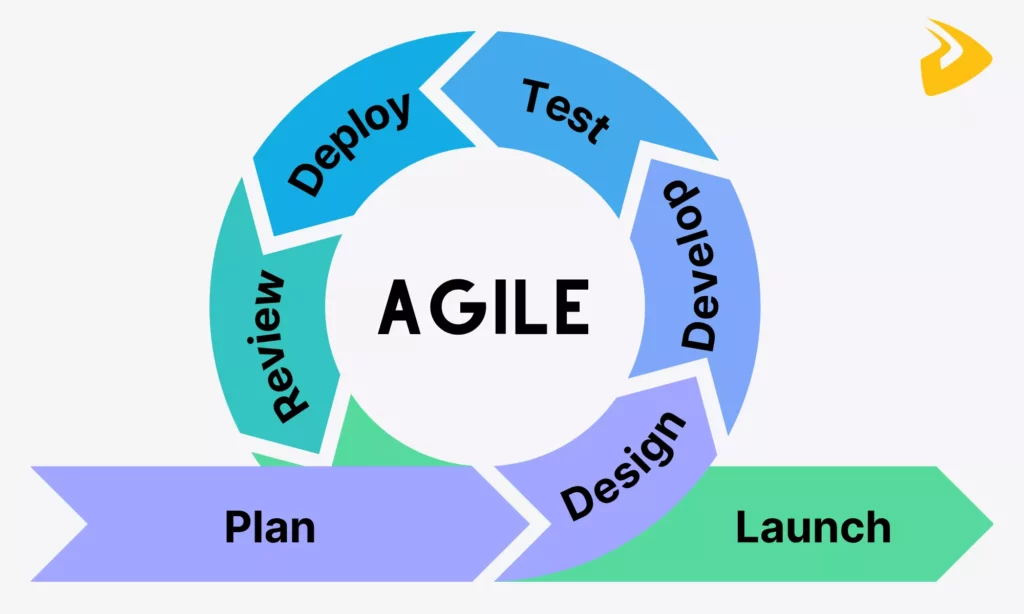
Agile project management is a flexible and iterative approach to building products, especially software. This approach accordingly allows teams to break work into smaller and more manageable chunks that can be completed within short cycles (often called iterations or sprints).
Agile appeared in the late 1990s to respond to traditional, plan-heavy project management approaches that often struggled when requirements changed. In Agile, teams don’t need to plan everything upfront and move work through dependent phases. Instead, they build and test parts of a product incrementally. For this reason, they can deliver value step by step, adapt the product to changing requirements, and improve based on quick feedback.
Besides, it removes the hierarchical working style that inherently exists in traditional methods. Instead, it encourages teams to collaborate closely, implement Agile testing alongside development, and adjust without costly rework. This way, Agile teams can launch products faster and reduce wasted effort.
Agile itself isn’t natively a rigid, dull framework. It’s more like a philosophy guiding how teams work around the following core principles:
- Work in small, manageable steps instead of trying to deliver everything at once
- Deliver usable results frequently
- Stay open to changes, even late in the project, if it improves the final outcome
- Collaborate closely with customers or stakeholders to make sure the product meets real needs
- Continuously gather feedback and improve
- Encourage team ownership and flexibility, allowing members to self-organize and adapt quickly
Today, Agile is widely adopted across industries, from tech startups to large enterprises. Its growing popularity also leads to an increase in tools and services supporting it. Accordingly, the global Agile project management software market is expected to reach $6.08 billion by 2026, while Agile development and testing services will hit $30 billion by the same year.
FURTHER READING: |
1. What Is Code Reuse? Benefit of Code Reuse and Examples |
2. How to Build an Application Like ChatGPT: A Full Guide |
3. Can ChatGPT Really Build an App? What ChatGPT Can & Cannot Do |
What Is Lean Project Management?
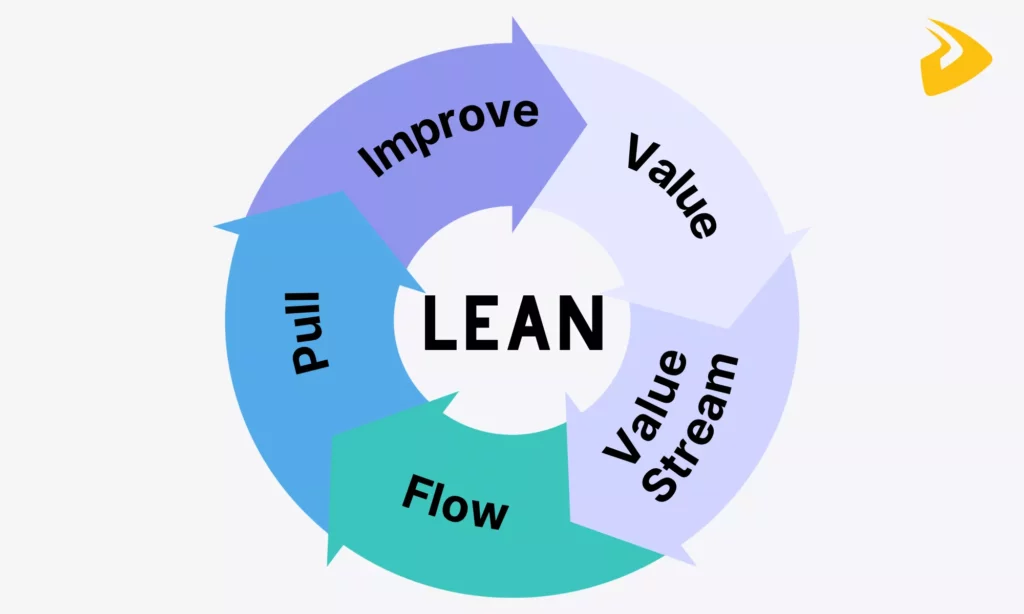
Lean is a method of removing any steps or actions that don’t contribute to customer value. Developed from manufacturing practices (particularly the Toyota Production System), Lean focuses on using automation to reduce defects, delivering only necessary outcomes for the next step, improving continuously, and reducing waste.
Lean didn’t originate in project management. But over time, its core values and concepts have been adopted beyond factories. James P. Womack mentioned the adoption of Lean across other industries through his Lean Thinking book published in 1996. Then in 2002, its application in software development was first mentioned in the book Lean Software Development: An Agile Toolkit.
Today, many development teams use Lean in projects where resources are tight or processes feel unnecessarily heavy. It helps streamline processes through the following principles to ensure every step actually adds value to the final outcome:
- Define value from the customer’s perspective, not just internal assumptions
- Identify and eliminate waste (time, effort, materials, or even unnecessary meetings)
- Create smooth, continuous workflows to avoid delays and bottlenecks
- Build quality into the process, instead of fixing problems later
- Deliver only what is needed, when it is needed (often called “just-in-time”)
- Continuously improve processes through small, ongoing changes
Difference Between Lean And Agile
We’ve walked you through the definition and core principles of Agile and Lean. So, now you may be curious about how these two approaches are different from each other.
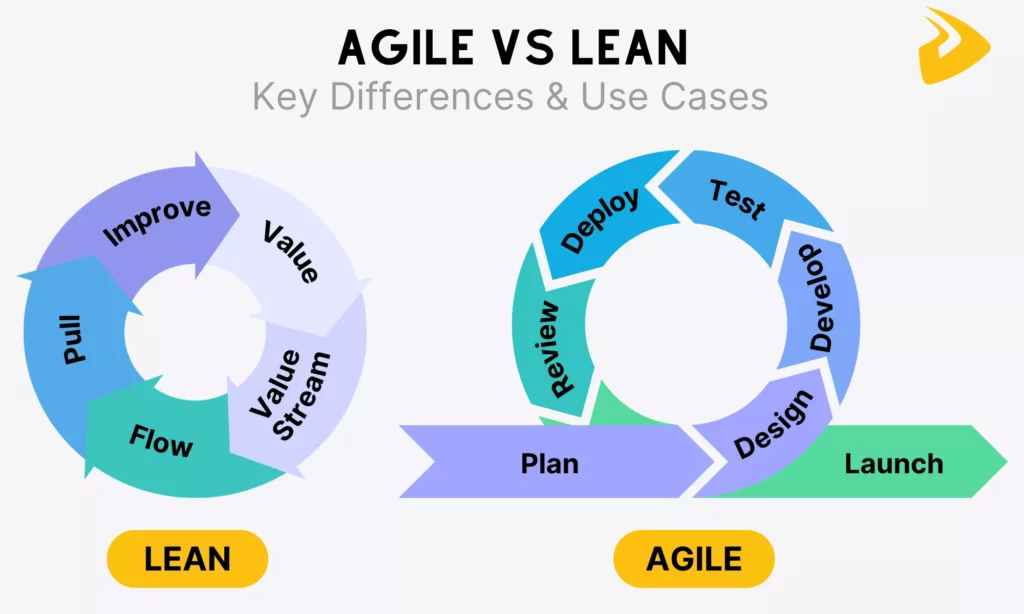
At a glance, you may feel Agile is more dynamic and supports adaptability alongside changes (e.g., in customer demands or business goals). Meanwhile, Lean focuses on building only crucial components and adjusting the workflow to reduce waste and increase efficiency. To make the differences between Agile and Lean clearer, take a look at the following comparison table:
| Aspect | Agile Project Management | Lean Project Management |
| Core Focus | Delivering value through adaptability and continuous feedback | Maximizing value by eliminating waste and improving efficiency |
| Approach To Work | Iterative and incremental (work is broken into small cycles) | Continuous flow (focus on optimizing the entire process) |
| Workflow And Structure | Structured into time-boxed iterations (sprints), with defined events (like sprint planning, daily stand-ups, review sessions, and retrospectives) | Less rigid structure; emphasizes smooth, uninterrupted workflows |
| Flexibility Vs Efficiency | Prioritizes flexibility and responsiveness to change | Prioritizes efficiency and waste reduction |
| Team Roles And Responsibilities | Clearly defined roles (e.g., Scrum Master, Product Owner, team members) | More fluid roles, with shared responsibility for improving processes |
| Delivery Speed And Output Quality | Frequent, small releases with ongoing feedback to refine quality | Focus on delivering high-quality output by optimizing the process upfront |
Similarities Between Agile And Lean
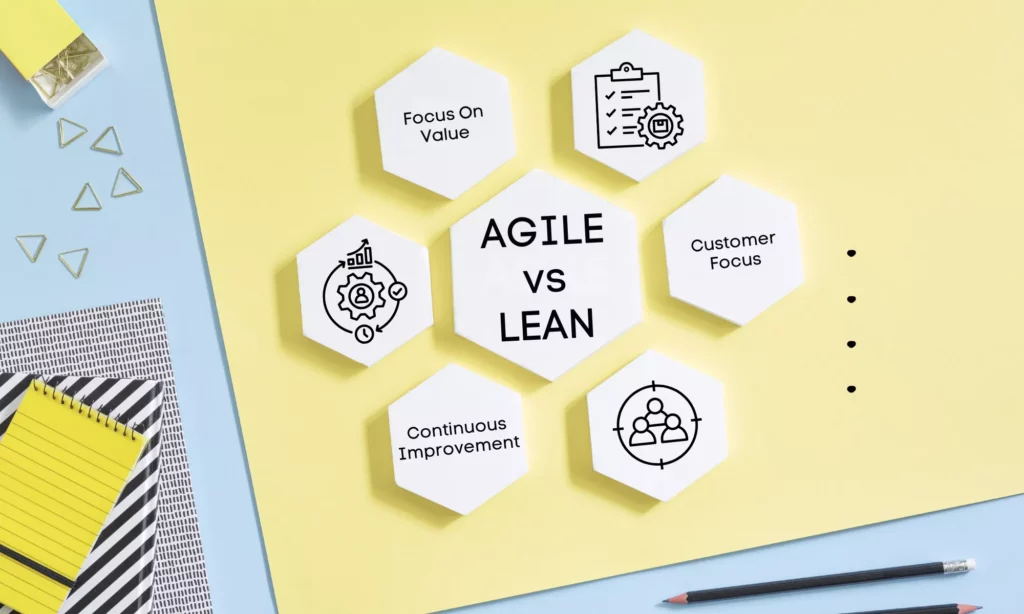
Despite those differences, they’re still similar in some ways. So, what exactly do they have in common?
- Customer Focus
Both Agile and Lean put the customer at the center of everything. Agile does this through constant feedback from customers to improve products incrementally over iterations. On the other hand, Lean focuses on defining what “value” really matters from the customer’s perspective and cutting out anything that doesn’t support it. So, although they take different paths, they still share the same intention: build what actually matters for end-users.
- Continuous Improvement
Neither approach assumes the process is perfect from the start, so they emphasize continuous improvements. Accordingly, Agile teams reflect after each iteration and change how they work bit by bit. Meanwhile, Lean encourages ongoing process optimization through small, consistent improvements instead of big changes.
- Focus On Value
Both Agile and Lean focus on delivering value rather than completing tasks. Particularly, Agile teams prioritize features that bring immediate benefits, while Lean ensures resources aren’t wasted on low-impact activities.
Agile Vs Lean: When To Use Each
Agile and Lean might share the same mindset in some areas, but in practice, they work best in different situations. But when should you use which? The wrong choice can result in operational inefficiency and costly rework. Keep reading, and you’ll learn when to use Agile, Lean, and both.
When To Use Agile
Briefly, Agile works best in projects where change (e.g., in customer demands, market trends, or business goals) is constant and unavoidable. So, if your project involves evolving requirements, unclear goals at the start, or frequent stakeholder input, Agile gives you the flexibility to adjust without disrupting the process.
More specifically, below are some common situations where Agile is the best choice:
- Requirements are likely to change frequently. Agile allows your team to adapt quickly through short iterations, so you’re not locked into outdated and fixed plans.
- You need regular feedback from customers or stakeholders. Through frequent reviews and releases, Agile keeps everyone aligned with current needs. This way, your team can improve the product to retain and increase customer satisfaction.
- The project is complex or exploratory. When you’re not entirely sure what the final product should look like, Agile helps you figure it out along the way through incremental releases.
- Speed of delivery matters. Agile enables faster delivery by allowing your team to build and test product increments instead of a full release. For this reason, the approach is widely adopted in testing ideas and developing MVPs (Minimum Viable Products).
When To Use Lean
Compared with Agile, Lean is better suited for situations where efficiency and consistency matter more than constant change. So, pick Lean if you aim to fine-tune the process continuously to keep things smooth from start to end, instead of adapting to constant changes.
To make things clearer, take a look at the following situations when Lean is a good fit:
- You want to eliminate waste and reduce costs. Lean helps your team cut unnecessary steps. This makes it ideal for resource-constrained projects.
- Processes are repetitive or can be standardized. Lean helps optimize workflows over time, especially in environments like manufacturing or operations.
- Quality and efficiency are top priorities. By improving the process itself, Lean helps prevent defects rather than fixing them later. This way, you can continuously increase workflow efficiency and maintain the high quality of the product.
- You need predictable outcomes. Lean offers a structured, efficiency-driven approach to help your team create a repeatable process that delivers predictable, stable outcomes with minimal resources.
Can Agile And Lean Work Together?
Agile and Lean can work together in many projects. In reality, Agile focuses on what to build next and how to adapt, while Lean focuses on how to build it better with fewer resources. When you find areas where the strengths of Agile and Lean overlap, you can balance flexibility with efficiency.
Here are some situations where using both can bring high value:
- Product development with evolving requirements. In this use case, Agile handles iterative development and feedback loops, while Lean ensures the workflow stays efficient and free of waste.
- Scaling Agile teams in larger organizations. These organizations can start projects with Agile to guide team-level execution, and then use Lean to scale processes across teams to avoid bottlenecks.
- Continuous delivery environments. In these projects, Agile enables frequent releases, and Lean optimizes the process to make delivery faster and more reliable.
- Improving existing Agile processes. If your Agile team is delivering fast but creating too much waste and demanding flow improvements, Lean can step in. It accordingly helps fine-tune your workflow and remove unnecessary steps.
- Improving DevOps efficiency. Lean principles (e.g., waste reduction) can be combined with Agile principles (iterative development to ensure code is delivered fast without wasting too many resources.
FAQs About Agile And Lean
Is Lean An Agile Methodology?
No, Lean isn’t technically a type of Agile methodology, although many articles now suggest it as a common Agile framework.
Lean is inherently a manufacturing practice, and it has high applications in the manufacturing and service industries. But it shares a similar mindset with Agile around delivering customer-centric value and improving continuously. For this reason, many often mix these two approaches up.
What Are The 5 C’s Of Lean?
The 5C’s of Lean is a systematic framework tied to the Japanese 5S approach. Its goal is to create a well-organized workplace that supports easy issue detection, continuous improvements, and safety.
5Cs stands for:
- Clear Out (Seiri): Remove anything unnecessary from the workspace. This helps reduce clutter, distractions, and wasted time searching for things.
- Configure (Seiton): Arrange essential items in a logical way so that everyone can easily access and use them.
- Clean and Check (Seiso): Regularly clean and inspect the workplace to spot issues early, like equipment problems or safety risks.
- Conformity (Seiketsu): Standardize how things are done. This ensures consistency, so everyone follows the same processes instead of improvising.
- Custom and Practice (Shitsuke): Turn the above practices into the habits of everyone through continuous training and discipline.
What Are The 7 Lean Principles?
Lean guides teams on how to implement work through the seven core principles as follows:
- Eliminate waste: Identify and remove any step or action that contributes no value to customers.
- Build quality in: Consider quality from the start instead of as an afterthought. This means teams need to build processes (e.g., automated testing) to immediately catch issues and minimize defects.
- Create knowledge: Build a culture that encourages continuous learning and improvement. For example, in software development, teams can be fostered to use pair programming or code reviews to share knowledge and encourage self-learning at the same time.
- Defer commitment: Use the latest data to make crucial decisions at the last responsible moment. This prevents teams from wasting resources on decisions that are made based on outdated information or guesswork.
- Deliver fast: Deliver products, bug fixes, or enhanced features as fast as possible to gather customer feedback, identify issues, and improve.
- Respect people: Enable employees to make decisions, share ideas, and improve how they work.
- Optimize the whole system: Focus on improving the entire workflow instead of isolated parts.
Is Lean Considered Agile?
Not actually, although they share some similar values and principles. In fact, Lean isn’t officially considered part of Agile. But Lean principles support and complement the Agile methodology to help teams improve continuously and deliver value efficiently.
So, although Lean and Agile aren’t the same thing, they often work side by side. And sometimes, their similar points make people misunderstand that Lean is considered an Agile framework.
Conclusion
To summarize, Agile aims for flexibility, helping teams adapt quickly and deliver in small, iterative steps, while Lean focuses on efficiency, cutting waste, and refining processes over time. Still, they both care about delivering value, improving continuously, and keeping the customer at the center. With those traits, Agile works best in fast-changing, uncertain projects; Lean, meanwhile, is more ideal in stable environments where workflow optimization and waste reduction matter.
Are you planning to build a software product and want a team that already understands how to apply these approaches in real-world scenarios? If so, Designveloper is worth considering.
We use Agile methodologies like Scrum and Kanban to break projects into manageable iterations, ensuring faster delivery and constant feedback. Further, we also adopt Kaizen – a key practice of Lean – to continuously gather feedback from clients and team members to enhance team performance through retrospectives held after each sprint.
Our approach is especially valuable for MVP development. Instead of overbuilding, we deliver a functional product quickly, then refine it based on real user feedback. That approach helps us implement various successful projects, like Lumin, ODC, Swell & Switchboard, Walrus Education, and Joyn’it.
So, whether you’re building a SaaS platform, a web or mobile app, or even modernizing an existing system, Designveloper can help. Contact us and see how our team turns your idea into something real!
Also published on

Share post on










Read more topics









You may also like


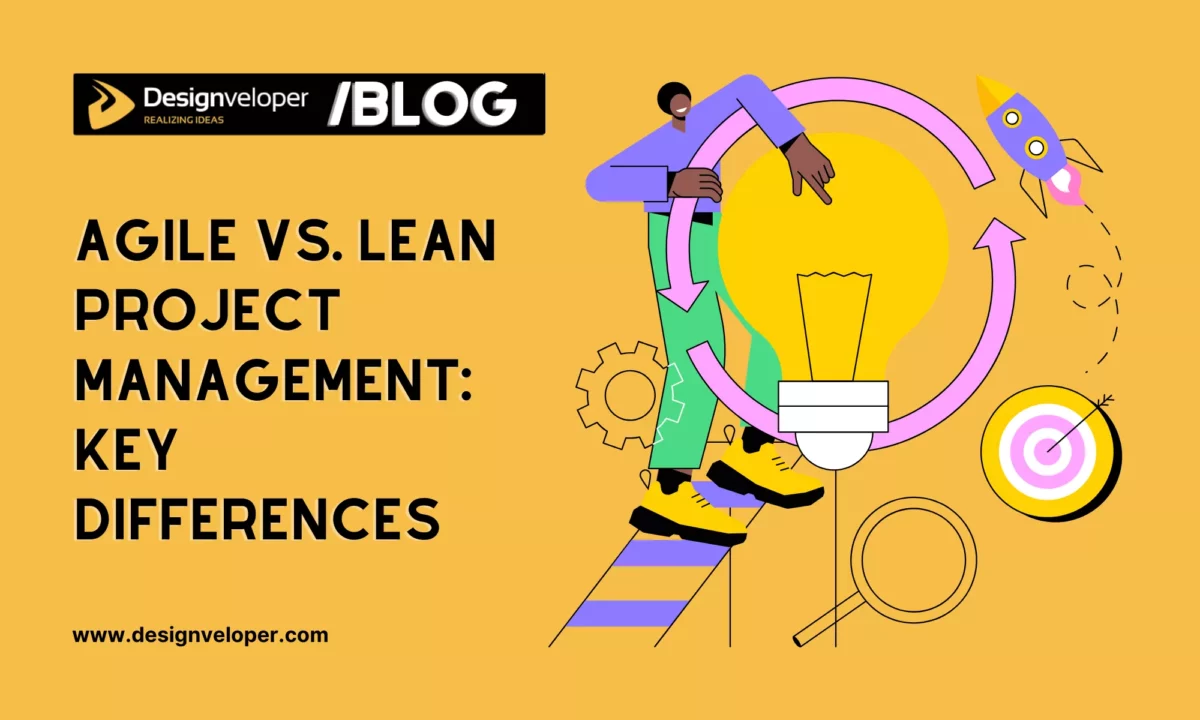
Agile Vs. Lean Project Management: Key Differences & Use Cases
Agile Vs. Lean Project Management: Key Differences & Use Cases Published March 24, 2026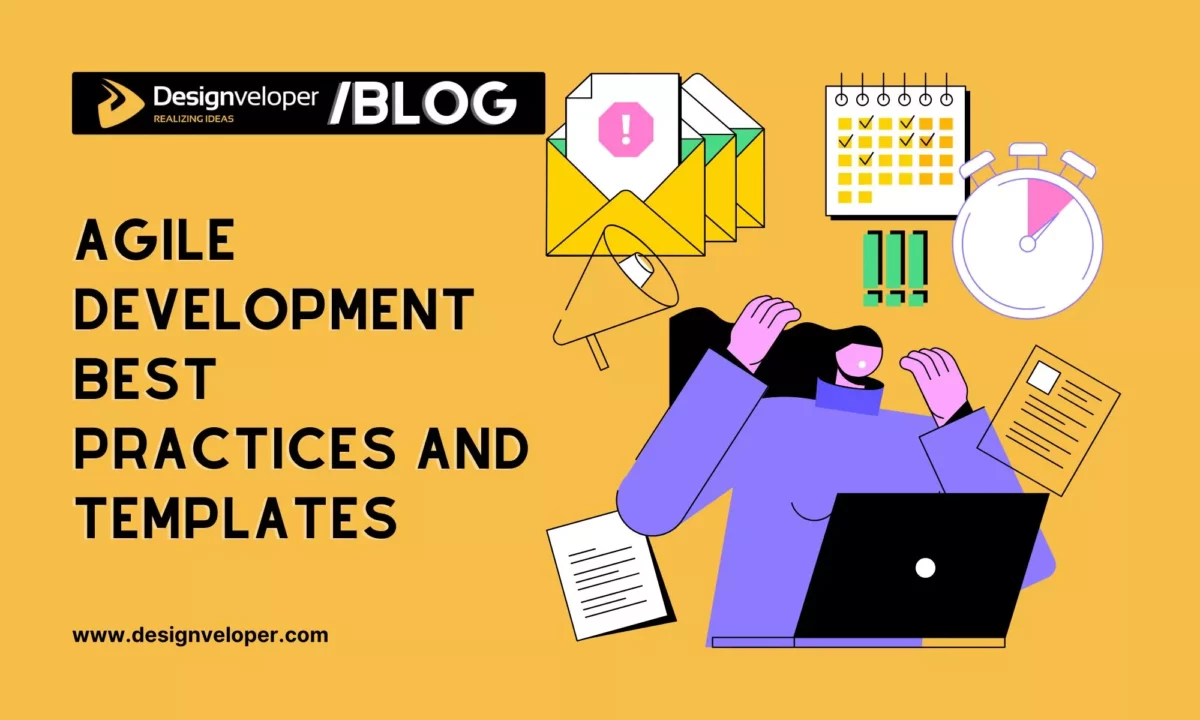
10 Agile Development Best Practices And Templates
10 Agile Development Best Practices And Templates Published March 23, 2026
Agile Vs. Waterfall Vs. Scrum Vs. Kanban: Key Differences
Agile Vs. Waterfall Vs. Scrum Vs. Kanban: Key Differences Published March 23, 2026









