















Agile Innovation: Process, Benefits, Examples, And Best Practices

KEY TAKEAWAYS:
- Agile innovation uses short feedback loops to move uncertain ideas toward validated solutions; software delivery is only one part of the work.
- Before increasing investment, test the riskiest assumption and define the success measure and guardrails.
- Scale only when the result meets a pre-agreed threshold without exceeding quality, safety, or cost limits.
- A sprint or prototype is a tool, not a strategy. Teams still need a clear problem, an accountable decision owner, and a reason the work matters.
Teams rarely know enough at the start of a new product or process to justify a full-scale build. Yet fixed roadmaps can commit people and budget before the riskiest assumptions are tested. Agile innovation gives product managers and owners a way to shorten that gap: organize work around small, observable learning steps, then change the plan when evidence changes. This guide defines the approach, distinguishes it from software delivery alone, and shows how to frame experiments, choose measures, and decide whether to adapt, stop, or scale. It also explains where teams need strategy, safety controls, and shared ownership to keep experimentation useful.
What Is Agile Innovation?
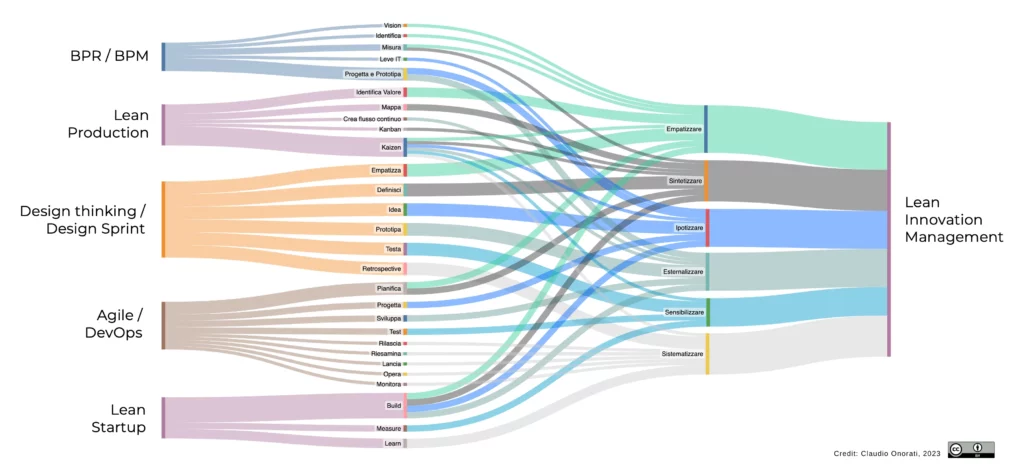
Agile innovation is a customer-focused way to explore, test, and improve ideas through short learning cycles. Teams combine problem discovery, prototypes or small releases, feedback, and evidence-based decisions to move from an uncertain opportunity toward a solution that works. The outcome may be a digital product, a service change, or a better internal process.
It is broader than Agile software development. Software practices such as sprints can support the delivery stage, but innovation work often starts earlier with user research, problem framing, and testing whether an idea is worth building. The BMJ Innovations paper on Agile Innovation in healthcare describes a structured, customer-centered approach for complex organizations that combines understanding the context, prototyping, and testing with iterative delivery.
There is no single checklist that every team must follow. A small product team may test a clickable flow, while an operations group may pilot a revised handoff. The shared idea is to make assumptions visible, learn from the people affected, and use that learning to choose the next investment. Agile innovation is not a promise of faster success; it is a way to make decisions with better evidence while uncertainty is still manageable.
Recommended for you:
- Agile Development Best Practices: 10 Tips And Templates In 2026
- What Is An Agile Framework? Definition, Types And Examples
- Agile Web Development: How It Works, Process, and Benefits
Why Innovation Fails When Assumptions Go Untested
Innovation efforts often lose momentum when teams treat early guesses as settled facts. Agile innovation cannot remove uncertainty, but it can expose weak assumptions before they become expensive commitments.
Plans Can Become Premature Commitments
A detailed roadmap can create alignment, but it can also lock teams into a solution before they understand the problem. When research, design, and delivery take place in separate stages, new customer evidence may arrive only after the budget and timeline are difficult to change.
The answer is not to abandon planning. Teams can plan around outcomes, constraints, and decision points while keeping the solution open to change. That makes a plan useful as a guide rather than a promise that every early assumption is correct.
Feedback Arrives Too Late
If teams wait for a finished product to ask users what they think, the feedback may come after the largest investment has already been made. A short interview, prototype review, or limited pilot can reveal confusion sooner, when the team can still adjust the design or test a different idea.
Feedback also needs a clear question. General reactions such as “Do you like it?” are less useful than observing whether people can complete a task, understand an offer, or solve the problem the team set out to address.
Delivery Is Disconnected From Strategy
A team can finish work on schedule and still make little progress on a business or customer goal. This happens when measures focus on activity, such as features released, rather than the change the work is meant to create.
Leaders should connect each experiment to a strategic challenge, name who can make the next decision, and review what the evidence means. In an Agile project management approach, teams can keep a visible backlog and adjust priorities without losing sight of the intended outcome.

How Agile Innovation Works In Practice
A practical Agile Innovation cycle moves from a real problem to a small test, then uses the result to choose what happens next. The steps can overlap; the point is to shorten the distance between a question and useful evidence.
Define The Problem And Baseline
Start by describing who experiences the problem, when it occurs, and why it matters. Map the current journey or process before suggesting a solution. For example, “improve onboarding” is too broad; “new users leave during identity verification because they cannot tell what information is required” gives a team a question it can investigate.
Choose a baseline measure that reflects the problem, such as task completion, time to resolve a request, or the number of errors per workflow. A baseline is not a target. It tells the team what happens today so that later evidence has a useful comparison.
Test The Smallest Useful Version
Choose a test that can answer the riskiest open question without building more than necessary. A sketch or clickable prototype can test comprehension; a limited pilot can test whether a process change works in its real environment. A minimum viable product in Agile may be useful when the team needs real-world use, but it should not be the default for a question that a cheaper test can answer.
A design sprint is one possible discovery technique, not a complete innovation system. Atlassian’s design sprint guide describes a five-day format for prototyping and testing a business idea with customers. Teams should adapt the format to the question, participant access, and risk level rather than treating the calendar as proof of learning.
Review Evidence And Choose The Next Step
Before a test begins, agree on what result would support the idea, what would weaken it, and who will make the decision. An Agile sprint cycle can provide a review cadence, but the team should still choose its own evidence and decision rule. Afterward, compare the evidence with the baseline and note what the test could not establish. Teams may then refine the prototype, test a different assumption, run a limited release, or stop the idea.
Short iterations work best when linked to a reliable software development life cycle. Discovery and delivery can inform each other, while quality, security, and operational checks remain part of the release decision. The team should record the reason for changing direction so that each cycle adds to its understanding.
For practical examples, check out:
- POC Vs MVP Vs Prototype: How To Choose The Right Validation Step
- Agile Release Planning: Steps, Benefits, And Best Practices In 2026
- Scrum Software Development Turns Change Into Working Software

Key Principles Of Agile Innovation
These principles help teams learn without turning each new idea into a large, unbounded project. They are useful when they change how people make decisions, not when they become another checklist to complete.
Start With Customer Evidence
Keep the people affected by a proposed change close to the work. Interviews help teams understand context, observation shows what people actually do, and usability tests reveal whether a solution is clear. Each method answers a different question, so teams should choose evidence based on the assumption they need to test.
Form Cross-Functional Teams
Bring product, design, engineering, operations, and subject experts together when their knowledge is needed to test an idea. A team with end-to-end context can spot dependencies earlier and make decisions with fewer handoffs. A clear Agile team structure still needs named ownership; shared work does not mean that accountability disappears.
Measure Outcomes, Not Activity
Track whether the experiment changes the user or business condition it was designed to affect. Releases, meetings, and completed tasks show activity, but they do not prove that a solution is useful. Keep the measure close to the problem statement and review it with the people who own the result.
Pair Speed With Guardrails
Small tests can reduce risk only when the team also protects customers and operations. Define limits for privacy, security, accessibility, service quality, and cost before exposing a change to real users. A test that violates a critical limit is not a success just because it produces a positive signal elsewhere.
Benefits Of Agile Innovation
Agile innovation can improve how teams learn and allocate effort, but it does not guarantee a successful product or a faster launch. The benefits below depend on whether teams test meaningful questions and act on the evidence.
Earlier Risk Discovery
A prototype can expose a usability problem before engineering work is complete. A pilot can reveal whether a new workflow fits the real operating environment. Finding these issues early gives teams more choices: revise the concept, narrow its scope, or stop before more time and budget are committed.
A Closer Fit With User Needs
Regular contact with customers can reveal a gap between what a team assumes people need and what they can use in practice. That evidence helps the team prioritize useful changes over features that are easy to build but do not address the core problem.
Adaptation Without Restarting The Whole Plan
When work is divided into small, reviewable steps, new information can change the next step without invalidating everything already learned. Teams can preserve useful components, adjust the backlog, and explain why priorities changed. The software development process can then respond to evidence while still respecting architecture and release constraints.
More Visible Collaboration
Frequent reviews make open questions and dependencies easier to discuss across functions. This can reduce the risk that teams discover conflicting assumptions only at handoff time. The value comes from shared decisions and clear ownership, not from adding more meetings to the calendar.
Related reading:
- Agile And Lean: Differences, Similarities And When To Use Each
- Agile vs Traditional Project Management: Key Points in 2026
- Agile vs DevOps: Key Differences and How They Work Together

Agile Innovation Examples
Examples are useful when they show what a team tested and what decision followed. The cases below have different evidence levels: one is a reported company transformation, one describes a healthcare method, and one is a proposed experiment rather than a published result.
Charles River Laboratories: Shorter Digital Delivery Cycles
A McKinsey case account about Charles River Laboratories reports that the company reduced the time to launch new digital products and services to three months, compared with 12 to 18 months previously. It also describes a three-month diagnostic phase followed by three months of mobilization before the first sprint. Those are separate measures and stages; the diagnostic timeline should not be used as the launch-time comparison.
The account describes a specific digital transformation, including customer-focused work, design thinking, and frequent delivery reviewed with customers. It is a company case narrative, not a controlled estimate of Agile’s independent effect. The transferable lesson is to shorten feedback loops and define the measures clearly, not to assume every organization can reproduce the same timeline.
Healthcare: Testing With Clinicians
The BMJ Innovations paper introduced earlier describes Agile Innovation in complex healthcare settings. Its examples include prototypes tested with clinicians and refined based on whether the tools fit real work. This shows why context matters: a promising idea must work with the people, tasks, and systems around it, not only in a demo.
Healthcare experiments also need clinical, privacy, and safety oversight. The method is not permission to expose patients to an unreviewed change. Teams should use approved environments and qualified reviewers, then expand only when evidence and governance support the next step.
A Proposed Onboarding Experiment
Consider a digital service where new users often leave during identity verification. The following is a hypothetical test plan; its thresholds must come from the team’s baseline data and risk requirements, not from a generic industry benchmark.
- Hypothesis: Clearer status instructions will help eligible users complete verification because they will know what information is needed and what happens next.
- Small test: Prototype the revised instructions, then test them with an appropriately scoped group after privacy, security, and accessibility review.
- Primary measure: Compare the verification completion rate among users who start the flow with the current baseline or a suitable control over a pre-agreed review window.
- Guardrails: Set acceptable limits for verification errors, fraud signals, support contacts, accessibility issues, and completion time before the test begins.
- Decision rule: The product owner scales the change only if the primary measure clears the team-set threshold and no guardrail is breached. Otherwise, the team revises the instructions, runs a bounded follow-up test, or stops the change.
The owner should also agree on the minimum evidence needed before launch, who reviews the results, and what happens if the test reaches a safety limit early. Those decisions turn “experiment quickly” into a controlled learning process.
Common Misconceptions About Agile Innovation
Agile innovation is often reduced to speed or experimentation. In practice, it combines a clear direction with flexibility in how a team reaches a useful outcome.
It Is Not Just Faster Delivery
A team can ship more often and still build the wrong thing. Speed matters when it helps the team gather relevant evidence sooner, correct course, or deliver a useful improvement. Release frequency alone is not proof of innovation value.
It Is Not Random Experimentation
A useful experiment has a specific question, a defined audience, a measure, and a decision that follows from the result. Testing many unrelated ideas without a baseline or owner creates activity, not reliable learning. Keep each test small enough to interpret and safe enough to reverse.
It Does Not Replace Strategy
Strategy helps a team decide which customer or business problems deserve attention. Agile innovation helps the team test possible responses. Without direction, an adaptable team may optimize work that does not matter; without learning, a strategy can remain tied to assumptions that no longer hold.

What It Takes To Implement Agile Innovation Successfully
Implementation depends on more than adopting a sprint calendar. Teams need a focused challenge, enough authority to act on evidence, and a review process that can protect the work while it is still small.
Write A Focused Problem Statement
State the affected user or process, the current difficulty, and why it matters. Add the baseline measure and the outcome the team hopes to change. A focused statement makes it easier to compare solution options and prevents the experiment from expanding into a broad redesign before the team has evidence.
Assign Roles And Decision Rights
Name a product owner or accountable lead who can decide whether to continue, change, or stop the test. Include the people who understand customer needs, technical constraints, and operational risks. Teams can use appropriate software project management methodologies to coordinate work, but the decision process should stay clear to everyone involved.
Protect Learning And Quality
Leaders should reserve time for discovery, make it safe to report weak results, and remove blockers without taking ownership away from the team. At the same time, teams must maintain the quality assurance process and security, privacy, and compliance reviews that apply to the product or service.
Set a regular review point for each experiment. The team should bring the original question, observed evidence, guardrail status, and recommended next step. A brief decision record helps other teams understand what was learned and prevents a stopped idea from returning without new evidence.

Conclusion
Agile innovation helps teams make progress when the right solution is not yet clear. Start with a meaningful problem, test the riskiest assumption, and use a pre-agreed measure and guardrails to decide whether to adapt, stop, or scale. The approach works best when customer learning stays connected to strategy, delivery, and quality. If your team needs support turning a validated idea into a digital product, learn more about Designveloper’s software development services.
Also published on

Share post on










Related Articles


What Is a Vector Database? How It Works, Use Cases & Limits
What Is a Vector Database? How It Works, Use Cases & Limits Published October 28, 2026
How Will AI Affect Software Development? Complete Guide In 2026
How Will AI Affect Software Development? Complete Guide In 2026 Published October 21, 2026
How Gitignore Works: Rules, Patterns, Examples, And Debugging Tips
How Gitignore Works: Rules, Patterns, Examples, And Debugging Tips Published October 16, 2026