














Types Of Agile Methodology: Which One Is Best For Your Team?

KEY TAKEAWAYS:
- Agile methodology is not one fixed framework, but a family of approaches that all support iterative delivery, faster feedback, and continuous improvement.
- The right fit depends on team size, workflow, technical discipline, and coordination needs rather than on which framework is most popular.
- Scrum, Kanban, and XP usually suit team-level delivery, while SAFe, Scrum At Scale, LeSS, and Nexus help organizations coordinate Agile across multiple teams.
- Teams get better results when they adapt Agile methods to their real workflow and culture instead of forcing a framework mechanically.
Agile has been around for years, becoming one of the most common ways software teams plan and deliver work. As Agile adoption has grown, so has the number of frameworks built around it, from Scrum and Kanban to XP, SAFe, and several scaling models.
That variety is useful, but it also creates confusion. This guide breaks down the main types of Agile methodology, how they work in practice, where each one fits, and how teams can choose the approach that actually matches their size, goals, and delivery style. If you want the broader foundation first, it helps to understand what Agile software development means in practice before comparing frameworks.
Related articles:
- What Is SCRUM And How Does It Work?
- Agile Vs Scrum: What’s the Difference and When to Use Each?
- Agile Vs. Waterfall Vs. Scrum Vs. Kanban: Key Differences
What Is Agile Methodology?
Agile is a mindset for building products through small, continuous improvements instead of one large release at the end. Agile methodologies are the practical frameworks teams use to apply that mindset in day-to-day work.
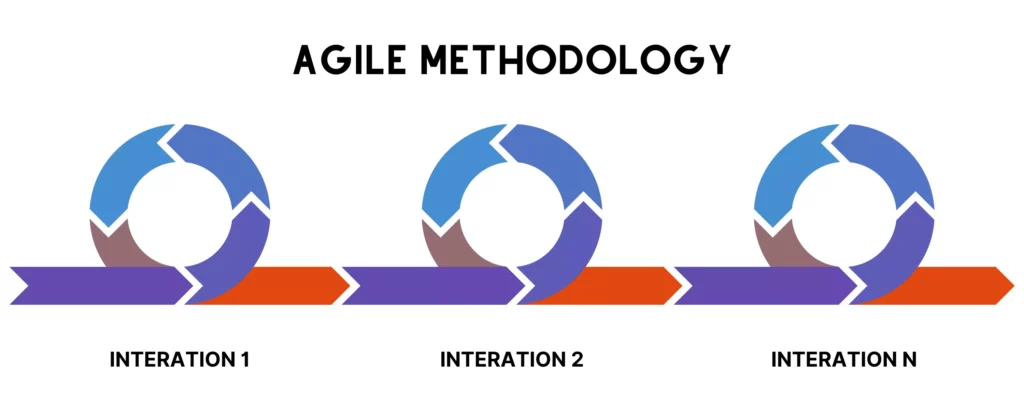
Although these frameworks differ, they all help teams break work into smaller pieces, test ideas early, gather feedback, and adapt quickly. Instead of locking every requirement upfront, teams can deliver value in shorter cycles, communicate more often, and respond better to changing customer or business needs.
That is one reason Agile remains so popular in software delivery. According to the 18th State of Agile Report, 41% of surveyed organizations said they had increased their investment in Agile. Separately, IMARC Group projects enterprise Agile transformation services to grow at a CAGR of 16.1% from 2026 to 2034, reflecting continuing demand for frameworks such as Scrum, Kanban, Scrumban, and Scrum/XP.
Why There Are Different Types Of Agile Methodologies
If Agile is supposed to simplify delivery, why are there so many versions of it? The short answer is that teams do not all work in the same environment, with the same constraints, or toward the same kind of outcome.
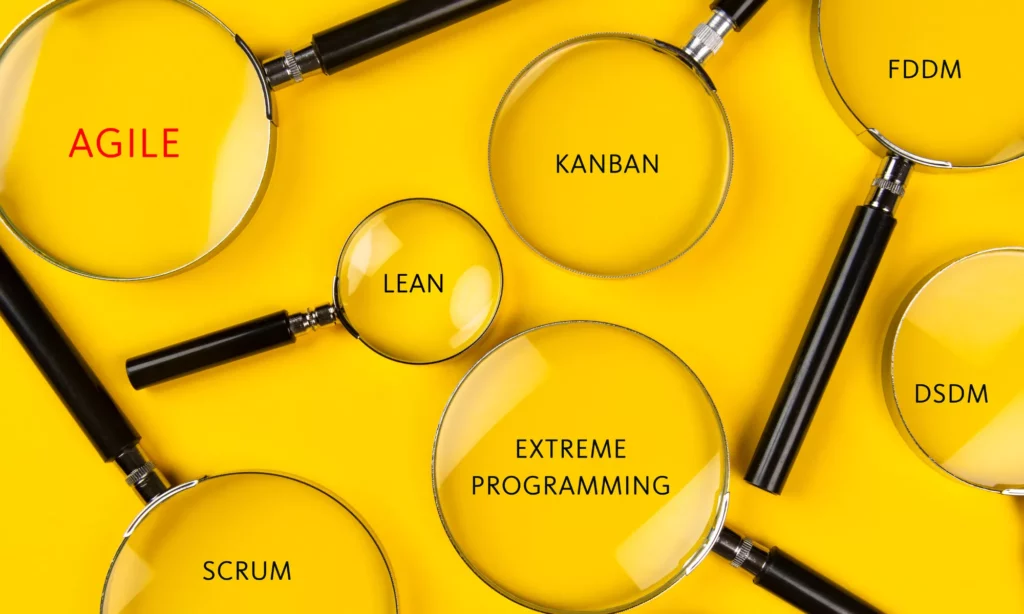
Why Teams Need Different Agile Development Methods
In reality, a five-person startup trying to ship an MVP quickly works very differently from a 200-person enterprise team handling legacy systems, approvals, and cross-team dependencies. Their priorities, risk tolerance, and communication patterns are not the same, so Agile was never meant to be one-size-fits-all.
That is why different frameworks emerged. A lightweight team may prefer Kanban because it keeps work flowing without strict roles or sprint deadlines. A team that needs more structure often leans toward Agile vs Scrum methodology comparisons before settling on Scrum and its time-boxed sprint model.
Beyond workflow, factors such as team culture, delivery maturity, leadership style, and stakeholder involvement all shape which framework feels natural and which one creates friction.
How Agile Methodologies Support Different Workflows
Different Agile methods also align with different workflow patterns:
- Continuous delivery workflows: Kanban
Teams that release updates frequently often use Kanban because visual boards and work-in-progress limits support steady flow without constant sprint resets.
- Iterative workflows: Scrum
Scrum fits teams that benefit from fixed delivery cycles, sprint reviews, and retrospectives. It gives delivery a predictable rhythm.
- Engineering-heavy workflows: Extreme Programming (XP)
XP works well for highly technical teams because practices like What Is Pair Programming? Types, Pros, and Cons and test-driven development are central to the method.
- Scaling workflows: SAFe, Nexus, or Scrum At Scale
Once many teams work on the same product, scaling frameworks help coordinate shared priorities, dependencies, and release timing.
See more:
- Story Points in Agile and How to Estimate Them Effectively
- What Is An Epic In Agile?
- Jira And Agile: How To Use Jira For Agile Project Management
10 Common Types Of Agile Methodology
Below are the main Agile approaches most product teams and project managers should know. They all connect back to the Agile mindset, but each one solves a slightly different delivery problem.
1. Scrum
Scrum is the most widely recognized Agile framework. It centers on a small, self-organizing team delivering a defined set of work in short, time-boxed sprints, usually lasting two to four weeks.
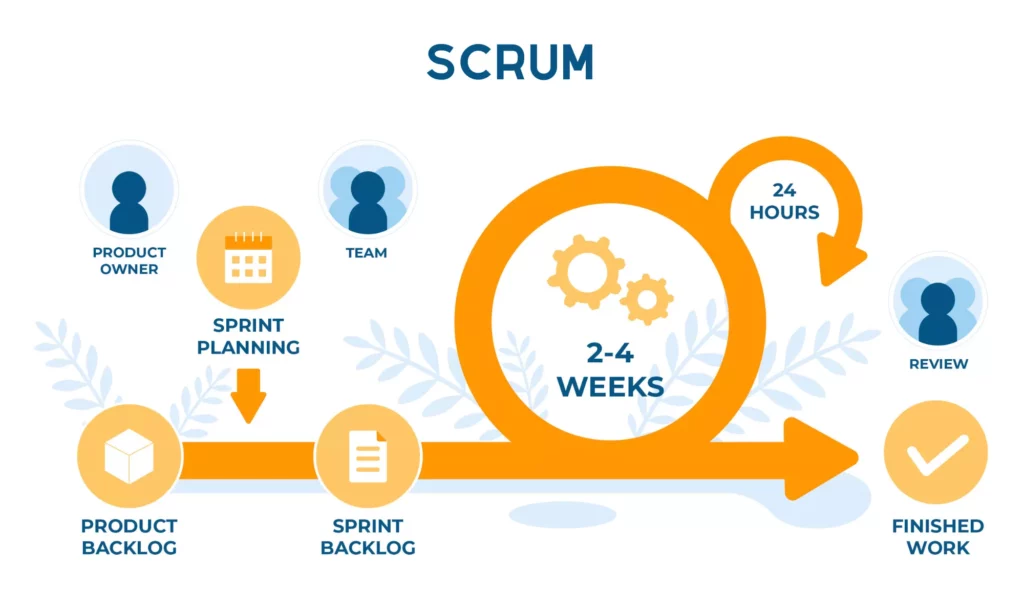
How it works: Scrum uses defined roles such as Product Owner, Scrum Master, and developers. Teams plan the sprint, break work into smaller pieces, meet daily for short stand-ups, and review progress at the end of each sprint before improving through retrospectives.
Best for:
- Complex or uncertain projects where requirements change quickly.
- Teams that benefit from a clear delivery rhythm and shared ownership.
- Products that need regular stakeholder feedback.
- Teams building MVPs or iterative feature releases.
| Pros | Cons |
| – Gives teams a clearer view of what is in progress, blocked, and next. – Encourages regular feedback and fast adjustment. | – Can be harder to scale cleanly across very large organizations. – Works best when the team understands Scrum well and can self-manage responsibly. |
2. Kanban
Kanban is a visual workflow management method built around continuous flow instead of fixed iterations. It uses a board to show tasks moving through stages such as To Do, In Progress, and Done.
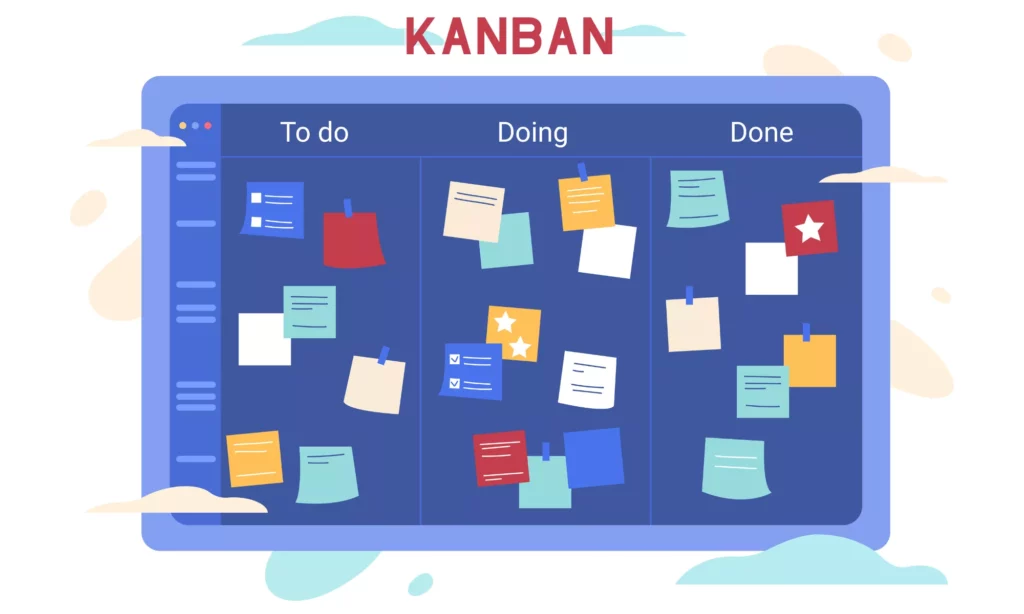
Its best-known mechanism is limiting work in progress, which helps teams reduce overload and keep work moving. Kanban originated in manufacturing, but it is widely used in software teams that need ongoing delivery without strict sprint boundaries.
How it works: Teams visualize work on the board, pull tasks when capacity is available, and continuously look for bottlenecks. There is no required sprint planning cycle, which makes the method more flexible for dynamic environments.
Best for:
- Teams handling ongoing or unpredictable workloads such as maintenance or support.
- Environments where priorities shift frequently.
- Teams that prefer continuous delivery over sprint-based planning.
- Workflows that need better visibility and bottleneck control.
| Pros | Cons |
| – Makes workflow and task status easy to see. – Helps teams identify and reduce bottlenecks. | – Provides less timeline structure for forecasting. – Can lead to weak prioritization if discipline is poor. |
3. Extreme Programming (XP)
Extreme Programming is an Agile methodology that emphasizes engineering discipline and code quality. It supports rapid feedback through practices such as pair programming, continuous integration, and test-driven development.
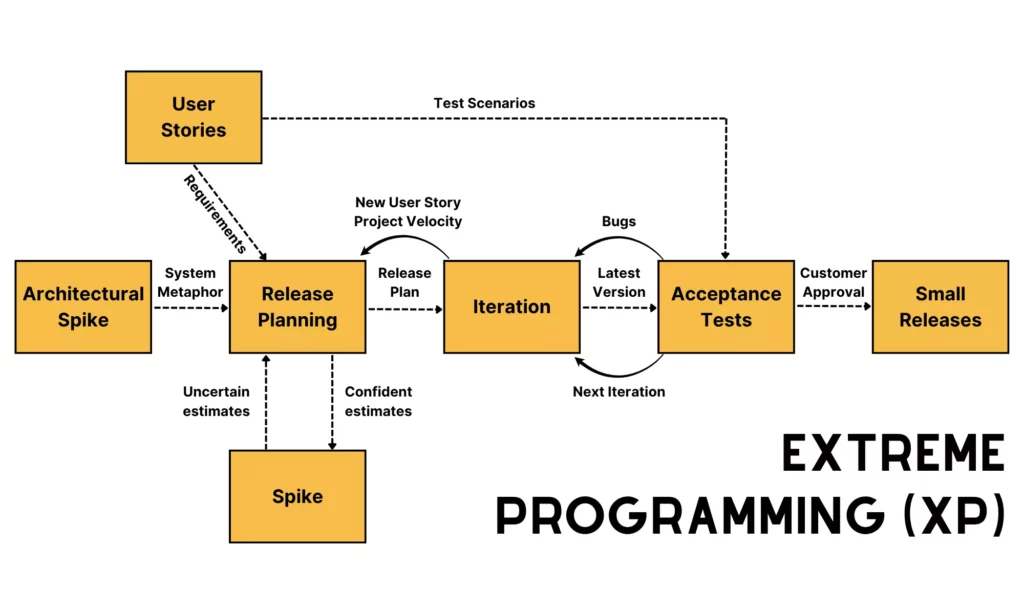
How it works: XP teams work in short cycles, but with more attention on how software is written and tested. Developers often work in pairs, write tests before code, and integrate changes frequently so issues surface early.
Best for:
- Engineering-driven teams that care deeply about code quality.
- Projects with rapidly changing requirements and frequent releases.
- Teams trying to reduce technical debt over time.
| Pros | Cons |
| – Improves code quality and reduces defects over time. – Supports fast adaptation when requirements change. – Encourages close collaboration and tight feedback loops. | – Requires strong discipline and team maturity. – Some practices, especially pair programming, do not fit every team culture. |
4. Scaled Agile Framework (SAFe)
Scaled Agile Framework is designed for large organizations that need to align many teams around shared planning, governance, and delivery.
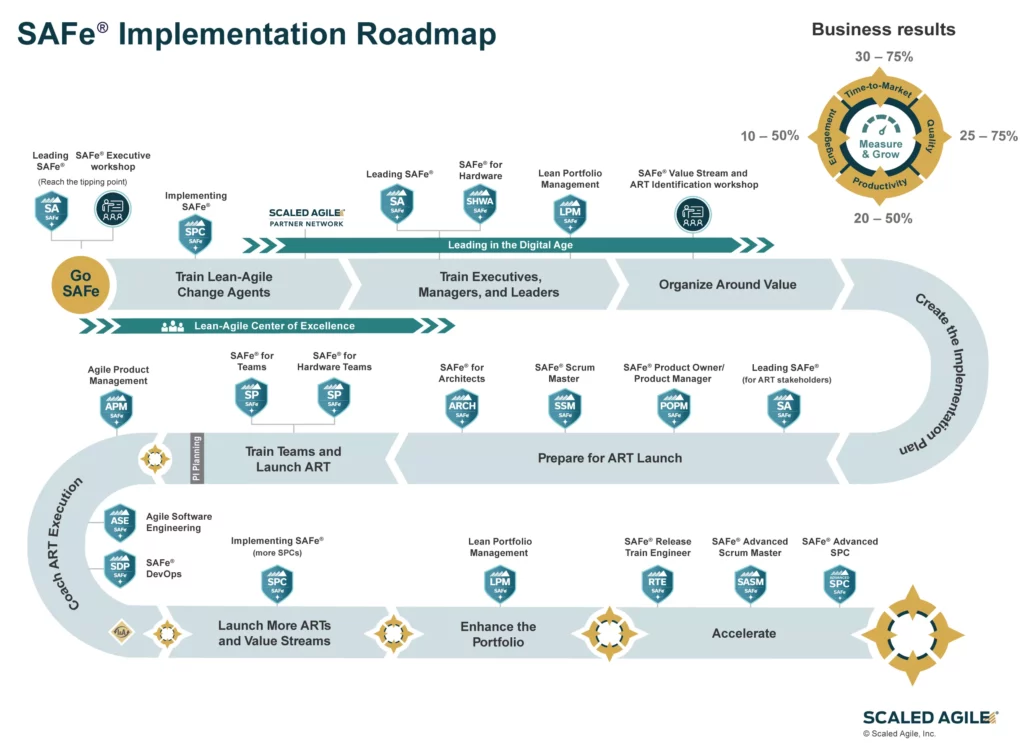
It combines Agile, Lean, and delivery coordination through components such as Agile Release Trains, Program Increment Planning, Lean Portfolio Management, and continuous delivery practices. The same Digital.ai report also noted that SAFe remains one of the most widely used scaling frameworks among organizations trying to coordinate Agile beyond the team level.
How it works: Teams are organized into Agile Release Trains that plan and execute together over shared Program Increments, typically every 8 to 12 weeks. Roles such as Release Train Engineer and Product Manager help manage dependencies, alignment, and risk.
Best for: Large enterprises managing complex, interdependent products across many teams.
| Pros | Cons |
| – Gives large organizations a clearer structure for scaling Agile. – Connects business strategy with delivery more explicitly. | – Can feel heavy and complex to implement. – Often reduces flexibility compared with lighter frameworks. |
5. Scrum At Scale (S@S)
Scrum At Scale extends Scrum principles to multiple teams working on the same product while trying to preserve agility at the team level.
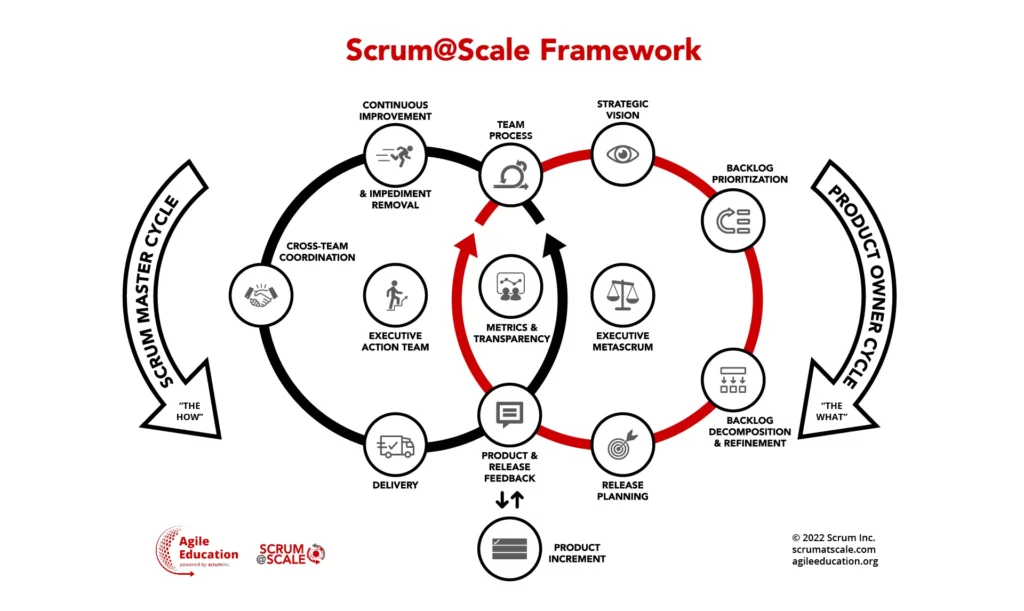
Its core ideas include the Scrum of Scrums, lightweight coordination layers, and two interconnected cycles: one focused on execution and one focused on product ownership and alignment.
How it works: Teams still run standard Scrum locally, but representatives from each team meet through a Scrum of Scrums to discuss blockers, dependencies, and integration concerns. A Product Owner Cycle and Scrum Master Cycle help maintain alignment across the wider system.
Best for:
- Organizations already comfortable with Scrum.
- Products built by several teams in parallel.
- Teams that want scaling support without the full weight of SAFe.
| Pros | Cons |
| – Builds on familiar Scrum practices. – Supports multi-team coordination without adding too many layers. | – Coordination gets harder as scale increases. – Extra cycles can slow delivery if teams are still weak at basic Scrum. |
6. Large-Scale Scrum (LeSS)
Large-Scale Scrum stays very close to core Scrum while scaling it with fewer added roles and less structure than some other enterprise frameworks.
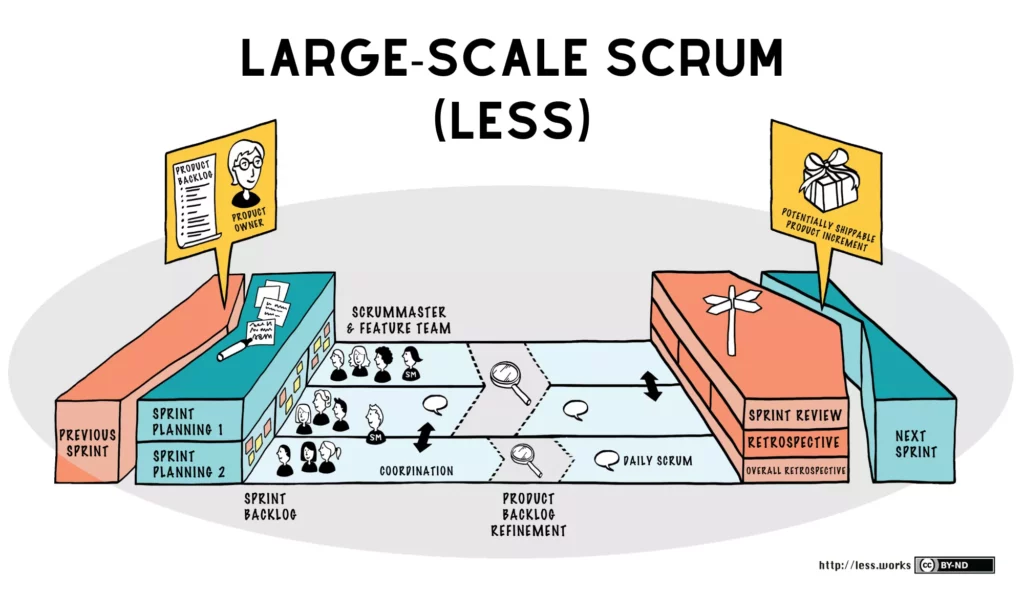
Even with multiple Scrum teams involved, LeSS usually keeps one Product Owner, one shared backlog, and one integrated product increment at the end of every sprint. It comes in two main configurations: Basic LeSS for smaller scaling cases and LeSS Huge for more complex product areas.
How it works: Several teams work from one shared backlog under the same sprint schedule. Cross-team coordination is expected to happen directly where possible, rather than through a heavy management layer.
Best for:
- Organizations that want to scale Scrum without much added overhead.
- Teams working on a single product with tightly shared goals.
- Environments that value simplicity and direct communication.
| Pros | Cons |
| – Keeps scaling relatively simple. – Reinforces strong alignment through one backlog and shared goals. | – Requires high discipline and experience. – Offers less formal guidance than heavier scaling models. |
Further reading:
- AI Pair Programming: What Changes for Modern Dev Teams
- What Is Velocity In Agile? Formula, Examples, And Common Mistakes
- Agile Sprint Cycle: Definition, Execution, and Steps Explained
7. Nexus
Nexus is another Scrum-based scaling framework, usually aimed at 3 to 9 teams working on the same product.
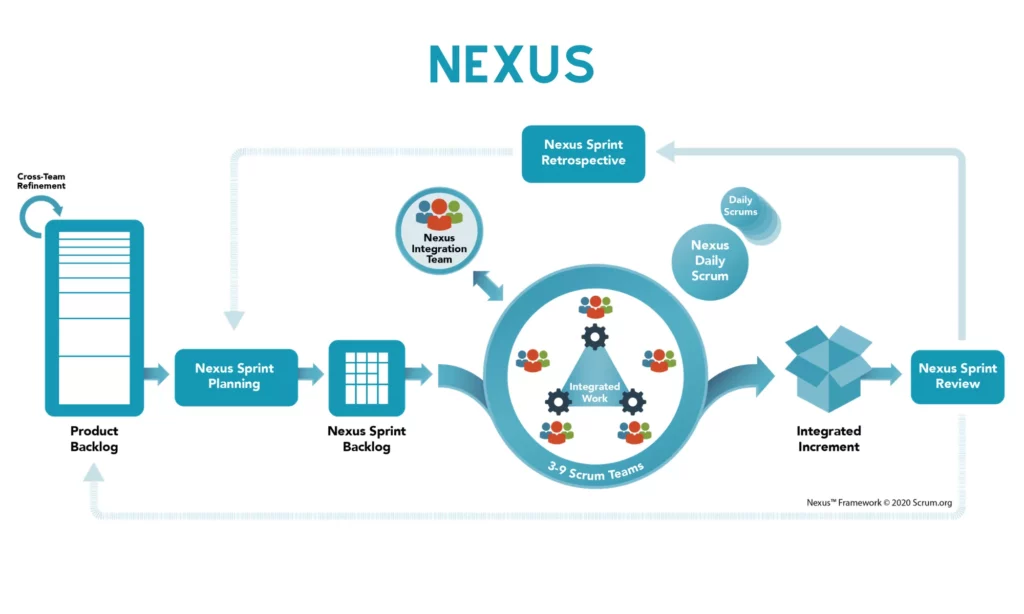
Compared with LeSS, Nexus adds a bit more structure through the Nexus Integration Team, which focuses on dependencies, integration quality, and producing one coherent increment every sprint.
How it works: Teams share one Product Backlog and continue running their own Scrum practices, but they also take part in shared Nexus planning, Daily Nexus coordination, and integrated review activities to keep work synchronized.
Best for:
- Organizations scaling Scrum across a moderate number of teams.
- Products that require smooth integration of work from several teams.
- Teams struggling with dependencies and cross-team coordination.
| Pros | Cons |
| – Handles integration concerns continuously. – Adds enough structure to manage dependencies well. | – Not designed for very large-scale environments. – A single Product Owner can become a bottleneck. |
8. Dynamic Systems Development Method (DSDM)
Dynamic Systems Development Method is one of the earlier Agile approaches and tends to be more structured than lighter frameworks. It tries to balance speed, business value, and governance.
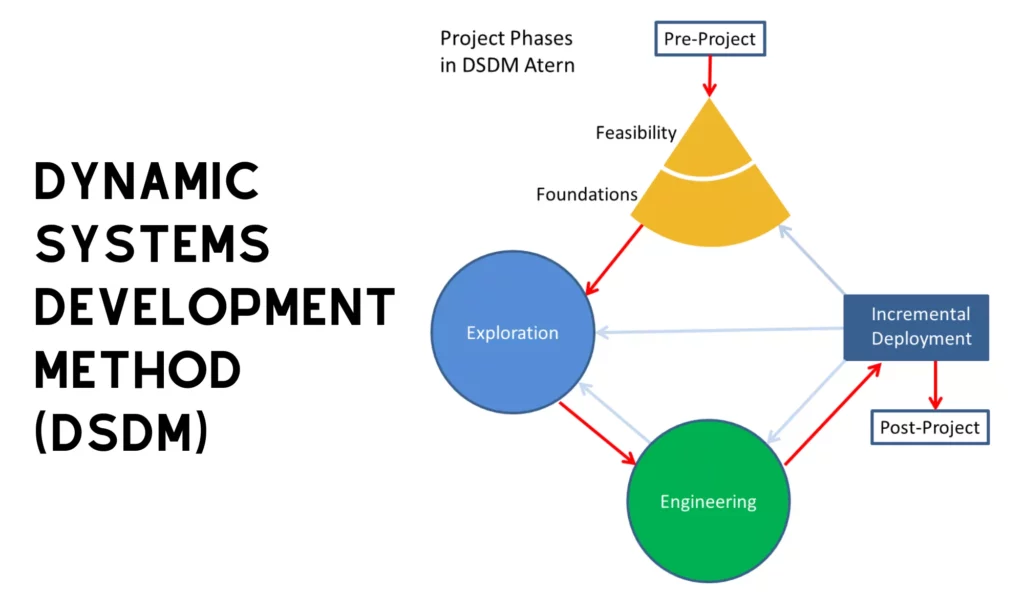
How it works: DSDM follows phases such as feasibility, foundation, development, and deployment. It uses timeboxing, active user involvement, and iterative delivery while keeping stronger governance than many modern Agile teams expect.
Best for:
- Large organizations that need governance and documentation along with Agile delivery.
- Projects with fixed deadlines but more flexible scope.
| Pros | Cons |
| – Balances Agile flexibility with stronger control. – Useful when deadlines and budgets are tight. | – More rigid than lighter Agile methods. – Depends on strong business stakeholder involvement. |
9. Feature-Driven Development (FDD)
Feature-Driven Development is a structured Agile approach built around delivering small, client-valued features in short cycles, often within two weeks or less.
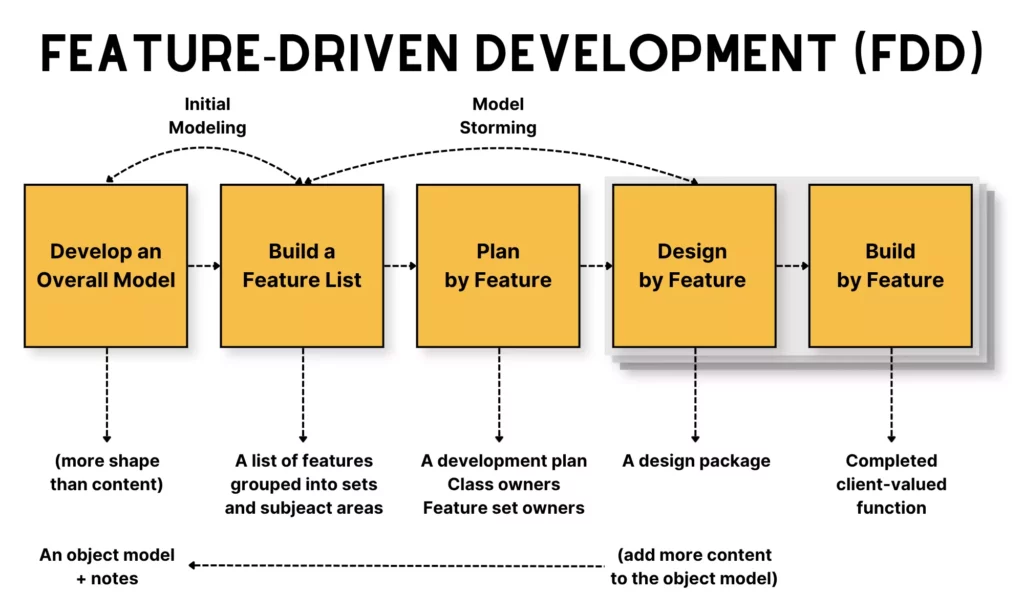
Compared with lighter frameworks, FDD emphasizes domain modeling, documentation, ownership, and reporting. It often starts with a broader system model that helps guide the software architecture before feature work is divided into smaller delivery units.
How it works: Teams first create an overall model of the business domain, then break the project into small features. Small temporary teams plan, design, and build those features, while specific developers often own particular code classes.
Best for:
- Large, complex software projects with relatively clear requirements.
- Teams that want stronger planning and documentation.
- Environments where progress needs to be tracked clearly by features.
| Pros | Cons |
| – Gives teams predictable feature-based progress tracking. – Keeps work tied to client-valued output. | – Less flexible when requirements change often. – Upfront modeling can slow early momentum. |
10. Crystal
Crystal is a family of Agile methodologies rather than a single framework. Different variants such as Crystal Clear or Crystal Orange are intended for different team sizes and project criticality levels.
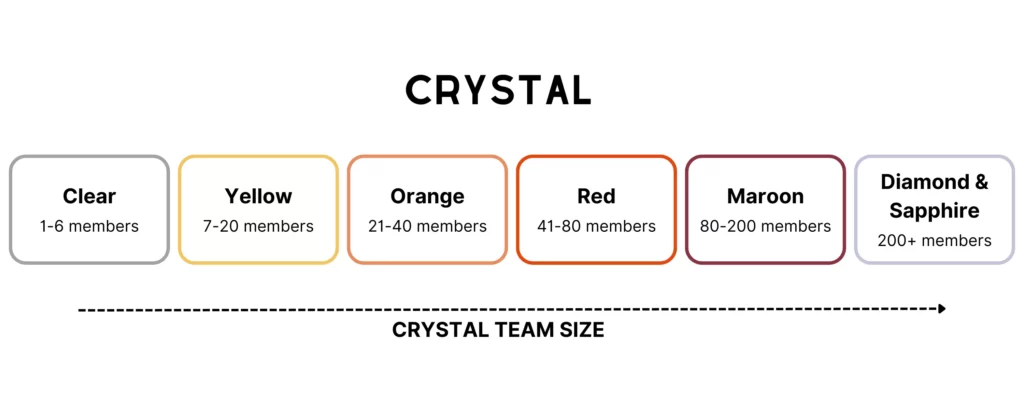
All Crystal variants value people, communication, and adaptability over rigid process. Instead of forcing one model everywhere, Crystal changes based on team size and project complexity.
How it works: Crystal does not define one fixed set of roles or ceremonies. Teams choose practices that fit their context, emphasizing frequent delivery, close communication, and continuous learning. Crystal Clear is for very small teams, while larger variants add more coordination and control.
Best for:
- Small to mid-sized teams that value flexibility and autonomy.
- Organizations open to adapting processes rather than following one strict model.
- Teams experienced enough to define their own working methods responsibly.
| Pros | Cons |
| – Very flexible and context-aware. – Strong focus on people and communication. | – Can feel too loose for inexperienced teams. – Harder to standardize across large organizations. |
Agile Methodology Comparison For Different Team Types
There is no universal best Agile methodology. The right choice depends on team size, workflow style, engineering depth, and how much coordination the product really needs.

Best Agile Methods For Small Teams And Startups
Small teams and startups usually need speed, clarity, and low process overhead. Good fits often include Kanban for flexible flow, Scrum for sprint-driven MVP delivery, Scrumban for hybrid control, and Crystal Clear for very small teams that rely on direct communication.
Best Agile Methods For Software Teams
Software teams usually need a balance of delivery speed, code quality, maintainability, and flexibility. Scrum helps structure feature delivery, XP adds strong engineering discipline, Kanban supports bug fixes or DevOps-style work, and FDD can help larger software teams track feature-based progress more formally.
In practice, many teams combine methods. At delivery partners like Designveloper, teams may use Scrum and Kanban for planning flow while also borrowing engineering practices such as pair programming to strengthen software quality.
Best Agile Methods For Enterprise Teams
Enterprise teams usually need more structure because they are coordinating multiple teams, shared systems, and business-level priorities. In those cases, SAFe, Scrum At Scale, LeSS, and Nexus are the more common choices, depending on how much coordination and process overhead the organization can support.
Continue reading:
- Agile vs Kanban vs Waterfall: Definition, Purpose, Disadvantages, and Performance
- The 12 Agile Principles and 4 Agile Values of the Agile Manifesto
- DevOps Best Practices: 10 Ways To Improve Speed And Reliability
Common Mistakes When Choosing Agile Methodologies
Teams often struggle with Agile not because the mindset is broken, but because the chosen framework does not actually fit the context. A few mistakes show up repeatedly.

Assuming Scrum Works For Every Team
Scrum is popular enough that some teams treat it as the default answer. But highly reactive support workflows or fixed-ticket service desks often work better with flow-based methods than with strict sprint boundaries.
How to avoid it: Look at how work actually arrives and moves through the team. If the workflow is more continuous than iterative, Kanban or Scrumban may fit better.
Choosing A Scaled Framework Too Early
Frameworks like SAFe or Scrum At Scale can look attractive to growing organizations, but they assume a certain level of team-level Agile maturity. If teams are still weak at backlog management, estimation, or sprint execution, more coordination layers can create noise instead of clarity.
How to avoid it: Make sure individual teams are comfortable with core Agile practices before introducing enterprise-scale structure.
Ignoring Team Culture And Workflow
Teams have different communication habits, autonomy levels, and decision patterns. Forcing a framework that clashes with those realities often creates resistance or shallow adoption.
How to avoid it: Study how the team communicates, how work flows, and where bottlenecks already exist before choosing a method.
Treating Agile As One Fixed Method
One of the most common misunderstandings is treating Agile as rigid. Frameworks such as Scrum or Kanban are operating models, not unchangeable laws. When teams follow them mechanically, they usually miss Agile’s real value: adaptability.
How to avoid it: Keep the Agile mindset first. Adjust ceremonies, refine workflows, and combine practices when needed so the method supports delivery instead of controlling it.
FAQs About Types Of Agile Methodology
What Are The Different Types Of Agile Methodologies?
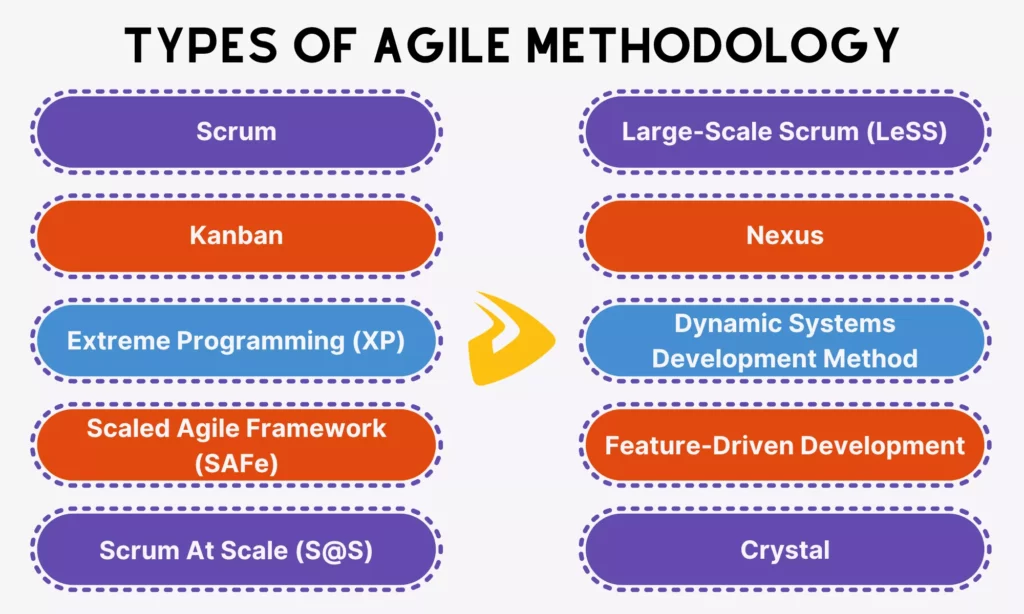
Common Agile methodologies include Scrum, Kanban, Extreme Programming (XP), Scaled Agile Framework (SAFe), Scrum At Scale, Large-Scale Scrum (LeSS), Nexus, Dynamic Systems Development Method (DSDM), Feature-Driven Development (FDD), and Crystal. Each one applies the Agile mindset in a different operating style.
Which Agile Methodology Is Best For Software Development Teams?
There is no single best option, but Scrum, XP, Kanban, and FDD are often the strongest fits for software teams. The right choice depends on whether the team needs sprint structure, engineering discipline, flow-based work, or more formal feature tracking.
Can Teams Use More Than One Agile Methodology?
Yes. In practice, many teams blend methods. A team might use Scrum for sprint planning and reviews while using Kanban principles to manage daily flow or XP practices to strengthen engineering quality.
Can Agile Methodologies Be Used In Software Testing?
Yes. Agile testing is integrated throughout the development process instead of being pushed to the end. In other words, testing happens continuously as teams build and refine features. If you want the testing-specific angle, this guide on Agile methodology testing explains how that works in more detail.
How Do Teams Choose The Right Agile Methodology?
Teams should start with their actual delivery conditions: team size, technical complexity, stakeholder involvement, release rhythm, and dependency level. The best framework is the one that supports those realities with the least unnecessary overhead.
Conclusion
Agile methodology is not about finding one perfect framework and applying it everywhere. It is about choosing a delivery model that fits the team’s real workflow, then improving that model continuously as the product and organization evolve.
For software teams, that usually means balancing speed, collaboration, engineering quality, and change management rather than blindly copying the most popular framework. In broader custom software development work, that fit matters because delivery rhythm and process design directly affect product quality and long-term maintainability.
At Designveloper, that is why Agile is treated as a working model, not a fixed ritual. If your team needs support choosing the right delivery setup or turning that setup into real execution, our software development services can help bridge planning, engineering, and release workflows more effectively.
Also published on

Share post on










Related Articles


Best Open-Source Vector Databases In 2026: Top Options Compared
Best Open-Source Vector Databases In 2026: Top Options Compared Published June 05, 2026
AI In Software Development: Changing How Software Gets Built
AI In Software Development: Changing How Software Gets Built Published June 05, 2026
What Is A Vector Database? A Practical Guide For AI Search And RAG
What Is A Vector Database? A Practical Guide For AI Search And RAG Published June 04, 2026