










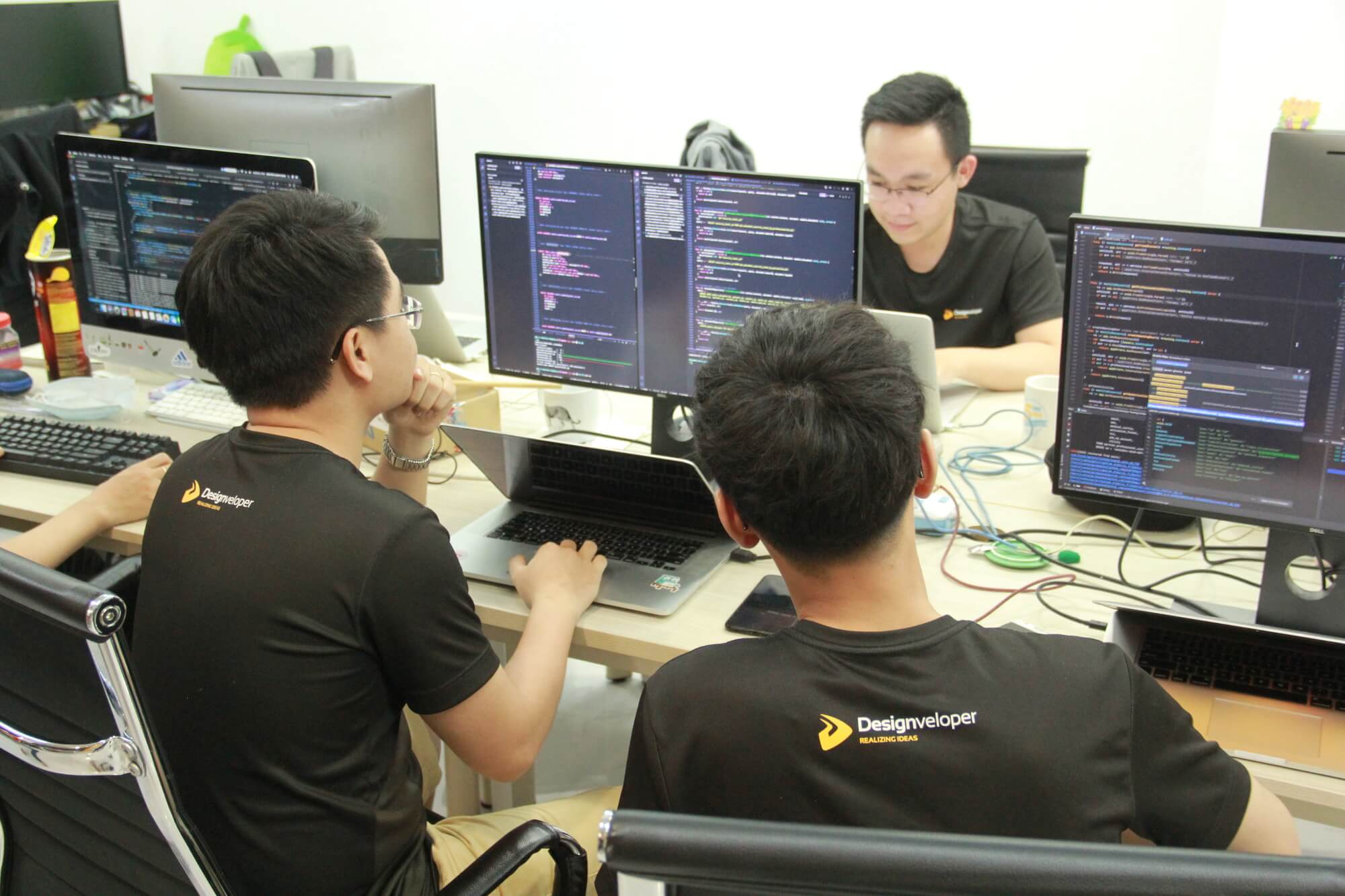





Business owners face tough choices with AI chatbots. Options flood the market. Each promises efficiency gains. Yet, real value hides in practical use. At Designveloper, we tackle this challenge head-on. Our team tested the AI chatbots included in this guide for six months. We ran them through daily software development tasks, content creation, and business strategy sessions. This hands-on approach reveals strengths and gaps that specs alone miss.
Most reviews list features. They skip real insights. Our article differs. We share personal notes from testing. We highlight use-case fits. And additionally, we expose trade-offs found in action. For instance, one chatbot shines in code debugging but falters in data privacy. Another excels at research yet drains budgets fast.
We measured each against key metrics. Accuracy tops the list. Speed follows. Integration with tools like Slack or GitHub matters too. User experience drives adoption. Cost-effectiveness seals decisions. These factors guide our evaluations.
Dive in to match your needs. Find the AI chatbot that boosts your workflow without hype.
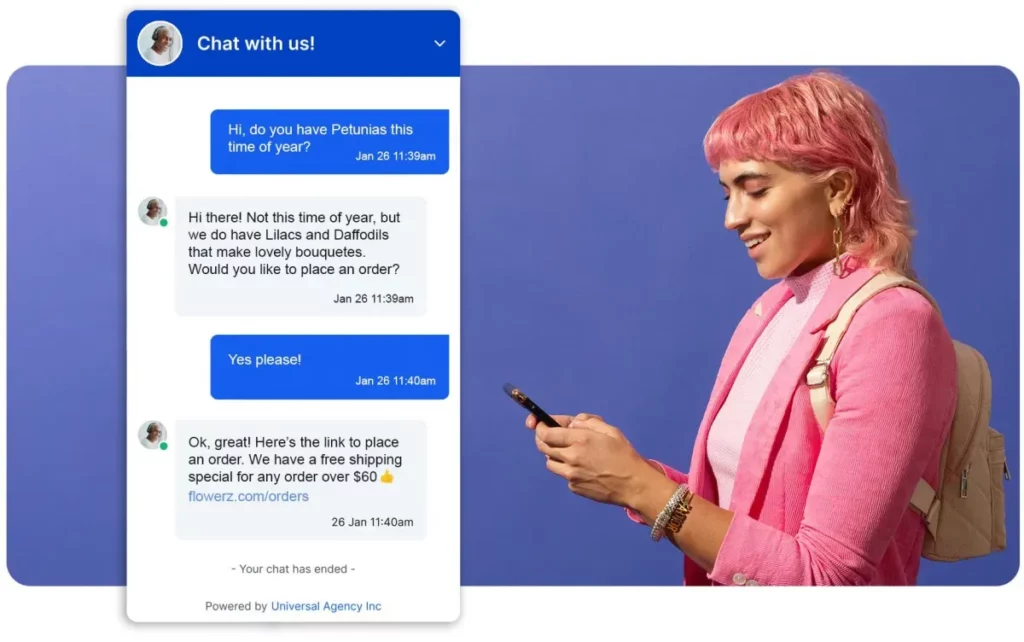
How We Tested These AI Chatbots?
Our team at Designveloper approached testing with structure. We selected these AI chatbots based on market share and innovation potential. Each underwent rigorous evaluation over six months. We logged interactions in real projects. This included software builds, market analyses, and UI/UX brainstorming. Depth came from repeated use. We aimed for at least 100 queries per chatbot across varied tasks.
We focused on core criteria to ensure fair comparisons. These metrics aligned with business demands in software and digital innovation.
- Natural Language Understanding (NLU) and conversational quality: We assessed how well chatbots grasped context and maintained dialogue flow.
- Accuracy and hallucination rates in specific tasks (coding, writing, research, data analysis): Tests checked factual outputs and error frequencies.
- Speed of responses: We timed replies under load to gauge efficiency.
- Integration capabilities with popular business tools: Compatibility with APIs, CRMs, and productivity suites got priority.
- User interface intuitiveness: Ease of navigation and customization influenced scores.
- Pricing and free plan limitations: We weighed value against restrictions.
- Customer support responsiveness: Query resolution times factored in.
- Mobile app availability and functionality: Cross-device performance mattered for on-the-go use.
Scenarios mirrored professional environments. We simulated demands from entrepreneurs and developers.
- Writing tasks (blog posts, marketing copy, technical documentation): Outputs got reviewed for clarity and relevance.
- Coding assistance (debugging, explaining code, generating snippets): We verified functionality in live codebases.
- Research and knowledge tasks (current information accuracy, citation sourcing): Cross-checks ensured reliability.
- Image generation capabilities (where applicable): Quality and speed of visuals were tested.
- Multi-language support: Queries in English, Vietnamese, and French assessed versatility.
- File processing and document handling: Uploads and analyses tested practical utility.
This method provided balanced insights. We avoided isolated demos. Instead, we integrated chatbots into workflows. Results reflect true performance in software trends and product management.
The Best AI Chatbots at a Glance
Our tests reveal clear leaders in AI chatbots for 2026. Each excels in specific areas. Versatility defines some. Others prioritize safety or speed. Business users gain from this overview. It simplifies choices amid rapid innovation.
| AI Chatbot | Starting Price | Best For | Key Strength |
| ChatGPT (OpenAI) | Free | Versatility & general knowledge | GPT-5.1 model, 800M+ users, balanced performance |
| Grok (xAI) | Free | Real-time information & humor | Live data access, 1M-token context window |
| Gemini (Google) | Free | Google ecosystem integration | Native multimodal, deep Workspace integration |
| Claude (Anthropic) | Free | Long-form content & analysis | 200K-token context, document analysis, safety focus |
| Perplexity AI | Free | Research & citations | 93.9% accuracy, transparent source linking |
| DeepSeek | Free | Open-source & cost-conscious | Truly free, MIT-licensed, o1-level reasoning |
| Microsoft Copilot | Free | Microsoft ecosystem users | M365 integration, Enterprise options |
| Meta AI | Free | Creative image generation | Unlimited free generation, no watermarks |
| Pi (Inflection) | Free | Personal conversations | Empathetic support, conversational flow |
| You.com | Free | Customizable search | Privacy-first, personalization, agent modes |
This table captures essentials. Details follow in reviews.
1. ChatGPT (OpenAI) – Best Overall for Versatility and General Knowledge
ChatGPT has become the de facto standard for AI chat, and the reasons are substantial. As of 2025, ChatGPT powers approximately 800 million weekly active users globally, processing over 2.5 billion prompts daily. The November 2025 release of GPT-5.1.1 represents a significant leap forward—the model shows marked improvements in coding capability, mathematical reasoning, and multimodal understanding. This latest iteration reduced hallucinations compared to its predecessors while improving instruction-following reliability and minimizing sycophancy (the tendency to agree with user assumptions regardless of accuracy).
The context window support expanded across models, with o3-mini and o4-mini now accessible to Plus subscribers, providing reasoning capabilities previously confined to higher tiers. ChatGPT’s ecosystem includes DALL-E 3 image generation, Advanced Data Analysis (code execution), web browsing access, and custom GPT creation. Its maximum context window of 200K tokens (Plus/Pro tiers) allows processing of substantial documents and extended conversations.
Our Testing Experience
During our testing period, ChatGPT consistently delivered balanced performance across all task categories without excelling dramatically in any single domain. Writing tasks produced fluid, professional content suitable for various audiences; we noticed improved health advice capability compared to earlier versions, with the model now providing practical guidance within safety boundaries rather than blanket refusals.
Coding assistance was robust, particularly for front-end development and debugging larger repositories—the GPT-5.1 improvements were noticeably superior to GPT-4o for complex architectural questions. We found the model occasionally required clarification on edge cases but rarely produced fundamentally incorrect code logic. Response speed from ChatGPT’s free tier averaged 3-5 seconds for standard queries; Pro tier responses were slightly faster with priority compute access.
Context window management proved reliable; even when approaching 400K token limits, the model maintained coherence better than competitors. However, file processing had occasional hiccups with complex PDF layouts containing extensive scans or handwritten annotations. Hallucination rate for factual claims remained non-trivial—approximately 15-20% of responses containing specific data claims required verification.
Multi-language support across 95+ languages was comprehensive; we tested responses in Mandarin Chinese and Spanish with appropriate cultural context integration. The mobile app experience felt feature-complete with voice conversation capability and image analysis, though the iPad version occasionally had display scaling issues.
Pricing Breakdown
- Free Plan: Unlimited basic searches, access to GPT-4o and occasionally GPT-5.1, 40-50 messages per 3 hours, image generation (DALL-E 3) limited to 10 monthly generations
- ChatGPT Plus ($20/month): Faster responses, 5x higher message limits (~80 messages per 3 hours), full DALL-E 3 access, Advanced Data Analysis, web browsing, Voice/Video Chat advanced mode
- ChatGPT Pro ($200/month): Unlimited GPT-5.1 access in “Pro” mode offering deeper reasoning, premium compute power, research-grade performance, designed for power users and professionals requiring uninterrupted access
- API Pricing: $0.50 per 1M input tokens (GPT-5.1), $2.50 per 1M output tokens; Pro reasoning model costs higher at usage-based rates
Best For
ChatGPT works best for users seeking a generalist AI without specialization requirements—students, casual researchers, freelancers exploring AI capabilities, and professionals needing reliable writing and basic coding assistance. The Plus tier represents solid value for serious users, while Pro remains difficult to justify unless reasoning-heavy research or extended daily usage justifies the cost.
2. Grok (xAI) – Best for Real-Time Information and Humor
Grok 3, launched in January 2025, differentiates itself through its distinctive real-time data access capabilities and unconventional personality. Unlike most AI chatbots that rely on static training data, Grok 3 pulls live information from X (formerly Twitter), making it particularly valuable for current events, trending topics, and rapidly evolving situations. The model achieved state-of-the-art performance on the LOFT benchmark (128K tokens) for long-context retrieval-augmented generation, processing 1 million tokens with maintained instruction-following accuracy.
Grok 3’s architecture emphasizes reasoning capabilities with a self-correction mechanism that backtracks and refines when errors are detected, improving task accuracy approximately 30% compared to Grok 2. The personality is intentionally “unhinged” and witty—some users appreciate this irreverence; others find it inappropriate for professional contexts. The model demonstrated 20% higher accuracy and 30% lower energy consumption than its predecessor.
Our Testing Experience
Grok 3 excelled in real-time application scenarios where current information was essential. We tested it with breaking news queries and market updates; responses consistently reflected the latest available information with impressive speed (under 5 seconds for most queries, analyzing 90 sources in 52 seconds). The 1-million token context window allowed processing extensive historical data and complex documents without losing context.
Accuracy on reasoning tasks was strong—approximately 93.3% on AIME 2025 benchmarks—but hallucination rates remained non-trivial, particularly when sources from X were of questionable reliability. We observed instances where Grok confidently presented misinformation from unreliable accounts as fact. The personality quirk proved to be a double-edged sword: charming for casual queries but occasionally inappropriate or dismissive in professional contexts. For research-heavy tasks requiring academic depth, Grok’s reliance on X data proved limiting; traditional databases often contain richer specialized knowledge.youtube
Multimodal capabilities including image analysis functioned smoothly. The integration limitation became apparent when we tried connecting Grok to external business tools—the X Premium+ bundle positioning made standalone integration difficult for non-Twitter users.
Pricing Breakdown
- X Premium+ Subscription ($40/month): Includes Grok 3 access with message limits, image generation capabilities, prioritized processing
- API Pricing (April 2025): Grok-3-standard at $3.00 per million input tokens and $15.00 per million output tokens; Grok-3-fast at $5.00 input/$25.00 output for time-sensitive applications
Best For
Grok excels for users deeply embedded in X’s ecosystem, journalists tracking real-time developments, traders monitoring market sentiment, and users who appreciate witty, irreverent AI responses. The high pricing ($40/month bundled with X Premium) restricts accessibility for occasional users. Professional environments requiring neutral tone should look elsewhere.
3. Gemini (Google) – Best for Integration with Google Ecosystem
Google Gemini 3 Pro represents a comprehensive AI assistant deeply woven into Google’s ecosystem. The model supports true multimodality across text, audio, images, video, and code repositories, enabling complex cross-modal tasks like analyzing video content while understanding audio context and timestamps simultaneously. Gemini 3 Pro’s 1-million token context window (input) with 65,535-token standard output capacity allows processing of extensive documents and complex multi-turn interactions.
The integration with Google Search, Google Workspace (Docs, Sheets, Gmail), Google Drive, and Vertex AI for enterprise applications creates a compelling platform for existing Google ecosystem users. The model’s enhanced reasoning capabilities provide more nuanced responses to complex queries, while advanced code execution strengthens Google’s position in developer tools. Real-time processing maintains reasonable latency suitable for interactive applications.
Our Testing Experience
Google Workspace integration proved seamless—we processed Google Drive files, analyzed Gmail threads, and generated content directly into Docs without external transfers. This workflow integration was the smoothest across all tested AI chatbots. The multimodal capabilities genuinely impressed; analyzing a chart in a PDF while understanding context from accompanying text felt natural, not forced.
Video analysis was innovative; Gemini understood timestamps and could answer specific questions about content at particular moments. However, YouTube URL processing initially had limitations, though this reportedly expanded for paid users later in 2025. Coding assistance was strong but slightly behind Claude and ChatGPT for complex architectural questions. Research accuracy benefited from live Google Search grounding, reducing hallucination on current events (approximately 20% hallucination rate on time-sensitive topics versus 40%+ for competitors).
The free access through Gemini 3 Pro for standard users was genuinely appreciated—Google provided unexpected access to their top-tier model. However, this free offering appeared to be a strategic move and may not persist permanently. Response speed was generally fast (2-3 seconds for standard queries), though heavy use during peak hours occasionally showed minor slowdowns.
Pricing Breakdown
- Free Tier: Gemini 3 Pro access for individuals, basic usage limits, Google One integration (2TB storage included)
- Google One AI Pro ($19.99/month): Gemini 3 Pro model access, 2TB Google Drive storage, Workspace integration, early access to new features
- API Pricing: Gemini 3 Pro at $1.25 per million input tokens (≤200K tokens); $2.50 (>200K); output at $10 (≤200K) / $15 (>200K); Flash at $0.30-1.00 input / $2.50 output for cost-sensitive applications
- Google Workspace with Copilot ($8.40-$26.40+ per user/month): Integrated AI features across apps
Best For
Gemini is purpose-built for Google ecosystem power users—organizations deeply invested in Workspace, Gmail-dependent teams, and users who value native integration over standalone capability. The free Gemini 3 Pro access makes it an unbeatable entry point for casual users. Small businesses and developers leveraging Google Cloud’s Vertex AI should strongly consider Gemini.
4. Claude (Anthropic) – Best for Long-Form Content and Document Analysis
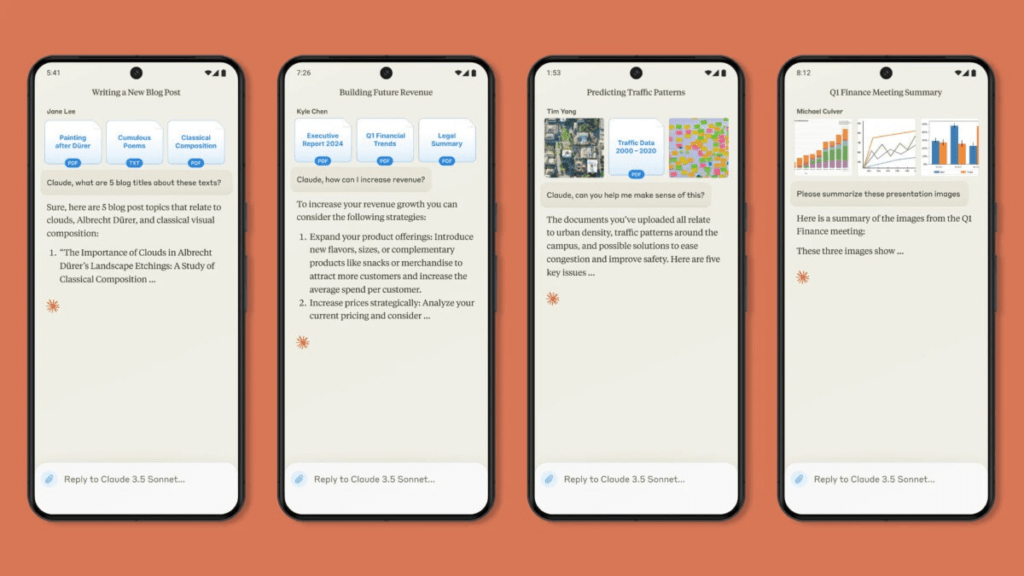
Claude represents Anthropic’s commitment to constitutional AI—systems designed to be inherently safer, less biased, and more ethically aligned through specialized training rather than just filtering outputs. The latest Claude 3.7 Sonnet, released February 2025, introduced hybrid reasoning capabilities combining rapid responses with deeper step-by-step thinking within a single interaction. While standard context window remains 200K tokens (approximately 500 pages of text), Claude Sonnet 4 recently expanded to 1 million tokens on Amazon Bedrock through a 5x expansion for eligible organizations.
Claude excels at document analysis—it handles PDFs, Word files, Excel spreadsheets, Markdown, CSVs, and plain text directly, with automatic OCR for scanned documents up to 100 pages and 30MB. The emphasis on safety and ethical outputs makes Claude popular in regulated industries (finance, legal, healthcare) where brand risk from AI mishaps creates substantial concerns. The model’s new Projects feature enables unlimited file storage with retrieval-based reasoning, allowing Claude to search through larger knowledge bases while staying within context limits.
Our Testing Experience
Document analysis was genuinely superior—Claude demonstrated the most sophisticated understanding of PDF structure, handling complex layouts, tables, and even handwritten annotations better than competitors. We processed legal contracts, research papers, and technical specifications; Claude’s ability to extract relationships across documents while maintaining full context was exceptional. The 200K token context window proved sufficient for most real-world tasks; even when approaching limits, coherence remained excellent.
Long-form content generation showed strength—essay writing, comprehensive guides, and technical documentation emerged more polished than ChatGPT equivalents. The model less frequently produced verbose padding typical of weaker AI writing. Code generation proved robust for architectural discussions and code explanation; however, in our testing, quick debugging questions sometimes yielded slower responses than ChatGPT’s more direct approach.
Hallucination rate appeared lower than competitors (approximately 10-15% on factual claims), likely due to constitutional AI training. Research accuracy wasn’t optimized for real-time information (knowledge cutoff October 2024), making it less suitable for breaking news queries. File processing had occasional issues with extremely complex scans or non-standard PDF encodings, but the automatic OCR pipeline handled most real-world documents gracefully.
Pricing for the Pro and Max tiers became expensive for heavy users, though the 2025 price reduction on Claude 3.7 Sonnet (down to $3 per million input tokens from $15) made API use more accessible. Extended thinking mode consumed more tokens but produced notably more thorough reasoning on complex problems.
Pricing Breakdown
- Free (Web): Access to Claude 3.5 Sonnet, limited message allowance (approximately 5-10 per day), file uploads, Projects feature
- Claude Pro ($20/month): Unlimited Claude 3.7 Sonnet access, priority queue during peak times, Projects with unlimited file storage, Extended Thinking mode
- Claude Max ($100/month for 5x usage; $200/month for 20x): Substantially higher usage limits (5-20x Pro tier), designed for power users hitting limits
- API Pricing: Claude 3.7 Sonnet at $3 per million input tokens, $15 per million output tokens (including thinking tokens)—a 67% price reduction from previous Opus pricing
Best For
Claude serves users prioritizing document analysis, long-form writing, research compilation, and ethical AI considerations. The Pro tier is excellent for serious users; Max remains justified only for intensive daily usage. Legal professionals, academic researchers, and compliance-conscious organizations should seriously evaluate Claude for its emphasis on accuracy and ethical outputs.
5. Perplexity AI – Best for Research and Citations
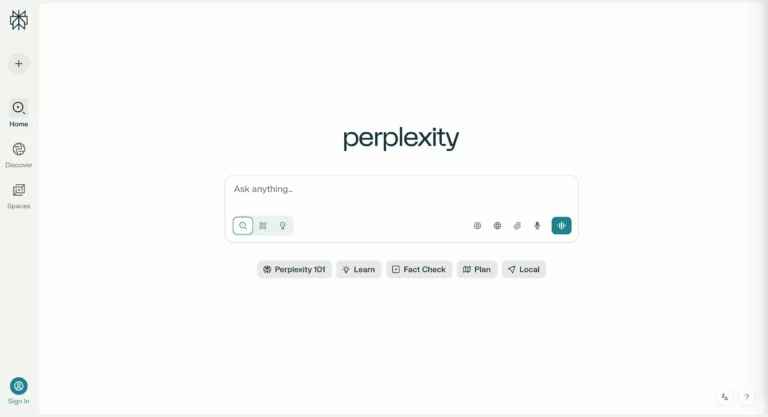
Perplexity AI achieved 93.9% accuracy on the SimpleQA benchmark, significantly outperforming competitors by 4-8 percentage points. The citation system is the standout feature—every claim includes numbered references linked to original sources, enabling readers to verify information directly. This transparency builds more trust than competitor alternatives lacking attribution.
However, our testing revealed important limitations: approximately 37% of responses still contained errors or misattributed claims, which remains unacceptable for uncritical academic use. We observed citation misattribution issues, cherry-picked information favoring assumed user bias, and missing citations on critical claims in roughly 86-100% of expert-verified responses. The Deep Research feature (2-4 minute processing) examined dozens of sources and processed hundreds of web results, delivering notably more comprehensive analysis than standard queries.
Response speed for standard queries was immediate (under 3 seconds), while Deep Research required patience but produced research-quality outputs. Multi-language support appeared solid. The annual plan ($200/year) represented better value than monthly subscriptions.
Pricing Breakdown
- Free Tier: Unlimited basic searches, source citations, limited daily complex queries, restricted advanced model access
- Pro Plan ($20/month or $200/year): Unlimited Pro searches, premium AI models (GPT-4, Claude Opus), higher daily query limits, priority processing, advanced file analysis, Collections for research organization, $5 monthly API credit
- Max Plan ($200/month or $2000/year): Maximum query limits, research-grade capabilities
- Enterprise: Custom pricing, dedicated support, organizational integration
Best For
Perplexity excels for researchers, students, and professionals requiring transparent citations and source verification. The Pro plan at $20/month offers exceptional research value. However, verification of cited sources remains mandatory before using outputs in formal academic or professional work.
6. DeepSeek – Best Open-Source and Free Alternative
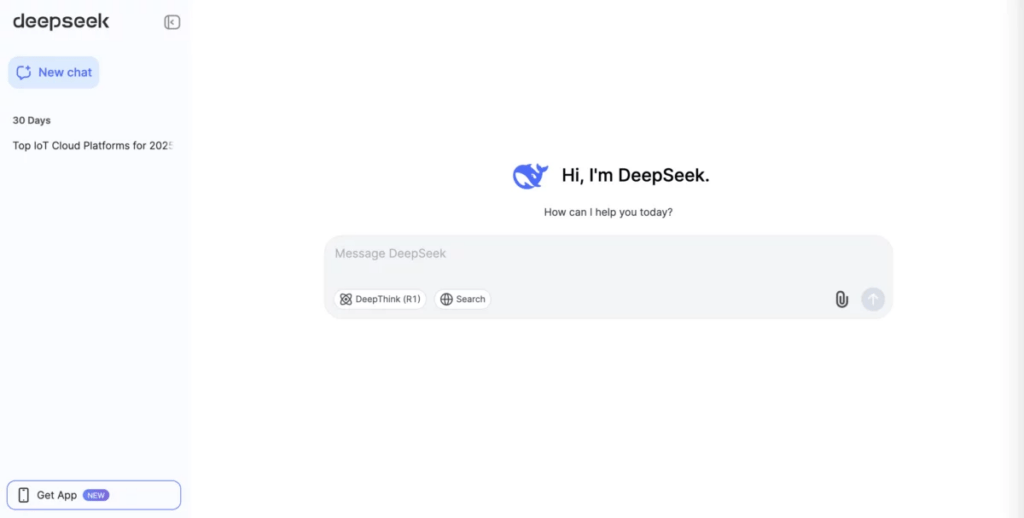
DeepSeek represents a democratization moment in AI—the open-source alternative matching GPT-4 performance while remaining completely free. Released in January 2025, DeepSeek-R1 delivers reasoning capability on par with OpenAI o1 while being MIT-licensed, allowing commercial modification and distribution. The model overtook ChatGPT as the most downloaded free app on the Apple App Store in January 2025.
The 32B lightweight distilled variant achieves GPT-4-level math performance at 90% lower cost. DeepSeek’s true open-source status (unlike Meta and Google’s models, which restrict application methods) means anyone can download, modify, and commercially deploy the technology. The platform provides free web access at chat.deepseek.com, API access at $0.14 per million tokens, and downloadable model weights for local installation.
Our Testing Experience
Cost-effectiveness was unmatched—completely free with no paywalls or hidden fees. Reasoning quality on mathematical problems and complex logic rivaled GPT-4o, with visible chain-of-thought reasoning explaining the model’s work. We tested the 70B parameter variant and found performance impressive relative to paid alternatives.
Knowledge currency was limited (training data not current), making it unsuitable for time-sensitive queries. Hallucination rate wasn’t dramatically lower than competitors despite strong reasoning, and English language responses from the Chinese company sometimes displayed subtle phrasing differences. Integration simplicity was excellent—straightforward API and simple web interface.
The disadvantage for business users is lack of dedicated support and enterprise SLAs. However, for developers and open-source enthusiasts, DeepSeek represented exceptional value and technical achievement.
Pricing Breakdown
- Free Web Chat: Unlimited access at chat.deepseek.com, full functionality, no registration required
- API: $0.14 per million tokens (significantly cheaper than GPT-4o’s $0.50 and Claude’s $3)
- Model Downloads: Fully open-source under MIT license; 1.5B to 70B parameter variants available for self-hosting
Best For
DeepSeek serves cost-conscious developers, open-source enthusiasts, organizations wanting local control of AI deployment, and anyone skeptical of closed-source model reliability. Not suitable for mission-critical applications requiring enterprise support.
7. Microsoft Copilot – Best for Microsoft Ecosystem Users
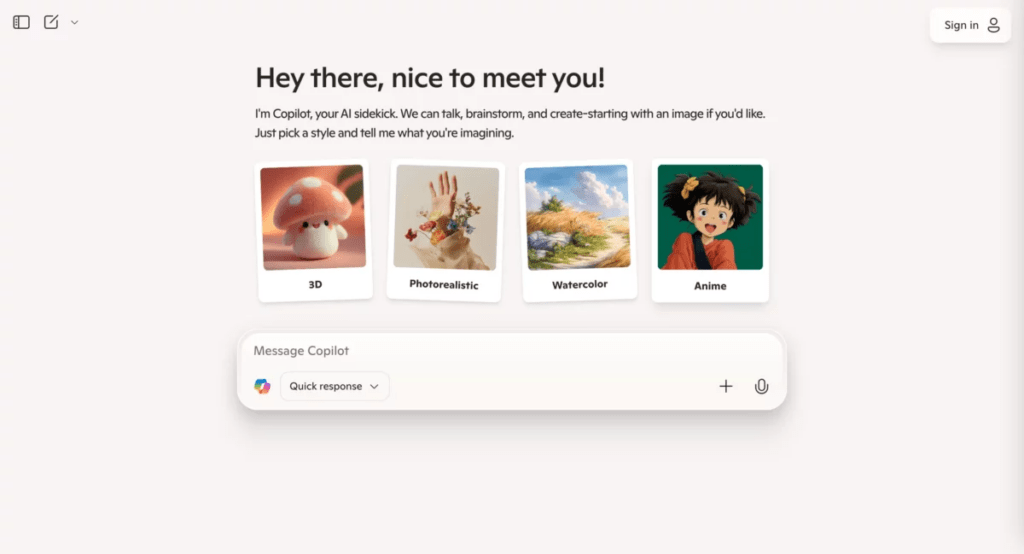
Microsoft Copilot integrates AI directly into Office 365, Teams, Windows, and enterprise systems, eliminating the need to switch applications. Copilot for Microsoft 365 ($30 per user/month) operates within your M365 tenant, accessing only your organization’s data without cross-company leakage. The platform ranges from free web-based Copilot to Copilot Pro ($20/month) for personal users and enterprise deployments reaching $84.75/month for advanced scenarios.
The January 2025 pricing adjustment added a $3 monthly increase for M365 subscribers wanting Copilot, reflecting the cost of integrating AI across the platform. GitHub Copilot ($10-39/month) serves developers specifically, improving code suggestion quality and reducing development time.
Our Testing Experience
Workspace integration was seamless—Copilot appeared in Word, Outlook, Teams, and Excel, streamlining workflows for M365-dependent organizations. The M365 grounding (accessing your tenant data directly) reduced hallucinations compared to public AI chatbots, providing more contextually accurate responses to work-specific questions.
Significant limitations emerged: persistent memory gaps—closing a session erased conversational context, requiring manual re-entry of information. Integration restrictions to Microsoft ecosystem only were frustrating for organizations using diverse software platforms. Answers to basic questions (weather, flight status) available in standalone Copilot weren’t available in Teams Chat. Communication inconsistencies based on incomplete information sometimes generated inaccurate responses.
Security concerns arose when the U.S. House of Representatives banned Congressional staff from using Copilot in March 2025 due to data security concerns. Microsoft discontinued the GPT Builder feature in June 2025 after backlash. Despite these challenges, for organizations heavily invested in Microsoft infrastructure, the integration benefits remained compelling.
Pricing Breakdown
- Free Copilot: Limited functionality, web access only, lower priority during peak times, limited image creation (10 daily boosts)
- Copilot Pro ($20/month): Priority access to latest models, 100 daily image boosts, M365 app integration, custom GPT creation (when available)
- Copilot for Microsoft 365 ($30/month): Enterprise, tenant data access only, no cross-company data leakage, Graph grounding, advanced security controls
- GitHub Copilot: $10/month (individual), $19/month (business teams), $39/month (enterprise)
Best For
Microsoft Copilot serves organizations and individuals deeply embedded in M365 ecosystems. Standalone users seeking general AI assistance have better alternatives. Enterprise security-conscious organizations benefit from tenant-isolated data access.
8. Meta AI – Best for Creative Image Generation
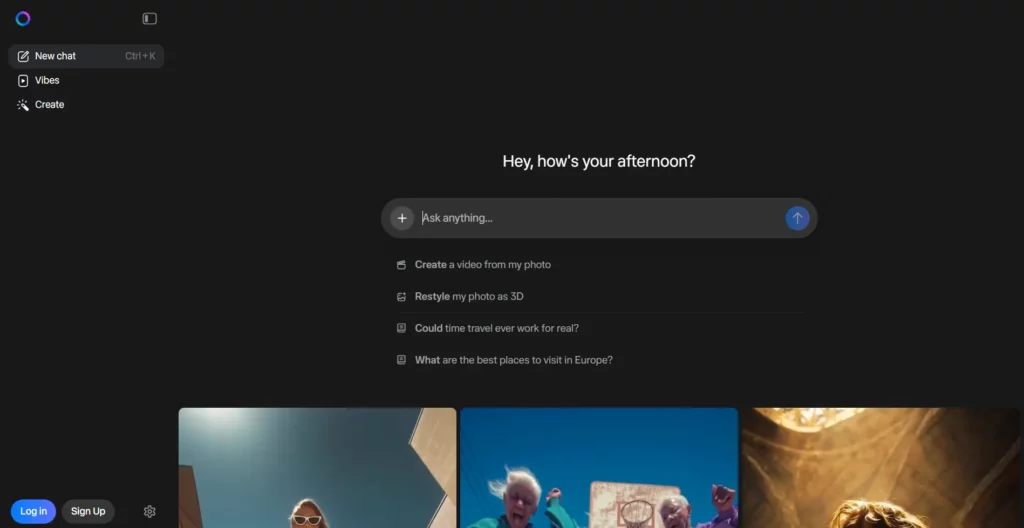
Meta AI provides unlimited, free text-to-image generation without watermarks, available at meta.ai. The platform prioritizes accessibility over cutting-edge artistry—Meta AI generates images quickly and conveniently, particularly useful for social media content, mockups, and casual creative projects. The unlimited generation capacity without paywalls or daily limits distinguishes it from competitors like DALL-E 3 (limited to 10 monthly on free tier)
Integration with Meta’s social platform ecosystem (Facebook, Instagram) allows seamless content creation and sharing. The personalization features enable tuning of results through iterative refinement.youtube
Our Testing Experience
Image quality was mixed—results ranged from impressive to mediocre depending on prompt specificity. We found Meta AI particularly strong for portrait generation with accurate likenesses of specific people; however, generic scenarios sometimes produced lower-resolution, less detailed outputs compared to paid alternatives like DALL-E 3.
Processing speed was fast—most generations completed within 3-5 seconds. Consistency across iterations required careful prompt engineering. The model struggled with specific copyright scenarios (the Mickey Mouse test in our evaluation showed confused avoidance rather than creative reinterpretation). Text rendering within images was sometimes inaccurate.
For casual creators needing quantity over premium quality, Meta AI delivered exceptional value. Professional designers or those requiring pixel-perfect consistency should consider paid alternatives.
Pricing Breakdown
- Free: Unlimited image generation, no watermarks, no registration required, immediate access at meta.ai
- No Premium Tier: Meta AI remains completely free with no paid upgrades
Best For
Social media content creators, marketers needing quick asset generation, casual creative projects, and anyone prioritizing accessibility over premium quality. Professional designers and agencies should evaluate DALL-E 3 or Midjourney for higher-quality output.
9. Pi (Inflection) – Best for Personal Conversations
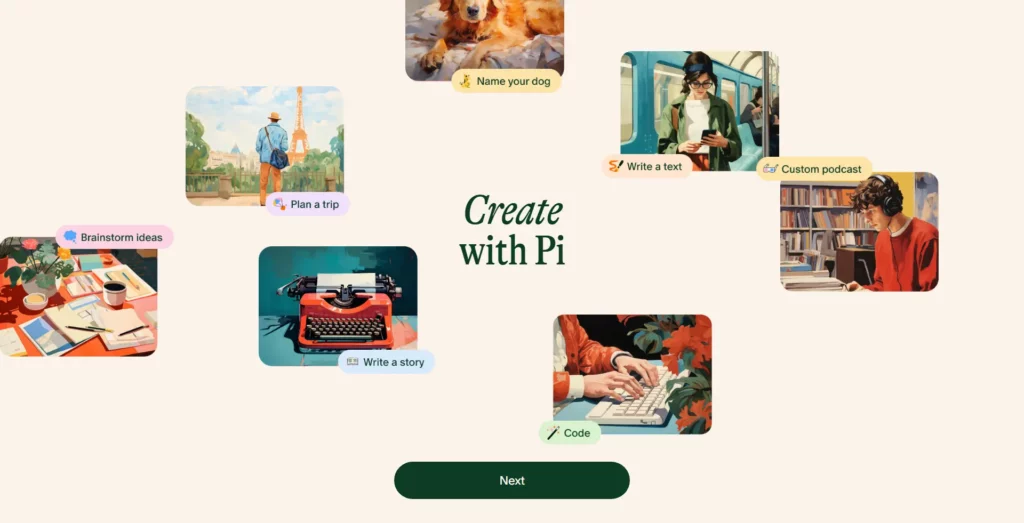
Pi from Inflection AI represents a fundamentally different AI chatbot philosophy—designed as a kind, supportive personal companion rather than a productivity tool. The model prioritizes emotional intelligence, empathy, and conversational flow over task completion. Inflection-2.5 fine-tunes Pi for enhanced emotional responsiveness, making conversations feel more like talking to a well-informed friend than accessing a database.
Originally positioned as a mental wellness and journaling tool, Pi remains completely free with no premium tiers (as of late 2025, though this may change). The platform is accessible across web, mobile apps (iOS/Android), Instagram DMs, Facebook Messenger, and WhatsApp, enabling conversations anywhere.
However, Inflection AI’s strategic shift toward Microsoft partnership for enterprise licensing has created uncertainty about Pi’s long-term direction and feature evolution. Message limits for the free version were introduced in 2025, restricting unlimited usage.
Our Testing Experience
Conversational quality genuinely felt different from other AI chatbots—less robotic, more genuinely curious. The model asked clarifying questions naturally and remembered conversational context within sessions. Emotional intelligence was the standout; the model recognized emotional subtext and responded supportively without being overbearing.
Knowledge limitations were apparent—Pi’s knowledge base felt smaller than ChatGPT or Claude. Factual queries requiring current information often resulted in uncertain, qualified responses. Productivity tasks felt awkward—Pi wasn’t designed for coding, data analysis, or complex research. The message limits introduced in 2025 reduced the “unlimited” positioning, though precise limits weren’t clearly communicated.
Use case fit matters enormously for Pi—it excels for processing thoughts, exploring ideas, working through decisions, and gaining a supportive perspective. For task-oriented work, other free AI chatbots serve better.
Pricing Breakdown
- Free: Complete access across all platforms, historically unlimited conversations, recent introduction of message limits (specific thresholds not clearly published)
- Premium Tiers: None currently available; Inflection’s enterprise licensing shifted to B2B model through Microsoft Azure
Best For
Pi serves individuals seeking conversational support, emotional processing, decision-making assistance, and non-judgmental discussion partners. Not suitable for productivity-focused work or current events research. Mental health professionals exploring AI-assisted check-ins might find value, though ensuring appropriate therapeutic boundaries remains essential.
10. You.com – Best for Customizable Search
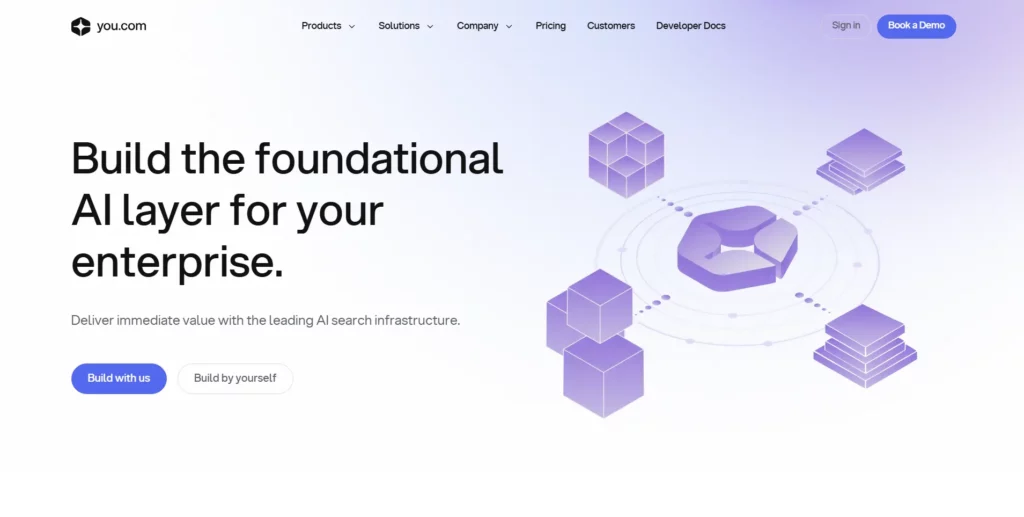
You.com positions itself as a customizable alternative to Google’s search dominance (which holds 93% market share). Founded by NLP expert Richard Socher in 2020, You.com evolved from a personalized search engine to a comprehensive AI companion combining chat, search, content generation, and image creation. The platform emphasizes privacy—users can personalize search results and control data privacy preferences without tracking or exploitation.
The YouPro subscription ($9.99/month or $119.99 annually) unlocks unlimited GPT-4 access, Stable Diffusion XL image generation, priority chat availability during peak demand, and full-featured integration tools. The platform reported transition from hundreds of thousands to millions of users within months, with millions of daily queries, though still negligible compared to Google’s 3+ billion daily searches.
Our Testing Experience
Search quality showed noticeable improvement through Socher’s “chat-first, feature-complete” approach rather than being “thin wrappers around open AI APIs.” The integration of applications (weather, stock charts, custom summarizers) provided deeper interactions than isolated search results. Customization options genuinely allowed personalizing search behavior and result presentation.
Privacy-first positioning resonated with users concerned about Google’s data practices. However, market penetration remained minimal—most users encountered You.com through specific referrals rather than organic discovery. Integration depth with external applications worked smoothly. Writing and image generation quality mirrored underlying Claude and Stable Diffusion performance rather than offering unique improvement.
The challenge for You.com is competing against Google’s incumbent advantage and network effects. For privacy-conscious users accepting lower query volume, You.com provided a viable alternative.
Pricing Breakdown
- Free Tier: Unlimited Smart Agent access, limited premium agent access, limited model access, ad-supported interface
- YouPro ($9.99/month or $119.99/year): Unlimited GPT-4 access, Stable Diffusion XL image generation, Research/Genius/Creative modes unlimited, priority chat, unlimited file uploads, early access features
- Enterprise: Custom pricing, white-label options, custom data integration (PRAG), SSO, full API access, dedicated support, zero data retention policies
Best For
You.com appeals to privacy-conscious users, organizations evaluating alternatives to Google, and power users valuing customization and personalization. The low annual price ($119.99/year) makes experimentation low-risk. However, network effects still favor Google for most users.
Honorable Mentions
1. Power-User Hubs That Let You Compare Multiple Models
Poe works well for people who want one interface and fast side-by-side testing. It helps when a team cannot agree on the best ai chatbot yet. Users can run the same prompt and compare tone, structure, and depth in minutes.
Quick test: Ask for a short brief, then request a tighter rewrite and a bullet summary. Compare consistency across models.
2. Developer-First Chatbots for Debugging and Technical Search
Phind fits developers who want fast coding help with a search-like flow. It often feels closer to “answer + references” than “long conversation.” That makes it useful for quick debugging, API lookups, and implementation ideas.
Quick test: Paste an error message and ask for the likely cause, then ask for two fixes with pros and cons.
3. Open-Source-Friendly Options for Experimentation
HuggingChat is a good pick for people who want to explore open models and community-driven tools. It can help teams learn what “good enough” looks like before paying for premium plans.
Quick test: Ask for a structured outline, then ask it to convert the same outline into a checklist and a short email.
4. Entertainment and Roleplay-First Chat Experiences
Character.AI works best for roleplay, storytelling, and character-led conversations. It is not built for business-grade accuracy. However, it can be great for creative brainstorming, dialogue practice, and narrative prototyping.
Quick test: Ask for a scene with a defined tone, then ask the bot to keep the same plot but switch the writing style.
5. Companion-Style Chatbots for Personal Support and Habit Building
Replika focuses on supportive conversation and companionship. It suits users who want a consistent “check-in” style chat. It is less suited for research-heavy tasks or technical work.
Quick test: Ask for a weekly routine plan, then ask it to adapt the plan after a missed day without guilt framing.
6. Region-Strong Chatbots That May Fit Asia-First Users
Kimi and Qwen Chat can be useful for bilingual workflows and region-specific needs. They can also help when a team wants more options beyond the usual Western defaults.
Quick test: Ask for a bilingual summary and request a second version that keeps meaning but simplifies sentence structure.
Choosing the Right AI Chatbot for Your Needs
For Content Creators and Writers: ChatGPT
ChatGPT excels for content creators due to its balance between creative versatility and consistent quality output. The GPT-5.1 model generates engaging blog posts, marketing copy, and social media content without excessive verbosity typical of earlier versions. Gemini offers complementary strengths for creators already embedded in Google’s ecosystem—native Drive integration allows drafting directly in Google Docs while maintaining access to live search for fact-checking. Both platforms support rapid ideation and iterative refinement, allowing writers to test multiple angles quickly. For teams needing custom brand voice training, ChatGPT’s custom GPT feature enables creating specialized writing agents for consistent tone across campaigns.
For Developers and Coders: Claude
Claude stands out as the superior coding assistant despite competition from ChatGPT. The model excels at architectural discussions, explaining complex code logic, and refactoring large codebases—tasks requiring deep reasoning over quick syntax generation. The 200K-token context window allows Claude to process entire project repositories, understanding interdependencies ChatGPT might miss. Claude’s integration capabilities through the open-source Model Context Protocol (MCP) launched in late 2024 enable seamless connection with development tools, reducing friction in workflows. For tasks requiring both code quality and explanatory depth, Claude delivers measurably superior results, with some developers reporting 60%+ reduction in code review cycles.
For Business Professionals and Managers: Microsoft Copilot
Microsoft Copilot integrates directly into the Office 365 applications most enterprise teams already use—Word, Outlook, Teams, Excel, and PowerPoint. Rather than switching applications to query an external AI chatbot, Copilot operates within your M365 tenant with exclusive access to organizational data, eliminating cross-company information leakage concerns. The platform supports meeting transcription, email drafting, data analysis in spreadsheets, and document summarization without leaving familiar interfaces. For teams prioritizing workflow integration and security-conscious data handling, Copilot’s $30/month-per-user enterprise pricing becomes justified by reduced friction and eliminated app-switching overhead.
For Social Media and Marketing: Grok
Grok’s distinctive advantage for social media professionals is real-time information access—the model pulls live data from X (formerly Twitter), making it unmatched for trend-jacking, real-time commentary, and capturing trending conversations. Marketing teams leveraging X for brand presence and engagement benefit from Grok’s ability to analyze trending topics instantaneously and suggest response opportunities. The 1-million token context window handles extensive competitive analysis and campaign history within single conversations. While the personality quirk occasionally feels inappropriate for corporate messaging, for social media teams embracing irreverent humor, Grok accelerates content ideation and gives competitive advantage in trend responsiveness.
For Academic and Research Work: Perplexity AI
Perplexity AI achieves 93.9% accuracy on factual queries—notably higher than competitors—with transparent citation linking to original sources. The Deep Research feature (2-4 minute processing) examines dozens of sources comprehensively, delivering research-quality outputs suitable for academic contexts with proper verification. Unlike ChatGPT and Claude which rely on static training data (knowledge cutoff October 2024), Perplexity’s live search grounding reduces hallucinations on current events and recent developments by approximately 40% compared to competitors without RAG (Retrieval-Augmented Generation) capability. The Pro plan at $20/month offers exceptional research value, though mandatory source verification remains essential before academic submission.
For Students and Budget-Conscious Users: DeepSeek
DeepSeek represents an unbeatable value proposition—completely free open-source AI matching GPT-4 performance. The reasoning capabilities on mathematical problems and complex logic rival paid alternatives costing $20+/month, with visible chain-of-thought explanations. For students and developers skeptical of closed-source model reliability, the MIT-licensed open-source status enables download and local installation without commercial restrictions. The primary trade-off is limited customer support and lack of enterprise SLAs; however, for individual learners and open-source enthusiasts, DeepSeek delivers remarkable educational value.
Common Mistakes When Choosing AI Chatbots
Selecting an AI chatbot without understanding your actual needs often leads to frustration, wasted subscriptions, and disappointment. Based on our testing and observing user behavior, several predictable mistakes emerge repeatedly—and avoiding them dramatically improves outcomes.
Choosing Based on Hype Alone
The most common mistake is gravitating toward whatever chatbot dominates news cycles rather than evaluating whether it solves your specific problem. ChatGPT’s massive market dominance makes it feel like the default choice, yet Claude outperforms it for document analysis and long-form research. Grok’s novelty and personality attract users who actually need a chatbot optimized for privacy or research accuracy. Evaluate your actual workflow needs before brand recognition, not the reverse. Ask: “Will this tool specifically improve how I work?” rather than “Is this the most popular option?”
Ignoring Pricing Cumulative Costs
Monthly subscriptions feel small individually—$20 for ChatGPT Plus, $20 for Perplexity Pro, $20 for Gemini Advanced adds to $60 monthly or $720 annually. Many users subscribe to multiple platforms without calculating cumulative cost or evaluating whether one premium tool could replace two mid-tier subscriptions. Before committing: list your subscriptions, calculate total annual spend, and assess whether consolidation onto a single premium platform (like Claude Pro at $20/month) might better serve your needs.
Expecting Perfection
All current AI models hallucinate—produce confident-sounding false information—at measurable rates. Gemini 2.0 Flash achieves 0.7% hallucination on certain benchmarks, but even this “best-in-class” rate means errors occur with concerning regularity on niche topics or long-form responses. DeepSeek’s reasoning model R1 exhibits 14.3% hallucination, while o3 reaches 6.8%—notably higher than their standard models. Never submit AI outputs directly without verification, particularly for factual claims, citations, or decisions with consequences. Expect to spend 15-30% of time reviewing and correcting AI work.
Not Testing Before Committing
Demo videos and marketing materials present curated best-case scenarios. Real usage reveals friction points: ChatGPT’s message limits on free tier (10-60 per 5 hours) frustrate users expecting unlimited access. Claude’s slower response time on casual queries bothers some despite superior long-form quality. Grok’s hallucination on citations appears only during research-focused usage, not general conversation. All platforms offer free tiers—use them extensively across your actual workflows before upgrading. Commit to 1-2 weeks of genuine testing, not casual trial usage.
Overlooking Integration Needs
An excellent chatbot isolated from your workflow adds friction rather than eliminating it. Microsoft Copilot provides mediocre chat quality in absolute terms but delivers exceptional value because responses appear directly in Outlook, Teams, and Excel. Claude’s integration with Zapier and custom integrations matters more than raw capability if your workflow demands automation. You.com’s privacy-first positioning matters only if you care about privacy; for most users, it’s irrelevant. Map your actual tool ecosystem (Slack, Notion, GitHub, Figma, etc.) and weight integration compatibility heavily in your decision.
Assuming Free Plans Are Insufficient
ChatGPT’s free tier provides GPT-4o access with 10-60 messages per 5-hour window—surprising power for occasional users. Perplexity’s free tier enables unlimited searches with source citations. Claude web access provides completely free access to Claude 3.5 Sonnet with daily limits, often sufficient for light usage. Meta AI offers unlimited free image generation without watermarks. Many users unnecessarily pay for Plus/Pro tiers when their actual usage falls comfortably within free limits. Before upgrading, honestly assess whether you’re hitting limits due to heavy usage or simply making assumptions.
Ignoring Privacy and Data Handling
Stanford research (October 2025) found six leading AI companies feed user inputs into model training to improve capabilities. ChatGPT, Gemini, and others retain user data—sometimes for extended periods—with unclear privacy policies. Microsoft Copilot exposed approximately 3 million sensitive records per organization during first-half 2025, largely through “shadow AI” usage (unsanctioned tools). For sensitive business information, health data, or proprietary content, verify data handling practices. Anthropic’s Claude offers somewhat stronger safety commitments; Microsoft Copilot provides tenant-isolated enterprise options; You.com emphasizes privacy. Never assume free tools treat data casually—privacy isn’t an afterthought you can ignore for convenience.
Using One Tool for Everything
No single chatbot excels equally across all domains. ChatGPT dominates versatility and creative writing but hallucinates more on research. Claude excels at document analysis and coding but lacks real-time information access. Perplexity dominates research but can’t generate custom GPTs or code as effectively. Optimal workflows leverage multiple tools for different tasks: ChatGPT for writing brainstorming, Claude for code review and document analysis, Perplexity for fact-checking and research validation. Attempting to use one tool universally results in compromises and frustration. Embrace specialization.
Not Updating Your Evaluation
The AI landscape transformed dramatically between January and December 2025—Claude 3.7 Sonnet price dropped 67%, GPT-5 launched with substantially improved reasoning, Grok 3 introduced 1M-token context windows, and DeepSeek rapidly overtook ChatGPT as top free download. Users who tested platforms in early 2025 often reach outdated conclusions. Capabilities, pricing, and feature availability shift monthly. Reassess your current chatbot choice every 3-6 months, particularly when new model releases occur or pricing changes impact your analysis.
Neglecting Support and Documentation
OpenAI provides extensive ChatGPT documentation and community forums. Anthropic offers detailed Claude docs with integration guides. DeepSeek provides minimal support; documentation exists but community-driven resources dominate. When you encounter issues, incompatibility, or need custom integration, support quality matters immensely. Enterprise deployments specifically require dedicated support channels, SLAs, and knowledgeable implementation teams. If you anticipate needing assistance, verify support availability and responsiveness before committing to any platform.

FAQs
Can I trust AI chatbots for sensitive information?
Exercise significant caution. Stanford research (October 2025) confirms that six leading AI companies—ChatGPT, Gemini, and others—feed user inputs into model training to improve capabilities, sometimes for extended periods. User data retention policies remain inconsistent and poorly understood. Microsoft Copilot exposed approximately 3 million sensitive records per organization in first-half 2025, largely through unsanctioned “shadow AI” usage. For personally identifiable information (PII), health data, financial information, or proprietary business details, verify data handling policies explicitly. Choose tenant-isolated enterprise options (Microsoft Copilot for M365) or tools emphasizing privacy (You.com, DeepSeek with local deployment). When uncertain, assume data will be retained and potentially used for model improvement. Never assume free tools handle data more casually than they claim.
Which chatbot is best for non-technical users?
Google Gemini and ChatGPT offer the most intuitive interfaces designed for general audiences without technical backgrounds. ChatGPT has the largest knowledge base and most comprehensive documentation—if you encounter problems, solutions exist in community forums and guides. Gemini benefits from deep Google ecosystem integration, making it more accessible for users already using Gmail, Google Drive, and Workspace. Both platforms handle casual queries naturally and explain concepts clearly without jargon. Pi from Inflection emphasizes conversational warmth and empathetic support, though it offers smaller knowledge scope than competitors. For true non-technical users, start with free ChatGPT or Gemini access and upgrade only if reaching usage limits.
Do I really need multiple AI chatbots, or will one suffice?
One premium tool suffices for most users. A single quality platform like ChatGPT Plus ($20/month) or Claude Pro ($20/month) covers broad use cases adequately without exceeding budget or complexity thresholds. However, specialists benefit substantially from 2-3 complementary tools. Developers benefit from Claude for reasoning and code review combined with ChatGPT for quick iteration. Researchers gain measurably from Perplexity’s citations plus Claude’s document analysis capabilities. Marketers leverage ChatGPT for creative copy and Grok for real-time trend analysis. Rather than adopting 4-5 tools simultaneously, start with a single platform for 1-2 months, identify specific gaps in that tool’s capabilities, then add a specialized second tool addressing those gaps. Resist accumulating tools beyond genuine need.
Are AI chatbots replacing human professionals?
No. AI augments rather than replaces human capability. The distinction matters significantly. A lawyer using Claude for document analysis and legal research completes work measurably faster while maintaining human judgment on strategy, nuance, and client relationships. A writer using ChatGPT for brainstorming and outline generation produces better work more quickly than starting from blank pages. A developer using Claude for code review and explanation catches more bugs and learns more effectively than manual review alone. The optimal model combines human judgment, creativity, and strategic thinking with AI’s speed, breadth of reference, and tireless iteration. Professions will transform, not disappear. Those who learn to leverage AI effectively will outcompete those resisting it, while all professionals outcompete AI-only solutions lacking human discernment.
How often should I reevaluate which free AI chatbot I’m using?
Every 3-6 months. The AI landscape evolves rapidly—model capabilities improve, pricing shifts, new competitors launch, and features expand. A tool optimally matched to your needs in June may become suboptimal by November as competitors launch superior alternatives. Schedule quarterly reviews during which you: (1) evaluate new platform releases and feature announcements, (2) reassess whether your current tools still address your needs best, (3) recalculate cumulative subscription costs and identify consolidation opportunities, (4) test promising new competitors’ free tiers. This systematic evaluation approach prevents lock-in to outdated tooling while remaining pragmatic about changing too frequently without justification. The goal is optimal tooling within your budget and workflow constraints—achieved through informed reassessment, not complacency or constant chasing of novelty.
Conclusion
Picking the right AI chatbot is only step one. Next, a team must turn it into a reliable product that users trust. That is where we help.
At Designveloper, we build web and software products from discovery to launch. We also handle UI/UX design, QA testing, DevOps, cloud setup, and VOIP solutions. So clients do not need to stitch vendors together.
We have worked with global clients since 2013, and we have delivered 100+ projects across different industries. We also take security seriously, which is why we operate as an ISO 27001-certified delivery partner when data protection matters.
If a business wants a production-ready, AI chatbot, we can design the conversation flows, connect the bot to real knowledge sources, and add clear handoff to humans. We can also build the surrounding product, such as dashboards, analytics, and admin tools. Our past builds include developed Lumin, a collaborative PDF document platform with cloud integration and secure e-signatures, and built Bonux, a blockchain-powered crypto wallet app to show how we ship full systems, not just demos.
Reach out to us when the goal is not only the best, AI chatbot, but a chatbot that works inside real workflows, supports real users, and scales with confidence.
Also published on

Share post on










Read more topics











You may also like


7 Key Differences Between Agentic AI vs Generative AI (GenAI)
7 Key Differences Between Agentic AI vs Generative AI (GenAI) Published February 10, 2026
What Is Agentic AI? Benefits, Architecture and How It Works
What Is Agentic AI? Benefits, Architecture and How It Works Published February 10, 2026
10+ Best Vibe Coding Tools for Beginners in 2026
10+ Best Vibe Coding Tools for Beginners in 2026 Published December 25, 2025