

















35 Profitable Ecommerce Business Ideas to Start in 2026
February 28, 2026

People now prefer online shopping to going to bricks-and-mortal stores, due to its convenience and diverse cheaper options. According to Statista, the global market for eCommerce will reach $3.89 trillion in 2026 and continue to grow at 6.27% annually in the upcoming years. If you want to enter this realm, having good eCommerce business ideas is the first step.
Here, in this blog post, we’ll detail the top 35 profitable ideas to start your eCommerce business. Each will come with different opportunities, challenges, and ways to implement effectively. Keep reading!
Health and Wellness Ecommerce Business Ideas
Health and wellness isn’t exactly a “new” space. But people don’t stop caring about their bodies and well-being in recent years. This hints at the idea of starting a health and wellness eCommerce business in 2026. Below are several ideas you may refer to if you want to build a startup in this realm:
1. Personalized Supplement Packs
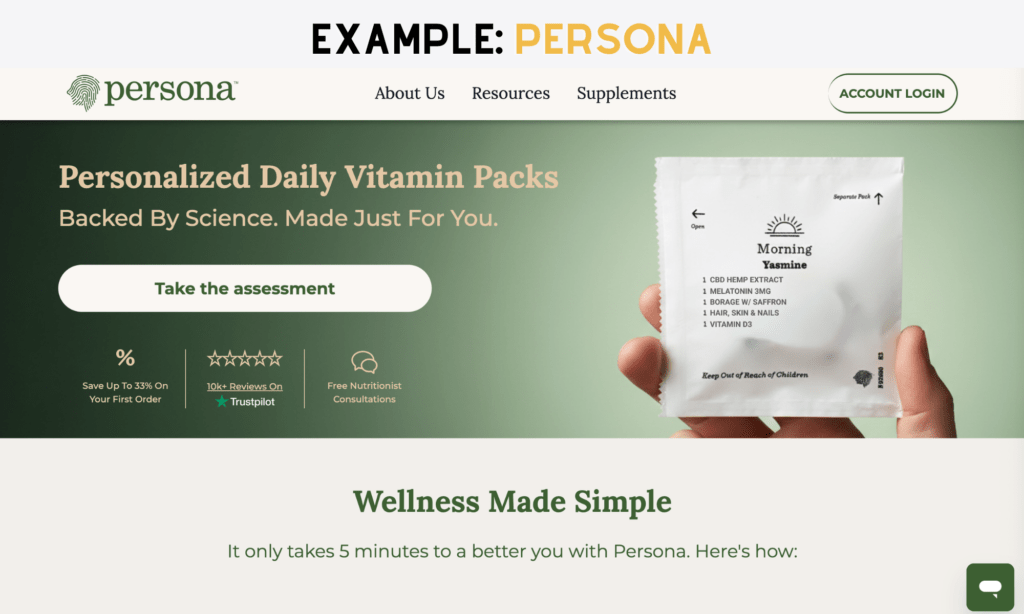
Don’t just sell random supplement packs. Instead, focus on customized vitamin and supplement products based on individual needs. Accordingly, your eCommerce website can encourage customers to fill out an online health questionnaire that contains lifestyle data or DNA test results. Then, machine learning algorithms can analyze that input and suggest a personalized pack for customers.
Opportunities:
This eCommerce business idea holds a huge potential. Customers usually don’t know which supplement products are suitable for their health conditions. They want guidance but don’t want to talk to a doctor for every small decision.
Reading ingredients takes time and requires domain knowledge, while buying trending products doesn’t ensure that they fit a customer’s needs.
So, delivering personalized supplement packs can address these problems.
Challenges:
- Customers need to take detailed questionnaires about lifestyle and diagnostic results, so that recommendation systems can have enough information to suggest the right packs.
- Even with AI’s assistance, you still need human reviews to ensure the personalized pack fits a customer’s needs.
- AI must provide accurate responses and ensure that the combination of different supplements doesn’t cause counter-effects.
- Your eCommerce business must handle sensitive health data carefully in compliance with industry standards.
Tips to build the business effectively:
You should start simple to test how the recommendation system works and adjust it based on real feedback.
2. Biohacking Gadgets Store
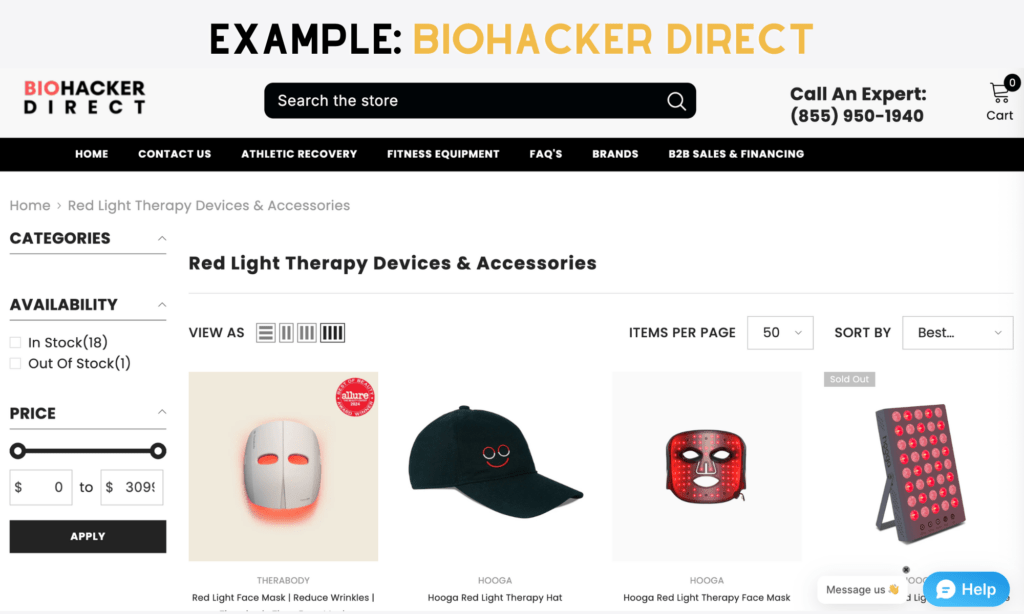
This eCommerce business idea focuses on selling gadgets designed to improve physical or mental performance. They could be light therapy lamps, sleep trackers, wearable stress monitors, and more.
Opportunities:
Biohacking is a niche, but growing at a surprising speed of 24.8% annually. In 2026, its market size is reported to reach $56.2 billion. Its growth is driven by the growing adoption of wearables, the expansion of DIY biology and self-tracking communities, and the increasing focus on cognitive and physical improvements.
Besides, 82% of Americans consider biohacking a worthwhile investment, mainly in mental health, weight loss, and anti-aging. They believe that biohacking can modify their internal systems, not just cure specific diseases.
These figures show a huge opportunity for startups in this realm. Your online store can sell biohacking devices to change the target audience’s living surroundings, which gradually improves their mental and physical health.
Challenges:
- Biohacking can come with the risk of overpromising. Many customers may over-expect biohacking devices to hack and modify their biological systems. If they don’t receive their desired outcomes, they may give thumbs down to your store.
- If your biohacking gadgets don’t comply with health and data privacy standards, your eCommerce business may confront substantial fines.
Tips to build the business effectively:
Don’t sell everything, as it requires high upfront investments. Instead, focus on a smaller segment, like stress management or sleep optimization. You should also offer honest product guides and detail potential cons, coupled with building good-quality content on social media platforms (e.g., YouTube or TikTok). This educates your target audience about products, avoiding over-expectation.
3. Sustainable Yoga and Fitness Gear
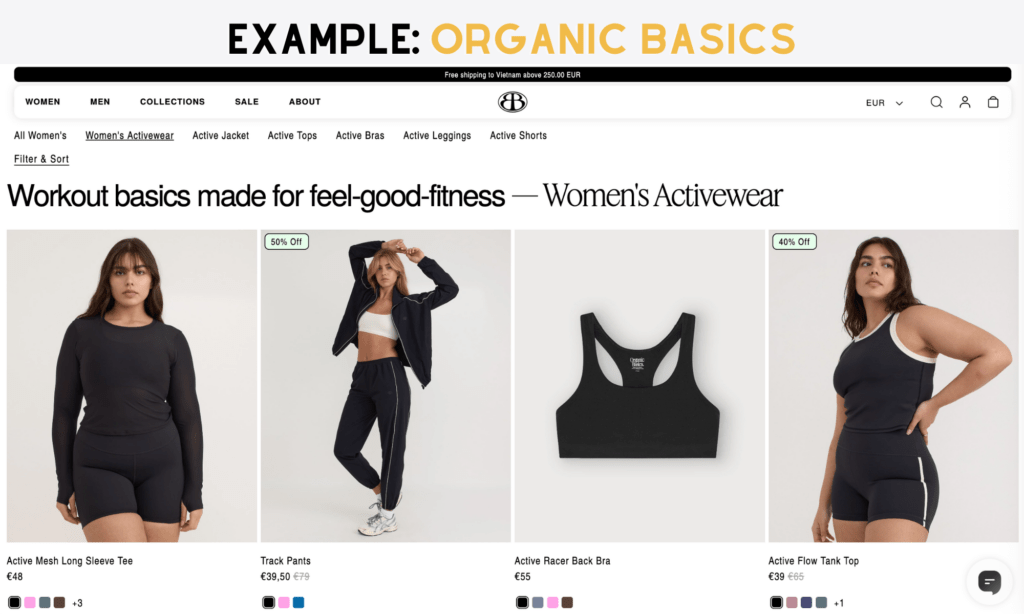
This business idea focuses on selling yoga mats, blocks, straps, and fitness accessories made from eco-friendly materials, like cork, natural rubber, or recycled plastics. Its target audience is eco-conscious consumers who value environmental protection and sustainability.
Opportunities:
A lot of fitness gear is still plastic-heavy and disposable. Many eco-conscious consumers, especially Millennials and Gen Z, notice that. And they’re willing to pay more to buy products whose brands have environmental credentials.
According to Fortune Business Insights, using recycled plastics for yoga clothing has encouraged this market to grow.
By telling a good story about sustainable fitness gear, your eCommerce business can win in this niche.
Challenges:
- Sustainable materials come with a higher cost and a tighter margin.
- There’s the risk of “greenwashing” accusations if messaging isn’t careful.
Tips to build the business effectively:
Start with one hero product, like a yoga mat. But having a good product doesn’t guarantee your success. Tell the product’s story clearly, without exaggeration.
Further, you may start with small production runs or dropshipping from ethical suppliers before committing to bulk orders. You can also focus on community-driven marketing, especially through fitness creators.
4. Self-Care Subscription Boxes
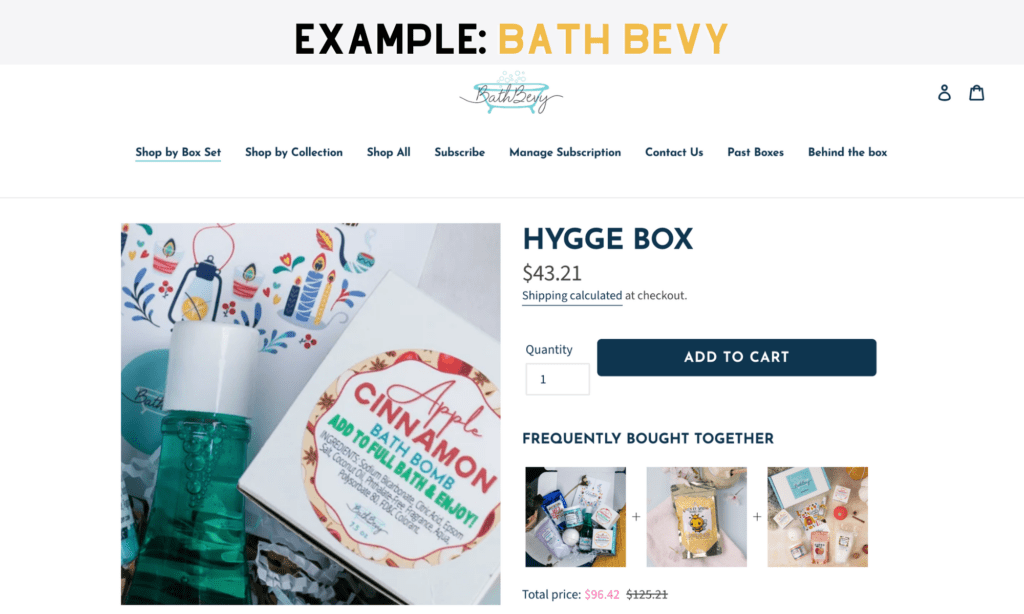
A subscription box business often provides consumers with a curated, themed box of different physical products on a regular basis, usually monthly. Accordingly, this eCommerce business idea focuses on offering self-care products, like candles, herbal tea, essential oils, or bath salts.
Opportunities:
Self-care subscription boxes are developing at an annual speed of 15.6% from 2026 to 2033. People love this service, as it allows even busy people to take care of their mental health easily without spending much time shopping. This service also offers lots of customization choices, increasing a customer experience. So, investing in this type of eCommerce business is beneficial.
Challenges:
- Consumers can cancel your service easily if boxes feel repetitive.
- Shipping and inventory planning are big issues, especially during peak seasons, can make the service less effective.
- Unstable subscription costs, which are affected by the type and amount of products inside the box, may overwhelm consumers.
Tips to build the business effectively:
You should test with limited-edition boxes before launching subscriptions. This reduces risk and helps validate themes.
Further, partnering with small makers can keep costs lower and add uniqueness, but that must align with your inventory planning. Don’t forget clear branding and storytelling to build trust among consumers.
5. Smart Air and Water Purifiers
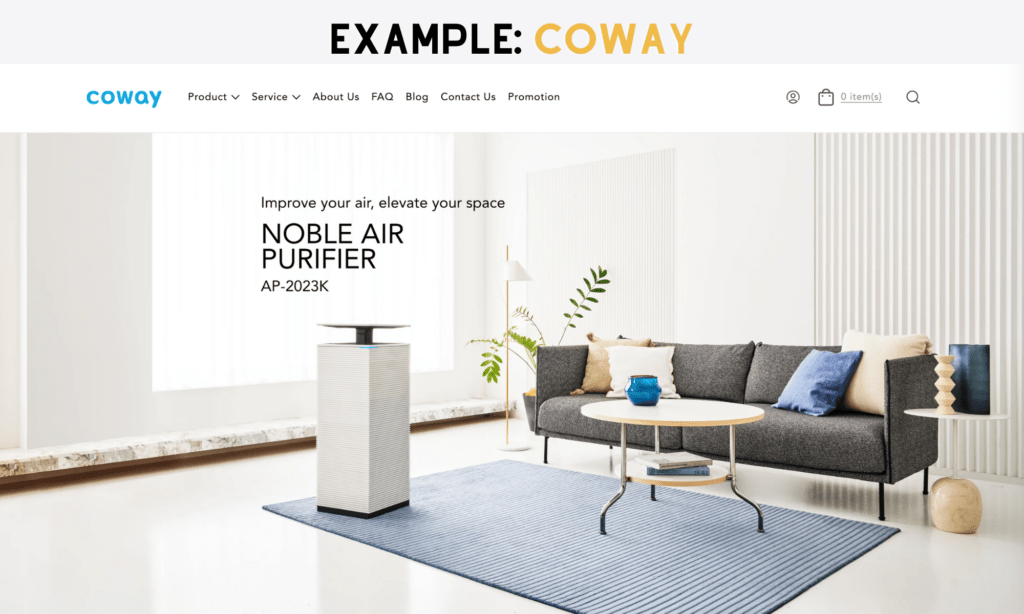
This eCommerce business idea is about selling compact air purifiers and portable water purification devices designed for urban living. These products target small apartments and those who worry about pollution but don’t want bulky machines.
Opportunities:
Beyond health care products, people now also care for the quality of their living environment, typically air and water around them. Polluted air and water can significantly impact their health. But this is what city dwellers can’t avoid, mainly due to the high concentration of vehicles and people.
Many people try to purify air and water with devices which are large and mainly for families. So, there’s a gap for portable, affordable options aimed at renters, travelers, or desk workers.
Challenges:
- Smart purifiers with high quality can require high upfront investments.
- Consumers may have less awareness about the health impacts of poor indoor air or water quality and the true capabilities of purifiers. So, this makes it hard to convert visitors into buyers.
- Your eCommerce business must work closely with manufacturers to handle technical and maintenance issues.
Tips to build the business effectively:
Your business should source proven products to build authority. Also, explain their use cases clearly through good-quality content on social media platforms to raise awareness of long-term health benefits.
Home and Living Ecommerce Business Ideas
Home isn’t just where people sleep anymore. It’s also where they work, stretch, recover, and try to stay sane. That opens a good opportunity for many startups to grab in the home and living sector. Below are the best ideas if you plan to start an eCommerce business in this realm:
6. Remote Work Ergonomic Solutions
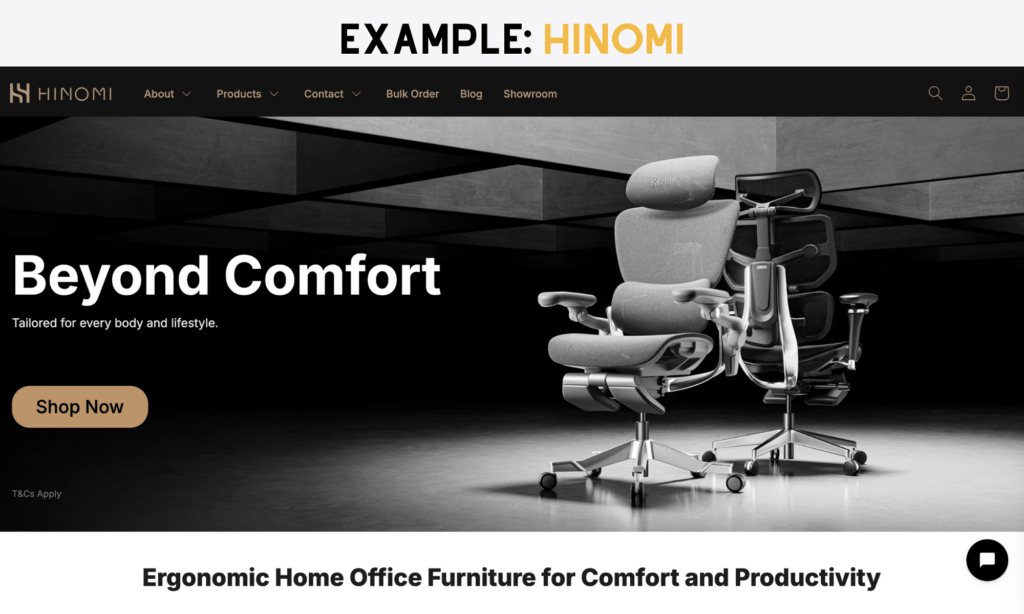
You can build a business that sells ergonomic furniture and accessories, especially for remote workers. They can be ergonomic chairs, standing desks, monitor arms, and anything that supports people when they work in long hours and don’t have much time to move their bodies.
Opportunities:
Many people now choose remote or hybrid work. This is not a fad, but becomes a norm, especially after the COVID-19 pandemic. Not only offices but also remote workers need ergonomic products to support their work, especially those requiring a single posture for long periods (e.g., designers, developers, and writers).
They can work from bedrooms, kitchens, and corners of living rooms. So, they require ergonomic furniture to support their natural posture and reduce musculoskeletal disorders or tiredness.
Challenges:
- The market is crowded with many sellers. This makes competition more intense.
- Ergonomic furniture is bulky, making shipping expensive and complex.
- Customers have different body types and expectations. So if your store only runs online, the return rates might be high.
Tips to build the business effectively:
Focus on specific groups of the remote workforce, like digital nomads or hybrid workers. Also, partner with reliable suppliers and prioritize functionality that your target audience values most, like sit-stand or lumbar support.
Many people still lack awareness of the importance of ergonomic furniture and consider them as luxury products. So, focus on good-quality content that guides consumers on how to set up their workstations or on how to adjust products to reduce pain.
Don’t forget to consider reliable logistics providers to handle warehousing and shipping effectively without affecting the quality of your products. Further, offer clear return policies, warranties, and maintenance to build trust.
7. Indoor Hydroponic Smart Gardens
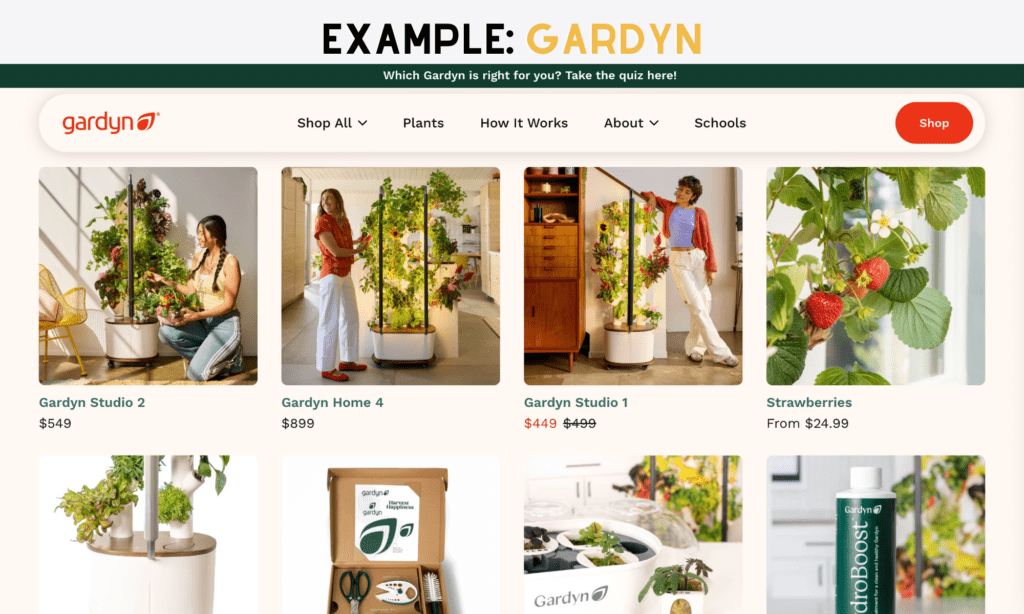
This eCommerce idea centers on smart hydroponic kits that let people grow herbs or vegetables indoors. The idea seems great for those whose houses don’t have much space for outdoor gardens or those living in apartments.
Opportunities:
Urban living keeps shrinking outdoor space. But the desire to grow food hasn’t gone away. People want to build their own gardens not just to self-provide fresh food but also to stay close to nature and find a small sense of calm.
They don’t want expensive or complicated tools to help them grow vegetables. So, there’s room for smart indoor hydroponic kits that are approachable to those living in a cramped space.
Challenges:
- This online store requires high upfront capital, no matter whether you manufacture smart kits yourself or buy from other suppliers.
- Your eCommerce business has to confront intense competition with other established retailers.
- Your target consumers may consider smart hydroponic kits more costly than traditional gardening methods. This takes longer time to convert visitors into purchasers.
Tips to build the business effectively:
You should identify your business model (manufacturing or selling from other suppliers), target customers, and unique selling proposition (e.g., AI-powered nutrient control). That helps you produce or find smart kits whose features meet your requirements.
Regardless of your business model, you should have a good supply chain process to find the best suppliers, control quality, and manage inventory. You should ensure that the products meet safety standards. Further, invest in good-quality content on social media platforms to educate consumers about the benefits of hydroponics.
8. On-Demand 3D Printed Home Decor
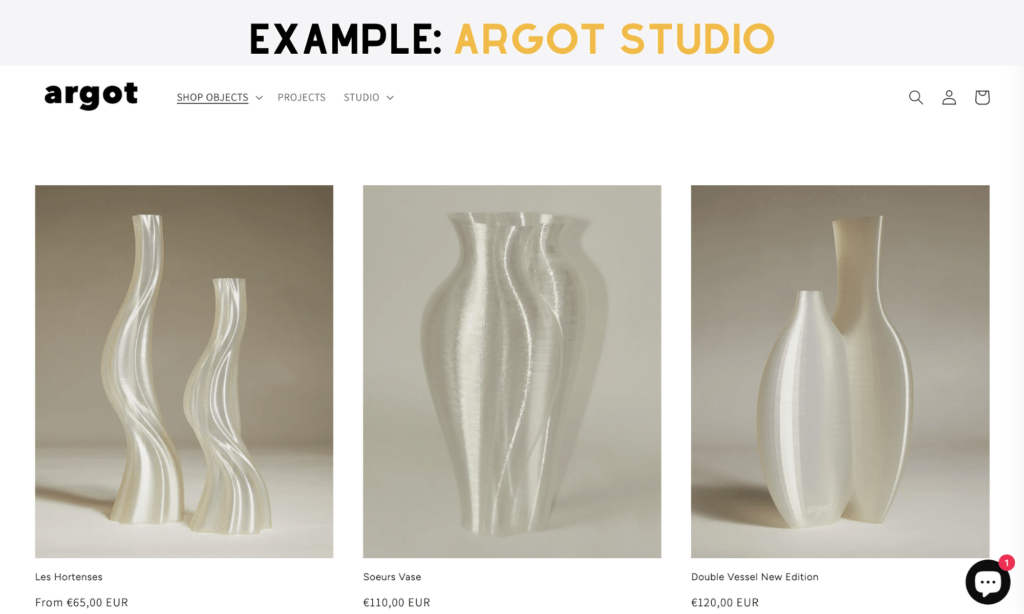
This eCommerce business idea is about selling custom or semi-custom home decor made with 3D printing. These decor items include vases, lamps, sculptural pieces, and anything the printing machine can print. Accordingly, customers choose colors, sizes, or patterns, and the item is printed after purchase instead of buying mass products.
Opportunities:
Mass-produced decor is everywhere, and it often looks the same. Meanwhile, consumers are seeking something unique and personalized that reflects their individual style and taste. That opens an avenue for on-demand 3D printing to grow.
Besides, this approach is highly valued for minimizing waste because your business only prints when customers require. 3D printing machines can even print complex and geometric designs that traditional manufacturing struggles to print. They also enable fast printing. All these factors make on-demand 3D printing a worthwhile investment.
Challenges:
- As production depends completely on the 3D printer, your business struggles to control quality and may confront many failed prints. This leads to material waste, increased costs, and even delayed delivery. Especially if customers make a bulky order, it’s hard to ensure consistent quality.
- Providing many personalized, on-demand variations, colors, or sizes can increase the number of SKUs fast. This makes it hard to schedule production and organize inventory.
- This idea requires high upfront investment for equipment.
Tips to build the business effectively:
Start with a small collection of designs, and test demand before expanding. Besides, you should invest in high-quality, reliable printers that can produce good surface finish and even intricate designs. Don’t forget tools for finishing, like sandpapers, primers, and spray paints.
You should also invest in CAD software (Fusion 360 or Blender) to create your own designs. In case you use designs from external sources, purchase commercial licenses (if any).
9. Smart Living Products for Seniors
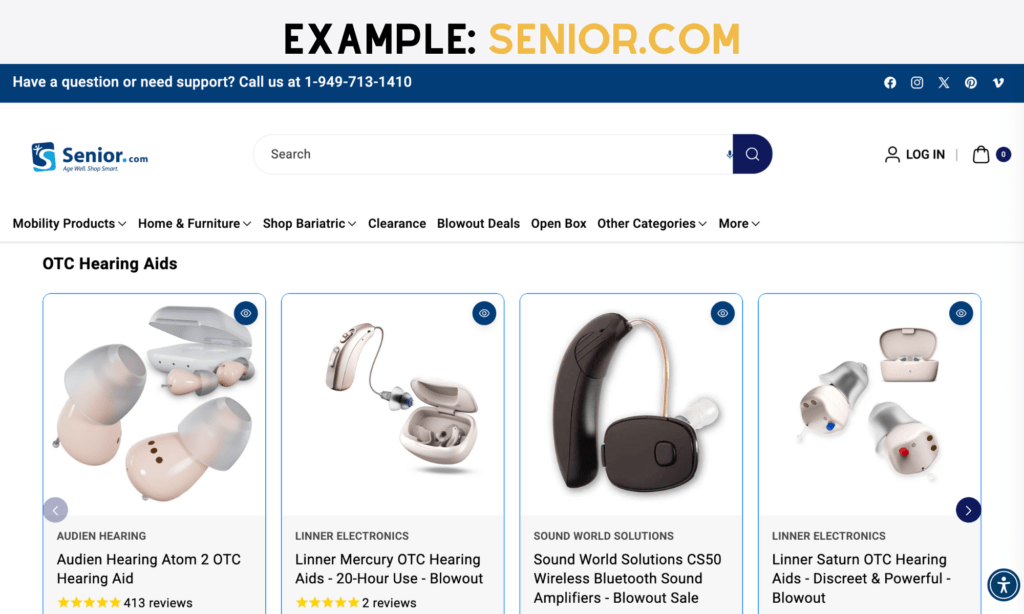
You can build an online store targeting seniors and selling smart living products for this customer group. These products could include fall detection sensors, smart pill boxes, simple alert systems, and many more. They all help the elderly live independently and safely.
Opportunities:
The aging population is growing fast. Yet families, caregivers, or clinics can’t spend 24/7 paying attention to them. Only small events, like falling or heart stroke, can significantly affect the lives of elder people.
That’s why the market for smart living products targeting this group is increasing. This gives you an opportunity to offer well-designed solutions that help monitor seniors.
Challenges:
- Seniors often have low tech literacy and may feel anxious when learning new techs. This can make it hard for them to adopt smart products and even abandon them.
- Smart living products need to integrate with other physical devices or software. This requires you to ensure seamless connections between devices. This is very important in urgent cases, for example, when a senior customer falls and needs to send SOS messages to clinics or caregivers.
Tips to build the business effectively:
You should learn about the core needs of your target audience (e.g., reducing fall risks or monitoring health). Then, choose suitable products from reliable, high-quality suppliers that offer good maintenance services and ensure data privacy compliance for their products.
Besides, you should offer educational content through in-person webinars or workshops. This way, both seniors and their family members can easily learn about how these smart living products truly work for them.
10. Premium Furniture Re-commerce Platform
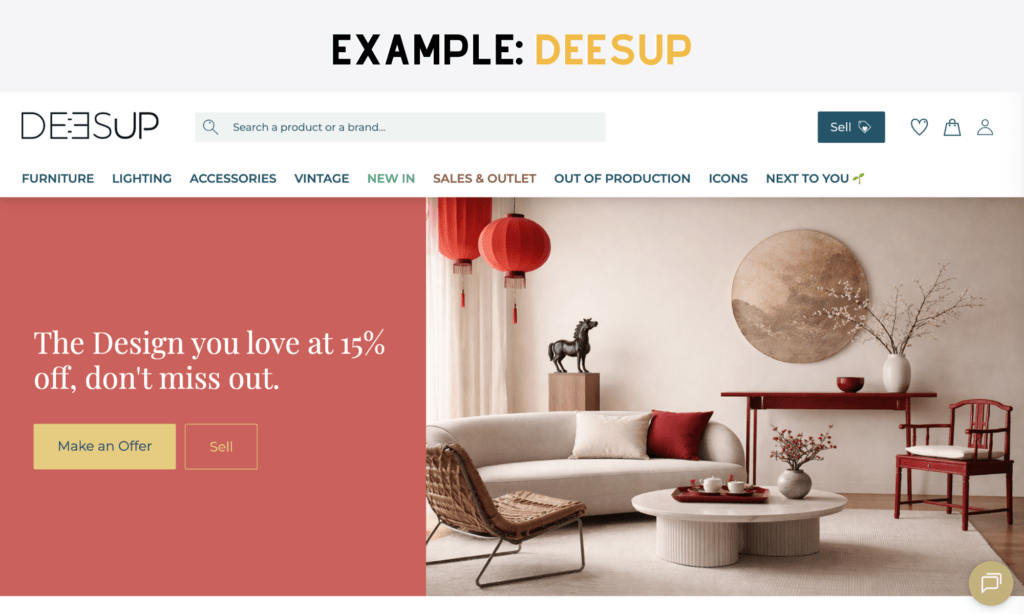
This model involves buying, refurbishing, and reselling high-end furniture. Not all people can afford premium pieces of furniture, but they still want to buy high-quality products. That’s why renewing old, yet high-end furniture items is a good way to approach luxury products at a reasonable cost.
Opportunities:
There’s a growing interest in buying refurbished high-end furniture. This is attributed to various factors, like shifts toward sustainability, customization, and lower costs.
Particularly, more and more consumers, especially in urban areas, want to reduce waste or customize existing designs to fit their living or working places. So, they tend to restore high-quality pieces instead of buying new ones.
Besides, premium furniture is often made from good-quality materials, like solid hardwoods. This makes premium furniture resale a worthwhile investment.
Challenges:
- Your eCommerce business has to hire skilled labor and invest in high-end materials to make used furniture feel “premium.”
- Finding high-quality furniture pieces is difficult and time-consuming. This leads to unstable inventory levels. Besides, some materials for refurbishing are hard to find or too expensive, leading to potential delays in shipping or high costs.
Tips to build the business effectively:
Start locally and define your style to build your personal brand. Besides, you should focus on sourcing high-quality furniture pieces and materials from reliable places and setting up a professional workspace with high-quality tools.
You can also partner with refurbishers instead of doing everything in-house. Don’t forget to invest in high-quality content (videos, blog posts, images, etc.) that highlights the importance of refurbished high-end furniture to reach your target audience more easily.
Pet Care Ecommerce Business Ideas
Pet care is very dynamic out there, with a global value of over $289 billion in 2026. The demand and investment of pet owners in pet care products and offerings are increasing strongly. This makes eCommerce ideas in this realm feasible and (possibly) effective if you can find the right niches to develop your business. Below are the best ideas for reference:
11. Specialty Diet Pet Food
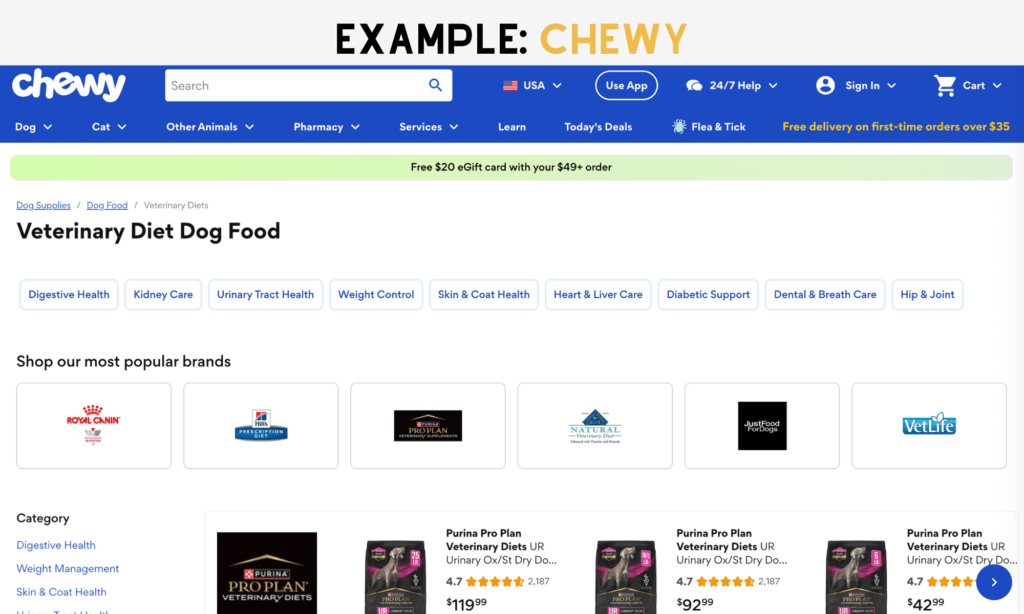
This eCommerce business idea focuses on selling pet food for specific health needs. For example, you can sell food for pets with allergies, obesity, or plant-based diets.
Opportunities:
Many pet owners feel lost when their pet develops issues like itching, digestive problems, or obesity. Therefore, they increase their spending on special food to support their pets during treatment. This gives room for you to open an online store that mainly focuses on specialty diet pet food.
Challenges:
- Sourcing high-quality, specialty food products with health claims can be difficult. Besides, without properly identifying market demands, your business can face overselling or inventory shortages.
- Specialty food targets pets with health problems. This requires the food to meet stringent regulations to ensure safety standards. Further, this requires your staff to be highly trained and knowledgeable about veterinary health, pet nutrition, and ingredients to ensure pets will get the right food.
Tips to build the business effectively:
You should start narrow instead of selling all specialty food. This requires you to identify niche opportunities (e.g., weight management or grain-free diets) to define a unique selling proposition.
Further, partner with certified manufacturers whose products comply with regulations and go through the rigorous testing process. You should also invest in educational content to explain why ingredients are chosen. This helps build more trust.
12. Personalized Pet Accessories
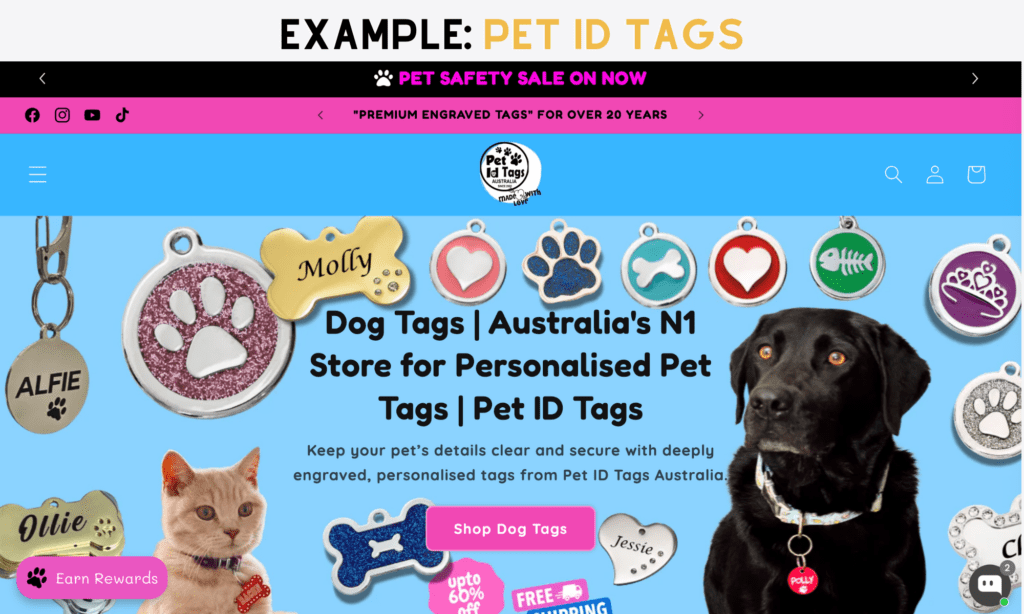
You can start a business that sells custom pet accessories, like name-printed collars, designer clothes, or handmade ceramic bowls with tiny paw illustrations. These products are customized, leaving a long-lasting memory and personal touch.
Opportunities:
More and more people are adopting pets, and they see their pets as important family members. This has promoted the increasing spending on pet accessories.
There are various mass-produced accessories out there, which leave no emotional connection between pets and their owners. Therefore, more people are looking for something personalized to leave unique marks on their pets. This also makes the accessories less disposed.
Challenges:
- Customization can slow down production & shipping.
- Personalized items are nearly impossible to resell if returned.
- Any mistakes (e.g., a pet’s name misspelling) can become a nightmare, incurring costs for rework and the disposal of faulty products.
Tips to build the business effectively:
You should clarify your niche to stand out, for example, funny accessories or eco-friendly materials. Don’t forget to define your main selection of products, like collars, tags, or pet bandanas, that deliver the best ROI for your business.
You should also source reliable, high-quality suppliers and choose a suitable business model (e.g., handmade or print on demand). Taking photos of real pets wearing real products also attracts pet owners.
13. Remote Pet Interaction Devices
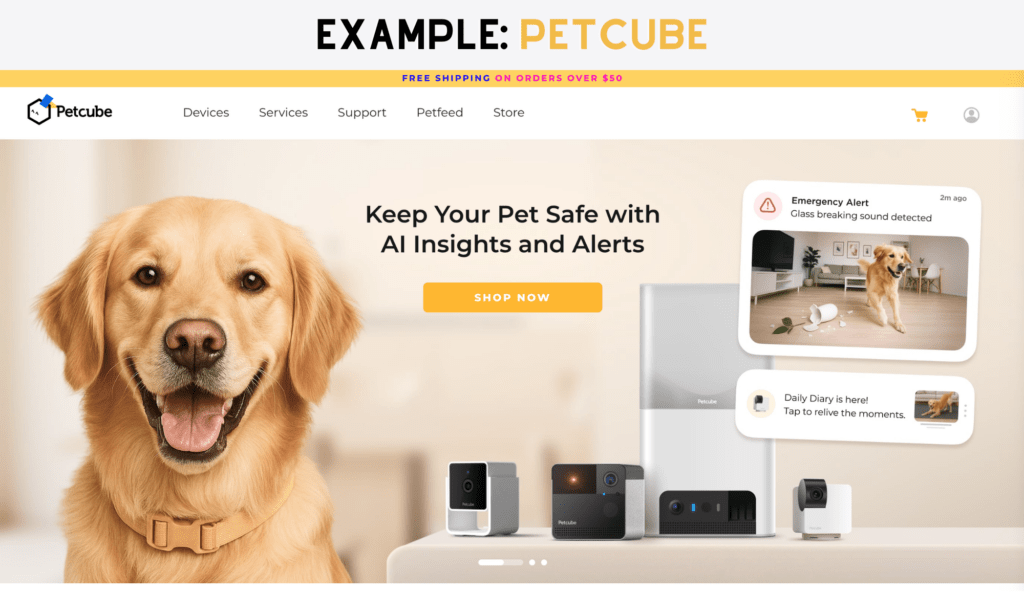
You can focus on selling smart devices that let owners interact with pets or feed them remotely. These devices often come with cameras (which can move to track pets) and speakers (through which owners talk with their pets).
Opportunities:
More people work outside the home, and they often have no one to take care of their pets. Worrying about how their pets live and eat at home, especially when they’re on a business trip, they prefer to own a smart device to support interactions and feeding. This increases the demand for an online store that specializes in these devices.
Challenges:
- This eCommerce business requires high upfront costs. Normally, smart pet devices can be much more expensive than traditional accessories, mainly due to the IoT and even AI they adopt.
- A high demand also means a more intense competition. This requires your business to have strong market positioning to stay competitive.
- Potential consumers may have unrealistic expectations about the products.
Tips to build the business effectively:
You should identify the real demand of potential consumers, which helps find the best white-label proven products to meet their needs. Beyond essential features, these products (e.g., interactive cameras, treat dispensers, or smart collars) must seamlessly connect with a user’s mobile app and ensure data privacy compliance. Also, invest in high-quality content to position your business differently in this crowded market.
14. Pet Hygiene Subscription
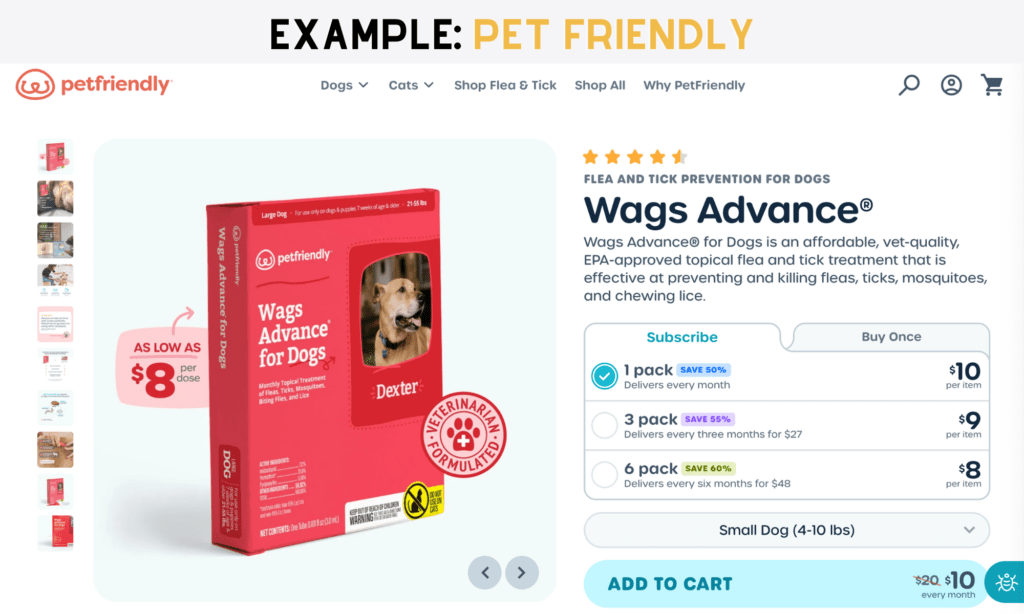
Instead of waiting for consumers to place orders, this business idea allows you to deliver pet hygiene essentials periodically. These products could be cat litter, pee pads, grooming wipes, and more.
Opportunities:
Many pet owners reorder the same products repeatedly for pet hygiene. Therefore, they don’t want to spend time opening the website and adding these products to the shopping cart. That’s why having a service to deliver the same types of pet hygiene products is great.
Challenges:
- Your eCommerce business struggles to manage inventory to avoid overstocking or stockouts.
- You have to ensure product quality and availability for periodic subscriptions. This requires you to find reliable suppliers with high-quality and safe products.
Tips to build the business effectively:
Due to the crowded market, you need to research existing competitors (e.g., BarkBox) and trends to identify opportunity gaps and find a specific niche. Further, source essential hygiene products that are frequently used and needed, like grooming wipes or shampoos. This prevents the shortage of those products and ensures reliability.
But the unique selling proposition that sets you apart and possibly delivers success is how you combine different products to customize subscription boxes for different customers. Otherwise, you can allow consumers to tailor their boxes. Besides, provide pet owners with educational content to use products effectively.
15. Educational Pet Puzzle Toys
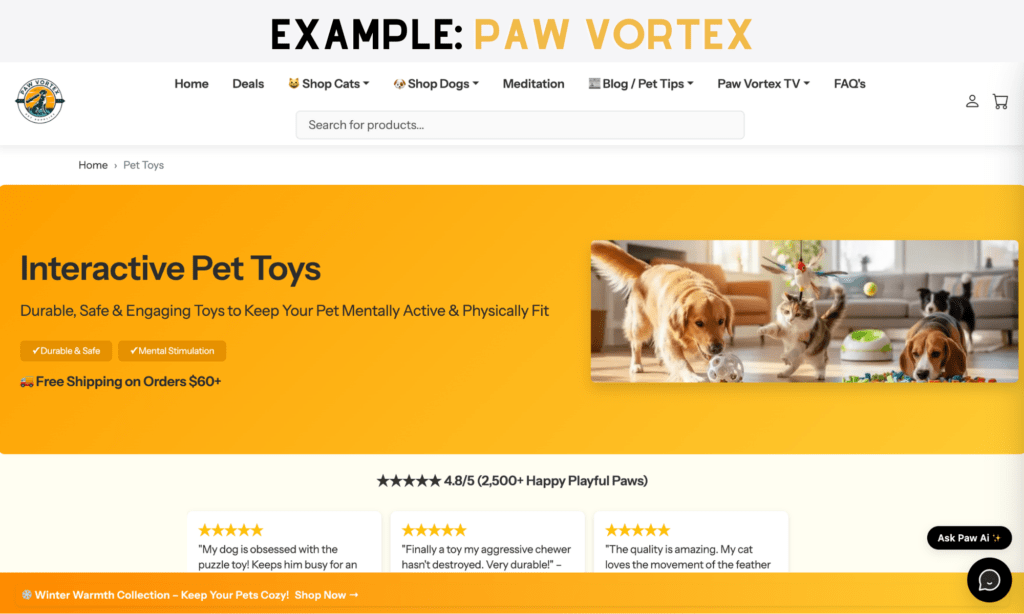
This eCommerce business idea is about selling puzzle toys designed to stimulate pet minds and increase physical activity. They could be treat-dispensing puzzles, interactive boards, or any toys that make pets think instead of just chew.
These interactive, treat-dispensing tools stimulate minds, increase physical activity, and help manage destructive behaviors, with difficulty levels ranging from beginner to advanced.
Opportunities:
Many pet toys focus on physical activity only. Meanwhile, mental stimulation is still underrepresented, especially for indoor pets. Owners dealing with boredom-related behavior are actively looking for solutions to enrich the cognitive behavior of their pets. That opens an avenue for you to enter this niche.
Challenges:
- The competition in this niche is intense, so you have to compete against other large and established retailers.
- Many people often complain about the durability of puzzle toys, which are easily broken by aggressive chewers. So, your products must be both functional and durable.
- Educational toys often cost more. Convincing consumers to pay for mental stimulation toys rather than non-educational toys might be hard at times.
Tips to build the business effectively:
You should research existing products to see what is missing and how pet owners think about these products. Further, partner with reliable toy manufacturers whose products are both functional and durable. Ensure that those products use non-toxic and pet-safe materials as well, and avoid small, breakable parts that pets can swallow.
Whether you open an online store only or a physical store as well, you should demonstrate how puzzle toys work in a real environment by showing in-store or on-website videos. Also, create blog posts or social media content to explain the mental benefits of puzzle toys.
Tech and Gadgets Ecommerce Business Ideas
Many inventions appear to make our lives easier and more convenient. So, starting an eCommerce business that sells technological gadgets is a worthwhile investment. Below are the best ideas you can consider:
16. Privacy-Protection Accessories
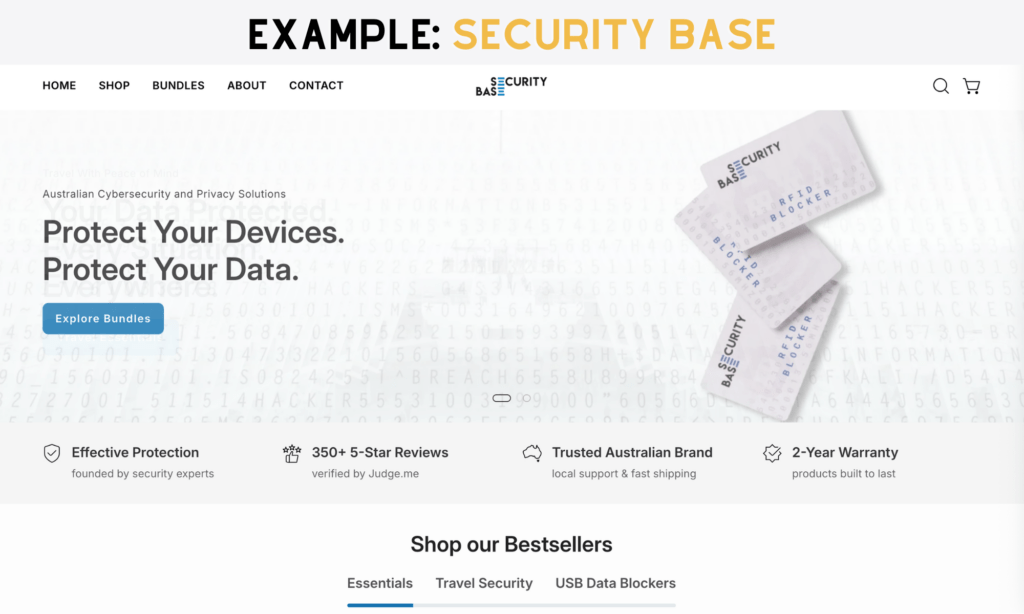
You can open an online store that focuses on small, everyday privacy-protection accessories. These products could be webcam covers, anti-peeping glasses, RFID-blocking wallets, and more.
Opportunities:
People are increasingly raising awareness of online data privacy, but many of them are also looking for solutions to protect their physical privacy. Of course, they don’t want something too complicated, but simple and affordable. Therefore, having products like anti-peeping glasses and RFID-blocking wallets will protect users and their physical possessions from being observed.
Challenges:
- Many people don’t consider webcam hacking, shoulder surfing, or RFID theft as significant risks. So, their demand for these products may be much lower than that of other tech products.
- “Good enough” alternatives prevent users from buying privacy-protection products. For example, instead of using specialized webcam covers, many people can paste Post-it notes or opaque tape.
- Rapid changes in technology may require these products to evolve accordingly. For instance, webcam covers may not fit all laptop or mobile models. This requires constant redesign.
Tips to build the business effectively:
You should sell bundled kits (e.g., 3-in-1 privacy kits) instead of single items. This makes your average order more valuable. Besides, focus on high-quality content that explains the benefits of privacy-protection accessories to attract and retain customers.
17. Portable Solar Charging Solutions
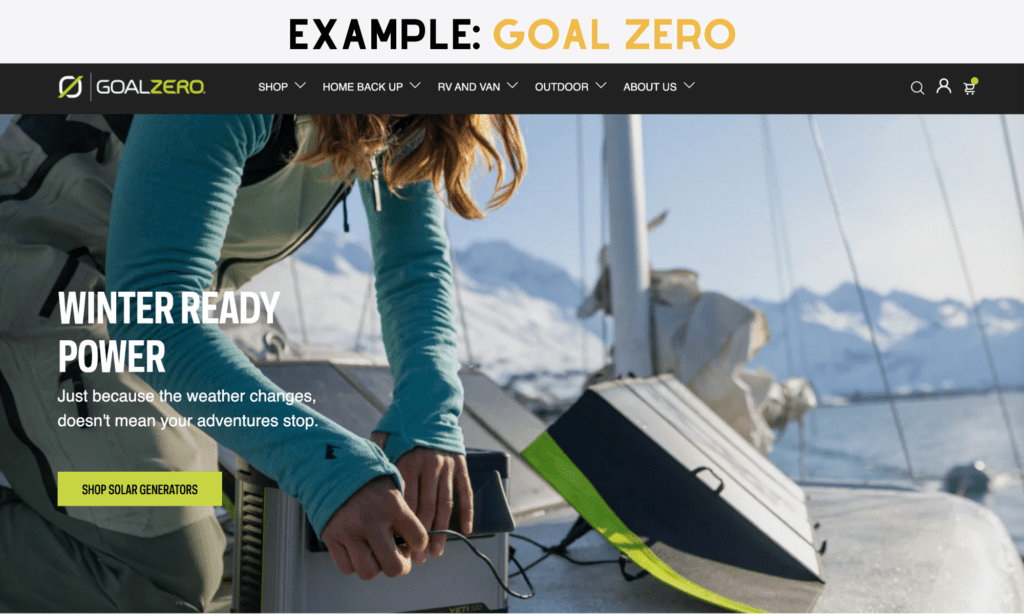
This eCommerce business idea focuses on selling portable solar chargers for people on the move, typically campers, hikers, and digital nomads working from beaches or vans. Without the need to find outlets or cafés to charge their phones or laptops, people can get power from sunshine anywhere and anytime.
Opportunities:
Remote work and outdoor lifestyles aren’t something new, but increasingly grow in recent years. But outdoor places like camping areas or beaches don’t have available charging stations for people to chage their electronic devices, like mobile phones, laptops, or lamps. So, there’s a high demand for compact, reliable solar charging solutions.
One study has shown that the global value of portable solar chargers will reach $0.77 billion in 2026 and continues to increase by over 14% annually. This growth is mainly attributed to the growing adoption of renewable energy and sustainable solutions.
Challenges:
- This eCommerce idea requires high initial investments and may face tricky logistics due to battery shipping regulations.
- Portable solar chargers perform based on weather, have capacity constraints, and may be easily broken due to outdoor factors.
- The market is highly competitive.
Tips to build the business effectively:
You should research the market and competitors to identify trends and opportunities (e.g., over 80% of end-users are outdoor enthusiasts, like campers, backpackers, and hikers).
Also, partner with reliable suppliers whose products have durable materials, enable modern connectivity, meet safety standards, and address actual problems. These products should come with clear warranty and post-sales services. Don’t forget to invest in a good inventory management process to ensure safe shipping and storage.
Further, focus on high-quality content to explain how chargers truly work in outdoor environments, plus their pros and cons.
18. Content Creator Starter Kits
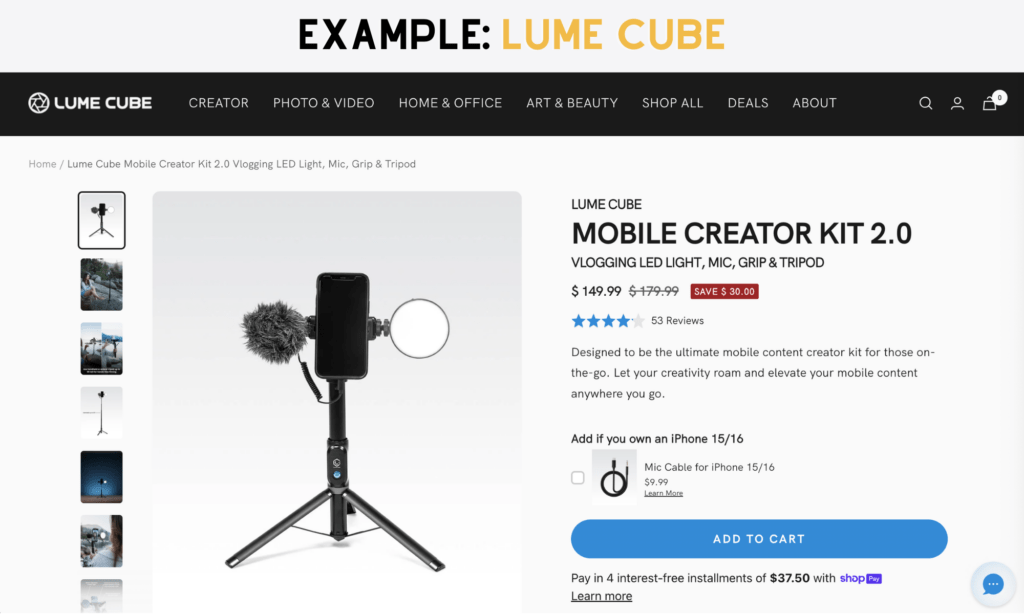
Your eCommerce business can focus on selling bundled kits for new content creators instead of single items. These kits include ring lights, lavalier microphones, simple backdrops, and more to help beginners start their content creation journey seamlessly.
Opportunities:
The creator economy keeps growing, with over 207 million independent creators worldwide. More and more brands are increasing their partnership with content creators across different platforms to advertise their offerings. Further, more and more people with different specialized skills also go online to share their specialization, from parenting to procurement.
But beginners feel anxious about how to film their content to attract and retain viewers. This encourages more eCommerce platforms to offer starter kits for these target consumers.
Challenges:
- The market is highly competitive. You have to compete against large eCommerce platforms (like Amazon and Best Buy) and specialized pro-audio/camera stores.
- It’s hard to define which kits are for “starters.” Because beginner creators have different needs depending on their content (beauty, tech review, etc.) and platforms (YouTube, TikToks, etc.).
- Building starter kits takes more time to pick products from different suppliers. This also makes supply chain management hard and complex.
Tips to build the business effectively:
You should source products from reliable, high-quality suppliers with clear warranty and post-sale services. Instead of bundling products randomly, you should combine products by use cases or platforms, like UGC starter kits, podcaster kits, or video streamer kits. You should offer a quick-start guide to add more value to your offerings.
19. Custom Mechanical Keyboards & Artisan Keycaps
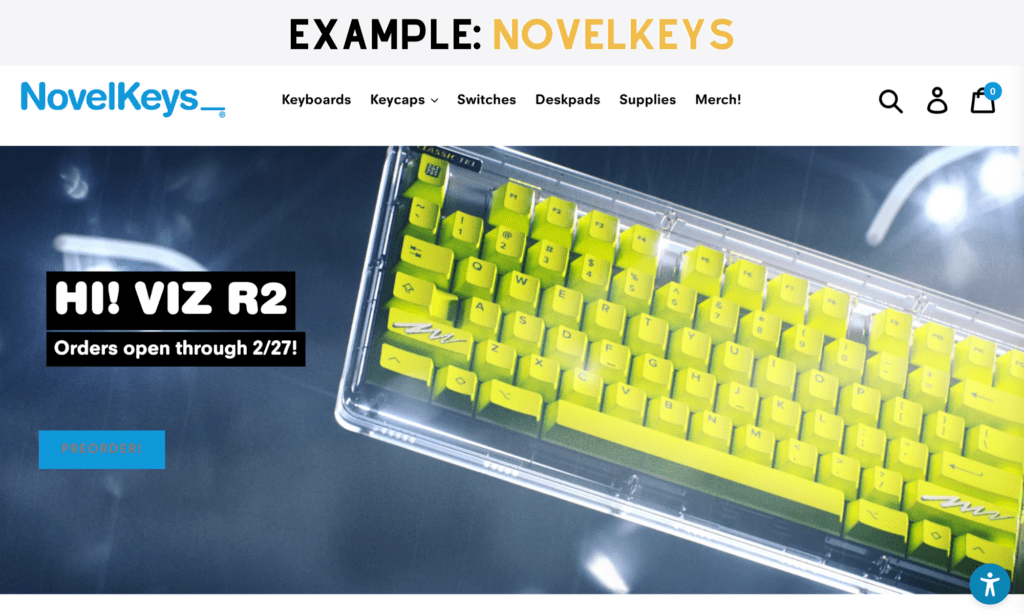
Investing in custom mechanical keyboards and keycaps is a great eCommerce idea. These products of target hobbyists and collectors who prioritize aesthetics, uniqueness, and customization.
Opportunities:
There’s a growing interest in custom mechanical keyboards and artisan keycaps. More and more people love using or collecting small batches of handmade keycaps that integrate theme-based or artistic designs to add a unique touch. This turns this realm a fertile playground for you to start an eCommerce business.
Challenges:
- This eCommerce business idea requires high upfront costs for high-quality materials and significant effort.
- You need to hire highly skilled artisans to build custom keycaps and keyboards.
- Inventory management is complex. Your keycaps and keyboards are custom, not mass-produced. So, it’s hard to forecast accurate demands to ensure proper inventory levels.
Tips to build the business effectively:
To succeed, your business has to master technical knowledge of keyboard components and artistic design skills. Further, you need to identify your unique selling proposition (e.g., theme-based designs or typing feel), production methods (e.g., 3D printing or resin casting), and sales model.
We advise you not to build custom products only based on pre-order methods. Selling pre-built keyboards alongside customizable elements helps you manage inventory better and serve both the general audience and enthusiasts.
20. Bio-based Tech Protection Cases
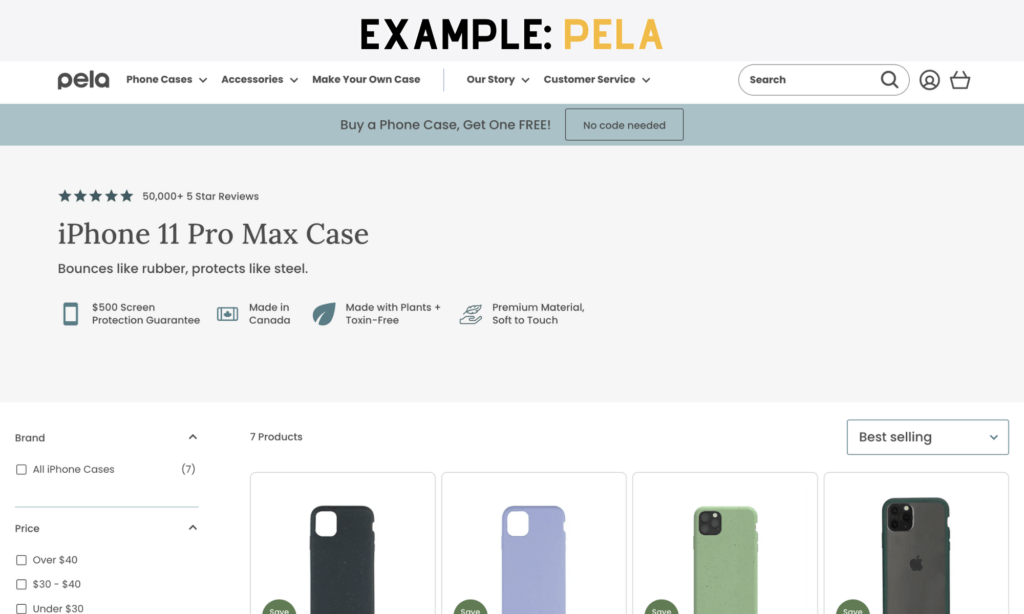
Your eCommerce business can focus on tech accessories (e.g., phone cases or laptop sleeves) made from bio-based materials, like pineapple fiber or plant-based polymers. This idea targets those caring for environmental protection and sustainable materials.
Opportunities:
People are raising awareness of their carbon footprints and environmental impact. So, they’re seeking eco-friendly items, typically tech protection cases like phone cases. Besides, many bio-based cases use advanced materials like plant-based polymers, bioplastics, and flax straw to become more durable and protect tech gadgets better.
For this reason, the market for bio-based cases is growing significantly, especially among millennials and Gen Z. This creates a good chance for you to enter the market.
Challenges:
- Whether you sell from other suppliers or manufacture bio-based cases yourself, reliable sourcing is tricky. If you’re just a retailer, you may struggle to make sure whether the imported products are truly eco-friendly and sustainable. Meanwhile, bio-based production costs a lot and requires you to find a reliable source of sustainable materials.
- Your business has to balance between the product’s durability and aesthetic designs.
- It takes time to convince your consumers that your products are truly compostable or biodegradable.
Tips to build the business effectively:
Your business should start with a narrow product line and test real feedback. Don’t forget to be transparent about the materials used to build tech protection cases and to explain trade-offs honestly so that consumers won’t over-expect.
More importantly, build an eco-friendly brand to make your products more convincing. This involves clarifying your environmental certifications, using eco-friendly packaging, building educational content, and partnering with eco-influencers.
Fashion and Beauty Ecommerce Business Ideas
Fashion and beauty offerings aren’t new, yet they’re always what people, especially women, care about. These factors significantly affect people’s mental health, define their identity, boost their confidence, and represent social perception. As people are spending more money on fashion and beauty products, this is a fertile playground you shouldn’t ignore when starting an eCommerce business:
21. Curated Vintage and Second-Hand Fashion
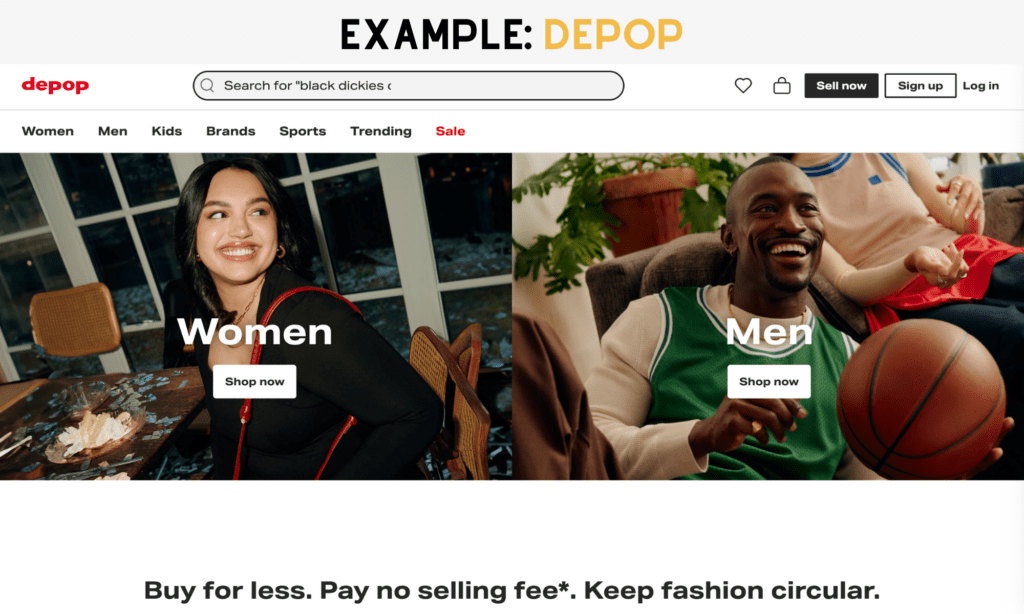
You can open an eCommerce business that focuses on resale fashion, but not the everything-for-everyone kind. It can specialize in Y2K, minimalist, or luxury archive pieces that feel timeless instead of trendy.
Opportunities:
According to BOF, the market for secondhand fashion will increase two to three times faster than the first-hand market and reach $317 billion in 2027.
This playground attracts consumers of all ages, with young shoppers valuing past-season and unique items and old shoppers emphasizing sustainability. Even brands and retailers are entering this market to acquire potential shoppers who want to buy fashionable items, especially luxury ones, at affordable prices.
But the second-hand fashion market is overwhelming with inconsistent quality. Many shoppers want a unified place where they can find high-quality products for their favorite style. That’s a market gap you can harness to win in this realm.
Challenges:
- Sourcing authentic, high-quality items in specific styles is a waste of time. This requires you to search through thrift shops, wholesalers, and even independent sellers.
- Cleaning and repairing secondhand items can increase labor costs and hidden expenses.
- The market is highly competitive. So, it may take time to position your business differently.
Tips to build the business effectively:
You have to identify a specific, high-demand niche and source items that fit your brand’s vision to maintain a consistent feel. This helps you build a strong and reliable brand identity.
Investing in high-quality photography and storytelling matters as well. This allows you to deliver the “story” behind each piece and attract potential consumers.
22. Clean Beauty Cosmetics
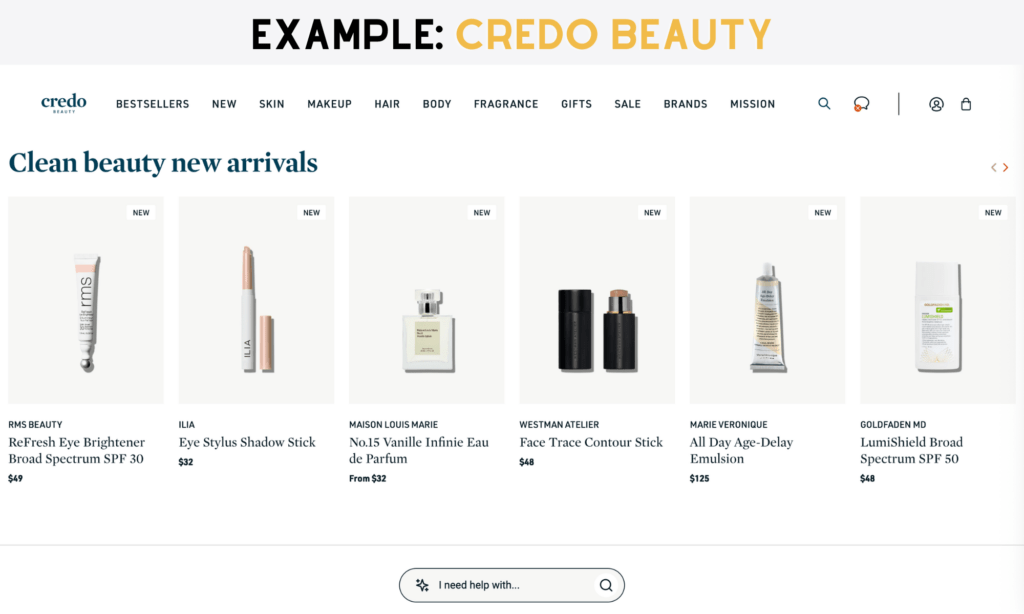
This eCommerce business idea focuses on cosmetic products that have safe ingredients, transparent labeling, and ethical production. Those products are often recognized with certifications like COSMOS-standard, USDA Organic, Ecocert, and Leaping Bunny/Cruelty-Free International.
Opportunities:
The clean beauty market is growing, with an estimated $179.65 billion in 2026. This growth reflects people’s higher demand for ingredient safety, transparent production, and sustainable practices for not only human health but also the environment. This creates a great chance for you to enter the market.
Challenges:
- Sourcing truly safe and sustainable ingredients is hard. It requires you to find reliable suppliers with certifications and claims to prove safety and ethical standards. This also makes supply chain management more complex.
- Pricing is 30 – 40% higher than that of other cosmetic products. This may prevent various consumers in emerging markets from accessing clean beauty products.
- Regulations about clean beauty products vary across regions. This makes international trading harder.
Tips to build the business effectively:
You should start with a small product line that positions your brand differently. This way, you can test how the target consumers actually react to your products and make improvements later.
Further, as “clean beauty has no universal legal definition, you have to define your “clean” standards clearly, clarify ingredients, show testing, and get certified. Beyond ethically sourced materials, you should also invest in sustainable packaging in alignment with your brand ethos. In case your business sells products from other brands instead of manufacturing them, the same also applies.
Besides, focus on educational content on social media platforms to avoid “greenwashing” concerns.
23. Adaptive Clothing Line
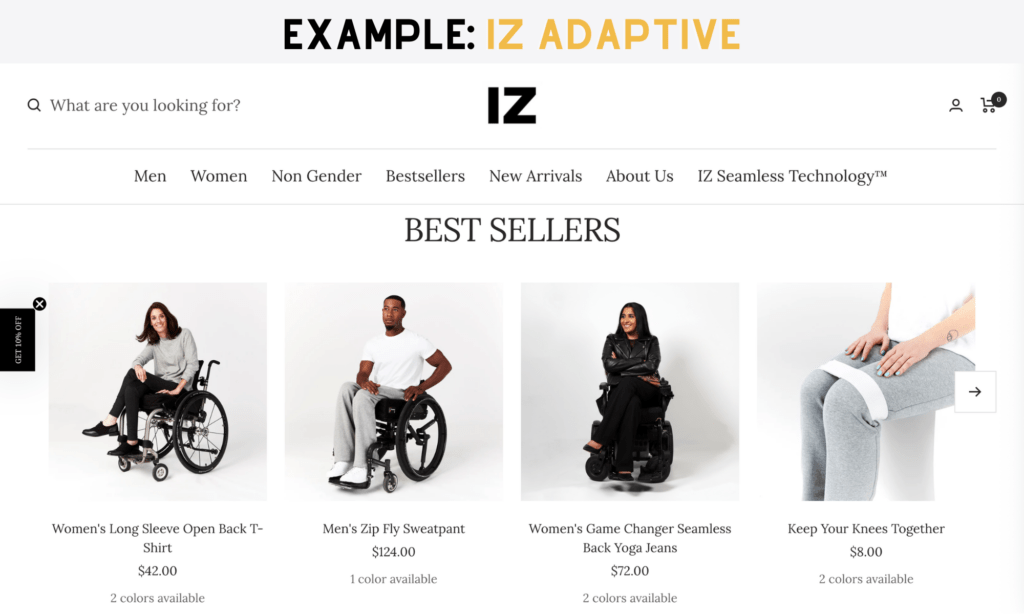
You can open an eCommerce business that sells clothing for people with disabilities or mobility challenges. Such clothes feature magnetic closures, non-irritating fabrics, sensory-friendly materials, and more to make consumers comfortable.
Opportunities:
There’s a radical shift toward adaptive clothing, which is designed specifically for people with disabilities and the geriatric population. The reasons are mainly due to the rising awareness of those groups about adaptive wearables and their higher spending on apparel. People no longer just want fashionable items, but adaptive clothing that assists them in daily life. For this reason, the global value of adaptive clothing is forecast to reach nearly $19 billion in 2026.
Challenges:
- Design requires a lot of research and testing to balance function and fashion. Besides, wide variations in needs and a lack of industry standards for adaptive clothing make the design complex and time-consuming.
- Production costs may be higher due to specialized components and complex production.
- The market is highly competitive and specialized. So, finding reliable, experienced manufacturers to produce specialized adaptive garments can be difficult.
Tips to build the business effectively:
Due to varying needs, your business should identify a specific niche (e.g., wheelchair users or people with medical needs) and work with real users during design to see whether your design meets their needs. Don’t forget to analyze competitors like Tommy Hilfiger Adaptive or Buck & Buck to identify market gaps.
Also, find specialized manufacturers that can handle complex production for adaptive clothing. Prioritize comfort and simplicity over trendiness. And in initial stages, you should use small-batch production or pre-orders to reduce risk and avoid expensive upfront inventory.
24. Evening Wear Rental Platform
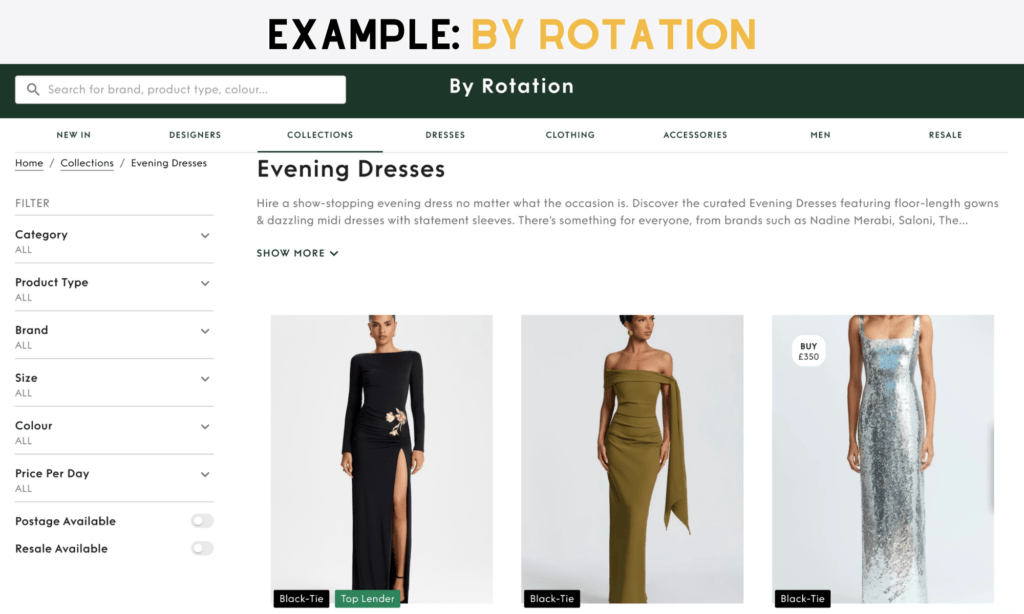
This eCommerce business idea is about renting high-end dresses and suits for special occasions, like weddings or galas. It helps people get the look without spending much money on something they may use only once in their lives.
Opportunities:
Not all the time, people want to buy formal, luxury clothes for occasional events, like weddings or galas. Such clothing is often expensive, and people don’t wear it casually or throw it away to reduce environmental impacts. So, renting solves that. You can open a store that offers good sizing guidance, transparent pricing, and smooth experiences.
Challenges:
- Logistics and supply chain management are complex. You have to handle various processes like renting, the return of garments, cleaning, and restocking.
- This eCommerce business model requires high costs to buy garments and clean them after every use by using specialized, high-quality cleaning services.
- You may confront possible problems, like garment damage or theft.
Tips to build the business effectively:
You should focus on one demographic group or a specific niche with high demand, like GenZ or prom events. Also, research the market and competitors (e.g., Rent the Runway or Hurr) to understand their inventory, pricing, and service gaps.
Further, invest in fit guidance, plan for storage space, partner with professional dry cleaning shops, and have clear policies to handle damage, lost items, or late returns. Don’t forget to invest in good customer service to encourage consumers to return.
25. Custom-Blended Perfume Brand
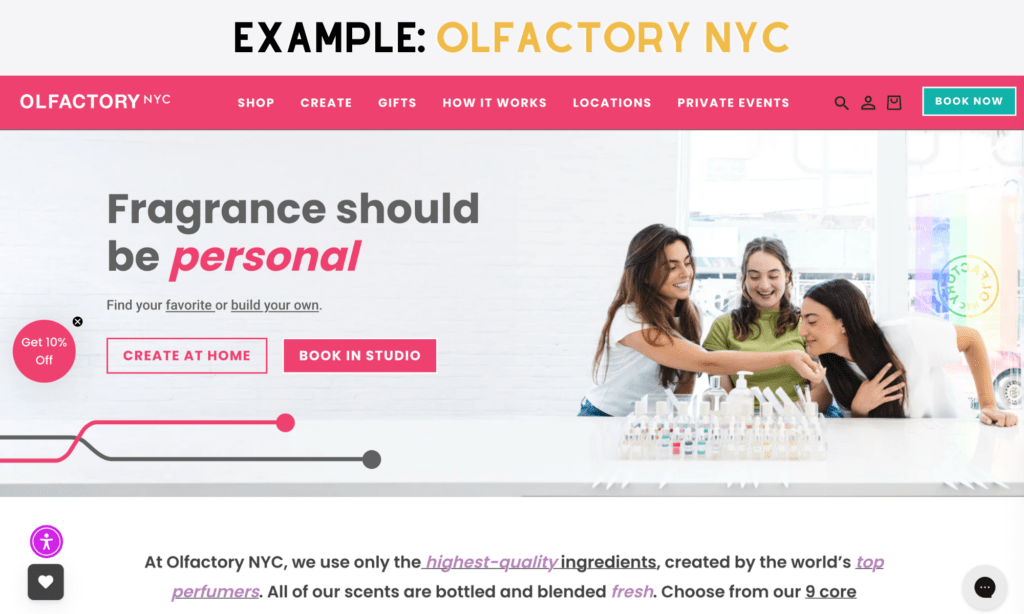
Instead of selling ready-made perfume, this business model allows consumers to create personalized fragrances by choosing base notes. This targets those who want to experiment with perfume and create a scent tailored for them.
Opportunities:
Many people are looking for scents that offer a personal touch to their lifestyles and personalities. Also, they’re curious about how perfume is created. Accordingly, custom-blended perfume allows them to choose notes based on moods, seasons, or occasions instead of just relying on gender. This increases customer loyalty and engagement with your brand.
Challenges:
- Custom blends require your business to comply with stringent regulations and complex labeling laws (e.g., FDA in the US/EU Cosmetics Directive). This ensures that perfume formulation meets safety standards (e.g., IFRA) and proves harmless for users.
- This business type requires high expertise in perfume formulation and high-quality ingredients to create professional-grade products.
- Returns are hard because perfume is custom-made.
Tips to build the business effectively:
Your business should start with a limited core collection (3 – 5 scents) and focus on high-quality ingredients to avoid overwhelming yourself and customers. You can offer guided blends to help consumers build their desired scents better and reduce disappointment.
Also, ensure all products meet IFRA standards, undergo a safety evaluation process, and get correct labeling. You should get liability insurance to protect consumers from unexpected problems like an allergy. Establish a secure, temperature-controlled environment to store both raw materials and finished products safely.
Education and Hobby Ecommerce Business Ideas
Opening an eCommerce business that focuses on education and hobbies isn’t a bad idea. People want to learn and explore something new that, however, doesn’t require long-term commitment. Below are the best ideas to try if you decide to start your startup in this realm:
26. DIY Craft Experience Kits
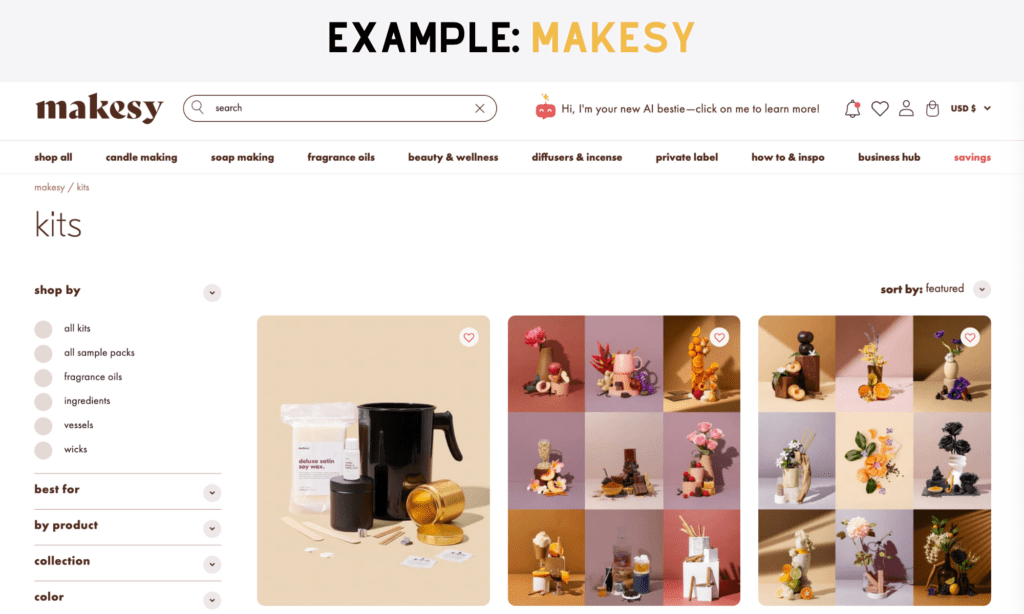
You can open a DIY store that allows people to try handicraft activities. The store accordingly focuses on selling candle-making kits, soap kits, embroidery kits, pottery kits, and anything else. Those kits include essential materials, tools, and instructions for people to try new hobbies at home.
Opportunities:
There’s a shift toward DIY crafting among young people to release stress and look for unique items. Many want to try crafts but don’t know where to start, and buying enough materials and tools to build crafts is sometimes time-consuming. Therefore, they demand DIY craft kits, which opens a good chance for your business to enter the market.
Challenges:
- It takes time and effort to find different materials and tools for DIY craft kits. This makes inventory management more complex because you have to manage both raw materials and retail kits.
- Handmade kits often cost more than mass-produced items.
- Your unique, original kit designs may be stolen and sold at a lower cost in larger eCommerce platforms.
- You have to update DIY craft kits regularly to increase user engagement and encourage reapeat purchases.
Tips to build the business effectively:
Focus on high-demand crafts, analyze competitors to find market gaps, and test your crafts with real users to understand reactions and make necessary improvements. Besides, you should find reliable suppliers for bulk materials to control costs and ensure high availability. Consider other crucial factors for your kits, like health safety or sustainable materials.
You should also include detailed, easy-to-follow instructions (for example, in video forms) and hold small workshops at a physical store. This way engages customers deeply in your brand.
27. STEM Learning Kits for Kids
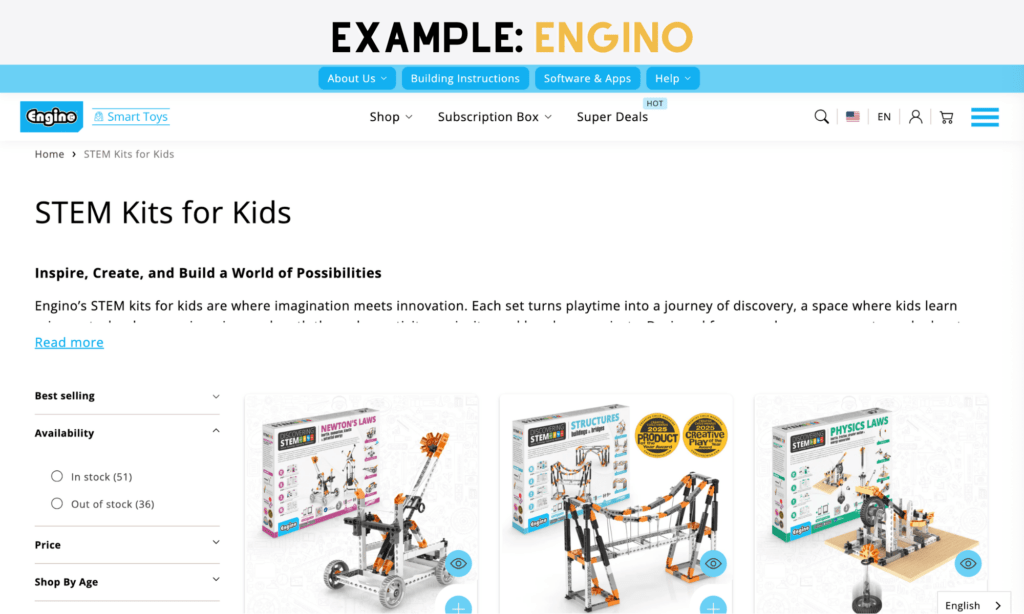
Your eCommerce business can focus on hands-on STEM kits for children. Those kits include build-a-robot sets, products for safe chemistry experiments, and others that make science more interesting for children.
Opportunities:
The demand for STEM learning kits is growing. The drivers are straightforward: Parents want educational products that don’t feel like homework, but schools don’t always provide enough hands-on experimentation. So, STEM kits fill this gap. They help children, especially those aged 8 – 12, develop technical and soft skills like maths skills or critical thinking.
Challenges:
- This eCommerce model requires product safety and age appropriateness.
- Many parents are suspicious about the true STEM value of various products on the market. So, only labeling your products with STEM tags isn’t effective. Instead, convince parents with real videos to show how educational the kits are.
- The market is highly competitive with various established brands and retailers.
Tips to build the business effectively:
Your business should identify a specific STEM niche and audience to position your brands differently. Further, focus on products that meet safety standards for children and fit your target age groups.
You should build high-quality content that offers easy-to-understand instructions for even kids and shows the true STEM value of your products. Besides, partnering with influencers or schools/daycare centers is a good way to advertise your products.
28. Cultural Experience Subscription Box

Your store can deliver a monthly box that includes snacks and small items (e.g., postcards) related to a specific country or culture. This is a good way to help customers discover different cultures and cuisines.
Opportunities:
Many people are curious about the culture of various countries around the world. But not all of them can afford travel to many regions. So, there’s a high demand to learn about new cultures without leaving one’s country. And subscription boxes help with that. They help you tell cultural stories through authentic snacks and artisan crafts.
Challenges:
- Sourcing authentic items consistently can be hard.
- If your subscription boxes include food, importing edible items can be difficult, and you have to comply with strict FDA and international safety regulations. Besides, you have to balance inventory to ensure that food doesn’t expire.
- People have different desires about cultural discovery. So they prefer personalized boxes to general boxes that may include what they dislike.
Tips to build the business effectively:
You should initially narrow your subscription boxes to one country. This helps you source items from reliable, high-quality suppliers more easily. Further, it’s important to identify your target audience, understand what they like most, and analyze competitors to spot market gaps.
Besides, you should create a prototype of your first box to test the contents, packaging, and even customer reactions. This allows you to check whether the box meets expectations.
29. D2C Specialty Farm Produce
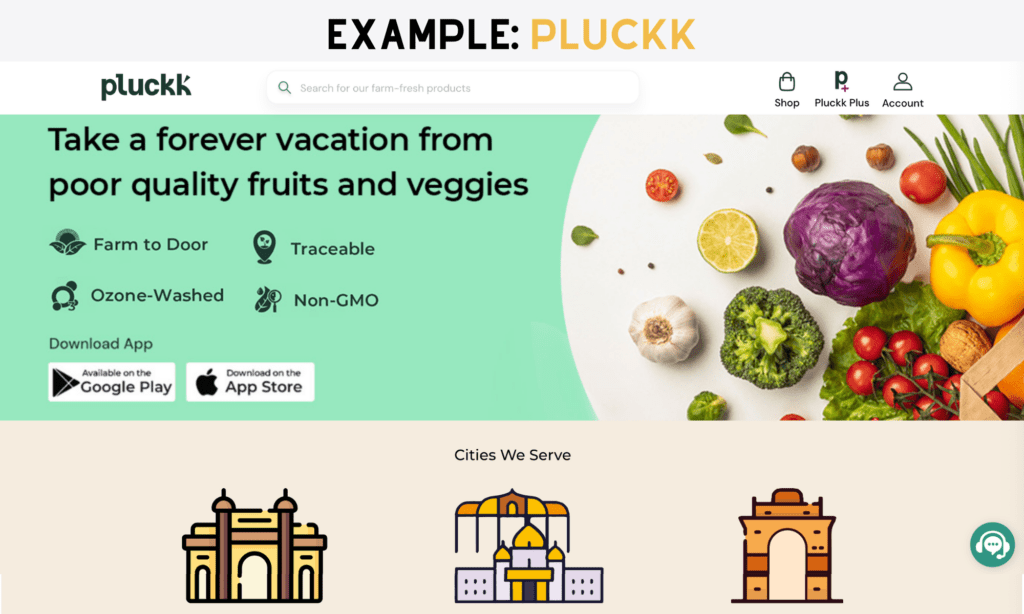
This eCommerce business model connects local farms directly with urban consumers to sell clean vegetables and seasonal produce.
Opportunities:
More and more consumers are finding reliable sources for fresh and sustainable food. They want to know where their food comes from, which supermarkets never tell them directly. This gives you a great opportunity to enter the market and approach these consumers.
Challenges:
- Shipping small orders to individual consumers are more complex than delivering bulk orders.
- The initial investment is high, as you have to invest in warehouses, inventory management, labor, packaging & shipping, and marketing.
- It’s much harder to develop food safety plans and comply with strict regulations about food safety, hygiene, and labeling.
Tips to build the business effectively:
You should start small and loca by limiting delivery zones and communicating clarifying about inconsistent supply due to weather and season. Further, invest in proper and temperature-controlled warehouses and transport, plus durable packaging, to maintain product quality. You should also focus on high-quality content that shows the true value of your farm products.
30. Left-Handed Specialty Store
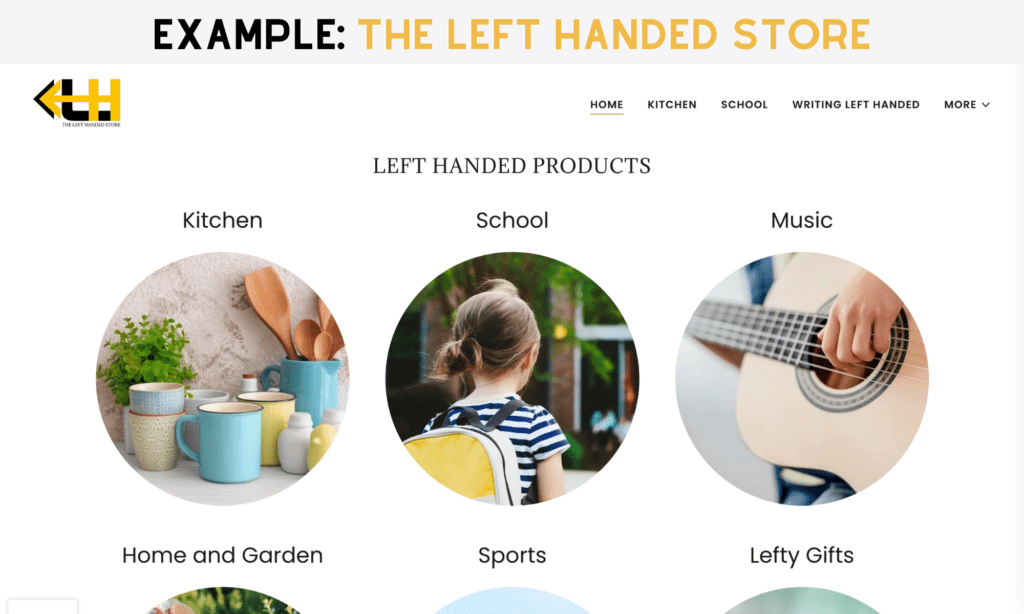
This idea focuses on selling products designed specifically for left-handed people. They involve scissors, knives, notebooks, and anything that makes daily life easier.
Opportunities:
10 – 13% of the population are left-handed. Due to this small customer base, most products are now designed to serve right-handed people. Although left-handed people can adapt to right-handed tools, having a left-handed specialty store for those people is still a great idea. It helps left-handed people live more easily and conviently.
Challenges:
- The market size is limited. This makes it hard to get high revenue.
- Sourcing or manufacturing left-handed items is much harder. Besides, the quantity of those items is much lower than that of right-handed products, which increasing the manufacturing costs.
- Left-handed people also don’t need to use left-handed tools in all cases. Further, many products are built for both left-handed and right-handed users. This leads to limited demands for only left-handed tools.
Tips to build the business effectively:
You need to research the market and competitors carefully to identify high-demand items that left-handed people truly need. Source products from reliable manufacturers that specialize in creating left-handed tools. Otherwise, you can produce your own branded products. Further, focus on educational content to highlight the benefits of left-handed tools.
Giftable and Trending Ecommerce Business Ideas
Building an eCommerce business that offers gifts and memorable items is a worthwhile investment. If you’re interested in this realm, don’t miss the following business ideas:
31. Personalized Name Necklace
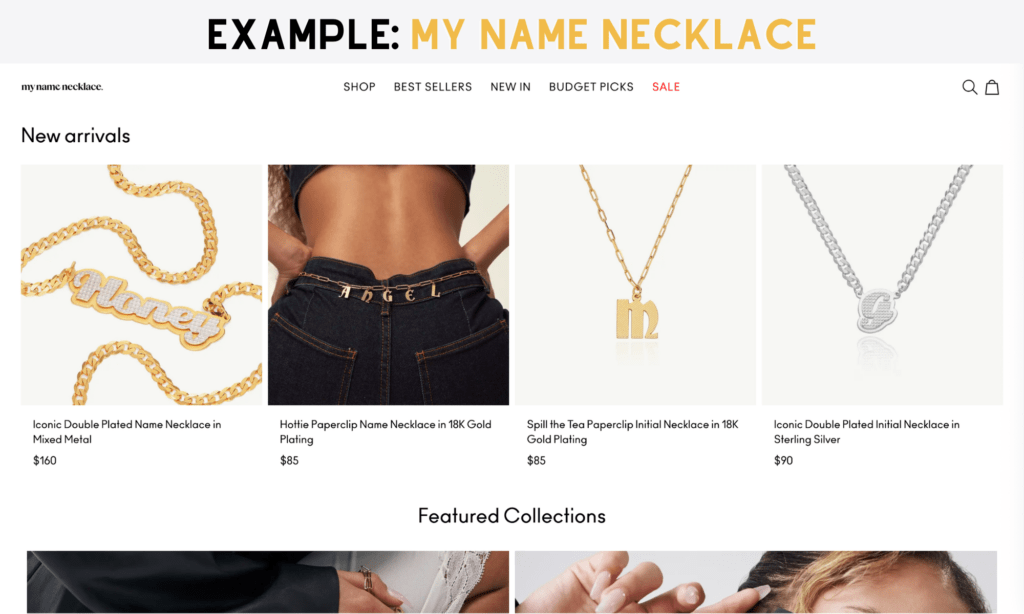
This idea hints at a store selling necklaces engraved with names, like first names, nicknames, or even short phrases. Such necklaces give a personal touch and experience to users.
Opportunities:
Customizing jewelry, especially necklaces, is not something new. Especially, this is the most popular choice of various couples for romantic occasions. Although the market is crowded, there’s still room for your brand to enter and build a loyal customer base in the market.
Note: For the best chances of success, focusing on high-quality materials and unique, modern designs (e.g., layered options, diverse fonts) is recommended to differentiate in a competitive, yet booming, market..
Challenges:
- The market is highly competitive. This requires careful planning and strategies to position yourself differently.
- Customized name necklaces take time and are only bought for certain occasions (e.g., weddings or birthdays). So it’s hard for customers to return regularly.
Tips to build the business effectively:
To acquire more chances for success, you should focus on high-quality materials and unique designs. You should choose a suitable production method (e.g., self-production, outsourced manufacturing, or Print-on-Demand) and create a prototype to check the quality of name engraving. It’s also important to create memorable branding with consistent brand images, high-quality social media content, and influencer marketing to attract and retain customers.
32. Custom Star Map Poster
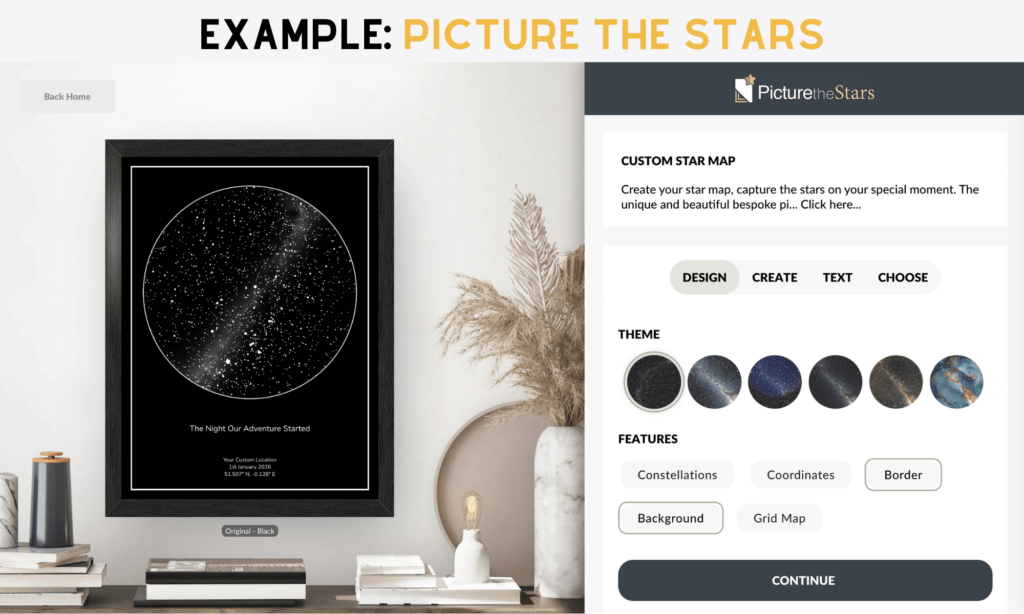
You can start a store that allows people to create a custom star map. The star map shows how the stars aligned on a specific date and location you love. So, for those who want to preserve memory about birthdays, weddings, or first dates, this is a great idea.
Opportunities:
There’s a high demand for people to create custom star maps that present memorable dates and locations. These maps don’t look similar with black background and minimal text. But they implies a special time for the owners and also act as a good decor item in their houses.
Challenges:
- The market is crowded and nearly saturated while the demand is quite limited. This hinders you from generating high revenues.
- The quality of printed posters may disappoint customers.
Tips to build the business effectively:
To stand out in the crowded market, you should identify specific designs that most customers love (e.g., minimalist or vintage), print materials (e.g., cotton canvas or acid-free paper), and ensure excellent print quality. Also, use a reliable star map API or generator and a simple customization process (date, place, and a short text). Invest in good brand storytelling and real images/videos to show customers the true quality of your products.
33. Custom Map Coordinates Jewelry
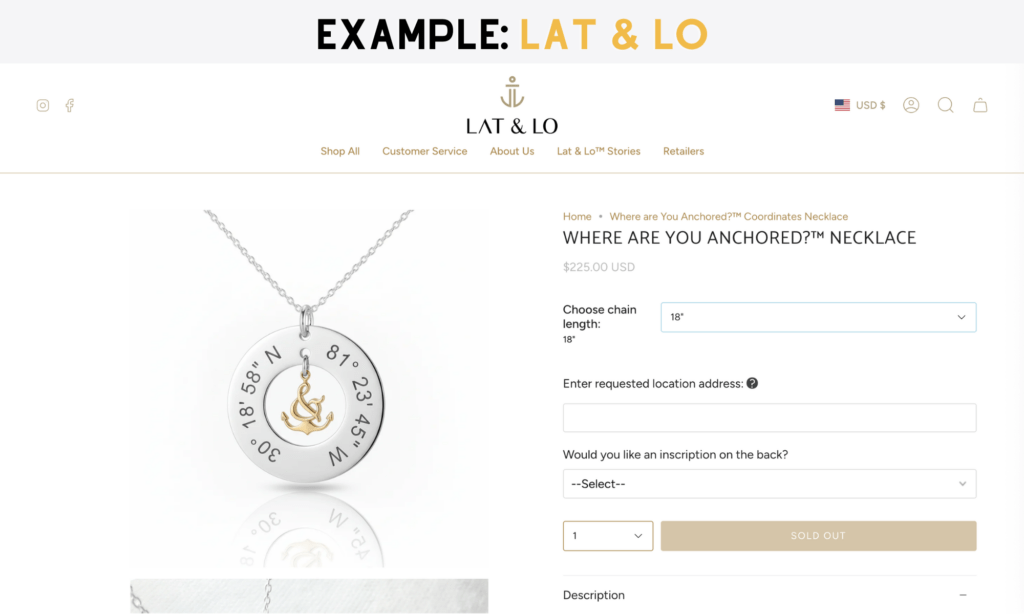
This eCommerce business idea focuses on selling jewelry engraved with the latitude and longitude coordinates of a meaningful place. This place may be where two people met, where a proposal happened, or even a hometown.
Opportunities:
More and more people are increasingly moving away from mass-produced items and caring more about meaningful gifts. Many want something they can bring anywhere to remind them of certain milestones and special locations. So, there’s a good chance to create jewelry pieces engraved with the coordinates of those places.
Challenges:
- Customers may not know their exact coordinates, or they’ll send vague locations. That leads to back-and-forth and delays.
- Engraving long coordinate strings can affect design clarity.
Tips to build the business effectively:
You should identify high-demand jewelry options, like bar necklaces, rings, or bracelets, and durable materials. Further, integrate GPS coordinate finders, like gps-coordinates.net or Google Maps, to help customers fill out the location’s coordinates easily. You should also invest in reliable material sources and production workflows to engrave or stamp metals.
34. 3D Crystal Photo Engraving
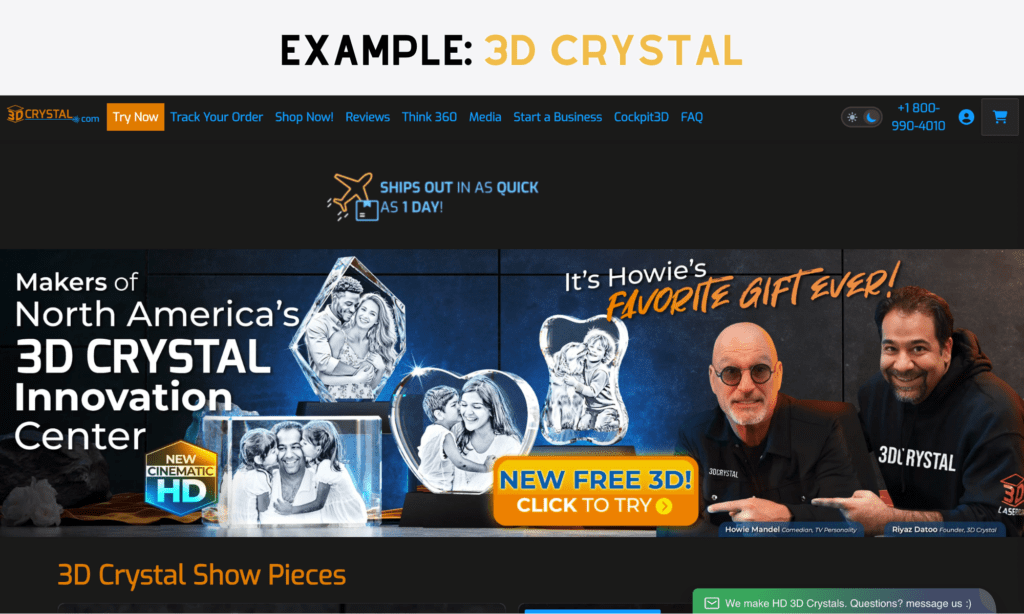
Another great business idea to preserve memory is through 3D crystal photo engraving. This idea centers around a photo laser-engraved inside a crystal block in 3D. This item is often considered a premium gift for memorials, anniversaries, or important moments.
Opportunities:
The market for 3D crystal photo engraving is growing, with a high profit margin of 40 – 60%. The main driver is the increasing desire for unique, custom-made gifts on special occasions, like weddings or corporate awards. This makes the market a fertile playground for you to enter.
Challenges:
- The market is highly competitive, requiring careful planning to stand out.
- This business idea requires high costs for expensive machinery, staff training to use machines, and consumables (e.g., lasers or diodes).
- The idea requires deep technical expertise and excellent quality control to avoid creating poor-quality images. Further, you can face the risk of damage due to the low crystal quality or the too-intense laser.
Tips to build the business effectively:
Analyze the market and competitors to identify high-demand crystal shapes and pricing. If you have a tight budget, partner with a specialized supplier first instead of investing in machines. Besides, you can target individual and B2B customers (e.g., event planners or corporates) to maximize your revenues.
35. Custom Voice Soundwave Art
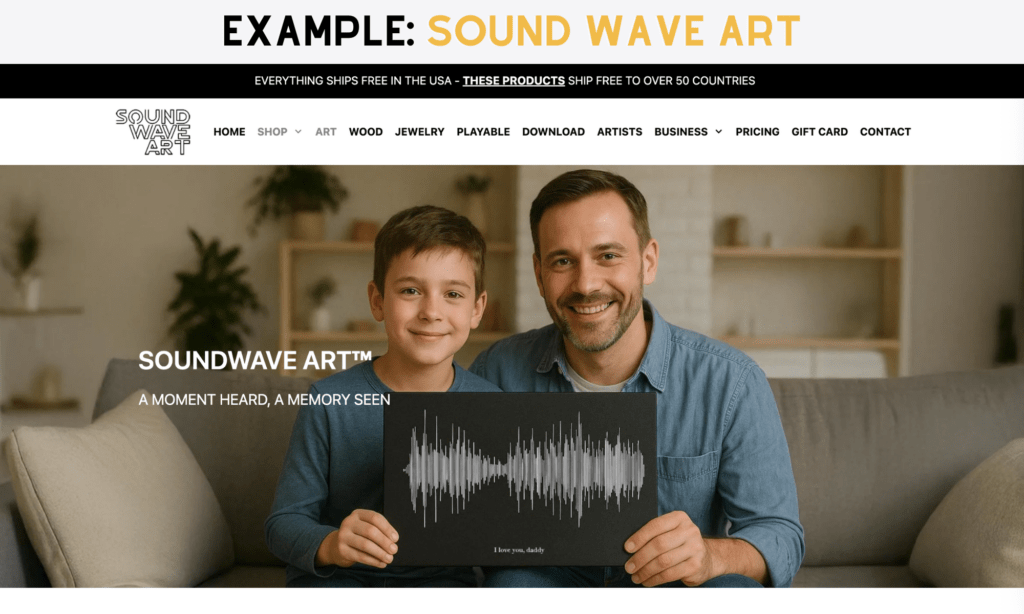
Our final profitable idea for your eCommerce business is creating custom voice soundwave art. Accordingly, you’ll turn a voice recording, like a proposal or a baby’s laugh, into visual soundwave art printed on canvas, framed posters, or acrylic materials.
Opportunities:
People now don’t just want to preserve memories through pictures but voices. Instead of saving precious audio in mobile phones, more and more people want to turn it into artworks. They become personalized home decor with sentimental value. That makes the market an attractive place to enter.
Challenges:
- Customers may send low-quality or too-long audio. This leads to an unclean visual waveform and ruins the whole product.
- If customers want to turn copyrighted songs or other people’s voices into art without permission, this can result in legal risks about intellectual property and privacy.
- The process of receiving audio, converting it, sending a digital proof, getting approval, and printing is time-consuming and exhausting.
Tips to build the business effectively:
You should plan for your products and services to stand out and engage customers in the conversion process. For example, you can integrate audio conversion tools and a visual editor that includes customizable themes, printed materials, and AI-generated short captions to help customers visualize their finished products. The products can include QR codes that lead customers to the audios they sent.
Ecommerce Business Models You Can Choose From
Besides eCommerce business ideas, you should also define the right business model. Your choice often depends on your offerings, target audience, budget, and more. Below are the five common business models you can consider. Each comes with pros, cons, and the best use cases.
Dropshipping
Dropshipping allows you to focus on selling products online while having third-party suppliers ship your orders directly to customers. Accordingly, you don’t need to worry about inventory and warehouse management. Instead, you only need to care about product development, marketing, and customer relationships.
Pros: The barrier to entry is low. It allows you to release products with limited capital and test ideas quickly. If a product flops, you can move on without worrying about inventory costs.
Cons:
- Margins are thin.
- You may have less control over product quality and shipping times. This can hurt your brand if things go wrong.
Best for: Beginners who want to focus on eCommerce aspects, like product pages, ads, and customer service, without heavy upfront risk.
Print-on-Demand (POD)
Print-on-demand allows you to print products (e.g., t-shirts, posters, or mugs) only after someone orders.
Pros:
- You don’t need to pre-print products; this eliminates the need for inventory management.
- POD enables you to focus on branding rather than caring about the whole logistics process behind.
Cons:
- Product quality depends heavily on suppliers.
- Shipping times can be lower than expected, leading to customer disappointment.
Best for: Creators, designers, and niche community builders. If you already have an audience, POD can be an easy way to deliver your products to target customers.
Private Label and White Label
White-label products are generic items you rebrand. Meanwhile, private label products are usually customized or improved versions made specifically for you.
Pros:
- When you choose private or while label models, you’re building an actual brand, with customized logos and packaging.
- Profit margins are often better than dropshipping or POD, and customer trust tends to be higher.
Cons:
- You may face higher upfront costs and inventory risks. If the product doesn’t sell, you may struggle with storage and logistics.
Best for: Founders who want long-term value. If you’re thinking about brand equity, repeat customers, or even an exit one day, this model is for you.
Subscription-Based Ecommerce
Subscription eCommerce sells products on a recurring basis – let’s say weekly, monthly, or quarterly.
Pros: This model comes with predictable revenues. Because customers place regular pre-orders, your business can easily forecast cash flows and plan for growth.
Cons:
- People cancel immediately if your product doesn’t deliver ongoing value.
- Many customers have different tastes and preferences, hence requiring customized boxes.
Best for: Products people use regularly or enjoy discovering repeatedly. If your product fits naturally into someone’s routine, subscriptions are the best choice.
B2B Ecommerce
B2B eCommerce focuses on selling products or services to other businesses, not individual consumers. This business often handles bulk orders, longer sales cycles, and more complex invoices.
Pros: B2B eCommerce comes with higher order values, more stable relationships, and less emotional buying behavior.
Cons: Sales cycles are slower and more complex because decision-making involves multiple people.
Best for: Founders with industry knowledge or access to a specific business niche. If you understand a problem companies face daily and have a sound solution to it, choose B2B eCommerce.
Conclusion
You’ve read through the 35 profitable eCommerce business ideas to start your startup in 2026. However, turning into your idea into an effective eCommerce store is never an easy task. In that case, partnering with a reliable, experienced developer helps you go on this journey more easily. So, why don’t you work with Designveloper?

Designveloper is a leading software development and IT consulting company based in Vietnam. Our team has deep technical expertise across modern technologies and hands-on experience building high-quality, scalable eCommerce platforms. They are not just pretty storefronts, but can actually perform under pressure.
Accordingly, we’ve built the Chloe Ting Hub, a digital platform that combines workout programs, diet recipes, and an online store for activewear. We also modernize the Aha local eCommerce platform by adopting modern technologies and open-source third-party services to increase speed and reduce cost. Further, we integrated an AI-powered chatbot that provides instant product information and personalized recommendations.
Our services cover:
- Custom eCommerce web and app development
- Legacy modernization
- AI chatbot integration
- Maintenance and support
Reach out to us and start turning that idea into a working, scalable eCommerce solution.
Also published on

Share post on










Read more topics












You may also like


35 Profitable Ecommerce Business Ideas to Start in 2026
35 Profitable Ecommerce Business Ideas to Start in 2026 Published February 28, 2026
18 Best Productivity Apps to Organize Tasks, Time and Attention
18 Best Productivity Apps to Organize Tasks, Time and Attention Published February 24, 2026
31 Most Helpful Apps for Work, Study, and Personal Life
31 Most Helpful Apps for Work, Study, and Personal Life Published February 15, 2026