











Top 10 Custom Application Development Companies Revolutionizing Businesses

In the dynamic world of business today, there has been a remarkable emergence of custom application development companies. These innovative technology firms are making a significant impact by reshaping businesses through their tailored solutions, resulting in enhanced growth and operational efficiency. By streamlining operations and delivering personalized user experiences, these companies are leading the way in digital transformation. In this article, we will unveil the top 10 custom application development companies that have revolutionized businesses with their outstanding contributions. Prepare to embark on an exciting journey exploring cutting-edge solutions and unprecedented possibilities as we delve into each company’s unique strengths and achievements. Embrace the future of business transformation alongside these industry pioneers.
An Overview
In this section, we will present a comprehensive overview of the custom application development field. This field is currently driving a transformative wave in the business landscape.
What is custom application development?
When it comes to custom application development, it refers to the intricate process of crafting software applications specifically tailored to fulfill the unique business needs and requirements. Unlike off-the-shelf software solutions, custom applications are meticulously created from scratch, always keeping the client’s distinctive objectives at the forefront.
In today’s fast-paced digital era, businesses are constantly in search of innovative solutions to address their unique challenges and grasp new opportunities. As a result, this is where custom application development companies play a pivotal role. These firms specialize in creating tailored software that perfectly aligns with an organization’s specific goals and requirements.
Additionally, these companies utilize an agile and collaborative approach to engage with clients and gain a deep understanding of their workflow, pain points, and desired outcomes. This enables them to develop tailored applications that enhance operational efficiency through streamlined processes, automated tasks, and overall improvement.
Custom application development companies harness cutting-edge technologies to empower businesses and ensure their competitiveness in rapidly changing markets. By utilizing artificial intelligence, machine learning, blockchain, cloud computing, and more, these companies create advanced solutions that are future-ready.
In addition, businesses construct custom applications with scalability in mind. This also allows companies to expand and evolve seamlessly without significant disruptions. As organizations grow, these applications can be easily adjusted and enhanced to meet the changing needs of the company.
FURTHER READING: |
| 1. Top 5 React Native App Development Companies in India in 2023 |
| 2. Top 5 App Development Companies in Spain |
| 3. Top 5 Mobile App Development Companies in Japan |
Importance of custom application development in today’s business landscape
In today’s competitive and constantly evolving business environment, the significance of custom application development cannot be emphasized enough. Due to technology reshaping various industries, businesses must adapt and embrace innovative solutions to maintain a competitive edge.
Custom application development companies play a crucial role in empowering businesses by providing tailor-made software solutions that address their specific challenges and opportunities. As a result, while off-the-shelf software might offer standardized functionalities, it often fails to meet the unique demands of different businesses.

Companies can obtain a competitive advantage by choosing custom application development. This approach also allows them to create software that perfectly aligns with their workflows and objectives. These tailored solutions are meticulously crafted from scratch, ensuring that every feature and capability works together seamlessly to enhance efficiency and boost productivity.
In the digital age, security is of utmost importance. As the prevalence of data breaches and cyber-attacks has escalated, necessitating strict measures to safeguard sensitive information and prevent unauthorized access. Thus, custom application development companies prioritize security by implementing robust protocols to fortify their applications. This ensures that valuable data remains protected and inaccessible to unauthorized individuals.
Innovative technologies like artificial intelligence and machine learning hold significant potential for business transformation. By developing custom applications specifically designed to harness these technologies, companies can unlock fresh insights, streamline processes, and make data-driven decisions more efficiently.
Custom application development offers another significant advantage: integration. These applications can seamlessly merge with existing systems and software, creating a harmonious digital ecosystem that enhances overall efficiency.
In addition, custom application development enables businesses to effectively meet customer needs. By incorporating features and functionalities tailored specifically for their target audience, companies can provide a personalized and seamless user experience, fostering customer loyalty and satisfaction.
Recommended reading: Custom Web Application Development: 5 Current Trends
The role of custom application development companies in driving innovation
Custom application development companies play a crucial role in driving innovation across various industries. By utilizing their expertise and technological capabilities, these companies empower businesses to embrace groundbreaking solutions and transform their operations.
In today’s fiercely competitive landscape, innovation serves as the propeller of progress and growth. Also throughout this dynamic process, companies specializing in custom application development actively contribute by constantly exploring novel technologies and methodologies.
These companies possess an extensive understanding of business requirements. Consequently, they can effectively identify obstacles and bottlenecks that hinder productivity. Additionally, by providing custom software solutions to address these challenges, they streamline processes and enhance efficiency.
The significant advantages of custom application development also include the opportunity to integrate cutting-edge technologies. Because of it, companies can leverage artificial intelligence, Internet of Things (IoT), blockchain, and other emerging trends to gain a competitive edge.
Custom application development companies also ensure that businesses receive software capable of evolving with the changing needs of the industry through iterative development processes. This adaptability also enables organizations to proactively navigate dynamic markets and maintain relevance.
Additionally, these companies cultivate an atmosphere conducive to creativity and collaboration. They actively engage with their clients, fostering the exchange of ideas and insights. This collaborative approach consistently leads to innovative solutions that effectively address intricate challenges.
In the realm of digital innovation, data-driven decision-making takes center stage. In this age, specialized applications can be crafted to capture and analyze substantial volumes of data. By doing so, these applications offer invaluable insights that serve as a guiding light when making strategic choices.
Finally, custom application development companies enhance their software by incorporating user feedback and preferences. This tailored approach ensures a seamless and personalized user experience, fostering customer loyalty and driving business growth.
Recommended reading: 7 Steps of Custom eCommerce Website Development
Top 10 Custom Application Development Companies Today
In the realm of digital transformation, businesses have placed great importance on custom application development. These specialized tech companies play a pivotal role in driving this revolution by introducing innovative software solutions that reshape entire industries. So, in this section, we explore the 10 leading custom application development companies responsible for transforming businesses across various sectors. Through their unparalleled expertise and groundbreaking approaches, these industry pioneers have earned their stellar reputation. Let us dive into the exceptional strengths and achievements of each company, uncovering how they empower businesses to thrive in our ever-evolving digital landscape. Prepare yourself to discover the crème de la crème in the world of custom application development.
1. Designveloper
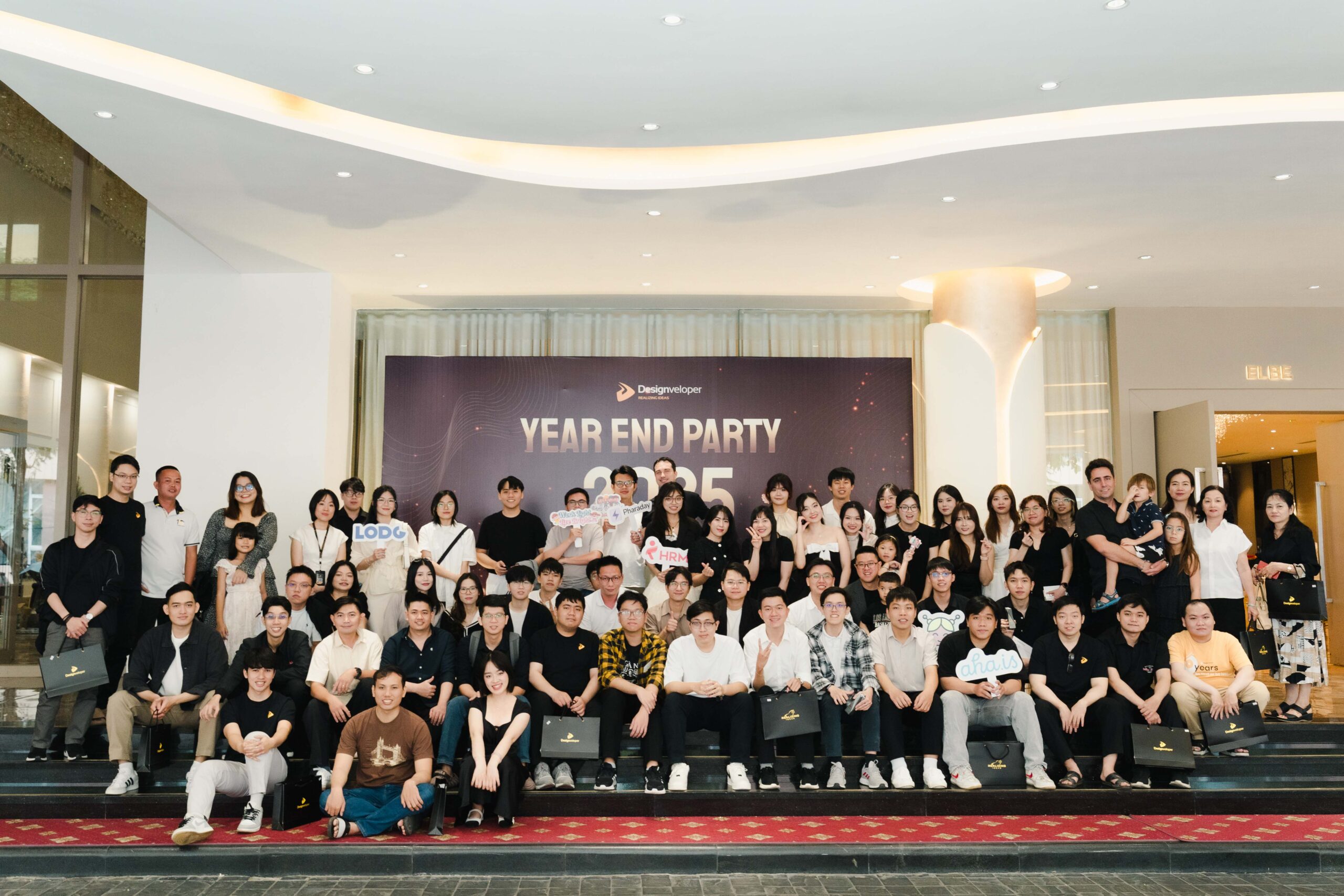
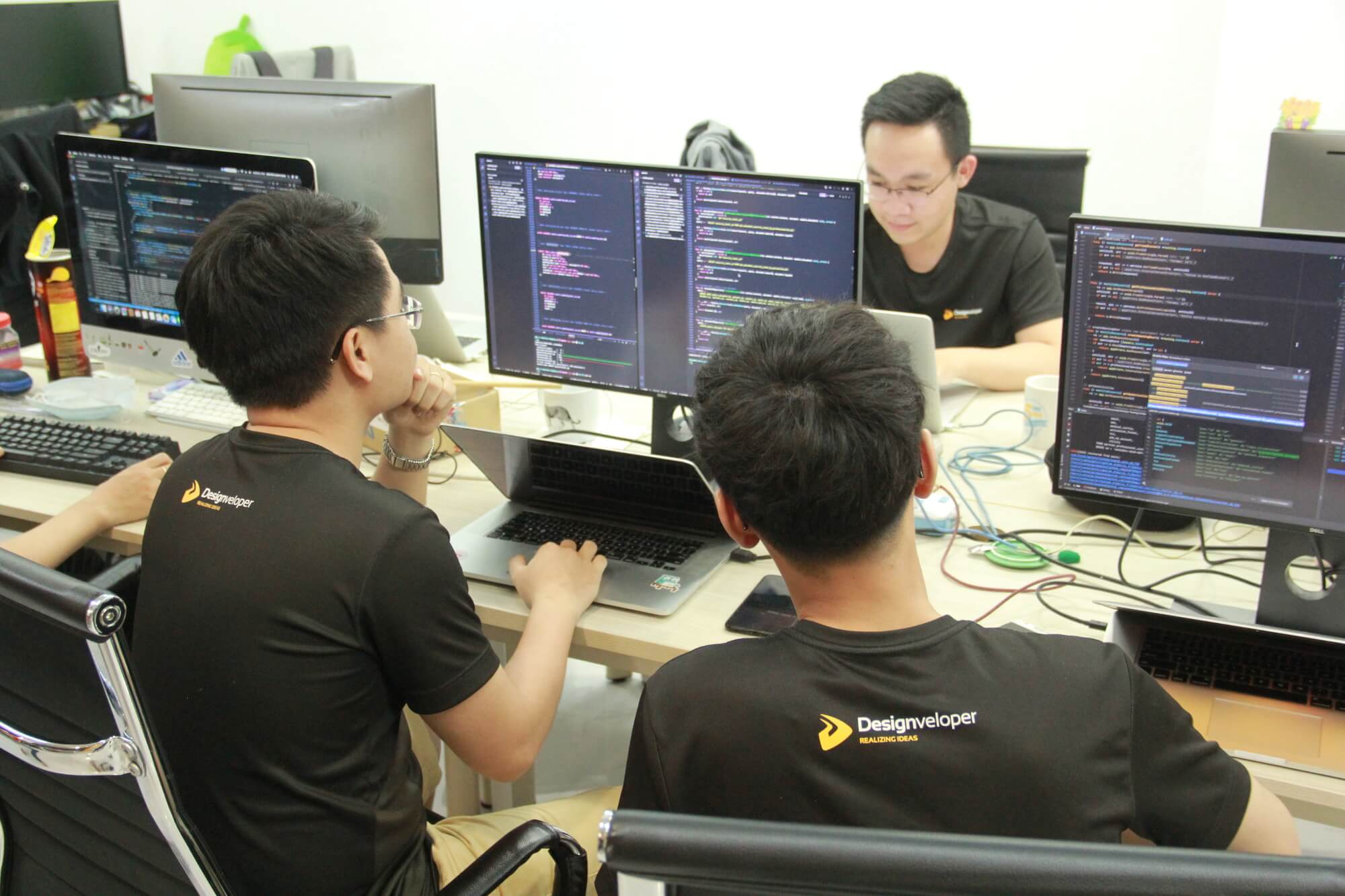
Designveloper, a prominent custom application development company based in Vietnam, boasts a team of over 50 specialized developers and designers. We excel in delivering top-notch solutions for web, mobile applications, design, and VOIP systems. Our mission revolves around providing their clients with the best quality services that are not only fast but also reliable. To achieve exceptional results consistently, Designveloper follows a systematic approach.
Designveloper offers a comprehensive range of services, encompassing Web Development, Mobile Application Development, UI/UX Design, and more. Our impressive track record boasts 100+ projects successfully delivered and over 50 satisfied clients. This exceptional dedication to excellence resonates through every facet of our work.
One of our notable achievements is being Meteor’s primary partner, a renowned JavaScript framework for creating fully customized real-time, single-page, and responsive applications. This serves as evidence of our expertise, as we are prominently featured at the top of Meteor’s partners’ page.
When working with Designveloper, rest assured that we will tailor your product to meet your specific needs. Our solutions go beyond functionality; they are creatively designed to stand out. If existing apps or open-source solutions do not align with your requirements, Designveloper can create a custom solution from scratch.
Our commitment to excellence is also reflected in our impressive numbers. We have invested over 200k working hours and developed expertise in 20+ technologies. Our dedicated teams, consisting of 3-15 members per project, further demonstrate our dedication. Delivering quality and unique solutions sets us apart as a leading custom application development company that is revolutionizing businesses.
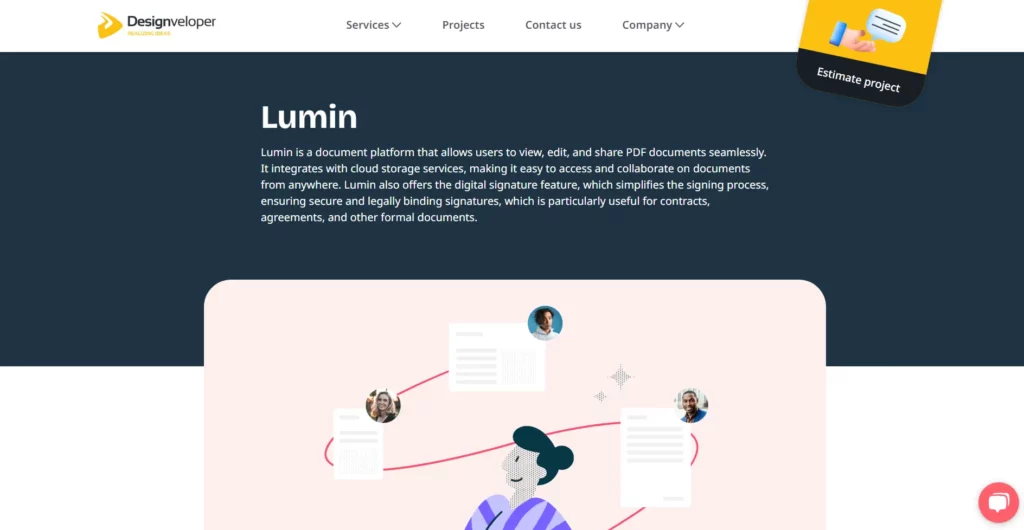
How We Developed Lumin
In the Lumin project, we embraced the Agile development approach and incorporated Scrum and Kanban frameworks. These methods helped us to remain as flexible as possible and to work as efficiently as possible. We also employed project management software such as Jira and Trello in managing our activities.
The development process used in our project was in cycles that were short and iterative. This approach allowed for constant checks and improvements to the code as and when necessary. In this way, we were able to guarantee that Lumin stayed up-to-date and performed well without compromising on its stability.
Another major issue we encountered during the development was the problem of compatibility with different platforms. Lumin had to be compatible with Android, iOS, Chrome OS, and BlackBerry Ecosystem. Our team was extremely careful in the process of optimizing the application to meet the unique needs of each platform.
Another challenge that was faced was the constant need to maintain and update Lumin. We realized that frequent updates are crucial to maintain the app’s security and users’ interest. Everyone on the team was focused on bug fixing, security improvements, and adding new features.
Finally, the last important component of the Lumin project was users support. As the app started to penetrate different markets and languages, we made it our priority to promptly and adequately address users’ questions. To meet the needs of the increasing number of users, it was crucial to offer detailed documentation and help.
Recommended reading: Considerations for Using DevOps Managed Services
2. NMG Technologies
NMG Technologies is a respected global software development company. Since its establishment in 2008, they have consistently excelled in the field of custom application development. Their track record also boasts successful partnerships with over 500 clients and a highly skilled team of more than 100 experts. With these credentials, NMG Technologies has earned a reputation as a trusted ally for astute business owners and entrepreneurs looking to enhance their enterprises.
The NMG team consists of a dedicated and diverse group of consultants, engineers, and creative minds who take great pride in delivering exceptional software solutions that drive success for their clients. Their approach emphasizes personalization, utilizing tailored processes and strategies to perfectly align with each client’s unique business objectives.
Additionally, NMG Technologies stands out due to their remarkable 13 years of experience in the industry. Throughout these years, they have refined their skills and expertise, consistently delivering exceptional results for their clients. Witnessing the substantial financial growth achieved by their clients through the utilization of NMG’s customized software solutions brings immense satisfaction to the entire team.
NMG Technologies, as a distinguished custom application development company, also recognizes the significance of an organized and streamlined project development process. With a team comprised of 100 skilled professionals, they possess the expertise to undertake intricate projects and construct tailored applications that cater to the unique requirements of businesses operating across diverse sectors.
When it comes to fulfilling software development needs, business owners and entrepreneurs seek a reliable and experienced partner. NMG Technologies also emerges as an ideal choice in this domain. Their extensive portfolio of successful projects and a client base of over 500 are clear indicators of their dedication and commitment to excellence. Undoubtedly, NMG Technologies is a key player in revolutionizing businesses through cutting-edge technology and innovative solutions.
3. Groovy Web
Groovy Web is another dynamic hub of young and enthusiastic professionals who possess modern skills and knowledge. In this fiercely competitive market, they also offer a fresh perspective, delivering high-quality and cost-effective services to industries and organizations across various domains. Their expertise spans React Native App Development, Android App Development, iOS App Development, Cross Platform App Development, and Progressive Web Applications.
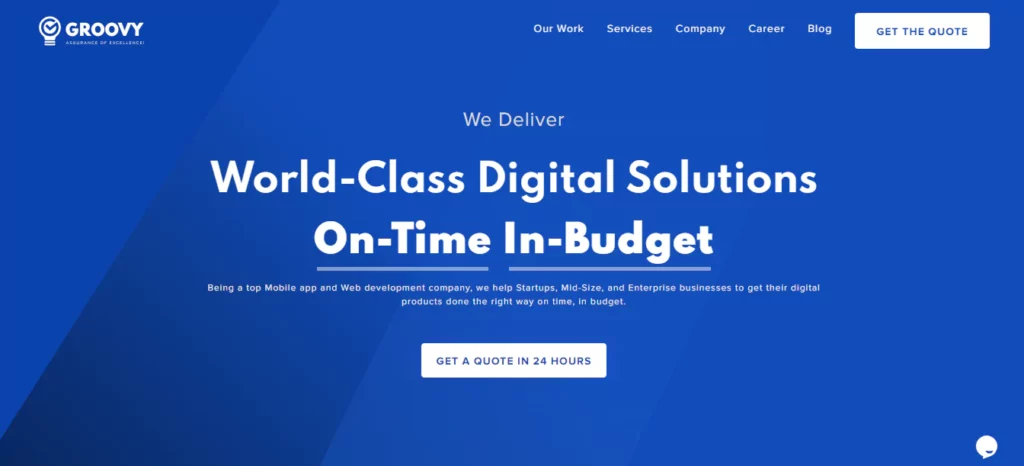
Groovy Web boasts an impressive track record spanning over 6 years. In addition, they have successfully analyzed client requirements and delivered cutting-edge, complex solutions. The company also takes great pride in their unblemished reputation for providing growth-driven solutions that enable businesses to thrive in their respective markets, garnering the trust and loyalty of their clients.
Groovy Web has solidified its position as a market leader in the industry, receiving recognition from various prestigious organizations. Their accolades include being named the Top Android App Development Company by Mobile App Daily and being recognized as the Top Mobile App Development Company by both Clutch and GoodFirms. Furthermore, DesignRush identified them as the leading Construction Website Creating Company among others.
Groovy Web, driven by a vision to provide cost-effective and high-quality IT services, warmly invites clients from diverse backgrounds. With expertise in mobile and web development, they excel in delivering complex solutions. Their successful track record includes MVP solutions and challenging software projects for startups as well as large enterprises. Project ticket sizes range from $10K to $100K.
FURTHER READING: |
| 1. Top 5 Mobile App Development Companies in France |
| 2. From Seoul to Busan: A Look at 5 Best Web Agencies in Korea |
4. Emizen Tech
Established in 2013, Emizen Tech quickly gained prominence by providing cutting-edge solutions for mobile app development to clients worldwide. The company’s strong emphasis on delivering results and insights has earned global recognition as a leading player in the industry.
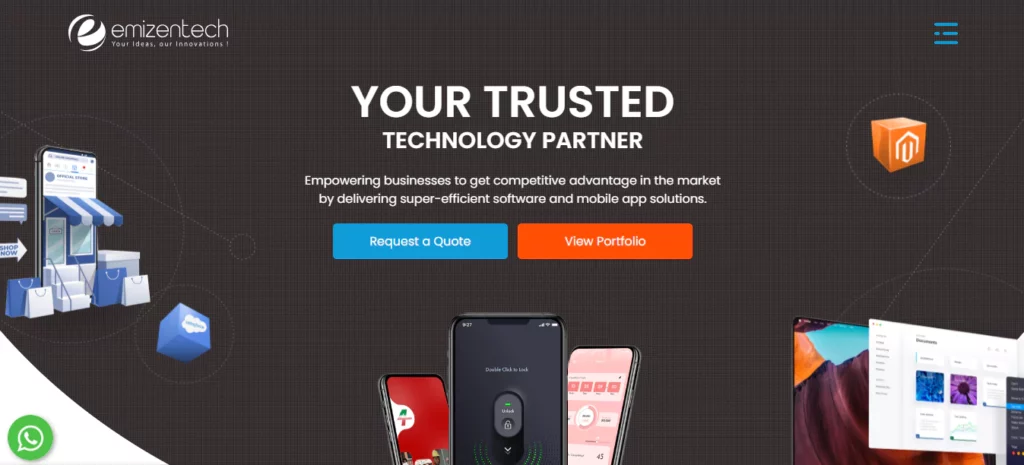
Emizen Tech also exemplifies a steadfast commitment to excellence. Their expertise lies in creating cutting-edge mobile software solutions tailored for businesses of all sizes, ensuring utmost client satisfaction. A team of passionate and skilled professionals collaboratively conceptualizes, develops, and supports innovative custom mobile solutions, guiding clients towards prosperous business journeys.
Emizen Tech, a reputable company in the industry, proudly touts a prestigious clientele that includes Dragon Fit, LYNCPIX, FABBRICA IN PEDAVENA, Dfindar Store, and Abdulla. With an experienced team of 101-200 dedicated professionals and over 7 years of industry expertise under their belt, Emizen Tech’s capabilities and track record speak for themselves.
Indeed, Emizen Tech truly stands as one of the top 5 companies in custom application development, bringing about revolutionary transformations for businesses. With an unparalleled dedication to providing cutting-edge mobile app solutions across various industries, they have established an unmatched reputation. Their exceptional track record, global recognition, and passionate team position them as the preferred choice for businesses seeking innovative and result-driven mobile software solutions.
5. A3logics
Since 2003, A3logics has earned a reputation as a trusted technology partner. They consistently provide quality services for various organizations, making them a sought-after choice in the industry. A3logics’ dedication to delivering time-critical solutions and embracing innovative delivery methods sets them apart.
A3logics’ unwavering commitment to excellence forms the cornerstone of their remarkable success. They also demonstrate this dedication by implementing a Centre of Excellence (COE) for their clients, utilizing cutting-edge technologies to deliver outstanding results across various industries such as Healthcare, E-learning, Transportation, Media Monitoring, Fintech, E-commerce, and more.
A3logics also firmly believes that achieving remarkable results relies on innovation and dedication. Accordingly, they prioritize investing in upscaling their team’s skills and expertise and staying updated with the latest technologies, including AI/ML, IoT, AR, VR, Mixed Reality, Blockchain, Big Data, Cloud Computing, among others.
In addition, their team is comprised of highly skilled professionals who are dedicated tech enthusiasts. They work tirelessly to deliver top-notch products that not only meet but also surpass client expectations.
A wide spectrum of service offerings is available from A3logics. These encompass App Development, Software Development, Android and iOS App Development, Cross-platform App Development, React Native App Development, and IT Consulting.
6. Simform
Among all the custom application development companies, Simform distinguishes itself as a company that changes businesses with technology. Simform, being an AWS Premier Tier Partner, has always been in the list of the most prominent US software development companies on Clutch.
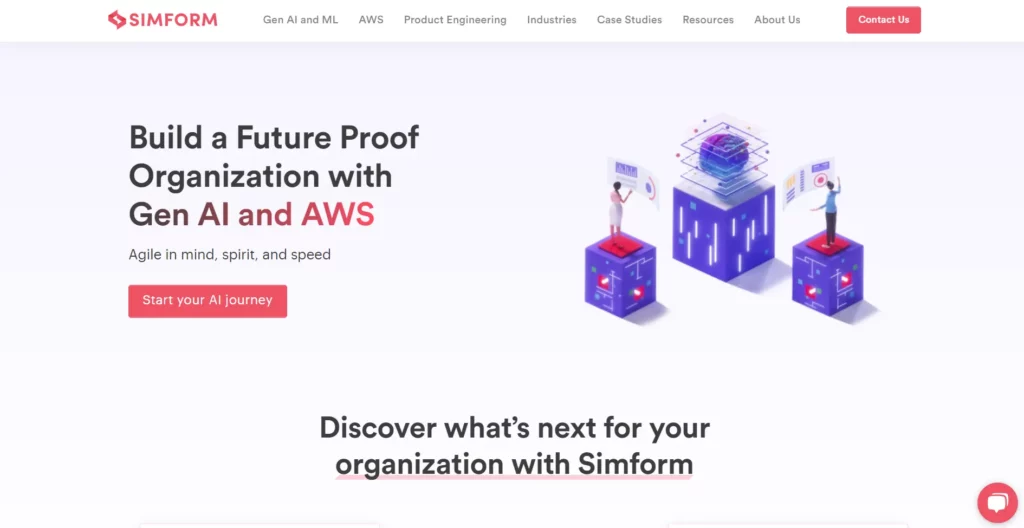
Simform was established in 2010 and has assisted organizations such as public startups, Fortune 500 firms, and progressive enterprises. Their mission is centered on addressing software engineering challenges using product development.
Simform has a strategic resource known as the Product Innovation Center. It transforms engineering constraints into opportunities for change and competitiveness, thus enhancing the agility of the business. The center focuses on the product features with AI/ML, and it can assist clients in achieving substantial AI/ML return on investments.
7. Hyperlink InfoSystem
Hyperlink InfoSystem, a prominent name among custom application development companies, began its journey in 2011. The company aimed to bridge the gap between imagination and reality using technology. Initially, it was a small team driven by a passion for innovation and plenty of coffee.
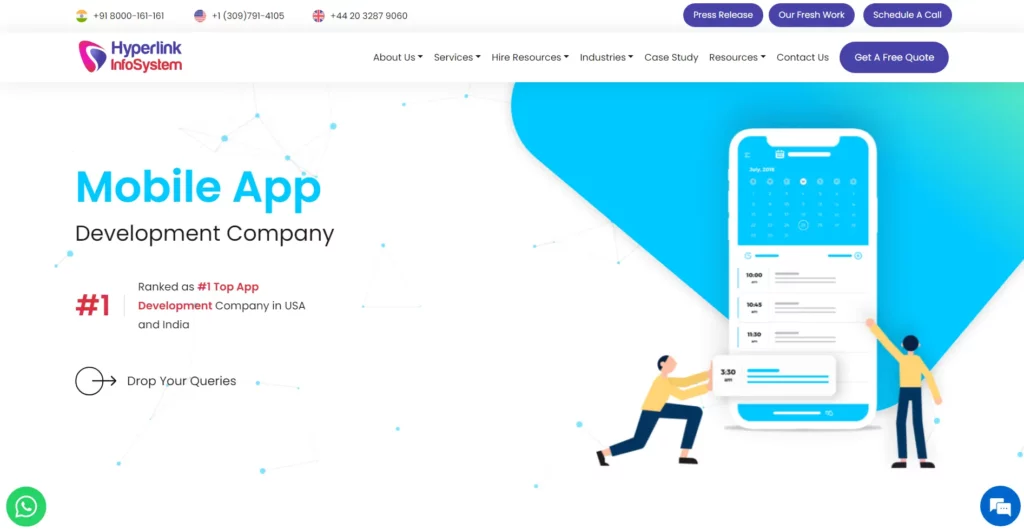
Over the years, Hyperlink InfoSystem has grown remarkably. The company has delivered over 4,500 mobile applications, developed more than 2,200 websites, and completed 400+ projects on cutting-edge technologies for over 2,700 clients. Their expertise spans AI/ML, IoT, BI, Data Science, and more.
Indeed, the company’s success is evident in its workforce. Today, Hyperlink InfoSystem employs over 1,000 talented professionals, from tech wizards to creative dreamers. Each project leverages top-tier technologies to craft experiences that go beyond mere code.
8. Innowise
Innowise is worthy of being on any list of best custom application development companies. This software development and IT consulting firm was started in 2007 and has expanded over the years. Some of them are IT and others are non-IT organizations, they help clients to accomplish different objectives with digital solutions and recent trend technologies.
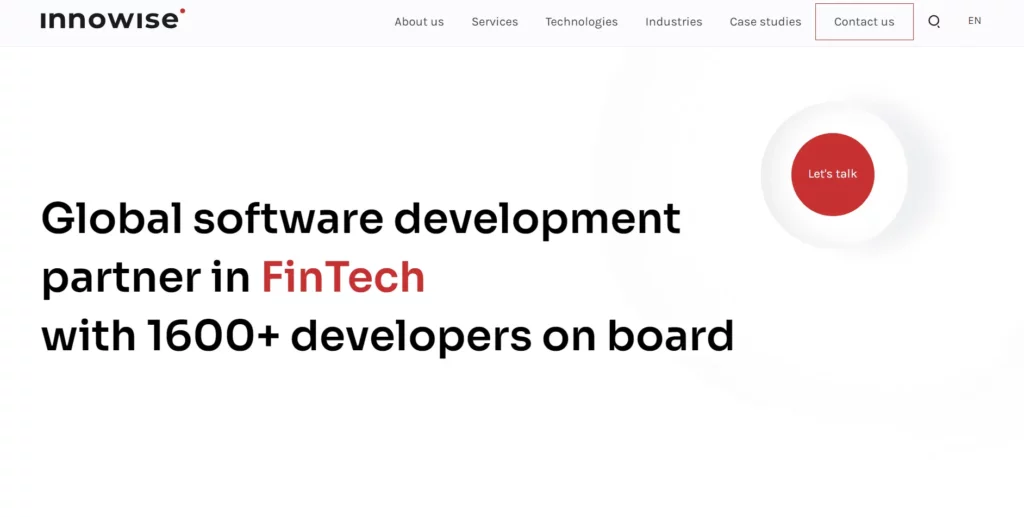
The company has been in business for more than 17 years and uses its experience to manage projects of different levels of difficulty. This makes it easy for the company to complete projects in the IT market since they possess adequate knowledge in the same.
In addition, Innowise has a team of over 1,600 IT workers. It also has an in-house team of developers, business analysts, UI/UX designers, QA specialists, and DevOps engineers. This versatility enables them to handle numerous projects across the firm.
The company has worked in over 40 different domains. They have specialists working on projects by matching them to the industry they have worked in before. This method has been found to be efficient in providing quality solutions to the problems.
9. Tech Alchemy
Tech Alchemy is an award-winning software design and development agency located in Shoreditch, London. Used by big brands, organizations and startups who want to grow big, their products have got to millions and have been endorsed.
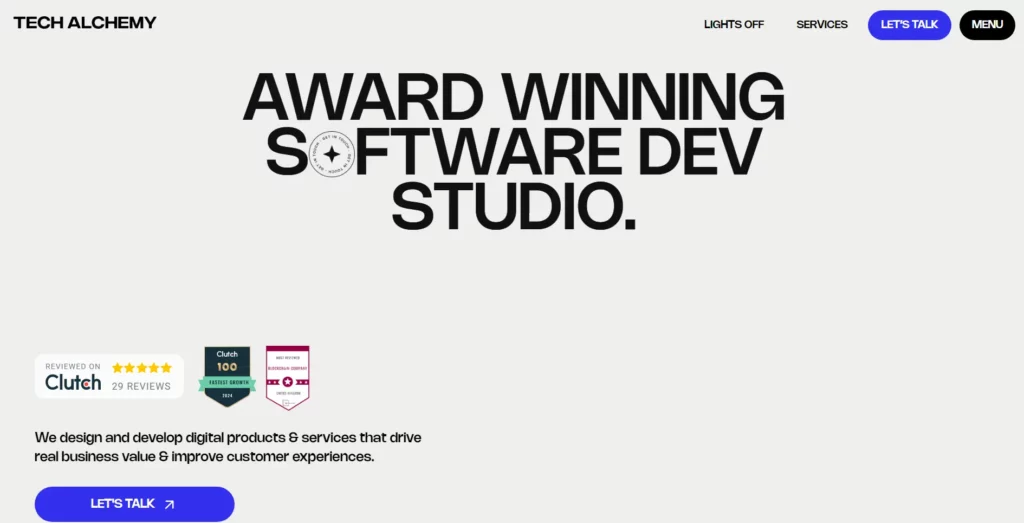
Tech Alchemy was founded in 2016, and since then, it has gained a good reputation among the companies in the industry. It was started after their first big hit, which gave them the knowledge required to fund companies at every level. Today, they are among the most highly rated software engineering companies in the world.
Furthermore, Tech Alchemy has over 300 employees in its team. This makes them capable of designing solutions with the conventional and innovative technologies. This entails specialized skills in blockchain and Web3 industries, which have become a new frontier for many companies.
Finally, The company has a strong client base; more than 120 companies use the services of this company. One of the examples of their work is a fintech startup, for which they created a blockchain payment system that improved security and decreased the time of the transaction by 50%. This project demonstrates how they are able to put into practice creative solutions successfully.
10. Azumo
Since 2016, Azumo has been supporting development teams with qualified software developers. They specialize in nearshore software development from Latin America to provide affordable and quality solutions.
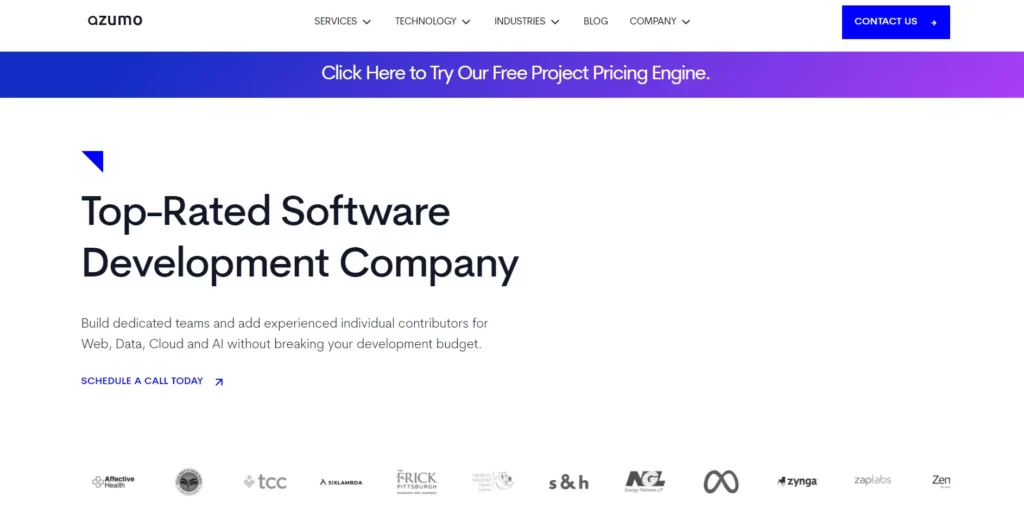
The vision of the company is to assist all sorts of enterprises in creating smart applications. In the contemporary world where the process of digitalisation is observed, the usage of the modern technologies is crucial for the survival. However, the recruitment of skilled local developers is difficult and costly. Azumo solves this by having highly trained developers that work hand in hand with the clients.
Azumo has a great experience in creating AI, data, mobile, and enterprise applications in the cloud. Twitter is their first customer and shows their capacity and efficiency. Since then, they have continued to provide the best solutions across the different sectors.
Conclusion
Businesses, in their pursuit of digital transformation, find immense value in collaborating with top custom application development companies. These partnerships also unlock boundless possibilities that extend far beyond merely building applications. Instead, these companies serve as catalysts propelling growth and guiding organizations towards success in this ever-evolving digital landscape.
To revolutionize your business and unlock its full potential, consider partnering with one of the top 10 custom application development companies. These exceptional companies possess expertise, dedication, and a passion for innovation. Their transformative solutions additionally have the power to propel your business to new heights. By embracing customized technology, you will be embracing the future of business success.
Also published on

Share post on










Related Articles


Top 10 Fintech Software Development Companies in Vietnam
Top 10 Fintech Software Development Companies in Vietnam Published August 04, 2026
10 Trusted Healthcare App Development Companies in Vietnam
10 Trusted Healthcare App Development Companies in Vietnam Published August 03, 2026
Top 20 Web Development Companies in Vietnam
Top 20 Web Development Companies in Vietnam Published July 22, 2026