









If you are dreaming to build your own app then work on it now because it may be an endless gold pot afterward. However, before starting any activities, it’s essential to know some causes that could make your project fail once it’s handed to the users or the business will make the app development project fail.

The research phase will establish the base for every type of activity including app development. To be honest, to make sure their products and services perform well, businesses must do research along with other stages since things are constantly changing, especially in the software development industry.

Recommended reading: Let’s Face It: Are Mobile App Development Dying?

Once it’s done poorly, your app is likely to fail your users’ expectations in terms of the design, its functions, features, etc. Or you are not able to observe the bigger picture to manage your process properly and carry out wrong estimations. This, therefore, leads to ineffective or even negative ROI (return on investment).
The thing is that there are many to dig into. For example, you need to know your market (target audience, competitors, market trends, etc.), everything related to your industry (technology, basic features, functions, monetization, etc.), and the strength and weaknesses of your idea.
So in short, it’s important and there are also plenty of activities to do. To make this stage easier, here are some tips for you.
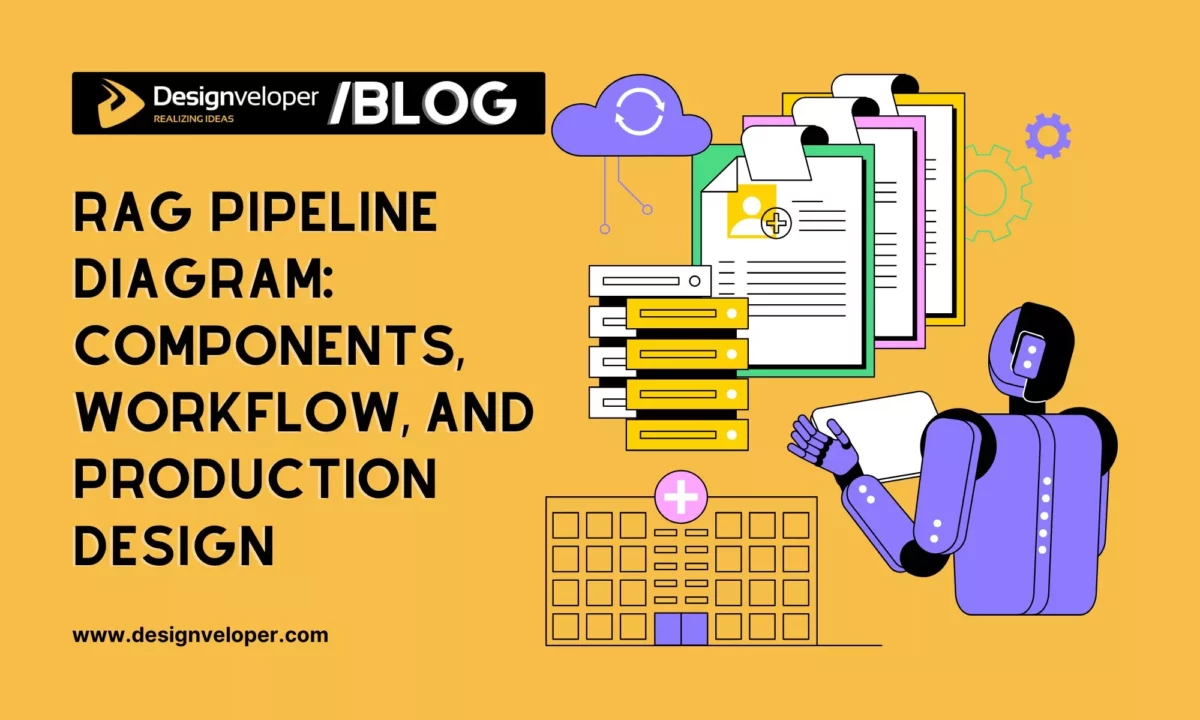
Enough theory, here is a research example from Designveloper. To make a good medical app, you need to look at these 3 factors:

Recommended reading: Top 20 Mobile App Development Software Can Not Be Ignored
You may ask if this section should be included in the first one. Oh yes, but because of its importance, here is a whole big part of how to generate a brilliant idea.
Just like the first cause, when your idea is not really good, the product is likely to be abandoned and all the money invested will go nowhere.

Then how to spot a bad idea to get rid of them from the beginning? To help you cross out those dull ideas here is a list of questions for you but first, as stated earlier, you should carefully do research on the marketplace (in this context, let’s open your phone and investigate the AppStore or the Google Play) to find similar apps and find out their core functions.
If there is a single “no” then dump that idea now! No, I’m just kidding you! In this case, we can do more study and analytics to explore different aspects and approaches to come up with better ideas for your future product. The thing is that you should hold the project until there is another sparkle in your mind.
“So what a brilliant app should do?”, now you are asking the real question. Let Designveloper suggest you some standards for a great app:

All in all, innovation is key. When your app looks like other existing products, it may have to compete really hard with them. Furthermore, since there are many similar apps on the market, users will be less interested and your product will make no impact on the target audiences’ minds.
Of course, the testing stage is essential to every product development project. Done properly, your product will be stable and offer users a great experience to use. Nevertheless, once there is little to no testing or it is executed poorly, these scenarios will happen:

And well all of those issues may be prevented and fixed beforehand if the testing phase has been done well. In other words, this helps businesses and also the software development team avoid issues when the product is delivered to end-users. Furthermore, testing can prevent errors and problems that may ruin your app after fixing bugs found. Last but not least, the product will be checked if it is qualified and meets the standards as well as other specified requirements.
Most of us will assume that testing only includes 3 types of checks: design, usability, and functions/features. However, we do need to test the initial idea on your users before starting the project as well, and this activity will make sure you don’t waste any resources on a dull one as analyzed earlier. However, leave the idea to part 2, and let’s dig into 3 other important checks.
In this check, your team should look at various design elements such as color, font, icons, illustrations, brand design, navigation, etc. In short, you should test if the interface is right, aesthetic, and consistent, and at the same time, check if the UX is seamless. To perform it properly, we recommend you read Apple’s iOS Human Interface Guidelines and Google’s Android Design Principles.
Need an example here? Just look at the 2 most popular music apps – Spotify and Apple Music. People prefer Spotify over Apple Music since their UI is beautiful and UX is fun and seamless to use. According to Statista, Spotify now has 100 million paid subscribers while Apple Music has only 50 million.
This is when businesses check if the app meets all the requirements and goals. Your focus should be on the easy and quick use of it; how easy it is when onboarding and the user’s satisfaction with the experience. To waste no resources, this check should begin as early as the UX wireframing stage happen.



It is based on the type of your app to decide which element is the most important to test. However, navigation and content should always be on the top list.
When it comes to navigation, we should check if the menu is doing good, is it organized nicely and logically. Regarding the content, your technical team should make text blocks, multimedia galleries or widgets scroll through screens easily. In case your product is an e-commerce app, let’s test your payment process over and over because no good payment means no money paid.
Installation testing:
As this activity happens, you will seek bugs that occur during the installation process. At the same time, this check will ensure that other associated activities and events run smoothly.
Functionality testing:
This check is where the technical team looks for possible bugs within app functions and features.
Interruption testing:
you will know what will happen when there is an interruption during the operation of your app such as phone calls, cable insertion or removal, network outage or recovery, etc.
Above are 3 main reasons that will likely make your app development project fail when developing it on your own. However, to limit the risk, there are many solutions such as hiring a good software outsourcing team. And look no further than Designveloper, our company offers a wide range of services regarding software development.