
















The Hidden ROI of UX Design in App Development
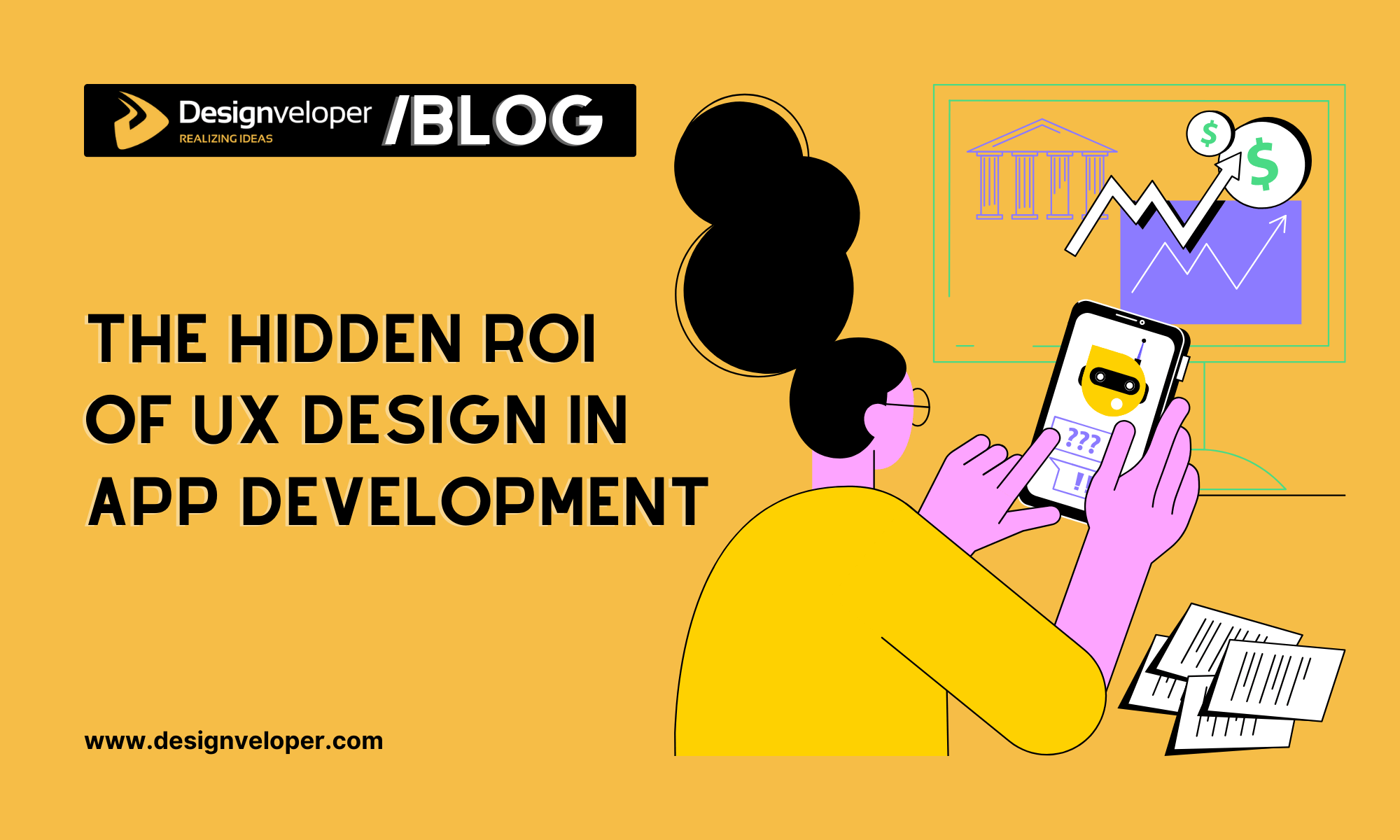

Let’s talk about a common assumption in app development: treating user experience (UX) design as a “nice-to-have.” It’s often seen as a luxury, an extra layer of polish that adds time and cost to a project. But what if that assumption is backward? The truth is, poor UX is likely costing your business far more than you realize in lost productivity, abandoned features, and daily frustration.
Good design isn’t just about making things look pretty. It’s about making them work better for the people who use them. When you invest in UX, you’re not just adding an expense; you’re making a strategic investment that pays dividends in ways you might not be measuring.
TL;DR
- Investing in UX design is a strategic move that significantly reduces training time and onboarding costs, leading to instant productivity boosts.
- A well-designed app minimizes support requests by anticipating user needs, potentially saving businesses thousands in lost productivity.
- Enhancements in UX can increase feature adoption rates, ensuring development resources deliver real value to users.
- Even small UX improvements can recover hours of productivity each week, exemplifying the importance of effective design.
- Tracking UX metrics can demonstrate ROI, with a potential return of 2-10 times the initial investment.
Visible Costs vs. Hidden Costs

When businesses look at UX, they see the upfront costs: design hours, user testing sessions, and prototyping. These are easy to track on a spreadsheet. What’s harder to see are the invisible costs that pile up when an app is confusing or difficult to use.
Think about the time your team spends on support tickets explaining a feature. Consider the hours wasted on training for a tool that should be intuitive. Or what about the expensive features your development team built that nobody uses because they’re too complicated? When you use app development services, you can avoid these issues from the start. These hidden costs of bad UX can often end up exceeding the entire development budget.
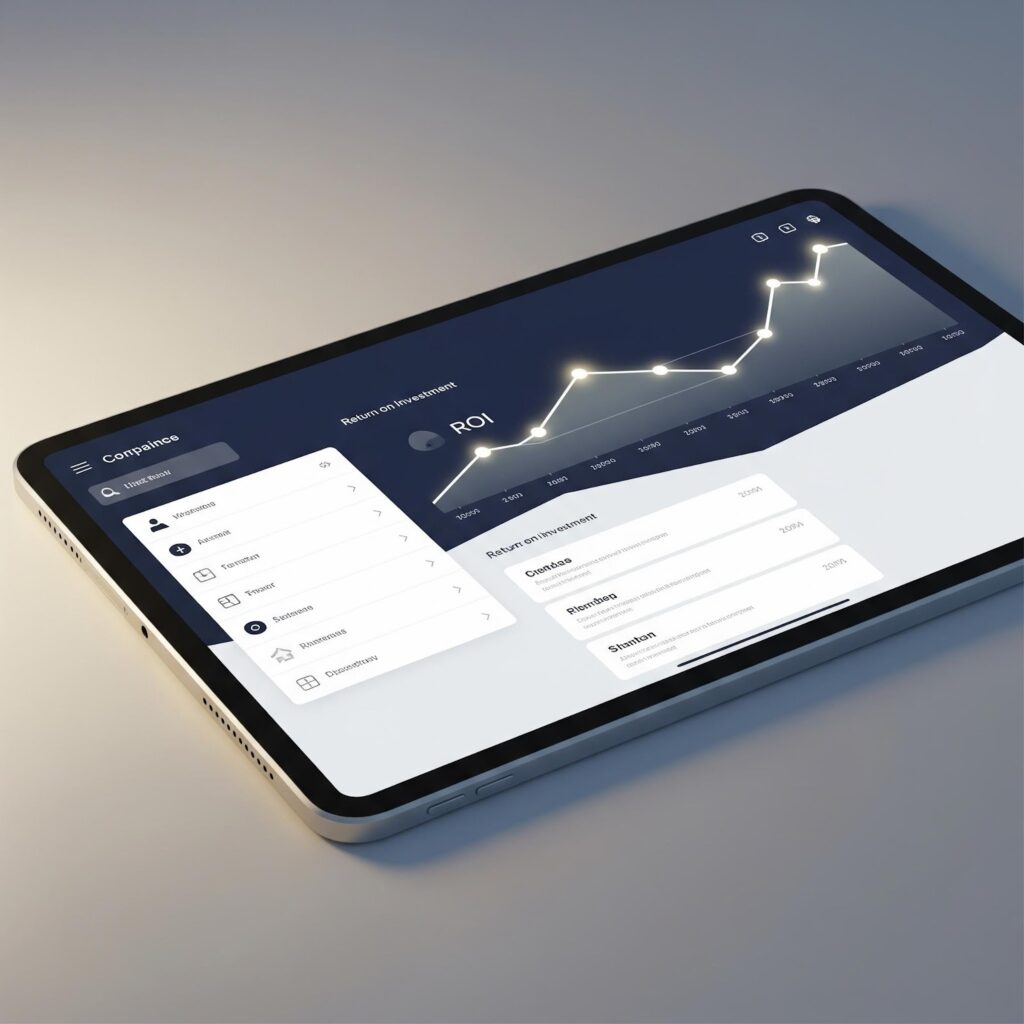
Hidden ROI #1: Reduced Training and Onboarding Time
A well-designed app should feel natural. When your team or customers can figure out how to use your app without a thick manual or a multi-day training session, you save a tremendous amount of time and money.
Intuitive UX design means your app is self-explanatory. This allows new employees to become productive almost immediately. For customer-facing apps, it means users can get value from your product right away, leading to a much better first impression and higher adoption rates.
Hidden ROI #2: Fewer Support Requests and Error Resolution
Good UX is proactive. It anticipates user needs and prevents problems before they even happen. Every confusing interface, unclear button, or poorly worded error message is a potential support ticket waiting to happen.
Each support interaction has a cost, not just the time your support team spends on it, but also the lost productivity of the user who ran into the problem. Investing in clear design and helpful messaging upfront drastically cuts down on these issues. A simple tooltip or a clearer layout can prevent hundreds of future support requests.
Hidden ROI #3: Higher Adoption and Feature Utilization
Have you ever wondered why some features in your app get all the love while others are ignored? It’s often a UX issue. There’s a huge gap between features that are built and features that are actually used. If a feature is hard to find or difficult to use, people will simply ignore it.
This means your investment in developing that functionality goes to waste. Good UX ensures that the features you build are discoverable and easy to use. This way, your development dollars actually deliver the value you intended, because people can and will use what you’ve built.
Hidden ROI #4: Faster Task Completion and Productivity Gains

Small improvements in UX can lead to massive productivity gains over time. Imagine an internal app that 50 employees use every day. If a better design saves each of them just 10 minutes per day on a common task, that adds up to over 40 hours of recovered time every single week. That’s an entire extra employee’s worth of productivity, gained simply by making a tool easier to use. When you multiply these small time savings across your entire organization, the ROI becomes undeniable.
You can get these productivity boosts by creating a tool that’s designed for your team’s specific workflows. Using a no-code app maker, exploring app templates, or partnering with a service that builds custom apps can help you streamline operations. This frees your team up from busy work so they can focus on what matters most. With a custom app, every feature has a purpose, creating more value for your business.
Hidden ROI #5: Reduced Development Rework
One of the most expensive things you can do in app development is to rebuild something after it has already launched. Finding and fixing a usability issue during the design phase costs a fraction of what it costs to fix it after the code has been written and the app is live.
By investing in UX research and user testing early on, you can identify potential problems before a single line of code is written. This “measure twice, cut once” approach saves you from costly and time-consuming rework down the line.
Hidden ROI #6: Employee Satisfaction and Retention
The quality of the tools you provide your team has a direct impact on their morale. Forcing employees to use clunky, frustrating internal apps every day contributes to burnout and can be a factor in why people leave.
Investing in good UX for your internal tools shows your team that you value their time and are committed to making their work life better. It’s a powerful, often-overlooked employee retention strategy. Happy employees are productive employees, and providing them with tools they enjoy using is a win-win.
Hidden ROI #7: Competitive Advantage Through User Experience

In a market where your competitors offer similar features, superior UX can be your key differentiator. When all else is equal, users will always choose the app that is easier and more enjoyable to use.
A frictionless experience can create loyal customers who not only stick with you but also recommend you to others. This turns your UX from a simple design choice into a powerful marketing tool.
Measuring What Matters: UX Metrics That Reveal ROI
To truly understand the value of UX, you need to track the right metrics. Here are a few concrete things you can measure:
- Time-to-Task Completion: How long does it take a user to complete a key task?
- Feature Adoption Rates: What percentage of users are using a specific feature?
- Support Ticket Volume: How many support tickets are related to usability issues?
- User Error Rates: How often do users make mistakes while using the app?
- User Satisfaction Scores: How do users rate their experience with your app?
Tracking these numbers before and after UX improvements will give you hard data to prove the ROI. A 15-20% investment of your development budget in UX can often return 2-10 times that amount through these hidden benefits.
The Compound Effect: How Good UX Keeps Paying
The value of investing in UX only grows over time. When more people use your app, the time saved increases. As your app gets easier to use, support costs drop. A well-designed app is simpler to maintain and update, which saves development time. Good UX is the gift that keeps on giving. For example, with new features like Nana banana, you can design professional images using just a text prompt, improving both speed and creative output for your team.
Conclusion: UX Is Not a Cost, It’s an Investment
It’s time to shift our thinking. User experience isn’t a line item expense; it’s a strategic investment in productivity, efficiency, and satisfaction. Every dollar you spend on making your app easier to use will return to you multiple times over through the hidden benefits that most businesses never even measure.
The question isn’t whether you can afford to invest in good UX. It’s whether you can afford not to.
Time for a UX Check-Up
Think about the most-used app in your business right now. How many clicks does it take to complete a common task? How many support requests does it generate each week? Take a closer look. The answers will show you exactly where your hidden ROI is waiting to be unlocked.
FAQ
Why is UX design often considered a cost rather than an investment in app development?
UX design is frequently viewed as a luxury or an extra cost rather than a critical component of the app development process. This perspective arises from the visible, upfront costs associated with design, user testing, and prototyping, which are easy to quantify. However, the hidden costs of poor UX, such as increased training times, higher support ticket volumes, and reduced feature adoption—can lead to significant losses. Investing in good UX ultimately reduces these hidden costs and enhances productivity, making it a strategic investment.
What are the hidden returns on investment (ROI) from UX design in app development?
Hidden ROIs of UX design include reduced training and onboarding time, fewer support requests, higher feature adoption, faster task completion, and reduced development rework. Each of these factors contributes to overall productivity and efficiency. For example, intuitive design leads to quicker user onboarding, while proactive UX minimizes the chances of support tickets, thereby saving time and resources for both users and support teams.
How can effective UX design improve employee satisfaction and retention?
Effective UX design for internal tools greatly impacts employee satisfaction. When employees are equipped with intuitive, user-friendly applications, they experience less frustration and increased productivity. This translates to higher morale and can be a crucial factor in retention, as employees feel valued when their tools enhance their work experience. Investing in good UX is, therefore, not just about improving usability; it’s also a vital strategy for keeping top talent.
What metrics should businesses track to measure the ROI of UX design?
To gauge the ROI of UX design accurately, businesses should track several key metrics including: time-to-task completion, feature adoption rates, support ticket volumes, user error rates, and user satisfaction scores. Monitoring these metrics before and after implementing UX improvements provides hard data to evaluate the effectiveness of design changes and their impact on productivity and user experience.
How does poor UX lead to increased development costs?
Poor UX can lead to increased development costs primarily through the need for extensive rework. Fixing usability issues after launch is significantly more costly than addressing them during the design phase. Additionally, confusing interfaces often result in wasted developer resources on support and retraining, which can far exceed initial investment in UX design, highlighting the importance of incorporating strong UX practices from the outset.
Also published on

Share post on