













Top 10 Best Front-End Developer Courses With Certificates

You’re a beginner who wants to start your front-end development journey but don’t know which courses to take? Here, we’ll provide 10 best front-end developer courses for you to develop the future career path.
These courses provide a bunch of knowledge, tips, and tricks or practices you may not know before. Furthermore, a certificate could be concrete proof of your abilities to employers. Another upside of these online courses is that you can learn, do research, and practice remotely. So, why wait? Let’s discover!
What Is Front-End Web Development?
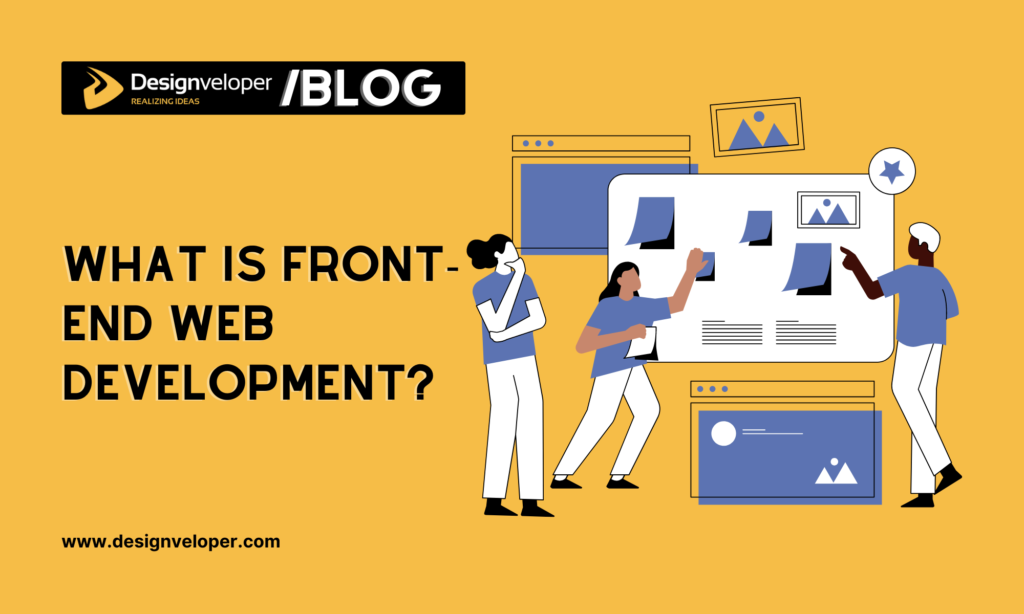
Front-end web development is everything involved in programming the user interface of a web application. Typically it refers to the Hypertext Markup Language (HTML), Cascading Style Sheets (CSS), and JavaScript portion of website production as opposed to the database or server-side programming.
Why is Front-End Development Important?
Front-end development acts as a crucial component in the web development process. It allows your website or app to interact with your target audience and deliver essential messages. Let’s delve into some key reasons why front-end development is that important:
Make First Impressions
The front end is what your potential customers will experience first when accessing your website. Therefore, it can break their impression of your site if it’s poorly designed with hard navigation, bad content structure, or slow page load. Meanwhile, a well-designed one can leave a positive impact on your audience as it’s accessible, engaging, and intuitive.
Reflect Your Brand Identity
The front end is a reflection of your brand’s online presence. Consistent functionality and design across your website can improve your brand identity and accordingly boost customer loyalty.
Optimize Performance
Without your notice, the front end largely determines your website’s performance. Accordingly, efficient code, proper asset management, and optimized images expedite your page load times and boost overall customer experience.
Foster User Engagement
All what we mentioned above, coupled with interactive elements (e.g., buttons, transitions, or forms), play a critical role in engaging customers. These factors also motivate them to interact with your content.
Impact Conversions
If your audience find the site easy to use and navigate, they’re more likely to subscribe to your newsletter or even make a purchase. Therefore, it can be said that an intuitive front-end design can increase conversion rates.
Explore a Career as a Front-End Developer
Front-end developers are responsible for a website’s visual and interactive elements. They’re not UI/UX designers. While designers create a blueprint to showcase how users can interact with your website, front-end developers seamlessly convert the blueprint into a functional user interface (UI). This UI covers the layout, navigation, and other visual elements like buttons or animations.
By leveraging languages (e.g., HTML or CSS), along with frameworks (e.g., React or Angular), these developers can build responsive designs that adapt to multiple devices and platforms.
The Overview Front-End Development on the Job Market
In 2023, the most demanding skill in the IT job market is web development with JavaScript and Java as the most common programming languages (40%). According to Indeed.com, the average annual salary for front-end web developers in the United States is USD113,726.
More and more organizations are looking for seamless digital transformation and how to stand out virtually. This makes the position of front-end developer extremely popular. Accordingly, at the time of this article, there were over 3,700 open, full-time positions available.
How to Become a Professional Front-End Developer
So, how should you prepare to become a front-end developer? Here are some of our tips:
- Education: A bachelor’s degree in computer science or relevant fields is a pass for you to embark on your front-end development journey. But it’s not the only way. Alternatively, you can participate in coding boot camps or online courses to speed up your education.
- Skill Development: Today, the biggest challenge for those seeking developers are qualified candidates. Particularly, over a quarter reported that it’s difficult to discover potential candidates as they don’t have essential skills that match a company’s requirements. Worse, over 50% of organizations find a skill shortage hold their progress back. So, acquiring strong skills is a must to keep you qualified. These skills can involve programming languages, frameworks, libraries, UI/UX designs, and soft skills.
- Portfolio: Having a well-structured portfolio is the best way to demonstrate your skills and past work. It helps you impress recruiters.
- Stay Updated: The tech industry is constantly evolving. So, keeping up with the latest trends, techs, and tools is a plus for a successful career. For example, at Designveloper, apart from common tech stacks, we also focus on advanced techs that can shape the future of web development like PWA, motion UI, micro-interactions, and AI-powered chatbots. Understanding these techs give you better chance to stand out among candidates.
Top 5 Questions to Choose the Best Front-End Development Courses
Among the vast amount of front-end developer courses, it’s overwhelming to pick the right one. But fear not! By asking yourself these key questions, you’ll discover the perfect course that fit your goals and learning style:
Question 1: What is my current skill level and learning goal?
Before diving in, you should evaluate your existing knowledge. Are you a complete beginner, or do you already acquire some experience with HTML, CSS, or JavaScript? Answering these questions will help you choose the right course for your current level.
Equally important are your learning goals. Do you want to develop basic websites to master complex front-end frameworks? Understanding your aspirations will guide you towards courses that cover your desired skills.
Question 2: What does the course cover?
Once you know your current skillset and goals, you should dig into the course curriculum. Apart from the foundational elements of front-end development, does it provide hands-on training or projects? Understanding what knowledge or experience the course offers will ensure it aligns with your ultimate objectives.
Besides, a good course is not confined to only providing knowledge; but it helps you access additional learning materials and active online communities where you can ask questions and get help from others.
Question 3: How much time and money can I invest?
Front-end development courses come in various formats and price ranges. Free courses and tutorials are a great starting point, yet in-dept learning often requires paid options. Further, you should consider how much time you can spend on studying. So, choose a course that fits your schedule, whether it’s a self-paced or one with deadlines.
Question 4: How do other students evaluate this course?
Reviews and ratings from other learners are goldmines for you to evaluate the efficiency of a course. Platforms like Class Reviewed or courses themselves provide valuable insights into how different learners think of their structure, delivery style, and more. Besides, you can look for reviews that talk about a course’s goods and bads on social media platforms or communities like Reddit.
Question 5: Is the course often updated?
As the front-end development is advancing, new techs will emerge. So, choosing a course that is outdated can hold you back. Meanwhile, a regularly updated course ensures you’re learning the most relevant and latest skills.
The Top 10 Best Front-End Developer Courses
So, what are the best front-end developer courses you should consider in your list? Let’s find them out:
1. Front-End Engineer – Codecademy
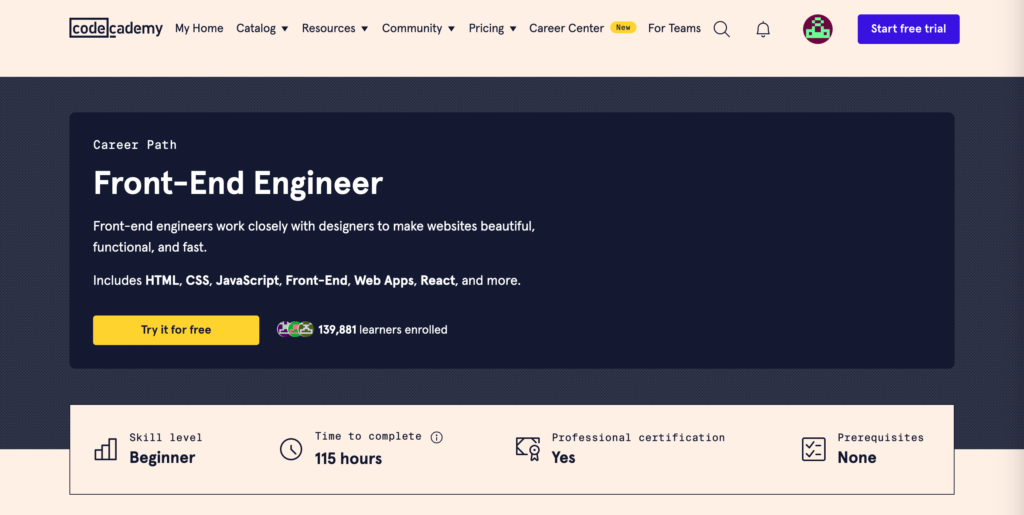
- Tuition Fees: USD 11.99/month for Plus + USD 15.99/month for Pro (all billed annually) with a 7-day free trial
This comprehensive program guides you through a journey of becoming a front-end developer, from programming languages (e.g., HTML or CSS) to web design and GitHub. All this knowledge will be taught throughout 34 lessons. Besides, the program equips you with interview skills through frequently asked questions (FAQs) and coding challenges. This helps you become an outstanding candidate and increase the likelihood of winning a position.
The program doesn’t only confine you to theories. It also enables you to implement hands-on projects like building a portfolio website or a fashion website. Further, the program integrates AI to assist your study, from explaining concepts to providing solution code. Another plus is its career options and opportunities to interact with recruiters worldwide.
2. Front End Development Courses From W3C
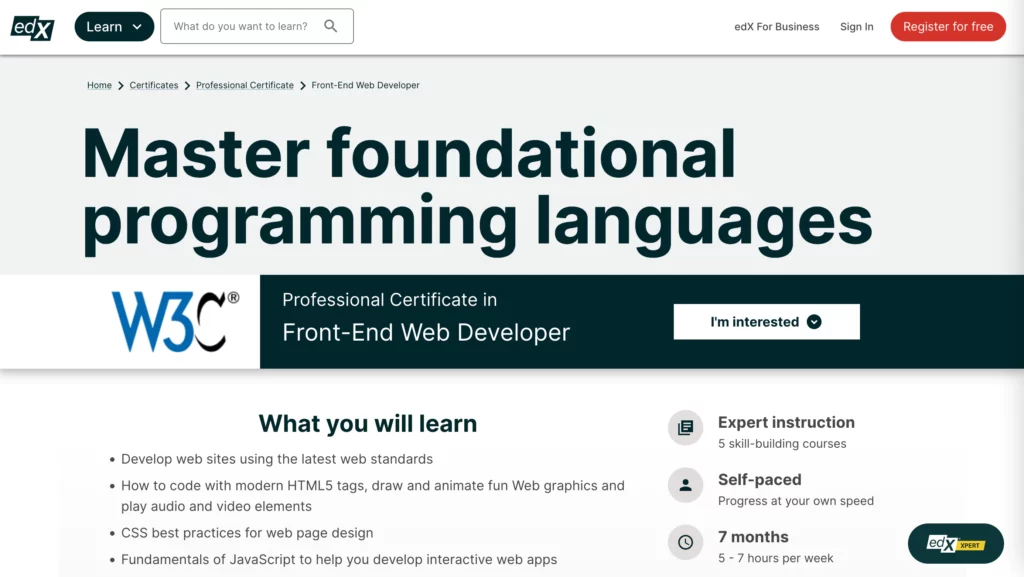
- Tuition Fees: USD 1075,50
This program was held by the World Wide Web Consortium (W3C). Throughout the course, you’ll acquire the knowledge of how to build responsive websites with the latest web standards. This self-paced program offers five skill-building courses on CSS, JavaScript, and HTML5. Accordingly, you can:
- Use the CSS best practices for web design
- Develop interactive web apps using JavaScript
- Use modern HTML5 tags for coding
- Design and animate interesting web graphics and other elements
- Comprehend the importance of accessibility and internationalization
Furthermore, this program also offers learners a wide range of guidance, tips, and practices to build or enhance your website or other projects. And what could help you learn things faster than some intuitive and interactive examples? The program from W3C will give you all those necessary assets.
The quality of this program is assured since its instructors of these courses are from 2 tech giants: Microsoft and Intel and one of them is a lecturer from University Côte d’Azur.
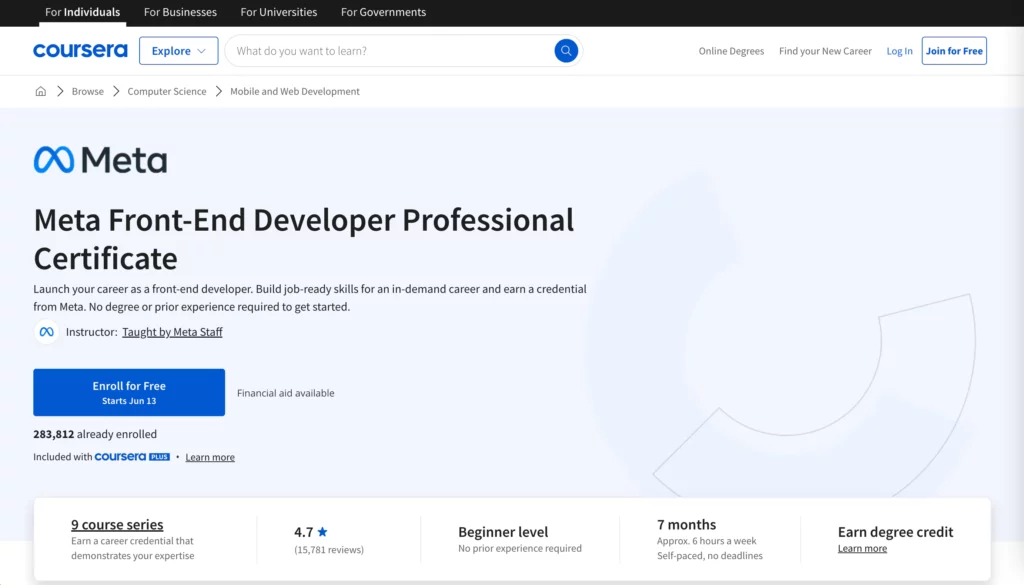
3. Meta Front-End Developer Professional Certificate
- Tuition Fees: Free
Do you want to become a front-end developer from scratch with the support of Meta (formerly known as Facebook)? If yes, this program is for you. With a duration of approximately 7 months, you can master the fundamentals of front-end development through 9 separate courses:
- Introduction to Front-End Development
- Programming with JavaScript
- Version Control
- HTML and CSS in depth
- React Basics
- Advanced React
- Principles of UX/UI Design
- Front-End Developer Capstone
- Coding Interview Preparation
Accordingly, at the end of the course, you’ll develop a responsive and interactive website using the above tech stacks for content structure, immersive visual style, interactive user experiences, and more. Also, you can obtain a highly recognized certificate from Meta and prove your proficiency through hands-on projects.
4. freeCodeCamp.org
- Tuition Fees: Free
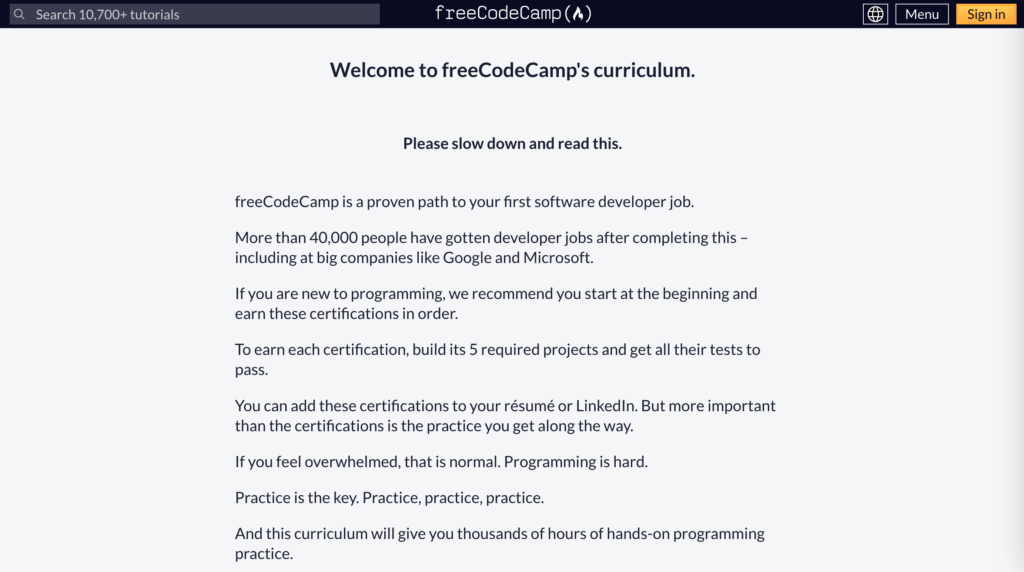
freeCodeCamp is a well-known forum amongst the developer community. Its members provide a wide range of knowledge, practices and even career advice. At the same time, Quincy Larson – freeCodeCamp’s founder – and his partners have been working on a huge programming curriculum.
Their program covers multiple aspects of front-end development like responsive web design, JavaScript algorithms, data structures, front-end dev libraries, and more. They also place each course in order, which allows beginners without coding skills to start easily. To earn certificate in each course, you’re required to complete five projects and pass the test. To earn each certification, build its 5 required projects and get all their tests to pass.
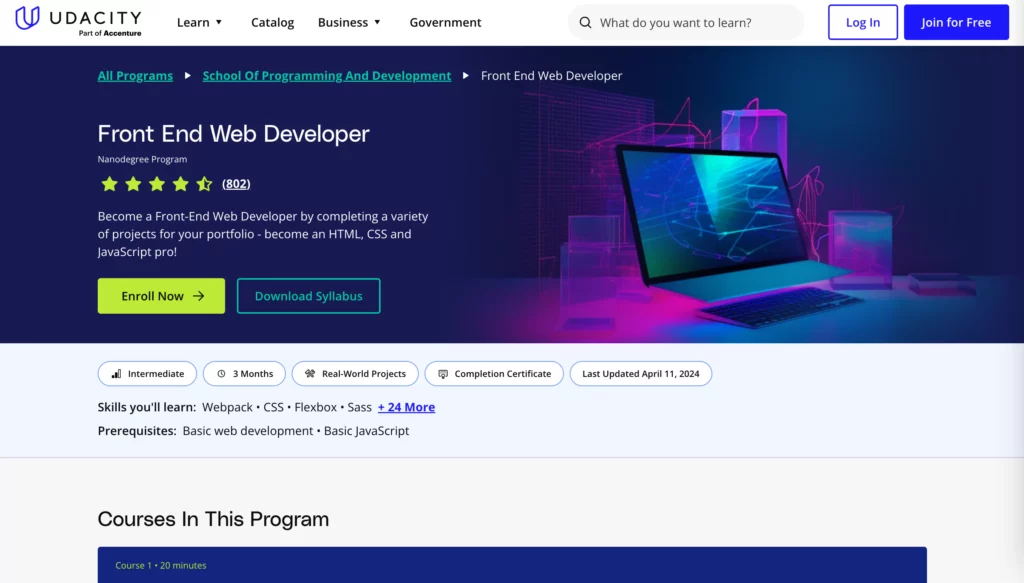
5. Front End Web Developer by Nanodegree Program
- Tuition Fees: USD 249
This program helps you conquer your front-end development journey through six compulsory courses. They include:
- CSS, Website Layout, Website Components
- JavaScript & the DOM
- Web APIs and Asynchronous Applications
- Build Tools and Single Page Web Apps
- Project: FEND Capstone – A Travel App
Besides, the program provides an optional course that assists you with securing a job. Accordingly, it guides you how to conduct industry research, optimize your LinkedIn, and improve your GitHub profile.
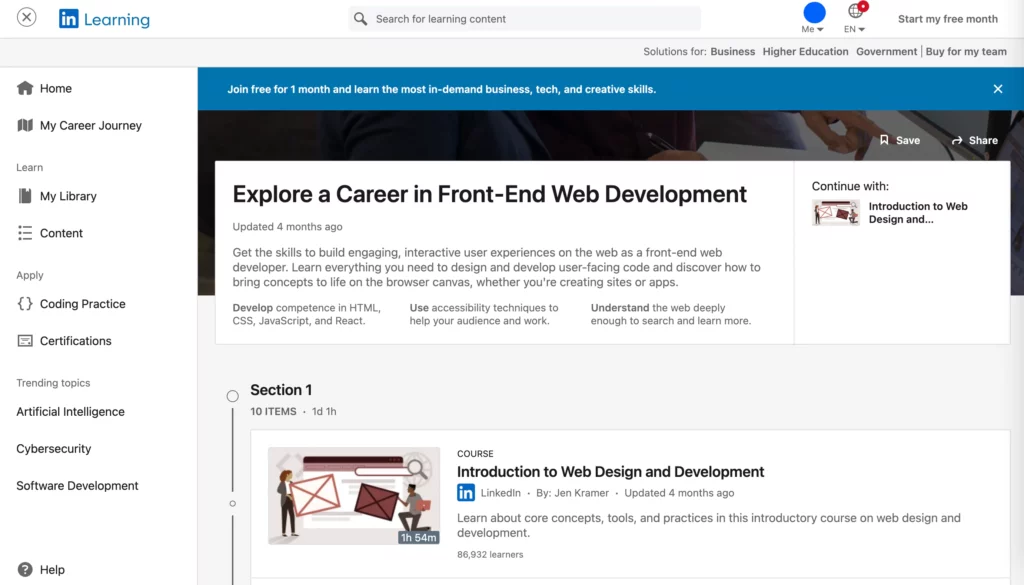
6. Become a Front-End Web Developer
- Tuition Fees: USD 27/month with a one-month free trial
This program by LinkedIn connects you with industry experts in front-end development through ten dedicated courses. They include:
- Introduction to Web Design and Development
- HTML/CSS/JavaScript/React.js Essential Training
- Search Techniques for Web Developers
- Web Programming Foundations
- Simplifying Web Development with Accessibility Best Practices
- React.js: Building an Interface
- React.js: Modern Browser APIs
These courses provide you with essential skills to develop interactive, engaging user experiences for your website’s front end.
7. Become a Front End Developer – Educative
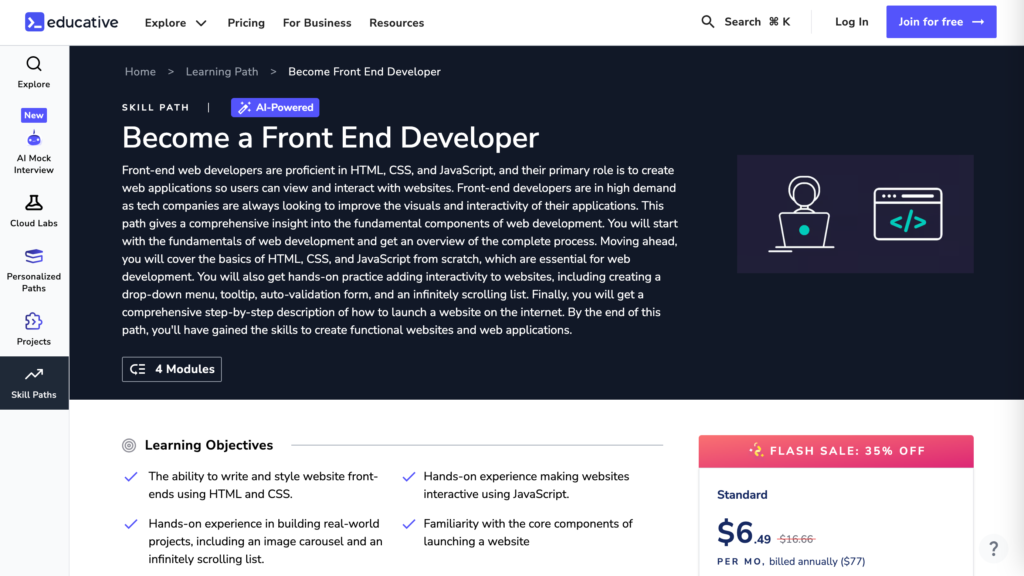
- Tuition Fees: USD 6.49/month if billed annually
This course aims at enabling you to use HTML and CSS for writing and styling web front ends. Accordingly, you’ll embark on the journey by studying the fundamentals and entire process of web development through the first two modules:
- Web Development: A Primer
- Learn HTML, CSS, and JavaScript from Scratch
You’ll also learn through practical projects to build a dropdown menu, autocomplete search, tooltips, and more. In the fourth module, you’ll discover how to launch your website through detailed steps
8. Front-End Web Development Short Course
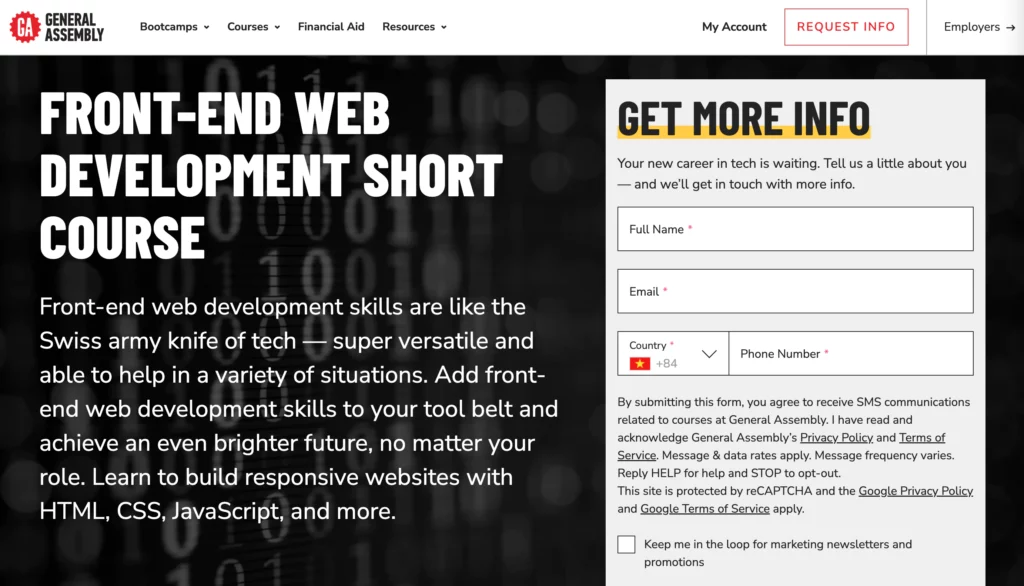
- Tuition Fees: USD 4,500
This short course offers you both flexible and fixed schedules to learn front-end web development from scratch. Accordingly, you can choose a one-week, full-time format or a 10-week, part-time evening course. Regardless of your choice, you can participate in a live class with expert-led practice.
At the end of this course, you can achieve crucial skills like HTML5, CSS3, JavaScript (ES6), Responsive design, APIs, and Version control.
9. Front-End Web Developer – RMIT & Udacity
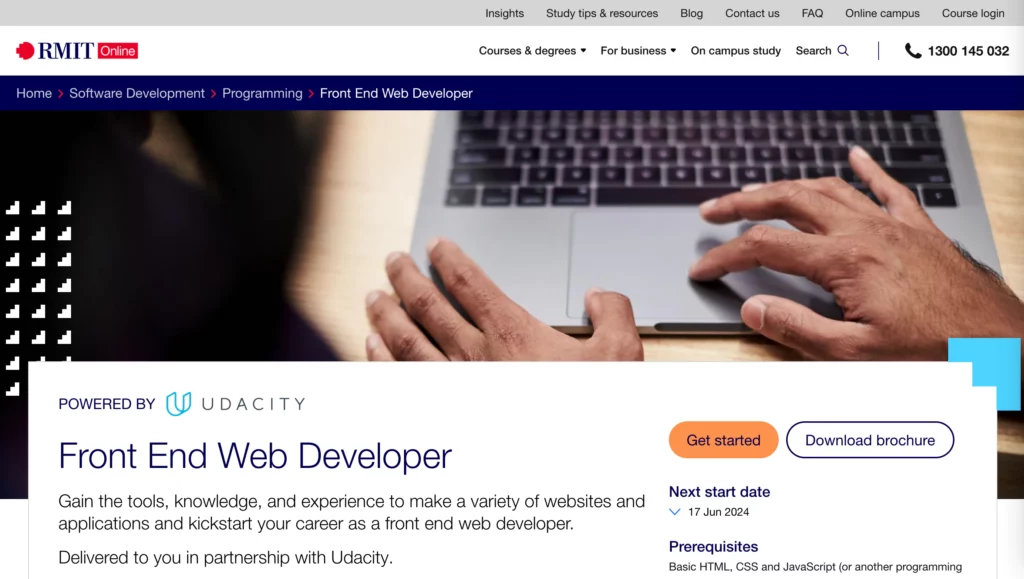
- Tuition Fees: USD 2,000
This online RMIT course, powered by Udacity, helps you gain knowledge, experience, and essential tools about front-end development. It’s designed for junior or middle-level developers and designers having the basics of programming skills.
The course includes four modules as follows:
- CSS and Web Layout
- JavaScript and the DOM
- Web APIs and asynchronous applications
- Build tools, Webpack, and Service Worker
Moreover, you can develop technical skills and capabilities through five hands-on projects:
- Responsive websites
- Interactive websites
- Web apps
- Automated app build & deployment
- Enhanced offline performance
10. The Front-End Web Developer Bootcamp: HTML, CSS, JS & React
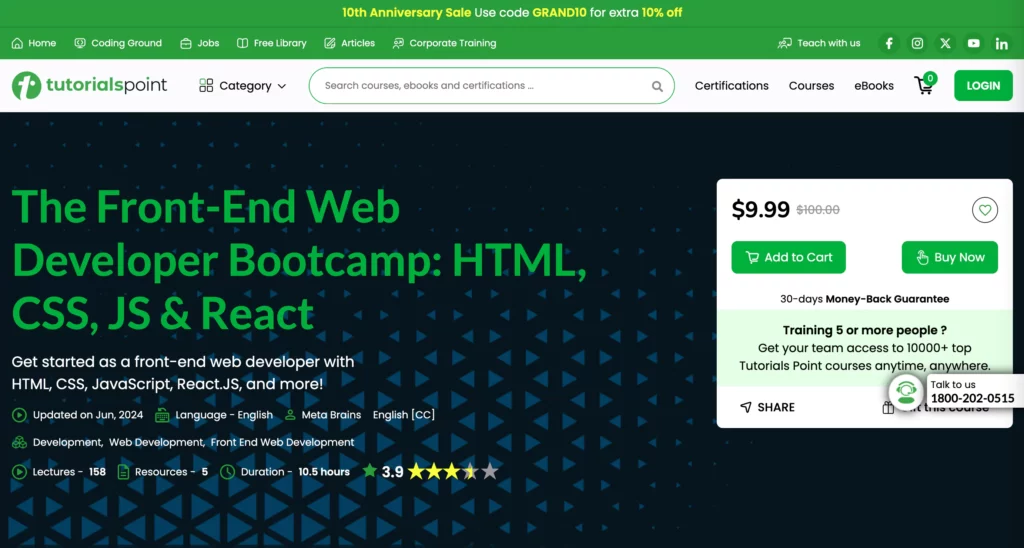
- Tuition Fees: USD 9.99
This course provides 158 lectures lasting 10.5 hours. It helps you acquire in-demand skills like HTML, CSS, JavaScript, and React with the assistance of expert instructors. Besides, it allows you to enhance these skills through practical projects and an online community.
Here are some of what you can learn from this course:
- Understand the basics of HTML and CSS
- Leverage CSS Grid and Flexbox to build responsive layouts
- Make your web pages more interactive using JavaScript
- Use React to create reusable and scalable components
- And more!
Conclusion
This article has navigated you through a detailed journey of becoming a front-end developer. Accordingly, we elaborated on the 10 best front-end development courses and how to choose the right one for your unique learning goals.
If you have any other suggestions, tell us now. And in case you are looking for a front-end job in a young, wild and free software development company, Designveloper could be the one! Click here to see our job descriptions. You’ll have a chance to earn some good money, at the same time, we also provide you with advanced training to start a great career!
Don’t forget to follow us on Facebook, Twitter, and LinkedIn to read more articles like this one!
Also published on

Share post on










Related Articles


Product Design Process: 6 Steps From Research To Launch
Product Design Process: 6 Steps From Research To Launch Published September 18, 2026
RAG Status In Project Management: Meaning, Colors, And Examples
RAG Status In Project Management: Meaning, Colors, And Examples Published September 09, 2026
How Gitignore Works: Rules, Patterns, Examples, And Debugging Tips
How Gitignore Works: Rules, Patterns, Examples, And Debugging Tips Published August 05, 2026