
















B2B apps are shaking up industries, powering businesses to do more with less. These tech superheroes, built for businesses like yours, pack essential features for different areas like marketing, finance, and more.
In this article, you’ll dive into the B2B app basics, discover their notable features with trends, and learn about the top 7 B2B apps transforming industries in 2026. So, are you ready to unveil the world of B2B apps? Keep reading!
Understanding B2B Apps
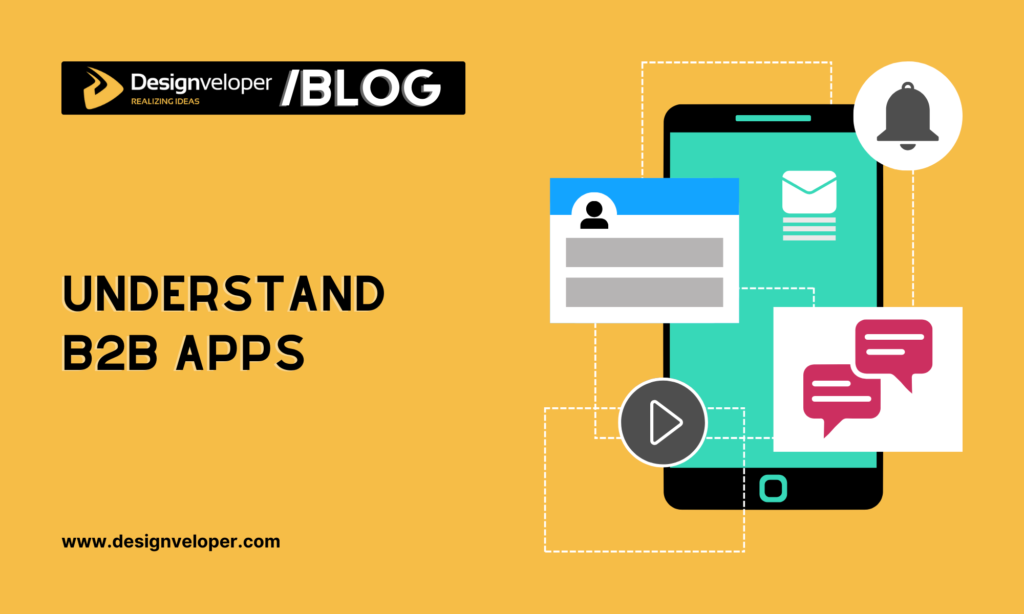
First, let’s look through the definition of B2B apps and their difference from traditional methods in business communication.
What are B2B Apps?
B2B apps, or Business-to-Business applications, are software tools specifically designed to streamline communication, collaboration, and operations between companies. Unlike consumer-focused apps, B2B apps cater to the unique needs of businesses, addressing challenges in areas like sales and marketing, supply chain and logistics, collaboration, etc.
What Do B2B Mobile Apps Offer That Email and Social Media Do Not?
While email and social media have served as traditional methods for business communication, they come with inherent limitations. Email can lead to information overload and scattered communication, while social media platforms often lack the security and functionality required for professional interactions. B2B mobile apps offer several distinct advantages that surpass these limitations:
- Dedicated and secure environment: B2B apps provide a dedicated platform designed specifically for business communication, ensuring sensitive information is protected and readily accessible within the organization.
- Streamlined collaboration tools: Real-time features like group chats, project management tools, and file sharing facilitate seamless collaboration and task delegation, keeping everyone on the same page.
- Contextual communication: Unlike email threads or social media posts, B2B apps allow for contextual communication within specific projects or tasks, reducing confusion and enhancing efficiency.
- Integration with existing systems: B2B apps can seamlessly integrate with your existing business systems, eliminating data silos and creating a unified workflow.
- Accessibility and mobility: Mobile versions of B2B apps allow employees to access information and complete tasks from anywhere, anytime, further enhancing productivity and flexibility.
Building B2B Apps: Purchasing, Distributing, and Cost
Now that we understand what B2B apps are and why they’re beneficial, it’s important to delve into the practical aspects of these applications. This includes understanding how they are purchased and distributed, the cost considerations involved in their development, and how access to these apps is granted in a B2B context. These factors are crucial in leveraging the full potential of B2B apps and ensuring their successful integration within your business operations.
How Are Custom B2B Apps Purchased and Distributed?
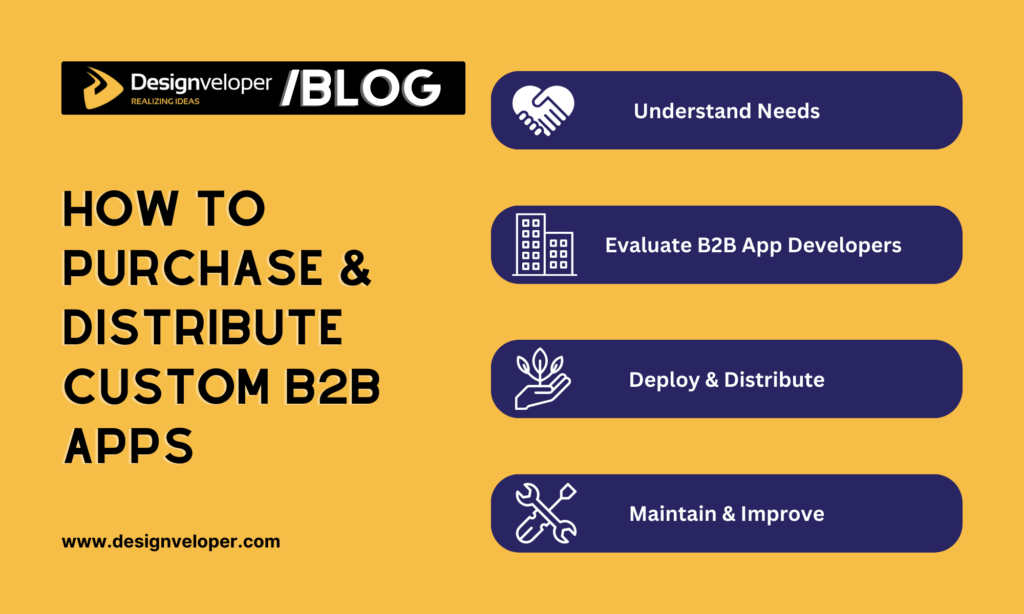
Custom B2B apps are designed to meet your specific business needs. So they require careful planning and collaboration with a development team. The process of purchasing and distributing custom B2B apps involves several key factors:
Identifying Needs and Requirements
The first step is to define the goals of the app, identify the target users, and outline the desired features. This helps ensure that the app meets the specific needs of the business.
Evaluating B2B App Development Companies
It’s important to consider the experience, portfolio, and technical expertise of potential app development companies. This can help ensure that the final product is of high quality and meets your business’s requirements.
When choosing a B2B app development company, it’s crucial to go beyond a simple portfolio review. Understanding their development process is equally important, as it allows you to assess their approach, methodology, and alignment with your project’s needs.
Top-notch B2B app developers all have a clear, transparent development process to bring your idea to measurable success.
For example, at Designveloper, a B2B app development company, we offer a custom process that involves clients at every step. By collecting client requirements, we build a list of essential features and suggest suitable solutions using Agile frameworks. This agile methodology allows our development process to flexibly align with your business goals and industry standards while ensuring a final product can meet end-user demands. This turns Designveloper into a worthy B2B app development partner.
Deployment and Distribution Options
B2B apps can be deployed and distributed through various platforms, including app stores, private servers, and cloud platforms. The choice of platform depends on the specific needs and preferences of the business.
Ongoing App Management and Maintenance
After the app is deployed, it’s important to provide regular updates, fix bugs, and offer user support to ensure a smooth user experience.
Cost Considerations in B2B App Development
Developing a custom B2B app involves significant upfront and ongoing costs as follows:
- Development Costs: These are the costs associated with creating the app, including the time and resources spent by the development team.
- Licensing Fees: Depending on the licensing model chosen, there may be fees associated with using certain software or platforms.
- Ongoing Maintenance: After the app is developed, there will be ongoing costs associated with maintaining and updating the app.
The cost of your custom B2B app can vary depending on several factors. The app’s complexity, the number and sophistication of its features, and the size and expertise of your development team are major determinants. Not to mention unexpected costs from inadequate market and user research, inefficient development processes, or even communication gaps within the team.
Therefore, planning your project carefully and choosing the right development options, such as freelancers or agencies, is crucial for cost management. Utilizing open-source libraries and outsourcing specific tasks are other strategies you can employ to optimize your budget and ensure efficient B2B app development.
How to Grant Access to Apps in B2B
In the dynamic B2B environment, granting user access to applications requires a strategic approach that balances accessibility with robust security measures. Here’s how:
1. Identify User Roles: Determine the different types of users who will be using the app. These could include administrators, managers, and regular users.
2. Define Access Levels: Based on user roles, define what levels of access each role should have. For instance, administrators may have full access, while regular users may have limited access.
3. Implement Access Control: Use an access control system within your app to manage user permissions. This could be built into the app or managed through a third-party service. This step is crucial in preventing unauthorized access to your sensitive business data.
4. Provide Secure Login: Ensure each user has a secure login to protect their information and access rights. Besides, other security measures like two-step verification or encryption are essential to safeguard sensitive information.
5. Monitor and Adjust: Regularly review user access and adjust as needed due to changes in roles, new features, or security concerns. Furthermore, your development team should regularly conduct vulnerability scans, penetration testing, and security audits to proactively identify and address potential security threats. Accordingly, your team can apply updates promptly to patch vulnerabilities and ensure compliance with security standards.
FURTHER READING: |
1. |
|
5 Key Features and Functions of B2B Apps
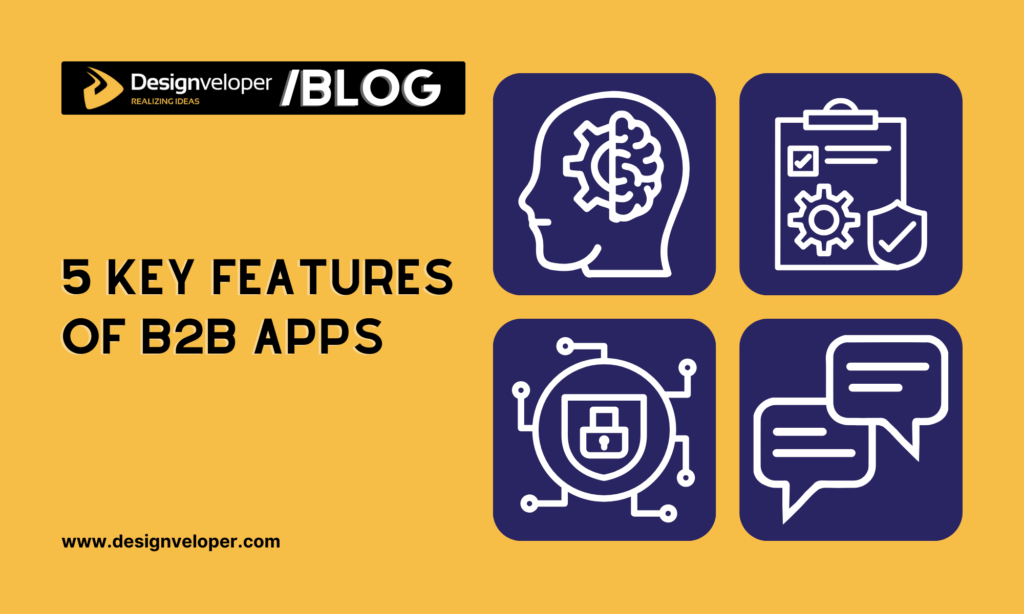
In the realm of B2B applications, the significance of features and functionalities cannot be overstated. A survey by Demand Gen revealed that 73% of B2B buyers consider features or functionalities as one of the top five factors when evaluating service providers.
These key features and functions serve as the backbone of B2B apps, directly influencing their effectiveness and usability. They play a pivotal role in meeting the unique needs of businesses, thereby driving their decision-making process and increasing user engagement.
Now, let’s dive into the top five features you should include in your B2B app.
Integration Capabilities
B2B apps should have the ability to seamlessly integrate with existing business systems like Customer Relationship Management (CRM) or Enterprise Resource Planning (ERP). This can be achieved through APIs, which allow for data synchronization, real-time updates, and more. This feature enables businesses to streamline their operations, enhance customer interactions, and improve efficiency.
User Management
A robust user management system is crucial in a B2B app. It should allow for the creation, deletion, and modification of user accounts, as well as the assignment of user roles and access levels. Features like role-based access control, single sign-on, and multi-factor authentication ensure that only authorized users have access to specific information and functionalities. This safeguards sensitive data while empowering users to perform their duties efficiently.
Data Security
Given the sensitive nature of business data, B2B apps must prioritize data security. So, essential features like data encryption, secure login protocols, secure data transmission, and even compliance with industry-specific regulations are a must to protect sensitive business data from breaches. This fosters trust and confidence among users, allowing them to focus on their tasks without concerns about data leaks.
Communication
B2B apps go beyond mere functionality by integrating powerful communication features that bridge the gap between teams, partners, and clients. Some communication features you can consider in your B2B app include real-time messaging, secure file sharing, video conferencing, and push notifications.
These features are essential for B2B apps as they boost collaboration, enhance workflows, promote teamwork, and aid in making informed decisions. Also, they amplify productivity by minimizing communication overhead and speeding up response times.
Real-Time Analytics and Reporting
Businesses need insights to make informed decisions. Therefore, B2B apps should provide robust analytics and reporting features. Such features, coupled with interactive charts and graphs, help in analyzing sales performance, customer behavior, and operational efficiency. Accordingly, your business can identify trends, discover opportunities, and measure the impact of your initiatives. All these things empower you to make data-driven decisions and optimize your operations based on concrete evidence.
5 Notable Trends Shaping B2B App Development
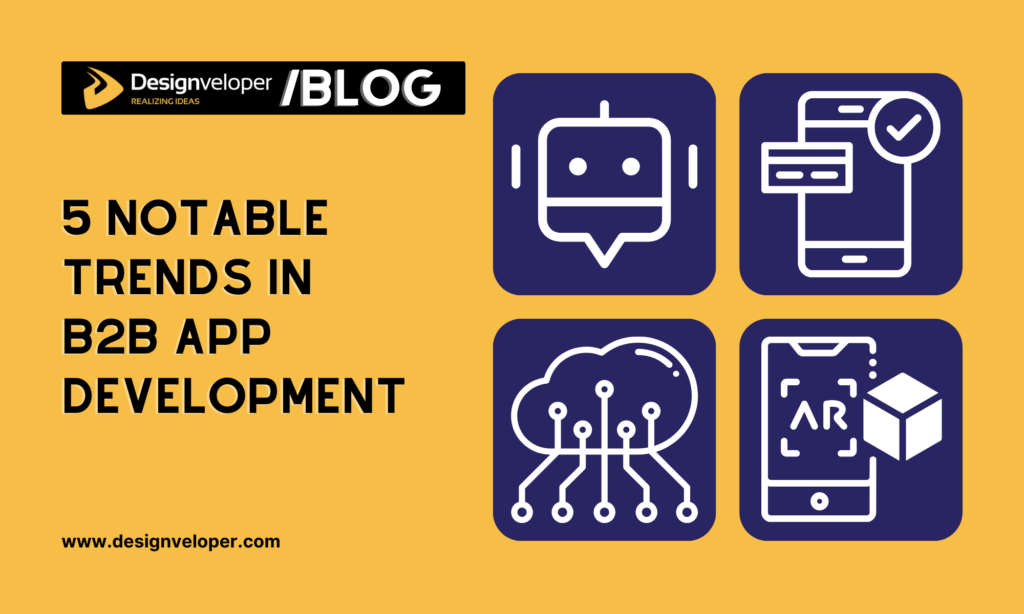
Today, buyers are seeking customer experiences that resonate with them on a deeper level. According to Deloitte, suppliers who master this art are 34% more likely to secure purchases and 32% more likely to get contract renewals with clients. To truly stand out in a saturated market, your B2B app needs to foster genuine connections, prioritize empathy, and deliver personalized experiences for every client interaction.
This is where emerging B2B app development trends come into play. The advent of AI, IoT, AR, Cloud technologies, and enterprise mobility not only strengthens the key features of B2B apps but also enhances the personalized experience that buyers crave. Here’s how:
Artificial Intelligence (AI) Integration
AI is transforming B2B apps by automating processes, providing personalized experiences, and offering predictive analytics. This tech enables apps to learn from data, identify patterns, and make decisions with minimal human intervention. This not only enhances the functionality of B2B apps but also improves their efficiency and effectiveness.
Internet of Things (IoT) Integration
McKinsey forecasts a staggering economic impact of $4 trillion to $11 trillion annually by 2025 from the Internet of Things (IoT). Surprisingly, B2B applications are expected to seize nearly 70% of this value, outpacing consumer uses. This highlights the promising future of applying IoT in your B2B apps and campaigns.
IoT sensors and devices provide a real-time data stream to your app, from machine performance to inventory levels to customer behavior. This data empowers you to anticipate needs, tailor experiences, automate tasks, and streamline operations. IoT integration opens doors for B2B organizations to expand beyond traditional markets, fuel innovation, and unlock new revenue streams.
Plus, IoT allows you to connect your app with your team’s devices, creating a collaborative hub where information flows freely and customer service becomes proactive.
Augmented Reality (AR)
AR is revolutionizing business operations by offering immersive experiences that amplify customer engagement and streamline business processes. Indeed, 38% of B2B buyers now expect their vendors to offer AR options to enhance their experience with offerings.
In the B2B realm, AR finds its application in diverse areas such as product demonstrations, medical training, and beyond. AR technology brings your offerings to life, providing a realistic and engaging visualization. This is particularly beneficial when showcasing large products or real estate.
A prime example of this is IKEA. The company launched the IKEA Place app integrated with AR to enable both consumers and businesses to virtually place furniture in their spaces, thereby enhancing the shopping experience.
Cloud Computing
The rise of web applications and cloud services has spurred the growth of B2B e-commerce. Manufacturers, wholesalers, and distributors are embracing digital transformation, using the cloud to build sustainable futures and deliver exceptional customer experiences. Cloud-powered B2B apps scale effortlessly, access data from anywhere, and ditch costly infrastructure. Plus, new features and updates roll out at lightning speed, keeping your users happy and engaged.
Enterprise Mobility
Enterprise mobility is all about empowering businesses to work remotely and flexibly, with the support of mobile devices and cloud technology.
The B2B enterprise mobility sector is on a growth trajectory, with a potential doubling to a staggering USD 320 billion. This is because it’s making a difference in different areas. For example, sales reps can use mobile apps to access customer data, manage leads, and close deals on the go. Meanwhile, supply chain managers use mobile apps to monitor inventory levels, track shipments, and optimize logistics.
The mobile workforce continues to expand with increasing demands for work on the go. So, there is a corresponding enhancement in B2B mobile versions to cater to this growing need.
Top 7 Successful B2B Apps by Industry
You’ve explored the innovative trends shaping B2B app development. And now, let’s shift gears and delve into the best industry-specific B2B apps that inspire your development journey:
PayPal

Industry: Finance & Payments
PayPal is a global online payment platform that allows parties to send and receive money easily and securely. This digital wallet empowers businesses of all sizes to streamline payments, boost efficiency, and build trust with their clients. Here’s why PayPal is the ideal B2B app for businesses:
1. Frictionless Payments: With PayPal, your clients can pay instantly, securely, and in their preferred way – credit card, debit card, or even their PayPal balance. This reduces friction, accelerates cash flow, and keeps your operations running smoothly.
2. Global Reach, Local Expertise: Whether you’re dealing with clients across town or the globe, PayPal’s extensive network has you covered. The wallet accepts payments in over 200 currencies, with built-in currency conversion and fraud protection for peace of mind.
3. Unmatched Security: Business transactions demand trust. So PayPal prioritizes security with industry-leading encryption, fraud prevention tools, and buyer & seller protection programs. This ensures every transaction is safe and secure.
Outstanding Features
PayPal offers robust features specifically designed for businesses, including:
- Invoicing & bill pay: Send and receive invoices directly through PayPal, with easy tracking and automated reminders for faster payments.
- Subscriptions & recurring payments: Manage recurring payments effortlessly, whether it’s monthly subscriptions or retainer fees.
- Virtual terminals: Accept payments directly from your website or app, offering a seamless and secure checkout experience.
- Mass payments: Send payments to multiple recipients at once, simplifying payroll, vendor payments, and other bulk transactions.
- Detailed reporting: Track your payment history, analyze trends, and gain valuable insights into your financial data.
Shopify

Industry: E-commerce & Retail
Shopify is an all-in-one e-commerce platform that empowers businesses of all sizes to build, manage, and grow their online stores. It’s the ultimate B2B app for launching, managing, and thriving in the e-commerce landscape. Here’s why:
1. Built for B2B Success: Shopify’s robust B2B features are designed from the ground up for business-to-business transactions. Accordingly, you can manage complex orders, offer custom pricing and discounts, handle wholesale accounts, and streamline invoice and payment processes – all within a single, intuitive platform.
2. Scalability Made Simple: Whether you’re a niche B2B startup or a seasoned industry player, Shopify’s flexible infrastructure grows alongside your business. Scale seamlessly from handling a handful of orders to managing thousands, all without breaking a sweat.
3. Control at Your Fingertips: Shopify allows you to build your B2B store exactly how you envision it, with extensive customization options for branding, product pages, and checkout experiences. Further, by integrating your existing tools and workflows, you can make Shopify your centralized hub for e-commerce operations.
4. Endless Possibilities: You can access a vast ecosystem of apps and extensions in Shopify to tailor your B2B experience, regardless of marketing automation, inventory management, or lead generation.
Outstanding Features
Shopify offers a wide range of essential features for your B2B needs:
- Wholesale pricing & discounts: Offer tiered pricing, custom quotes, and volume discounts to your B2B clients.
- Bulk order options: Enable quick and efficient ordering for large quantities.
- Purchase orders (PO): Streamline invoicing and payment processes with PO integration.
- Customer accounts & portals: Provide dedicated accounts for your B2B buyers, allowing them to track orders, manage invoices, and view exclusive offers.
- Advanced analytics: Gain valuable insights into your B2B sales performance, customer behavior, and marketing effectiveness.
Cerner
Industry: Healthcare & Medical
Cerner is a healthcare platform designed for B2B use in hospitals and other healthcare organizations. It’s a B2B powerhouse in the healthcare sector for some reasons:
1. Unifying the Healthcare Landscape: Cerner’s comprehensive platform integrates EHR, billing, revenue cycle management, and population health seamlessly. This, therefore, provides a unified view of patients across the care continuum. This feature allows healthcare providers to streamline workflows, improve collaboration, and elevate patient care to a whole new level.
2. Data-Driven Insights, Precision Decisions: Cerner is a data powerhouse. It harnesses real-time patient data and advanced analytics to deliver actionable insights. Accordingly, clinicians can predict and prevent health issues, personalize treatment plans, and optimize resource allocation. This hence leads to better care and reduced costs.
3. Patient Empowerment at its Core: Cerner empowers patients to be active participants in their own health journey. Through patient portals and mobile apps, they can access their records, schedule appointments, communicate with providers, and manage their health.
4. Innovation at the Forefront: Cerner is constantly pushing the boundaries of healthcare technology. From AI&ML to cloud-based solutions and telehealth advancements, Cerner is at the forefront of innovation, shaping the future of healthcare delivery.
Outstanding Features
Cerner boasts a range of outstanding features for B2B needs as follows:
- Clinical decision support tools: Empowering clinicians with real-time data and evidence-based recommendations for improved diagnosis and treatment.
- Population health management: Proactively managing chronic diseases, identifying at-risk populations, and optimizing resource allocation for preventive care.
- Revenue cycle management: Streamlining billing, coding, and claims processing, ensuring accurate and timely reimbursement for healthcare organizations.
- Robotic process automation: Automating routine tasks, freeing up staff time and resources for patient care.
Workday
Industry: Human Resources & Payroll
Workday is a leading cloud-based provider of ERP software designed for human resources, finance, and education operations. Here’s why Workday is a successful B2B app for your inspiration:
1. One Platform, Endless Possibilities: Workday’s all-in-one platform unites finance, HR, and planning in one place, providing a 360-degree view of your business. This provides real-time data, seamless collaboration, and insights across departments, thereby propelling your business toward better decision-making and agility.
2. Finance on Autopilot: Workday streamlines your financial processes. From automated payroll and expense management to advanced budgeting and forecasting tools, Workday takes the grunt out of finance, freeing you to focus on strategic planning and growth.
3. HR Reimagined: Workday is your HR superpower. Simplify talent acquisition and retention, manage performance evaluations with ease, and empower your employees with self-service tools and learning platforms. Workday fosters a thriving workplace culture, attracting and retaining top talent.
4. Planning with Precision: Workday takes the guesswork out of planning. Model scenarios, forecast performance, and adapt to market changes with agility. Workday provides the data and insights you need to navigate uncertainty and make informed decisions that propel your business forward.
Outstanding Features
Workday boasts a range of outstanding features:
- Mobile-first design: Access your data and tools on the go, keeping your business running smoothly at all times.
- AI-powered insights: Gain valuable insights from your data, identifying trends, predicting outcomes, and making data-driven decisions.
- Robust integrations: Connect Workday with your existing systems and tools, creating a seamless workflow across your entire organization.
Slack
Industry: Communication & Collaboration
Slack is a communication B2B app that transforms the way businesses communicate, collaborate, and get things done. This messaging hub fuels productivity and team spirit by:
1. Real-time Connections, Instant Clarity: Slack’s instant messaging keeps teams in sync, questions answered, and decisions made on the fly. For this reason, discussions between team members flow naturally, fostering faster problem-solving and a more agile work environment.
2. Organized Chaos, Tamed: Slack’s channels organize conversations by topic, project, or team, keeping information easily accessible and relevant. This, therefore, facilitates your search for past discussions effortlessly, never losing track of a crucial detail again.
3. Collaboration Unleashed: Slack integrates seamlessly with file sharing, video conferencing, task management, and other essential apps. Besides, Slack allows your team to share ideas, assign tasks, and track progress in one place. This makes collaboration a breeze within a single platform.
4. Customization for Every Team: No two teams are alike. So its flexible platform allows you to tailor it to your specific needs, from adding custom integrations to building your bots.
Outstanding Features
Slack has a wide range of outstanding features:
- Mobile-first design: Stay connected and productive on the go.
- Advanced search: Find what you need instantly, even within complex conversations.
- Fun and engaging: GIFs, emojis, and custom reactions add a touch of personality to your communication.
- Secure and compliant: Enterprise-grade security and data privacy keep your information safe.
HubSpot
Industry: Marketing & Sales
HubSpot is a comprehensive suite of B2B software solutions designed to address various aspects of marketing, sales, customer service, and operations. This unified platform stands out in the crowd of B2B marketing & sales solutions for these following reasons:
1. All-in-One Marketing Powerhouse: From captivating websites and email marketing campaigns to automated workflows and insightful analytics, HubSpot’s marketing tools fuel every step of the customer journey.
2. Sales on Steroids: HubSpot’s sales tools streamline your sales process, from lead qualification and pipeline management to deal closing and customer relationship management. Besides, these tools help automate tasks seamlessly and gain valuable insights into customer behavior.
3. Customer Service that Shines: HubSpot empowers you to deliver exceptional customer service that builds loyalty and brand advocates. Resolve issues efficiently, personalize interactions, and gather valuable feedback, all within a single platform, hence ensuring happy customers who stay with you for the long haul.
4. Operations Unbound: HubSpot’s operation tools connect your marketing, sales, and service teams seamlessly. Accordingly, you can have a unified view of your customers and business performance.
Outstanding Features
HubSpot offers a host of outstanding features for your B2B needs:
- Seamless integrations: Connect with your existing tools and apps to create a powerful ecosystem.
- Mobile accessibility: Manage your business on the go with HubSpot’s mobile app.
- AI-powered insights: Gain valuable data-driven recommendations to optimize your marketing, sales, and service efforts.
- Extensive learning resources: Access comprehensive training materials and support to ensure your team gets the most out of HubSpot.
- Thriving community: Connect with other HubSpot users and experts to share best practices and learn from each other.
Trello

Industry: Project Management & Productivity
Trello is a project management and task organization tool designed to visualize workflows, assign tasks, and track progress. This B2B app is perfect for managing projects, prioritizing tasks, and collaborating on specific goals. Here’s why Trello is one of the best B2B apps:
1. Simplicity Reigns Supreme: Trello’s intuitive interface, with its boards, lists, and cards, makes organization a breeze. It’s so easy to use that even the most tech-averse colleagues can jump in and contribute instantly. No more steep learning curves, just pure productivity flow.
2. Collaboration Unbound: Trello fosters a culture of transparency and teamwork. Every team member can see the big picture, track progress, and contribute to projects in real time.
3. Customization is King: Trello adapts to your unique workflows and processes, allowing you to personalize boards, lists, and cards to match your specific needs. Whether you’re managing a marketing campaign or a software development project, Trello can be your tailor-made productivity powerhouse.
4. Power in the Palm of Your Hand: Trello’s mobile app keeps you connected and productive on the go. Manage tasks, collaborate with teams, and track progress, anytime, anywhere.
Outstanding Features
Trello stands out with the following notable features:
- Automation: Automate repetitive tasks and save time for what truly matters.
- Integrations: Connect with your favorite tools and workflows for a seamless experience.
- Power-ups: Enhance functionality with custom add-ons to suit your specific needs.
- Visual inspiration: Boards and cards can be customized with colors, labels, and emojis, making them fun and engaging.
- Focus mode: Eliminate distractions and get things done with a laser-sharp focus.
What’s Next?
So, you’ve explored the B2B app universe, met the industry-altering powerhouses, and peeked behind the curtain of their game-changing features. With this comprehensive guide, we hope you’re fully equipped to make your first step in this realm. If you have a B2B app idea but don’t know where to start, contact Designveloper to receive a sound consultation!
Also published on

Share post on










Read more topics











You may also like



120+ Best Mobile App Ideas to Make Money in 2026
120+ Best Mobile App Ideas to Make Money in 2026 Published March 16, 2026
Convert Website to Mobile App: Cost, Methods, Best Approach
Convert Website to Mobile App: Cost, Methods, Best Approach Published March 02, 2026
Top 50 Trending Apps in 2026 (New Updated)
Top 50 Trending Apps in 2026 (New Updated) Published March 02, 2026