












Agentic AI Impact on Workforce: How It Reshapes Jobs & Organizations
March 06, 2026

Agentic systems do more than answer prompts. They plan, decide, coordinate tools, and act across workflows. That shift matters because work no longer stops at simple task automation. It moves toward goal delegation, always on execution, and mixed teams of people plus software agents. This is why agentic ai impact on workforce has become a serious business question for leaders, employees, and policymakers.
Recent evidence points to a broad shift, not a niche trend. The World Economic Forum says more than 1,000 leading global employers collectively represent more than 14 million workers in its 2025 jobs study. Microsoft reports that 82% of leaders say this is a pivotal year to rethink key aspects of strategy and operations. In the same year, PwC found that workers with AI skills are paid 56% more on average. These signals suggest one clear point. Agentic AI is not only changing tools. It is changing job design, management logic, and the structure of organizations.
This article explains what that change looks like in practice. It shows how agentic systems reshape daily work, which jobs feel the impact first, whether jobs are replaced or upgraded, how companies need to adapt, what opportunities and risks emerge, and which skills now matter most.

How Agentic AI Is Transforming the Nature of Work

1. From Task Execution to Goal Delegation
Work changes fastest when managers stop assigning steps and start assigning outcomes. Traditional software needs people to tell it exactly what to do. Agentic AI works differently. A human can define a goal, set rules, provide tools, and review results, while the system handles many intermediate actions on its own.
This shift moves labor from manual execution to supervisory control. A marketing lead can ask an agent to research a segment, draft campaign angles, compare competitor messages, and prepare a test plan. A finance manager can ask an agent to gather inputs, flag anomalies, and produce a first pass at a monthly review. The employee still owns judgment. Yet the employee now spends less time producing raw output and more time steering the workflow.
Microsoft describes this as a move toward digital colleagues rather than passive assistants. Its report says 46% of leaders say their companies are using agents to fully automate workflows or processes. That does not mean humans disappear. It means many jobs now start with delegation, then shift to approval, escalation, and refinement.
As a result, role definitions start to change. A project manager becomes part planner and part orchestrator. A business analyst becomes part researcher and part verifier. A team lead becomes part coach and part operator of AI capacity. The center of gravity moves away from doing every step by hand.
Employees therefore shift from doing to overseeing. That is the practical core of the workforce change. The worker still matters, but for different reasons. The worker adds context, checks risk, handles exceptions, and keeps work aligned with business goals.
2. Automation of Cognitive Work
Agentic AI matters because it automates more than repetitive office chores. It can now support planning, analysis, coordination, summarization, prioritization, and even multi step decision flows. That is a major break from older automation, which mainly targeted routine physical or clerical work.
Anthropic’s January 2026 Economic Index shows that augmentation patterns edged to just over half of conversations on Claude.ai. The same report also notes that computer and mathematical tasks represent a third of conversations on Claude.ai. Those two findings matter together. They suggest that AI use is still strongest in knowledge work, and that many users already treat AI as a collaborator rather than a simple replacement.
Cognitive automation now reaches tasks once seen as safe from software. An agent can review documents, extract requirements, compare versions, prepare meeting briefs, create test cases, route requests, and follow up across systems. It can also coordinate other tools, which makes it more useful than a static chatbot. Once connected to calendars, ticketing systems, CRMs, internal knowledge bases, and email, an agent can handle sequences of work that used to require several people.
That changes the economics of white collar work. It cuts handoff time, lowers search costs and reduces the effort spent moving information from one system to another. Additionally, it also changes who can perform strong work. A less experienced employee can use an agent to reach an acceptable first draft faster, while a senior employee can use the same system to scale judgment across more projects.
3. Continuous 24/7 Digital Labor
Human work has limits. People need breaks, sleep, handoffs, and shift coverage. Agentic systems do not face those limits. They can monitor queues, update records, prepare drafts, and trigger next actions at any hour. That makes them attractive for operations, customer support, compliance checks, and internal service workflows.
The appeal is simple. Companies have rising service expectations but limited human energy. Microsoft says 53% of leaders say productivity must increase, while 80% of the global workforce say they lack enough time or energy to do their work. Digital labor fills that capacity gap.
Customer service offers a clear example. Finnair says its Agentforce deployment is expected to resolve 80% of customer service questions. Even when such systems do not solve every case, they can still triage, gather context, and shorten the time humans need to resolve complex issues. That changes staffing logic. Instead of throwing more people at backlog, firms can let agents absorb volume and reserve people for edge cases.
However, continuous operation creates a new management burden. Someone must define guardrails, monitor output quality, audit decisions, and intervene when risk rises. So 24 by 7 digital labor does not remove management. It creates a new form of management.
4. Human AI Collaboration Models
The workforce impact of agentic AI does not arrive in one jump. Most organizations move through stages. First, AI works as a copilot. Next, employees supervise semi autonomous agents. Then, some workers become orchestrators who manage several agents across one workflow or function.
This staged model fits what large employers now report. Microsoft says every employee may become an agent boss. It also reports that 28% of managers are considering hiring AI workforce managers to lead hybrid teams of people and agents. That is a sign of structural change, not a small productivity hack.
Research from Harvard Business School and collaborators points in the same direction. In a field experiment, 776 professionals at Procter & Gamble worked on real product innovation challenges, and the findings showed that AI could function like a teammate in certain collaborative settings. The lesson is important. Human AI collaboration is not only about speed. It is also about expertise sharing, coordination, and better quality when the workflow is designed well.
So the future model is not human versus machine. It is human with machine, then human over machine, and finally human orchestrating many machines toward one business goal.
Jobs Most Likely to Be Affected by Agentic AI

1. Knowledge Work and Information Processing Roles
Knowledge work feels the impact first because agentic systems excel at handling information. Research, reporting, documentation, meeting preparation, market scans, knowledge retrieval, proposal drafting, and internal coordination all fit the strengths of modern agents.
Analysts, coordinators, paralegals, researchers, executive assistants, recruiters, and many operations staff will see the nature of their work change. A large share of their time goes to collecting data, structuring it, comparing options, and preparing outputs for others. Agents can now do the first pass on all of those tasks.
That does not make expertise irrelevant. It raises the value of problem framing and review. Employees who can ask the right question, test assumptions, spot missing context, and challenge weak outputs become more valuable. Employees who only move information from place to place face more pressure.
2. Operations and Workflow Management
Operations work often depends on coordination across systems, people, and deadlines. This is exactly where agentic AI becomes useful. Agents can schedule jobs, monitor exceptions, update tickets, route approvals, remind stakeholders, and reconcile workflow states in real time.
This makes a difference in logistics, procurement, finance ops, HR ops, and internal service desks. A workflow that once needed several staff members to chase updates can now run through a chain of agents plus targeted human review. The result is not only faster work. It is more stable process control.
Still, operations teams do not disappear. They become smaller, more analytical, and more focused on exception handling. In many firms, one operations professional may supervise a system that coordinates far more activity than a person could manage alone.
3. Customer Support and Service Functions
Customer support is one of the clearest early use cases because the work contains large volumes, clear intents, repeatable actions, and measurable service outcomes. Agentic systems can read the issue, pull order data, verify policy, respond to common requests, and escalate only when a case needs judgment or empathy.
Evidence from workplace research already shows how AI lifts performance in this domain. A National Bureau of Economic Research study found that customer support agents using an AI tool increased productivity by nearly 14%. The same study found a 34% improvement for novice and low skilled workers. That pattern matters because it suggests AI can compress skill gaps in service roles.
As systems become more agentic, support teams will likely split into two layers. One layer will manage routine resolution through autonomous systems. The other layer will handle emotional cases, policy exceptions, retention risks, and high value customers. So the frontline job does not vanish all at once. It polarizes into lower touch automation and higher touch human resolution.
4. Software and Digital Production Roles
Software teams already feel this shift. Agents can write code, suggest architecture options, generate tests, review pull requests, document functions, and support deployment workflows. That means junior production tasks become easier to automate, while senior design and review become more important.
Microsoft Research found that developers with access to the AI pair programmer completed a task 55.8% faster. That does not mean software engineers become unnecessary. It means teams can ship more with the same headcount, or hold the same output with fewer routine hours.
Digital production beyond coding also changes. Designers, content teams, QA testers, and product marketers increasingly work with agents that produce drafts, variations, scenarios, and first pass assets. The human role then shifts toward taste, brand judgment, system thinking, and cross functional alignment.
Will Agentic AI Replace Jobs or Augment Them?

The most accurate answer is both, but not evenly. Agentic AI will replace some tasks, redesign many roles, and create a smaller set of new jobs around agent design, supervision, integration, governance, and performance management.
Evidence so far leans more toward task level change than full job elimination. Anthropic’s latest usage data suggests augmentation still plays a major role in real world work. PwC’s 2025 analysis also shows something important about labor markets. It reports a fourfold increase in productivity growth in industries most exposed to AI. That suggests firms often use AI to raise output, not only to cut staff.
At the same time, replacement risk is real in jobs built around predictable information handling. If most of a role consists of routine drafting, routing, or status tracking, an agent can now do much of that work. In those cases, headcount may fall, hiring may slow, or entry level roles may shrink.
Yet augmentation remains powerful in jobs where context, empathy, accountability, and domain judgment matter. Think of consulting, product management, healthcare operations, complex support, sales strategy, or regulatory work. In these fields, AI expands reach, but people still own consequence.
So the question should not be whether all jobs disappear. The better question is which parts of a role are automated, which parts are elevated, and which new responsibilities appear around supervising digital labor.
Organizational Impact: How Companies Must Adapt

1. Redesigning Workforce Structures
Companies must redesign roles before they redesign org charts. If agents handle more first pass work, then one employee can manage a broader span of execution. That often means smaller teams with wider scope.
However, smaller teams do not automatically mean weaker capability. In many cases, they mean teams with more leverage. A lean product group can use agents for research, backlog drafting, release notes, test generation, and support analysis. A lean marketing team can use agents for segmentation work, performance reporting, and content adaptation.
This changes workforce planning. Leaders need to define which work stays human, which work becomes hybrid, and which work becomes mostly autonomous. Hiring also changes. Firms need fewer people for repetitive coordination and more people who can direct systems, validate outputs, and connect work across functions.
2. New Management Paradigms
Managing agents is not the same as managing software licenses. It is closer to managing a semi autonomous workforce. Leaders must define roles, permissions, escalation rules, quality standards, and audit trails. They must also decide where not to automate.
McKinsey captures the urgency of that shift. Its 2025 workplace report says almost all companies invest in AI, but just 1% believe they are at maturity. That maturity gap is not only technical. It is managerial.
Managers now need new habits. They must learn how to assign work to agents, review machine output efficiently, measure AI contribution, and prevent silent failure. They also need to coach people through role change. Many employees do not fear the tool itself. They fear unclear expectations and unfair evaluation. Good management reduces that uncertainty.
3. AI Native Organizational Models
As agent use scales, companies begin to form hybrid human agent teams. This often pushes firms away from rigid function based structures and toward outcome based work cells. A project may combine one product manager, one domain expert, one operator, and several specialized agents instead of a long chain of handoffs across departments.
Microsoft calls this a frontier firm model, where teams form around goals and use scalable intelligence on demand. That model favors speed, cross functional execution, and fluid role boundaries. It also raises a new design question. How many agents should each person manage?
The answer depends on risk, process stability, and domain complexity. High stakes work needs lower autonomy and tighter review. Low stakes work can support broader automation. Either way, the company needs a clear human agent ratio for each process.
4. Measuring Productivity in the Age of AI Agents
Time based metrics become less useful when agents do more execution. If an employee produces stronger results in less time because they used AI well, old measures may misread high performance as low effort.
Companies therefore need output based metrics. They should track cycle time, error rate, business impact, customer outcome, cost per resolution, speed to insight, and exception quality. They should also separate human performance from system performance only when that distinction helps improvement. In many hybrid workflows, value comes from the combined system.
This is another reason the agentic AI impact on workforce is organizational, not only individual. It changes how firms define productivity, accountability, and value creation.
Key Impacts of Agentic AI on Workforce: Opportunities vs. Challenges

The opportunities are strong. Agentic AI can raise output, compress routine work, reduce cognitive overload, improve service speed, and let people focus on judgment heavy tasks. It can also help less experienced workers perform closer to expert level, which may widen access to higher value work.
The challenges are just as real. First, job quality may split. Workers with strong AI judgment gain leverage, while workers in routine knowledge roles may lose bargaining power. Second, entry level jobs may shrink because agents absorb tasks that once trained junior staff. Third, mistakes can scale fast if firms automate weak processes or trust poor outputs.
There are also governance risks. Agents can create security problems, compliance gaps, and hidden process errors when permissions are too broad or oversight is weak. They can also create social strain if firms deploy them mainly for cost cutting while offering workers no path to adapt.
The broader labor market picture remains mixed. Some studies show productivity gains and stronger hiring in AI using firms. Others warn that disruption will hit unevenly, especially in clerical and early career roles. That means the main question is not whether opportunity or risk wins by default. It depends on how organizations design work, retrain staff, and share the gains.
Skills That Will Be Critical in an Agentic AI Era

The first critical skill is judgment. Workers need to know when to trust an agent, when to challenge it, and when to take over. That requires domain understanding, not just tool familiarity.
The second skill is problem framing. High value workers will define goals clearly, break complex work into useful constraints, and choose the right balance of autonomy and control. In an agentic setting, the best prompt is not a clever sentence. It is a well designed task environment.
The third skill is process thinking. People who understand workflows can redesign them around agents. They can remove waste, reduce handoffs, and create smarter exception paths. This becomes essential in operations, support, finance, HR, and product teams.
The fourth skill is verification. Workers must check sources, test logic, review outputs, and measure whether the system actually improves business results. Blind trust will fail. Constant distrust will also fail. Good operators know how to validate quickly and precisely.
The fifth skill is collaboration across functions. Agentic AI often connects data, systems, and teams. People who can translate between business needs, technical limits, risk rules, and user outcomes will become more valuable.
The sixth skill is AI literacy with governance awareness. Employees need to understand permissions, data handling, privacy, bias, auditability, and safe escalation. That is no longer just an IT concern. It becomes part of normal knowledge work.
Labor market data already reflects this value shift. PwC reports that AI can make people more valuable even in highly automatable jobs. So the key career move is not to compete with agents on raw speed. It is to become excellent at directing, checking, and improving them.
Preparing for an Agentic AI Workforce Future

1. For Businesses
Businesses should start with process mapping, not hype. They need to find workflows with high volume, repeatable logic, clear data access, and measurable outcomes. Then they should assign the right level of autonomy, define review points, and test performance with strict guardrails.
They should also redesign roles openly. Employees need to know which tasks will change, which new skills matter, and how success will be measured. Firms that hide the change invite resistance. Firms that explain the path create stronger adoption.
Training must go beyond tool demos. Teams need practice in delegation, exception handling, audit, and quality review. They also need incentives that reward smart AI use rather than visible busyness.
2. For Individual
Individuals should learn to use agents as work amplifiers. That starts with one simple habit. Move from asking for answers to assigning outcomes. Let the system gather inputs, structure options, and prepare drafts, then review the result with a critical eye.
People should also build durable strengths that agents do not easily replace. These include domain judgment, communication, relationship management, ethical reasoning, and system level thinking. Technical fluency helps, but the real edge comes from combining fluency with accountability.
Career planning should also change. Workers may need to prove not just what they can do alone, but what they can produce with a well managed stack of tools and agents.
3. For Policymakers
Policymakers need to prepare for uneven impact. Clerical roles, entry level knowledge work, and some service functions may face faster disruption than senior roles. That means reskilling policy should target transition pathways, not generic training slogans.
The World Economic Forum reports that 86% of respondents expect AI and information processing technologies to transform their business by 2030. That scale of change requires better labor market data, faster curriculum updates, and stronger support for lifelong learning.
Policy also needs to address transparency, worker voice, and accountability in automated decision systems. If agents shape hiring, scheduling, support, or internal evaluation, workers need clear rights around review and appeal.
Agentic AI will not reshape work through one dramatic event. It will do so through thousands of workflow changes that shift employees from execution to oversight, from isolated tasks to managed outcomes, and from fixed teams to hybrid human agent systems. Some roles will shrink. Many will be redesigned. A smaller but important set of new roles will appear around orchestration, governance, integration, and AI enabled management.
The main lesson is clear. Organizations that treat agentic AI as cheap labor may gain speed but create risk and distrust. Organizations that treat it as a new operating model can redesign work more intelligently. They can raise output, improve service, and build stronger human roles around judgment, creativity, and accountability. That is where the real agentic AI impact on workforce will be decided.
Conclusion
Agentic AI will not simply remove work. Instead, it will redesign how work gets done. Teams will spend less time on manual coordination and more time on judgment, control, and strategic decisions. That is why the real challenge is not whether businesses should adopt agentic systems. It is how fast they can redesign workflows, roles, and governance around them.
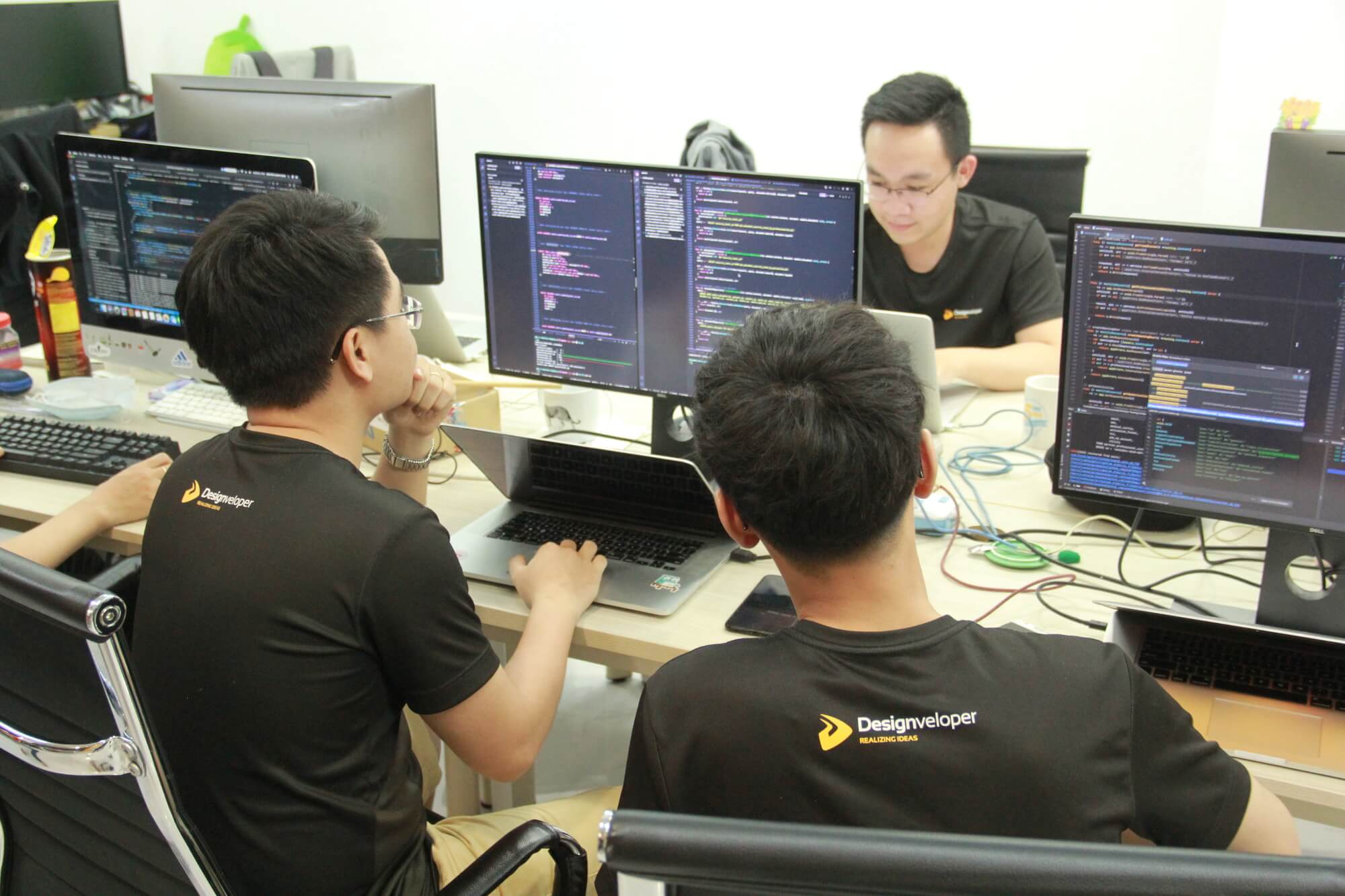
At Designveloper, we see this shift as a practical transformation opportunity. Since we were formed in 2013, we have helped businesses turn ideas into usable digital products through web development, mobile development, UI/UX design, software engineering, cybersecurity consulting, and AI development services. With 100+ projects for clients across 20+ industries and 12 years of expertise, we understand that workforce change only creates value when technology fits real operations, real people, and real business goals.
That is also why our approach goes beyond building tools. We help companies shape digital systems that people can actually use and scale. Our portfolio already reflects that range through projects such as Lumin, Swell & Switchboard, and HANOI ON. For us, the future of work is not about replacing humans with software. It is about helping organizations build smarter human agent collaboration, stronger workflows, and products that keep delivering long after deployment.
Also published on

Share post on










Read more topics








You may also like


Agentic AI Impact on Workforce: How It Reshapes Jobs & Organizations
Agentic AI Impact on Workforce: How It Reshapes Jobs & Organizations Published March 06, 2026
Agentic AI Single vs Multi-Agent Systems: Key Differences
Agentic AI Single vs Multi-Agent Systems: Key Differences Published March 04, 2026
Agentic AI Security: Risks, Core Architecture, Solutions
Agentic AI Security: Risks, Core Architecture, Solutions Published March 03, 2026