
















The 12 Agile Principles And 4 Agile Values Explained For Teams

KEY TAKEAWAYS:
- Agile principles turn Agile from ceremonies into daily habits: deliver value early, welcome change, collaborate closely, and improve continuously.
- The 12 Agile Manifesto principles work with the 4 Agile values to guide project decisions, team behavior, delivery cadence, and stakeholder communication.
- Agile project management works best when teams use small increments, visible progress, customer feedback, and regular reflection instead of relying on static plans.
- Common failures come from resistance to change, weak collaboration, poor planning discipline, and scaling ceremonies without simplifying real dependencies.
- To apply Agile well, teams should start with user needs, define clear acceptance signals, review each cycle, and improve one practical behavior at a time.
Agile principles help project teams deliver value faster, adapt with less waste, and learn while they build. That is why they still matter in Agile project management and Agile software development. The official Agile Manifesto principles define 12 ideas, while the Agile Manifesto defines 4 values. Recent research shows that Agile remains a major way of working. Digital.ai reports that 71% of survey respondents use Agile in their SDLC. PMI also reports a +57% increase in the use of hybrid approaches. Yet adoption alone does not guarantee results. Atlassian found teams waste 25% of their time just searching for answers. So teams need more than ceremonies. They need clear thinking, tight feedback loops, and strong execution.
This guide explains the agile manifesto principles in plain language. It also shows how the agile values shape day-to-day project management, software project management methodologies, and delivery decisions. Each section gives a practical meaning, a simple example, and clear advice. As a result, you can move from knowing Agile terms to using agile principles with intent.
Recommended for you:
- Agile Development Best Practices And Templates
- Scrum Software Development Turns Change Into Working Software
- What Is Scrum? A Simple Guide To The Scrum Framework
The 12 Principles Of The Agile Manifesto In Project Management
1. Principle #1: Customer Satisfaction Through Early And Continuous Delivery
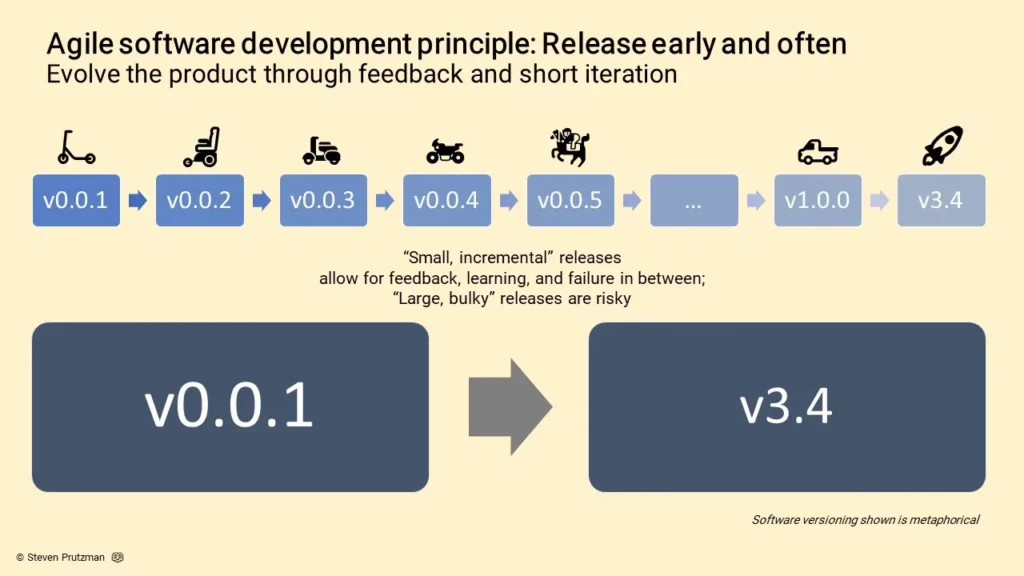
This principle says value should reach the customer early and often. It shifts project management away from “big reveal” thinking. Instead of waiting months to launch everything, the team ships useful parts sooner. That reduces guesswork and creates real feedback.
In practice, this means a project manager uses Agile development release planning to break work into small releases that solve a clear user problem. A fintech team, for example, might release instant spending alerts first, then add budgeting insights later. GOV.UK Service Manual says agile teams should get your service in front of real users as soon as possible. That is the heart of this principle. Deliver something helpful, learn from use, and improve the next release.
2. Principle #2: Welcome Changing Requirements, Even Late In Development
Agile does not treat change as failure. It treats change as new information. Customer needs shift. Markets move. Competitors launch. Regulations change. So strong project management keeps room for learning instead of locking every decision too early.
This does not mean a team says yes to every idea. It means the team reviews change against value, risk, and timing. A good project manager updates the backlog, resets priorities, and protects the team from random scope growth. The goal is controlled adaptation. When teams do this well, change becomes a source of advantage rather than delay.
3. Principle #3: Deliver Working Software Frequently
Frequent delivery keeps progress real. It replaces long status reports with usable output. This matters because software that works teaches more than software that is still “almost done.” It also builds trust with stakeholders.
For project management, this principle supports short iterations, clear sprint goals, and regular demos. A B2B SaaS team might release a basic dashboard in two weeks, refine filters in the next cycle, and add export tools after that. Each increment creates evidence. Each release also makes risk visible sooner. As a result, teams correct direction before a project becomes expensive to fix.
4. Principle #4: Business And Developers Must Work Together Daily
Agile principles depend on shared understanding. When business teams and delivery teams stay apart, handoffs grow, assumptions multiply, and priorities drift. Daily collaboration closes that gap. It keeps product decisions close to technical reality.
This does not require long meetings every day. It requires fast access, clear context, and active decisions. A product owner, designer, engineer, and QA lead should resolve blockers while work is still fresh. That saves time and reduces rework. GitHub found that GitHub found that 47% of respondents in the U.S. and Germany used this extra time for collaboration and system design when AI coding tools saved time. Even with new tools, direct collaboration still creates the alignment that projects need.
5. Principle #5: Build Projects Around Motivated Individuals
Agile assumes people do better work when they have trust, purpose, and support. So the job of project management is not to control every move. The job is to create the conditions for strong work. That includes clear goals, healthy constraints, and quick access to decisions.
Motivated teams usually move faster because they do not wait for constant approval. They take ownership. They raise issues early. They care about the outcome. For example, if a team owns a feature from idea to release, members are more likely to solve edge cases before they become customer problems. Trust does not remove accountability. It strengthens it.
6. Principle #6: Face-To-Face Conversation Is The Most Effective Communication
This principle focuses on speed and clarity. A live conversation reduces delay, clears ambiguity, and lets people respond in real time. That is why Agile values direct communication for hard decisions, unclear requirements, and sensitive trade-offs.
Today, face-to-face can mean in person or live video. The point is not the room. The point is immediate understanding. A short call between a stakeholder and a developer can replace days of scattered messages. Project managers should still document decisions. However, they should use live discussion first when the topic is complex or urgent. That keeps work moving and prevents misunderstanding.
7. Principle #7: Working Software Is The Primary Measure Of Progress
This principle changes what success looks like. Progress is not a large plan, a green timeline, or a stack of documents. Progress is software that users can run, test, and judge. That focus keeps teams honest.
In project management, this means reviews should center on outcomes. Show the feature. Run the workflow. Validate the acceptance criteria. Modern teams often support this mindset with DORA tracks five software delivery performance metrics such as deployment frequency and change lead time. Those metrics help teams see whether value is moving safely and steadily. Still, the principle stays simple: if the software does not work, the project is not as far along as the slides say.
8. Principle #8: Agile Processes Promote Sustainable Development
Agile is not about speed at any cost. It is about steady delivery over time. When teams sprint forever, quality drops, morale falls, and defects rise. Then progress slows. Sustainable pace protects long-term performance.
A project manager applies this principle by limiting work in progress, planning realistic iterations, and watching team load. For example, if every sprint ends with weekend work, the plan is weak even if the release looks on track. Healthy delivery keeps energy stable. It also gives teams space to think, review, and improve. Over time, that produces better outcomes than repeated crunch.
9. Principle #9: Continuous Attention To Technical Excellence And Good Design
Agile teams do not earn speed by ignoring quality. They earn speed by building quality into the work. Clean code, strong architecture, test automation, and thoughtful design reduce friction later. So technical excellence is not extra work. It is delivery work.
This matters even more at scale. DORA’s research reflects input from more than 39,000 professionals and again stresses user-centricity and stable priorities for strong outcomes. Teams need solid foundations to support that stability. In practice, a team may pause feature work to refactor a fragile component, improve tests, or simplify an integration. That short-term discipline often prevents long-term slowdown.
10. Principle #10: Simplicity Is Essential
Simplicity means doing only the work that matters now. It is the art of maximizing the amount of work not done. This principle protects teams from bloated scope, weak features, and unnecessary complexity.
Project managers apply simplicity by asking hard questions. Does this feature solve a current user need? Can we release a smaller version first? What can wait? A smart team often wins by shipping the simplest useful change. For example, a portal may need a searchable dashboard now, not a full personalization engine. Simplicity improves focus. It also makes systems easier to build, test, and maintain.
11. Principle #11: The Best Solutions Emerge From Self-Organizing Teams
Agile teams work best when the people closest to the problem can shape the solution. That does not remove leadership. It changes leadership. Leaders set direction, boundaries, and desired outcomes. The team decides how to reach them.
This creates better solutions because engineers, designers, analysts, and QA specialists each see different risks. When they work together, they often find a cleaner path than a top-down plan would. A project manager should guide priorities and remove blockers, not dictate every task. Self-organizing teams respond faster because they do not need approval for every small decision.
12. Principle #12: Regular Reflection Improves Team Effectiveness
Agile principles end with learning. Teams must stop, inspect, and adapt. Otherwise, the same friction returns sprint after sprint. Reflection turns experience into better process.
Retrospectives are the common tool here. A good retrospective asks what helped, what hurt, and what the team will change next. Then it turns one or two ideas into action. For example, a team may decide to refine stories earlier, cut meeting time, or tighten review standards. Improvement does not need to be dramatic. Small changes, repeated often, create strong delivery systems over time.
What Are The 4 Agile Values?
The agile values sit above the 12 agile principles. The values explain what matters most. The principles show how teams act on those beliefs. Together, they shape daily decisions in project management.
| Agile Value | What It Favors | What Teams Should Still Keep |
|---|---|---|
| Individuals and interactions | Fast decisions and shared understanding | Useful tools and lightweight process |
| Working software | Real outcomes over paperwork | Enough documentation to support delivery |
| Customer collaboration | Ongoing feedback and joint problem solving | Clear commercial terms and boundaries |
| Responding to change | Adaptation based on learning | Plans that guide work without freezing it |
1. Individuals And Interactions Over Processes And Tools
This value puts people first. Good tools help. Good process helps too. But people create understanding, solve conflict, and make trade-offs. So Agile gives more weight to human communication than to rigid workflow.
For project management, this means the team should not hide behind ticket states or templates. If priorities are unclear, talk. If a story is weak, refine it together. If two teams conflict, solve it directly. Process should support work, not dominate it. When leaders forget this, teams spend more time managing the system than serving the customer.
2. Working Software Over Comprehensive Documentation
This value does not reject documentation. It rejects heavy documentation that delays learning and adds little value. Teams still need notes, architecture records, acceptance criteria, and release details. However, those artifacts should support delivery instead of replacing it.
A useful rule is simple. Document what helps people build, test, run, and maintain the product. Skip the rest. A team does not need a forty-page spec to validate one small workflow. A demo, a story map, and clear acceptance criteria may be enough. Working software reveals truth faster than theory does.
3. Customer Collaboration Over Contract Negotiation
This value says strong results come from shared learning, not from strict distance. A contract can define scope, timing, and obligations. Yet customer needs often evolve after work starts. So Agile favors ongoing collaboration that helps both sides reach a better outcome.
In project management, this means frequent reviews, honest trade-off discussions, and access to decision-makers. A vendor and client may agree to deliver the core onboarding flow first, then re-rank lower-value items after feedback. That kind of collaboration protects time and budget better than pretending the first plan was perfect. Trust grows when both sides solve problems together.
4. Responding To Change Over Following A Plan
This value explains a common Agile misunderstanding. Agile teams do plan. They just do not worship the first version of the plan. They treat planning as a living activity. That makes the team more responsive and more realistic.
The original Agile Manifesto history makes this clear: Agile Manifesto history makes the point directly: “We plan, but recognize the limits of planning in a turbulent environment.” That sentence still matters in project management. Plans set direction. Feedback refines it. Teams that hold both ideas at once usually perform better than teams that choose one extreme.
Further reading:
- Agile Vs Scrum: What’s the Difference and When to Use Each?
- Agile Vs. Waterfall Vs. Scrum Vs. Kanban: Key Differences
- Agile Vs DevOps: Key Differences And How Do They Interrelate
How To Apply Agile Principles In Project Management
1. Start With Customer Needs
Start every project by defining the user problem, the business goal, and the agile acceptance criteria that show success. This sounds basic, but many teams skip it. Then they build features without a clear reason. Agile principles work best when value is visible from the start.
A simple approach helps:
- Write user stories around real outcomes.
- Define what success looks like before work starts.
- Rank backlog items by value, risk, and urgency.
When customer needs guide the backlog, scope decisions become easier. Teams can then protect the work that matters most.
2. Deliver In Small Increments
Small increments reduce risk. They also speed up learning. Instead of trying to deliver a full platform at once, deliver the next useful slice. Then test it, measure it, and improve it. This is one of the most practical ways to apply agile manifesto principles.
Small increments work because they make trade-offs visible. If a release slips, only a small package moves. If feedback changes direction, the team adjusts before large waste builds up. A project manager can support this by defining smaller stories, smaller releases, and smaller approval cycles.
3. Encourage Team Collaboration
Agile project management is a team sport. Strong collaboration keeps context close to the work. It also helps teams solve problems before they become blockers. So leaders should design communication, not just hope for it.
That means daily syncs with purpose, open backlog refinement, shared demos, and clear ownership across product, design, engineering, and QA. It also means fewer silos. When people see the same goals and the same evidence, they make better choices. Collaboration should feel normal, not exceptional.
4. Review And Improve Regularly
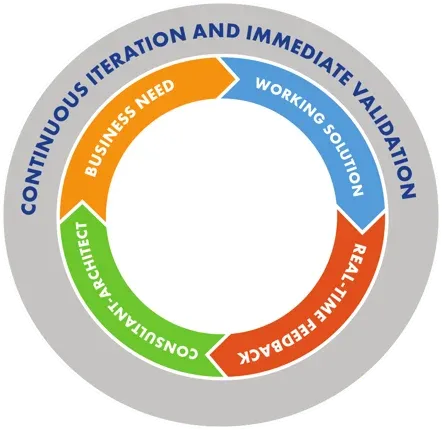
Agile principles only work when teams inspect their results. So every iteration should end with review. What did the team ship? What did users do? Where did work slow down? What should change next?
Use a simple cadence. Run demos to review the product. Run retrospectives to review the process and connect improvements to the quality assurance process. Then choose one improvement to test in the next cycle. This keeps change manageable. It also turns Agile from a set of meetings into a learning system.
Related reading:
- 10 Project Management Tools For Productive Team Work
- What Is Software Development and the Software Development Process?
- Custom Software Development: How It Can Drive Your Business Growth
Common Challenges When Applying Agile Principles
1. Resistance To Change
Many Agile efforts fail before delivery practices mature because Agile vs traditional project management is also a behavior change. The main issue is not usually the sprint board. It is behavior. People may prefer old approval chains, fixed plans, or department boundaries because those systems feel familiar.
Digital.ai says organizational resistance to change and insufficient understanding amongst leadership are the two main reasons respondents claim Agile is not scaling. That finding shows why training alone is not enough. Leaders must model the change. They need to reward learning, shorten decisions, and support cross-functional work.
2. Lack Of Collaboration
Agile breaks down when teams work in silos. Product talks to business. Engineering talks to engineering. QA joins late. Operations sits downstream. That structure slows learning and creates rework. Agile principles need shared ownership instead.
When collaboration is weak, even simple decisions take too long. Backlog items become vague. Dependencies grow. Handoffs hide defects. Teams can fix this by creating joint planning, shared demos, and clear working agreements. Better collaboration is often the fastest improvement a project can make.
3. Misunderstanding Agile As “No Planning”
This mistake appears often. Some teams hear “respond to change” and assume plans do not matter. Then work becomes reactive. Priorities shift without discipline. Delivery becomes noisy. That is not Agile. That is drift.
Agile still needs roadmaps, release goals, story refinement, risk review, and capacity planning. The difference is that plans stay flexible. They guide work without pretending the future is fixed. Good Agile planning creates direction and room to learn at the same time.
4. Scaling Agile In Large Organizations
Scaling is hard because complexity grows faster than ceremony can solve. More teams mean more dependencies, approvals, systems, and stakeholder needs. So large organizations often struggle to keep agile principles alive while trying to coordinate at scale.
Digital.ai’s Agile at Scale analysis notes that only 11% of respondents are “very satisfied” with Agile’s effectiveness. Large organizations improve this by simplifying governance, aligning around outcomes, reducing dependency chains, and giving teams clearer ownership through better project management systems. The same PMI report mentioned earlier also shows that fit-for-purpose delivery matters more than forcing one method everywhere. In other words, scaling Agile is less about adding rituals and more about removing friction.
Explore more:
- Agile Software Development Life Cycle Guide
- What Is An Agile Framework? Definition, Types And Examples
- Agile Methodology Sample: Real Examples & Success Stories

FAQs About Agile Principles
1. What Is The Difference Between Agile Values And Agile Principles?
The agile values are the foundation. They explain what teams should value most when trade-offs appear. The agile principles are the practical rules that turn those values into daily behavior. So values guide judgment, while principles guide action.
For example, “customer collaboration over contract negotiation” is a value. “Welcome changing requirements” is a principle that helps teams live that value. Both matter. Yet they operate at different levels.
2. Which Agile Principle Is The Most Important?
There is no official ranking. Still, many teams treat customer value as the anchor. That is why Principle #1 often stands out. If a team satisfies customers through early and continuous delivery, many other good behaviors follow. Frequent releases, collaboration, simplicity, and reflection all become easier to justify.
That said, the best answer depends on the problem. A burned-out team may need sustainable pace most. A slow enterprise team may need simplicity and self-organization most. Agile principles work as a system, not as isolated slogans.
3. Can Agile Principles Work For Non-Software Projects?
Yes. Agile started in software, but its logic fits any work with uncertainty, feedback, and evolving needs. Marketing campaigns, service design, product discovery, internal operations, and training programs can all use agile principles.
The key is to apply the ideas, not copy software rituals without thought. For a hiring project, that may mean short experiments with outreach messages. For a training rollout, it may mean pilot sessions before full launch. The principle stays the same: learn early, adapt fast, and deliver useful outcomes in small steps.
4. How Do Agile Principles Help Project Management?
Agile principles help project management by making value, risk, and learning visible earlier. They shorten feedback loops. They improve stakeholder alignment. They reduce waste from late surprises. They also create a better balance between planning and adaptation.
Most of all, agile principles move project management away from reporting progress and toward producing progress. That shift matters. When teams focus on customer outcomes, working increments, and regular improvement, project control becomes stronger because it is based on evidence, not assumption.
Agile principles are not a ritual checklist. They are a decision framework. They help teams choose customer value over internal comfort, evidence over assumption, and learning over delay. That is why the 12 agile principles and the 4 agile values still matter in modern project management.
If a team wants better results, it should not start by adding more ceremonies. It should start by asking a simpler question: which agile principles are missing from the way this project really works today? The answer usually reveals the next improvement. Then the team can act, review, and improve again.
Conclusion
Agile principles still matter because they turn project management into a faster and more practical system. They help teams focus on real customer value, not just internal activity. They also help teams adapt without losing direction. When a team delivers in small steps, works closely with stakeholders, and reviews progress often, it makes better decisions with less waste.
At Designveloper, we use that mindset in real product delivery. Since we were founded in 2013, we have kept building with the same focus on clarity, collaboration, and continuous improvement. Today, our work is backed by 13 years of expertise across products such as Lumin, ODC, Joyn’it, Walrus Education, and Bonux. We also support businesses through AI-Powered Business Software, Custom Software Development, Web App Development, Mobile App Development, and VOIP App Development. Most importantly, that experience comes from shipping under real business pressure, with 100+ successful projects for over 50 clients worldwide. That is why we do not see agile principles as theory. We see them as the working rules behind products that launch faster, scale better, and stay useful longer.
For teams that need a reliable software partner in Vietnam, we bring both strategic thinking and hands-on delivery. We help turn ideas into working products, improve existing systems, and build digital solutions that match real business goals. Contact us to discuss your next web, mobile, AI, or custom software project.
Also published on

Share post on










Related Articles



Cloud Application Development: Architecture, Process, And Cost
Cloud Application Development: Architecture, Process, And Cost Published September 25, 2026
Android App Development: Stack, Process, Cost, And Best Practices
Android App Development: Stack, Process, Cost, And Best Practices Published September 17, 2026
How Gitignore Works: Rules, Patterns, Examples, And Debugging Tips
How Gitignore Works: Rules, Patterns, Examples, And Debugging Tips Published August 05, 2026