














Agile Project Management: Plan, Adapt, And Deliver Better In 2026

KEY TAKEAWAYS:
- An agile project plan gives teams direction while leaving room to adapt scope, priorities, and delivery details as real feedback arrives.
- Agile project management is iterative planning: teams define goals, prioritize backlog items, plan short cycles, inspect results, and improve continuously.
- The main benefits are adaptability, quality, customer satisfaction, continuous improvement, and better communication when the team keeps work visible and decisions evidence-based.
- A practical Agile plan needs vision, roadmap, product backlog, sprint backlog, roles, cadence, metrics, and risk controls rather than a rigid upfront schedule.
- Successful Agile planning depends on clear communication, small iterations, useful tools, continuous feedback, and value-focused delivery, not ceremonies alone.
Agile project management works best when teams face change, uncertainty, and fast feedback cycles in Agile software development. It does not remove planning. Instead, it turns planning into a living process. That is why an agile project plan is useful as part of an agile framework. It gives direction without locking the team into assumptions that may be wrong two weeks later.
This approach matters because many projects now move in unstable environments. Customer needs shift. Priorities change. New information appears mid-build. A rigid plan often breaks under that pressure. A flexible plan does not. So this guide explains what Agile project management is, where it came from, what an agile project management plan looks like, how to build one, and which practices help teams succeed.
Recommended for you:
- Agile Vs Traditional Project Management: Key Points
- Agile Vs DevOps: Key Differences And How Do They Interrelate
- The 12 Agile Principles and 4 Agile Values of the Agile Manifesto
What Is Agile Project Management (APM)?
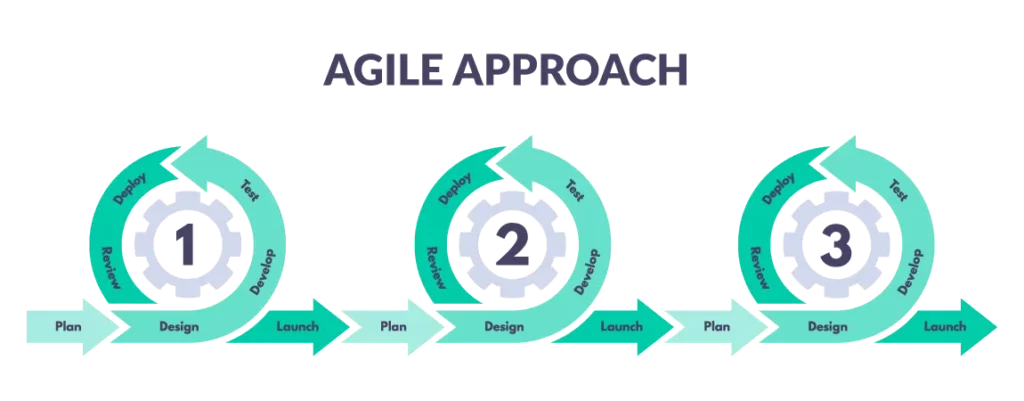
Agile project management is a way to deliver work in short cycles, learn from feedback, and adapt before problems become expensive. It is iterative. It is collaborative. Most of all, it is value-focused. Teams do not wait until the very end to discover whether they built the right thing. They test direction as they go.
Its mindset comes directly from the Agile Manifesto, which values individuals and interactions over processes and tools, working software over comprehensive documentation, customer collaboration over contract negotiation, and responding to change over following a plan. That last value is especially important. It does not mean planning is bad. It means the plan must serve reality, not fight it.
In practice, Agile project management breaks a large project into smaller pieces. Those pieces move through planning, execution, review, and adjustment again and again. Each cycle gives the team more evidence. As a result, decisions improve over time. Risks also surface earlier.
A strong agile project plan therefore looks different from a traditional master schedule. It still defines goals, scope direction, roles, priorities, and success measures. However, it does not pretend every detail is known upfront. It leaves room for discovery. That makes it useful in product development, software delivery, internal transformation, and any work where learning changes the next step.
This is also why many teams prefer the project management agile methodology when requirements are likely to evolve. Instead of treating change as rework, Agile treats change as input. That shift sounds simple, yet it changes how teams plan, communicate, and deliver.
Further reading:
- What Is SCRUM And How Does It Work?
- Scrum Software Development Turns Change Into Working Software
- Story Points in Agile and How to Estimate Them Effectively
The History Of Agile Project Management
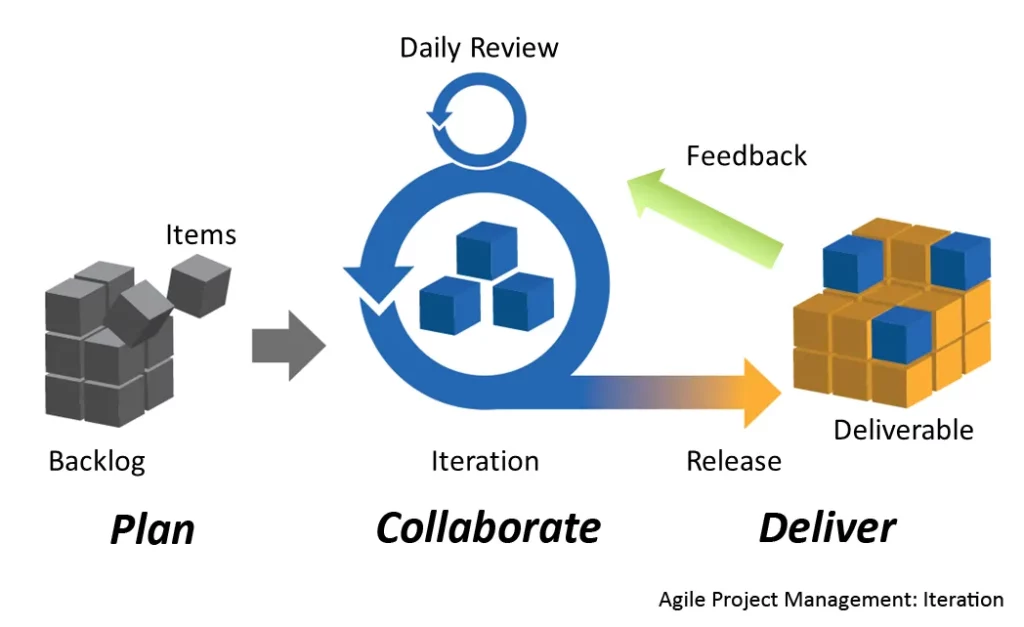
Agile project management did not appear overnight. Its roots go back to Lean thinking and flow-based production. Toyota explains that the Toyota Production System has roots tracing back to Sakichi Toyoda’s automatic loom and later evolved around Just-in-Time and the elimination of waste. That idea shaped later delivery methods that favor smaller batches, faster feedback, and less wasted effort.
Software teams then pushed those ideas further. Scrum became one of the most influential frameworks in that shift. The Scrum Guide records that Scrum was first co-presented at the OOPSLA Conference in 1995. That mattered because it gave teams a clearer structure for iterative planning, cross-functional work, and rapid inspection.
The real turning point came in 2001. The official Agile history states that February 11-13, 2001, seventeen people met at Snowbird in Utah and produced the Agile Software Development Manifesto. That event did not invent iterative work from nothing. However, it gave the movement a shared language and a shared set of values.
After that, Agile spread far beyond software. The PMI and Agile Alliance Agile Practice Guide notes that agile has expanded into manufacturing, education, healthcare, and other industries. That expansion makes sense. Many industries now deal with uncertainty, fast decision cycles, and growing pressure to deliver value sooner.
Today, Agile project management is no longer a niche software method. It is a broader planning and delivery model. Teams use it when they need speed, visibility, and a better way to learn while executing. That is why the history still matters. It shows that Agile is not about ignoring discipline. It is about applying discipline where uncertainty is high.
Related reading:
- Agile Vs. Waterfall Vs. Scrum Vs. Kanban: Key Differences
- 20 Software Project Management Methodologies for Software Development
- Agile Vs. Lean Project Management: Key Differences & Use Cases
What Is Agile Project Management Plan?
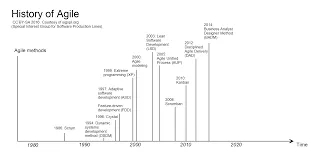
An agile project management plan is a lightweight, adaptive system for guiding delivery. It connects strategy to execution, but it does not freeze every detail on day one. In other words, it is the operating logic behind the work.
A traditional project plan often tries to define all scope, dates, dependencies, and tasks upfront. By contrast, an agile project plan sets the direction first and then refines the details in rolling cycles. It answers a smaller set of high-value questions. What problem is the team solving? Which outcomes matter most? What work comes next? Who owns decisions? How will progress be checked? When will the team review and adapt?
This kind of plan usually contains a product or project vision, a roadmap, a backlog, sprint or iteration goals, team roles, meeting cadence, and reporting rules. It is less about predicting every move and more about creating a reliable decision framework. That is why a good plan feels clear without feeling rigid.
For example, a team building a customer portal may know the first release must support login, profile updates, and help requests. That is enough to start. They do not need every future workflow fully detailed before sprint one. As feedback arrives, the backlog changes. The roadmap shifts. The plan stays valid because it was designed to evolve.
So, the purpose of an Agile plan is simple. It helps teams move with intent. It prevents chaos without creating bureaucracy. When done well, it keeps short-term work aligned with long-term value.
5 Benefits Of Agile Project Management Planning
Agile planning delivers real benefits when it is used well. Recent data still supports that point. In the 17th State of Agile report, 71% of respondents said they use Agile in the SDLC, 42% said their organizations use a hybrid model, 63% said team-level users follow Scrum, and among people satisfied with Agile, almost 60% saw better collaboration, 57% saw better alignment to business needs, and a quarter saw better quality software delivered. Those outcomes map directly to how an Agile plan is built and used.
1. Adaptability
Adaptability is the first major benefit because change is normal in modern projects. Markets shift. Stakeholders rethink priorities. Users reveal new pain points. A fixed plan struggles in that environment. Agile planning does not.
An Agile plan creates structured flexibility. The team keeps the broader goal steady, but it reprioritizes the work that leads there. That makes change visible and manageable. Instead of rewriting the whole project every time something moves, the team updates the backlog, reviews the roadmap, and adjusts the next sprint.
Consider a product team that planned a loyalty feature for the next sprint. Then customer support reports a payment error affecting live users. In a rigid process, that surprise can derail the schedule. In Agile, the team can re-rank the backlog, protect the most critical outcome, and redirect effort with less friction. The plan bends without breaking.
2. High-Quality Final Products
Agile planning improves quality because it reduces the size of what teams build at one time. Smaller batches are easier to review, test, and improve. Problems surface earlier. So quality becomes part of the process, not just a final checkpoint.
This matters because large handoffs often hide defects. One long delivery cycle can push weak assumptions deep into the build. Agile avoids that trap. Teams define acceptance criteria early, review increments often, and refine work before flaws spread.
A good Agile plan also protects quality through focus. Sprint goals prevent teams from scattering across too many priorities. A clear Definition of Done helps teams avoid shipping work that is only half ready. Over time, that discipline produces stronger final outcomes.
3. Increased Customer Satisfaction
Customer satisfaction improves when teams show progress early and invite feedback often. Agile planning supports that habit from the start. It builds review points into the delivery rhythm. That keeps the customer close to the work instead of far from it.
This closeness changes the conversation. Stakeholders do not need to wait until the end to say the result feels wrong. They can react after each increment. That reduces expensive misunderstandings. It also builds trust because progress stays visible.
For example, a SaaS team may release a simpler dashboard first, collect feedback from real users, and then change the next sprint around navigation pain points. That loop feels slower to people who love large upfront plans. Yet it often leads to a better product because the team learns while building.
4. Continuous Improvement
Continuous improvement is built into Agile planning. Teams do not only review the product. They also review how they work. That habit is powerful because process issues rarely fix themselves.
Retrospectives help teams inspect blockers, handoff delays, unclear ownership, or weak estimation habits. Then the team changes one or two things in the next cycle. Those small adjustments compound. Over time, the delivery system gets stronger.
The performance upside can be large. McKinsey found that highly successful agile transformations delivered around 30 percent gains in efficiency, customer satisfaction, employee engagement, and operational performance, made organizations five to ten times faster, and gave them a three times higher chance of becoming top-quartile performers. That kind of result does not come from ceremonies alone. It comes from using the planning cycle to keep learning.
5. Improved and Streamlined Communication
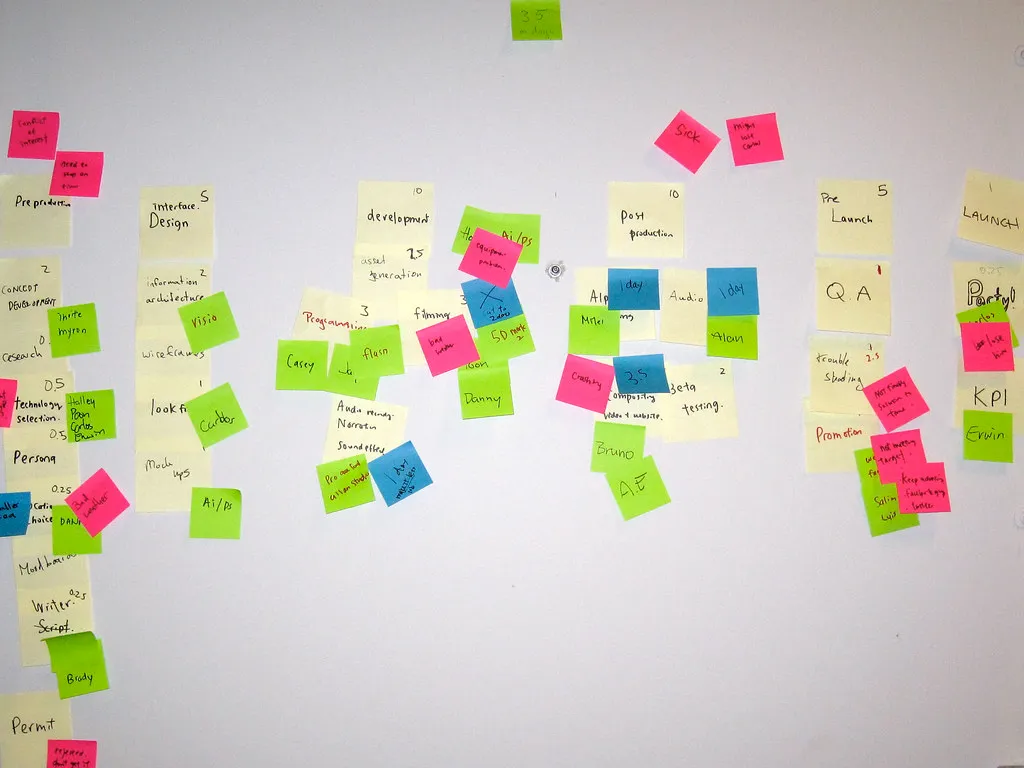
Agile planning improves communication because it gives teams shared artifacts and a regular rhythm. Everyone can see the roadmap, the backlog, the sprint goal, and the current blockers. That reduces hidden work and conflicting assumptions.
Communication also becomes shorter and more useful. Daily check-ins focus on progress and impediments. Sprint reviews focus on outcomes and feedback. Retrospectives focus on improvement. Each conversation has a purpose.
That structure matters for cross-functional teams. Designers, engineers, QA specialists, analysts, and stakeholders do not always think alike. A visible plan creates common ground. It turns planning into a team sport instead of a private management activity.
Key Components Of Agile Project Management Planning
A good Agile plan has a small number of core parts across the software development life cycle. Each part does a specific job. Together, they create clarity without unnecessary paperwork.
Vision & Product Roadmap: The plan starts with direction. Atlassian defines a roadmap as a shared source of truth that outlines the vision, direction, priorities, and progress of a product over time. That is why the roadmap sits above sprint-level work. It explains why the team is building, what themes matter most, and which milestones come next.
Product Backlog: The backlog turns strategy into prioritized work. Atlassian describes it as a prioritized list of work for the development team that is derived from the product roadmap and its requirements. This is where features, fixes, technical debt, research, and user requests live. The Product Owner keeps it ordered so the team always knows what matters now.
Sprint Backlog: The sprint backlog narrows focus. Atlassian defines it as a prioritized list of tasks and user stories that a software development team commits to complete within a single sprint. It is the short-term execution plan. If the product backlog is the full menu, the sprint backlog is this week’s order.
Roles & Responsibilities: Ownership must be explicit. The Scrum Guide defines a Scrum Team as one Scrum Master, one Product Owner, and Developers. Even outside strict Scrum, the principle still holds. Someone must own value decisions, remove delivery friction. Someone must do the work. When those boundaries blur, planning gets noisy.
Cadence/Ceremonies: Agile planning only works when the team has a regular rhythm. Atlassian explains that the four main Scrum ceremonies are sprint planning, daily stand-up, sprint review, and sprint retrospective. These meetings are not filler. They are the control points that keep work aligned, visible, and adaptable.
These components support each other. The roadmap sets direction. The product backlog sets priority. The sprint backlog sets near-term focus. Roles create decision speed. Ceremonies create feedback. Remove one of them, and the plan gets weaker.
Continue reading:
- What Is An Agile Team? Structure, Roles & Responsibilities
- 10 Agile Development Best Practices And Templates
- Custom Software Development: How It Can Drive Your Business Growth
How To Create An Agile Project Management Plan?
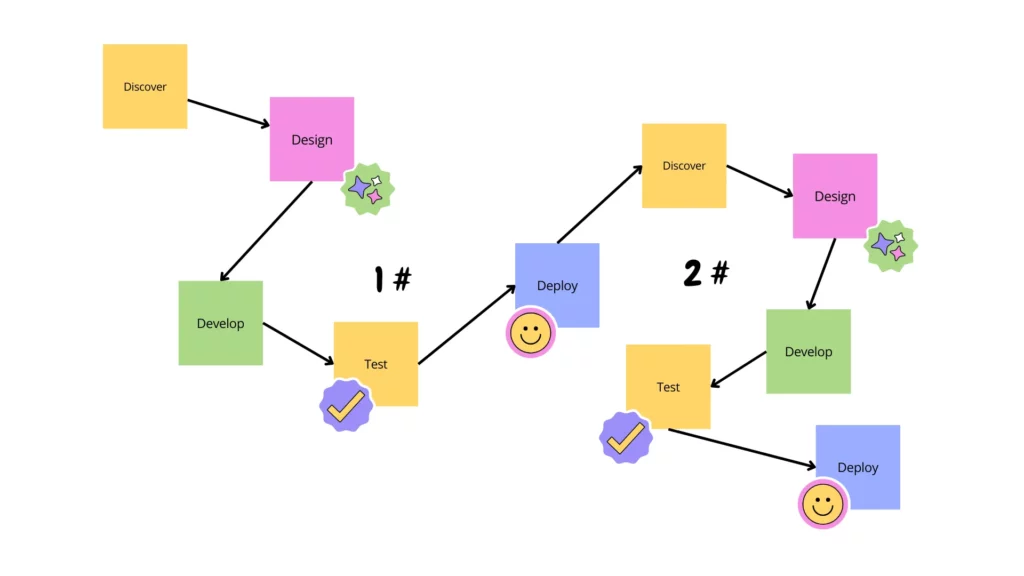
Creating an Agile plan is simpler than many teams expect. The goal is not to write a huge document. The goal is to create enough structure for smart execution and fast adjustment.
Define project goals and deliverables. Start with outcomes, not activities. The team should know the business problem, the target user, the expected value, and the core deliverables for the next release or phase. Goals should be specific enough to guide trade-offs. “Improve onboarding conversion” is stronger than “redesign onboarding.”
Identify stakeholders and team roles. Next, define who influences the work and who makes final calls. This step prevents slow decisions later. Stakeholders may include sponsors, end users, support teams, legal reviewers, and operational owners. The team should also clarify who owns the backlog, who facilitates the process, and who delivers the increment.
Create and prioritize the product backlog. Break the work into user stories, tasks, bugs, spikes, and technical improvements. Then rank them by value, urgency, dependency, and learning impact. The backlog should stay lean enough to manage and detailed enough for the next cycle. Teams often fail here by writing either too little or far too much.
Plan sprints and set timelines. Once priority is clear, select the work that fits the next sprint or iteration. The team should choose a realistic amount based on capacity, known blockers, and the sprint goal. Then map larger themes across a flexible roadmap. This is where the agile project plan becomes operational. It translates broad direction into near-term commitments.
Establish monitoring and reporting mechanisms. Good Agile plans make progress visible. A burndown chart shows the amount of work completed and the total work remaining. A velocity chart displays the average amount of work a scrum team completes during a sprint. A cumulative flow diagram shows work-item status over time and helps teams identify bottlenecks. Teams do not need every metric. They do need a few that support decisions.
Review, adapt, and continuously improve. Finally, treat the plan as a living system. At the end of each cycle, review delivered work, gather stakeholder feedback, update the backlog, and run a retrospective. Then adjust the next sprint. This step is where many teams either become truly Agile or simply stay busy. The difference is whether learning changes the plan.
A practical example makes this clearer. Imagine a company launching a self-service HR portal. The first version of the plan may prioritize leave requests, employee profile edits, and policy search. After sprint one, users say search matters more than profile editing. The backlog changes. The roadmap updates. The team stays aligned because the plan was built to absorb evidence, not resist it.
Best Practices For Successful Agile Project Management
1. Prioritize Clear Communication
Agile fails quickly when communication becomes vague, especially without clear Agile acceptance criteria. So teams should define simple rules for how they share updates, escalate blockers, and confirm decisions. Short, frequent communication works better than long status reports. However, clarity matters more than frequency. A daily stand-up with no real signal helps no one.
It also helps to keep planning artifacts visible. When the roadmap, backlog, sprint goal, and current blockers are easy to find, fewer discussions get lost in chat threads or side meetings.
2. Break Work Into Manageable Iterations
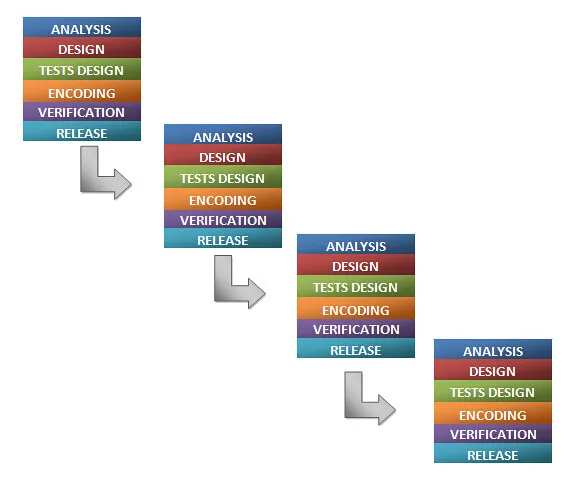
Small iterations are not a formality in the software development process. They are a risk-control tool. Smaller pieces are easier to estimate, test, review, and change. They also create earlier proof of progress.
Teams should therefore avoid loading a sprint with oversized tasks. If one item is too large to understand or verify, it is too large for effective Agile planning. Breaking work down forces better thinking and keeps momentum steady.
3. Use Agile Project Management Tools
Tools do not make a team agile, but the right toolset reduces friction. Teams need a system that can show backlog order, sprint status, ownership, blockers, and basic reporting in one place. Visibility matters more than feature overload.
The best tool is usually the one the team will actually maintain. A perfect board that nobody updates is worse than a simpler board that stays current. Therefore, teams should choose tools that match their maturity and workflow, then keep usage rules simple.
4. Encourage Continuous Feedback
Feedback should not wait until launch. Teams need it during design, during development, during review, and after release. Internal feedback also matters. Delivery issues often show up before product issues do.
This is why Agile planning works best when feedback is expected, not feared. Teams that normalize frequent input usually adapt faster and defend weak assumptions less.
5. Focus On Delivering Value
Agile teams do not win by completing the most tickets. They win by delivering the most useful outcomes. That is an important difference. A full sprint can still produce low-value work if the backlog was ordered poorly.
Every sprint should therefore answer one question in a quality assurance process: what value moved closer to the customer, the user, or the business? When that question guides backlog priority, the plan stays connected to purpose. When it does not, Agile becomes busywork.
FAQs About Agile Project Management

1. What Are The 5 Phases Of Agile Project Management?
Atlassian states that the 5 phases of Agile project management are Envision, Speculate, Explore, Adapt, and Close. These phases are lighter than traditional project stages, but they are still useful. Envision defines purpose. Speculate turns that purpose into a flexible plan. Explore delivers increments. Adapt uses feedback to improve both product and process. Close wraps up learning, handoff, and next-step decisions.
Not every team labels work this way every day. Still, the sequence is helpful because it shows that Agile has structure. It simply uses a structure that expects learning.
2. What Is the Difference Between Agile and Traditional Project Management?
In simple terms, Agile is iterative and flexible, while waterfall is linear and sequential. Traditional project management usually tries to define scope in detail first and then control delivery against that baseline. Agile starts with direction, but it expects scope detail to evolve through shorter feedback cycles.
That does not make one method universally better. Traditional methods work well when requirements are stable, compliance is strict, and change is limited. Agile works better when teams need faster feedback, more customer input, and room to re-rank work as new information appears.
3. How Much Does An Agile Project Management Certification Cost?
There is no single price because certification paths differ by provider and format. Current examples include $200 USD per attempt for Scrum.org’s PSM I assessment, $250-$2,495 USD for the Scrum Alliance Certified ScrumMaster course, and £297.00 as the standard fee listed for an AgilePM v3 Foundation exam bundle in APMG’s store.
So, the real answer is range, not one number. Exam-only routes are cheaper. Instructor-led training costs more. Renewal rules also vary, so teams should compare the full path, not just the first payment.
4. What Are Common Methodologies Of Agile Project Management?
Common methodologies include Scrum, Kanban, Lean, DSDM, XP, and hybrids such as Scrumban. APM describes Agile as a family of methods where requirements and solutions evolve iteratively, and its resources point to Scrum, Lean, DSDM, eXtreme Programming (XP), and Kanban as core approaches teams encounter often.
Each method solves a slightly different planning problem. Scrum is strong for structured iteration. Kanban is strong for flow and work-in-progress control. Lean focuses on waste reduction and value. XP is strong on engineering discipline. Many real teams mix ideas from several methods instead of following one playbook in a pure form.
Agile project management is not about abandoning discipline. It is about using the right kind of discipline for uncertain work. A useful agile project plan stays light, visible, and adaptable. It links vision to backlog, backlog to sprint goals, and sprint results back to learning.
That is why Agile remains relevant. It helps teams plan without pretending they know everything upfront. It also helps them deliver value sooner, communicate better, and improve as they go. When teams treat planning as a living system instead of a frozen document, Agile stops being a buzzword and starts becoming a reliable way to ship better results.
Conclusion
Agile project management works best when planning stays flexible, visible, and tied to business value. That is exactly how we approach delivery at Designveloper. As a software development company, we know that a strong agile project plan should guide execution without slowing teams down. We use that mindset across 100+ projects for clients across 20+ industries. We also support that work with web app development, mobile app development, software development, AI development services, cyber security consulting, UI/UX, and VoIP app development. So, when clients need a plan that can adapt to change and still protect quality, we know how to build it.
Our experience is not just broad. It is practical. We have helped shape products such as Lumin, a document platform for viewing, editing, sharing, and signing PDFs, Swell & Switchboard, a business management platform for the solar industry, and Walrus, an education platform built with React, React Native, and Node.js. We have also delivered healthcare solutions like ODC, a comprehensive healthcare web platform for a European client. These projects show how we turn Agile thinking into real products that scale, solve business problems, and create measurable value. For us, Agile is not only a method. It is how we help companies move faster, make better decisions, and launch software with confidence.
Also published on

Share post on










Related Articles



Android App Development: Stack, Process, Cost, And Best Practices
Android App Development: Stack, Process, Cost, And Best Practices Published September 17, 2026
Cloud Application Development: Architecture, Process, And Cost
Cloud Application Development: Architecture, Process, And Cost Published September 14, 2026
How Gitignore Works: Rules, Patterns, Examples, And Debugging Tips
How Gitignore Works: Rules, Patterns, Examples, And Debugging Tips Published August 05, 2026