















What Is SCRUM And How Does It Work?

To develop any software effectively, having a talented team and excellent tools is not sufficient. Beyond these factors, you need a well-structured development process (or methodology) that aligns with your business. Agile is one of the most popular methodologies. It includes various frameworks, typically SCRUM, our main discussion topic today. So, what is SCRUM and how does it work?
In this article, we’ll elaborate on the basics about SCRUM. This knowledge is crucial for your team to understand this framework and apply it to your work. Now, let’s begin!
What is SCRUM?
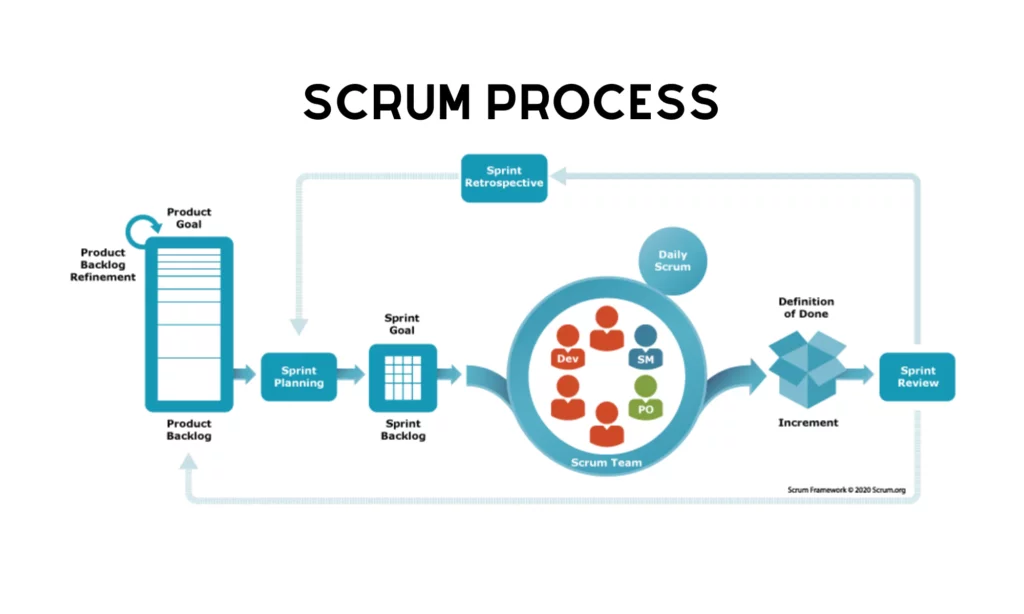
SCRUM is a common Agile framework that allows you to deliver a high-performing, scalable product in time and within budget.
So, how can SCRUM do this? Briefly speaking, SCRUM divides your development process into smaller, manageable tasks that would be completed in a certain timeframe (often 1-4 weeks). This timeframe is known as a “sprint”. These tasks focus on the most critical features of the product. Upon feedback, you continue to upgrade the product to meet the ever-changing demands of end-users. This allows you to create the product that not only has essential functions but also is flexible to market shifts.
Why Should You Use SCRUM? – Designveloper’s Insights
This approach removes the drawbacks of traditional methods, as illustrated by our recent experience in rebranding the entire set of static web pages for the Lumin website. Our team, Growth Team of Lumin, along with the New Zealand team, faced the challenge of rebranding nearly 50 web pages.
Initially, we didn’t apply SCRUM. Instead, we designed, developed, and tested each page sequentially and only released them all at once when completed. However, this approach had many drawbacks:
- We had to manage a large number of documents and designs simultaneously. Sometimes, when the client updated the design. But if our team was unaware, so it led to missed changes. This resulted in incomplete development, requiring rework based on client feedback.
- Managing multiple tasks at once without fully completing any made it easy to overlook details. This leads to incomplete updates.
- Further, while working on the 20th page, the client provided feedback on the 1st page. This required us to review and modify documents, designs, and the development environment. This process consumed a significant amount of time on rework.
However, when applying the SCRUM framework afterwards, we managed to minimize these issues. In particular, we broken the tasks into manageable chunks. This reduced the need for extensive rework and ensured that the product evolved in line with client feedback.
With its immense benefits, the global market of SCRUM software is forecast to expand at an annual growth rate of 7.8% from 2024 to 2030. This growth underscores the higher demand for software to manage the SCRUM process.
Three Pillars and Five Values of SCRUM

SCRUM is founded on empirical process control theory. It optimizes predictability and controls risks by using an iterative and incremental approach.
Three pillars of SCRUM
- Transparency: In the process, essential aspects must be visible to people who are responsible for the outcome. Transparency makes sure these aspects must be defined in a general standard so that observers can share a common understanding of what is being seen
- Inspection: SCRUM team must frequently inspect the artifacts and progress toward Sprint’s goal to detect undesirable variances
- Adaptation: If an inspector determines that one or more aspects of the process diverge from acceptable limits which leads to an unacceptable product, the process or the materials being processed must be adjusted as soon as possible.
Five values of SCRUM
- Commitment: Each individual in the SCRUM team commits to achieving the goals of the SCRUM team
- Courage: The members have the courage to do the right thing and work on tough problems
- Focus: Everyone must focus on the work of the Sprint and the goals of the SCRUM team
- Openness: All members of the team including the stakeholders agree to be open about all the work and the challenges.
- Respect: Team members respect each other to be capable and independent people
Recommended reading: What is The Quality Assurance Process?
Roles in a SCRUM Team
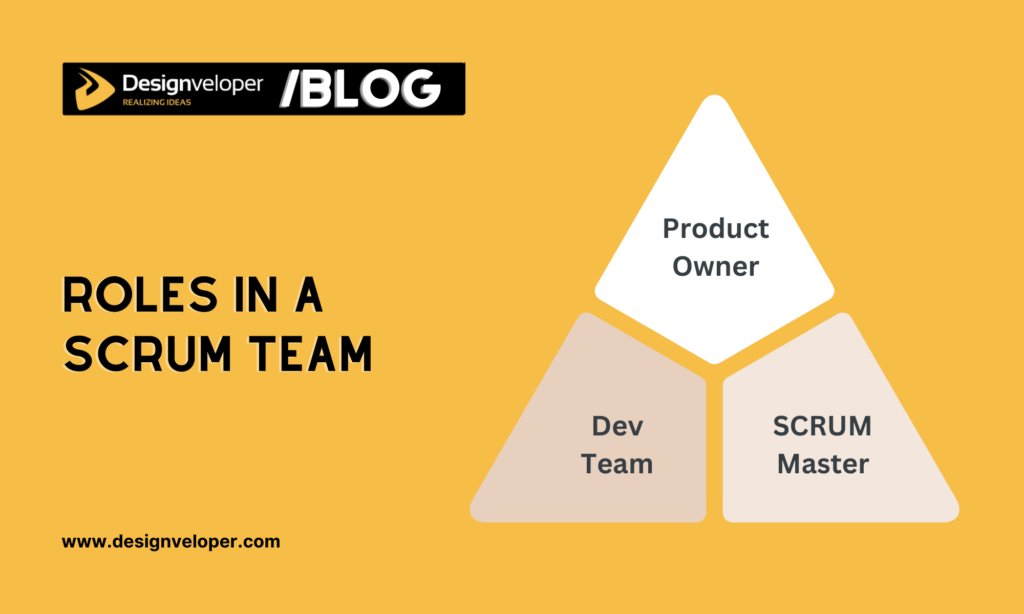
The SCRUM framework consists of a SCRUM team with its associated roles, events, artifacts, and rules. The rules bind all the roles, events, and artifacts together, and govern the relationships and interactions between them.
First thing first, we should understand that the SCRUM team is designed to optimize creativity, productivity, and flexibility. There are 2 characteristics of SCRUM, they are self-organizing and cross-functional:
- Self-organizing: the team chooses how to complete the work by themselves without being directed by people outside of the team
- Cross-functional: the team have all competencies to accomplish the work without depending on others not part of the team
There are 3 different roles in the team: Product Owner (PO), SCRUM Master (SM), and the development team
1. Product Owner (PO)
The product owner is the sole person, not a committee. The main responsibilities of the PO are:
- Maximizing the value of the product resulting from the work of the Development team
- Managing the product backlog: Clarifying and giving the order of all product backlog items; ensuring that the product backlog is visible, transparent, and clear to all and Development team understands the items in the Product backlog
Note: The whole team must respect the decisions of the Product Owner and all decisions are visible on content and the order of the Product backlog.
Recommended reading: What is Scrum Software Development? Understanding Agile Project Management
2. SCRUM Master (SM)
What is SCRUM master? This is a common question when it comes to SCRUM. So in short, SCRUM master is a servant-leader in the SCRUM team. SCRUM master is responsible for promoting and supporting SCRUM: serve to the PO, serve to the development team and serve to the Organization. Besides that, the SCRUM master helps everyone understand SCRUM theory, practices, rules, and values.
3. Development Team
The development team consists of professionals who do the work of delivering a potentially releasable incremental product at the end of each sprint. There are some characteristics of a Development team:
- Self-organizing
- Cross-functional
- No-titled in SCRUM
- No sub-team in SCRUM
- Accountability belongs to the team as a whole not as an individual
SCRUM Events
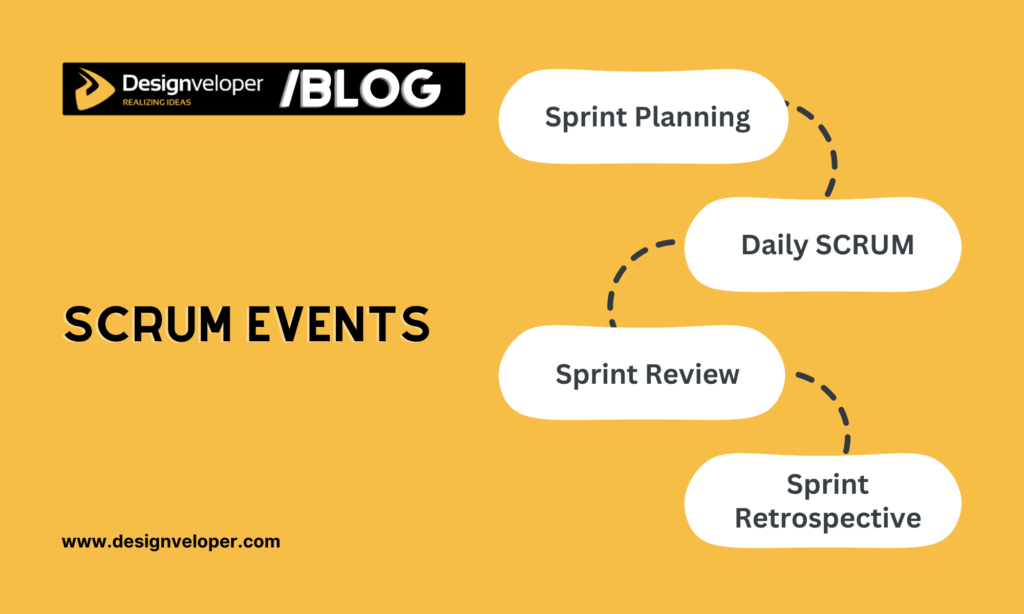
There are four events happening in each sprint listed below:
Recommended reading: Agile Sprint Cycle: Definition, Execution, and Steps Explained
1. Sprint Planning
In this event, a plan of the work performed in the sprint is created by the whole team. It’s time-boxed to a maximum of 8 hours for a one-month sprint. The responsibilities of SM in this event are making sure the event takes place smoothly. Accordingly, a SCRUM master will keep the session within the time-box and ensure all the attendants understand the purpose.
In sprint planning, all the participants need to clarify the following things:
- What can be done in this sprint?
- How will the chosen work get done?
- What is the ultimate goal of the sprint?
Recommended reading: Agile Sprint Planning: Definition and Generic Guides in 2022
2. Daily SCRUM
Daily SCRUM is a 15-minutes time-boxed meeting for the development team. It is held every day at the same time and in the same place. The purpose of this session is to optimize collaboration and performance by inspecting the work of yesterday and forecasting upcoming work. It helps every member of the team sync their tasks with each other and the progress of the sprint.
3. Sprint Review
The sprint review is held at the end of each sprint to inspect the increment of the product and adapt the product backlog. The SCRUM team and stakeholders collaborate on what was done in this sprint. The Sprint review can not last more than 4 hours for a one-month sprint. The result of it is a revised product backlog that defines the probable product backlog items for the next sprint.
4. Sprint Retrospective
The sprint retrospective is held after the sprint review and before the next sprint planning. It often lasts no more than 3 hours. This event gives the whole team an opportunity to inspect and create a plan for improvement next sprint.
In this event, the team will inspect how the previous sprint took place. In particular, they identify which items went well and potentially needed improvements, thereby creating a detailed plan to implement the improvements.
Recommended reading: 10 Best Practices in Software Project Management in 2022
SCRUM Artifacts
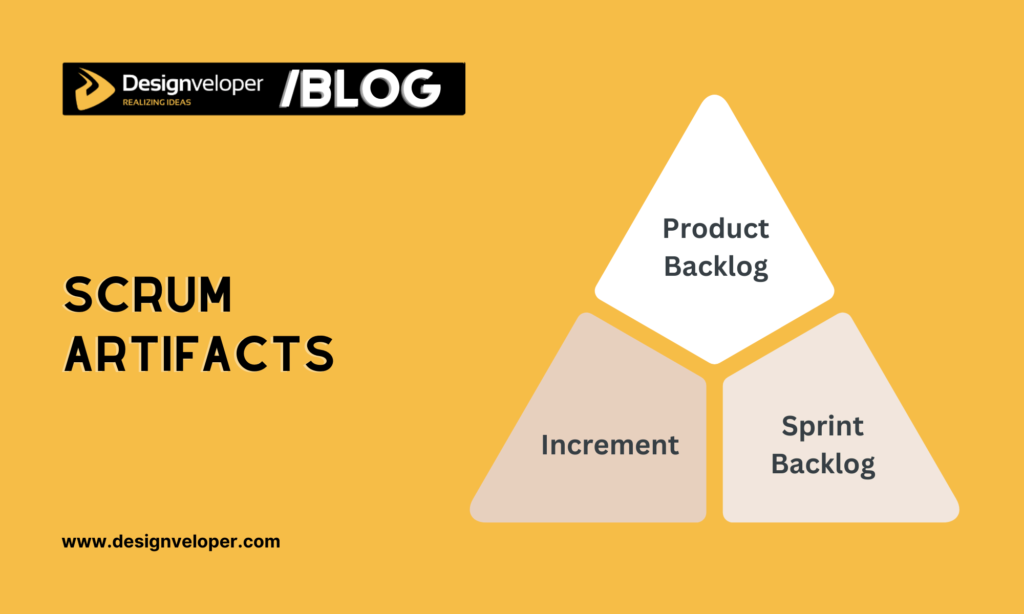
SCRUM’s artifacts represent the work or the value to provide transparency and opportunities for inspection and adaptation. They are designed to maximize the transparency of important information so that everybody has the same understanding of the artifacts.
Product Backlog
It is an ordered list of everything needed in the product. Each item in the product backlog is a user story or task which describes the work that needs to be done to deliver the product.
The product backlog is dynamic and never complete. It evolves when the product and the environment evolve.
The product owner takes the responsibility for it, including the content, the availability, and the order.
Sprint Backlog
It is a list of selected product backlog items that define all work that the development team identifies as necessary to meet the sprint goal.
Only the development team can change the sprint backlog during a sprint. The development team tracks the total work remaining in a sprint through the Daily SCRUM session. This helps the team project the likelihood of achieving the sprint goal.
Increment
The increment is the sum of all the product backlog items completed during a sprint and the value of the increment of all previous sprints. It is a step forward to the vision or the goal of the product.
Final words
We hope this article has successfully answered the question “What is SCRUM” and has helped you understand the basic elements of it to apply in your real product or project.
At the moment, Designveloper is applying this method in its development process and receives many achievements thanks to this. If you are looking for a software outsourcing company, this team might be the right one! Tell us your ideas and we’ll make it come true!
Also published on

Share post on










Related Articles


Scrum Software Development Turns Change Into Working Software
Scrum Software Development Turns Change Into Working Software Published June 29, 2026
App Development Project Management: Methodologies & Tools
App Development Project Management: Methodologies & Tools Published December 01, 2025
Gamification in the Workplace: How to Get It Right?
Gamification in the Workplace: How to Get It Right? Published June 06, 2025