








October 23, 2021
Blockchain technology, which Bitcoin, Ethereum, and many others use, is the hottest thing in technology right now. We could find out about them easily anywhere and at any time. Many people buy them or keep an eye on how much they are worth. So, just what is Blockchain? What’s the point?
In this blog, we’ll talk about the basics of Blockchain for people who aren’t tech-savvy or are just starting out and want to see the big picture of the Blockchain world.

Back to history, from 2007 to 2009, there was a world financial crisis that affected everything (economics, politics, social life, etc.) in the world. The fall of Lehman Brothers was seen as the most famous economic failure in the United States. It was called a Unique point of failure.
At the same time, Satoshi Nakamoto wrote a paper called Bitcoin: A peer-to-peer electronic cash system. In his/her (we still don’t know who this student is) paper, it was said that Cryptocurrency (the first known example is Bitcoin) could distribute trusts to get rid of Unique of failure. And the technology that makes this system work is called Blockchain.
Blockchain is a Chain of Blocks. Yes, what simple it is!
In advance, Blockchain is:
Recommended reading: Top Blockchain Companies
Since Ethereum is the most well-known Blockchain so far, we’ll take a closer look at how it works.
A laptop, computer, or even a phone that is connected to the Internet and works as part of the Blockchain network.
Node’s duties:
Recommended reading: Navigating the AVAX to ETH Transition: Strategies and Considerations
The most basic part of Blockchain is the Block, which includes a block’s hash, a hash from the previous block (if it’s not the first block, also called the Genesis block), a timestamp, a nonce, and a Merkle Root to track back the transaction.
Using Block Explorer tools like Etherscan, we can see Block’s information as below:

The leader or a group of people make all decisions. A blockchain can’t do this because it doesn’t have a “leader”. For Blockchain to make decisions, “consensus mechanisms” need to be used to reach a consensus.
Proof-of-Work is the most popular way to reach a consensus (aka POW). In this blog, we will only talk about POW as the main consensus so that it is easier to understand how Blockchain works. But there are a lot of consensus or proof ideas out there. You can learn more here.
Satoshi Nakamoto, who made Bitcoin, solved the problem by coming up with the “proof of work” protocol.
This process includes these steps:
Mining is the term for all of these steps. It could be summed up by the picture below:

Nick Szabo came up with the idea in the late 1990s. A smart contract is a computer protocol that is meant to make it easier, more reliable, or more legal to negotiate or carry out a contract.
Smart contracts let transactions happen without the need for a third party. These transactions can be tracked and can’t be changed.
Smart Contract could be helpful in a number of ways, including:
Taking advantage of Smart Contract in Ethereum, with the language named Solidity, developers could adopt and develop their own Smart Contracts applications (aka DApps), e.g. CryptoKitties, CryptoZombies, …
So far the Blockchain world has 3 types:

As you can see, Blockchain 1.0 is just a ledger that keeps track of incoming transactions. This was the first use case Satoshi Nakamoto gave for Bitcoin.
We could interact with Blockchain 2.0, which uses Smart Contracts, through Blockchain 2.0. We could also put a logical business layer on top of Smart Contract and end-user applications (aka DApps). Ethereum is the platform that most people use to talk about Blockchain 2.0.
But the technologies that came before Blockchain had their own problems, like scalability,…
Blockchain 3.0 was the first step toward fixing the problems with the previous version of Blockchain. ArcBlock is known as the first place where Blockchain 3.0 was shown off.
With blockchain in healthcare, the paper was chosen from over 70 submissions from a wide range of people, organizations, and companies that talked about how blockchain technology could be used in health and health IT to protect, manage, and exchange electronic health information.
A team from Deloitte Consulting LLP won a Blockchain Ideation Challenge put on by the Office of the National Coordinator for Health Information Technology at the U.S. Department of Health and Human Services (ONC).
Investing in Blockchain is one of the hottest trends in the financial markets, and it could change the way traditional business models work in a number of fields.
The good news is that there are many ways to invest in blockchain technology, giving investors the chance to take advantage of what this new technology has to offer.
The top three courses for learning about blockchain technology will teach you the basics, such as what blockchain is and how it works. It will also show you how to make your own private network and a smart contract.
Blockchain Advantages – Combining IoT with the power of blockchain
The Future of Blockchain
From Forbes Magazine. Imagine a technology that could:
Blockchain technology is making all of these things more and more possible. Blockchain is still in the “early adopter” stage, but it has a lot of potential for programs that help people all over the world.
Depending on your industry, your company may already be keeping an eye on or experimenting with technologies like blockchain and bitcoin. However, if you want to be a part of social impact programs in the 21st century, you’ll need to know about this change.
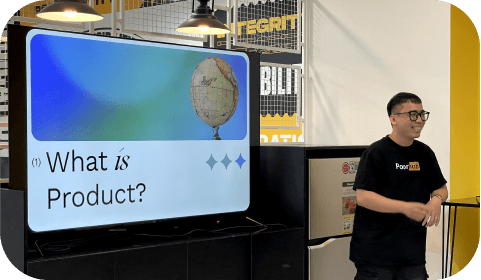
We at Designveloper are early adopters of Blockchain technology, which is just starting to become popular. We’re optimistic about the future of applications based on Smart Contracts or Blockchain technology in general. We put on some workshops so that our developers could learn more about Blockchain. If you’re interested, you can find a more technical tutorial on how to make your own DApps here. We’re happy to work with any companies or organizations that are part of the Blockchain World’s beautiful party.
Senior Developer