















GraphQL vs Rest Which One Is Better?

Are you looking for a detailed comparison between GraphQL vs REST? If yes, this article is the right place for you to start your discovery! Let’s read our newest article to find out the key differences between these two APIs!
The Introduction of API
As everyone knows, a website is created by both front-end and back-end elements. While users interact with front-end components such as using a keyboard to type something or accessing a site with just a click of a mouse, back-end components have to control the server and the database to satisfy the users’ requirements.
In order to maintain the communication between users and a server, we need a “machine translation” named API (Application Programming Interface), which is able to translate “human action/language” and help the server understand our needs.
Instead of only translating, API can actually do much more than you thought. Let’s explore:
- API can enhance the security of both servers and users because they do not communicate with each other directly (but through API).
- API can support a lot of figures of HTTP such as URI, request or response headers, caching, versioning, content format, etc.
- Besides, API has open-source thus you can use API through any client supporting XML or JSON.
- The most common operations are GET (create new data), POST (read data), PUT (Update data), and DELETE (delete data).
- Finally, API is easy to understand and configure, which is why it has become a standard in modern web development.
GraphQL vs Rest.: What Is the Different?
1. Introduction of REST
REST (REpresentational State Transfer) was one of the very first APIs introduced over the world. It was invented and introduced by Roy Thomas Fielding in his Ph.D. thesis in 2000.
Since it was one of the first APIs ever, REST has quickly become a standard named RESTful API(s). Although REST does not have any strict rules (it is flexible and it depends on how developers want their site’s structure to look), there are some definitions you should follow. (GraphQL vs REST)
- REST works as a client-server model, in which a server combines a range of services listening to requests from clients. A request sent from a client needs one or more services to satisfy depending on how complicated the request is.
- REST is stateless, which means the client or server does not save the state of each other. This could help REST is easy to develop since it has not updated the state memories of clients, however, without state memories, each request sent to the server sometimes needs to be combined with the state memories, thereby broadening the information and data sent to the server.
- REST has the capability of catching.
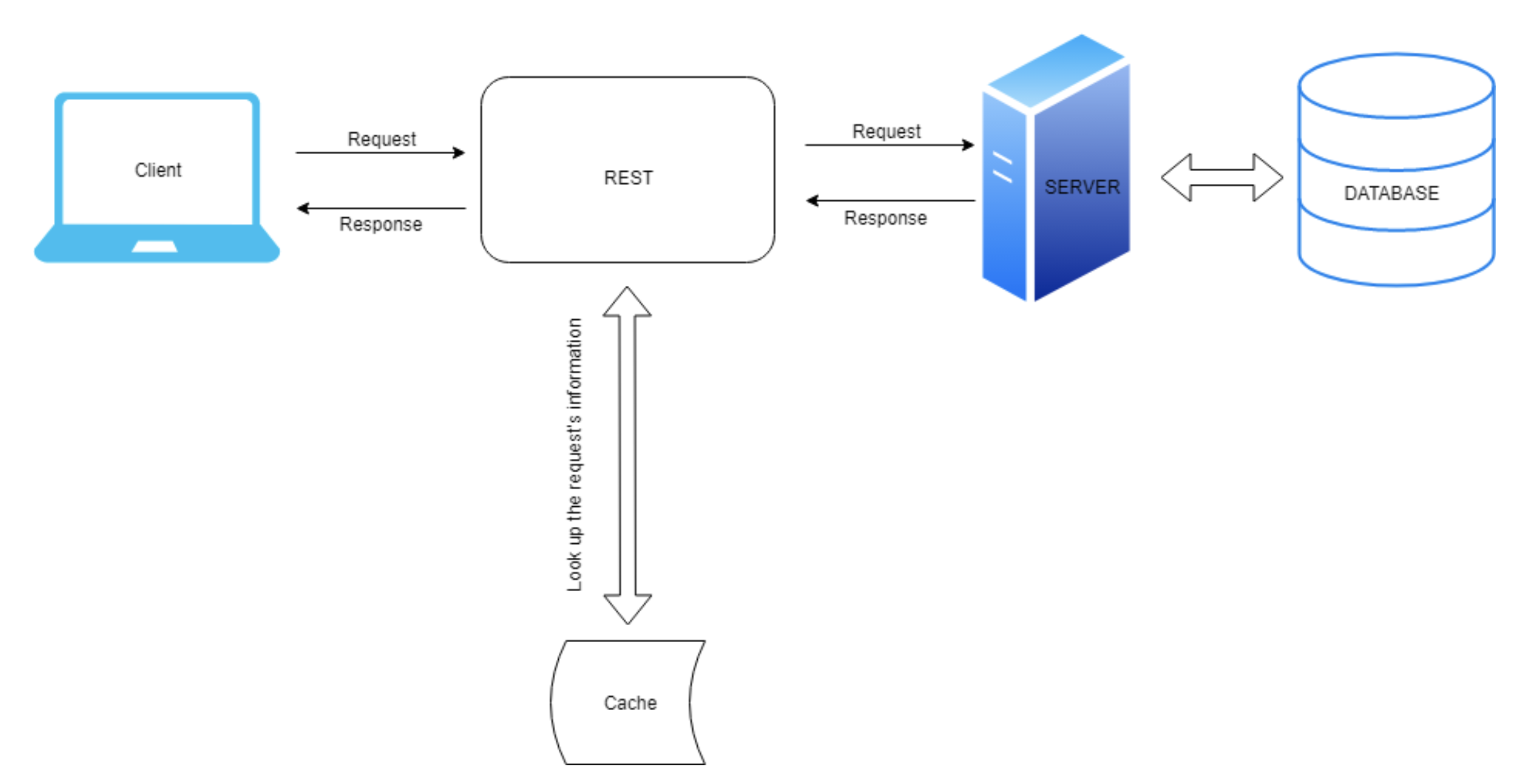
When a request comes to the REST
Before doing anything, REST will look up the request’s information to know whether the information is in the cache or not. If there was the same information (that means there had already been the same request sent through REST), REST will respond exactly like the response of the previous request. But in case the sent request is new, REST will communicate with the server to have the information on the response to the client as well as add the information of the request to the cache.
- REST has standardized a lot of services, making communication between different devices or methods of a lot of kinds of clients with the server easier. However, because the system has been standardized, we barely can optimize it.
- REST has a lot of layers, which are responsible for their own types of requests. Thus REST is easy to broaden each element.
Why REST?
- REST is easy to understand.
- REST helps the application become simple.
- Optimize the code.
- Optimize the system’s resources.
- REST response data in a lot of types (HTML, XML, RSS, JSON, etc.).
Recommended reading: The Role of Sociological Imagination in Web Development
2. Introduction of GraphQL

We’ve learned that REST is simply an API that transfers requests from clients to servers. So, what about GraphQL? GraphQL has been developed based on REST to make all the requests more optimized and straightforward. It was developed internally by the Facebook team in 2012 before being released and becoming open-source in 2015.
- GraphQL is a query language, using any data types provided by developers, thusGraphQL is flexible and easy to back up.
- Unlike REST, in which each request is sent alone, GraphQL defines a request with its types and fields describing the request and everything is connected.
Recommended reading: Top 4 Best Programming Language for Beginners in 2022
An example of GraphQL
Assume that we’re looking for a book’s information. To extract its name, author, and release date, REST has to send three separate requests. Meanwhile, GraphQL can use a single request to get all this information.
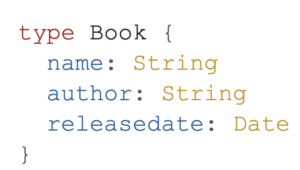
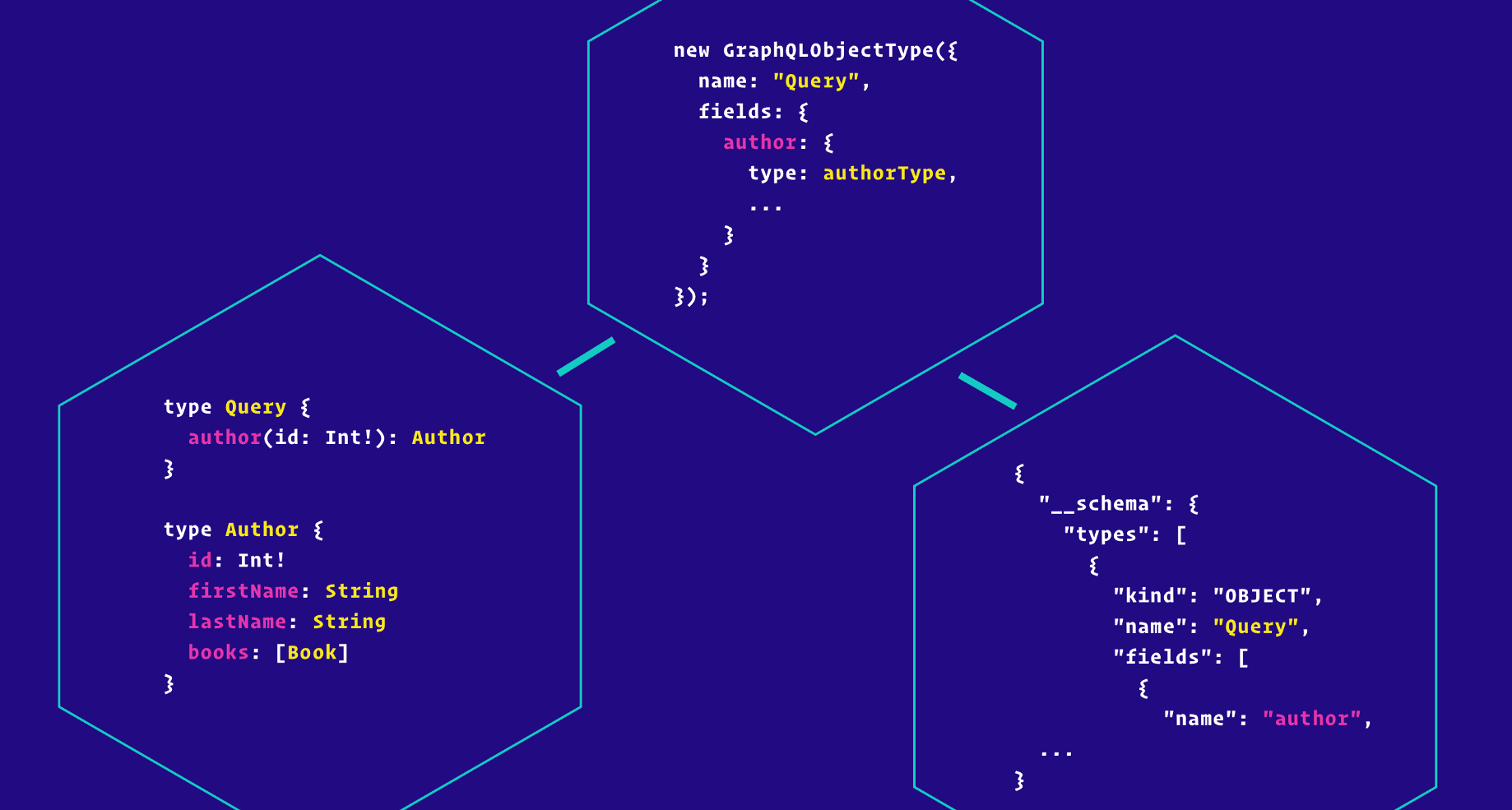
Since GraphQL has been developed based on REST, it inherited all the strengths and features of REST.
- GraphQL has a hierarchical structure.
- It can send and receive data immediately because of its optimized structure. Therefore, GraphQL can satisfy strict requirements in real-time (streaming live, video calling, etc.).
- Because GraphQL combines a lot of information and resources into one request, it has one end-point. Meanwhile, REST has multiple end-points to fetch (over fetching and under fetching – one of the biggest disadvantages of REST).
- GraphQL has a single schema. It provides its own type of system with its own syntax called SDL (Schema Definition Language), which defines a contract between the server and the client, telling users how a client can access the data. Therefore, it is easy to look for the relationships between resources. Moreover, with a fully defined schema, front-end teams and back-end teams can work independently yet in a cohesive way.
- GraphQL also supports JavaScript Frameworks.
- It has ease of server and client development.
- GraphQL works with queries. So when a request is sent to the server, it will retrieve the GraphQL query.
As a result, we can say that using GraphQL is like using multiple REST.
GraphQL’s Pros & Cons
Working with GraphQL, developers can receive many benefits as follows:
- Fetching Multiple Resources: GraphQL makes APIs less chatty. Particularly, RESTful API calls are chained on the client before the final representation can be formed for display. GraphQL can reduce this by enabling the server to aggregate the data for the client in a single query.
- Caching: RESTful APIs can use caching built in the HTTP specification, with well-defined semantics for GET requests that allow for broad caching capabilities across browsers and server frameworks. Meanwhile, GraphQL doesn’t follow the HTTP spec for caching and uses a single endpoint instead. This allows developers to implement more targeted caching to their app’s certain data needs and query patterns for non-mutating operations.
While the main benefit of GraphQL is to enable clients (e.g., web or mobile apps) to query for just the data they need, this can also be problematic, especially for open APIs where an organization cannot control 3rd party client query behavior. Therefore, great care has to be taken to ensure GraphQL queries don’t result in expensive join queries that can bring down server performance or even DDoS the server.
3. GraphQL vs REST?
A REST API is an architectural concept for network-based software. GraphQL, on the other hand, is a query language, a specification, and a set of tools that operates over a single endpoint using HTTP. In addition, over the last few years, REST has been used to make new APIs, while the focus of GraphQL has been to optimize for performance and flexibility. In comparison, GraphQL has more advantages than REST:
- GraphQL’s performance is much better.
- Data of GraphQL is more optimized while REST sometimes has excess or lack of data.
- GraphQL is more flexible, faster, and easier to maintain consistency. This is because it’s not based on any specific database or storage engine.
- GraphQL is very easy to understand (even much easier than REST) as it is straightforward and intuitive.
With those advantages, GraphQL has become more popular and people this API it better than REST.
4. But can GraphQL totally replace REST?
GraphQL is more common nowadays. However, because it is too flexible, REST is more standard and “RESTful”. Working with REST, developers can easily access, modify, and broaden their libraries. Therefore, some companies or enterprises refuse to use GraphQL.
Each request of REST is specific and explicit (to multiple end-points). Thus it is easy to find issues and fix them by calling multiple end-points to fetch related resources. On the other hand, requests in GraphQL are combined from a lot of types and information, so it’s difficult to track a false request.
Unlike REST, GraphQL is not cacheable. This means this API has send a server request for every query. But GraphQL has been developed in terms of caching based on HTTP caching.
As the older API architecture with decades-long existence, REST has become more mature with more tools and integrations than GraphQL. So, no wonder it has more information on issues or bugs. For this reason, developers working with REST might find it easier to get help from others than GraphQL.
Recommended reading: WebSocket Protocol vs HTTP: What You Should Know!
A Conclusion About “Graphql vs Rest”
REST or RESTful approach is always limited to a single resource. If users need more data and information, they always have to send multiple requests to the server. While GraphQL is much more flexible and GraphQL also combines connected entities within one GraphQL data query.
Both REST and GraphQL have been developed for developers to modify and optimize the data easier. With our detailed analytics, it’s really difficult to tell which is better as it depends on specific circumstances and developers’ ideas (and maybe in the future, there would be a lot of types of API developed to satisfy our needs). Developers need to understand clearly their desires and the impacts of both REST and GraphQL before choosing either REST vs GraphQL.
However, people at Designveloper recommend that comparison like “GraphQL vs REST“ is not a good idea. When you can fully understand them, they can co-exist (even with other APIs such as SOAP) to optimize the data perfectly.
Also published on

Share post on









Related Articles


Rust Vs Python: Performance, Safety, And Project Fit For Teams
Rust Vs Python: Performance, Safety, And Project Fit For Teams Published September 25, 2026
What Is Ext JS? Features, Components, And Frontend Use Cases
What Is Ext JS? Features, Components, And Frontend Use Cases Published September 25, 2026
Difference Between HTML And CSS: Key Comparisons And Examples
Difference Between HTML And CSS: Key Comparisons And Examples Published September 23, 2026