















10 Best Data Analytics Software in 2025: A Complete Guide

Data is like a gold mine in today’s world. But to extract valuable insights from this mine, you need a special tool – data analytics software. This software helps you dig deep into data, uncovering patterns and trends that aren’t visible on the surface.
Why does this matter? In our data-rich world, those who can interpret data have the upper hand. They can make smarter decisions, spot opportunities faster, and stay ahead of the competition. That’s why choosing the best data analytics software is so crucial.
In this article, Designveloper (DSV) will dive into the world of data analytics software. We’ll explore its benefits, look at future trends, and most importantly, reveal the top 10 best data analytics software in 2025.
So, if you’re curious about data analytics software, this guide is for you. Dive in, and let’s start exploring!
9 Benefits of Data Analytics Software
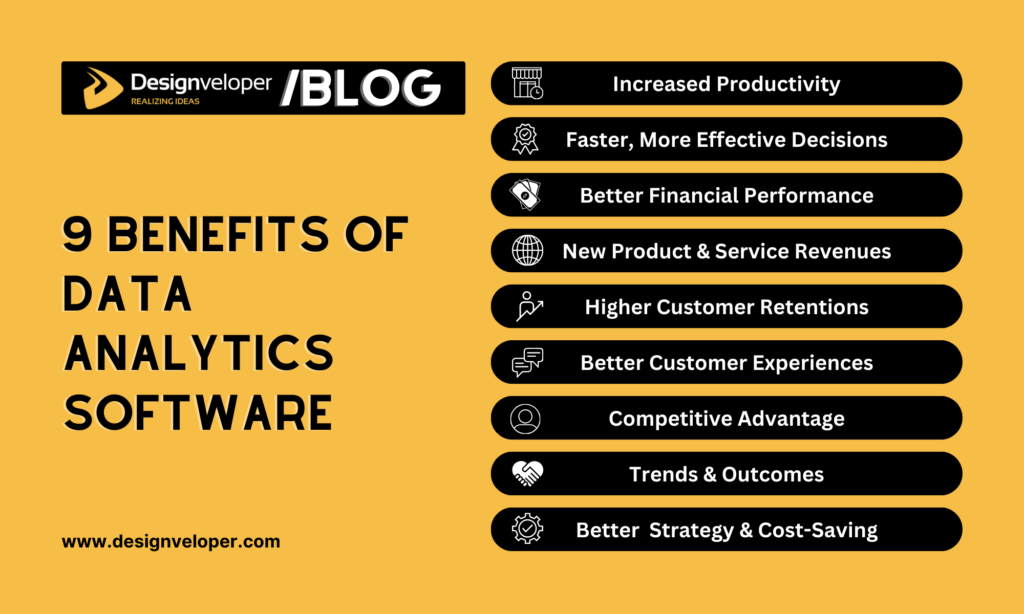
Data analytics software brings numerous pros that can transform the way we work, make decisions, and even view the world. Here are some of the key benefits you may obtain, regardless of the best data analytics software you choose:
Increase Efficiency & Productivity
According to Statista, most companies (64%) realized the use of data analytics can render their operations and processes more productive.
But how? Data analytics software can automate routine tasks, freeing up employees to focus on more complex problems. This leads to increased efficiency and productivity as employees can do more in less time.
For example, data analytics can automate data collection and processing, which are typically time-consuming tasks. This allows employees to focus on interpreting the data and making strategic decisions, thereby increasing their productivity.
FURTHER READING: |
1. 10 AI Data Analytics Tools Transforming the Industry |
2. 10 Leading Data Analytics Companies |
3. Data Analyst vs Business Analyst: A Comparative Guide for Beginners |
Make Faster, More Effective Decisions
56% of businesses admitted that using data analytics allows for more effective decision-making.
With real-time data and easy-to-understand dashboards, decision-makers can quickly understand the situation and make informed decisions. This reduces the time spent on analysis and increases the speed of decision-making.
For instance, a marketing manager can use data analytics to monitor campaign performance in real time, allowing them to make quick adjustments to optimize results.
Improve Financial Performance
By identifying trends and patterns, data analytics can help businesses optimize their operations and reduce costs. This can increase financial performance and profitability. For example, a retail business can use data analytics to optimize inventory levels based on sales trends, reducing storage costs and improving cash flow.
Identify New Product & Service Revenues
Data analytics can help businesses understand their customers’ needs and preferences, leading to the development of new products and services that generate additional revenue. For instance, a software company can use data analytics to identify features that users frequently request, guiding the development of new products that meet these needs.
Improve Customer Retentions
By analyzing customer behavior and feedback, businesses can improve their products and services to meet customer needs, leading to increased customer satisfaction and retention. For example, a telecom company can use data analytics to identify the reasons for customer churn and take corrective actions to improve customer retention.
Enhance Customer Experiences
Data analytics software can provide businesses with deeper insights into customer behavior and interests. This then allows them to tailor their products and services to improve customer experience. For instance, an e-commerce business can use data analytics to personalize product recommendations based on a customer’s browsing history, improving the shopping experience and increasing sales.
Increase Competitive Advantage
Businesses that use data analytics can gain a competitive advantage by understanding market trends and customer preferences better than their competitors. For example, a restaurant can use data analytics to identify popular food trends and incorporate them into its menu, attracting more customers and gaining a competitive edge.
Predict Trends & Outcomes
Data analytics can help businesses predict future trends and outcomes based on historical data. This can help businesses make proactive decisions for future operations. For instance, a financial institution can use data analytics to predict future market trends, helping them to make investment decisions that yield higher returns.
Drive Strategy & Save Cost
As researched by Microstrategy, 53% of businesses are using data analytics to advance business strategies, enhance processes, and save costs. By identifying inefficiencies and areas for improvement, data analytics can help businesses reduce costs and increase profitability. For instance, a manufacturing company can use data analytics to optimize production processes, reducing waste and saving costs.
Future & Trends of Data Analytics Software
The data analytics software market is currently undergoing robust growth. As of 2022, the global data analytics market was valued at USD 49.03 billion and is projected to grow at a CAGR of 26.7% by 2023, indicating a promising future.
Some key factors below propel this growth:
- The adoption of machine learning and artificial intelligence technologies is on the rise, enhancing the capabilities of data analytics software.
- The increased acceptance of social networking platforms has led to an explosion of data, providing rich sources for analysis.
- The demand for individualized consumer experiences and the rise of online shopping have further emphasized the importance of data analytics in understanding customer behavior and trends.
In light of this current landscape, it’s crucial to examine the latest trends in data analytics software and see how these trends are shaping its future.
Here are the trends you may see in data analytics software today and even in the future:
Integration of Artificial Intelligence (AI) & Machine Learning (ML)
As previously stated, the advent of AI/ML is a major driver of market growth. These advanced techs automate the analysis of vast datasets. This, accordingly, makes it easier to discover insights, facilitate data-driven decisions, and deliver personalized customer experiences based on reliable data.
Beyond conventional AI techs, we’ve seen the rise of generative AI in data analytics software. This tech is revolutionizing how most businesses handle their data.
Notably, some best data analytics software like Tableau incorporate generative AI to democratize data analysis and streamline insights consumption at scale. It offers intelligent suggestions and in-product guidance, and it equips business users with intelligent, personalized, and contextualized insights.
However, Gartner also highlights new risks emerging from the increasing use of AI. They include ethical risks, training data poisoning, or fraud detection evasion, which must be addressed.
Therefore, managing AI risks is not just a necessity, but a requirement. This management is not solely about regulatory compliance. But data analytics software must implement effective AI governance and responsible AI practices to build trust among stakeholders and accelerate ethical AI use.
Consequently, AI-powered data analytics software continues to serve as a crucial aid to decision-makers, but it does not entirely supplant them in decision-making.
Predictive Analytics
The predictive analytics segment holds a dominant position in the market, with a revenue share of 32.4% in 2022. Predictive analytics offers precise and reliable insights. So it aids organizations in problem-solving and opportunity identification, including fraud detection, marketing campaign optimization, decision-making enhancement, and operational efficiency improvement.
Furthermore, it employs historical data, statistical algorithms, and machine learning techniques to predict the likelihood of future outcomes.
For these reasons, it’s becoming an essential tool for businesses aiming to anticipate customer behavior, market trends, and operational efficiency.
Real-Time Analytics
The demand for real-time analytics is escalating in response to the increasing need for interconnected devices.
Here’s why:
- Real-time analytics empowers businesses to make decisions based on real-time data with remarkable precision. It offers actionable insights as data is produced, enabling businesses to respond swiftly.
- Real-time analytics aids businesses in identifying and addressing issues before they escalate into significant problems. It can also bolster risk management by detecting potential problems or threats in real-time.
- This type of data analytics assists in identifying and rectifying inefficiencies in real-time, which can boost operational efficiency. Moreover, it provides personalized and relevant information that can enhance the customer experience in real-time.
For these reasons, today’s tools are designed to connect with various devices and software to offer real-time analytics.
Some of the best data analytics software, such as Zoho Analytics, provides an IoT platform or integrates other tools like CRM or Google Analytics to generate real-time insights, pinpoint inefficiencies, and forecast consumption.
10 Best Data Analytics Software in 2025
Having explored the benefits and emerging trends of data analytics software, it’s clear that the right tool can be a game-changer in harnessing the power of data. But with a myriad of options available, how do you choose the one that fits your needs the best?
To help you navigate this landscape, we have curated a list of the top 10 best data analytics software in 2025. Each of these tools has been selected for its ability to transform complex data into actionable insights, keeping in line with the trends we’ve discussed.
Let’s dive in and explore them.
Microsoft Power BI
Best Used For: Data-driven decision-making and performance metrics tracking
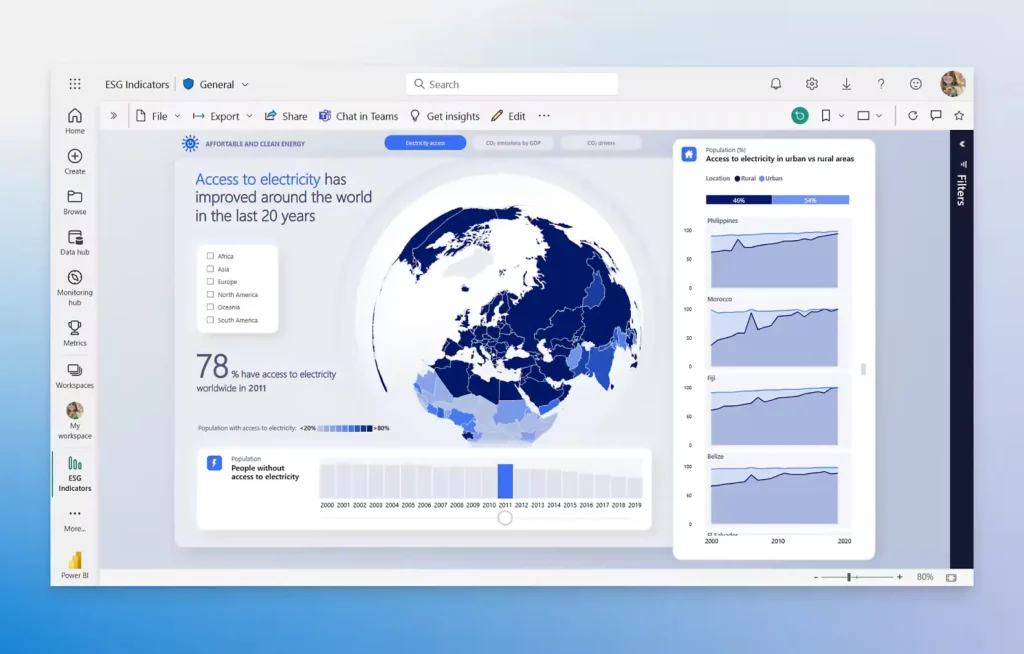
Microsoft Power BI is a premier data analytics software that excels in data visualization. It’s known for its user-friendly interface, making it a popular choice for users within the Microsoft ecosystem.
Power BI’s robust features include real-time analytics, which allows users to make data-driven decisions promptly, and extensive data modeling capabilities. So it enables users to create complex data models with ease. It also integrates seamlessly with other Microsoft products, enhancing its usability within the Microsoft ecosystem.
While its advanced features might seem complex at first, they offer powerful capabilities for those willing to learn. Power BI’s pricing structure is flexible, catering to both individual users and enterprise-level needs, making it a versatile tool for various business sizes.
Tableau
Best Used For: Business intelligence and data exploration
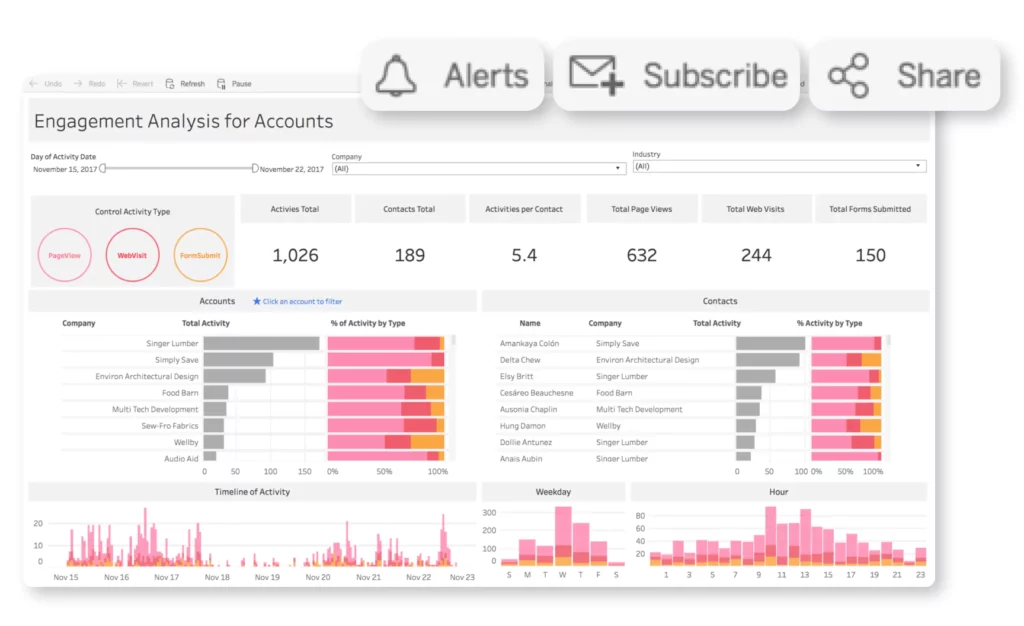
Tableau is known for its intuitive interface and drag-and-drop functionality. This feature makes it easy for non-technical users to create and interact with data visualizations.
Tableau offers a wide range of visualization tools, making data analysis accessible and understandable to users at all levels of technical expertise.
Despite its higher-end pricing, Tableau’s excellent customer support and ability to handle large data sets and complex visualizations make it a valuable tool for businesses.
Sisense
Best Used For: Operational reporting and customer data analysis
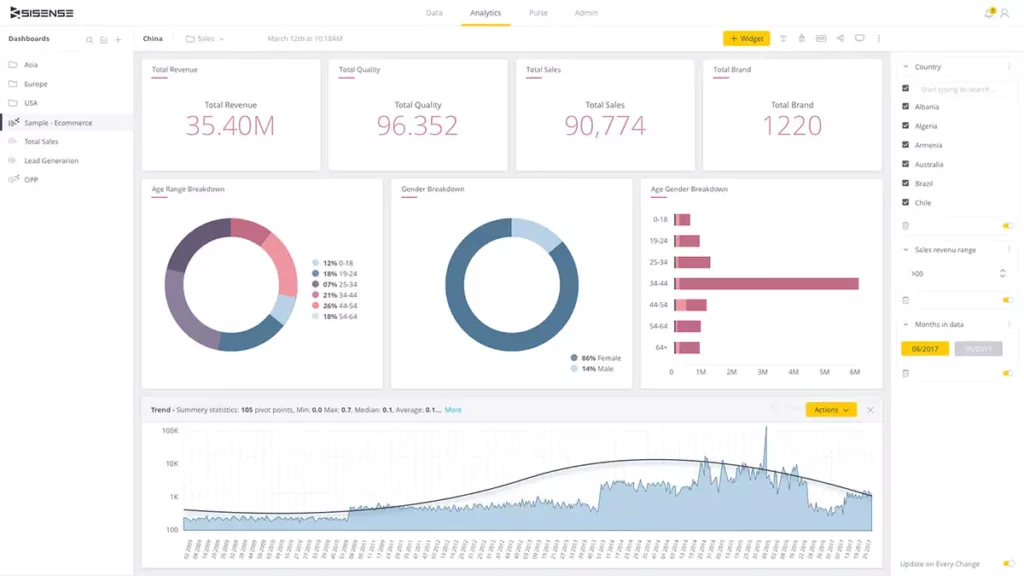
Sisense focuses on usability and affordability. It’s particularly suitable for mid-sized businesses looking for a robust yet affordable analytics solution.
Sisense allows users to combine data from multiple sources, providing a comprehensive view of business operations. Users can create interactive dashboards, making data analysis and operational reporting a breeze.
While some users might find its interface less intuitive compared to other tools, its powerful features and competitive pricing make it a strong contender in the data analytics software market.
Looker
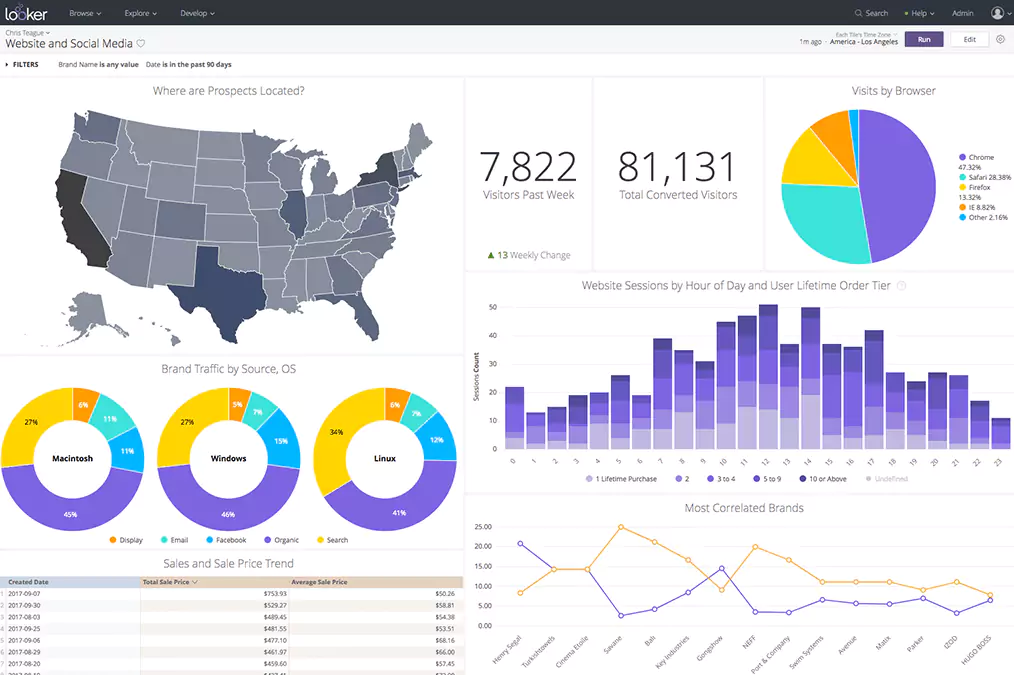
Best Used For: Data exploration
Like other best data analytics software in this list, Looker also excels at data exploration and collaboration. It’s particularly suited for cloud-based environments and businesses looking to maintain data integrity across departments. Looker’s data governance capabilities ensure that data remains consistent and accurate, regardless of who accesses it or where it’s used.
While Looker has a steep learning curve, its powerful features, coupled with excellent customer support, make it a worthy investment for businesses committed to making data-driven decisions.
Qlik Sense
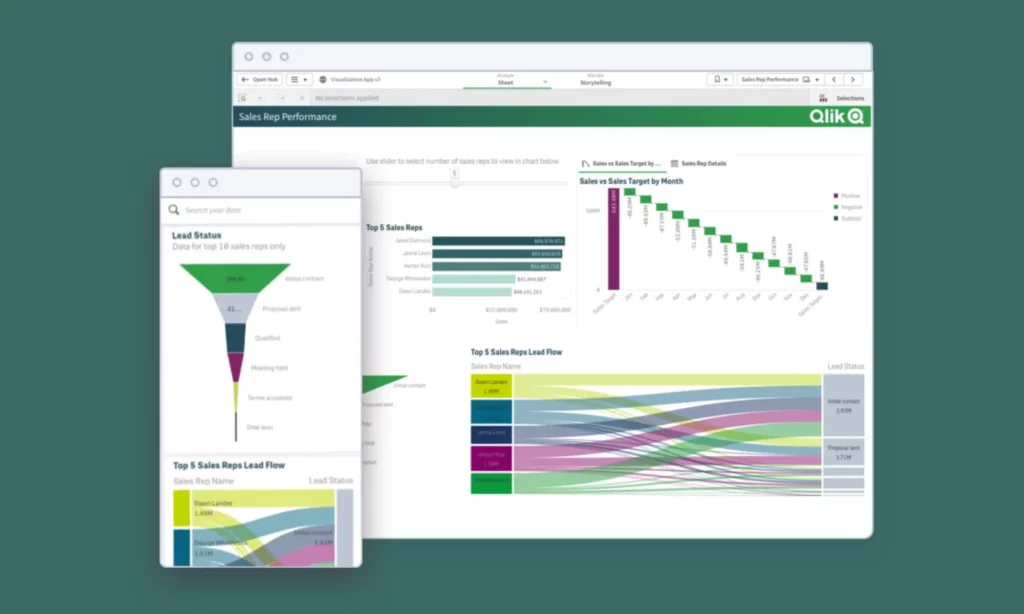
Best Used For: Data-driven decisions using Machine Learning
Qlik Sense features its in-memory analytics, associative data exploration, and highly interactive interface. These features are particularly useful when dealing with complex datasets and self-service Business Intelligence (BI).
One of the standout features of Qlik Sense is its machine learning capabilities, powered by Qlik AutoML. This feature allows analytics teams to create automated experiments, integrate predictive analytics with Qlik Sense apps, and make real-time predictions.
Despite the steep learning curve associated with its powerful features, Qlik Sense’s excellent customer support makes it a worthwhile investment. Furthermore, its scalable pricing structure makes it an ideal choice for businesses of all sizes.
Zoho Analytics
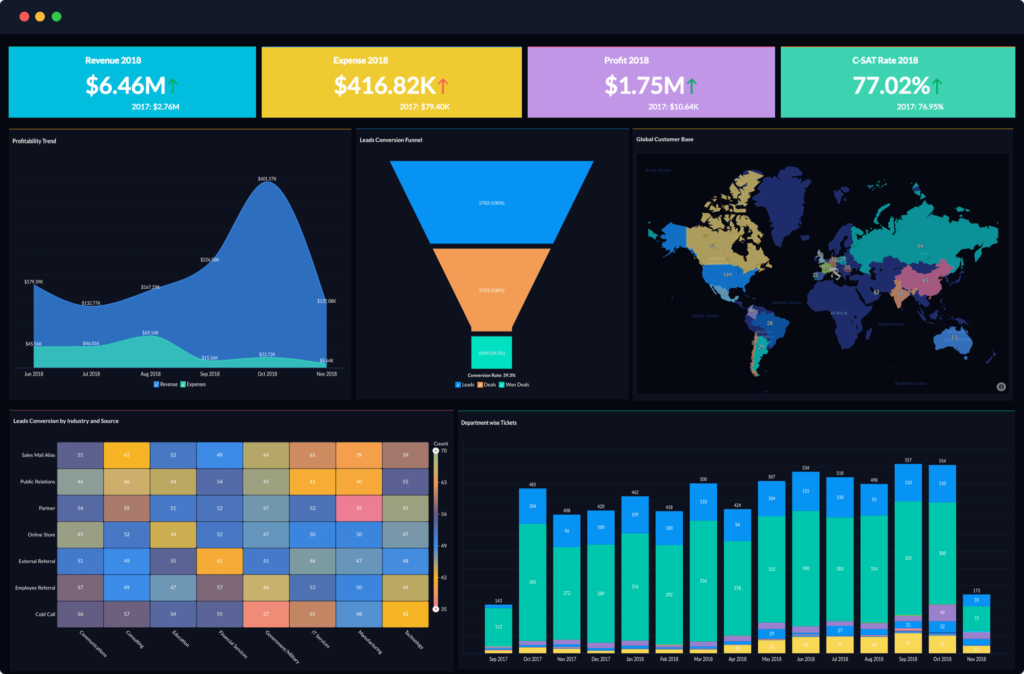
Best Used For: Operational reporting and KPI tracking
Zoho Analytics is a cost-effective and user-friendly data analytics tool, making it an ideal choice for small to medium businesses. It provides self-service Business Intelligence (BI) and reporting capabilities, enabling users to create insightful dashboards and data visualizations with ease.
Zoho Analytics supports data integration from over 250+ data sources, allowing users to analyze data from various files, feeds, databases, and business apps. It also offers a browser-based development environment, making it accessible from any device with a web browser.
Domo
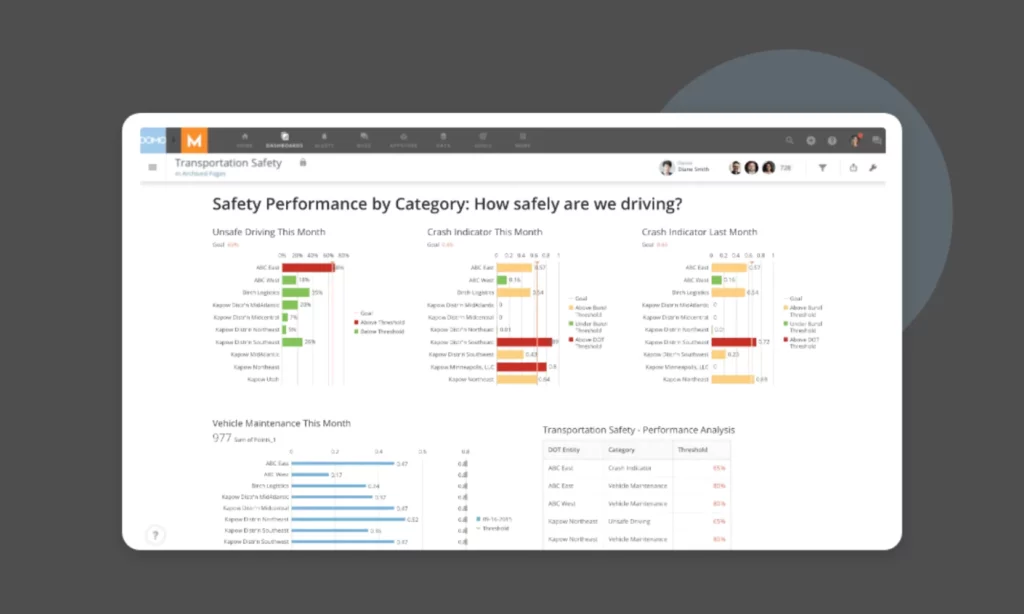
Best Used For: Streamlining workflows
Domo is a cloud-based platform designed for business intelligence and data warehousing. It’s particularly suited for businesses looking to consolidate their data sources and enhance their decision-making processes.
Domo provides a unified view of all your data sources, simplifying the process of drawing insights from complex data. It offers over 1,000 pre-built connectors for data integration and supports data writeback, allowing data to be sent back to your systems. While Domo offers a powerful set of features, it might require a learning curve for new users.
Google Analytics
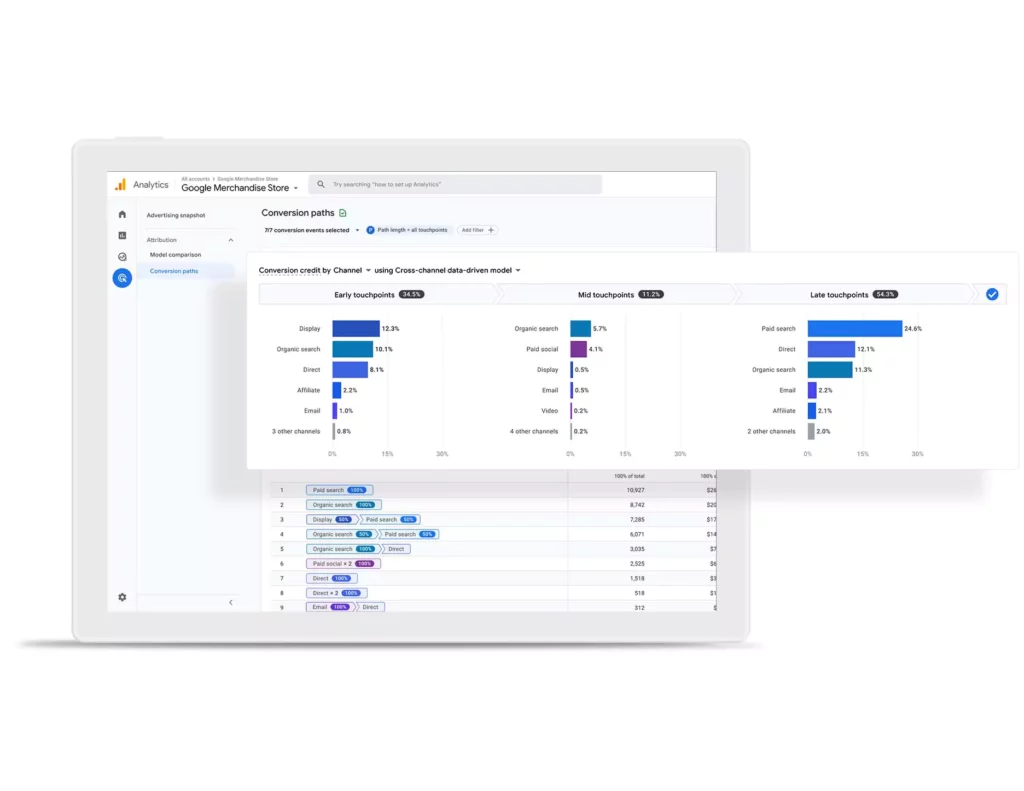
Best Used For: Website traffic insights and optimization
Google Analytics is a web analytics service that focuses on website and app traffic analysis. It’s perfect for understanding user behavior and assessing the effectiveness of marketing campaigns.
Google Analytics offers a range of features, including real-time analytics, audience insights, and conversion tracking. It uses machine learning models to analyze data and predict future actions people may take, like making a purchase or churning. However, its advanced features might require a certain level of technical expertise.
SAS
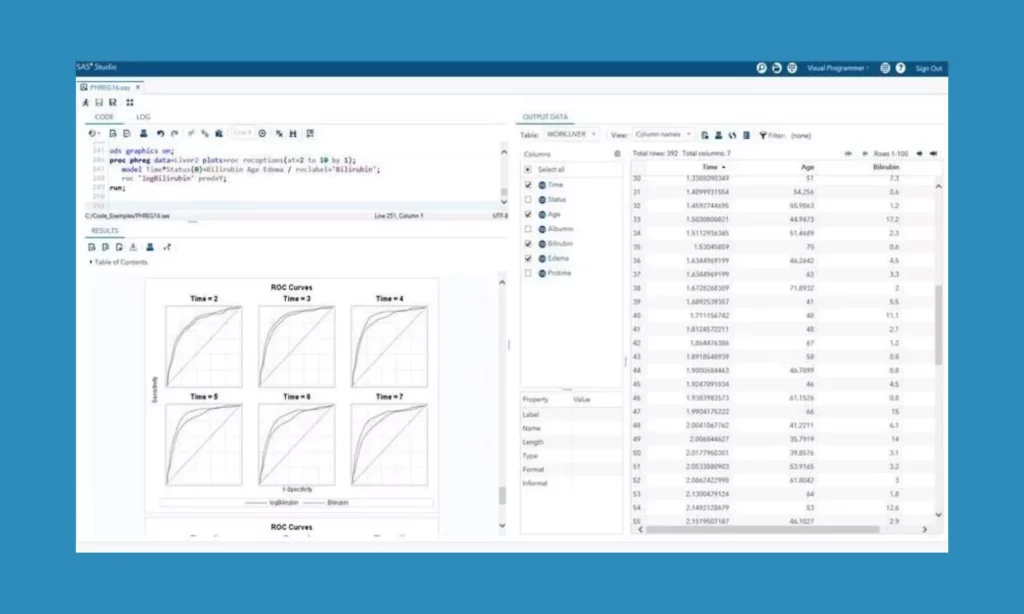
Best Used For: Predictive modeling and complex data analysis
SAS is the best data analytics software for its advanced statistical analysis, data mining, and predictive modeling capabilities. It’s favored by large enterprises for its reliability and robust features (e.g., basic descriptive analytics or advanced correlations).
It offers an intuitive 4GL with easy-to-learn syntax and supports a wide range of data formats. While SAS offers a powerful set of tools, it might be expensive for smaller businesses.
Altair RapidMiner
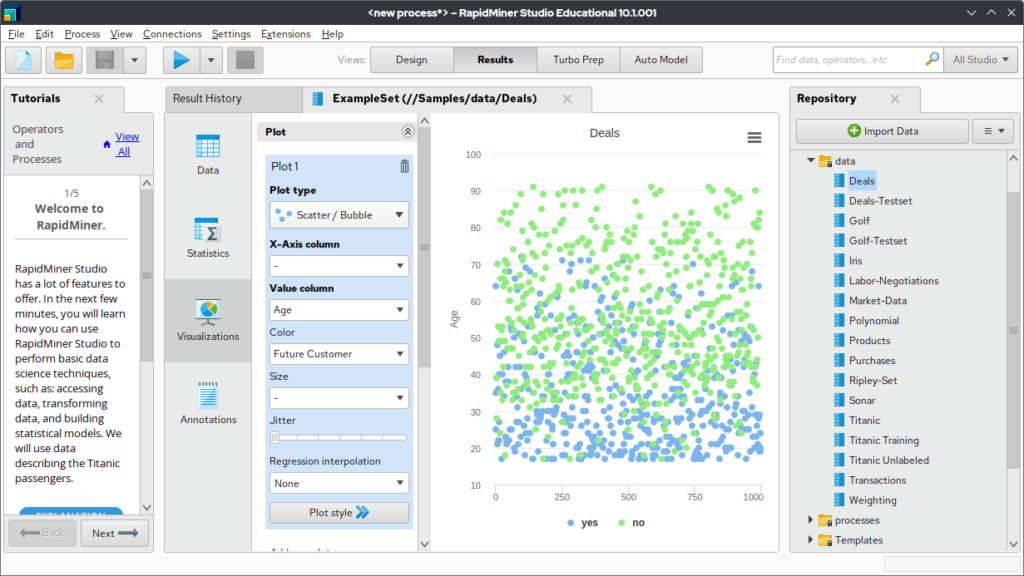
Best Used For: Predictive analytics and data science projects
Altair RapidMiner is a data science platform that offers a visual interface for building machine learning models and workflows. It’s suitable for both beginners and experienced analysts, offering a range of features for data preparation, machine learning, and model deployment.
Altair RapidMiner streamlines model creation through automated, visual, and code-based approaches. While RapidMiner offers a user-friendly interface, its advanced features might require a learning curve.
Data Analysis at Designveloper
Data analysis is now a very important aspect in any business organization. In particular, at Designveloper, we specialize in delivering high-quality services and projects with data analysis as our foundation. The best data analytics software is used by our team in order to provide the best insights. This assists our clients in making right decisions.
Our method
At Designveloper, we offer different data analysis techniques to help our clients in their decision-making processes. Descriptive Analysis is one of the methods we use that has been found to be most effective. This method involves analyzing data by presenting characteristics and changes of data without making conclusions. Data can be presented in form of tables and charts.
For instance, we assisted an e-commerce firm that dealt with household products and goods. This information was required by the company to know the sales trends and which products sold well during a three-month marketing campaign of April-June 2023. The total sales for this period were 1. 2 billion VND. The most popular product was a mini electronic fan with the total sales of 223 million VND (average 300k per order) and air conditioners with total sales of 128 million VND (average 6 million per order). Customers were 40% male and 60% female with the age ranging from 25-50 years.
Based on this analysis, we were able to deduce that the mini fan was the most popular product as it contributed 17% of the total sales. The target clients were the young and middle-aged people. We assumed that the sales could go up even more because of the high demand and low order value of the mini fan.
This approach is different from the Business Analyst (BA) approach where data is analyzed to make conclusions and forecast. A BA without skills in creating charts and evaluating data may find it difficult to present conclusions and recommendations to the marketing team.
What’s Next?
In the data world, using the right tools can make a difference. This guide has taken you on a journey through the top 10 best data analytics software in 2025. Each one has its own strengths, ready to help you dig deep into your data, uncover hidden patterns, and make smart decisions.
But remember, the best data analytics software is the one that fits your specific needs. So, take a moment to think about what you really need. Is it easy data preparation? Powerful machine learning? Or maybe interactive visualization? Once you know what you’re looking for, choosing the right software becomes a lot easier.
So, go ahead. Dive back into the list, explore your options, and find the best data analytics tools for you. The world of data is waiting, and with the right software, you’ll be ready to uncover its secrets.
Also published on

Share post on










Related Articles


What Is IoT Data Analytics? Types, Use Cases, And Implementation
What Is IoT Data Analytics? Types, Use Cases, And Implementation Published September 25, 2026
Data-Driven Decision-Making: 7 Steps And Real-World Examples
Data-Driven Decision-Making: 7 Steps And Real-World Examples Published September 16, 2026
RAG Pipeline Diagram: Components, Workflow, And Production Design
RAG Pipeline Diagram: Components, Workflow, And Production Design Published August 21, 2026