











13 Best Agentic AI Tools For Building And Operating Agents

KEY TAKEAWAYS:
- Choose tools by workflow and control needs, not a leaderboard. This shortlist covers developer kits, no-code builders, data and retrieval tools, workflow automation, and monitoring.
- Separate complementary tools: an agentic AI architecture shows where the model, retrieval, action controls, and traces belong.
- Compare like with like: AI agent frameworks are not direct substitutes for a managed builder or an observability service.
- Give each tool only the access it needs, set stop limits, record each run, and require approval for payments or other high-impact changes.
- Estimate the total workflow cost across model usage, hosting, credits, executions, evaluation, and human review—not just a framework’s license.
An agent project can look straightforward until a team has to decide what the system may do on its own, which work should stay deterministic, and how to recover when a connected tool fails. Those choices shape architecture, operating cost, and whether employees can trust the result. This review of the best agentic AI tools looks beyond feature breadth to assess workflow fit, control, and the operational work each option leaves with the team.
How this shortlist was built: Product scope, lifecycle, hosting, and billing were checked against official documentation and pricing pages on October 13, 2026. This docs-based shortlist compares tools for building and operating agents, not ready-made consumer assistants; it is not hands-on testing or a performance ranking. Products are grouped by role, so tools in different layers may complement one another rather than compete. Listed prices name the currency, billing unit, and allowance; model use, overages, hosting, and taxes can change the total.
What Are Agentic AI Tools, And How Do They Work?
What Makes A Tool Agentic?
An agentic AI tool combines a model with tools, context, and a run loop so software can choose steps toward a defined goal. A chatbot mainly returns text, while rule-based automation follows a fixed path. An agent can select from approved actions based on what it finds, which makes permissions, stop conditions, and review points part of the product design.
How An Agent Tool Completes A Task
- Receive a goal: The application supplies a user request, clear outcome, and allowed scope.
- Gather context: The agent reads approved data or calls a tool that the user is allowed to access.
- Select a next step: The model chooses among available actions; application rules still limit what it can do.
- Check and act: Code validates the proposed action, and a person approves sensitive or hard-to-reverse changes.
- Record the run: Logs and evaluation tests show whether the task was completed, where it failed, and what it cost.
Best Agentic AI Tools At A Glance
Use the table to identify a tool layer, then read the matching profile for its workflow example and limitation. An AI agent architecture makes the boundaries between model, runtime, data, action, and review easier to see. A framework does not replace the application code, identity checks, or business rules around it.
| Tool and layer | Best fit | Deployment and price basis | Main trade-off |
|---|---|---|---|
| Claude Agent SDK Agent SDK |
Claude agents with a ready-made loop and tool execution | Runs in a process you operate; model usage is separate | Claude-centered behavior and runtime choices need review |
| OpenAI Agents SDK Agent SDK |
OpenAI-centered agents with tools and handoffs | Runs in your application; model and hosted-tool usage may cost extra | OpenAI-first defaults may not suit every provider strategy |
| Google ADK Agent framework |
Code-first agents and predictable workflows in Google Cloud | Develop locally or deploy on Google Cloud; hosting and model usage vary | Managed deployment is most natural inside Google’s ecosystem |
| Microsoft Agent Framework Agent framework |
New Microsoft-oriented agent applications and workflows | Open-source framework; model and hosting charges remain separate | Check current package maturity and migration effort |
| LangGraph Orchestration runtime |
Stateful workflows with branches, retries, or review pauses | Open-source library or managed deployment; operating costs vary | Explicit graph design takes planning and maintenance |
| CrewAI Agent framework |
Role-based agent teams inside a defined flow | Open-source framework with optional hosted offerings | Role labels do not guarantee separate expertise or safe actions |
| LangChain Agent framework |
A standard agent loop with many model and tool integrations | Open-source framework; model and optional hosted services cost extra | Abstractions can be more than a narrow workflow needs |
| Pydantic AI Typed agent framework |
Python agents that need validated inputs and structured outputs | Open-source framework; model and durable-runtime costs vary | Teams must select and operate the surrounding runtime |
| LlamaIndex Data and retrieval framework |
Agents that depend on documents, connectors, and retrieval | Open-source framework and optional managed data services | Retrieval quality depends on data preparation and permissions |
| Haystack Pipeline and agent framework |
Search or RAG pipelines with an agent only where judgment helps | Open-source framework; hosting and provider costs vary | Component and pipeline design adds setup work |
| Gumloop Visual agent builder |
Operations and marketing teams building app-connected agents visually | Pro from US$37/month, 20,000 included credits, and an 8% orchestration fee; Enterprise is custom (checked Oct 13, 2026) | Credit use and the orchestration fee need a workload estimate |
| AI by Zapier Agent-enabled automation step |
Existing Zapier teams mixing model choices with fixed app actions | Task-based; an AI step uses 1, 3, or 5 tasks by model tier, and tool calls may use additional tasks (checked Oct 13, 2026) | Former Agents features are migrating into Zaps; verify which knowledge sources are supported |
| n8n Workflow automation |
Connecting an agent to business apps with low-code flows | Cloud Starter is €20/month billed annually for 2,500 executions; self-hosting is available (checked Oct 13, 2026) | Complex agent logic may need a code framework alongside it |
| Microsoft Copilot Studio Managed agent builder |
Business agents for Microsoft 365 and Power Platform workflows | Standalone: US$200/month per 25,000 Copilot Credits or pay-as-you-go; Microsoft 365 Copilot is a separate license (checked Oct 13, 2026) | Capacity, connectors, and tenant rules shape the real cost |
| LangSmith Observability and evaluation |
Tracing runs and testing changes across an agent stack | Developer: US$0/seat for 5,000 traces; Plus: US$39/seat/month for 10,000 traces, then usage billing (checked Oct 13, 2026) | Review data retention and trace handling before sending sensitive data |
| AgentOps Agent observability |
Session traces and cost visibility for supported agent stacks | Basic: US$0/month for up to 5,000 events; Pro from US$40/month (checked Oct 13, 2026) | Verify SDK support, sensitive trace handling, and retention needs |
The shortlist covers multiple roles on purpose. A framework may call a retrieval library and a workflow service, while an observability product watches the whole run. If you need a single product that handles all of these, define which layer can be managed and which needs to remain in your code or cloud account.
Agent SDKs And Code-First Frameworks
These tools help developers create the agent loop, connect models to tools, and control what happens between steps. The main choice is whether you want a provider’s ready-made SDK, a general framework, or explicit control over state and routing.
Claude Agent SDK For A Ready-Made Agent Loop
The Claude Agent SDK runs in a process your team operates. Anthropic describes it as a higher-level path with an agent loop and tool execution, not just an API client. It suits teams that want to build on Claude without implementing each loop step themselves.
A document-review agent could call a search tool, read selected files, and prepare a summary for a reviewer. The application must still scope file access, log tool calls, and define when the run stops. If the team would rather offload the runtime, Anthropic also offers Claude Managed Agents; that changes the hosting and control boundary, so compare the two paths before committing.
Model usage and runtime choices affect cost. The SDK is most natural for a Claude-centered design; a team that needs multiple model providers or custom orchestration may prefer a more provider-neutral framework.
More on building and governing agents:
- How To Build An AI Agent: A Beginner’s Step-By-Step Python Example
- AI Agent Governance: How To Manage Agents In Production
- Enterprise AI Agents: Use Cases, Platforms, And Safe Deployment
OpenAI Agents SDK For OpenAI-Centered Workflows
The OpenAI Agents SDK gives application developers an agent loop with tools, handoffs, guardrails, sessions, and tracing. It suits teams building around OpenAI models that want the SDK to manage common run behavior instead of writing every transition themselves.
For example, a support agent can search a policy source, hand an ambiguous request to a billing specialist, and return a draft for a person to approve. The SDK supplies the control points; your application still owns identity, access checks, business rules, and any final write. The SDK uses the Responses API for OpenAI models by default, but hosted model and tool use can add usage costs.
The former Assistants API is not a current alternative: OpenAI sunset it on August 26, 2026. New work should use the Responses API and current agent tooling; existing integrations should follow the official migration guide. Choose this SDK when you want an OpenAI-centered application loop, and compare another framework if provider portability is a core requirement.
Google ADK For Code-First Agent Workflows
Google’s Agent Development Kit (ADK) is a framework for building agents and workflows. Its workflow agents support predictable sequences, parallel work, or loops, while its agent platform offers a managed deployment path. This gives Google Cloud teams a code-first way to move from local development toward a hosted runtime.
An internal knowledge agent could retrieve approved policies, ask a model to classify the request, and send a proposed action to a human reviewer. ADK can organize those steps; the application team still needs to decide which records are available and what actions require approval.
Cloud hosting, model usage, and connected services shape the bill rather than one universal framework price. ADK is worth considering when Google Cloud integration matters. Validate supported deployment, region, model, and monitoring requirements in your target environment before standardizing on it.
Microsoft Agent Framework For New Microsoft Builds
Microsoft Agent Framework brings agent abstractions and workflow orchestration into Microsoft’s current development path. Microsoft positions it as the successor to AutoGen and Semantic Kernel. For new Microsoft-oriented agent work, evaluate it instead of treating both predecessors as current choices.
A team can use a workflow to keep fixed steps and policy checks in code, then invoke an agent where a request needs interpretation. This split can be easier to review than asking several general agents to negotiate the entire process. Before migrating a working AutoGen or Semantic Kernel application, check the framework’s package status, supported language, integration needs, and migration cost.
Model inference and hosting remain separate cost decisions. Choose this framework when the Microsoft application environment and workflow abstractions match your needs; do not move an existing system solely because a successor exists.
LangGraph For Stateful And Branching Agents
LangGraph is a low-level orchestration framework for stateful agents. It represents work as a graph, which helps when runs branch, retry, pause for review, or resume with saved state. A refund workflow, for example, can separate eligibility checks, response drafting, and an approval interrupt instead of burying every rule in one prompt.
This control is useful when the team needs to inspect each stage and decide what can continue after a failure. The trade-off is design effort: engineers must define state, transitions, persistence, and recovery behavior. Simple agents with one short task may be easier to maintain with a direct SDK or ordinary application code. Teams that want managed hosting can evaluate LangSmith Deployment; runtime and database resources are billed separately from the open-source LangGraph library.
LangGraph itself does not set business policy or grant safe permissions. Compare LangGraph vs MCP when the question is orchestration versus a shared tool-connection protocol.

CrewAI For Role-Based Agent Teams
CrewAI offers two useful ways to structure work: Crews organize agents around roles and tasks, while Flows provide event-driven control and state. A research workflow might use a defined flow to collect sources, pass findings to a reviewer, and stop for approval before publishing.
The role model makes responsibilities easy to describe, but a name such as “researcher” does not prove that an agent has distinct expertise or that its answer is correct. Teams still need separate permissions, limits on loops, checks for conflicting results, and evaluation examples. Use CrewAI when its role-and-flow model makes a real workflow easier to explain; avoid multi-agent work when one agent can complete the task.
The framework is open source, with optional hosted offerings. Model calls, execution, monitoring, and the managed service can change total cost. Confirm current support and deployment controls for the version you plan to run.

LangChain For A Standard Agent Loop And Integrations
LangChain gives developers a common agent loop and building blocks for models, tools, and integrations. It can shorten setup when an application needs a familiar tool-calling pattern and several existing connectors. A customer-service team might combine a language model, order lookup, and a policy search tool without writing each integration from scratch.
LangChain and LangGraph are related but serve different levels of control: LangChain is the higher-level framework for a standard agent loop, while LangGraph supports custom stateful workflows. That extra abstraction is useful for speed, but it can make behavior harder to follow if a narrow task only needs a few functions. Keep business rules and access checks in the application instead of treating a framework as a complete safety layer.
The open-source framework does not remove model, hosting, or optional observability costs. Choose it when integration speed and a standard loop matter more than owning every low-level transition. For interoperability, compare LangChain vs MCP rather than treating MCP as another agent framework.
Pydantic AI For Typed Python Agents
Pydantic AI is a Python framework for teams that want typed dependencies and validated output around model calls. That is useful when an agent must return structured data that another service will consume, such as a ticket category, policy reason, evidence references, and a review flag.
Structured output can help reject a malformed response, but it does not prove that the classification or recommendation is true. Add domain validation and a human path for uncertain cases. For work that must survive a process restart, the project documents integrations with durable-execution engines; those add infrastructure and operational choices the team must own.
Pydantic AI suits Python teams that already rely on schemas and validation. If a task is a fixed sequence with no model-selected decisions, a normal typed service may be simpler than an agent framework.
Data And Retrieval Frameworks
Retrieval tools help an agent find relevant business or product information. Retrieval-augmented generation (RAG) combines that search with a model response. These options organize connectors, document processing, retrieval, and agent workflows; a separate vector store may still sit underneath them.
LlamaIndex For Document-Centered Agents
LlamaIndex focuses on connecting agents and workflows to external data. Its framework includes connectors, indexes, retrieval components, and agent patterns, which suits a knowledge assistant that must answer from product manuals, policies, or other document sets.
For example, an agent can retrieve passages from an approved policy collection, attach source identifiers to its draft, and hand the result to a support representative. LlamaIndex can provide the data path, but the application still needs access filters, a freshness plan, and a way to show the source behind each claim. Retrieval can return irrelevant or outdated material, so a fluent answer is not proof of correct grounding.
Use it when data ingestion and retrieval are central to the product. Check whether you need the open-source framework, managed services, or both, and budget for document processing, embeddings, storage, and model calls.
Explore related agent technologies:
- Build A RAG Agent With LangChain: Step-By-Step Tutorial
- What Is A Vector Database? A Practical Guide For AI Search And RAG
- Why AI Agents Need MCP: How AI Systems Connect To Tools And Data
Haystack For Search Pipelines And Agent Steps
Haystack combines components, pipelines, document stores, and agents. Its key distinction is that an agent can be one step inside a predictable pipeline, or a pipeline can be a tool an agent calls. A support search system can keep indexing and access checks deterministic, then use an agent only to interpret an ambiguous question or draft a response.
This design can make the boundary between fixed processing and model judgment easier to test. The trade-off is that teams need to design and maintain the components and connections. Before using an agent for every request, compare the pipeline-only path with the agent path on representative questions and error cases.
Haystack fits teams that want explicit search and retrieval components alongside tool-using agents. It is not a standalone vector database; compare its data-store integrations, retrieval quality, and tracing needs with your current stack.
Workflow Automation And Managed Agent Builders
These tools connect model decisions to business applications, but they offer different levels of control. A visual builder can help non-developers test an idea, while a workflow platform or managed studio can add triggers, app actions, and team controls. Check each connector’s permissions, approval options, and billing unit before using it for customer or financial data.
Gumloop For Visual, App-Connected Agents
Gumloop is a visual agent builder for teams that want to connect business apps and describe work in natural language. Its product materials list connectors, Model Context Protocol (MCP) support, agent-scoped policies, and shared workspaces. These features can fit marketing, support, and operations teams that do not want to start with a custom runtime.
A team could use it to gather campaign data, draft a report, and send the draft to an owner for review. The visual layer can speed setup, but it does not remove the need to check what each connected account can read or change. Keep high-impact actions behind explicit approval and test failure paths before scheduling a run.
As checked on October 13, 2026, Gumloop Pro starts at US$37 per month with 20,000 included credits; its pricing page also lists an 8% orchestration fee. Enterprise pricing is custom. Credit use varies by task, so test real workflows and confirm how the fee applies before estimating monthly cost on the Gumloop pricing page.
AI By Zapier For Agent Steps Inside Existing Zaps
AI by Zapier brings former Zapier Agents behavior into an AI step inside the Zap editor. A team can combine model reasoning with normal triggers, filters, and app actions, then require approval for selected tools instead of treating the workflow as one unrestricted agent.
This suits teams that already depend on Zapier and want to add judgment without moving their integrations. The product transition is still rolling out, and Zapier notes that some knowledge-source integrations are not yet supported in AI by Zapier. Check the current feature list before migrating an agent.
AI steps use Zapier tasks, with different model tiers consuming 1, 3, or 5 tasks per step; tool calls may consume additional tasks. They draw from the shared task allocation rather than the former standalone Agents activity quota, so estimate the full run rather than counting only the AI step. Review the latest Zapier task pricing and run history before forecasting costs.
n8n For Connecting Agents To Business Apps
n8n is a workflow automation platform with AI nodes. It can connect an agent to email, CRM, databases, webhooks, and other services, while keeping the workflow visible to the team. An operations team could classify an incoming ticket, fetch order data, draft a reply, and send the draft to an employee before any customer-facing action.
That makes n8n useful as an execution and integration layer, not automatically a replacement for a code-first orchestration framework. Complex state, custom retries, or strict type contracts may need application code beside the workflow. If a process grows into a larger AI business process automation system, document which part n8n owns and which service owns the business rules.
n8n can be self-hosted or used as a cloud service. As checked on October 13, 2026, Cloud Starter is €20 per month when billed annually. It includes 2,500 executions and 1,600 Assistant credits. A full workflow run counts as one execution. Model use beyond included credits and self-hosting operations can add to the bill. Compare the current n8n plan details before estimating volume.

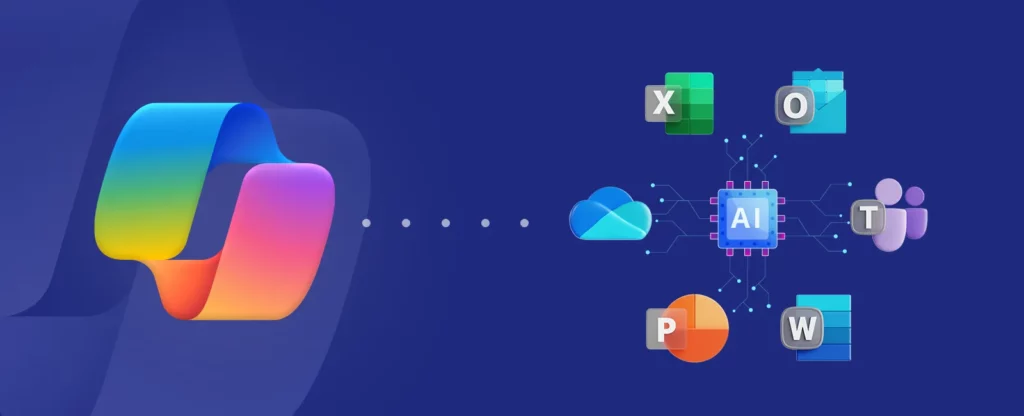
Microsoft Copilot Studio For Microsoft Business Workflows
Microsoft Copilot Studio is a managed builder for business agents that can use Microsoft data, connectors, and workflows. It fits teams already using Microsoft 365 or Power Platform that prefer managed authoring to a custom runtime.
A policy assistant could answer from approved SharePoint content and route a leave request into an existing flow. Microsoft documents connectors, REST APIs, and MCP server integrations, but a connector does not remove the need to check each user’s permissions, data access, and approval rules.
As checked on October 13, 2026, standalone Copilot Studio offers a US$200-per-month pack for 25,000 Copilot Credits or a pay-as-you-go option. The U.S. commercial Microsoft 365 Copilot license is US$30 per user per month when billed annually; it is separate and is not the standalone Copilot Studio price. Eligible Microsoft 365 subscriptions may include Copilot Studio use for internal agents under their licensing terms. Check the current billing and licensing guide for the intended channel, user type, and entitlement. Capacity, connectors, and tenant rules still shape the actual cost.
Agent Observability And Evaluation
Observability tools do not usually build the workflow. They help teams see what the agent did, find failures, and compare changes. Treat traces as sensitive data: review payload capture, retention, access, and regional needs before enabling them in production.
LangSmith For Traces And Evaluation
LangSmith provides tracing and evaluation for language-model applications and agents. Teams can inspect a run’s model calls, tool steps, and failures, then use datasets and evaluators to check whether a changed prompt or tool still meets the task criteria.
For a ticket workflow, a trace can help find whether a weak answer came from retrieval, routing, or the final response. That is more useful than tracking only whether the API returned successfully. LangSmith is associated with the LangChain ecosystem but can support other stacks; confirm current SDK support and deployment options for your framework.
Evaluation does not prove production quality by itself. A curated dataset can miss new user behavior, while an automated judge can make mistakes. Review sample traces with domain owners and use a separate acceptance threshold for high-impact actions. LangSmith’s pricing page lists Plus at US$39 per seat per month with 10,000 base traces, then usage-based charges; the Developer plan includes 5,000 traces for one seat. These are LangSmith prices, not fees for the open-source LangChain framework. Check trace limits and data handling on the current LangSmith plans page before sending sensitive prompts or tool results.
AgentOps For Agent Session Monitoring
AgentOps is an observability option for teams that want to inspect agent sessions and usage across supported frameworks. It may fit a stack where session traces and cost visibility are the immediate need, especially when a development team wants a dedicated agent view alongside its application logs.
Before choosing it, confirm that the current SDK supports the exact framework and version in your project. Also check whether traces capture prompts, user data, tool arguments, or outputs; decide what should be masked, who can view it, and how long it is retained. As checked on October 13, 2026, AgentOps Basic is free for up to 5,000 events. Pro starts at US$40 per month and lists unlimited events and log retention. Confirm the terms on the AgentOps plans page before budgeting.
AgentOps and LangSmith overlap in parts of the monitoring job. Compare them on the trace detail you need, evaluation workflow, supported integrations, deployment and retention controls, and total usage cost. Neither one replaces a task-specific test set or an incident owner.
A Practical Agentic AI Workflow: Support Ticket Triage
A support ticket shows how tools from different layers can work together. This is an illustrative design, not a tested deployment or a Designveloper project. Its purpose is to show the boundary between model suggestions and actions the application permits.
- Receive and scope: A verified ticket enters the workflow with a run ID and the customer’s account scope.
- Retrieve: A data layer such as LlamaIndex or Haystack finds relevant policy passages and order facts. The workflow keeps source IDs and checks the user’s access before returning records.
- Interpret: An agent SDK or orchestration framework classifies the request and drafts a recommendation with the evidence it used. It has read access, not direct permission to issue a refund.
- Validate: Application code checks order status, refund limits, required fields, and duplicate requests. Unclear or out-of-policy cases go to a person.
- Approve and act: A support lead reviews the proposed amount, policy evidence, and customer record. Only after approval does a service call the payment API with an idempotency key.
- Trace and learn: An observability tool records the route, retrieval results, model and tool calls, policy outcome, approval, and final status. The team reviews corrections and failures against an agreed test set.
LangGraph can own the stateful control flow, while a data framework handles retrieval and a service such as n8n connects selected business systems. A team could use other tools for each role. The decision is not to install this exact stack; it is to give each step one owner and keep permissions outside model instructions. That boundary is central to AI agent orchestration.
How To Choose The Right Agentic AI Tool
Choose based on the work the system must complete and the control the team needs to keep. A short proof of concept should answer whether an agent is useful at all before the team adopts a framework.
- Start with the workflow: Write down the trigger, intended user, expected result, failure path, and the step that needs model judgment. Keep stable routing and policy checks deterministic.
- Match the tool layer: Use an SDK or framework for agent behavior, retrieval tools for data-heavy answers, automation for app-to-app execution, and observability for tracing and evaluation. Combine layers only when the workflow needs them.
- Check control and data boundaries: Confirm hosting, region, identity, permissions, retention, export, and audit needs. A self-hosted library and a managed builder place different work and data controls on your team.
- Price the whole run: Include model input and output, retries, retrieval, connectors, workflow executions, hosting, traces, evaluation, human review, and maintenance. Compare cost per accepted outcome, not only a framework’s license or a model’s token rate. See this AI agent pricing guide for the cost components to include.
- Test a bounded slice: Use normal, ambiguous, incomplete, and denied requests. Measure completion quality, correction and escalation rates, latency, and cost. Set an owner, review date, and a threshold that would pause or narrow the pilot.
Once a workflow has stable evidence and a clear owner, expand access in small steps. Do not give an agent broader permissions just because the demo handled a few successful requests. For specific threat patterns and safeguards, review agentic AI security before connecting a write action.
FAQs About Best Agentic AI Tools
Can Different Agentic AI Tools Work Together?
Yes. A framework can control the agent, a retrieval system can find approved data, an automation platform can connect business apps, and an observability product can record the run. Assign one owner to each step and check that data and permissions remain consistent across tools.
Do I Need An Agent Framework To Build An AI Agent?
No. A small application can call a model and a few approved functions directly. Use a framework when it reduces work for state, handoffs, retries, persistence, or evaluation. If the task follows fixed rules, a deterministic workflow may be easier to test than an agent.
Are Open-Source Agent Frameworks Free To Run?
The code may be open source, but a production workflow can still incur model, hosting, data storage, execution, monitoring, and engineering costs. Check the license and each service’s current plan, then estimate cost using representative workflow volume and retry behavior.
What Should A Team Check Before An Agent Can Change Business Data?
Confirm the user’s identity and record scope, validate the action with application rules, and give the agent only the minimum tool access needed. Require human approval for high-impact writes, make retries safe, and record an audit trail that links the request to the approved change.
Plan The Product Around The Workflow
When a shortlist points to a custom AI product, Designveloper’s AI development services can help scope the workflow, integrations, and implementation. Bring one target workflow, its data sources, action boundaries, and success measure to keep the first build focused.
Also published on

Share post on










Related Articles


Is Vibe Coding Legal? Ownership, Copyright, and Release Risks
Is Vibe Coding Legal? Ownership, Copyright, and Release Risks Published October 16, 2026
How Will AI Affect Software Development? Complete Guide
How Will AI Affect Software Development? Complete Guide Published October 16, 2026
How to Build AI Agents with LangChain: A Practical Python Guide
How to Build AI Agents with LangChain: A Practical Python Guide Published October 16, 2026