














The speed at which web development changes in 2025 is incomparable to any other form of development. New tools, user behavior shifts, and increasing competition are putting a lot of pressure on businesses. For those planning to launch a minimum viable product or a large-scale platform, their tech stack for web development and development team will determine their level of success. This article focuses on achieving the perfect web application stack and the right specialists to get it developed.
Modern users expect a sleek interface, swift responsiveness, and high security. Such expectations further complicate matters for the fast-paced users. Collaborating with a JS development dedicated team can help you turn ideas into scalable products faster, thanks to their deep expertise in both frontend and backend development.
What the “Right Tech Stack” Means in 2026

Selecting the industry’s best technologies requires conducting market research. A few factors to consider include:
- Development speed and efficiency: Brand new products require quick release windows.
- Scalability and long-term maintainability: Controlling growth periods appends support without frequent redesigns.
- Integration capabilities: APIs, cloud tools, and third-party services require unhindered connection.
- Talent availability: Expect a vast support pool with JavaScript due to its universal popularity. Partnering with a JS development dedicated team ensures you work with specialists familiar with both frontend and backend development, as well as mobile and desktop environments.
- Cost of ownership: Budgeting over time is a common pitfall that leads to maintenance and infrastructure overspending.
Current stacks are adopting tendencies such as:
- Edge-first and serverless designs for quicker efficiency.
- Low-code/pro-code synergies that help both non-technical and technical personnel.
- AI-powered development tools that automate coding and fix bugs rapidly.
- Stack components that have first-class security considerations integrated into them.
- Event-driven architecture is gaining traction for real-time applications.
Given JavaScript’s flexibility as well as its popularity in both frontend and backend realms, collaboration with a JS development dedicated team can offer both agility and additional resources. They provide significant value, and their work is done with optimal speed throughout your project lifecycle. Furthermore, the versatility of JavaScript enables full-stack development, which means reduced context switching and tighter coupling across your application’s parts.
Knowing the anatomy of technology stacks is crucial, whether you are creating a basic landing page or a sophisticated SaaS application. Common web stack examples are MEAN, MERN, and LAM, which each serve different purposes depending on the objectives of the undertaking and the infrastructure requirements of the undertaking.
Strategic Approach to Choosing a Stack
There is no single tech stack applicable to all cases. The strategically defined first steps are set to achieve the following:
- Fast time to market versus long-term sustainability.
- Decompose the system at hand. UI, backend, database, integrations.
- Pick suitable solutions for each layer; don’t apply one solution to all layers.
- Evaluate the community around each option and its maturity and roadmap.
- Assess adherence to compliance and other industry-specific standards (HIPAA, GDPR).
Proactivity and flexibility are equally important. Each technical stack needs to be able to grow with the company, incorporate adaptive features, and pivot to market changes. Consider how easy it will be in the future to swap out one technology as opposed to another. Such modularity will save time and cost in the future.
Common Pitfalls to Avoid

Even with the best intentions, things can go south. Be wary of these traps:
A hot new tool does not always mean it’s right for your use case: Following hype over fit.
Simplicity isn’t well suited to complex architecture: Simpler apps don’t need complex microservice architectures.
Hiring challenges are often overlooked: A rare stack might mean hiring delays or increased expenses.
Ignoring the Total Cost of Ownership is also dangerous when infrastructure, support, and maintenance of the system converge with your budget long-term.
Performance benchmarks don’t get looked at: Without testing different stacks for real-world workloads, regret can follow.
Underestimating security implications: Not considering security implications when making decisions will lead to vulnerabilities. Consider the implications of vulnerabilities while making stack choices.
Evading these pitfalls takes business, design, and technical communication. All parties should collaborate on communicating what takes priority.
Why the Team Matters as Much as the Stack

The tools in question will always need to be used by the right party. But what defines a good team?
- Hands-on experience with your web application stack
- Proficiency in modern CI/CD, code review, and test automation practices
- Learning agility and advanced troubleshooting skills
- Willingness to learn and invent new things
Your team recruitment options:
In-house, great for long-term vision ownership and alignment to company strategy.
Freelancers are not ideal as they are useful for ad-hoc tasks, but lack long-term availability or project commitment. Users are not ideal.
That leaves you with a Dedicated team model, flexible and cost-efficient, while providing an adequately focused and scalable team that sidesteps internal hiring overhead.
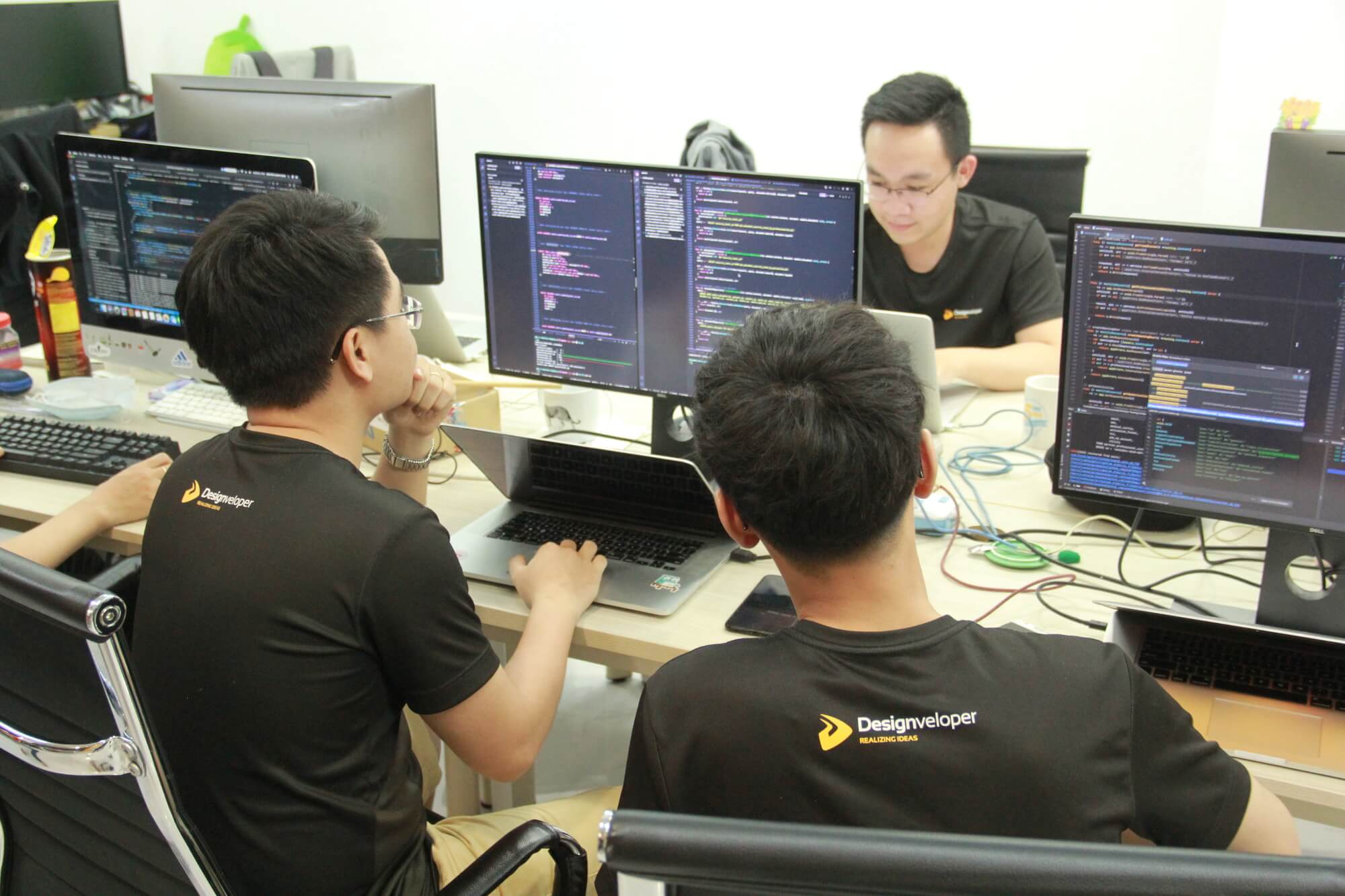
Selecting a JS development dedicated team ensures structure, responsibility, and default teamwork processes. They are also familiar with stack planning, cross-functional workflows, and agile principles.
You further gain experienced practitioners who understand how to document processes, scale, troubleshoot under pressure, and address other important needs for both startup and enterprise projects.
Final Thoughts: Prepare Yourself To Build for the Long Run
The web development technologies you select and use within your organization go beyond the nary check engineering paradigm, a weird term here dedicated to building a simple list of steps that need completing. Perceptibly, they play a role in determining scale, automation, adaptation, and the degree to which innovative solutions and strategies permeate your business.
Make sure you develop the right strategies, plan for scaling up, and consult experts in the field. A compatible blend of technology and an expertly trained workforce will help in turning your ideas into reality through guaranteed futuristic digital solutions.
When adopting strategies related to planning sessions, do not hesitate to pour resources into code reviews and discovery workshops; these sessions set the pace towards narrowing all business objectives to a single untangled goal. Always keep in mind that software is not simply written; it is constructed through a very coherent process guided by a clear vision. Choosing the right web development stacks is also a critical part of this process, as it ensures your technology foundation aligns with your goals and supports long-term scalability and performance.
Also published on

Share post on










Read more topics











You may also like



Top 50 Trending Apps in 2026 (New Updated)
Top 50 Trending Apps in 2026 (New Updated) Published March 02, 2026
20 Web App Ideas for 2026: Health, FinTech, AI, E-commerce
20 Web App Ideas for 2026: Health, FinTech, AI, E-commerce Published March 01, 2026
What Is Web Application Security? OWASP 10 Web App Vulnerabilities
What Is Web Application Security? OWASP 10 Web App Vulnerabilities Published January 12, 2026