














Project Risk Management: Process, Examples, And A Risk Register

KEY TAKEAWAYS:
- Make uncertainty actionable. A risk management plan should connect each risk to an objective, an owner, and a next decision.
- Separate risks from issues. A risk may happen; an issue has already happened and needs active resolution.
- Use scores with care. Agree on likelihood and impact scales first; a score helps teams prioritize but is not a precise forecast.
- Record the response conditions. Each priority risk needs an owner, an early-warning trigger, a due date, a fallback, and a review point.
- Track upside as well as threats. Uncertainty can create opportunities, so teams should decide how to capture a possible gain as well as limit harm.
An approved launch date can look firm while a supplier dependency, untested integration, or unanswered product decision remains open. Those uncertainties can affect scope, cost, quality, and delivery order through a chain of small decisions. The challenge is not to predict every problem. It is to make important unknowns visible early enough for the right person to act. This article moves from the basic risk model to a repeatable process, a sample register, software-delivery scenarios, and a short escalation routine. The aim is to make risk reviews useful without turning every meeting into a separate workshop.
What Is Project Risk Management?
Project risk management is the ongoing work of understanding uncertainty that could affect project objectives and deciding how to respond. The UK Government’s Orange Book Management of Risk defines risk as the effect of uncertainty on objectives. Although the Orange Book is written for government organizations, its definition is useful for project teams because it ties a risk to something the project is trying to achieve.
A risk can be a threat or an opportunity. A supplier may miss a delivery date and delay testing, or an early prototype may reveal a simpler way to meet a user need. In both cases, the team faces an uncertain event that could change a project result. Risk management helps the team record that uncertainty, judge its importance, and choose a response while there is still time to act.
A clear risk statement connects three parts: a cause, an uncertain event, and an effect on an objective. For example, a payment provider’s test environment may be unavailable. The checkout integration could then miss release testing and delay launch. This cause-event-effect chain gives the team a problem to investigate instead of a vague label such as “payment risk.”
A risk is not the same as an issue. “The vendor may miss the data handoff date” is a risk. “The vendor missed the data handoff date” is an issue. Once the event happens, the team should track the work needed to resolve it while still recording any remaining risk. On software work, the risk register should also align with the software project management plan, so the owner, response, and decision date connect to the delivery scope.
For related project-planning topics:
- App Development Project Management: Methodologies & Tools
- Project Time Management: 5 Strategies for Staying on Schedule
- 10 Project Management Tools For Productive Team Work
How The Project Risk Management Process Works
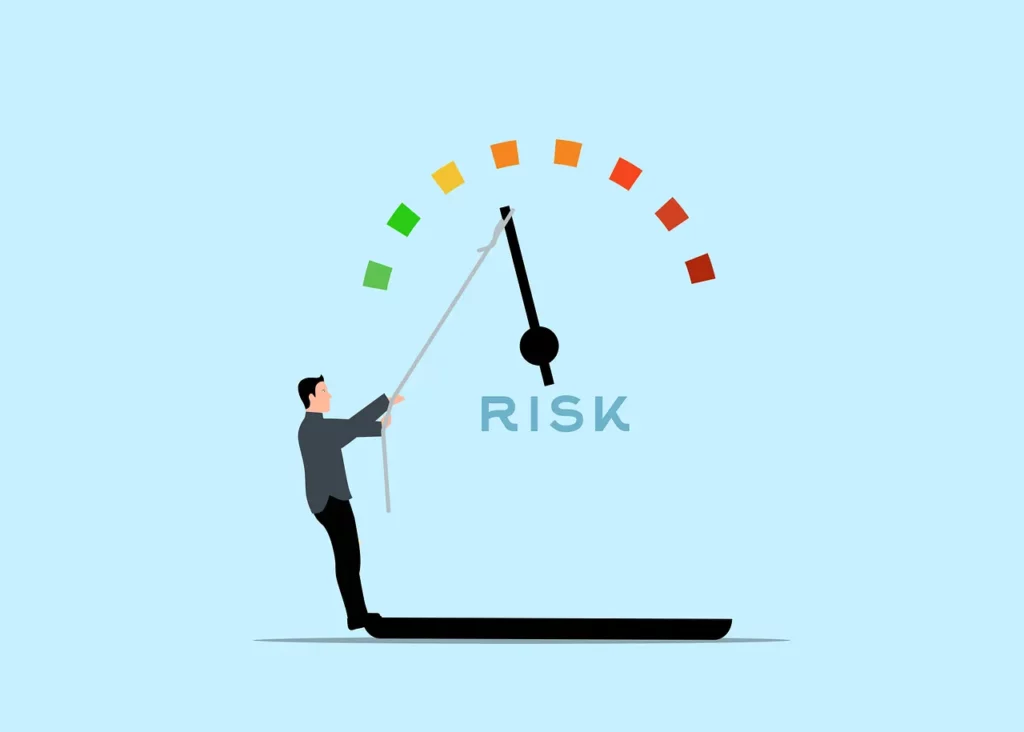
A useful project risk management process is a loop, not a one-time workshop. Teams identify uncertainty, assess what matters, choose a response, and revisit the record as the project changes. Different organizations may use different labels, but the work needs clear ownership at every step.
Identify Risks Before They Become Blockers
Risk identification turns assumptions and dependencies into statements the team can review. Start with project goals, planned work, dependencies, and decisions that are not yet settled. Ask what could change the scope, schedule, budget, quality, compliance position, or ability to launch.
Useful inputs include stakeholder discussions, delivery plans, estimates, prior project lessons, supplier commitments, technical reviews, and change requests. A checklist can help prompt discussion, but it should not replace conversations with the people who own the work. Record the cause and possible effect, then assign someone to investigate the uncertainty.
Assess And Prioritize Each Risk
Risk assessment estimates how likely an uncertain event is and how much it could affect a project objective. Teams can use a qualitative scale, such as low, medium, and high, or a defined 1-to-5 scale. Write down what each rating means before scoring risks; otherwise, two people may give the same risk very different ratings.
For a simple register, a team may multiply likelihood by impact to sort risks for discussion. A likelihood rating of 3 and an impact rating of 4 can produce a priority score of 12 on a 25-point scale. That score is a local ranking aid, not a 48% probability or a financial forecast. A low-likelihood risk may still need attention when its impact could stop a launch or breach an agreed requirement.
Define each scale against the project’s context before scoring. Set a likelihood horizon, such as the remaining delivery period, and use evidence from dependencies, test results, and supplier commitments. Tie impact bands to agreed limits for schedule delay, budget variance, affected users, compliance exposure, or loss of a critical capability. Record the definitions with the register and review related risks together when they share a dependency; their combined effects may be greater than either score suggests.
Where estimate uncertainty drives a decision, keep the assumptions visible and compare a range rather than treating one early figure as a commitment. Teams planning software scope can use the same assumptions when they estimate a software project.
Choose A Response And Name Its Owner
A response should change the exposure or prepare the team for the event. For a threat, common choices include avoiding the cause, reducing its likelihood or impact, transferring part of the exposure, or accepting it with a clear reason and contingency. A contract or insurance may transfer some financial exposure, but it does not remove every delivery consequence.
For an opportunity, a team may act to secure the benefit, increase its likelihood, share the work with a partner, or accept the possibility without extra effort. If the right response sits outside the project manager’s authority, escalate it to the sponsor or governance group rather than leaving it in the register without action.
Every response needs a named owner, an action, a due date, and a trigger for review. It should also state what the team will do if the event occurs and what exposure remains after the response. A response can lower risk; it cannot guarantee that the event will not happen.
Monitor Risks And Update The Record
Review risks on a cadence that matches project volatility, such as during regular planning or status reviews, and revisit them when a trigger occurs. Update the score when evidence changes, add newly discovered risks, and close items that are no longer relevant. If a risk becomes real, move the active work into issue management and keep the register focused on remaining uncertainty.
For more on delivery planning:
- Web Development Project Management: Complete Guide
- Everything About Managing Website Projects
- Project Management Services: What You Should Know?

Example: A Project Risk Register Teams Can Use
The register should make the next action clear, not collect every possible concern. The row below is a hypothetical software-project example. Its scores and timing are illustrative only; teams should set their own rating definitions and review cadence.
| Risk Statement | Likelihood And Impact | Owner, Trigger, And Response | Contingency And Residual Risk |
|---|---|---|---|
| Because the finance approver has not reviewed the payment requirements, acceptance criteria may miss the sprint-planning cutoff and affect the release date. | Likelihood: 3/5. Impact: 4/5. Example priority score: 12/25 using the team’s agreed scale. | Owner: product owner. Trigger: approval is missing two business days before planning. Confirm the approver and criteria; move dependent work out of the committed scope if sign-off is late. | Contingency: split the release or defer the dependent feature. Residual risk: a later scope change may still affect testing; review at each planning cycle. |
The example links a specific cause to an uncertain event and a delivery effect. It also gives one person the next action and tells the team when to revisit the risk. The rating helps compare this item with other risks; it does not prove the release will slip.
A working register usually records the risk statement, affected objective, likelihood, impact, owner, response, due date, trigger, contingency, status, and residual exposure. Teams can remove fields they do not use, but should keep enough detail to support an actual decision.
At the review point, the owner checks whether the trigger occurred and updates the status with evidence. If approval is still missing, the product owner can remove the dependent feature from the release commitment and ask the sponsor to decide whether scope or date takes priority. If approval arrives, keep the risk open until the acceptance criteria and test results are confirmed.
Do not lower a rating just because an action was completed. Reassess likelihood and impact against new evidence, then record the remaining exposure as residual risk.
Apply Project Risk Management To Software Delivery
Software projects often have risks around changing requirements, technical dependencies, data, and release readiness. The register becomes more useful when it records the specific workflow or decision at risk rather than broad labels such as “technical issue.”
- Unclear requirements: A decision-maker or acceptance rule may be missing. Confirm who approves scope, record assumptions, and separate uncertain estimates from committed work.
- External integrations: A payment, identity, or messaging provider may behave differently from the team’s assumptions. Test the critical path early and define a fallback before dependent work is scheduled.
- Data migration: Source records may be incomplete or inconsistent. Rehearse migration with representative data, assign a data owner, and define reconciliation and rollback checks.
- Release readiness: A defect or operational gap may block launch. Set test exit criteria, identify who can approve a release, and agree on rollback signals before deployment.
These controls do not belong in one generic “risk mitigation” paragraph. Connect each one to an owner, a date, and an observable signal. Teams can also compare relevant software project management methodologies when their delivery model changes how often scope, dependencies, and risks are reviewed.
Keep Project Risk Reviews Tied To Decisions
A risk review is useful when it changes a decision, assigns work, or confirms that an exposure is within the team’s agreed limits. A long register with no owner or next action creates the appearance of control without helping delivery.
- Set a review rhythm: Use the team’s existing planning, status, or stage-gate meetings. Review high-volatility work more often and use triggers to bring urgent items forward.
- Agree on escalation rules: Escalate when the risk exceeds the project’s authority or tolerance, threatens a critical objective, or needs budget or a decision the owner cannot approve.
- Keep ownership practical: The person closest to the cause may own the response, while the project manager coordinates visibility and follow-up. A sponsor resolves decisions above the team’s authority.
- Close stale items: Recheck assumptions and remove risks that no longer apply. Keep a short record of why a major risk was closed or accepted.
Before accepting exposure, record who has authority to approve it and which tolerance applies. A project manager may accept a minor delay within the team’s agreed limits, while a sponsor may need to decide if it affects a contractual milestone or approved budget. Note the rationale and approval date, then reopen the decision if assumptions change or the trigger occurs.
For software teams, these habits work alongside useful software project management best practices. Scale the process to the project’s size and uncertainty. A small team may need a short register and a clear owner. A multi-vendor program may need formal approval paths and documented thresholds.
Teams can start with one risk that could change scope, timing, or release quality, then assign its owner and next decision. When a web product needs delivery support across requirements, integrations, and release planning, Designveloper’s web application development services are one option to consider.
Also published on

Share post on










Related Articles


Project Risk Management: Process, Examples, And A Risk Register
Project Risk Management: Process, Examples, And A Risk Register Published October 05, 2026
Scrum Software Development Turns Change Into Working Software
Scrum Software Development Turns Change Into Working Software Published June 29, 2026
App Development Project Management: Methodologies & Tools
App Development Project Management: Methodologies & Tools Published December 01, 2025