














Enhancing Client Loyalty In Web Development With Smart Rewards

KEY TAKEWAYS:
- Client loyalty in web development depends on ongoing value, not only the first website launch. A useful reward strategy should make clients feel supported after delivery through better service, clearer communication, and measurable business outcomes.
- Smart rewards work best when they are tied to real behavior: repeat purchases, referrals, renewals, feedback, engagement, and product usage can all become signals inside a rewards web platform.
- For ecommerce and B2B teams, rewards should connect to customer data, segmentation, secure accounts, payment rules, analytics, and fraud controls instead of living as a separate marketing add-on.
- The main risks are privacy, over-discounting, weak reward economics, poor UX, and security gaps. Teams need clear consent, reliable tracking, and safe API design before scaling loyalty features.
- A scalable loyalty product usually needs both web development and business planning: the best system combines customer insight, product design, backend architecture, and continuous optimization.
Enhancing client loyalty in web development means giving clients and end users clear reasons to return, renew, refer others, and deepen the relationship. Smart rewards can support that goal through service credits, referral benefits, milestone perks, cashback-style value, loyalty points, personalized offers, or flexible payment benefits. The reward must reinforce a useful behavior without hiding its cost or replacing good service.
The goal of enhancing client loyalty in web development is to reward behavior that strengthens a useful relationship. For a web development company, the rewarded behavior might be a maintenance renewal, a qualified referral, early feedback, or adoption of a long-term improvement plan. For an ecommerce or SaaS product, it might be a repeat order, subscription renewal, partner sale, completed onboarding step, or meaningful community contribution. The same principle applies in both cases: define the behavior, make the value exchange understandable, and measure whether the incentive creates durable value.
Quick decision guide: Start with a lightweight rewards tool when the program only needs standard points, coupons, or referrals. Choose a custom web platform when rewards depend on proprietary pricing, multiple customer or partner roles, complex approval rules, CRM and payment data, real-time balances, or fraud controls. Before building either option, calculate the target behavior, reward cost, expected margin, and rules for earning, redeeming, expiring, reversing, and disputing rewards.
| Decision | Practical starting point | Evidence of success |
|---|---|---|
| Reward existing web clients | Offer referral credits, renewal benefits, or milestone service perks | More renewals, qualified referrals, and expansion work |
| Reward ecommerce customers | Connect points, tiers, and referrals to orders and customer accounts | Higher repeat purchase and redemption rates without margin damage |
| Reward B2B partners | Use rebates, enablement milestones, co-marketing benefits, or deal credits | More active partners, qualified opportunities, and retained accounts |
| Build a custom platform | Design a ledger, rules engine, integrations, controls, and admin workflow | Accurate balances, reliable redemptions, low abuse, and measurable lift |
Further reading:
- Web App vs Website: Similarities, Differences and Misconceptions
- 20 Web App Ideas: Health, FinTech, AI, E-commerce
- Web App Development Cost: Breakdown
Why Client Loyalty Matters In Web Development
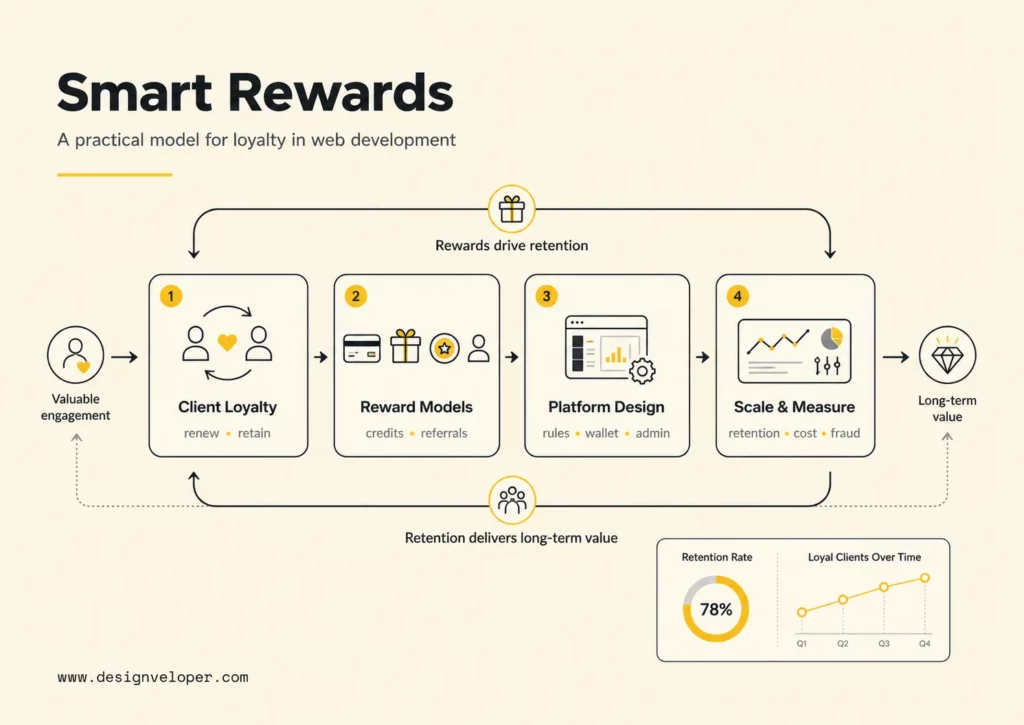
Client loyalty makes web development more valuable because websites and web applications are never truly finished. Security updates, performance tuning, content changes, analytics, accessibility work, integrations, conversion experiments, and new business requirements continue after launch. A trusted development relationship gives the client continuity while giving the delivery team the context required to improve the product without relearning its history.
Retention also changes the economics of delivery. A repeat client does not need to evaluate the team’s communication, web development process, and technical reliability from zero. The development company already understands the architecture, deployment path, stakeholders, and operational constraints. That knowledge can shorten discovery, reduce avoidable rework, and make maintenance or expansion projects easier to estimate.
Loyalty should not mean preventing a client from leaving. Contractual lock-in, inaccessible source code, undocumented infrastructure, and proprietary traps create dependency, not trust. Strong client loyalty comes from transparent work, measurable outcomes, reliable support, clean handoffs, and a product that can evolve. Rewards can reinforce that experience, but they cannot compensate for missed deadlines, fragile code, or unclear ownership.
A sensible client reward targets a behavior that benefits both sides. A referral credit can recognize the value of a qualified introduction. A renewal benefit can encourage teams to plan maintenance before defects become incidents. A milestone perk can reward prompt feedback or a multi-phase roadmap. An innovation credit can fund a small performance, accessibility, or analytics improvement after a successful release.
- Recurring revenue: maintenance, support, hosting, optimization, and continuous delivery become easier to plan.
- Long-term product quality: the same team can address technical debt and operational risks before they become expensive.
- Relevant upsells: additional work follows observed product needs instead of generic sales pressure.
- Qualified referrals: satisfied clients can introduce prospects who already understand the team’s value.
- Lower relationship friction: established communication, governance, and delivery routines reduce uncertainty.
The key measure is not how many rewards are issued. A client-loyalty program should track renewal rate, retained revenue, qualified referrals, maintenance adoption, expansion revenue, support health, and client satisfaction. If rewards increase discounts but not durable behavior, the program is subsidizing activity rather than enhancing client loyalty in web development.
What Smart Rewards Mean In Web Development
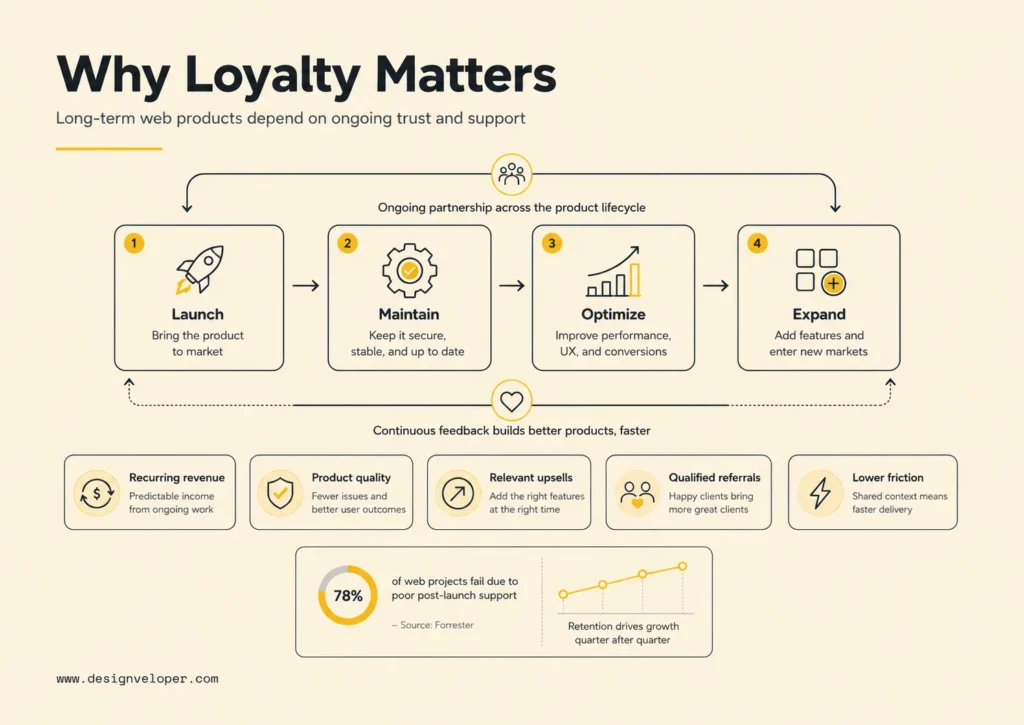
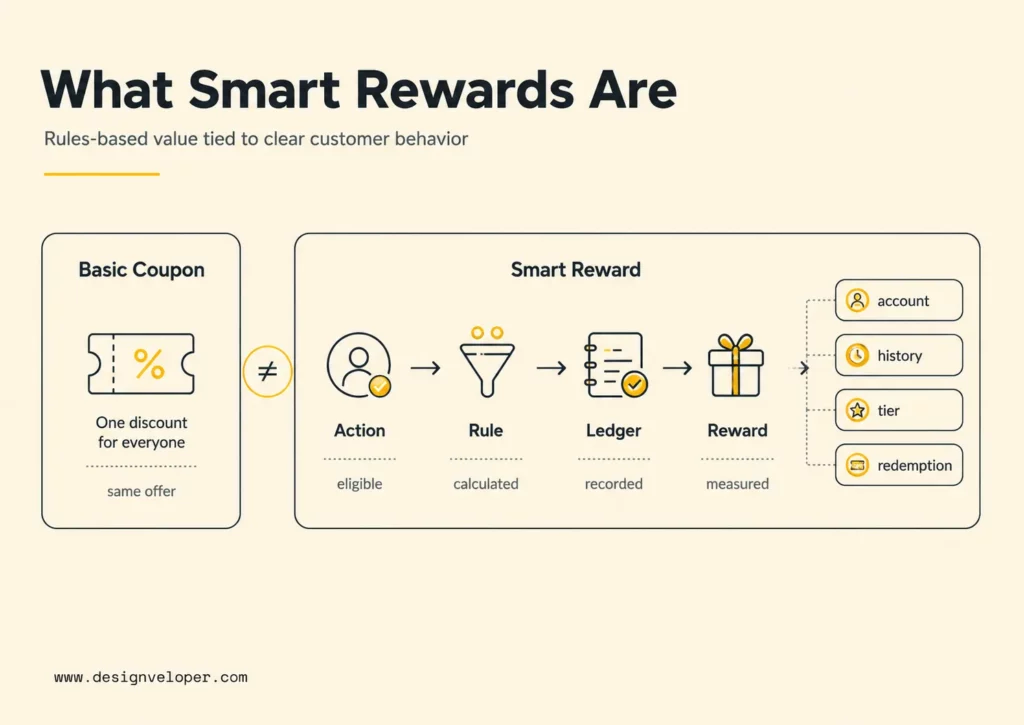
Smart rewards are incentives built into a web product or client experience, using credits, cashback-style benefits, referrals, milestones, personalized offers, or flexible payment perks to encourage repeat engagement and long-term value. “Smart” describes the connection between a business rule, a user action, a reward calculation, and measurable results. It does not require artificial intelligence.
A basic coupon gives the same discount to anyone who enters a code. A smart reward can consider the customer’s account, order history, membership tier, referral status, campaign, region, product eligibility, reward budget, and previous redemptions. The system then calculates the allowed benefit, records it in a ledger, applies it through the correct channel, and preserves an audit trail.
For enhancing client loyalty in web development services, smart rewards can include a credit toward maintenance, a free performance review after a milestone, a referral benefit after a qualified contract begins, or priority access to a planned improvement sprint. The terms should specify the value, eligibility event, redemption window, excluded work, tax treatment where relevant, and whether the benefit can be transferred or combined.
For customer-facing web products, common models include points, stored credits, tier benefits, cashback-style balances, free products, referral incentives, exclusive access, service upgrades, or personalized offers. Shopify’s Shopify ecommerce loyalty program guide describes programs as a way to reward repeat business and encourage ongoing interaction, while its Shopify omnichannel loyalty guidance highlights the need to keep customer profiles and rewards consistent across online and in-store journeys.
Smart rewards are different from reward-based financing. Financing changes when or how a customer pays, usually through credit, installments, or deferred payment. A reward changes the value received because of an eligible behavior. A program can combine the two, but the business must model credit risk, payment regulation, reward cost, and customer disclosures separately.
A smart reward is not a discount with a new label. It is a controlled value exchange tied to a behavior the business can afford and the customer can understand.
How Smart Rewards Improve Customer Retention
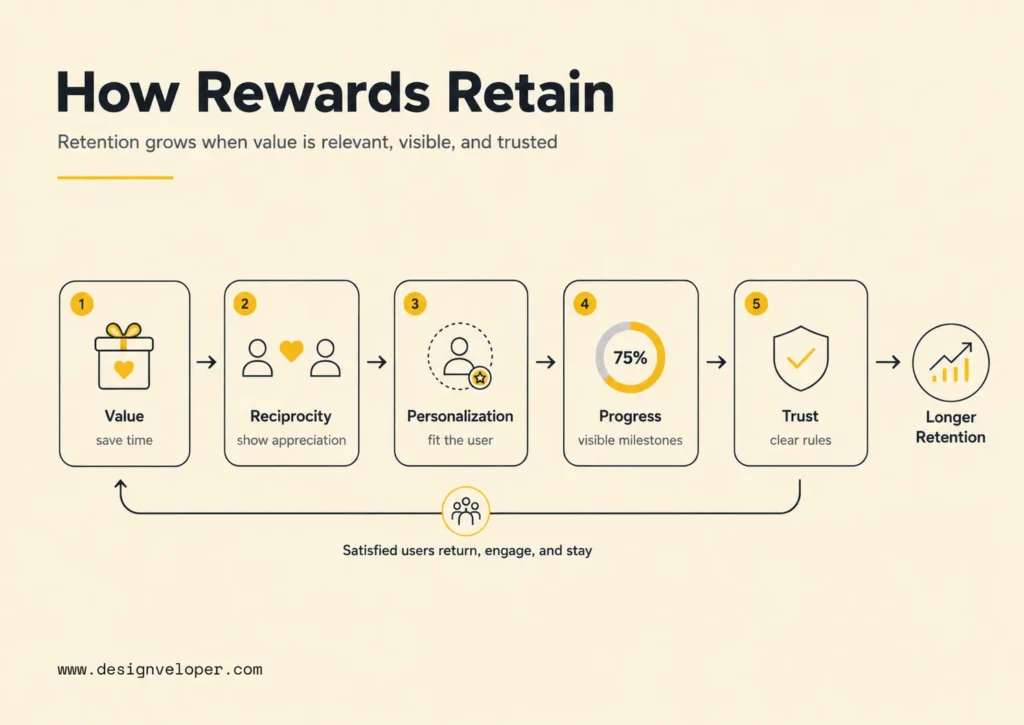
Smart rewards improve retention when they make continued participation more valuable, visible, and trustworthy, and thus enhancing client loyalty in web development. The program should help customers recognize progress and use benefits without forcing them to study complicated rules. Customer experience still leads; rewards amplify a useful experience rather than repair a poor one.
Perceived value matters first. A reward can save money, save time, provide access, reduce risk, or create recognition. Monetary value is easy to compare, but non-monetary benefits such as priority support, useful education, early access, or a service upgrade may protect margin while feeling more relevant. Zendesk’s customer loyalty guide recommends choosing rewards that match the audience instead of assuming one incentive works for everyone.
Reciprocity can strengthen the relationship when the reward feels like genuine appreciation. An unexpected service review after a successful launch can feel more meaningful than a generic discount sent to every account. The reward must remain transparent; manufactured scarcity or hidden conditions can turn reciprocity into suspicion.
Personalization improves relevance when it uses data responsibly. A maintenance client may value an accessibility check, while an ecommerce client may prefer a performance audit before a seasonal campaign. A customer who frequently buys one category should not receive an irrelevant offer just because it is inexpensive for the business. Personalization needs a clear data purpose, preference controls, and limits on profiling.
Progress tracking supports motivation by showing the distance to a milestone. Talon.One’s loyalty psychology overview connects program design with the endowed-progress and goal-gradient effects: an initial sense of progress and visible proximity to a goal can encourage continued participation. Product teams should use those mechanics to clarify progress, not to create compulsive loops.
Habit formation becomes useful when the repeated action already has value. A SaaS platform might reward completion of onboarding tasks that help the customer adopt important features. A B2B partner program might reward training, certifications, or accurate deal registration. Repeating meaningless clicks creates vanity engagement and teaches users to expect payment for actions they would otherwise ignore.
Trust depends on simple rules. Customers should be able to see how rewards are earned, when they become available, whether they expire, which purchases qualify, how returns affect the balance, and how to resolve a dispute. Balances must update predictably. Notifications should explain material changes. Support teams need the same ledger history that the customer sees.
- Define one primary behavior and one guardrail metric for the first release.
- Show progress, available value, pending value, and expiration dates in the account experience.
- Use a reward catalog that fits customer needs and business margin.
- Explain exclusions before checkout or redemption, not after rejection.
- Measure incremental behavior against a comparable group instead of counting all member purchases as program impact.
Recommended for you:
- Cloud Ecommerce Solutions: How To Choose The Right Platform
- Ecommerce Business: How To Start, Grow, And Use Technology
- Best Small Business Applications For Owners And Freelancers
Real Reward Examples Web Teams Can Learn From
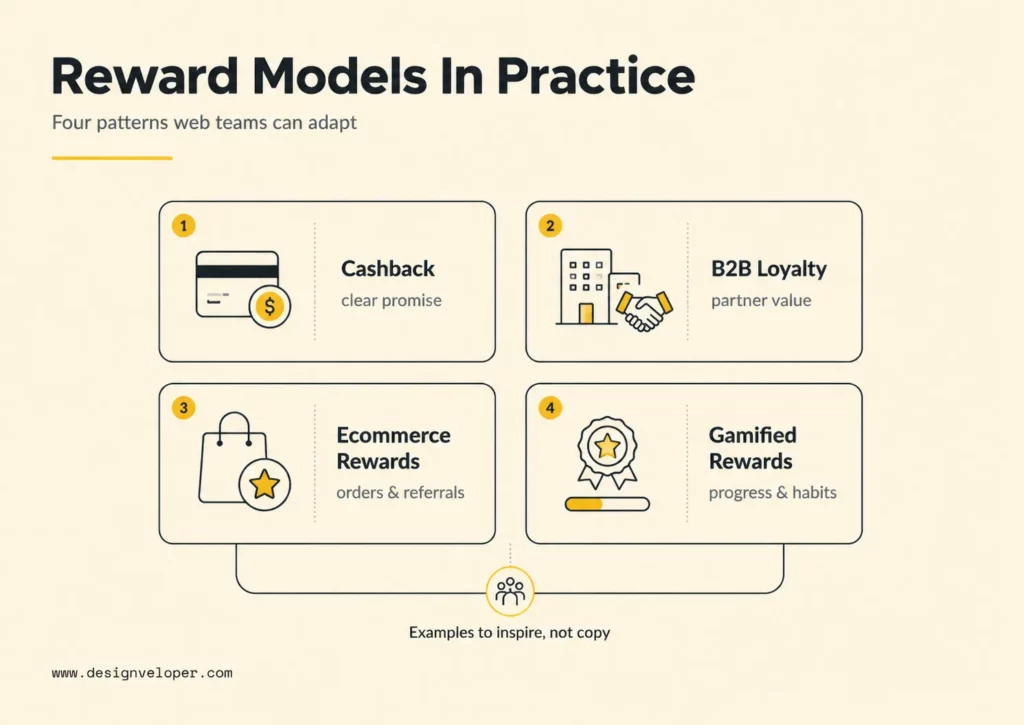
Useful reward examples reveal patterns that web teams can adapt without copying a program blindly. The best lesson for enhancing client loyalty in web development is usually the connection between a simple customer promise and the technical controls that keep it accurate.
Cashback Rewards From Capital One Quicksilver
Capital One Quicksilver is a cashback analogy, not a web development case study. Its public Quicksilver rewards page presents a clear flat-rate proposition for eligible cards: 1.5% cash back on everyday purchases, with additional categories and terms for specific offers. The page also explains conditions such as account status, qualifying purchases, returns, and redemption.
The transferable lesson is clarity. A web-development referral credit could state: “Receive a $500 service credit after the referred company signs and pays its first invoice.” The system then needs to identify the referrer, associate the opportunity, verify the qualifying payment, issue the credit once, and reverse it only under defined conditions. The customer promise stays simple even though the operational workflow is controlled.
B2B Loyalty Programs For Repeat Purchases And Partner Retention
B2B loyalty programs often reward more than purchases. Useful behaviors can include renewals, order volume, product training, certifications, qualified referrals, accurate deal registration, joint campaigns, customer adoption, or timely data submission. Rewards may take the form of rebates, service credits, priority support, training access, co-marketing funds, tier status, or partner experiences.
B2B design must account for organizations, not only individual users. One company may have buyers, administrators, finance contacts, partner managers, and end users. The platform needs rules for who earns, who controls the balance, who can redeem, and how benefits appear in contracts or invoices. Approval workflows and account hierarchies are therefore as important as the reward catalog.
A partner-retention program should separate activity from value. Logging ten unqualified leads should not earn more than one closed, well-supported deal. A practical score can combine verified revenue, training completion, customer health, data quality, and strategic contributions. Manual approval should remain available for high-value or exceptional rewards.
Ecommerce Rewards For Repeat Orders And Referrals
Ecommerce programs commonly reward purchases, referrals, reviews, birthdays, subscriptions, or cross-channel engagement. Shopify’s 2025 omnichannel loyalty examples show why a unified customer profile matters: customers expect the same balance and redemption rules whether they use a website, mobile app, or physical store.
The ecommerce workflow must handle returns, cancellations, partial refunds, guest checkout, account merging, currency differences, taxes, shipping, and promotion stacking. Points should often remain pending until the return window or payment-risk period passes. Referral rewards need safeguards against self-referral, duplicate identities, disposable accounts, and orders that are later refunded.
A small store can begin with an established loyalty application when its program follows standard patterns. Custom development becomes appropriate when the reward is tied to proprietary product configuration, subscription logic, marketplaces, multiple brands, partner channels, unusual redemption, or existing ERP and CRM workflows. Our B2C ecommerce model guide explains why custom loyalty and membership logic become necessary when standard platforms cannot represent real customer behavior without manual fixes.
Gamified Rewards For Engagement And Habit Formation
Gamified rewards use progress bars, challenges, levels, badges, streaks, missions, collections, or status to make advancement visible. A challenge might reward a customer for completing a product tutorial and using three valuable features. A partner portal might display certification progress. A client dashboard might recognize completed roadmap milestones.
Gamification works best when the action has intrinsic or practical value. Difficulty should rise gradually, progress should be achievable, and users should understand how the score is calculated. Our Boon project offers a useful example: recognition is tied to helpful community participation rather than empty clicks. The transferable lesson is to define the valuable behavior first, then make the score, eligibility rule, and user feedback easy to understand.
Teams should avoid streak loss designed to create anxiety, leaderboards that embarrass low-activity users, and random rewards that resemble gambling mechanics. Participation should remain voluntary where appropriate, and users should be able to understand why they received a reward. The program should improve the relationship, not manipulate attention.
Features Needed For A Smart Rewards Web Platform
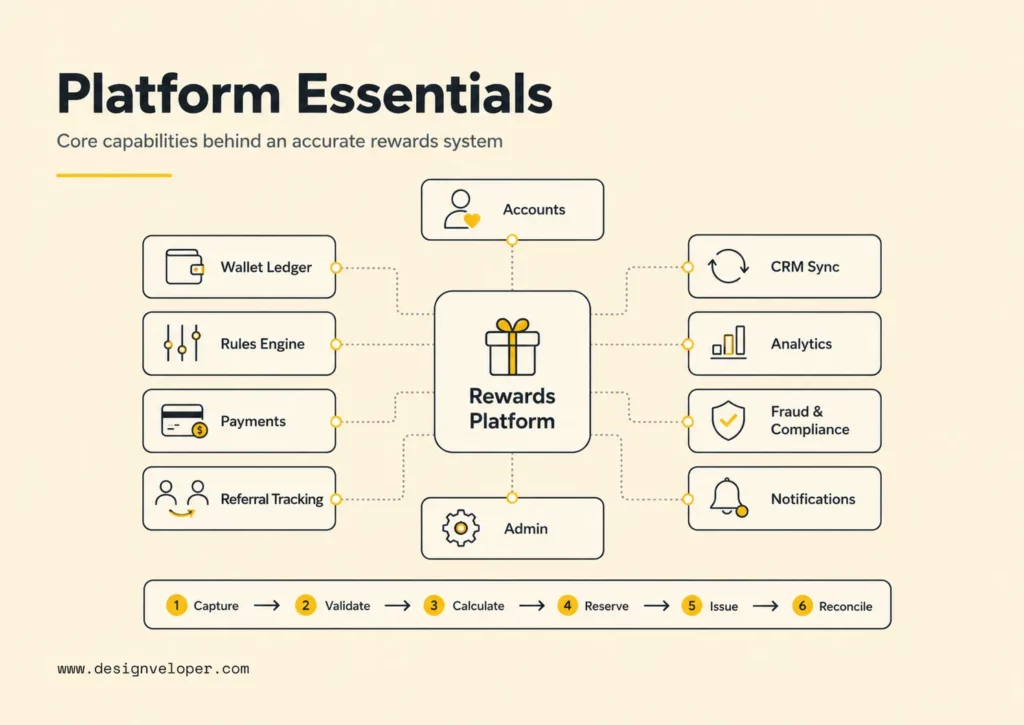
A smart rewards web platform works like a business web application and needs a reliable ledger, a configurable rules engine, secure integrations, clear customer interfaces, and operational controls. The following feature map connects the business purpose with the technical requirement.
| Feature | Business Purpose | Technical Requirement |
|---|---|---|
| User and organization accounts | Identify members, clients, partners, and roles | Authentication, account hierarchy, role-based access, consent, and account merge rules |
| Reward wallet | Show available, pending, redeemed, expired, and reversed value | Append-only ledger, transaction states, currency or points precision, and balance reconciliation |
| Points or credits logic | Calculate earning and redemption consistently | Versioned rules engine, eligibility filters, caps, priority, stacking, and effective dates |
| Payment gateway | Connect rewards with paid orders, refunds, or invoices | Tokenized payment integration, verified webhooks, idempotency, and refund handling |
| Referral tracking | Attribute qualified introductions | Referral codes or links, identity checks, conversion events, self-referral controls, and attribution windows |
| Tiered benefits | Recognize sustained value or partner status | Qualification periods, progress calculation, upgrade and downgrade rules, and benefit entitlements |
| CRM integration | Align rewards with client, lead, and account history | Bidirectional sync, field ownership, duplicate handling, retries, and error queues |
| Analytics | Measure incremental retention, cost, and behavior | Event taxonomy, cohort analysis, control groups, margin data, and experiment reporting |
| Admin dashboard | Manage programs and resolve exceptions | Role-based controls, rule preview, approval workflows, audit logs, and safe manual adjustments |
| Notifications | Explain earned value, progress, and expiration | Template governance, preferences, localization, delivery status, and rate limits |
| Fraud prevention | Stop account farming, referral abuse, and redemption attacks | Velocity limits, device and identity signals, risk scoring, review queues, and reversible holds |
| Compliance checks | Protect payment and personal data and communicate terms | Data minimization, retention rules, access controls, consent records, disclosures, and regional configuration |
The most important data structure is the rewards ledger. A balance should be derived from immutable transactions such as earn, reserve, release, redeem, expire, reverse, and manual adjustment. Editing a balance directly makes disputes and reconciliation difficult. Every transaction needs a unique source event so a retried webhook cannot issue the same reward twice.
The rules engine should be versioned. A campaign created in August may differ from the same campaign in September, yet the platform must explain how an earlier reward was calculated. Store the rule version, inputs, output, and reason code with the transaction. Use a simulation mode so an operator can test sample accounts before activating a rule.
From customer action to reconciled reward
This transaction workflow prevents a marketing promise from becoming an accounting mystery. Payment integrations should minimize card-data exposure and follow the applicable PCI scope. The PCI Security Standards Council confirms that PCI DSS v4.0.1 is the active version of the standard. Reward APIs also need object- and function-level authorization, strong authentication, rate limits, and protection for sensitive business flows; those risks are covered in the OWASP API Security Top 10.
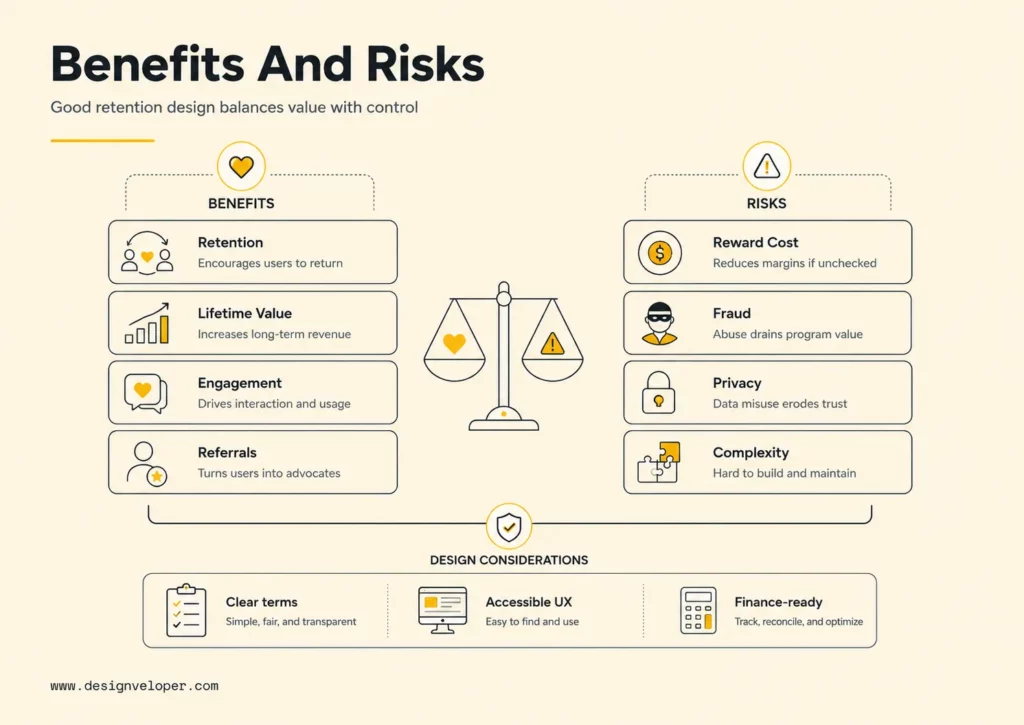
Benefits, Risks, And Design Considerations
Smart rewards can improve retention and engagement, but each benefit creates a cost or control requirement. The business case should include reward expense, software cost, operational workload, liability, fraud loss, support effort, and the incremental behavior attributable to the program.
| Area | Benefit | Risk To Manage |
|---|---|---|
| Retention | Gives customers or clients another reason to return or renew | Rewards may subsidize people who would have stayed anyway |
| Lifetime value | Can increase frequency, duration, or account expansion | Discount cost may exceed incremental margin |
| Engagement | Makes valuable progress and milestones visible | Vanity actions can create noise without business value |
| Referrals | Recognizes qualified introductions and advocacy | Self-referral, fake accounts, duplicate attribution, and low-quality leads |
| Reward cost | Creates a controllable investment in desired behavior | Uncapped liabilities, expiration disputes, and poor financial forecasting |
| Fraud or abuse | Program data can reveal suspicious patterns | Account farming, bot activity, stolen accounts, and redemption attacks |
| Terms | Clear rules can strengthen trust | Hidden exclusions or retroactive changes can damage the relationship |
| Privacy | Preference and behavior data can improve relevance | Excessive collection, unclear profiling, weak consent, and long retention |
| Payment compliance | Integrated checkout and credits reduce friction | Payment-data exposure, regional regulation, tax, and accounting complexity |
| User experience | A wallet and progress view make value tangible | Complex redemption, stale balances, accessibility defects, and notification fatigue |
Reward economics should be calculated before interface design. Estimate the baseline rate of the target behavior, expected incremental lift, gross margin, average reward, breakage, fraud loss, and operating cost. Set a maximum cost per incremental retained client, order, renewal, or referral. A program can appear popular while destroying margin if most rewards go to existing behavior.
Privacy must be designed into the program. Collect only the data needed for a stated purpose, separate required processing from optional personalization, provide meaningful controls, and define retention periods. The European Data Protection Board’s 2026 summary of consent under GDPR emphasizes informed consent, clear processing purposes, data types, controller identity, and the ability to withdraw consent when consent is the legal basis. Regional legal review remains necessary.
Fraud controls should create friction in proportion to value and risk. Low-value points might post immediately, while high-value cashback or partner rebates remain pending. Velocity limits can restrict repeated referrals or redemptions. Risk rules can flag shared devices, unusual account clusters, rapid earn-redeem patterns, and transactions followed by refunds. A human review queue is better than silently rejecting every unusual customer.
Accessibility and transparency are retention features. The wallet must work with keyboard navigation and assistive technology. Color cannot be the only signal for pending or expired rewards. Error messages should explain what happened and how to resolve it. Terms should be available at enrollment and redemption, with version history for material changes.
If finance cannot reconcile the reward, support cannot explain it, and the customer cannot predict it, the loyalty feature is not ready to scale.
Turning Smart Rewards Into A Scalable Web Product
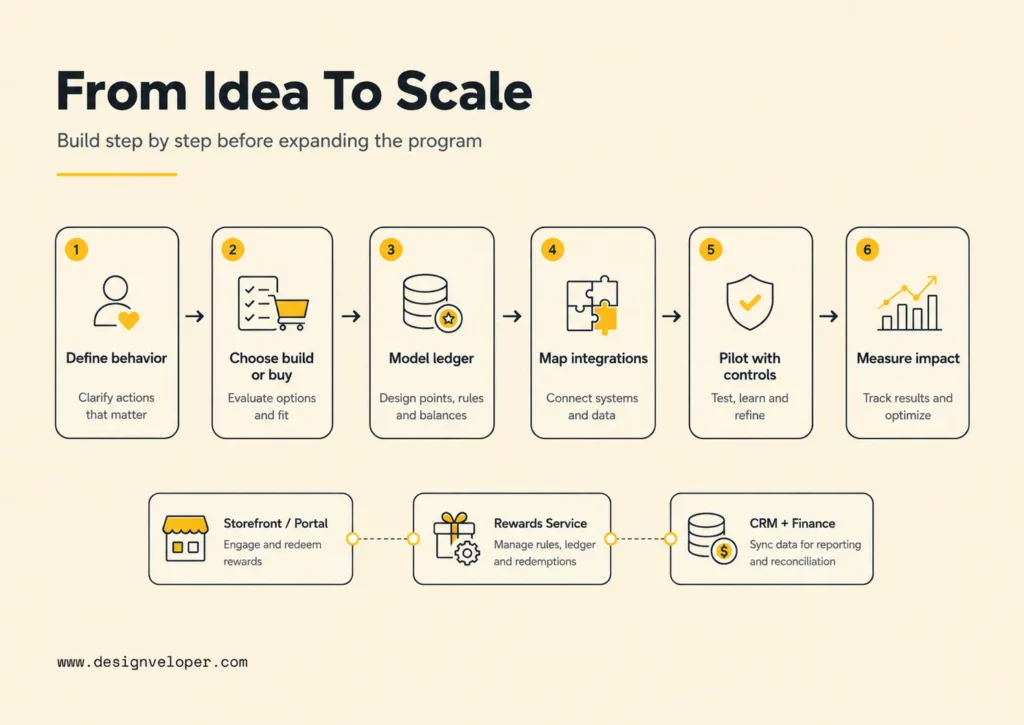
Turning smart rewards into a scalable web product requires product discovery, economic modeling, architecture, integrations, operational ownership, and controlled rollout. The first release should prove one valuable behavior before the team adds dozens of campaigns and tiers.
- Define the behavior and business case. Choose one target such as renewal, repeat order, referral, activation, or partner certification. Record the baseline, expected lift, reward cost, margin guardrail, and experiment period.
- Choose build, buy, or hybrid. Use a SaaS loyalty application for standard ecommerce points and referrals. Build custom logic when rewards depend on proprietary workflows, multiple systems, complex organizations, or differentiated customer experience. A hybrid can use a commercial incentives engine behind a custom portal. Teams that need custom integrations can scope this through web application development services instead of forcing loyalty logic into a generic plugin.
- Model the ledger and rules. Define transaction states, rounding, caps, expiration, refunds, reversals, stacking, tier changes, manual adjustments, and dispute evidence before building screens.
- Map integrations and ownership. Identify the source of truth for customer identity, orders, invoices, payments, CRM opportunities, product events, consent, and finance reconciliation. Define which system can change each field.
- Prototype the customer and admin journeys. Test enrollment, progress, redemption, errors, refunds, support, and manual review with real scenarios. Include accessibility and mobile behavior from the start.
- Launch with controls. Use a limited cohort, reward budget, alerts, feature flags, audit logs, and a rollback plan. Reconcile balances daily during the pilot and review suspicious activity before increasing value or reach.
- Measure incremental impact. Compare eligible participants with a meaningful baseline or control group. Review retention, redemption, margin, fraud, support contacts, and customer feedback together.
Architecture should separate the rewards domain from the storefront or client portal without disconnecting the experience. A modular rewards service can consume trusted events, evaluate rules, write ledger transactions, and expose wallet and administration APIs. An event queue absorbs spikes and retries. Idempotency keys stop duplicate issuance. Observability should trace an order or referral from source event to final reward transaction.
A rewards product becomes difficult to enhane client loyalty in web development when marketing, payments, support, and finance use different definitions of earned value. In our delivery work, we begin with a transaction map that defines each earn, pending, redeem, expire, refund, and manual-adjustment state before the interface is finalized. The first acceptance checkpoint is simple: finance must be able to reconcile the ledger, support must be able to explain a balance, and the customer must be able to predict what happens next. Our ecommerce development guide shows how this type of business logic fits into the wider storefront and integration architecture.
We would begin a rewards engagement with a behavior map and transaction model, not a points screen. The output should include program economics, user and organization roles, rules, ledger states, integration contracts, admin permissions, fraud scenarios, privacy requirements, analytics events, acceptance criteria, and rollout controls. That foundation lets the interface remain simple while the backend handles real operational complexity.
A production acceptance review should confirm that duplicate events do not create duplicate rewards, refunds reverse value correctly, balances reconcile with finance records, expired rewards follow the published terms, administrators cannot bypass approvals unnoticed, and mobile users can complete every core task. The team should also simulate provider outages, delayed webhooks, CRM duplicates, account merges, and disputed referrals.
Small businesses do not need to overbuild. A standard plugin application for enhancing client loyalty in web development may be the right first step when the program uses common points and referral patterns. Custom development becomes valuable when the reward experience differentiates the product, operational work is growing, or disconnected tools create inaccurate balances and manual reconciliation. Before commissioning a custom platform, document one earning rule, one redemption path, one reversal case, and the system that owns each event; that small exercise reveals whether standard software can support the program.
Continue reading:
- How Long Does It Take To Build A Web App? Timeline And AI Impact
- Top 20 Web App Development Companies (Ranked)
- SaaS Application Development: Process, Cost, And Architecture
FAQs About Smart Rewards In Web Development
What Are Smart Rewards In Web Development?
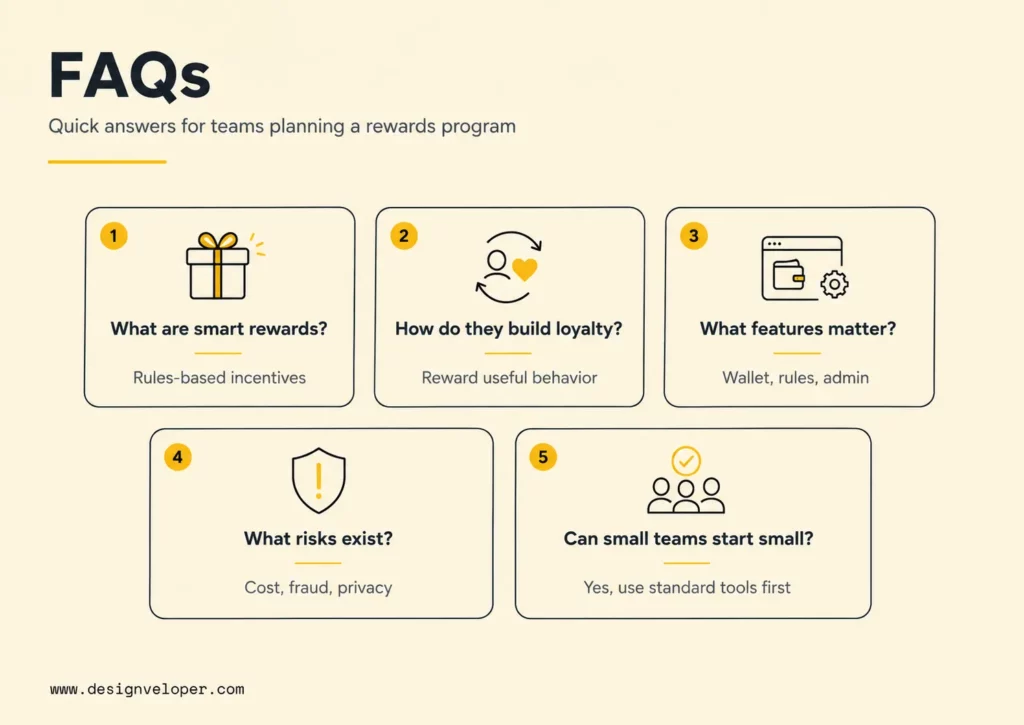
Smart rewards are incentives connected to defined actions and system data inside a web product or client experience. Examples include service credits for referrals, points for eligible purchases, tier benefits for sustained activity, milestone perks, or personalized offers. A smart reward has clear eligibility, calculation, redemption, expiration, reversal, and measurement rules.
How Do Rewards Improve Client Loyalty?
Rewards can enhance client loyalty in web development by recognizing valuable behavior, making progress visible, and adding practical value to renewal or continued engagement. The reward works only when the underlying delivery is reliable. For web development clients, referral credits, maintenance benefits, milestone reviews, or priority improvement access can support a long-term relationship without replacing quality, transparency, and support.
What Features Does A Rewards Web Platform Need?
A rewards web platform typically needs user and organization accounts, a wallet and transaction ledger, a versioned rules engine, payment or order integrations, referral tracking, tiers, CRM sync, analytics, notifications, an admin dashboard, fraud controls, consent and privacy controls, and finance reconciliation. The exact feature set depends on whether the program serves consumers, business clients, employees, or channel partners.
What Are The Risks Of Reward-Based Loyalty Programs?
The main risks in enhancing client loyalty in web development are uncontrolled reward cost, fraud, unclear terms, privacy violations, payment or tax complexity, inaccessible UX, inaccurate balances, and incentives that reward low-value behavior. Teams should model program economics, use an auditable ledger, protect APIs, limit high-risk actions, keep terms clear, minimize personal data, and launch with a controlled cohort.
Can Small Businesses Use Smart Rewards Without A Custom Platform?
Yes. A small business can begin with built-in ecommerce features, a loyalty application, CRM automation, referral software, or even a carefully tracked service-credit program. Custom development is usually unnecessary until rules, integrations, reporting, customer roles, or fraud controls exceed what the standard tool can handle. Starting with one measurable behavior helps the business prove value before investing in a custom platform.
Also published on

Share post on










Related Articles


WebSocket Protocol Vs HTTP: Differences, Use Cases, And Tips
WebSocket Protocol Vs HTTP: Differences, Use Cases, And Tips Published August 05, 2026
Future of Frontend Web Development: 2026 Guide
Future of Frontend Web Development: 2026 Guide Published August 03, 2026
Best Frontend Frameworks: 8 Options, Tradeoffs, And Tips
Best Frontend Frameworks: 8 Options, Tradeoffs, And Tips Published August 03, 2026