















What is POC in Software?

Are you curious about how software development companies create new products and features? Well, they often start with a POC or proof of concept. A POC is a prototype or model of a product for verifying that a concept is feasible and can become a working product. In the world of software, POCs are popular for testing new ideas and functionalities before investing time and resources in development. In this article, we will explore the concept of POC in software and how it can benefit companies in the development process. We’ll cover its definition, why it is important, and its usages in the software industry. So, let’s dive in!
An Overview on POC
When it comes to developing new software or updating existing systems, businesses often need to test out ideas and ensure they’re viable before investing significant time and resources into development. This is where a proof of concept (POC) in software comes in.
The Definition of POC
POC or proof of concept is a critical part of software development that helps validate a product idea before investing significant resources. A POC is a small-scale version of the final product that demonstrates the core features and functionality. It serves as evidence that the proposed solution is feasible, practical, and addresses the business problem.
A POC is typically common in the early stages of the software development lifecycle to evaluate the potential of a concept or idea. It helps identify potential risks, technical challenges, and limitations that could impact the project’s success. POCs demonstrate a specific aspect of the software, such as a new feature, a new technology, or a new integration.

In essence, a POC is an experimental model of the final product that aims to prove or disprove a hypothesis. A POC can come from minimal resources and can assist in testing the market’s response to the product idea. The purpose of a POC is to gain insight into the project’s viability, understand user needs, and determine the best approach for implementing the solution.
Key Elements of a POC
When developing a POC for a software project, there are several key elements to consider.
- A POC should have clear objectives and goals compatible with the overall project goals. This helps to ensure that the POC is relevant and useful for the project.
- A POC should be able to test the feasibility of the solution. This means that it should be possible to implement the proposed solution using the technology and resources available.
- The scope of a POC should limit to a specific set of features or functionalities. This allows for a focused approach to testing and validation.
- The POC should be designed to test with real-world data or sample data. Additionally, it should also ensure that the proposed solution will be able to handle real-world use cases.
- It should be able to test the performance of the proposed solution, to ensure that it meets the performance benchmarks.
- The POC should also test the user experience of the proposed solution, to ensure that it meets the needs of the end-users.
- A POC should be well-documented, with clear and concise documentation. The latter should outline the objectives, scope, and methodology used in the testing process.
By considering these key elements when developing a POC for a software project, developers can ensure that the POC is relevant, feasible, and effective in testing the proposed solution.
Recommended reading: What Is Data Structure and Their Applications?
Advantages of Using POC
POC is a crucial part of software development, and there are several advantages to using it. Here are some of the benefits of using POC in software:
- Mitigates risks: POC allows developers to test the feasibility of an idea without committing to it fully. By creating a prototype, developers can identify and mitigate potential risks early in the development process.
- Saves time and money: With a POC, developers can identify and fix potential problems early in the development process, saving time and money in the long run. By testing and validating the idea before committing to full-scale development, POC ensures that resources are used efficiently.
- Enhances collaboration: POC helps to promote collaboration among team members, stakeholders, and customers. Through creating a tangible product that everyone can see and interact with, POC fosters discussions and feedback that can help refine the idea and improve the final product.
- Demonstrates value: POC can be used to demonstrate the value of a product to potential investors or customers. By providing a working prototype, stakeholders can see the product in action and gain a better understanding of its potential value.
- Improves decision-making: By providing tangible evidence of an idea’s potential, POC can also help stakeholders make informed decisions. Using a POC, stakeholders can make better-informed decisions about whether or not to proceed with full-scale development.
In summary, POC is an essential tool for software development. It helps mitigate risks, saves time and money, promotes collaboration, demonstrates value, and improves decision-making.
The Role of POC in Software Development
In the world of software development, proof of concept (POC) plays a crucial role. It helps developers validate their ideas, test their assumptions, and demonstrate the feasibility of their concepts. All of it should come before investing significant resources into full-scale development. In this section, we will explore the role of POC in software development and how it can help businesses.
How POCs help in software development
Proof of Concept or POC in software development is a critical phase that enables organizations to make rational decisions on the development of a new software product. It is a testing approach that offers proof of a project’s feasibility to the product team, the client, and other stakeholders.
Current trends show that about 66% of software development projects do not incorporate POC and are therefore bound to fail. This shows the need for POCs in risk management and the success of software projects.
POCs help in several ways:
- Testing Feasibility: POCs check the technical viability of a project, that the proposed system, application or product can function in real life before the development starts.
- Validating Market Demand: They assist in determining the level of market need for a certain product or feature. This is important in preventing the creation of products that do not meet the market needs, a situation that contributes to the failure of one out of three new businesses.
- Saving Resources: Thus, POCs help to avoid the waste of time, money, and effort on the projects that are not viable.
- Building Trust: They give proof of the feasibility of the project hence gaining trust from the stakeholders and the investors.
In conclusion, POCs are not just a preliminary step in software development. These are a strategic asset that can make or mar a software project. Hence, it is important for any organization that is planning to venture into new software product development to be conversant with and apply a POC.
Recommended reading: What Is Software Architecture? Benefits, Characteristics and Examples
Importance of POCs in reducing development costs
POC is a critical aspect in software development, especially concerning the aspect of cost-cutting. A POC, or Proof of Concept, is a testing methodology that checks the possibility of the idea behind the software on a smaller scale. This is an important phase that takes place at the initial stages of product development.

Another advantage of a POC is that it may help to avoid expensive mistakes. In this way, the project concept can be tested in a controlled environment and problematic situations can be avoided in advance. This can prove to be very effective in preventing time wastage and hence cut on the overall cost of development.
Also, a POC can show additional expenses that may appear during the large-scale project. This early understanding enables one to look for ways of cutting costs, which can be done once the major project is afoot.
For example, SpaceX applied POCs when creating reusable rockets. It also helped them to assess the feasibility of the idea and the reaction of the target audience before investing in the development of the full-fledged application. Likewise, the digital payment platform Venmo employed a POC to enhance the features of the platform and the experience of the users. These examples show that POCs can result in successful, cheap development of products and are worth the investment.
Recommended reading: Hybrid Project Management: A Comprehensive Guide
Examples of POCs in software development
In software development, POCs have been used extensively to test the feasibility of new ideas, technologies, or features. For instance, a software company looking to develop a new app may use a POC to determine whether the idea is worth investing in. Similarly, a team developing a new software feature may use a POC to evaluate its performance and to ensure that it meets the requirements of the end-users.
One notable example of the use of POCs in software development is the development of the popular messaging app, Slack. When the founders of Slack began working on the app, they used a POC to test the basic functionality of the platform. This POC helped them to identify potential issues and to refine their ideas before moving on to full-scale development. As a result, Slack was able to launch as a highly polished and functional app that quickly became popular among users.
Another example of the use of POCs in software development is in the development of virtual reality (VR) and augmented reality (AR) applications. These types of apps require significant investment and development time, and using a POC to test the technology and user experience can help companies to determine whether the investment is worth it. For instance, a company developing a VR game may use a POC to test the game’s mechanics and user interface, identify potential issues, and refine the overall experience before moving on to full-scale development.
Overall, POCs have proven to be a valuable tool in software development, allowing teams to test new ideas, technologies, and features before investing significant time and resources. By using a POC to evaluate a concept, software developers can refine their ideas, identify potential issues, and ensure that the final product meets the needs of end-users.
Instagram: A Picture-Perfect POC
For instance, Instagram, the current trending photo sharing application was initially developed as a POC. The founders created a prototype of the application to determine its feasibility and the viability of the concept. This initial step was very important to prove the concept before going deep into the development of the idea.
Slack: Messaging Made Simple
Another example of a successful POC in software is Slack. This instant messaging app has evolved from being just a basic POC. The developers wanted to prove that their concept of a new type of messaging application is feasible in the real world.
Recommended reading: What Does a Business Analyst Do and How to Become?
The Process of Creating a POC
Creating a POC is an essential part of the software development process. It allows developers to test their ideas and concepts and determine whether they are feasible or not. However, creating a POC is not a straightforward task, and it requires careful planning and execution. In this section, we will discuss the process of creating a POC and the important steps that developers should follow to ensure the success of their project. By the end of this section, you will have a clear understanding of how to create a POC and the benefits it can bring to your software development projects.
Steps to create a POC
Creating a proof of concept (POC) in software can be a complex process. It is important to understand the purpose of a POC and the steps necessary to achieve the desired outcome. A POC should be used to demonstrate the feasibility of a software solution and prove that the concept is viable. To create a successful POC, it is essential to define the scope of the project, identify the stakeholders, and develop a timeline. It is also important to set realistic goals and objectives, and to create a plan of action.
When planning the POC, it is important to consider the resources available and the budget. The team should also consider the technical requirements of the project, such as software and hardware requirements. Additionally, the team should consider the user experience and how the POC will be tested. Once the scope and timeline have been established, the team should create a prototype and develop the necessary code.
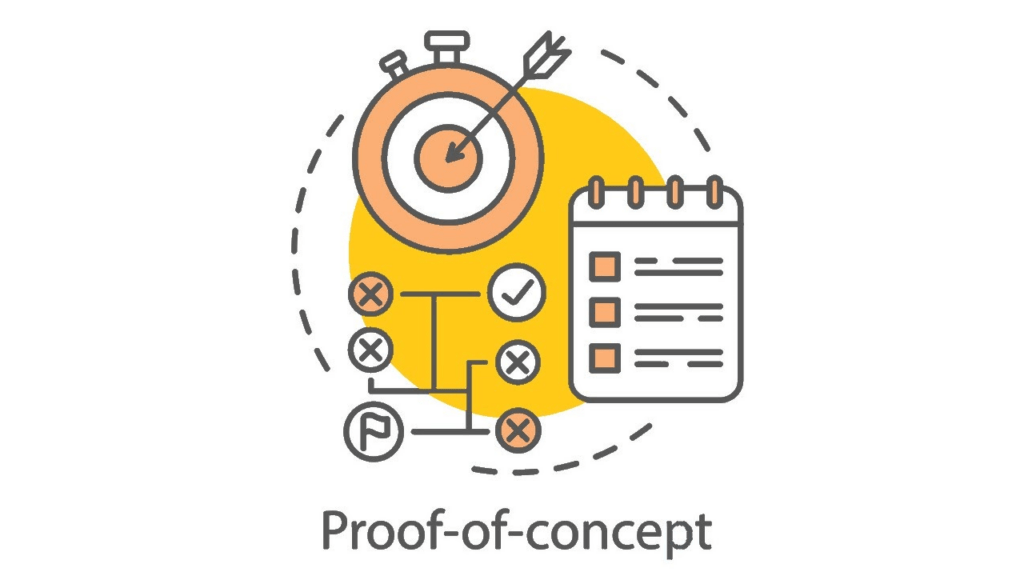
Once the POC is complete, the team should evaluate the results and document the process. This will help the team to determine whether the POC was successful and to identify any areas for improvement. The team should also consider the feedback from stakeholders and users, and use this feedback to refine the product.
Creating a successful POC requires careful planning and execution. It is important to understand the purpose of the POC and to develop a plan of action. Additionally, the team should consider the resources available, the technical requirements, and the user experience. Finally, the team should evaluate the results and document the process. By following these steps, the team can create a successful POC in software.
How Designveloper does it
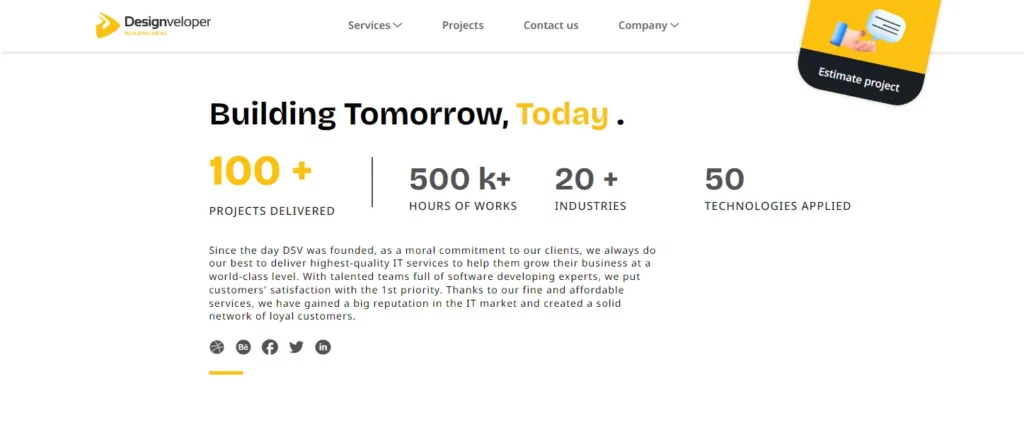
At Designveloper, we know that a Proof of Concept (POC) is a critical step in software development. The process of developing a POC is carried out carefully and professionally to provide the best solutions for clients. Here’s how we do it:
Define the Need
First of all, we define the purpose of the software and the real-life issues that the software will address. We engage our target consumers so that we can hear from them the problems that we are about to solve.
Project Definition
Then, we outline what the project seeks to accomplish. This involves defining the expected impact and how it will be assessed.
Resource Allocation
We describe the tools and resources that will be used to achieve the desired outcomes. This way we make sure that we have all the requirements for development before we embark on the process.
Development
Our skilled teams consisting of software developing experts get down to work on the POC. We have completed more than one hundred projects and invested over half a million hours of work in more than twenty industries and used fifty different technologies.
Testing
We validate the POC to know if it is effective in real life and if it can address existing problem areas. This is a very important stage of the POC process because it allows to reveal problems at the initial stage.
Evaluation
Last but not the least; we assess the POC to check whether or not it can yield a profit. This entails evaluating the feasibility of the solution and its relevance to the project goals.
The approach that we have used in developing a POC in software development has enabled us to offer the best IT services to clients and assist them in expanding their business at the world standard. For example, there is a crypto wallet Bonux, a healthcare platform for both doctors and patients ODC, and a construction management tool WorkPacks. All of these projects depict our quality standard and our capacity to provide successful solutions.
Best practices for creating a POC
A POC is a demonstration of the feasibility of a project, and it is essential for assessing the risks and benefits of the project. To ensure that the POC is successful, there are certain best practices to follow.
Firstly, it is important to have a clear goal and objectives. You should determine the project’s purpose and its expected outcome. This will help you create a plan to achieve the objectives. Secondly, you should identify the stakeholders and their needs. Knowing who the stakeholders are and what they need from the POC will help you create a plan to meet their needs.
Thirdly, you should also determine the resources needed for the project. This includes the budget, the time frame, and the personnel. Once the resources are identified, you can create a timeline for the project. Fourthly, you should create a plan to test the POC. This includes testing the design, the functionality, and the scalability of the project. Finally, you should document the results of the POC. This will help you evaluate the results and make decisions about the project.
With these best practices, you can ensure that your POC in software is successful. This will help you assess the risks and benefits of the project and make informed decisions.
Common mistakes to avoid when creating a POC
When creating a POC, it is important to avoid certain common mistakes that can lead to an unsuccessful outcome. One of the biggest mistakes is failing to define clear goals and objectives for the POC. This can result in a lack of direction and focus, which can lead to wasted time and resources.
Another mistake is trying to include too many features or functionalities in the POC. This can lead to scope creep, making it harder to develop and test the POC within a reasonable timeframe. It’s important to keep the POC simple and focused on the core objectives.
Another common mistake is failing to involve all relevant stakeholders in the POC development process. This can result in a POC that does not meet the needs of all stakeholders, leading to resistance and potential project failure.
Additionally, it is important to use realistic data and scenarios when developing the POC. Using unrealistic or inaccurate data can result in a POC that does not accurately represent real-world scenarios, making it difficult to determine if the POC is successful or not.
Lastly, it’s important to have a plan in place for evaluating the success of the POC. Without clear criteria for success, it can be difficult to determine if the POC was successful or not, leading to uncertainty and potentially wasted time and resources.
By avoiding these common mistakes, the process of creating a POC can be smoother and more effective, leading to a successful outcome.
FURTHER READING: |
1. How to Improve Developer Productivity for Long Term? |
2. Are Cloud-Native Applications Safe Enough for Businesses? |
3. Web Application Security: The Best Guide and Its Practices |
Conclusion
In conclusion, POCs play a crucial role in software development by providing a quick and cost-effective way to test and validate ideas before investing significant resources into a full-fledged project. However, creating a successful POC requires careful planning, attention to detail, and a focus on the project’s goals and objectives.
When creating a POC, it’s essential to avoid common mistakes such as over-engineering, ignoring user feedback, and failing to consider scalability and maintainability. By avoiding these mistakes and following a structured process, you can increase the chances of developing a successful POC that will pave the way for a successful software project.
If you’re looking for a reliable software development firm to help you create a POC or develop a full-fledged software solution, consider Designveloper. As a leading software development firm in Vietnam, Designveloper has a team of experienced developers and a proven track record of delivering high-quality software solutions to clients worldwide. Contact Designveloper today to learn more about their services and how they can help you turn your ideas into reality.
Also published on

Share post on










Related Articles



Android App Development: Stack, Process, Cost, And Best Practices
Android App Development: Stack, Process, Cost, And Best Practices Published September 17, 2026
Cloud Application Development: Architecture, Process, And Cost
Cloud Application Development: Architecture, Process, And Cost Published September 14, 2026
How Gitignore Works: Rules, Patterns, Examples, And Debugging Tips
How Gitignore Works: Rules, Patterns, Examples, And Debugging Tips Published August 05, 2026