















Are ISP Proxies Worth It? Pros, Cons, and Alternatives

In the world of proxies, ISP proxies sit somewhere between residential and datacenter options, but are they really worth the price tag? Some swear by their speed and reliability, while others argue you can get similar results for less. If you’re not sure whether to invest or look elsewhere, this guide breaks it down in plain terms.
What are ISP Proxies?
One particular kind of proxy server that uses IP addresses from ISPs but runs on data center infrastructure is called an ISP proxy, or Internet Service Provider proxy. This hybrid strategy combines the dependability and speed of data center connections with the legitimacy of residential IPs.
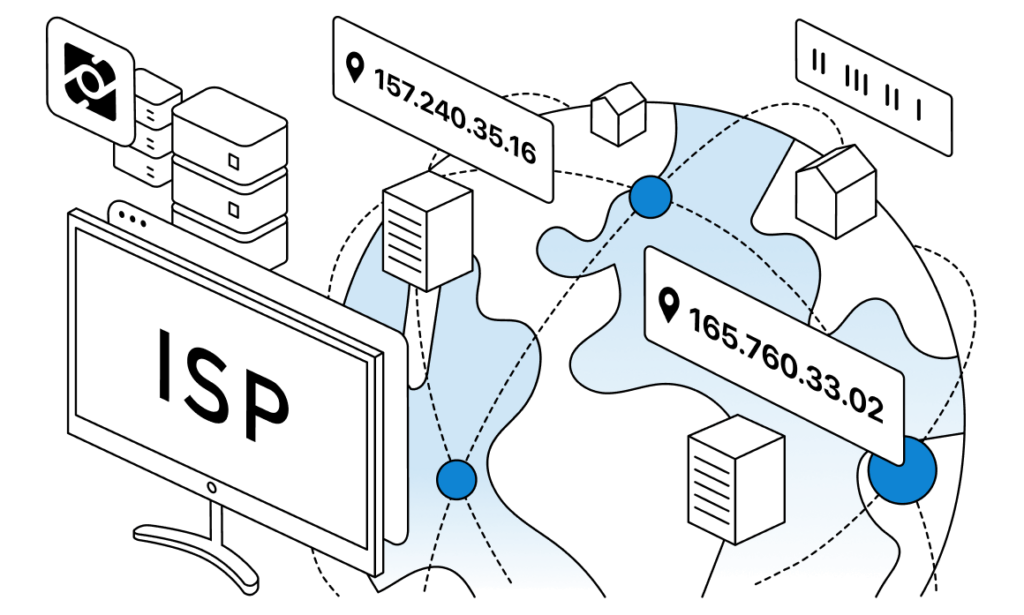
ISP proxies offer static, extremely reliable IP addresses that are not connected to recurring sessions, in contrast to conventional residential proxies that route traffic through real users’ devices. This makes them ideal for situations like sneaker copping, market research, or running several social media accounts where stability and authenticity are crucial.
They are unique in that they can appear to websites as legitimate home connections, greatly reducing the likelihood of being discovered or banned. Businesses and power users are increasingly using ISP proxies because of their special combination of speed, security, and stealth as web platforms become more aggressive in weeding out suspicious activity.
ISP Proxy Market Overview
The global proxy server market, which includes ISP proxies, was valued at $4.29 billion in 2023 and is projected to reach $7.59 billion by 2032, growing at a CAGR of 7.50%. This growth is driven by increasing cybersecurity concerns and the demand for privacy and regulatory compliance.
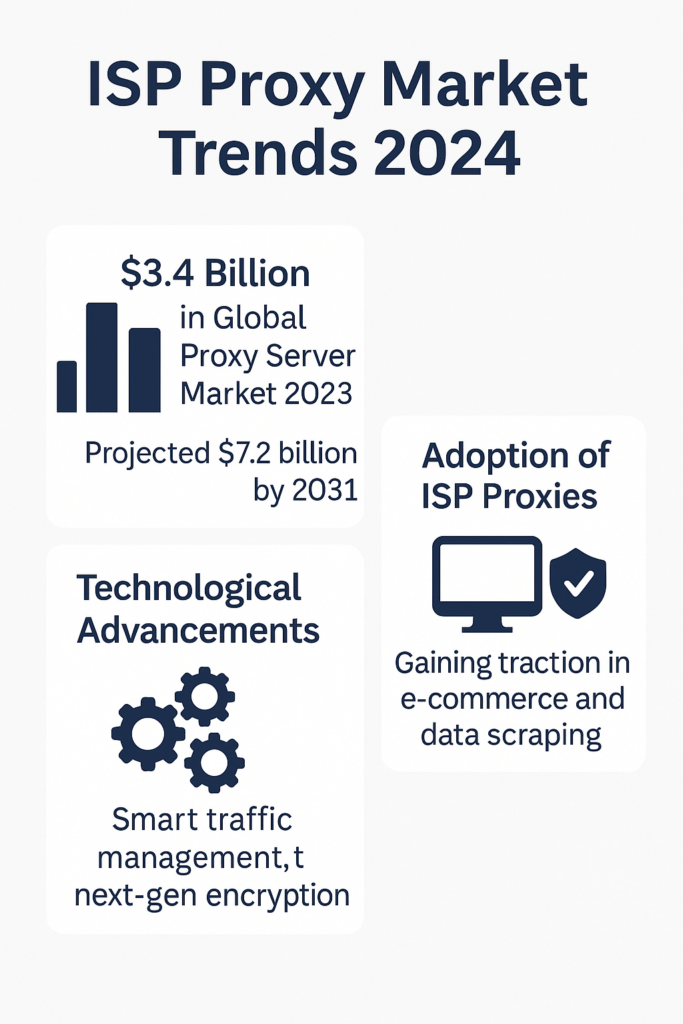
ISP proxies, offering static residential IPs, have seen significant adoption in sectors like e-commerce and data scraping. According to Proxyway’s 2023 research, while residential proxies dominate the market, ISP proxies are gaining traction, especially among specialized vendors in niches like sneaker scalping.
Technological advancements are enhancing ISP proxy services. Innovations such as smart traffic management, enhanced authentication protocols, and next-generation encryption are improving performance and security. As the digital landscape evolves, ISP proxies are poised to play a crucial role in ensuring secure and efficient online operations.
What Makes a Proxy Provider “Reliable”?
Not all proxy providers are built the same and when your tools, accounts or business rely on stable connections, reliability isn’t optional.
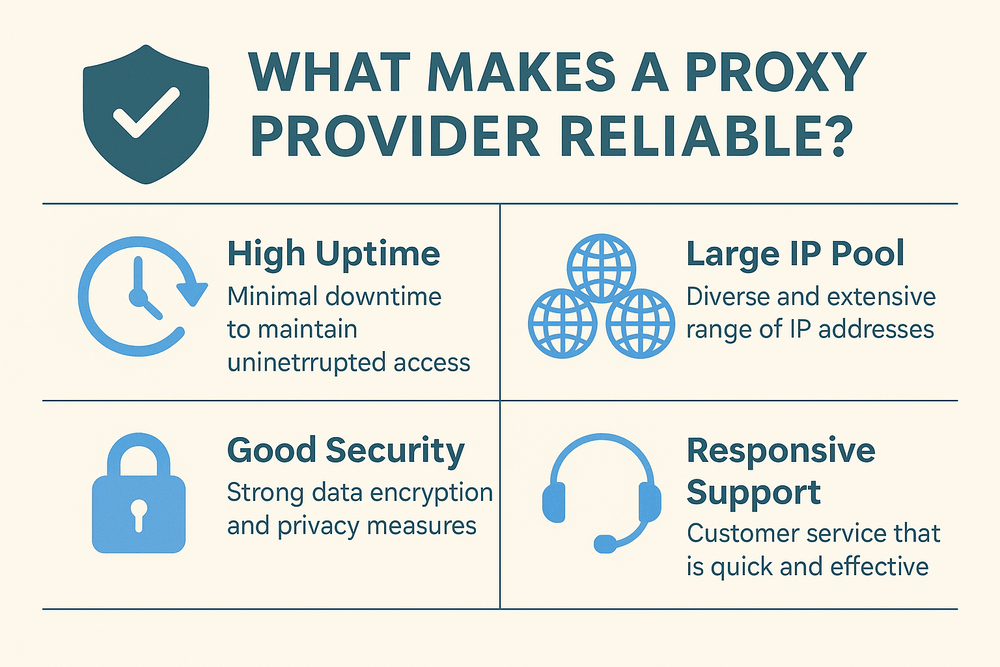
Here’s what to look for:
- Clean, trusted IPs
Reputable providers won’t recycle flagged or overused IPs. You want fresh addresses that won’t instantly trigger blocks or CAPTCHAs. - Consistent uptime
A “reliable” provider should guarantee at least 99% uptime. Anything less, and you risk sudden drops that can interrupt scraping, automation, or campaign testing. - Fast, uncapped speeds
Slow proxies kill productivity. Look for providers that don’t throttle speeds or overload their servers. - Clear usage policies
Make sure they allow the activities you plan to run, whether that’s bot automation, sneaker copping, social media management, or ad verification. - Real customer support
When something breaks (and it will), fast, helpful support is a must. Email-only support with 3-day wait times? Huge red flag.
Key Features to Look for in a Private Proxy Provider
Choosing a private proxy provider isn’t just about picking the first one that shows up in search. There are a few key things that separate the good ones from the rest and if you’re paying, these are non-negotiables.

True Private IPs
Make sure the proxies are private, not semi-dedicated or mislabeled shared IPs. One IP per user keeps your activity clean and reduces the risk of bans.
Multiple Location Options
Whether you need IPs from the UK, US or a specific city, flexibility matters. Geo-targeting is a must if you’re doing market testing, ad verification or local SEO.
Fast and Reliable Performance
Speed and uptime can make or break your setup. Look for providers that promise (and actually deliver) high speeds and at least 99% uptime. It’s especially important for scraping, bots or managing multiple accounts.
Solid Privacy and Security
The whole point of private proxies is control. Look for providers that don’t log your activity and offer HTTPS/SSL support to keep your data safe in transit.
Responsive Support
Even the best setup can run into issues. Go with a provider that offers fast, real support, ideally with live chat or same-day responses. You don’t want to wait days if your proxies suddenly stop working.
Red Flags: What to Avoid
Not every proxy provider is trustworthy. Some cut corners, oversell, or flat-out lie about what they offer. If you’re not careful, you could end up with slow connections, banned IPs, or wasted money.
Here are a few red flags to watch out for:
- “Unlimited” everything – Too many promises usually mean overloaded, low-quality proxies.
- No clear usage policy – If you can’t find what’s allowed or restricted, walk away.
- No info on IP reputation – Clean IPs matter. If they don’t mention it, they probably aren’t clean.
- Slow or no support – No live chat or long response times? That’s a big no.
- No trial or refund policy – Trusted providers usually offer a test period or guarantee.
Evaluate the Provider’s Reputation
Before you spend a dime, check what others are saying. A provider can have a sweet website, but if users are complaining all the time, that’s a red flag.

Here’s how to do a quick reputation check:
- Look for real reviews – Check Trustpilot, Reddit or niche forums. Avoid reviews that sound too good to be true or copy-pasted.
- Search for complaints – Type the provider’s name + “scam” or “problems” on Google. It’s a quick way to spot trouble.
- Check their social presence – Active providers usually post updates, answer questions and respond to feedback.
- Test their support – Send a question before buying. Slow replies or vague answers are warning signs.
Consider Pricing and Value
Not all proxies are priced fairly and cheaper doesn’t always mean worse. But you need to know what you’re paying for.
Some providers charge more just because they put the “ISP” label on their service even if the performance doesn’t match the price. Others might be a bargain but overload their servers and kill the speed.
Compare what’s included not just the price. And if you want solid performance without breaking the bank there are cheap ISP proxies out there, you just need to know where to look (.
Conclusion
ISP proxies can be a powerful tool if you know what you’re getting into. They offer a solid middle ground between speed and trust, but they’re not always the best fit for every use case or budget. Take the time to compare, test, and don’t fall for flashy promises. The right proxy setup should work for you, not against you.
At Designveloper, we recognize that ISP proxies offer a unique balance between speed, reliability, and anonymity—making them a valuable tool for specific use cases like web scraping, SEO monitoring, and accessing geo-restricted content. However, like any technology, they come with both advantages and limitations. Understanding these trade-offs is key to making an informed decision.
Whether you choose ISP proxies or explore alternatives like datacenter or residential proxies, the right choice depends on your goals, budget, and technical needs. As always, we recommend evaluating all options carefully to find the best fit for your project.
Also published on

Share post on










Related Articles


How To Choose A Web Hosting Provider: Key Factors To Consider
How To Choose A Web Hosting Provider: Key Factors To Consider Published August 05, 2026
WebSocket Protocol Vs HTTP: Differences, Use Cases, And Tips
WebSocket Protocol Vs HTTP: Differences, Use Cases, And Tips Published August 05, 2026
How 5G Impacts Mobile App Development: Opportunities and Challenges
How 5G Impacts Mobile App Development: Opportunities and Challenges Published December 11, 2025