












Agile vs Waterfall vs Scrum vs Kanban: How to Choose a Method

KEY TAKEAWAYS:
- Agile is a set of values and principles; Waterfall is a plan-driven lifecycle; Scrum is an Agile framework; and Kanban is a strategy for managing work flow.
- Choose based on how stable requirements are, how work arrives, how quickly users can give feedback, and which approvals or controls the project needs.
- Scrum adds a team structure, events, and goals around short Sprints. Kanban makes work visible, limits work in progress, and improves flow without requiring Sprints.
- Waterfall can fit work with stable scope and clear phase approvals. It does not require one final release or testing only at the end.
- Teams can combine planning, iterative delivery, and flow controls when each practice solves a clear problem and ownership remains explicit.
Choosing a delivery approach is harder when the names describe different things. Agile sets broad values, Waterfall organizes work into planned phases, Scrum defines a team framework, and Kanban manages the movement of work. The useful comparison is therefore not a contest between four interchangeable methods. It is a way to see which parts of delivery need upfront control, short feedback cycles, a shared team rhythm, or smoother ongoing flow. A poor fit can hide risk, overload reviewers, or leave progress hard to judge.
Agile vs Waterfall vs Scrum vs Kanban at a Glance
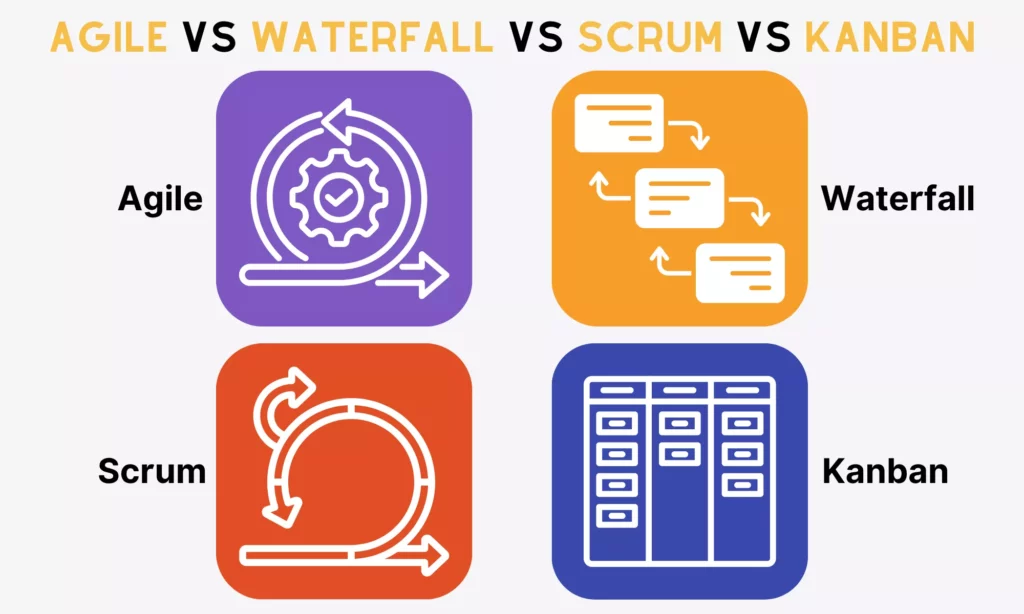
The main difference is the level each term describes. Agile is a value-led approach, Waterfall is a lifecycle model, Scrum is a framework, and Kanban is a flow-management strategy. Teams can use some of these ideas together.
| Approach | What it describes | How work is organized | Useful when | Watch for |
|---|---|---|---|---|
| Agile | Values and principles for developing products through collaboration and learning. | Small increments, feedback, and adaptation; the exact cadence depends on the team. | Requirements or user needs may change as the team learns. | Calling any short-cycle process “Agile” without real feedback or usable outcomes. |
| Waterfall | A plan-driven lifecycle with defined phases, deliverables, and approval points. | Scope and design are planned early; work progresses through controlled phases. | Requirements are stable and phase-level review or traceability is important. | Late discoveries can cause costly rework when earlier decisions are hard to change. |
| Scrum | An Agile framework for a team to create value in Sprints. | A Scrum Team works toward a Sprint Goal and produces a usable Increment. | A stable, cross-functional team benefits from regular planning and review. | Treating events as status meetings or measuring success by activity alone. |
| Kanban | A strategy for managing and improving the flow of work. | Make the workflow explicit, manage work in progress, and use flow measures. | Requests arrive continuously or priorities need to change without fixed Sprints. | A board without clear policies, WIP limits, or regular improvement is only a task display. |
Waterfall does not mean that teams cannot test during development or release in stages. Scrum does not promise a production release at every Sprint boundary. Kanban does not make deployment continuous by itself. Those choices depend on the product, engineering pipeline, and governance needs.
These approaches also do not sit at the same level. A team can use Agile project management principles with Scrum for product work, apply Kanban practices to support requests, and retain formal approval gates for a regulated release.
For a deeper dive, read:
- Agile Methodology Sample: Real Examples & Success Stories
- The 12 Agile Principles And 4 Agile Values Explained For Teams
- What Is SCRUM And How Does It Work?
What Agile Means in Software Delivery
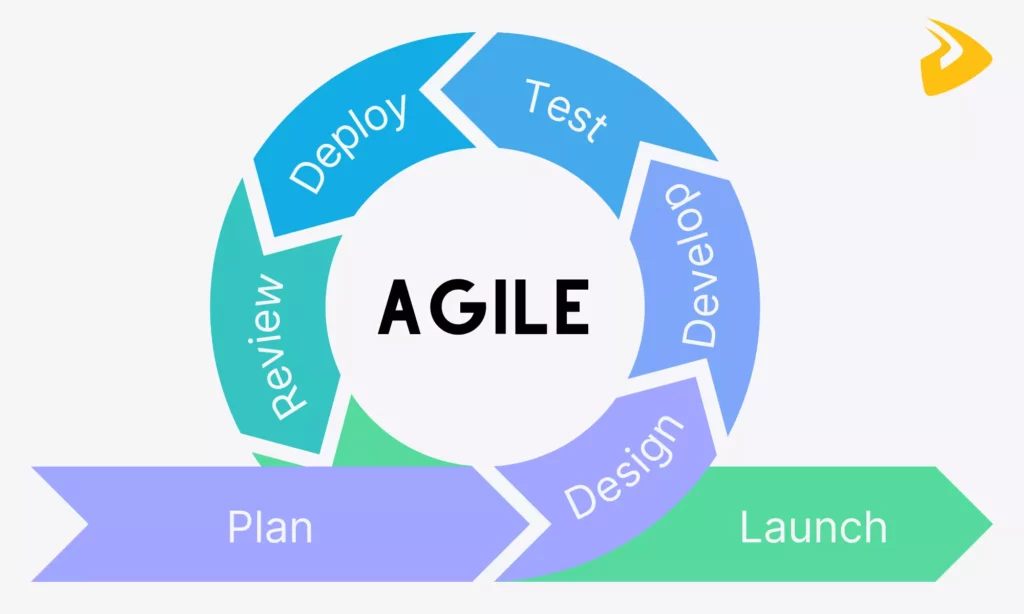
Agile is an approach guided by values that favor people, working outcomes, collaboration with customers, and responding to change. The Manifesto for Agile Software Development does not prescribe one workflow, role set, or Sprint length.
Agile teams make progress in increments and use feedback to decide what to improve next. Agile project management can use Scrum, Kanban, another framework, or a team-specific process. The test is whether the process helps the team learn and deliver useful outcomes.
How Agile Teams Adapt
An Agile team breaks a large product goal into smaller outcomes that can be built, checked, and reviewed. The team does not need to use Sprints unless its chosen framework requires them.
For example, a team building a clinic booking app could first test whether patients can find an appointment and complete a booking. The team can review task success and support feedback before expanding reminders or provider-selection features.
That sequence reduces the time between an assumption and evidence. It does not guarantee a better product. The team still needs clear acceptance criteria, quality checks, and decisions about what feedback should change the roadmap.
When Agile Helps and Where It Can Struggle
Agile is useful when user needs, technical risks, or market assumptions are not fully known at the start. Smaller releases let a team test those assumptions before committing to a larger build.
- It can help when stakeholders can review working outcomes and make timely decisions.
- It can struggle when reviewers are unavailable, priorities change without an owner, or teams ship increments without a clear quality bar.
- It still needs planning: teams forecast, manage dependencies, document decisions, and set release controls according to risk.
Agile is not the absence of plans. It treats plans as useful guides that can change when new evidence justifies a change. Teams that want practical working habits can start with a short set of Agile development best practices and adapt them to their constraints.
What Waterfall Means in Software Delivery
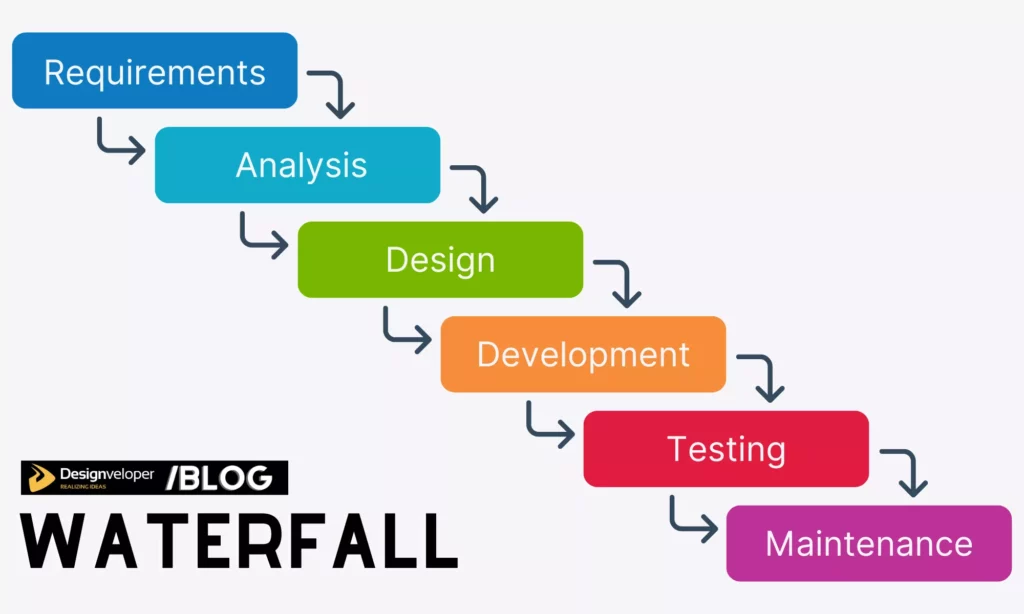
Waterfall is a plan-driven lifecycle that organizes work into defined phases, such as requirements, design, implementation, testing, and release. Teams agree on major deliverables and approvals before downstream work proceeds.
The Agile vs traditional project management comparison is useful here, but real projects often use more than one planning style. A project can retain phase gates and detailed records while testing parts of the solution throughout development.
How Waterfall Work Moves Through Phases
A phase-based project typically defines the scope, constraints, and acceptance rules before implementation. Design and build work then follow approved outputs, with reviews at agreed checkpoints.
Consider a payroll system with known tax rules and a fixed date for the first rollout. The team can document rules, approve the design, build the system, and validate calculations against agreed cases. Testing can happen during development and again at formal release gates.
If a rule changes after design approval, the project assesses its effect on scope, cost, schedule, documentation, and prior test results. Change control makes the impact visible. It does not make change impossible.
When Waterfall Fits and What It Costs
Waterfall can fit when requirements are stable enough to approve early, deliverables are clear, and later changes would be costly or need formal review. Examples include fixed-scope upgrades, procurement with signed specifications, or work governed by stage approvals.
- Potential value: clear phase ownership, review points, and traceable decisions.
- Main risk: assumptions may remain untested until a late integration or user review.
- Control: validate high-risk assumptions early and plan test activity across the lifecycle.
Stable scope can make estimates easier to manage, but Waterfall does not guarantee a fixed budget or date. Dependencies, defects, vendor delays, and changed requirements can still alter a plan.
What Scrum Means in Software Delivery
Scrum is a lightweight framework that helps a small team create value through short Sprints. The current Scrum Guide defines accountabilities, events, artifacts, and commitments. Scrum is related to Agile, but the terms are not interchangeable.
A Scrum Team includes a Product Owner, a Scrum Master, and Developers. The framework gives them shared goals and regular chances to inspect the product and how they work.
Scrum Roles, Events, and Sprint Outcomes
Each Scrum accountability supports a different part of the work:
- Product Owner: maximizes product value and manages the Product Backlog.
- Scrum Master: helps establish Scrum and improve the team’s effectiveness.
- Developers: create a usable Increment each Sprint and plan the work needed to meet the Sprint Goal.
A Sprint lasts one month or less. It includes Sprint Planning, Daily Scrum, Sprint Review, and Sprint Retrospective. The Product Backlog, Sprint Backlog, and Increment have corresponding commitments: Product Goal, Sprint Goal, and Definition of Done.
The Daily Scrum is a planning event for Developers to inspect progress toward the Sprint Goal and adapt their plan. It is not just a status report. During a Sprint, the team can clarify scope with the Product Owner as it learns, as long as the Sprint Goal is not put at risk.
When Scrum Helps and Where It Can Struggle
Scrum works well when a stable, cross-functional team can focus on a product goal and show an Increment for review at the end of each Sprint. A two-week Sprint is a common choice, but Scrum permits any duration of one month or less.
For a shopping app, a Sprint Goal might be to let a signed-in customer review and update a cart. The Increment should meet the team’s Definition of Done and be usable. The team may release it to production later if testing, approvals, or release planning require more work.
- Use Scrum when a regular planning and review rhythm helps the team make progress.
- Reconsider the fit when urgent requests regularly disrupt the Sprint Goal or the team cannot produce a usable Increment.
- Do not measure success by meetings completed or tickets closed alone. Review user outcomes, quality, and progress toward the Product Goal.
Recommended for you:
- Agile Vs Scrum: What’s the Difference and When to Use Each?
- What Is An Agile Team? Structure, Roles & Responsibilities
- Agile Vs DevOps: Key Differences And How Do They Interrelate

What Kanban Means in Software Delivery
Kanban is a strategy for managing and improving the flow of work. The Kanban Guide centers on defining and visualizing a workflow, actively managing items, and improving the system using flow measures.
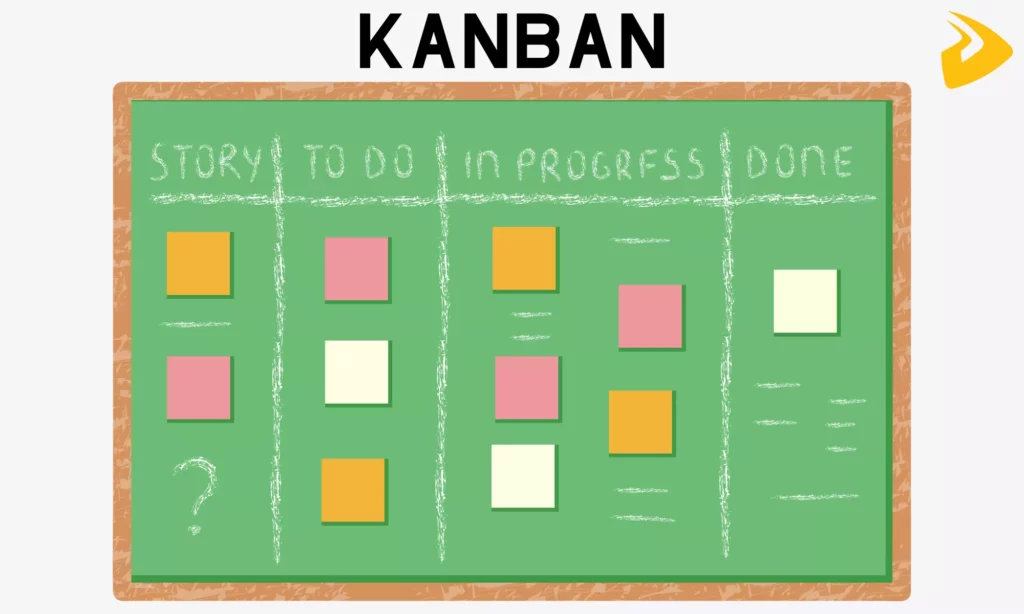
A board might show requests moving through “Ready,” “In Progress,” “Review,” and “Done.” The board represents the team’s real workflow. A team should define what each stage means and how work can move between stages.
How Kanban Uses Work-in-Progress Limits and Flow Measures
A work-in-progress (WIP) limit caps how many items may be active in a workflow stage. If a review column has a limit of three and already contains three items, the team should help clear existing work before starting another item.
That rule makes overload visible. It does not force faster work by itself. The team should look for the cause, such as unclear review criteria, missing test data, or one overloaded reviewer.
Kanban teams can monitor four core flow measures:
- WIP: how many work items are in progress.
- Throughput: how many work items finish in a given period.
- Work item age: how long an unfinished item has been in progress.
- Cycle time: how long an item takes from starting work to completion.
These measures help teams spot delay and discuss a service expectation. They are not promises about an individual task unless the team has enough history and a clear measurement rule.
When Kanban Helps and Where It Can Struggle
Kanban can suit support, maintenance, content, and product teams when requests arrive continuously or priorities shift often. Teams can keep their current roles and meetings while making work and bottlenecks easier to see.
Kanban does not require Sprints or a fixed release schedule. A team may release an item when it meets its policies, but continuous flow is not the same as continuous deployment. Deployment depends on engineering automation, risk controls, and release decisions.
A board without explicit workflow policies, WIP limits, and regular review can become a passive task list. The team should inspect where work waits and make one improvement at a time.
How to Choose a Method for Your Project
Choose the approach that manages your largest delivery risk. Project size, team hierarchy, and industry can affect planning, but none of them alone decides whether Waterfall, Scrum, Agile, or Kanban will fit.
Start With Requirement Stability and Feedback
Ask how much the team knows and how soon it can test its assumptions:
- Stable requirements and costly change: consider a phase-based plan with formal reviews and explicit change control.
- Uncertain needs or technical risk: use short learning cycles and review working outcomes before expanding scope.
- Regular product increments: Scrum can provide a Sprint Goal, a planning cadence, and an Increment for review.
Do not select Waterfall because requirements are unstable. When the team expects major learning, a plan that delays validation can make rework more expensive.
Match the Method to How Work Arrives
Work that arrives in a steady stream often benefits from visible flow and WIP limits. Work that can be planned toward a short-term product goal may fit Sprints. A project with both patterns can separate planned product work from urgent support work.
The right project management tools can support that workflow, but software does not decide the method. Agree on who sets priorities, how urgent work enters, and who can change a commitment.
Plan for Governance, Dependencies, and Team Capacity
Regulated work may require traceability, review evidence, access controls, or release approval. These controls can coexist with iterative development. Teams can keep formal approval gates while testing increments and assumptions earlier.
Large programs may need dependency planning across teams. That need does not make Waterfall an automatic choice. Consider whether teams can deliver useful slices, who resolves shared dependencies, and how decisions flow across the program.
Before committing, write down the team’s delivery rules: the work owner, review cadence, quality bar, release authority, and response to a changed requirement. Teams evaluating workflow software can compare relevant Agile project management tools after those working rules are clear.
Further reading:
- 20 Software Project Management Methodologies for Software Development
- MVP in Agile: Trends, Types, and Development Guide
- Custom Software Development: How It Can Drive Your Business Growth

One Feature, Four Ways to Organize the Work
Consider adding appointment reminders to a healthcare booking app. The feature is the same, but the delivery model changes when the team plans, reviews, and controls its work.
- Agile: test whether reminders solve a user problem, release a small usable outcome, then adapt based on patient and clinic feedback.
- Waterfall: agree on reminder rules, privacy needs, design, and acceptance criteria before implementation. Use formal reviews and traceable approval for each major phase.
- Scrum: set a Sprint Goal around a usable reminder flow. The Scrum Team selects work, checks progress daily, and reviews the Increment with stakeholders.
- Kanban: visualize each reminder task through analysis, build, test, and release. Limit active work and use cycle time or aging items to find delays.
These are illustrative choices, not measured case results. A real team would also define consent, delivery failures, time-zone rules, user notification settings, and release approval. A method organizes work; it does not replace product, safety, or privacy decisions.
Can Teams Combine Agile, Scrum, Waterfall, and Kanban?
Yes. Teams can combine practices when each one has a clear purpose and the handoffs are explicit. A hybrid setup should make ownership and change rules easier to understand, not add process for its own sake.
For example, a program may use phase-based funding and security approvals, Scrum for a product team, and Kanban to manage incoming support requests. A Scrum Team may also use a Kanban board or WIP limits to improve its workflow. That does not make every hybrid a formal Scrum or Kanban system.
Before combining approaches, agree on which plan controls scope, how urgent requests affect team commitments, where approval is required, and which measures show a bottleneck. Review the setup when work repeatedly waits, goals are missed for the same reason, or teams cannot explain who owns the next decision.
Planning Software Delivery With Designveloper
For custom software, the delivery approach should reflect product uncertainty, integrations, release risk, and stakeholder availability. Designveloper’s custom software development services can help teams scope those constraints and plan implementation, testing, and handoffs around them.
A useful first discussion should clarify the user outcome, assumptions that need validation, decision owners, dependencies, and any required release controls. Those facts help a team choose a workable delivery rhythm before it commits to a named framework.

FAQs About Agile vs Waterfall vs Scrum vs Kanban
Is Scrum Part of Agile?
Scrum is an Agile framework, while Agile refers to broader values and principles. A team can use Scrum to organize iterative product work, but Agile teams do not have to use Scrum.
Is Kanban Agile or Waterfall?
Kanban is a flow-management strategy, not a synonym for either Agile or Waterfall. Teams can use Kanban in an Agile environment, and whether their practice is Agile depends on how they collaborate, learn, and adapt.
What Is the Main Difference Between Scrum and Kanban?
Scrum organizes work around a Scrum Team, Sprint Goals, and time-boxed Sprints. Kanban manages work through an explicit workflow, WIP limits, and flow measures without requiring Sprints.
Can a Team Use Scrum and Kanban Together?
Yes. A team may keep Scrum’s accountabilities and events while using Kanban practices to visualize workflow and manage WIP. The team should define how those practices support its Sprint Goal and inspect whether flow improves.
Also published on

Share post on









Related Articles



How Gitignore Works: Rules, Patterns, Examples, And Debugging Tips
How Gitignore Works: Rules, Patterns, Examples, And Debugging Tips Published October 16, 2026
How Will AI Affect Software Development? Complete Guide
How Will AI Affect Software Development? Complete Guide Published October 16, 2026
What Is Velocity In Agile? Formula, Examples, And Common
What Is Velocity In Agile? Formula, Examples, And Common Published October 15, 2026