














What Is Agile Software Development? Methodologies and Benefits

KEY TAKEAWAYS:
- Agile software development helps teams deliver usable software in short cycles, then improve it through feedback, testing, and changing priorities.
- The method is built on the Agile Manifesto values: working software, collaboration, adaptability, and frequent delivery matter more than rigid plans.
- Scrum, Kanban, XP, iterative delivery, incremental releases, and continuous feedback are common ways teams turn Agile into daily delivery practice.
- Agile works best when requirements change, products need frequent updates, and stakeholders can give steady input throughout the software development life cycle.
- Successful Agile still needs discipline: clear roles, good backlog refinement, quality assurance, release planning, and experienced team members keep speed from becoming chaos.
Agile software development helps teams build software in small steps, test ideas early, and improve fast across the software development life cycle. That matters because software projects rarely stay fixed for long. User needs shift. Markets move. New risks appear. So teams need a way to adapt without losing speed or quality, with practical patterns similar to an Agile methodology sample.
This guide explains what agile software development means, how it works, which Agile development methodologies teams use most, and where it fits best. It also shows real examples from Instagram and Designveloper. Along the way, it uses current data and official sources so the advice stays practical and grounded.
Recommended for you:
- Agile Framework: Meaning, Types, And How To Choose
- Agile Development Best Practices And Templates
- Agile Web Development: How It Works, Process, And Benefits
What Is Agile Software Development?
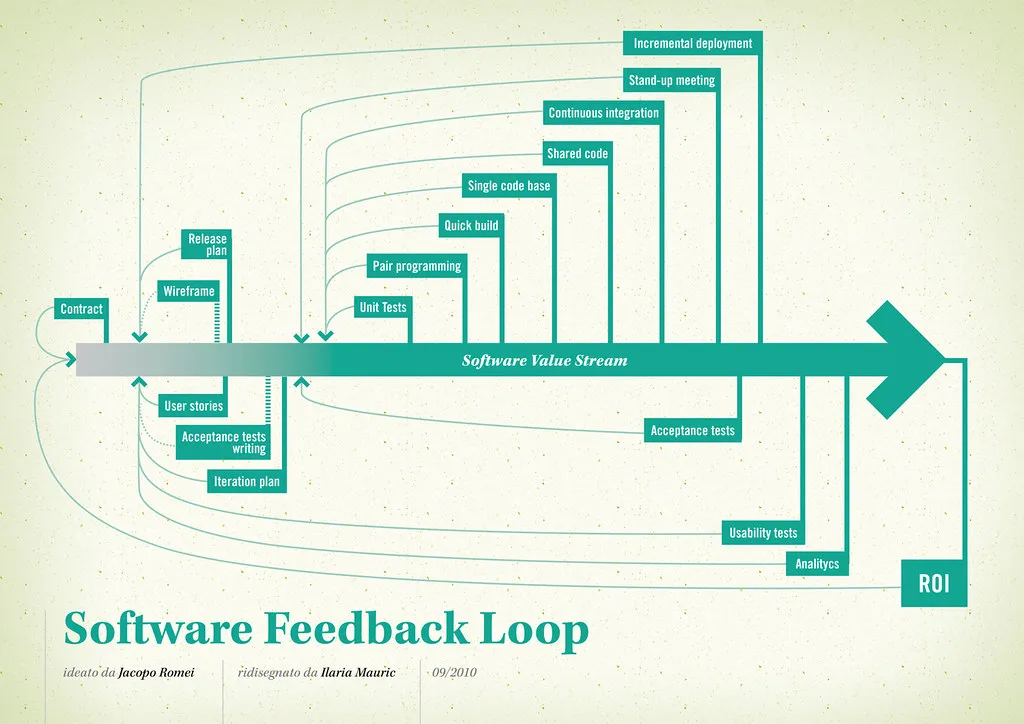
Agile software development is a way to plan, build, test, and improve software through short cycles. Instead of defining everything at the start and releasing once at the end, agile teams release smaller pieces often. Then they learn from users, stakeholders, and product data. Next, they adjust the backlog and continue.
So, what is agile in simple terms? It is a flexible approach to software work, values fast learning over rigid prediction. Additionally, it values working product increments over long theory. It also treats change as normal, not as failure.
Agile is not one single method. It is a family of agile methodologies such as Scrum, Kanban, and Extreme Programming. Each framework uses different rules. However, they share the same goal. They help teams deliver value sooner and improve direction while the product is still taking shape.
Agile software development is also common in modern delivery teams. Digital.ai reported that Digital.ai found that 71% use Agile in their software development lifecycle. The same research also found that State of Agile report found that 42% of respondents use a hybrid model. That is important. It shows that many teams do not follow one pure method. Instead, they blend agile with DevOps, product discovery, design systems, and release practices that fit their context.
In practice, agile methodology in software development usually includes these traits:
- Short planning and delivery cycles
- Frequent releases or demos
- Continuous testing and review
- Close teamwork across design, engineering, QA, and product
- Regular customer or stakeholder feedback
- Ongoing improvement through retrospectives
That mix makes agile useful when requirements are unclear at the start, when the product must evolve quickly, or when teams need to reduce the risk of building the wrong thing.
Further reading:
- What Is An Agile Team? Structure, Roles & Responsibilities
- Story Points in Agile and How to Estimate Them Effectively
- Agile Release Planning: A Complete Guide for Agile Teams
Core Principles And Values Of Agile Manifesto
Agile software development started from the Agile Manifesto. The manifesto defines Agile Manifesto values. These values do not reject process, planning, or documentation. Instead, they set priority. They tell teams what matters more when trade-offs appear.
1. Individuals and Interactions over Processes and Tools
Agile starts with people. A smart process helps, but strong teamwork helps more. Software projects move faster when developers, testers, designers, and product owners talk often and solve problems together.
For example, a daily stand-up may reveal a blocker in minutes. A rigid tool alone cannot do that. Likewise, a shared whiteboard or quick call can remove confusion faster than a long handoff chain. This is why agile teams prefer direct communication, short feedback paths, and clear ownership.
2. Working Software over Comprehensive Documentation
Documentation still matters. Teams need specs, architecture notes, test cases, and decision records. However, agile treats working software as the main proof of progress. A page of plans can look finished while the product still fails in real use.
Because of that, agile teams try to turn ideas into usable increments early. A rough but working feature teaches more than a perfect document that never reaches users. This value keeps teams honest. It pushes them to validate with reality.
3. Customer Collaboration over Contract Negotiation
Agile assumes that customers learn during the project too. They often discover what they really need only after they see the product in action. So the team should not lock every decision too early.
Instead, agile teams collaborate with customers through demos, backlog reviews, prototypes, and usage feedback. This reduces surprises later. It also improves trust because everyone sees the product evolve together.
4. Responding to Change over Following a Plan
Agile does not ignore plans. It creates smaller plans and revises them often. That difference matters. A fixed plan can break when markets, user behavior, or business priorities shift. Agile accepts that uncertainty is part of software work.
The Agile Manifesto principles behind the manifesto reinforce this idea. They emphasize early delivery, frequent releases, sustainable pace, teamwork, and continuous improvement. Together, the values and principles create a practical mindset: plan enough to move, deliver enough to learn, and change when the evidence says change is needed.
How Agile Software Development Works
Agile software development works by breaking large work into smaller decisions and smaller releases. That makes progress easier to see. It also makes mistakes cheaper to fix.
1. Iterative Development
Iteration means a team builds, reviews, and improves the same product area again and again. One cycle may produce a basic version. The next adds polish. Another adds edge cases, performance work, or analytics.
This approach helps because teams do not need perfect answers on day one. They can start with the most valuable slice, release it, and then refine it. As a result, they learn earlier and avoid heavy rework later.
A product search flow is a good example. The first iteration may support basic keyword search. The second may add filters. The third may improve relevance. The fourth may add saved preferences and reporting. Each cycle adds value without waiting for a giant release.
2. Incremental Delivery
Incremental delivery means each cycle adds a usable piece of the product. This is different from doing a lot of hidden work for months and shipping everything at once.
Each increment should be small enough to build, test, and review safely. Yet it should also be meaningful enough to show progress. For instance, a team building a healthcare app might release appointment booking first, then doctor search, then prescription management, then messaging.
This style helps stakeholders see momentum. More importantly, it helps users benefit sooner. That is one of the clearest benefits of agile software development.
3. Continuous Feedback And Collaboration
Feedback is the engine of agile. Teams collect it from many places: sprint reviews, QA results, customer interviews, usage analytics, support tickets, and retrospective meetings.
Then they use that feedback to reprioritize. If users ignore a feature, the team can stop investing in it. And if testers find a risky flow, the team can strengthen it before wider release. Finally, if customer goals change, the roadmap can change too.
This is also where cross-functional teamwork matters. Product people clarify the why. Designers shape the experience. Developers build the change. QA tests the risk. Operations teams help release and monitor it. When all of them work as one unit, agile becomes much more than a meeting routine.
DORA’s 2024 research draws on more than 39,000 professionals. It highlights user-centricity and stable priorities as core factors behind stronger delivery outcomes. That aligns well with agile. Good agile teams stay close to users, and they keep priorities clear enough to move without chaos.
Related reading:
- Agile vs Traditional Project Management: Key Points
- Agile Vs. Waterfall Vs. Scrum Vs. Kanban: Key Differences
- 20 Software Project Management Methodologies for Software Development
Common Agile Frameworks And Practices
Agile methodologies give teams a structure for doing agile well. Some are time-boxed, or flow-based, or focus heavily on engineering discipline. The right choice depends on the product, team maturity, and release pattern.
| Framework | Best Fit | Main Rhythm | Typical Practices |
|---|---|---|---|
| Scrum | Product teams with planned sprint goals | Time-boxed sprints | Backlog, sprint planning, review, retrospective |
| Kanban | Teams with continuous incoming work | Continuous flow | Board, work-in-progress limits, cycle time tracking |
| Extreme Programming (XP) | Teams that need stronger engineering quality | Short iterations with technical discipline | TDD, pair programming, continuous integration, refactoring |
1. Scrum
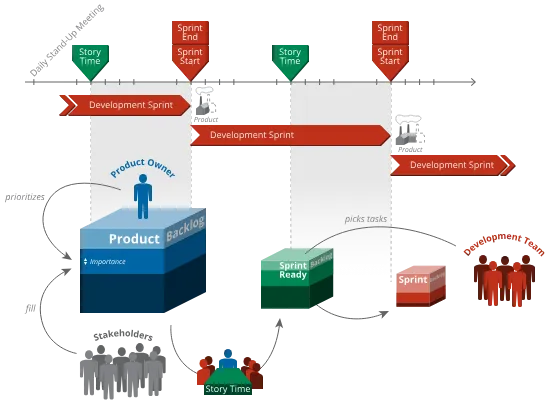
Scrum is the most widely recognized agile framework. It organizes work into short sprints, often two weeks long. The team selects sprint goals, builds from a prioritized backlog, and reviews results at the end of the sprint.
Scrum works well when teams need a clear cadence and visible checkpoints. It creates focus because the team commits to a smaller batch of work. It also creates transparency because stakeholders can review progress at predictable times.
That popularity shows up in recent data. The 17th State of Agile report found that Digital.ai’s State of Agile report found that 63% of team-level Agile users follow the Scrum methodology. So when people ask about agile methodologies, Scrum is often the first place to start.
2. Kanban
Kanban focuses on flow instead of fixed sprint boxes. Work moves across a board, often through stages such as To Do, In Progress, Review, and Done. Teams limit how much work can sit in progress at one time. That exposes bottlenecks quickly.
Kanban suits support teams, platform teams, and products with unpredictable incoming requests. It also works well for teams that want more flexibility than Scrum offers. Rather than planning everything into a sprint, the team pulls work as capacity opens.
A mature Kanban team tracks flow metrics such as lead time, cycle time, and blocked work. Those signals help the team improve delivery without overloading itself.
3. Extreme Programming (XP)
XP is an agile framework with a strong technical core. It is especially helpful when software quality, frequent change, and code health matter a lot.
According to Agile Alliance, Extreme Programming aims to produce higher quality software and higher quality of life for the development team. It promotes practices such as test-driven development, pair programming, continuous integration, refactoring, and small releases.
XP is valuable because agile can fail when teams move fast without solid engineering discipline. XP addresses that gap. It helps teams change code often without letting the product decay.
Explore more:
- 10 Project Management Tools For Productive Team Work
- Project Management System: Top 10 Core Components
- What Is Software Development and the Software Development Process?
Agile Software Development Lifecycle
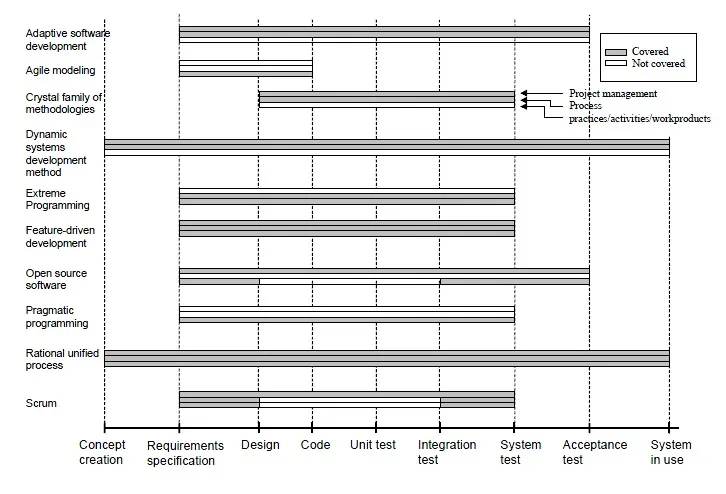
The agile software development lifecycle still covers the usual product stages. The difference is that teams move through them in shorter loops. Each stage informs the next cycle.
1. Requirement Gathering
Agile requirement gathering focuses on understanding the problem, not freezing every detail. Teams define user needs, business goals, constraints, and success metrics. Then they turn that understanding into backlog items such as epics and user stories.
This stage should stay lean. The goal is to gather enough detail to start useful work, not to predict every future change. Teams often use workshops, stakeholder interviews, process maps, and early prototypes here.
2. Design The Requirements
Next, the team designs the solution in a lightweight way. Designers map flows and wireframes. Architects shape the technical approach. Product owners refine priorities. Developers raise effort or dependency concerns.
Agile design is progressive. Teams design enough for the next increment, then revisit the design as the product grows. This keeps design practical and connected to real delivery.
3. Construction And Iteration
This is where the team builds the feature. Developers code in small units. They integrate changes often. They keep work visible on a board or sprint backlog. If new insight appears, they adjust before the cost of change grows.
Construction in agile is rarely a straight line. Teams build, test, refactor, and review continuously. That rhythm reduces the gap between idea and usable output.
4. Testing And Quality Assurance
Testing happens throughout the cycle, not only at the end, so the quality assurance process stays close to daily delivery. QA engineers, developers, and automation tools all play a role. Teams may use unit tests, integration tests, UI tests, exploratory testing, and performance checks.
This is one reason agile software development can improve quality. Bugs surface earlier. Edge cases appear sooner. And because work is smaller, teams can isolate issues faster.
5. Deployment
Once a feature meets the team’s definition of done, the team deploys it. That may mean a production release, a staged rollout, or a feature flag release to a smaller audience.
Modern agile teams often combine Agile and DevOps with CI/CD and monitoring. That makes delivery safer. It also helps teams release more often without creating chaos.
6. Feedback
After release, the team studies the result. Did users adopt the feature? Did conversion improve? Or, did support tickets rise? And did the change create unexpected friction?
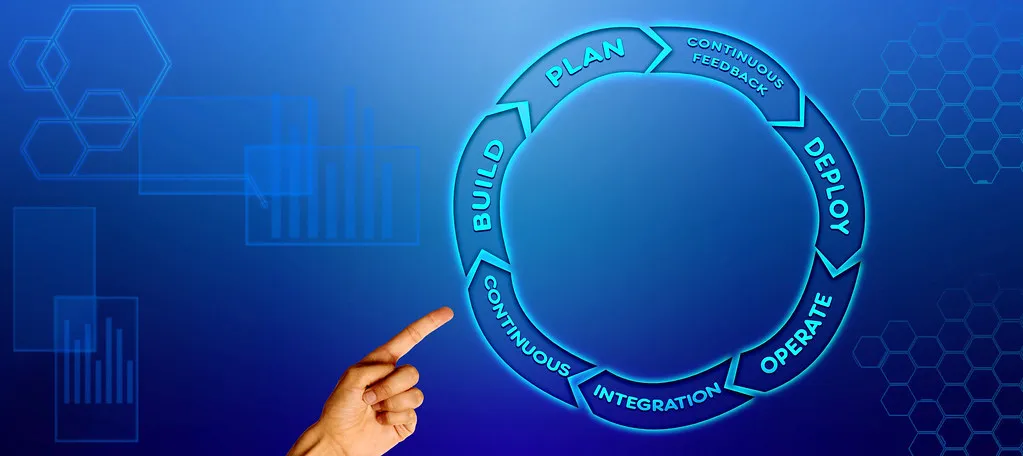
That feedback shapes the next backlog decisions. So the lifecycle does not end at deployment. It loops back into discovery, design, and development. That loop is one of the clearest answers to the question, “what is agile?” It is a learning system for product delivery.
Case study: Instagram and Designveloper
Examples make agile easier to understand. Two cases show the idea well. One is a global product company. The other is a delivery partner that works across many product types and industries.
1. Instagram
Instagram shows why agile principles matter at scale. Its engineering culture has long favored fast delivery, small changes, and strong rollback paths. In its engineering blog, Instagram explained that continuous deployment means engineers are Instagram Engineering explained that engineers are not limited to a few deployments per day at fixed times. That is a clear agile idea in action. The team keeps releases small, frequent, and reversible.
Instagram also shows how iteration improves deep technical systems, not just UI features. Meta reported that Instagram engineers Meta Engineering reported that Instagram reduced the compute time of basic video encodes by 94 percent. That did not happen through one giant rewrite alone. It reflects the kind of focused optimization and repeated learning that agile teams aim for.
So, Instagram is a useful case study because it connects agile ideas with real operating habits: quick releases, technical feedback loops, monitoring, and fast correction when something goes wrong.
2. Designveloper
Designveloper offers a different but equally useful view. We show how agile software development supports client delivery across many domains. Over the years, we’ve had 100+ projects delivered, 500k+ hours of work, 20+ industries, and 50 technologies applied. That range matters because agile works especially well when teams handle different business models, changing requirements, and varied technical stacks.
Our project portfolio also shows how agile fits different product shapes. Lumin is a Lumin, a document platform that allows users to view, edit, and share PDF documents seamlessly. ODC is a ODC, a healthcare platform for both doctors and patients. HANOI ON officially launched on July 10, 2024 as a unified digital ecosystem for Hanoi Radio and Television.
These examples matter because they show the real strength of agile software development. The same mindset can support SaaS, healthcare, media, and mobile products. The framework may change. The rituals may change. Yet the core stays the same: break work into manageable increments, gather feedback, and improve continuously.
Continue reading:
- The 12 Agile Principles and 4 Agile Values of the Agile Manifesto
- POC Vs MVP Vs Prototype: How To Choose The Right Validation Step
- From AI MVP To Product: Why Great Demos Are Not Enough

When Agile Software Development Is The Right Choice
Agile is powerful, but it is not universal. It works best when the project environment rewards learning and adaptation.
1. Projects With Changing Requirements
Some projects begin with a clear business problem but an unclear final solution. In those cases, rigid plans age fast. Agile works better because it lets teams refine the product as new information appears.
Startup products fit this pattern often. So do internal tools, digital transformation projects, and customer-facing apps in competitive markets. If requirements are likely to move, agile reduces the cost of adjusting course.
2. Products That Need Frequent Updates
Products that ship often benefit from agile. Mobile apps, SaaS tools, fintech dashboards, and eCommerce platforms all need regular updates. User expectations keep changing. Security patches also matter. So do experiment-driven improvements.
Agile supports that rhythm because it encourages smaller releases and faster prioritization. Teams do not need to wait for a major version cycle to improve the product.
3. Teams That Need Continuous Customer Feedback
Some products only succeed when customer insight shapes the roadmap closely. Agile is a strong choice here because feedback is built into the process.
If the team needs user testing, weekly demos, stakeholder reviews, or product analytics to guide decisions, agile gives that work a natural home. It keeps product direction connected to real use instead of guesswork.
Challenges Of Agile Software Development
Agile brings real benefits, but it also creates pressure points. Teams should understand them early.
1. Less Formal Documentation
Agile teams may under-document when they misunderstand the manifesto. That is risky. New team members can struggle. Compliance work can suffer. Architecture decisions can disappear into chat history.
Good agile teams do not avoid documentation. They right-size it. They document what others need to build, test, support, and scale the product.
2. Higher Dependence On Team Collaboration
Agile relies on communication. If the team works in silos, agile can become messy fast. Misalignment grows when product, design, engineering, and QA stop talking or work from different priorities.
This challenge gets harder in distributed teams when meetings are unclear, feedback is late, or ownership is weak. So collaboration is not a soft extra in agile. It is infrastructure.
3. Need For Experienced Team Members
Agile gives teams flexibility. That flexibility is useful, but it also requires judgment. Teams need people who can break work well, estimate trade-offs, surface risks, and decide when to change direction.
Without that skill, agile can slip into endless reprioritization, vague tickets, or hidden technical debt. That is why coaching, product clarity, and engineering discipline matter so much.

Agile Software Development Best Practices And Examples
Agile works best when teams treat it as an operating habit, not a meeting script. The practices below keep the method useful and grounded.
1. Keep Feedback Loops Short
Short feedback loops reduce waste. They help teams spot bad assumptions before those assumptions spread through the codebase. Teams can shorten feedback through quick demos, feature flags, QA checks, analytics, and lightweight customer interviews.
A simple rule helps here: do not wait too long to learn whether the team is building the right thing.
2. Prioritize Working Software
Teams should measure progress by usable output. A feature is not valuable because it is half-coded across several branches. It becomes valuable when users or stakeholders can see it, test it, or benefit from it.
This does not mean rushing sloppy work. It means breaking scope into real increments that can stand on their own.
3. Encourage Cross-Functional Collaboration
Agile gets stronger when the team solves problems together. Product managers clarify goals. Designers shape flows. Developers build. QA protects quality. DevOps or platform teams help release safely.
That shared ownership reduces handoff delay. It also improves quality because issues surface from several angles before release.
4. Continuously Improve Through Retrospectives
Retrospectives keep agile from turning into habit without thought. They help teams ask what worked, what slowed them down, and what they should change next cycle.
Small improvements matter here. Better ticket sizing. Clearer acceptance criteria. Faster code review. Stronger test coverage. These changes look minor alone, but they compound over time.
Example 1: Instagram
Instagram’s release culture is a strong example of short feedback loops and working software. Small, frequent deployments reduce risk because each change is easier to test, monitor, and roll back. The team does not wait for a big-bang release window. That keeps learning fast and operational risk more manageable.
Its engineering work on video processing also shows another best practice: improve the system after release, not only before it. Agile teams keep optimizing as real scale reveals new bottlenecks.
Example 2: Designveloper
Designveloper’s public content shows a practical blend of process discipline and flexibility. Our team applies Agile vs Scrum in custom web development. A Designveloper project uses Agile methods and Jira to monitor progress and support punctual delivery.
That example is useful because it reflects how many real teams work today. They do not treat agile as one rigid playbook. They combine frameworks, tools, and ceremonies based on product risk, client needs, and release goals. That is often the most practical form of agile software development.
Agile software development is not about removing planning. It is about planning in smaller cycles, validating faster, and learning while the product is still flexible. That is why it continues to matter. Teams can ship sooner, reduce the cost of change, and keep product decisions closer to real user needs.
For teams building products in fast-moving markets, that advantage is hard to ignore. The best results usually come from strong collaboration, clear priorities, and disciplined delivery. When those pieces work together, agile software development becomes more than a method. It becomes a reliable way to turn uncertainty into progress.

Conclusion
Agile software development works because it helps teams adapt, release value faster, and improve with every cycle. At Designveloper, we use that mindset across real delivery work, backed by 100+ projects delivered, 500k+ hours of work, 20+ industries, and 50 technologies applied. Since being formed in 2013, we have helped startups, SMEs, and enterprises turn ideas into working products through software development services, and UI/UX design.
That experience is visible in products such as Lumin, ODC, and HANOI ON. For us, agile software development is not just a process. It is how we reduce risk, keep stakeholders aligned, and deliver software that can grow with real business needs. If you are planning a new product or improving an existing one, get a quote and let us help you build with a team that knows how to move fast without losing quality.
Also published on

Share post on










Related Articles



Cloud Application Development: Architecture, Process, And Cost
Cloud Application Development: Architecture, Process, And Cost Published September 25, 2026
Android App Development: Stack, Process, Cost, And Best Practices
Android App Development: Stack, Process, Cost, And Best Practices Published September 17, 2026
How Gitignore Works: Rules, Patterns, Examples, And Debugging Tips
How Gitignore Works: Rules, Patterns, Examples, And Debugging Tips Published August 05, 2026