















What Are Agile Acceptance Criteria? Definition and Examples

KEY TAKEAWAYS:
- Start with a user story that states the result a user needs. Keep implementation choices with the people building the product.
- Write only the conditions needed to confirm that result. Split the story when it contains separate outcomes.
- Use Given-When-Then for behavior with a trigger, a checklist for simple outcomes, and rules for business logic.
- The Product Owner may start a draft, but the team should refine it together. Scrum does not require acceptance criteria as a named artifact.
- During a Sprint, clarify or negotiate scope without putting the Sprint Goal or the team’s quality bar at risk.
Agile acceptance criteria are observable conditions that show whether a user story or Product Backlog item meets its agreed outcome. A search story may sound clear until the team asks how partial matches and no results should work. Writing those expectations down helps product, design, development, and QA check the same behavior while leaving technical choices to the team. The sections below explain who shapes the criteria, when to refine them, how to choose a format, and how to check practical examples.
What Are Agile Acceptance Criteria?
Agile acceptance criteria are specific, observable conditions that a user story, feature, or other backlog item must meet for its result to be considered acceptable. They describe expected behavior, business rules, and important limits. They do not prescribe every step the developers must take to build the solution.

A user story explains who needs something and why. Its acceptance criteria show what must be true when the team delivers that outcome. For example, a story about product search still needs decisions about partial matches, empty results, and the information shown for each match.
Acceptance criteria are common in Agile teams, but Scrum does not name them as a required artifact. The Scrum Guide defines the Product Backlog, Sprint Backlog, and Increment, each with its own commitment. Teams may use acceptance criteria to make one backlog item clearer, alongside the Definition of Done that sets the quality bar for an Increment.
Characteristics Of Good Acceptance Criteria
Good acceptance criteria help different team members reach the same conclusion when they review the work. They should be:
- Clear: Use plain words that product, development, and QA can understand.
- Specific: Name the action, state, rule, or result instead of using words such as “easy” or “modern.”
- Observable: Describe something a person or test can check. A simple yes-or-no result can help, but not every complex outcome needs to be reduced to a binary phrase.
- Measurable when needed: Include a threshold only when it matters, and agree on the test setup and measurement method.
- Relevant and focused: Keep each criterion tied to the story’s outcome. Move separate user goals into separate stories when they can be delivered independently.
Criteria can include technical constraints when they protect a business, security, legal, or interoperability need. In that case, state the outcome the constraint protects and let the team choose the implementation where possible.
Where Acceptance Criteria Fit In The Agile Process
Teams usually discuss acceptance criteria while they refine a backlog item, then use them during build and review. The criteria keep the expected result close to the work instead of hiding it in a separate document. The Scrum Guide describes Product Backlog refinement as ongoing work that adds detail and makes items more precise.
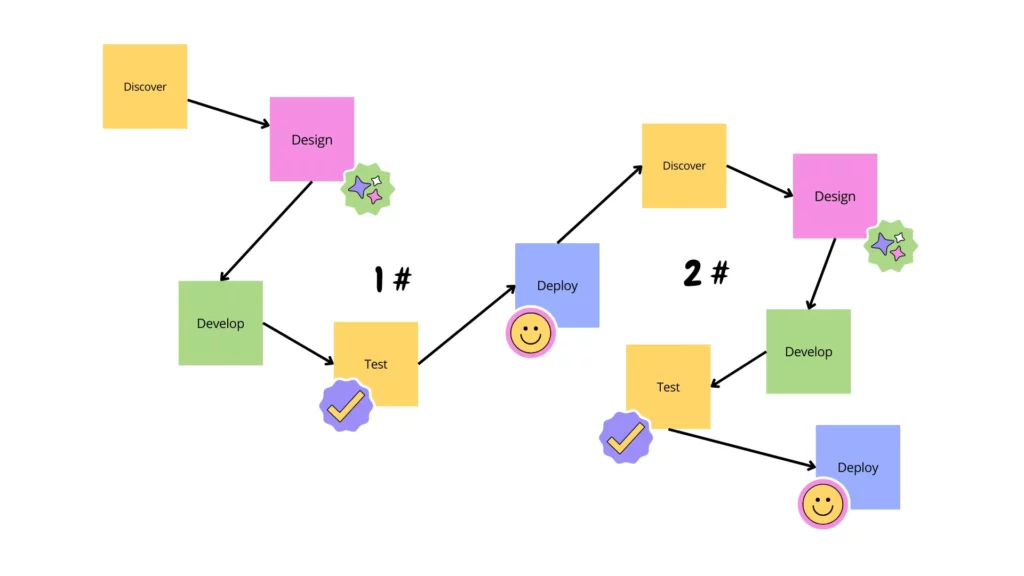
Developers can use the agreed conditions to plan and build the item. QA can use them to check expected behavior and important edge cases. The team can then review the same conditions with stakeholders. Acceptance criteria support this flow; they do not replace the team’s Definition of Done or its quality checks.
For adjacent context on team responsibilities, sprint flow, and Scrum delivery, explore these guides:
Further reading:
- What Is An Agile Team? Structure, Roles & Responsibilities
- Agile Sprint Cycle: Definition, Execution, and Steps Explained
- Scrum Software Development Turns Change Into Working Software
Why Are Agile Acceptance Criteria Important?
A short story can leave room for different assumptions. In a product search story, one developer may expect exact matches, while a stakeholder expects partial matches and a tester checks the empty state. Agreeing on these outcomes before work starts gives the team a shared basis for decisions.
- They reduce avoidable questions: The team can resolve unclear behavior during refinement, when it is easier to change the story.
- They help plan checks: QA and developers can connect each agreed outcome to the right quality assurance process and test approach.
- They make scope visible: When a new request appears, the team can compare it with the agreed outcome and decide whether to clarify the story or add separate work.
More criteria do not always mean more clarity. A long checklist can slow a small story and hide the result that matters most. The useful level of detail depends on the story’s risk, rules, and edge cases.
Who Writes Acceptance Criteria In Agile?
Product Owner Accountability
In Scrum, the Product Owner is accountable for effective Product Backlog management, including creating and clearly communicating backlog items. The Scrum Guide also allows the Product Owner to delegate that work while keeping accountability. It does not say that the Product Owner must write acceptance criteria alone, or that every team must use them.
A Product Owner may bring a first draft because they understand the product goal and business rules. Developers, QA, designers, analysts, and stakeholders can then point out feasibility issues, missing states, and user needs. The right contributors depend on the item and the decisions it affects.
Team Collaboration And Shared Ownership
Each role brings a different check to the discussion. Product clarifies value and business rules. Developers flag dependencies and technical limits. QA asks how each result can be observed. Designers check the intended interaction, and stakeholders confirm policy or customer needs.
For a password reset, product may define the user goal, QA may ask what happens with an expired link, and security may require the same message for existing and non-existing accounts to limit user enumeration, as recommended in OWASP’s Forgot Password Cheat Sheet. Together, the group can make the story testable without turning the criteria into a list of coding tasks.
When To Write Acceptance Criteria?
Start discussing acceptance criteria during backlog refinement, then refine them before the team selects the item for a Sprint. The story needs enough context to agree on its expected result, but it does not need every detail months in advance. Teams can add detail as they learn more about the work.
Some teams use a Definition of Ready checklist to decide whether an item is clear enough to select. That is a team practice, not a Scrum requirement. A team’s Agile project management process can set the right point for review without turning readiness into a fixed rule for every team.
Acceptance criteria can also change during a Sprint when the team learns something new. The Developers and Product Owner can clarify or negotiate Sprint Backlog scope as long as the change does not endanger the Sprint Goal. Work must still meet the Definition of Done; new scope should be recorded instead of added quietly.
How To Write Agile Acceptance Criteria
1. Start With The User Story
Start with the user outcome, not a technical task. A story might say: “As a user who cannot sign in, I want to reset my password by email so I can regain access to my account.” The story explains the need; the criteria make the expected result clear.
2. List Behaviors, Rules, And Edge Cases
List the main behavior, the business rule, and the edge cases that could change acceptance. For the password reset story, a useful set might say:
- A reset request sends a one-time link to a registered email address.
- The confirmation shown after a request does not reveal whether the email address belongs to an account.
- A valid link lets the user set a password that meets the account’s current password policy.
- An expired or already used link is refused, and the page explains how to request another one.
These conditions cover the main path and useful failure states without specifying the mail provider, database, or API design. If one proposed condition describes a separate user outcome, decide whether it belongs in another story instead of adding it by default.
3. Make Each Condition Observable
Write each condition so a reviewer can see what happened and check whether it meets the agreement. “The report loads quickly” is too vague. If speed is important, agree on the browser, device, network, measurement method, and target before adding a number.
For example, use a team-approved statement such as: “Under the agreed test setup, at least [agreed share] of dashboard requests complete within [agreed time].” Replace both placeholders with measured, approved values before treating the criterion as ready.
Keep one main expectation in each criterion. If a single line combines access rules, form validation, analytics, and display behavior, split it into checks that can be reviewed on their own.
4. Choose A Format That Fits
Use Given-When-Then when a starting state and action lead to a result. Use a checklist for a few independent outcomes, or a short rule list when business logic is the main concern. The format should make the criteria easier to discuss and check.
5. Review The Criteria And Split When Needed
Review the criteria with the people who will build, test, and approve the work. Ask whether each condition is clear, relevant, and verifiable, and whether the whole story can be delivered without risking its goal. Keep related edge cases with the story; split it when separate outcomes can be planned and delivered on their own.
Common Formats Of Agile Acceptance Criteria
No single format fits every story. Choose the one that makes the expected behavior easiest to read and review. Teams can use more than one format when a story has both a user flow and a set of business rules.
1. Given-When-Then Format
Given-When-Then describes a starting context, an action, and an observable result. Agile Alliance describes it as a template for acceptance tests. The Cucumber Gherkin reference explains the keywords used to write these scenarios.
For a profile phone number, a team could write one normal case and one failure case:
- Given a signed-in user is editing their profile, when they save a valid phone number, then the updated number appears on the profile.
- Given the entered number fails the agreed validation rule, when the user saves the form, then the number is not saved and a clear error appears beside the field.
Use this format when the order of events, a permission, or a failure state matters. A scenario can also support automated tests, but the criteria should still make sense to a person who does not read the test code.
2. Checklist Format
A checklist works well when a small feature has several simple outcomes that can be checked separately. For a product search story, the list might say:
- The search field is available on desktop and mobile.
- A full or partial product name returns matching products.
- Each result shows the agreed product details.
- A search with no matches shows an empty-state message.
Keep each line focused on one result. If the checklist starts to describe a sequence of actions, Given-When-Then may be easier to review.
3. Rule-Based Format
A rule list states the business conditions that the feature must follow. It suits work centered on pricing, eligibility, access, or calculations. For an activity report, criteria could state which role may open the report, which fields it shows, and what happens when a selected date range has no records.
Rules should name the role, state, or limit that changes the result. If a rule depends on an approved policy, link or refer to that policy so reviewers know which version controls the decision.
Agile Acceptance Criteria Examples
These examples show how criteria can cover a main outcome and a relevant edge case. The values and policies belong to each product team; adjust them to the actual product before using an example as a delivery agreement.
1. Product Search
User story: As a shopper, I want to search for products by name so I can find an item.
- A full or partial product name returns matching products.
- Each result shows the product name and the details agreed for the result page.
- A query with no matches shows a clear empty state.
- Selecting a result opens the matching product page.
These criteria cover the search result, the empty state, and the next user action. They leave the ranking algorithm and search service to the implementation team.
2. Edit Account Information
User story: As a registered user, I want to update my profile so my account information stays current.
- Only a signed-in user can open and edit their own profile.
- The user can change the profile fields allowed by the product.
- The email field stays read-only if email changes are handled through a separate verified flow.
- Missing or invalid required fields show an error tied to the field.
- After a successful save, the updated values remain visible after the page reloads.
The story makes the account owner and result clear. The criteria also cover field permissions, validation, and saved state without prescribing the form’s code.
3. User Activity Reporting
User story: As an administrator, I want to review recent account activity so I can investigate changes.
- Only users with the agreed report permission can open the page or export data.
- The report shows the fields required by the product’s audit policy, such as actor, action, and time.
- The user can filter activity by an agreed date range.
- The report states when no records match the selected range.
This example makes access, data, filtering, and the empty state visible. The team should confirm the required fields and permission rules with the product owner before treating the list as complete.
Acceptance Criteria Vs User Stories Vs Definition Of Done
These three items answer different questions. A user story explains the need, acceptance criteria describe one item’s expected result, and the Definition of Done sets the quality standard for completed work.
| Item | Scope | Question it answers | Example |
|---|---|---|---|
| User story | One user need or goal | Who needs what, and why? | As a shopper, I want to find a product by name. |
| Acceptance criteria | One story or backlog item | What must be true for this result to be accepted? | A partial product name returns matching items; a search with no matches shows an empty state. |
| Definition of Done | The team or product’s shared quality bar | What quality conditions must every Increment meet? | The team follows its agreed review, test, and release checks. |
In Scrum, the Definition of Done is the commitment for the Increment. Acceptance criteria can add item-specific detail, but they do not replace that shared quality bar or the Agile software development practices a team uses to deliver the work.

During review, check both levels: whether the item meets its criteria and whether the resulting Increment meets the team’s Definition of Done.
Common Mistakes To Avoid When Writing Acceptance Criteria
1. Writing Vague Or Ambiguous Criteria
Words such as “fast,” “simple,” and “user-friendly” leave room for different readings. Replace them with an outcome the team can observe. If speed matters, agree on a target and the setup used to measure it before adding the number.
2. Mixing Outcomes With Implementation
“Use React Query cache” tells developers how to build a feature, not what the user should experience. “The profile shows the saved details after the user returns to the page” describes an outcome. Keep a technical constraint only when it protects an agreed business, security, or compliance need.
3. Creating Non-Testable Acceptance Criteria
“The dashboard looks modern” cannot be checked until the team agrees what “modern” means. If the design system and layout are approved, a criterion can name those references. Otherwise, clarify the expected behavior or visual rule before making it an acceptance check.
4. Overcomplicating Simple User Stories
A small story may need only a few conditions. Add an edge case when it changes acceptance or protects a real user or business need. If the criteria describe several independent outcomes, consider splitting the story rather than making one item carry unrelated work.
FAQs About Agile Acceptance Criteria
How Many Acceptance Criteria Should A User Story Have?
There is no fixed number. Include enough conditions to show the story’s expected result and important edge cases. If the list covers several separate outcomes, revisit the story scope instead of aiming for a specific count.
Are Acceptance Criteria The Same As Test Cases?
No. Acceptance criteria state what result must be true. Test cases describe steps, data, and checks used to verify that result. A Given-When-Then criterion may be turned into an automated test, but the two still serve different purposes.
Can Acceptance Criteria Change During A Sprint?
Yes. The Developers and Product Owner can clarify or negotiate Sprint Backlog scope as they learn, provided the change does not endanger the Sprint Goal. Keep the team’s Definition of Done intact and record the agreed change in the work item.
What Is The Difference Between Acceptance Criteria And Requirements?
Requirements can describe product goals, capabilities, rules, and limits at different levels. Acceptance criteria usually narrow that detail to one story or backlog item. Teams may use these terms differently, so agree on how each document or field is used in your workflow.
What Should I Put In Acceptance Criteria In Jira?
Put the expected outcomes and important edge cases in the acceptance criteria area your team uses for the Jira issue. The exact layout depends on the project’s fields and workflow. Use clear conditions for user behavior, rules, permissions, or agreed thresholds; keep coding tasks in the delivery checklist. See this Jira and Agile guide for more on using Jira in an Agile workflow.
Conclusion
Useful Agile acceptance criteria make the expected result clear, keep checks tied to the story, and leave room for the team to choose how to build it. Agree on observable conditions, review important edge cases, and refine scope when new information appears. For software delivery support beyond this checklist, explore Designveloper’s software development services.
Also published on

Share post on










Related Articles



How Will AI Affect Software Development? Complete Guide In 2026
How Will AI Affect Software Development? Complete Guide In 2026 Published October 21, 2026
How Gitignore Works: Rules, Patterns, Examples, And Debugging Tips
How Gitignore Works: Rules, Patterns, Examples, And Debugging Tips Published October 16, 2026
What Is Velocity In Agile? Formula, Examples, And Common
What Is Velocity In Agile? Formula, Examples, And Common Published October 15, 2026