
















What Is A DevOps Engineer? Skills And How To Become One

KEY TAKEAWAYS:
- A DevOps engineer is responsible for making software delivery faster, safer, and more repeatable by connecting development, operations, automation, and infrastructure work into one practical workflow.
- The role usually includes CI/CD pipelines, infrastructure automation, cloud environments, monitoring, and collaboration across teams rather than one narrow tool specialization.
- Strong DevOps engineers need both technical depth and communication ability because the job depends on reducing friction between systems, teams, and release processes.
- A realistic path into the role starts with Linux, networking, scripting, cloud, automation, and real delivery practice, then expands into SRE, cloud engineering, or platform work over time.
DevOps has become a core part of modern software delivery because it connects development and operations into a smoother, more responsive workflow. That shift has also increased demand for engineers who can automate releases, improve reliability, and reduce delivery friction.
So what is a DevOps engineer, exactly? This guide explains what the role actually looks like in practice, why teams need it, which skills matter most, and how someone can grow into the role step by step. If you are already mapping the bigger delivery model behind this career path, it helps to start with what DevOps is and how it changes software workflows.

Related articles:
- What Is DevOps? The DevOps Lifecycle And How It Works
- Agile Vs DevOps: Key Differences And How Do They Interrelate
- Jira And Agile: How To Use Jira For Agile Project Management
What Is A DevOps Engineer?
Many people describe a DevOps engineer as someone who bridges software development and IT operations so both sides can work together more effectively. That definition is directionally correct, but it is still too thin to capture the real scope of the job.
In practice, a DevOps engineer is responsible for making sure code moves smoothly from idea to production without unnecessary friction or instability. That often means building automation, designing delivery systems, managing environments, improving observability, and making releases easier to repeat with confidence.
The exact role can look different from one company to another. Some teams lean more heavily toward cloud infrastructure. Others focus on automation, release pipelines, or reliability engineering. But the common goal stays the same: improve how software is built, shipped, and run.
Why Modern Software Teams Need DevOps Engineers
Modern software teams need DevOps engineers because the delivery process has become too fast and too complex to manage well through manual coordination alone. The pressure is no longer just about writing features. It is about shipping those features reliably and repeatedly.
That demand also shows up in the talent market. According to HackerRank, DevOps engineers were among the harder technical roles to fill in its recruiting data. That shortage makes sense because the role combines infrastructure, automation, reliability, and collaboration instead of focusing on only one technical layer.
- Faster release cycles create more operational complexity
Many software teams are under pressure to release software or updates faster without damaging quality. That sounds simple from the outside, but every release still needs build steps, testing, deployment controls, rollback planning, and post-release visibility.
DevOps engineers manage that complexity by building automated safeguards and cleaner release paths. Instead of relying on manual handoffs, they design systems that let teams move faster without turning every deployment into a fire drill.
- Cloud infrastructure makes delivery more dynamic
Cloud platforms make infrastructure more flexible, but also more dynamic. Environments can scale up, scale down, or change frequently depending on demand, architecture, and deployment patterns. Managing that manually does not scale well.
That is where DevOps engineers step in. They automate provisioning, control configuration drift, and help teams keep development, staging, and production environments consistent enough to trust.
- Teams need reliability, automation, and shared ownership
Modern teams cannot rely on the old pattern where developers build features and operations fixes problems later. Software quality now depends on shared responsibility for delivery, uptime, monitoring, and incident response.
DevOps engineers help make that shift real by improving visibility, reducing repetitive work, and building workflows where development and operations collaborate instead of colliding.
See more:
- DevOps Pipeline: A Complete Guide To Building One
- DevOps Best Practices: 10 Ways To Improve Speed And Reliability
- What Pair Programming Means In The Age Of AI Pair Programmers
What Does A DevOps Engineer Actually Do?
Different companies give DevOps engineers different job descriptions, but the role usually still revolves around a repeatable set of delivery and operational responsibilities.
At a practical level, the work often includes the following core tasks:
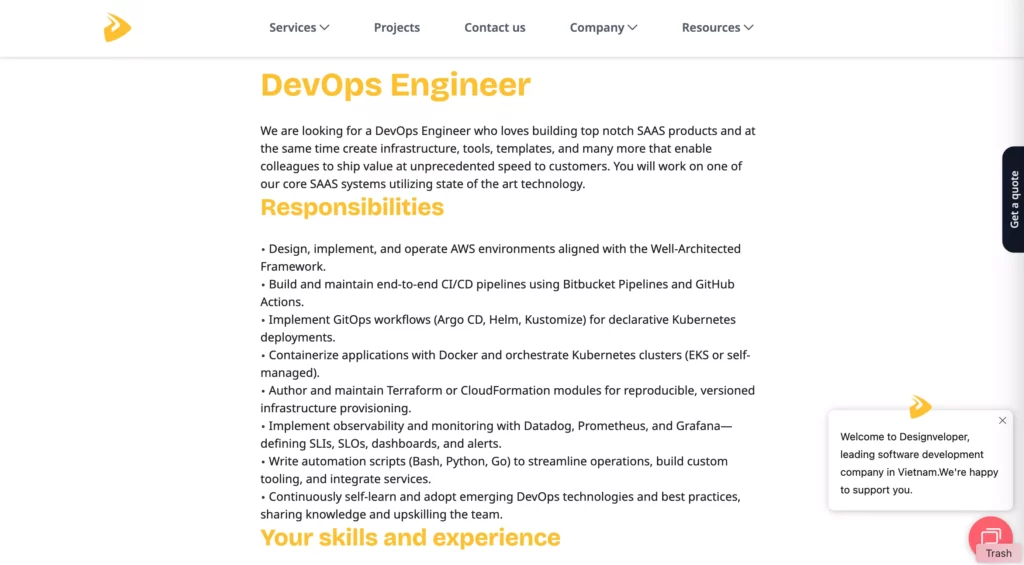
The responsibilities below show how those tasks connect infrastructure, automation, and release reliability.
- Build and maintain CI/CD pipelines
DevOps engineers design pipelines that automatically build, test, and deploy code through tools such as GitHub Actions or Bitbucket Pipelines. Instead of relying on manual release sequences, teams use those pipelines to integrate, validate, and deploy code in a more secure and repeatable way.
- Manage infrastructure and cloud environments
They also set up and manage servers, databases, and cloud resources, often through Infrastructure as Code tools such as Terraform or CloudFormation. That makes environments easier to reproduce, scale, and troubleshoot.
- Automate deployments and operational workflows
DevOps engineers reduce manual effort around repetitive operational tasks such as application deployments, service restarts, environment setup, or maintenance checks. That gives teams more time for engineering work that actually changes the product.
- Monitor systems, logs, incidents, and reliability
Once systems are live, DevOps engineers monitor performance, logs, alerts, and failure patterns by using observability tools and operational dashboards. That feedback helps teams respond faster to incidents and learn what needs to improve in the next release.
- Support security, compliance, and team collaboration
DevOps engineers also improve visibility across teams and help align development with security, operations, and compliance requirements. The role is technical, but it also depends on improving collaboration around delivery risk and release decisions.
Top DevOps Engineer Skills
Companies often struggle to find well-rounded DevOps engineers because the role combines multiple disciplines instead of sitting inside one narrow specialty. That also explains why candidates who understand only the theory often struggle to perform well in real delivery environments.
So if someone wants to become a DevOps engineer or stay competitive in the role, these are the skill groups that matter most.
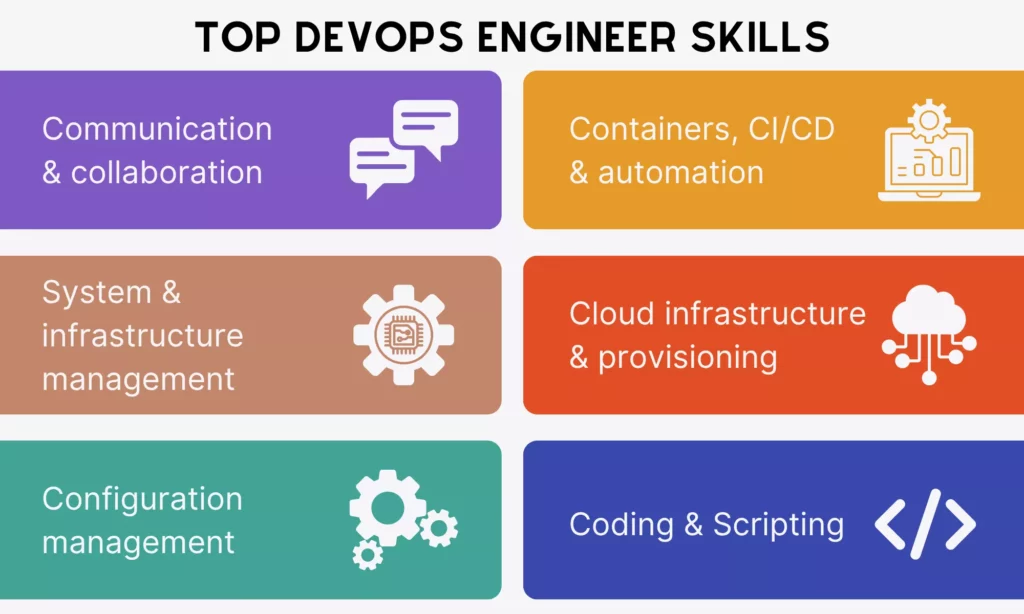
Together, they cover the systems, delivery automation, and collaboration skills the role depends on.
Communication And Collaboration
A DevOps engineer has to work well with both development and operations teams to keep delivery flowing from code to release and production support. That requires clear communication, shared context, and the ability to translate technical requirements across different roles.
Those collaboration skills matter even more when incidents happen. Instead of letting teams fall into blame patterns, a strong DevOps engineer helps people troubleshoot together and stay focused on practical solutions.
System Administration And Infrastructure Management
DevOps engineers also need a clear understanding of servers, storage, networking, permissions, and the underlying systems that keep applications running. Without that foundation, it is difficult to automate or optimize anything in a meaningful way.
Strong infrastructure knowledge helps with configuration, troubleshooting, scaling, and the operational discipline needed to keep environments stable under load.
Configuration Management
Configuration management helps DevOps engineers standardize environments through code instead of relying on manual setup. That keeps development, testing, and production environments more consistent, which reduces bugs and makes deployments more predictable.
Containers, CI/CD, And Automation
Automation is the backbone of DevOps work. Engineers in this role need to understand containers, release pipelines, and task automation because those systems are what allow code to move quickly with less manual intervention.
At a team level, that skill set improves feedback speed, reduces errors, and supports more confident release cycles. If you want the practical delivery side of this work in more detail, it helps to understand how a DevOps pipeline works and why it matters to modern release workflows.
Cloud Infrastructure And Provisioning
Most modern applications now run in the cloud, so DevOps engineers need to work with dynamic infrastructure that scales on demand instead of static servers that rarely change.
Cloud and provisioning expertise helps teams build flexible environments, control cost, and support services that behave well under changing production conditions.
Coding And Scripting
DevOps engineers do not need to work exactly like full-time software developers, but they still need to write code. Scripting is what makes automation real, whether the task involves deployments, environment checks, integrations, or debugging pipeline issues.
Languages like Bash and Python programming often show up here because they help engineers automate repetitive work and solve delivery problems quickly.
Further reading:
- DevOps Tools: Best Tools For Every Stage Of The DevOps Lifecycle
- What Is Node JS and How Does It Work?
- What Is Software Development and the Software Development Process?
How To Become A DevOps Engineer: DevOps Engineer Roadmap
Many people want to move into DevOps but do not know where to begin because the role touches so many different technical areas. The good news is that nobody has to learn everything at once. The better path is to build the foundation in layers and gain real experience over time.
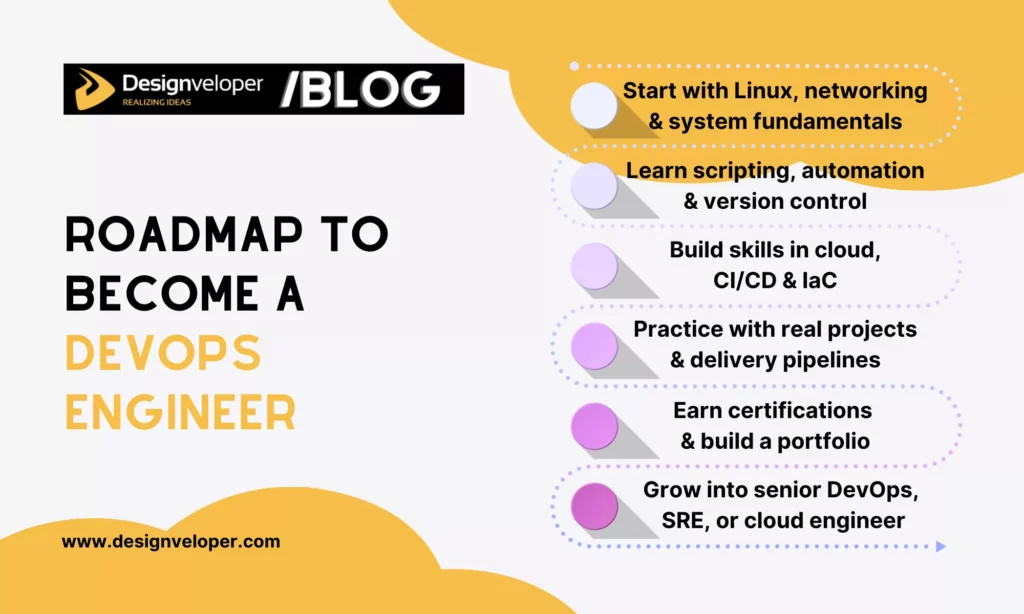
Treat it as a learning sequence, not a strict timeline: each layer makes the next one easier to apply in real delivery work.
Below is a practical roadmap that reflects how many engineers actually grow into the role.
Start With Linux, Networking, And System Fundamentals
Most DevOps environments run on Linux, so comfort with the command line, file systems, processes, permissions, and system behavior is a strong starting point. Networking basics such as ports, DNS, IP addressing, and load balancing matter too because they explain how applications actually communicate.
Those fundamentals make troubleshooting much easier later because they reduce guesswork.
Learn Scripting, Automation, And Version Control
Once the basics are in place, the next layer is automation. DevOps engineers regularly use scripting languages such as Bash, Python, or Go to handle repetitive tasks and connect systems together.
Version control is equally important because infrastructure, configuration, and pipeline logic all need traceable change management. That is one reason tools like Git matter beyond ordinary software development.
Build Hands-On Skills In Cloud, CI/CD, And Infrastructure As Code
After scripting and automation, it becomes much easier to learn cloud platforms, CI/CD pipelines, and Infrastructure as Code. That is where modern DevOps work really starts to take shape in real environments.
Engineers at this stage should learn how delivery works inside cloud environments, how to set up automated pipelines, and how to define infrastructure through code instead of manual setup.
Practice With Real Projects And Delivery Pipelines
At some point, theory has to turn into hands-on delivery work. Building a small project with a real pipeline is one of the fastest ways to understand where knowledge gaps still exist.
That practice also exposes real failure modes such as broken builds, configuration mistakes, or deployment errors, which are exactly the kinds of problems DevOps engineers need to learn how to diagnose.
Earn Certifications And Build A Portfolio
Certifications are not mandatory, but they can help validate fundamentals, especially for people transitioning from another technical role. A portfolio matters even more because it shows how someone has actually built pipelines, solved problems, or structured environments in practice.
Grow Into Senior DevOps, SRE, Or Cloud Engineer Roles
With more experience, the path can branch into Site Reliability Engineering, cloud engineering, or platform-focused work. At that level, the job becomes less about learning individual tools and more about designing reliable systems, making trade-offs, and improving team workflows at scale.
DevOps Engineer Vs Cloud Engineer Vs SRE
These roles overlap in real teams, which is why people often confuse them. Still, they usually emphasize different priorities. Understanding that difference helps engineers choose the direction that fits their strengths best.
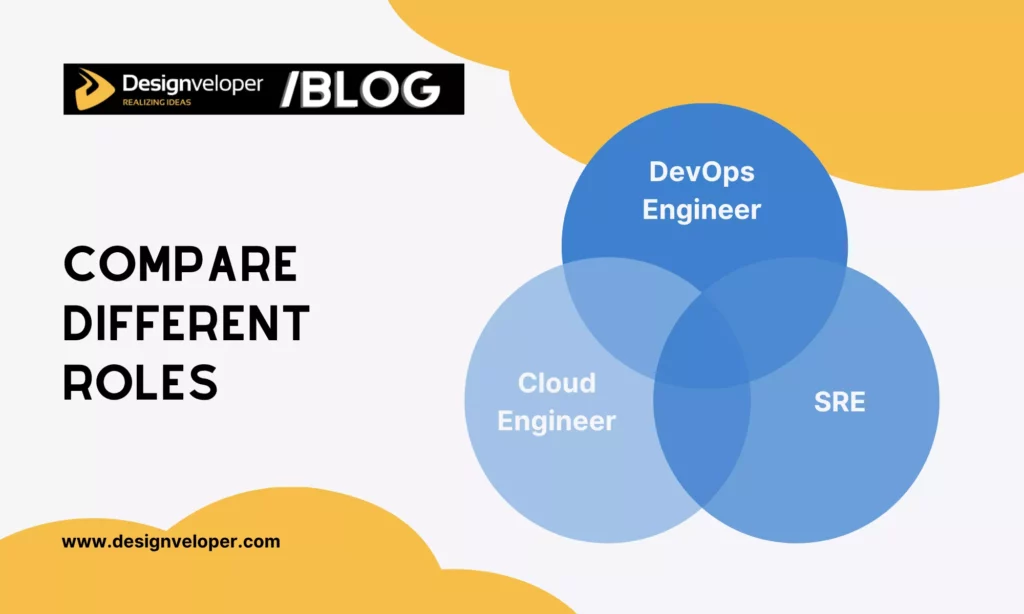
The comparisons below separate the primary focus, daily work, and success measures of each role.
DevOps Engineer Vs Cloud Engineer
A DevOps engineer usually focuses on release pipelines, automation, and the path from build to production. A cloud engineer focuses more directly on cloud infrastructure, architecture, and provisioning strategy.
| Aspect | DevOps Engineer | Cloud Engineer |
| Primary Focus | Delivery pipelines and automation | Cloud infrastructure and architecture |
| Daily Work | CI/CD, monitoring, automation | Provisioning, scaling, cloud services |
| Tools | Jenkins, GitHub Actions, Docker | AWS, Azure, GCP, Terraform |
| Goal | Faster, reliable releases | Scalable, efficient infrastructure |
| Perspective | Process-oriented | Infrastructure-oriented |
If someone enjoys workflow improvement, automation, and cross-team delivery, DevOps is often the better fit. If they prefer architecture, infrastructure design, and cloud environments at scale, cloud engineering may fit more naturally.
DevOps Engineer Vs Site Reliability Engineer
DevOps engineers and Site Reliability Engineers often look very similar on the surface. In many companies, the boundaries between them are blurred. Traditionally, though, SRE leans more heavily toward production reliability, uptime, and performance engineering.
| Aspect | DevOps Engineer | Site Reliability Engineer |
| Primary Focus | Delivery pipelines and automation | Reliability and system performance |
| Approach | Enable faster releases | Ensure systems stay stable |
| Key Metrics | Deployment frequency, release speed | Uptime, latency, error rates |
| Working Style | Broad across the pipeline | Deep in production systems |
| Mindset | Collaboration and flow from code to production | Reliability-first engineering |
If the goal is to improve delivery systems and release workflows, DevOps remains a strong path. If the engineer prefers debugging complex systems and defending reliability at scale, SRE may be the better long-term fit.
Where These Roles Overlap
Even with those differences, all three roles still overlap in important ways:
- All three work with cloud infrastructure and distributed systems
- Automation and scripting matter in all three roles
- Monitoring, logging, and incident response show up across them all
- DevOps engineers and SREs often stay closely tied to CI/CD and release reliability
- All three roles need strong collaboration with development teams
In smaller companies, one person may handle cloud provisioning, release automation, and reliability work all at once. Larger organizations are more likely to define those roles more clearly and split them across teams.
Continue reading:
- Agile Vs Scrum: What’s the Difference and When to Use Each?
- Agile Vs. Waterfall Vs. Scrum Vs. Kanban: Key Differences
- Custom Software Development: How It Can Drive Your Business Growth
FAQs About DevOps Engineers
What Does A DevOps Engineer Do?
A DevOps engineer works to make software delivery faster, smoother, and more reliable. The role connects development and operations through automation, infrastructure management, deployment workflows, and monitoring.
What Should I Study To Become A DevOps Engineer?
A good starting path includes Linux fundamentals, networking, scripting, cloud platforms, version control, Infrastructure as Code, CI/CD, containers, and observability tools. The best learning pattern is to pair theory with small real projects.
Does DevOps Require Coding?
Yes, but not in exactly the same way as a full-time application developer. DevOps coding usually means writing scripts, automating workflows, connecting tools, and reducing repetitive operational work.
Is DevOps Engineering A High-Paying Career?
In most markets, yes. According to Indeed, the average DevOps engineer salary in the United States was about $131,894 per year in May 2026. The exact number still varies by experience, location, and company, but demand for the role remains strong enough to keep compensation relatively high.
Is AI Replacing DevOps Engineers?
Not really, but it is changing how they work. AI tools can help with alert analysis, log review, or workflow suggestions, but DevOps still depends heavily on human judgment, systems thinking, trade-off decisions, and team coordination.
Conclusion
A DevOps engineer is not just someone who writes scripts between development and operations. The role exists to make software delivery faster, more reliable, and easier to scale through better automation, infrastructure design, and release discipline.
That is why companies often need more than tool familiarity. They need engineers who understand how product delivery, infrastructure, and real operational constraints fit together. In broader software development services work, that delivery maturity is often what separates stable product growth from constant release friction.
At Designveloper, that delivery mindset shapes how teams build web, mobile, and AI-powered software in practice. If your business needs a stronger release workflow, cleaner cloud operations, or a more dependable path from code to production, the right DevOps support can turn delivery from a bottleneck into an advantage.
Also published on

Share post on










Related Articles



Types of Agile Development Methodology: Key Approaches Compared
Types of Agile Development Methodology: Key Approaches Compared Published October 14, 2026
Agile Methodology Testing: Lifecycle, Quadrants & Team Practices
Agile Methodology Testing: Lifecycle, Quadrants & Team Practices Published October 13, 2026
What Is an Agile Team? Structure, Roles, and How to Build One
What Is an Agile Team? Structure, Roles, and How to Build One Published October 13, 2026