















Agile Development Best Practices: 10 Tips And Templates In 2026

KEY TAKEWAYS:
- Agile development best practices help teams deliver customer value through small iterations, visible work, early testing, continuous feedback, and retrospectives.
- Templates should support teamwork, not replace it; Kanban boards, backlogs, sprint plans, roadmaps, and workflow templates work only when teams keep them current.
- Healthy Agile teams prioritize outcomes over ceremonies by clarifying roles, protecting collaboration, and measuring value instead of activity.
- Testing, CI/CD, and shift-left habits reduce delivery risk because defects and integration issues are cheaper to fix earlier in the development cycle.
- The right Agile template depends on the decision a team needs to make, from daily task flow to product strategy, sprint execution, roadmap planning, and workflow optimization.
Agile teams do not improve just by running stand-ups or renaming meetings. They improve when they deliver useful software in small steps, learn fast, and keep work visible. That is why this guide on agile development best practices and template selection focuses on habits that help teams build better products, not just follow a routine.
That matters even more now because 74% now use hybrid, blended, or homegrown Agile models, and customer satisfaction (52%) remains the primary measure of success. So, teams need Agile development best practices and templates that fit their real context. This article explains what Agile software development means, which habits matter most, which mistakes slow teams down, and which templates support daily delivery.
Recommended for you:
- What Is An Agile Framework? Definition, Types And Examples
- What Is The Quality Assurance Process?
- Software Development Outsourcing: Definition, Benefits, And How To Start
What Is Agile Software Development?
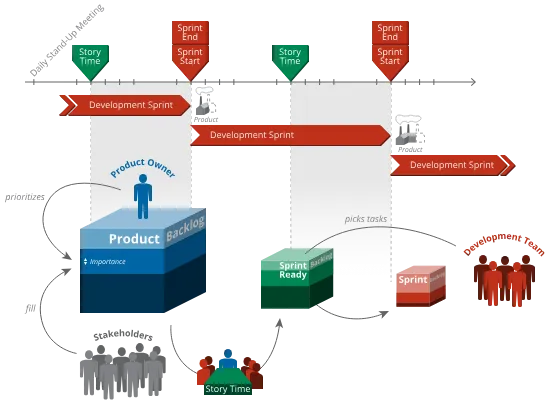
Agile software development is the ability to create and respond to change. Teams do not try to predict everything upfront. Instead, they plan just enough to start, deliver in short cycles, and adapt as new information appears.
This approach puts learning close to the work. Teams release usable increments, collect feedback, and improve the product one step at a time. As a result, they can reduce waste, lower delivery risk, and keep the product aligned with user needs.
Agile is also mainstream now. Digital.ai found that 71% of survey takers use Agile in their software development lifecycle, 63% of Agile users are team Scrum, and 34% create their own framework or do not follow a mandated framework. That mix explains why teams need reusable practices and flexible templates instead of one rigid playbook.
Further reading:
- Scrum Software Development Turns Change Into Working Software
- Story Points In Agile And How To Estimate Them Effectively
- Agile Vs. Waterfall Vs. Scrum Vs. Kanban: Key Differences
10 Agile Development Best Practices
1. Focus On Delivering Customer Value
Customer value should drive every decision. Teams should ask one simple question before they start work: what user problem does this solve? If the answer is vague, the item is not ready.
Strong teams also cut low-value work on purpose. In one McKinsey example, a bank could pause or stop 15 to 20 percent of its capacity by deprioritizing work based on shifting customer needs and market conditions. That is a useful model for backlog reviews. Remove work that does not move adoption, retention, revenue, or user success.
A good rule is simple. Tie each story, feature, or bug fix to a customer outcome, a business outcome, or a learning goal. Then review that value again at the end of each sprint.
2. Maintain A Prioritized Product Backlog
A backlog is not a storage folder. It is a decision tool. It tells the team what matters now, what can wait, and what should never be built.
In Scrum, the Product Owner is accountable for ensuring that the Product Backlog is transparent, visible and understood. That means backlog items should be clear, small enough to discuss, and ordered by value, risk, urgency, and dependency.
Therefore, teams should refine the backlog often. Add acceptance criteria. Split large items. Remove stale requests. When the backlog is healthy, sprint planning becomes faster and calmer.
3. Break Work Into Small Iterations
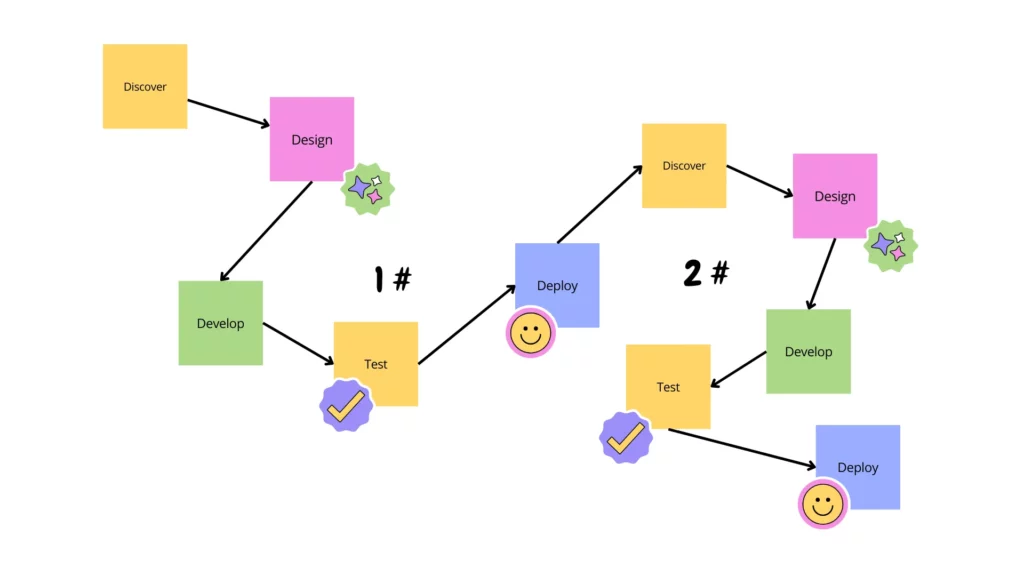
Agile works best in small batches. Large releases create long feedback loops, hidden blockers, and painful coordination. Small iterations do the opposite. They make progress visible and easier to change.
The Agile principles are direct: Deliver working software frequently, from a couple of weeks to a couple of months, with a preference to the shorter timescale. That is why teams often work in short sprints or tight delivery windows.
Small iterations also improve planning. Teams can estimate better, detect scope creep sooner, and recover faster when priorities change. In practice, this means slicing work by user value, not by technical layer.
4. Embrace Continuous Feedback
Agile teams do not wait until the end of a project to learn. They collect feedback during discovery, design, development, testing, release, and support. This keeps the product grounded in reality.
That habit matches recent DevOps research. Google Cloud noted that platform engineering efforts should prioritize user-centered design, developer independence, and a product-oriented approach. The same idea applies to Agile teams. Feedback should come from real users and from the people doing the work.
Use sprint reviews, usability tests, beta releases, support tickets, analytics, and defect trends. Then feed those signals back into backlog refinement. Fast feedback is what keeps Agile honest.
5. Ensure Transparency Across Teams
Hidden work slows delivery. Teams need to see priorities, blockers, ownership, dependencies, and status without asking for a private update. Transparency reduces rework and makes alignment easier.
This is one reason Kanban remains useful. Kanban is an Agile framework that visualizes work, limits work-in-progress, and promotes continuous improvement through transparent workflows. Even Scrum teams benefit from this level of visibility.
Make work states explicit. Show blocked items in the board. Share sprint goals, release risks, and decision changes in one place. When people can see the system, they can improve the system.
6. Build Cross-Functional Teams
Agile delivery slows down when work passes through too many silos. A team should have enough skills to move an item from idea to release with minimal handoffs. That often includes product, design, engineering, QA, and operations skills.
This is not just theory. McKinsey reports that team-focused transformations can lead to 30 percent efficiency gains when cross-functional skills come together around difficult outcomes. Cross-functional teams solve problems faster because the right people are already in the room.
So, build teams around value streams, products, or customer journeys. Do not build them around narrow functions alone. The fewer the handoffs, the faster the learning.
7. Encourage Team Autonomy (Self-Organization)
Agile teams need direction, but they also need room to decide how to do the work. Leaders should set outcomes, constraints, and priorities. Then the team should choose the approach.
This principle goes back to the source. The Agile principles state that the best architectures, requirements, and designs emerge from self-organizing teams. Teams closest to the work often make the fastest and most practical decisions.
Autonomy also improves ownership. People care more when they can shape the plan, not just follow orders. However, autonomy works only when goals are clear, roles are understood, and feedback is frequent.
8. Integrate Testing Early (Shift-Left)
Testing should not start after development is almost done. By then, defects are harder to isolate, fixes are larger, and release pressure is higher. Agile teams need quality checks from the start.
GitLab explains the idea clearly: “Shift left” refers to conducting testing, security, and quality assurance earlier in the software development lifecycle. In practice, that means reviewing acceptance criteria early, adding test cases during refinement, and automating checks close to the commit.
This practice improves speed and quality at the same time. Teams find issues when the context is still fresh. They also avoid late-stage surprises that disrupt the sprint or release.
9. Adopt Continuous Integration And Delivery
Agile delivery becomes fragile when integration happens late. Code sits in branches. Bugs pile up. Releases turn into stressful events. CI/CD reduces that risk by making integration and delivery routine.
Continuous integration (CI) is the practice of automating the integration of code changes from multiple contributors into a single software project. Then, continuous delivery is an approach where teams release quality products frequently and predictably from source code repository to production in an automated fashion.
For Agile teams, this means smaller merges, faster validation, and fewer release bottlenecks. It also creates confidence. When the pipeline is healthy, teams can ship more often without betting the entire sprint on one big deployment.
10. Continuously Improve Through Retrospectives
Retrospectives keep Agile from turning into habit without thought. They help teams inspect how they work, not just what they shipped. That is essential for long-term performance.
The Scrum Guide is clear: The purpose of the Sprint Retrospective is to plan ways to increase quality and effectiveness. A good retrospective should end with a small number of concrete actions, not a long list of complaints.
Keep the process light. Ask what helped, what blocked progress, and what should change next sprint. Then track one or two improvements until they become part of the team’s normal way of working.
Related reading:
- Software Development Life Cycle: Stages, Models, And Best Practices
- 20 Software Project Management Methodologies For Software Development
- What Is Software Development And The Software Development Process?
Common Agile Mistakes And How To Avoid Them
1. Treating Agile As A Process Instead Of A Mindset
Many teams copy Agile rituals but keep old habits. They hold ceremonies, but decisions stay slow. They use sprint language, but priorities remain fixed and distant from user feedback.
That gap shows up in the data. Digital.ai reported that only 11% are very satisfied and 33% are somewhat satisfied. In other words, adoption alone does not guarantee maturity.
Avoid this by teaching the reason behind each practice. Agile is not a meeting schedule. It is a way to learn, adapt, and deliver value with less waste.
2. Over-Reliance On Tools Instead Of Collaboration
Tools are useful, but they cannot replace shared understanding. A polished board can still hide confusion if the team never talks about tradeoffs, blockers, or customer needs.
The Agile Manifesto puts it plainly: Individuals and interactions over processes and tools. That does not mean tools do not matter. It means tools should support collaboration, not dominate it.
So, choose fewer tools and clearer workflows. Use them to expose decisions, not bury them. When conversation disappears, Agile quality usually drops with it.
3. Lack Of Clear Roles And Responsibilities
Agile teams need flexibility, but they still need clear accountability. If nobody owns priorities, the backlog becomes noisy. If nobody removes blockers, the sprint slows down. If nobody owns quality, defects move downstream.
In Scrum, the product owner builds and manages the product backlog. That role should stay focused on value, order, and decision clarity. The Scrum Master supports the system, and developers own delivery.
To avoid confusion, define who decides priority, who clarifies scope, who approves release readiness, and how cross-team dependencies are handled. Write that down and review it often.
4. Skipping Retrospectives And Feedback Loops
Some teams skip retrospectives when they feel busy. Others run them but never follow through. Both habits weaken Agile over time. Problems repeat because nobody changes the system.
Avoid this by treating feedback loops as delivery work, not optional overhead. Keep reviews, retrospectives, and customer feedback close to the sprint. Then assign owners to the actions that come out of them.
Agile without feedback becomes routine. Agile with feedback becomes learning.
Explore more:
- What Is Agile Acceptance Criteria? Definition, Examples
- Agile And DevOps: Differences And How They Interrelate
- What Is An Agile Team? Structure, Roles And Responsibilities
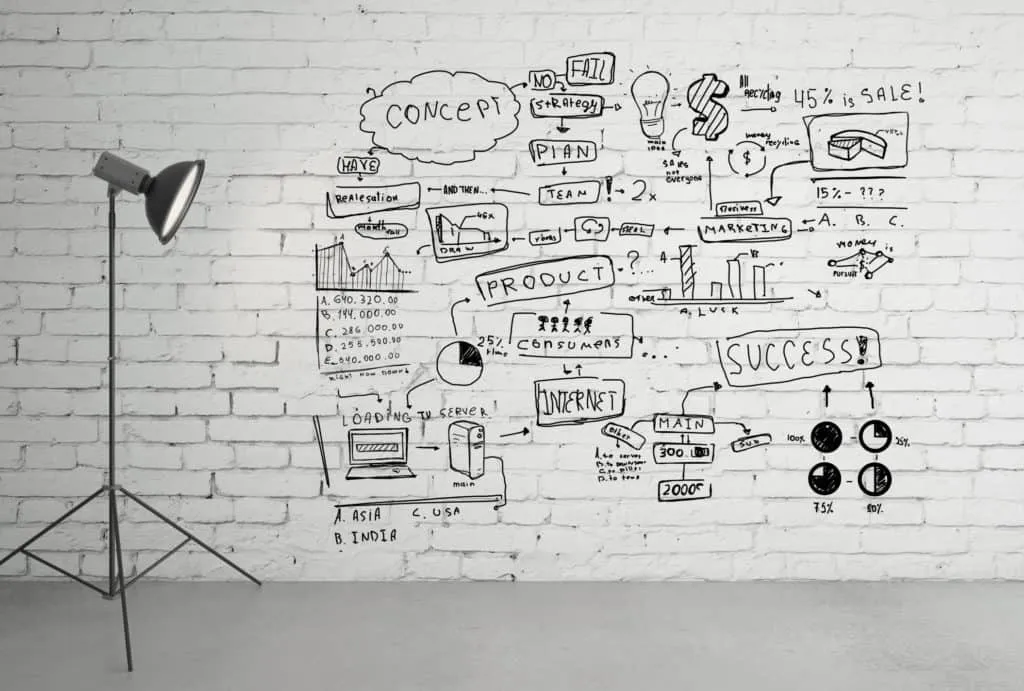
Common Agile Templates For Teams
Continue reading:
- Agile Principles And Values: 12 Principles And 4 Values Explained
- Types Of Agile Methodology: Which One Is Best For Your Team?
- Custom Software Development: How It Can Drive Your Business Growth

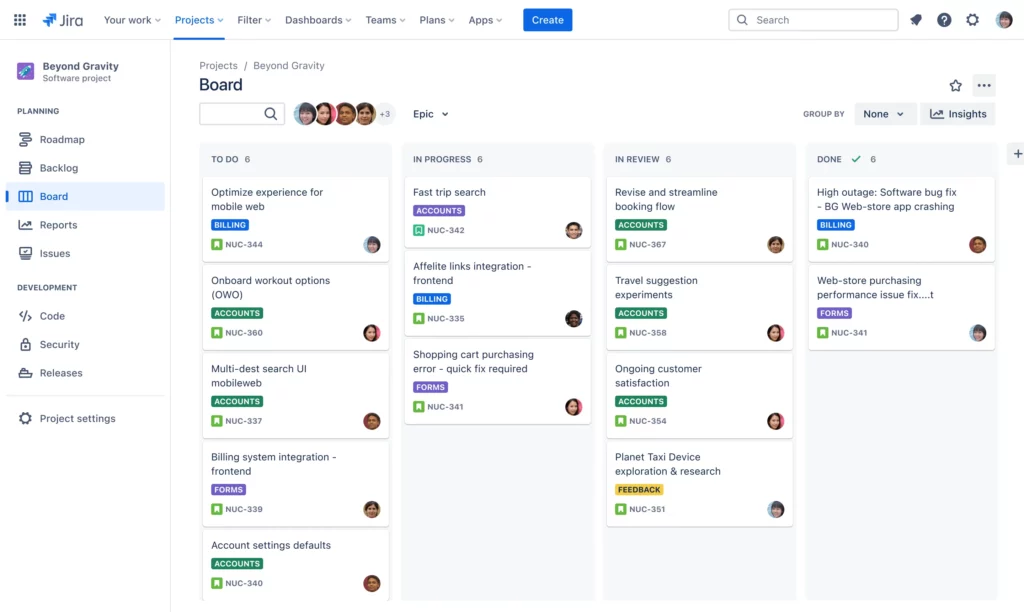
1. Best For Managing Tasks: Kanban Board Template
A Kanban board template is the easiest place to start when a team needs visibility. It shows work states, blocked items, and flow in one view. That makes it useful for software teams, support teams, and mixed delivery teams.
Use it when priorities change often or when work arrives continuously. It is especially helpful for bug queues, maintenance work, and teams that want to improve flow before they formalize sprints.
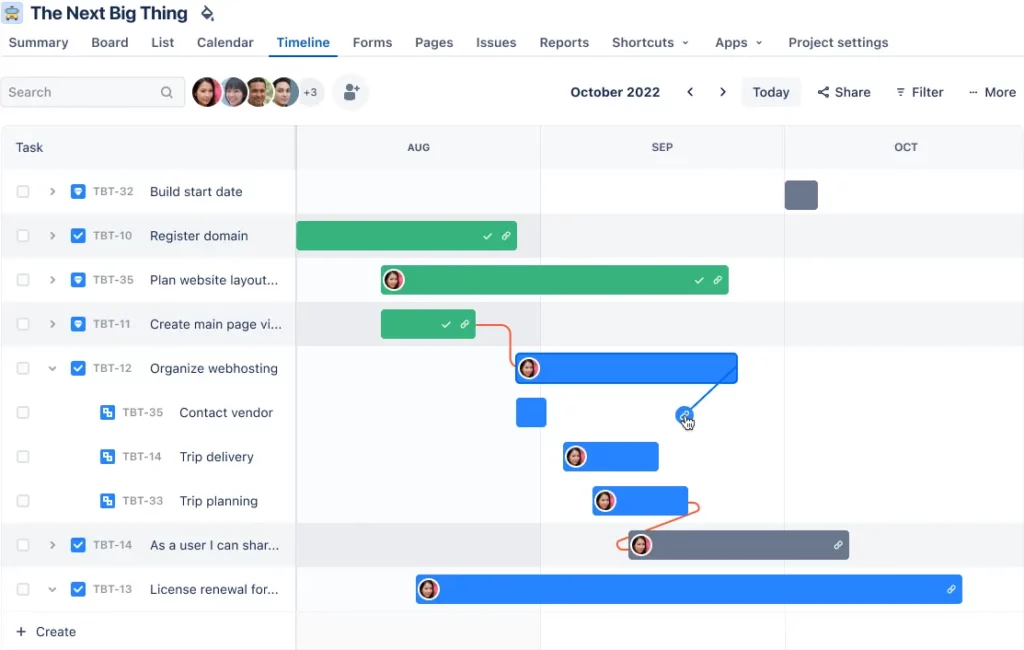
2. Best For Timeline Planning: Gantt Chart Template
A Gantt chart template helps teams see milestones, dates, dependencies, and release windows. It is useful when several teams, vendors, or approval steps affect delivery timing.
Agile teams should not use it as a rigid promise. Instead, they should use it as a communication tool for high-level planning. It works best for release planning, portfolio views, and stakeholder reporting.
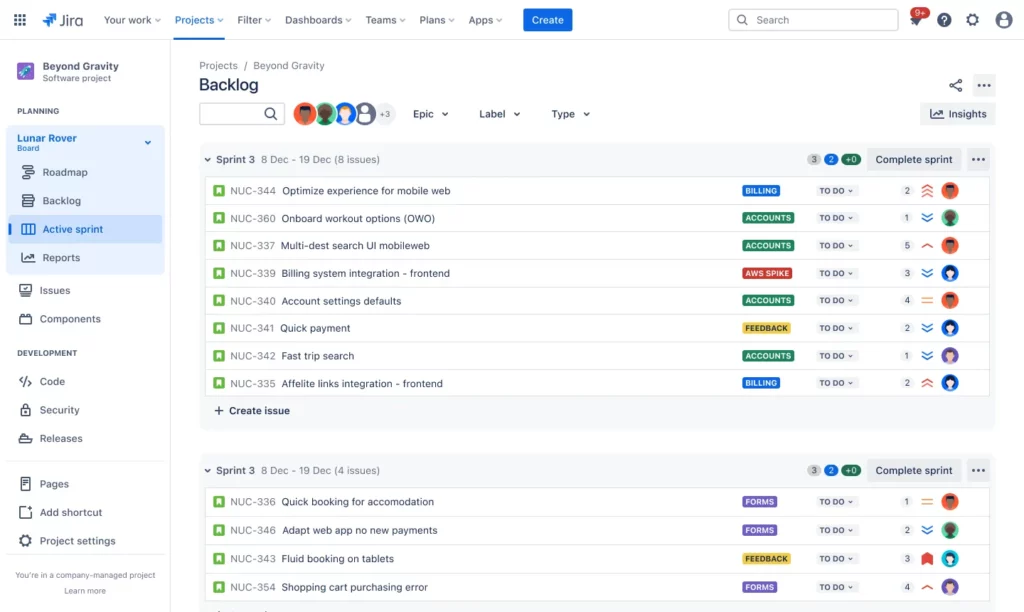
3. Best For Prioritizing Work: Product Backlog Template
A product backlog template helps teams rank work by value, urgency, risk, and effort. It is the right choice when the biggest problem is not execution speed but decision quality.
Use it to manage user stories, defects, technical debt, and discovery items in one ordered list. It is also the best base template for teams that work in Scrum or any backlog-driven model.
4. Best For Strategic Product Planning: Product Strategy Template
A product strategy template gives structure to vision, audience, goals, positioning, and major initiatives. It helps teams connect daily delivery to a bigger product direction.
Use it before roadmap planning gets too detailed. It is most helpful when a team knows it is busy but cannot clearly explain why the work matters or who it is meant to serve.
5. Best For Streamlined Collaboration: Agile Project Plan Template
An agile project plan template is useful when teams need one shared space for scope, owners, phases, boards, and delivery checkpoints. It brings structure without forcing a fully predictive plan.
Use it for new product builds, feature programs, or cross-functional initiatives that need more than a board but less than a heavy project document. It works well when several functions need one shared operating view.
6. Best For Product Strategy: Product Strategy Template
This template is also valuable when leadership needs to align product direction with measurable outcomes. It is not only for product managers. Engineering, design, marketing, and sales often need the same picture.
Use it to define tradeoffs, not just goals. A strong strategy template helps teams decide what not to build, which is often as important as deciding what comes next.
7. Best For Sprint Execution: Sprint Backlog Template
A sprint backlog template turns priority into execution. It shows the sprint goal, selected work, tasks, blockers, and progress during the sprint.
Use it when the team works in timeboxed iterations and needs a tighter planning view than the product backlog can provide. It is ideal for daily stand-ups, sprint planning, and mid-sprint adjustment.
8. Best For Roadmapping Goals: Agile Roadmap Template
An agile roadmap template gives a longer view across sprints, quarters, or releases. It shows themes, milestones, and goals without forcing every task into a fixed date too early.
Use it when stakeholders need direction, sequence, and tradeoff visibility. It is especially useful for product teams that must align delivery with launches, dependencies, or funding checkpoints.
9. Best For Structuring Work: Product Breakdown Structure Template
A product breakdown structure template is a practical way to decompose a large initiative into manageable parts. Many teams use it as a product-focused version of a work breakdown structure.
Use it when the scope is complex and the team needs to map epics, features, components, and deliverables in a logical hierarchy. It helps teams see missing pieces before development starts.
10. Best For Process Optimization: Workflow Template
A workflow template defines the steps work moves through and the rules around those steps. It is useful when delays come from unclear handoffs, inconsistent states, or too many exceptions.
Use it to standardize how items move from intake to release. This template is especially helpful for teams that need cleaner coordination between product, engineering, QA, security, and operations.

How To Choose The Right Agile Template
Matching Templates With Team Size And Maturity. Small or early-stage teams should start with fewer templates. A Kanban board, a product backlog, and a sprint backlog are usually enough. As the team grows, it can add an agile project plan template, a roadmap, or a workflow template to improve coordination.
Choosing Based On Project Scope And Complexity. Choose simple templates for simple work. A backlog and board are enough for one team shipping one feature area. Choose more structured templates when the work spans multiple teams, external dependencies, or long-range milestones. In that case, roadmaps, Gantt charts, and breakdown structures become more useful.
Aligning Templates With Agile Frameworks (Scrum, Kanban, SAFe). Scrum teams usually need product backlog, sprint backlog, and retrospective-friendly planning templates. Kanban teams need workflow visibility because In Kanban, we limit the WIP to balance utilization and still ensure the flow of work. SAFe environments need stronger cross-team planning because PI Planning is a cadence-based event for the entire ART that aligns teams and stakeholders to a shared mission and vision. So, the right template depends on how the team plans, coordinates, and releases work.
FAQs About Agile Development Best Practices And Templates
1. What Are The Most Effective Agile Development Best Practices?
The most effective practices are the ones that keep value, flow, and learning connected. Teams usually get the best results when they prioritize customer value, maintain a healthy backlog, work in small iterations, collect feedback continuously, test early, and improve through retrospectives. Clear ownership and visible work are also essential.
The key is not to adopt every practice at once. Start with the few that remove the biggest source of delay or confusion. Then improve the system sprint by sprint.
2. Which Agile Templates Should Beginners Use?
Beginners should start simple. A Kanban board template helps them see work. A product backlog template helps them prioritize. A sprint backlog template helps them execute timeboxed work. If the team needs more structure, add an agile project plan template next.
That sequence works because it mirrors how Agile matures. First, make work visible. Next, decide what matters. Then, manage execution in short cycles.
3. How Do Agile Teams Measure Success?
Agile teams should measure both delivery performance and business value. DORA notes that DORA has identified five software delivery performance metrics. These metrics help teams understand speed, stability, and recovery.
However, delivery metrics alone are not enough. Good Agile teams also track customer outcomes, product adoption, escaped defects, cycle time by work type, and whether sprint goals actually deliver value. The best scorecard is balanced. It shows both how fast the team moves and whether the work mattered.
4. Can Agile Be Applied Outside Software Development?
Yes. Agile can work outside software when the work has uncertainty, changing priorities, and a need for frequent feedback. That is why product discovery, marketing campaigns, operations improvement, and internal process redesign often use Agile ideas well.
The same principles still apply. Break work into small steps. Keep priorities visible. Learn from outcomes. Adapt quickly. Agile is useful anywhere teams need to respond to change without losing focus.
Agile works best when teams keep the goal simple. Deliver value, make work visible, test early, and improve every cycle. Then choose only the templates that help the team think clearly and move faster.
That is the real point of agile development best practices and templates. They should reduce confusion, not add ceremony. Review your current backlog, board, and planning documents this week. Remove one template that adds noise, and adopt one that makes priorities, ownership, or flow easier to see.
Conclusion
Agile only creates results when teams turn principles into daily habits. That is why the right mix of agile development best practices and templates should help your team deliver value faster, collaborate better, and improve every sprint. At Designveloper, we know that from direct experience. We are a Vietnam-based software company founded in 2013 and focused on AI, web app development, mobile app development, and UI/UX design, so we do not treat Agile as theory. We use it to help businesses ship real products with less waste and clearer priorities.
That practical mindset is what clients come to us for. Across our delivery work, we have built over 100 projects, logged more than 500,000 work hours, and served clients across 20+ industries. Our portfolio includes Lumin, ODC, WorkPacks, Joyn’it, Bonux, and HANOI ON, along with many other products that demanded strong backlog control, fast feedback loops, and continuous improvement. So, if your team wants more than a generic Agile checklist, we can help you choose the right workflow, refine your delivery process, and build scalable software that fits your business goals. That is how we turn Agile from a buzzword into measurable product progress.
Also published on

Share post on










Related Articles



Can ChatGPT Create an App? What It Can Build and What to Check
Can ChatGPT Create an App? What It Can Build and What to Check Published September 30, 2026
Best Open-Source Vector Database In 2026: 10 Options Compared
Best Open-Source Vector Database In 2026: 10 Options Compared Published September 29, 2026
Agile vs DevOps: Key Differences and How They Work Together
Agile vs DevOps: Key Differences and How They Work Together Published September 29, 2026