










12 Best Open Source Chatbot Frameworks in 2026

As AI-powered conversations become a standard part of digital products, more businesses are looking beyond plug-and-play chatbot tools. They want stronger control over data, deeper customization, and the flexibility to integrate conversational AI into real business workflows. That is where open source chatbot frameworks still stand out in 2026.
Unlike closed chatbot platforms, open source frameworks give development teams more ownership over how a bot is built, deployed, and improved over time. This matters if you are building for enterprise operations, regulated industries, internal knowledge systems, or any product where generic chatbot behavior is not enough.
Still, choosing the right framework is not as simple as searching for the “best chatbot platform.” Many tools in this market are proprietary, open-core, or heavily dependent on managed infrastructure. So in this guide, we focus on frameworks and developer platforms that meaningfully belong in the open source chatbot conversation, while also calling out important caveats where needed.
If your team is evaluating options for self-hosted AI assistants, customer support automation, or custom conversational products, this comparison will help you narrow down the right fit.
Further Reading:
- Best AI Chatbot That Boosts Your Workflow
- Best AI Chatbot Platforms to Use
- Best Tools to Automate Chatbots for Your Business
Quick Answer: The Best Open Source Chatbot Frameworks at a Glance
If you want a fast shortlist before diving deeper, these are the strongest options to evaluate first:
- Rasa for enterprise-grade control, self-hosting, and complex workflows
- Botpress for faster development with a builder-style experience
- Microsoft Bot Framework for teams already invested in the Microsoft ecosystem
- BotMan for PHP-based applications and web teams
- Bottender for JavaScript teams building multi-channel bots
- DeepPavlov for NLP-heavy and research-driven projects
- Tock for large-scale enterprise conversational systems
Comparison Table
| Framework | Open-source status | Core language | Self-hosted | Best for | Learning curve | Notes for 2026 |
|---|---|---|---|---|---|---|
| Rasa | Open source with commercial ecosystem around it | Python | Yes | Enterprise assistants, custom workflows | High | Excellent control, but more engineering effort |
| Botpress | Open-source roots, more platform-driven today | TypeScript | Limited / mixed | Fast prototyping and agent workflows | Medium | Review infrastructure tradeoffs carefully |
| Microsoft Bot Framework | Open source SDK with lifecycle caveats | C# / JS / Python | Partial | Microsoft-focused teams | Medium | SDK archived; support ended December 31, 2025 |
| Botkit | Open source | JavaScript | Yes | Messaging bots and integrations | Medium | Best for code-first teams |
| BotMan | Open source | PHP | Yes | Laravel and PHP applications | Low to medium | Strong fit for PHP ecosystems |
| Bottender | Open source | JavaScript | Yes | Cross-channel messaging bots | Medium | Practical choice for Node.js teams |
| Claudia Bot Builder | Open source | JavaScript | AWS-centric | Lightweight serverless bots | Medium | Best for narrower use cases |
| DeepPavlov | Open source | Python | Yes | NLP-intensive assistants | High | Better for technical teams with ML depth |
| Tock | Open source | Kotlin / Java | Yes | Enterprise-grade virtual assistants | High | Powerful, but more complex to operate |
| OpenDialog | Platform-oriented with structured dialogue focus | Mixed | Mixed | Regulated and complex conversational workflows | Medium to high | Validate deployment flexibility carefully |
| ChatterBot | Open source | Python | Yes | Learning and simple chatbot prototypes | Low | Limited production-grade suitability |
| Wit.ai | NLP platform with external ecosystem dependency | Mixed | No / limited | Quick NLP prototyping | Low to medium | Best for experimentation, not full ownership |
What Makes a Chatbot Framework Truly Open Source?
Before comparing tools, it is worth clarifying what “open source chatbot framework” actually means.
Not every chatbot product with a developer API should be treated as open source. In practice, a framework belongs in this category when its core source code is publicly available, its license supports meaningful use and modification, and teams can deploy or extend it without relying entirely on a closed hosted platform.
That distinction matters because many businesses are not just looking for a chatbot. They are looking for a system they can control.
In general, the landscape breaks down into three groups:
- Open source chatbot frameworks, which give developers control over logic, integrations, and deployment
- Open-core platforms, where some layers are open but the broader product experience is increasingly tied to managed infrastructure
- Proprietary chatbot platforms, which may be excellent for speed but do not match the same level of ownership or flexibility
For technical teams, this is more than a labeling issue. It affects architecture, compliance, maintenance, and long-term cost.
Continue with these:
- Best Open-Source RAG Frameworks
- Best Practices for Implementing RAG in AI Projects
- How to Build a RAG System Step by Step
Best Open Source Chatbot Frameworks in 2026
Nevertheless, the number of chatbot frameworks in the market is definitely countless. As a consequence, to help you find out the most suitable chatbot framework, people at Designveloper has this piece to show you the best open-source chatbot framework at the moment!
Before reading these articles you should know the basics of a chatbot:
- What Is a Chatbot And How Does It Work?
- AI Chatbot Development: Detailed Step-by-Step Guide
- What is an ERP AI Chatbot
1. Rasa
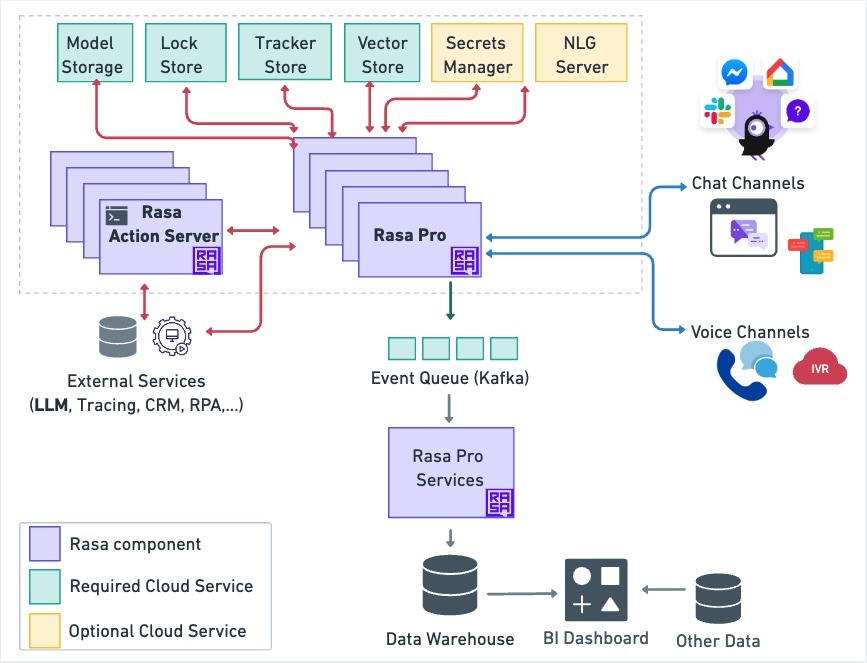
Rasa is still one of the most established open source chatbot frameworks for teams that need full control over conversational logic, deployment, and data. It is especially relevant for enterprise environments where customization, privacy, and workflow complexity matter.
Why it stands out
Rasa stands out because it gives developers deep control over how an AI assistant behaves, integrates, and scales. Compared with more guided chatbot platforms, it offers far more flexibility for building complex, business-specific conversational systems.
Key strengths
- Strong support for custom workflows and dialogue control
- Self-hosting flexibility for privacy and compliance-sensitive use cases
- Good fit for enterprise integrations and internal systems
- Mature ecosystem for production-grade conversational AI
Limitations
- Steeper learning curve than builder-style platforms
- Requires more engineering effort to implement and maintain
- May be too heavy for small or simple chatbot projects
Rasa is one of the best choices for organizations that value long-term control over short-term convenience. If your team can handle the technical overhead, it remains a top-tier framework.
You might also like:
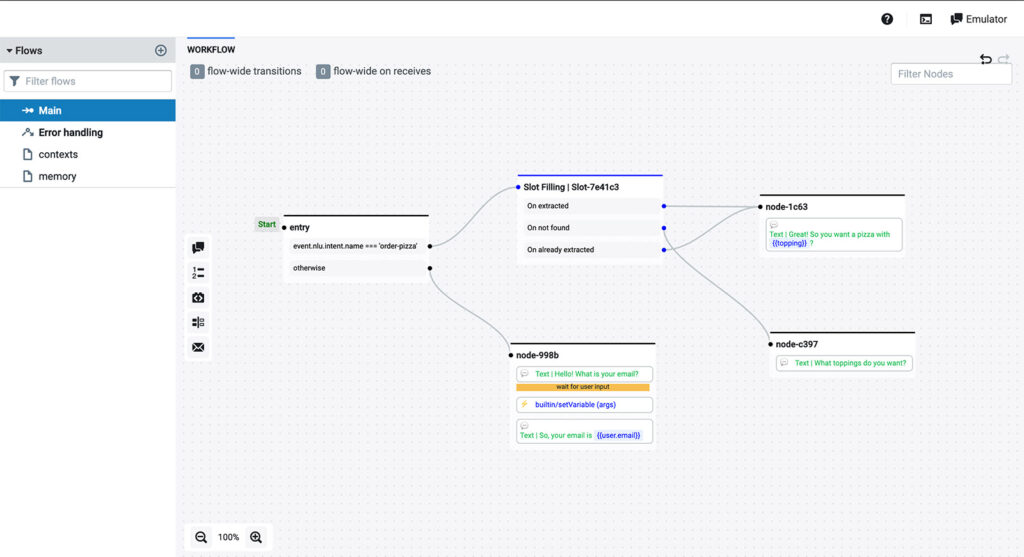
2. Botpress
Botpress is a popular chatbot framework for teams that want a more accessible way to build conversational experiences without giving up developer extensibility. It is often considered by companies that want to move faster than they would with a more engineering-heavy framework like Rasa.
Why it stands out
Botpress stands out for combining a builder-style experience with enough technical flexibility to support practical AI assistant use cases. It can shorten time to launch while still giving developers room to customize flows and integrations.
Key strengths
- Easier to adopt than many traditional chatbot frameworks
- Faster prototyping and deployment workflow
- Useful balance between usability and extensibility
- Good fit for teams building AI assistants with product speed in mind
Limitations
- Less infrastructure control than more self-managed frameworks
- Current direction is more platform-driven than purely open-source-first
- Teams should verify which parts are truly open and self-manageable
Botpress is a strong option for businesses that prioritize speed and usability. It works best when the goal is to launch faster while still keeping a reasonable level of technical control.
3. Microsoft Bot Framework / Azure AI Bot Service
Microsoft Bot Framework has long been a familiar option for enterprise chatbot development, especially for companies already operating within the Azure ecosystem. It still carries value for organizations with existing Microsoft-based bot infrastructure and integrations.
Why it stands out
Its main advantage is ecosystem alignment. For teams already invested in Microsoft tools, services, and enterprise workflows, Bot Framework can fit naturally into an existing architecture.
Key strengths
- Strong fit for Microsoft-centric enterprise environments
- Broad connector support and integration potential
- Familiar tooling for teams already working with Azure
- Useful for maintaining or extending legacy chatbot systems
Limitations
- Less compelling for new greenfield chatbot projects
- Long-term viability is weaker than more actively evolving alternatives
- Teams need to account for ecosystem shifts and support changes
Microsoft Bot Framework may still be relevant for companies already committed to the Microsoft stack. However, for new projects in 2026, it should be evaluated more as a legacy-aligned option than a future-first default.
Learn more in:
- How to Build Chatbots with LangChain
- How to Build a Chatbot with Long-Term Memory
- Guide to Building a Chatbot Using the RAG
4. Botkit
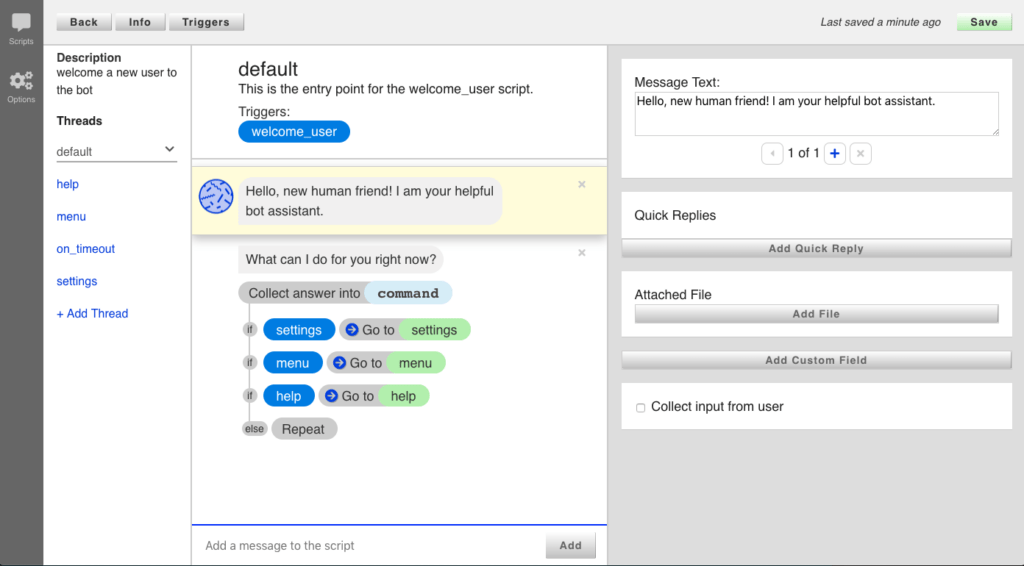
Botkit is a developer-friendly toolkit built for creating conversational applications in JavaScript. It is particularly useful for teams that want to build messaging bots and integrations in a code-first way.
Why it stands out
Botkit stands out because it treats chatbot development more like software engineering than dashboard configuration. That makes it attractive to developers who want direct control over bot behavior and event handling.
Key strengths
- Code-first flexibility for JavaScript teams
- Good fit for messaging bots and custom integrations
- Familiar developer experience in Node-based environments
- Suitable for teams building tailored conversational logic
Limitations
- Less accessible for non-technical users
- Not ideal for teams looking for visual orchestration tools
- May require more custom implementation than modern platform-style products
Botkit remains a practical option for developer-led chatbot projects. It is best suited to teams that want flexibility and are comfortable building conversational systems directly in code.
5. BotMan
BotMan is a practical open source chatbot framework for PHP developers, especially those working in Laravel or similar environments. It helps web teams add conversational functionality without disrupting their existing backend stack.
Why it stands out
Its biggest strength is ecosystem fit. For PHP teams, BotMan offers a more natural and efficient path than adopting a framework built around a completely different technology base.
Key strengths
- Strong alignment with PHP and Laravel workflows
- Supports multi-channel bot logic
- Easier adoption for web teams with legacy or established systems
- Practical for embedding chatbot features into existing products
Limitations
- Less relevant for teams focused on advanced LLM orchestration
- Not the strongest choice for highly complex enterprise assistant architectures
- Smaller strategic footprint than broader AI-first platforms
BotMan is one of the most sensible options for PHP-based businesses. If your team already builds and ships products in PHP, it offers a practical way to add chatbot capabilities without unnecessary complexity.
Explore more:
- Key Differences Between LangChain and LangGraph
- Comparisons Between LangChain vs Haystack
- Is DSPy Better Than LangChain
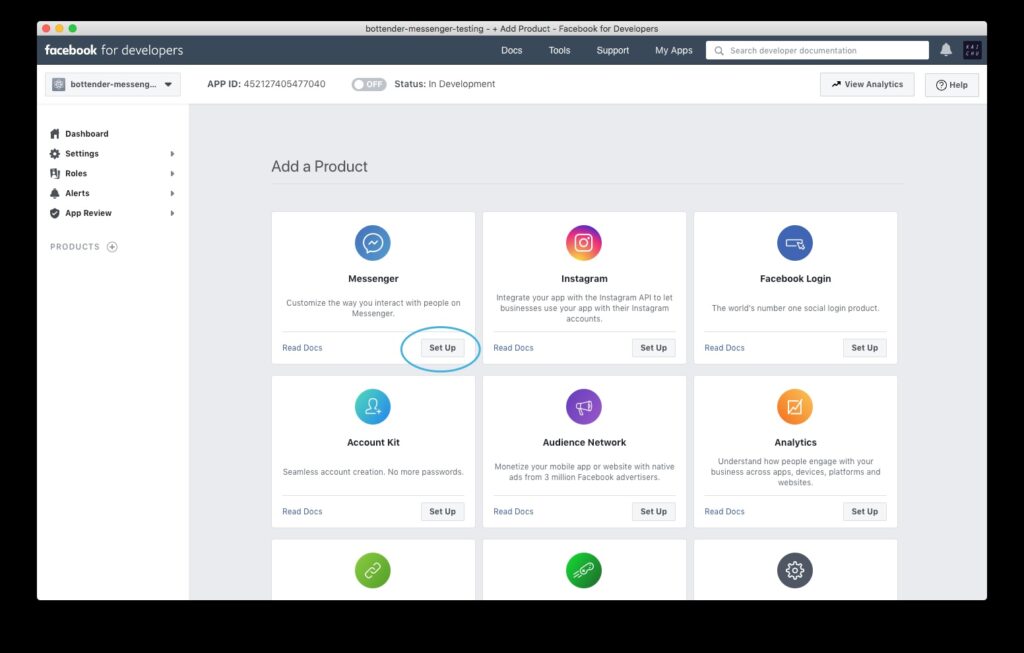
6. Bottender
Bottender is a JavaScript-focused framework designed for building conversational apps across multiple messaging channels. It is especially appealing to developers who want to stay within the Node.js ecosystem while supporting channel-specific bot experiences.
Why it stands out
Bottender stands out for giving JavaScript teams a straightforward way to develop and manage cross-platform conversational experiences. It is lightweight enough for focused use cases while still being flexible in implementation.
Key strengths
- Strong fit for Node.js development teams
- Good for cross-platform and messaging-channel bots
- Lighter and more approachable than heavier enterprise frameworks
- Flexible enough for practical production chatbot deployments
Limitations
- Less enterprise-oriented than frameworks like Rasa or Tock
- Better for focused implementations than large conversational platforms
- May need extra architecture for more advanced AI use cases
Bottender is a strong option for teams that want a JavaScript-native chatbot framework with multi-channel flexibility. It works especially well when speed and developer familiarity matter more than enterprise-scale orchestration.
Related reading:
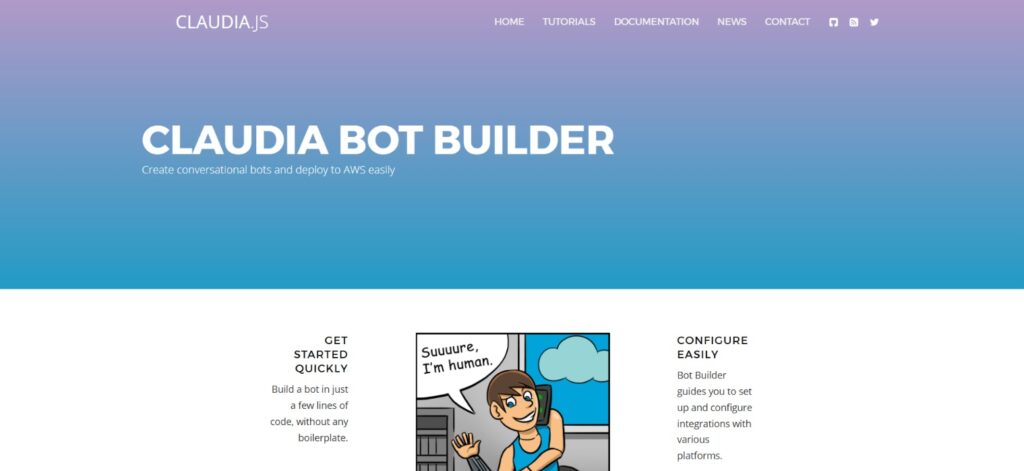
7. Claudia Bot Builder
Claudia Bot Builder is a lightweight framework aimed at developers building bots in AWS-centric, serverless environments. It is best suited to smaller chatbot projects where simplicity and low operational overhead are key priorities.
Why it stands out
Its main appeal is efficiency. Claudia Bot Builder allows teams to launch narrower bot experiences with less boilerplate and without adopting a large framework stack.
Key strengths
- Lightweight setup and relatively simple architecture
- Good fit for AWS-native and serverless workflows
- Lower operational overhead for smaller bot projects
- Efficient for event-driven chatbot use cases
Limitations
- Not ideal for large-scale or enterprise-grade conversational systems
- Narrower scope than more full-featured chatbot frameworks
- Less suitable for highly complex, multi-step dialogue orchestration
Claudia Bot Builder is a smart fit for focused chatbot projects that do not need extensive platform features. For small AWS-based deployments, it can be an efficient and low-friction choice.
Recommended for you:
8. DeepPavlov
DeepPavlov is an open source framework built for NLP-heavy conversational systems and research-oriented AI work. It is better known in technical and academic circles than in mainstream commercial chatbot tooling.
Why it stands out
DeepPavlov stands out because it is designed for teams that care deeply about language understanding and model-centric conversational AI. It is more useful when chatbot development overlaps with serious NLP work rather than straightforward support automation.
Key strengths
- Strong NLP focus with research-oriented depth
- Access to pretrained models and language-processing capabilities
- Well suited to technically demanding chatbot projects
- Useful for domain-specific conversational AI development
Limitations
- Higher technical barrier than mainstream chatbot tools
- Less accessible for product or business teams
- Overly complex for simple commercial chatbot implementations
DeepPavlov is best for organizations with strong technical capabilities and advanced NLP requirements. If your chatbot project is more about language intelligence than launch speed, it is a framework worth considering.
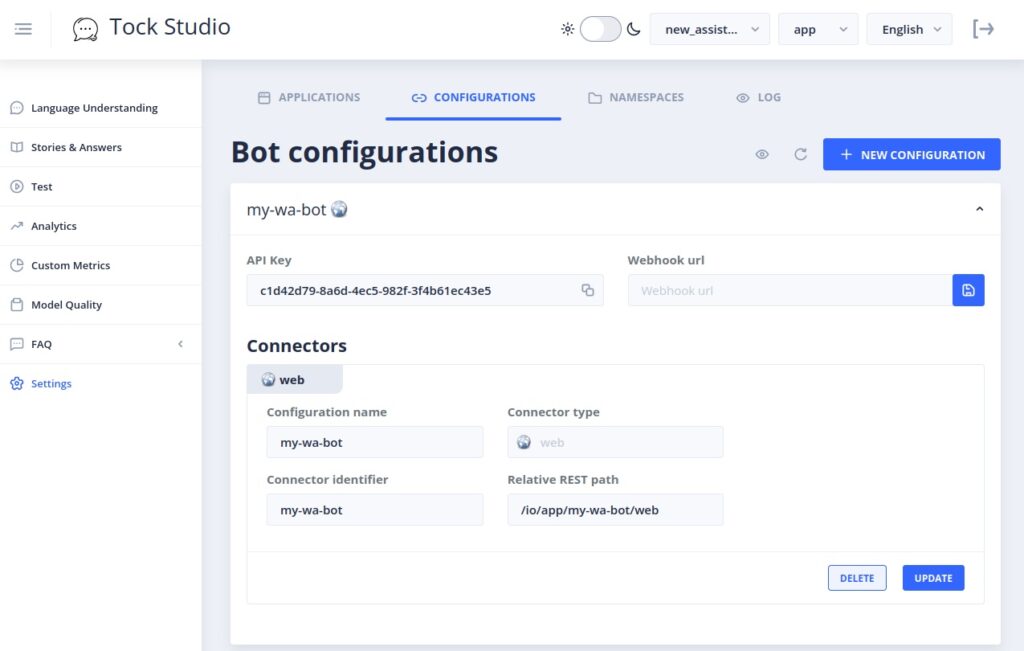
9. Tock
Tock is an enterprise-grade conversational AI framework designed for structured assistants across text and voice channels. It is built for organizations that view conversational AI as a long-term platform capability rather than a lightweight product add-on.
Why it stands out
Tock stands out for its orchestration capabilities and enterprise-ready architecture. It is especially relevant when businesses need multimodal assistants with more control over conversation structure and deployment.
Key strengths
- Supports both voice and text experiences
- Strong fit for enterprise orchestration needs
- Suitable for complex conversational architectures
- Useful for multimodal assistant systems
Limitations
- High complexity compared with lighter frameworks
- Requires a capable technical team to operate effectively
- Less suitable for startups or small chatbot deployments
Tock is a serious framework for enterprises building robust conversational systems. It is not the easiest option to adopt, but it can be highly valuable when architecture control and scale matter.
10. OpenDialog
OpenDialog is a conversational AI platform with a strong focus on conversation design and structured dialogue management. It is especially relevant in regulated or high-stakes environments where explainability and governance are important.
Why it stands out
What makes OpenDialog different is its emphasis on dialogue structure and controlled conversational design. That focus can be valuable for organizations that need more rigor than a typical fast-launch chatbot builder can provide.
Key strengths
- Strong conversation design orientation
- Good fit for regulated and structured dialogue use cases
- Useful where explainability and governance matter
- Better aligned with controlled interactions than generic chatbot tools
Limitations
- Less widely recognized than larger framework brands
- Not the strongest option for quick and lightweight prototyping
- Teams should validate platform dependency and deployment flexibility carefully
OpenDialog is worth evaluating when conversation quality and control are more important than raw speed. It is especially relevant for complex business workflows where structured dialogue matters.
11. ChatterBot
ChatterBot is one of the more beginner-friendly names in the chatbot ecosystem and is often used for educational purposes, experiments, and simple bot projects. It is approachable for developers who want to understand the basics of conversational AI without starting from a heavy enterprise framework.
Why it stands out
Its biggest advantage is accessibility. ChatterBot lowers the barrier to entry for teams or individuals who want to prototype chatbot behavior quickly or learn how chatbot logic works.
Key strengths
- Easy to start with for beginners
- Useful for learning, demos, and small experiments
- Lower complexity than enterprise-grade frameworks
- Suitable for simple proof-of-concept chatbot projects
Limitations
- Limited suitability for serious production deployments
- Not ideal for complex or large-scale conversational systems
- Falls short of modern enterprise AI expectations
ChatterBot is best treated as a lightweight learning and prototyping framework. It can be useful for simple chatbot experiments, but it is not the strongest choice for long-term production strategy.
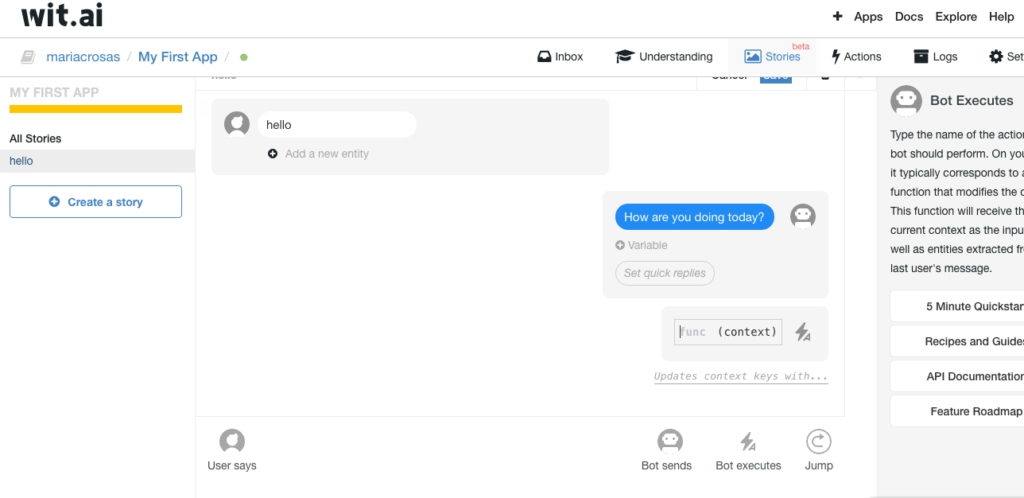
12. Wit.ai
Wit.ai is an NLP-first platform that has often been used for quick prototyping of conversational interfaces. It is attractive to developers who want to experiment with natural language features without building everything from the ground up.
Why it stands out
Wit.ai stands out because it makes early NLP experimentation more accessible. It can help teams validate chatbot concepts quickly before committing to a larger architecture.
Key strengths
- NLP-first approach for early conversational development
- Useful for fast prototyping and experimentation
- Lower barrier to entry for teams exploring chatbot interfaces
- Helpful for validating lightweight natural language use cases
Limitations
- Greater dependency on an external ecosystem than self-managed frameworks
- Not ideal for teams that require strong infrastructure ownership
- Less aligned with strict self-hosting or enterprise control needs
Wit.ai can be a practical starting point for quick conversational experiments. For teams that need deeper control and long-term architectural ownership, however, it is usually better seen as a prototype-friendly option rather than a core framework choice.
Which Framework Should You Choose?
The best open source chatbot framework depends on what your team actually needs to control.
If your priority is enterprise-grade customization, self-hosting, and data ownership, start with Rasa or Tock.
If you want a faster development experience and can accept some platform tradeoffs, Botpress is worth exploring.
If your team is already committed to PHP, BotMan is likely the most practical fit.
If you build primarily in JavaScript, Botkit and Bottender are sensible starting points.
If your chatbot initiative is really about LLM-powered knowledge access, Haystack may be a better strategic choice than a legacy bot stack.
And if your company already runs on Microsoft infrastructure, Bot Framework may still play a role in existing systems, even if it is no longer the strongest default for new projects.
Open Source Chatbot Frameworks vs Proprietary Chatbot Platforms
Open source frameworks and proprietary chatbot platforms are designed for different priorities.
Open source frameworks are usually the better choice when a business needs:
- more control over deployment and security
- deeper integration with internal systems
- tailored conversational logic
- long-term ownership of product behavior
By contrast, proprietary platforms are often better when the goal is:
- faster rollout
- less engineering involvement
- managed infrastructure
- a more accessible builder experience for non-technical teams
Neither approach is automatically better. The real question is whether your organization values speed more than control, or control more than convenience.
For many growing businesses, that tradeoff becomes especially important once a chatbot moves beyond FAQ automation and starts affecting customer experience, internal operations, or compliance-sensitive workflows.
How We Evaluated These Frameworks
To make this comparison useful, we looked beyond surface-level feature lists.
The frameworks in this guide were evaluated based on:
- how meaningfully open source they are
- whether teams can self-host or retain real deployment control
- how well they fit modern conversational AI needs in 2026
- the level of engineering effort required
- their suitability for enterprise, startup, or product-led use cases
- maintenance status and long-term viability
This matters because the “best” framework is not always the one with the most visibility. It is the one that best matches your architecture, team capability, and business goals.
Common Mistakes When Choosing an Open Source Chatbot Framework
One of the biggest mistakes is confusing a chatbot framework with a chatbot platform. These categories overlap in marketing, but not in implementation.
Another common issue is choosing a tool based on popularity instead of operating requirements. A framework that works well for a startup prototype may be the wrong fit for an enterprise assistant tied to compliance or internal systems.
Teams also tend to underestimate maintenance. Open source software gives more freedom, but it also requires stronger ownership around hosting, observability, upgrades, and conversation quality.
Finally, businesses should be clear about what they are actually building. In 2026, many so-called chatbots are really knowledge assistants, AI copilots, or retrieval-based support experiences. If that is your real use case, your evaluation criteria should reflect it.
FAQs about Open Source Chatbot Framework
What is an open source chatbot framework?
An open source chatbot framework is a developer-focused foundation for building conversational applications. Its source code is publicly available, and teams can usually customize, extend, and self-host it based on their needs.
What are the best open source chatbot frameworks in 2026?
Some of the strongest options in 2026 include Rasa, Botpress, BotMan, Bottender, Tock, DeepPavlov, and Haystack. The best choice depends on your use case, stack, and hosting priorities.
Which open source chatbot framework is best for self-hosting?
Rasa is one of the strongest self-hosted options because it gives teams deep control over workflows, deployment, and data handling.
Is Rasa better than Botpress?
Rasa is generally better for teams that need flexibility, self-hosting, and enterprise-grade customization. Botpress is often a better fit for teams that want faster development and a more guided builder experience.
Are open source chatbot frameworks suitable for enterprise use?
Yes. They are often a strong choice for enterprise environments, especially when security, compliance, integration depth, and deployment control are important.
What is the difference between a chatbot framework and a chatbot platform?
A chatbot framework is typically code-first and gives developers more control. A chatbot platform usually offers managed infrastructure and easier setup, but often with less flexibility.
Can open source chatbot frameworks work with LLMs?
Yes. Many modern frameworks can be integrated with LLM APIs, vector databases, and retrieval pipelines to support advanced conversational AI use cases.
Are open source chatbot frameworks really free?
The software itself may be free, but running it in production still comes with costs such as hosting, engineering time, maintenance, monitoring, and model usage.
Choosing the best open source chatbot framework in 2026 is less about chasing the most recognizable name and more about matching the tool to your real product needs.
Conclusion
If your team needs maximum control, Rasa remains one of the strongest options. If you want a smoother path to building and launching conversational experiences, Botpress may be a better starting point. And if your roadmap is shifting toward LLM-powered knowledge assistants, frameworks like Haystack deserve serious attention.
The key is to evaluate these frameworks through the lens of deployment, ownership, and long-term fit. Once a chatbot becomes part of a real business workflow, those factors matter far more than feature checklists alone.
Choosing the right framework is only the first step. To turn a chatbot idea into a reliable product, businesses also need the right architecture, integrations, conversation design, and long-term deployment strategy.
At Designveloper, we help companies build custom AI chatbot solutions tailored to real business needs, from internal assistants and customer support automation to enterprise-grade conversational platforms. If your team is planning an AI chatbot project and needs a development partner who understands both product delivery and technical execution, explore our AI development services.
Also published on

Share post on










Related Articles


Best AI Voice Agents In 2026: Top Platforms For Real Business Workflows
Best AI Voice Agents In 2026: Top Platforms For Real Business Workflows Published June 04, 2026
What Is The Model Context Protocol (MCP)? How Does It Work?
What Is The Model Context Protocol (MCP)? How Does It Work? Published June 02, 2026
How To Build A Chatbot With LangChain Step-By-Step Guide
How To Build A Chatbot With LangChain Step-By-Step Guide Published May 29, 2026